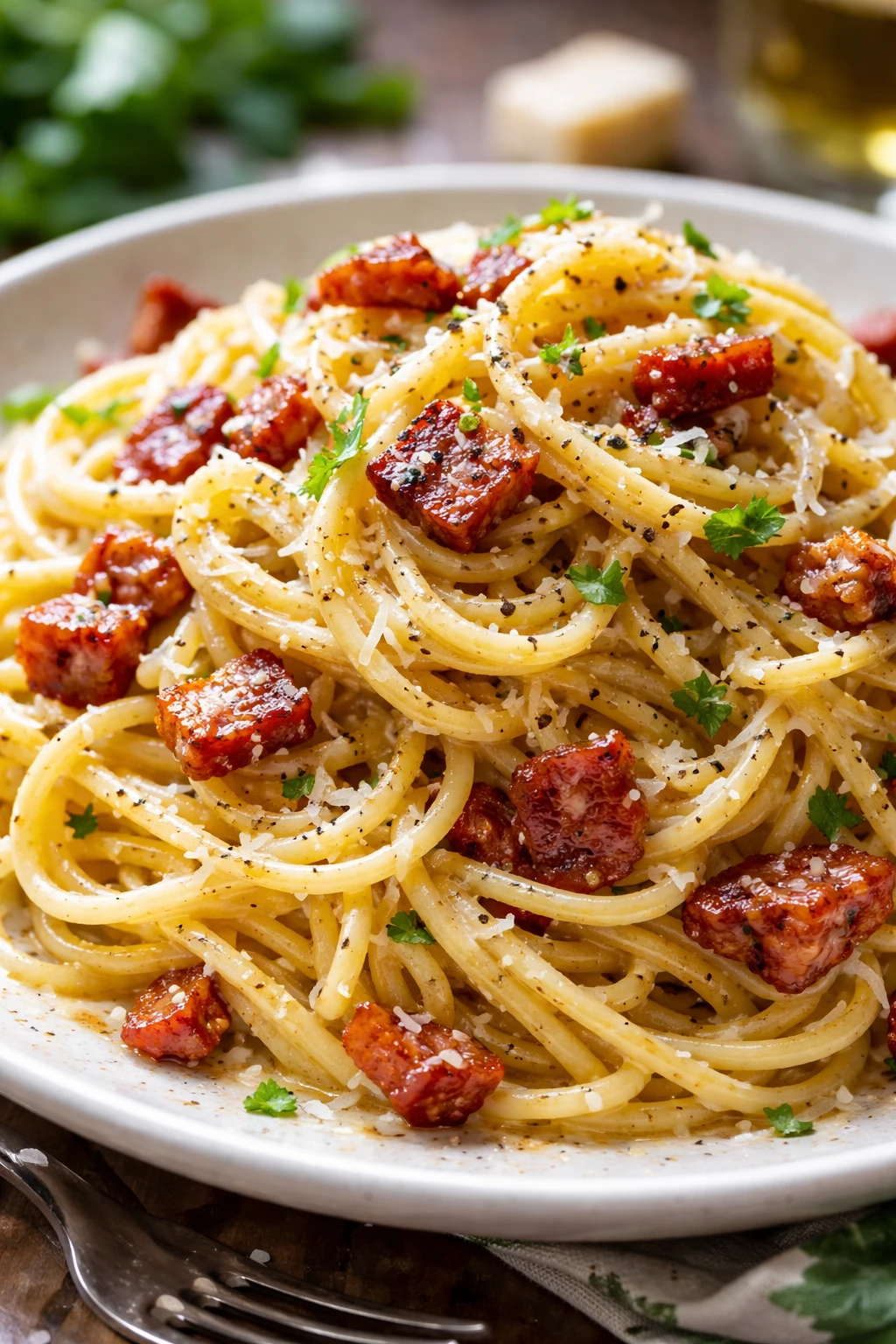
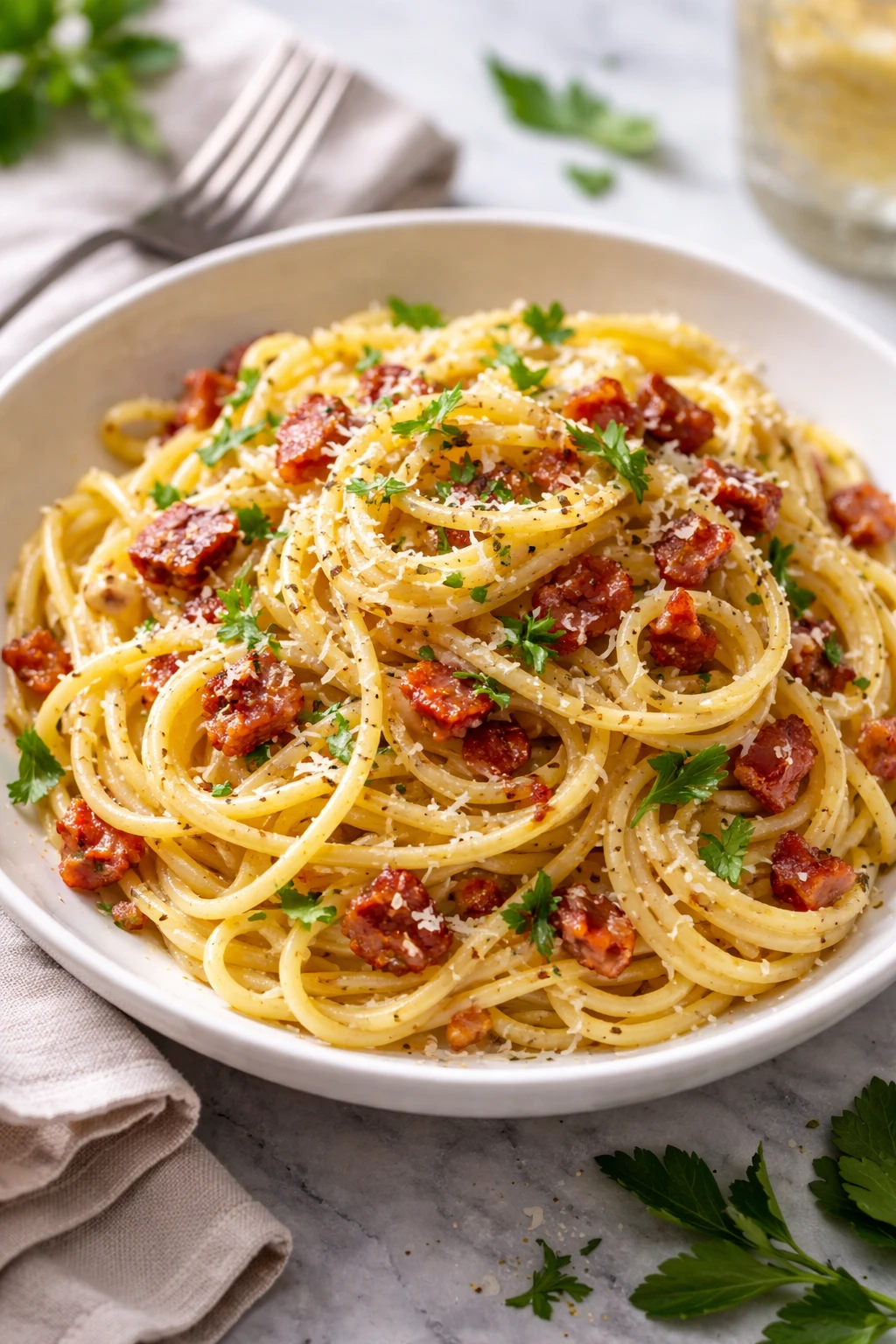
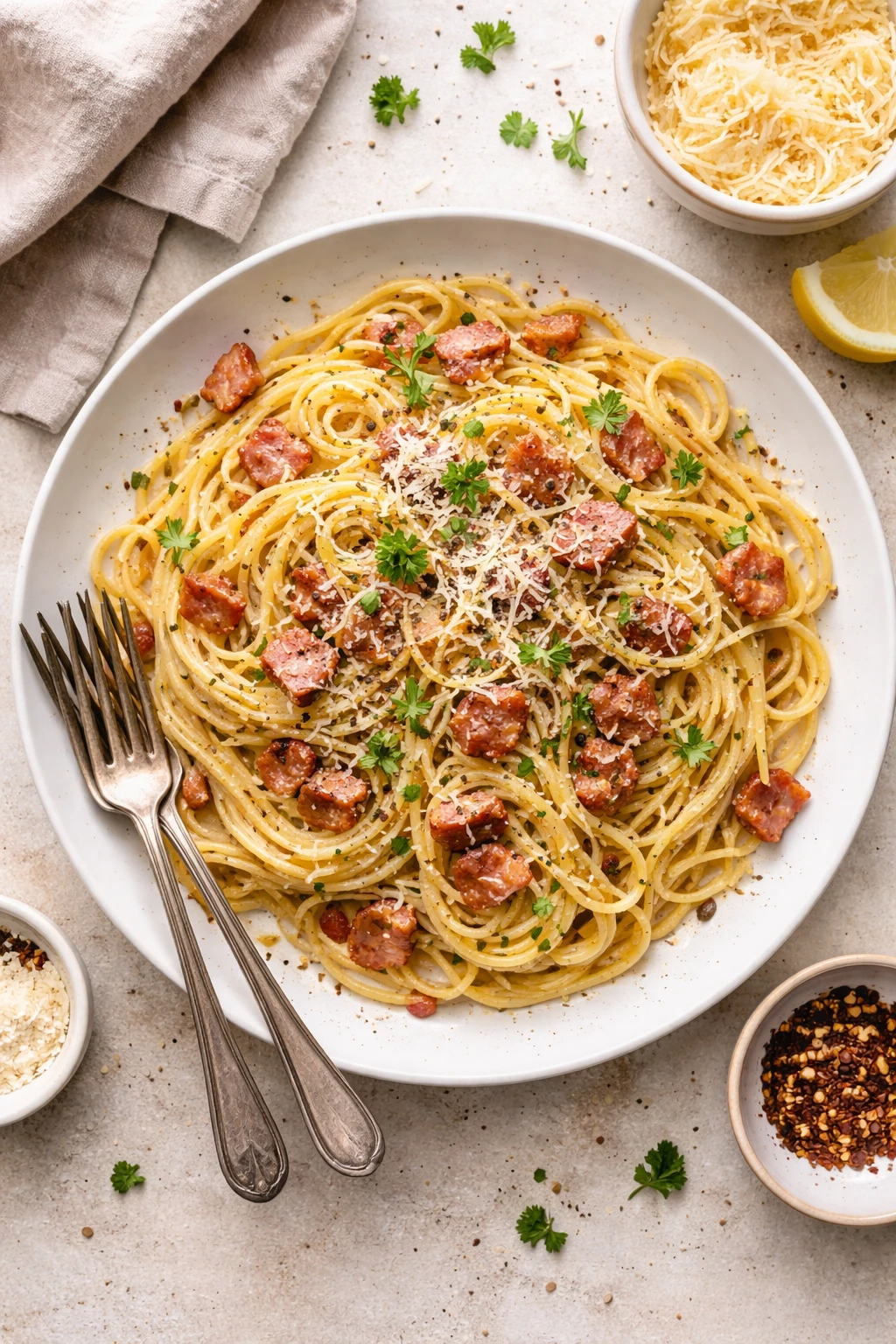
This spaghetti carbonara is my go-to when time’s tight but I crave something comforting. Using simple pancetta and a silky egg sauce, it comes together in just 15 minutes. Perfect for cozy dinners any night!
Introduction
I first stumbled upon spaghetti carbonara years ago during a hectic weeknight when I needed dinner on the table fast. The classic Roman dish instantly won me over with its creamy sauce made without any cream — just eggs, cheese, and pancetta. Over time, I’ve tweaked the method to make it faster and foolproof. For instance, I learned that tempering the eggs with hot pasta water is key to avoid scrambling and get that silky texture. Also, using pancetta instead of bacon gives it a slightly more authentic and delicate flavor that I love. This version is perfect when you want something indulgent but easy, especially on busy nights when you don’t want to fuss. The finished dish is rich, comforting, and coated in a luscious sauce that clings to every strand of spaghetti. It’s bright with Pecorino cheese and pepper, with crispy bits of pancetta adding just the right saltiness and crunch. Honestly, it feels like a little taste of Italy right in your own kitchen. I think you’ll love how quick and satisfying it is — it’s become a staple in my weeknight rotation.
How To Do It
Step 1
Bring a large pot of salted water to a rolling boil. Add the spaghetti and cook according to package instructions until al dente, usually about 8-10 minutes. It’s important to salt the water well because this is your only chance to season the pasta itself. Don’t overcook or the noodles will become mushy and won’t hold the sauce properly.
⏱ Time: 8-10 minutes
✓ Doneness: Pasta should be tender but still have a slight bite when you taste it.
Step 2
While the pasta cooks, heat a large skillet over medium heat. Add the diced pancetta and cook until it’s crisp and golden, about 5-7 minutes. Stir occasionally to render the fat evenly. The goal here is to get the pancetta crispy without burning it, as burnt bits will taste bitter.
⏱ Time: 5-7 minutes
✓ Doneness: Pancetta pieces are browned and crisp, fat rendered, and the pan smells fragrant.
Step 3
In a medium bowl, whisk together the eggs, grated Pecorino Romano, and a generous amount of freshly ground black pepper. This mixture forms the creamy sauce without any cream. Whisking well is crucial so the cheese and eggs are fully combined and smooth.
⏱ Time: 3 minutes
✓ Doneness: Egg and cheese mixture is smooth and slightly thickened, with no lumps.
Step 4
Reserve about 1 cup of the hot pasta cooking water before draining the spaghetti. This starchy water is essential for loosening the sauce and helping it cling to the noodles. Set it aside before tossing the pasta.
⏱ Time: 1 minute
✓ Doneness: Have a cup of cloudy, hot pasta water ready in a separate bowl.
Step 5
Drain the pasta quickly and add it to the skillet with the pancetta (remove garlic cloves if you added them for flavor). Toss everything over low heat to coat the noodles in the rendered fat. This step infuses the pasta with the pancetta’s flavor and warms it up gently.
⏱ Time: 2 minutes
✓ Doneness: Pasta is glossy and evenly coated with pancetta fat, warm but not hot.
Step 6
Remove the skillet from heat and immediately pour in the egg and cheese mixture. Quickly toss or stir vigorously to combine. The residual heat will cook the eggs gently, creating a creamy sauce without scrambling. If the sauce seems too thick, add reserved pasta water a little at a time to loosen it.
⏱ Time: 2-3 minutes
✓ Doneness: Sauce is smooth, creamy, and coats each strand of pasta without curdling.
Step 7
Taste and adjust seasoning, adding more black pepper or Pecorino if desired. The pepper adds a nice kick that balances the richness of the sauce. Serve immediately for best texture.
⏱ Time: 1 minute
✓ Doneness: Balanced flavor with peppery warmth and savory cheese notes.
Step 8
Optional: Garnish with extra grated Pecorino and a sprinkle of chopped fresh parsley for color and freshness. This little touch brightens the dish and makes it look inviting.
⏱ Time: 1 minute
✓ Doneness: Pasta looks vibrant with fresh green garnish.
Step 9
Serve hot with a simple green salad or crusty bread to soak up any leftover sauce. Carbonara is best enjoyed fresh, so plan to eat it right away for that perfect creamy texture.
⏱ Time: Immediate
✓ Doneness: Dish served warm and fresh, ready to enjoy.
Variations
Vegetarian Carbonara with Mushrooms
Swap pancetta for sautéed mushrooms to keep the dish vegetarian but still rich and savory. Use smoked mushrooms or add a splash of soy sauce for umami. The texture will be slightly different but still satisfying.
Note: Cook mushrooms until golden and caramelized to mimic pancetta’s texture and flavor before tossing with pasta.
Creamy Carbonara with Heavy Cream
For an even creamier sauce, add a splash of heavy cream to the egg and cheese mixture. This variation is richer and more indulgent but less traditional. Great if you prefer a sauce that coats pasta more thickly.
Note: Reduce pasta water slightly when adding cream to keep sauce from becoming too runny.
Gluten-Free Carbonara
Use gluten-free spaghetti to make this recipe suitable for gluten-intolerant diets. The technique remains the same, but cooking times may vary depending on the pasta brand. The sauce clings just as well to gluten-free noodles.
Note: Check pasta package instructions carefully and reserve pasta water accordingly.
Spicy Carbonara with Chili Flakes
Add a pinch of red chili flakes when cooking pancetta or sprinkle on top before serving for a spicy kick. This adds heat and depth, perfect if you like your pasta with a little fire.
Note: Adjust chili amount to taste and add gradually to avoid overpowering the dish.
Carbonara with Guanciale
For an authentic Roman flavor, substitute pancetta with guanciale (cured pork cheek). It’s fattier and more flavorful, enhancing the richness and aroma of the dish. Cooking method stays the same.
Note: Render guanciale slowly over medium-low heat to avoid toughness and bitterness.
Pro Tips
Temper the eggs with reserved pasta water before mixing with pasta.
Tempering warms the eggs gradually, preventing them from scrambling when added to the hot pasta. This creates a smooth, creamy sauce instead of curdled bits. Skipping this step often results in uneven texture.
Cook pancetta slowly over medium heat to render fat without burning.
Rendering fat slowly allows the pancetta to crisp and release its savory oils, which flavor the pasta. High heat can burn the pancetta, creating bitterness and ruining the dish’s delicate balance.
Use a good amount of freshly cracked black pepper.
Pepper adds necessary spice and aroma that cuts through the richness. Without enough pepper, the dish tastes flat and overly heavy. Freshly cracking releases essential oils that dried pepper lacks.
Reserve plenty of pasta water before draining.
The starchy water helps loosen the sauce to the right consistency and improves adhesion to pasta. Without it, the sauce can be too thick or clumpy, making it less silky and enjoyable.
Remove pan from heat before adding egg mixture.
Direct heat will scramble the eggs instantly, ruining the sauce. Residual heat is just enough to gently cook the eggs while keeping the sauce creamy and smooth.
Use whole eggs rather than just yolks or whites.
Whole eggs provide a balanced texture—yolks add richness and creaminess, while whites contribute structure. Using only yolks can make the sauce too thick and heavy.
Serve carbonara immediately after making.
The sauce is best fresh and warm; it can thicken or separate if left too long. Serving right away ensures the perfect creamy texture and flavor.
Common Mistakes to Avoid
Scrambled eggs in the sauce
Why it happens This happens when the egg mixture is added to pasta still on direct heat or when stirred too slowly, causing the eggs to cook too quickly and curdle.
Fix Remove the pan from heat before adding eggs and stir vigorously to distribute heat evenly. If needed, temper the eggs with reserved pasta water first to raise their temperature gradually.
Pasta too salty or bland
Why it happens Not salting the pasta water enough results in bland noodles, while over-salting can make the dish too salty overall, especially combined with salty cheese and pancetta.
Fix Salt the pasta water generously but taste to avoid overdoing it. Remember cheese and pancetta add salt, so balance accordingly.
Burnt pancetta
Why it happens Cooking pancetta over too high heat or leaving it unattended causes burning, which imparts bitterness and ruins flavor.
Fix Cook pancetta slowly over medium heat, stirring occasionally until crisp but not burnt.
Sauce too thick or clumpy
Why it happens Not adding enough reserved pasta water or adding eggs at too high heat causes sauce to thicken unevenly or clump.
Fix Add pasta water gradually to loosen sauce and stir quickly off heat to create a smooth texture.
Using pre-grated cheese
Why it happens Pre-grated cheese often contains anti-caking agents that prevent smooth melting, affecting sauce texture.
Fix Always grate Pecorino Romano fresh for best melting and flavor.
Nutrition
Per Serving:
Nutritional values are estimates and may vary based on specific ingredients used.
Storage & Tips
Room Temperature
Carbonara is best served fresh and should not be left at room temperature for more than 2 hours. If you need to hold it briefly, cover it loosely to prevent drying out but avoid extended sitting to maintain freshness and food safety.
Refrigerator
Store leftovers in an airtight container in the fridge for up to 2 days. The sauce will thicken and may separate when cold. Reheat gently with a splash of water or broth to loosen the sauce and restore creaminess.
Freezer
Freezing carbonara is not recommended as the egg-based sauce can separate and become grainy. If you must freeze, store pasta and sauce separately and reheat carefully, but expect some texture changes.
Reheating
Reheat slowly over low heat on the stovetop or in the microwave with a splash of reserved pasta water or broth. Stir frequently to prevent the eggs from scrambling and to revive the creamy texture.
Make Ahead
You can cook the pancetta and prepare the egg-cheese mixture a day ahead, storing them separately in the fridge. Cook and drain the pasta fresh, then combine everything just before serving to keep the sauce silky.
FAQ
Can I use bacon instead of pancetta?
Yes, bacon can be used if pancetta isn’t available, but it has a smokier and stronger flavor that changes the dish’s character. Use unsmoked bacon if possible and cook it gently to avoid overpowering the sauce.
Why did my carbonara sauce scramble?
Scrambling happens when eggs are exposed to too much direct heat or added too quickly to hot pasta. To prevent this, remove the pan from heat before adding the egg mixture and stir constantly. Tempering the eggs with pasta water also helps avoid scrambling.
Can I make carbonara ahead of time?
Carbonara is best eaten fresh because the sauce thickens and can separate when cooled. You can prep ingredients in advance, but combine and serve the pasta immediately after cooking for the best texture.
What cheese is best for carbonara?
Pecorino Romano is traditional and provides a sharp, salty flavor that balances the richness of the sauce. Parmesan can be used but will result in a milder taste. Always grate cheese fresh for best melting and flavor.
How do I get the sauce creamy without cream?
The creaminess comes from the emulsification of eggs, cheese, and pasta water. The key is to add the egg mixture off the heat and stir quickly to create a silky sauce without scrambling the eggs. No cream needed!
Can I use a different pasta shape?
Spaghetti is classic because it holds the sauce well, but you can try fettuccine or bucatini. Avoid very short or thick pasta as it won’t coat as evenly with the sauce.
Is guanciale better than pancetta?
Guanciale is traditional and fattier, giving a richer flavor and silkier texture. Pancetta is milder and easier to find. Both work well, but guanciale is preferred for authenticity.
How much black pepper should I use?
Use a generous amount of freshly cracked black pepper — it’s essential for balancing the richness and adding aroma. Start with about a teaspoon and adjust to your taste.
Final Thoughts
Give this quick spaghetti carbonara a try — it’s comfort food that’s easy enough for any weeknight. I can’t wait to hear what you think!