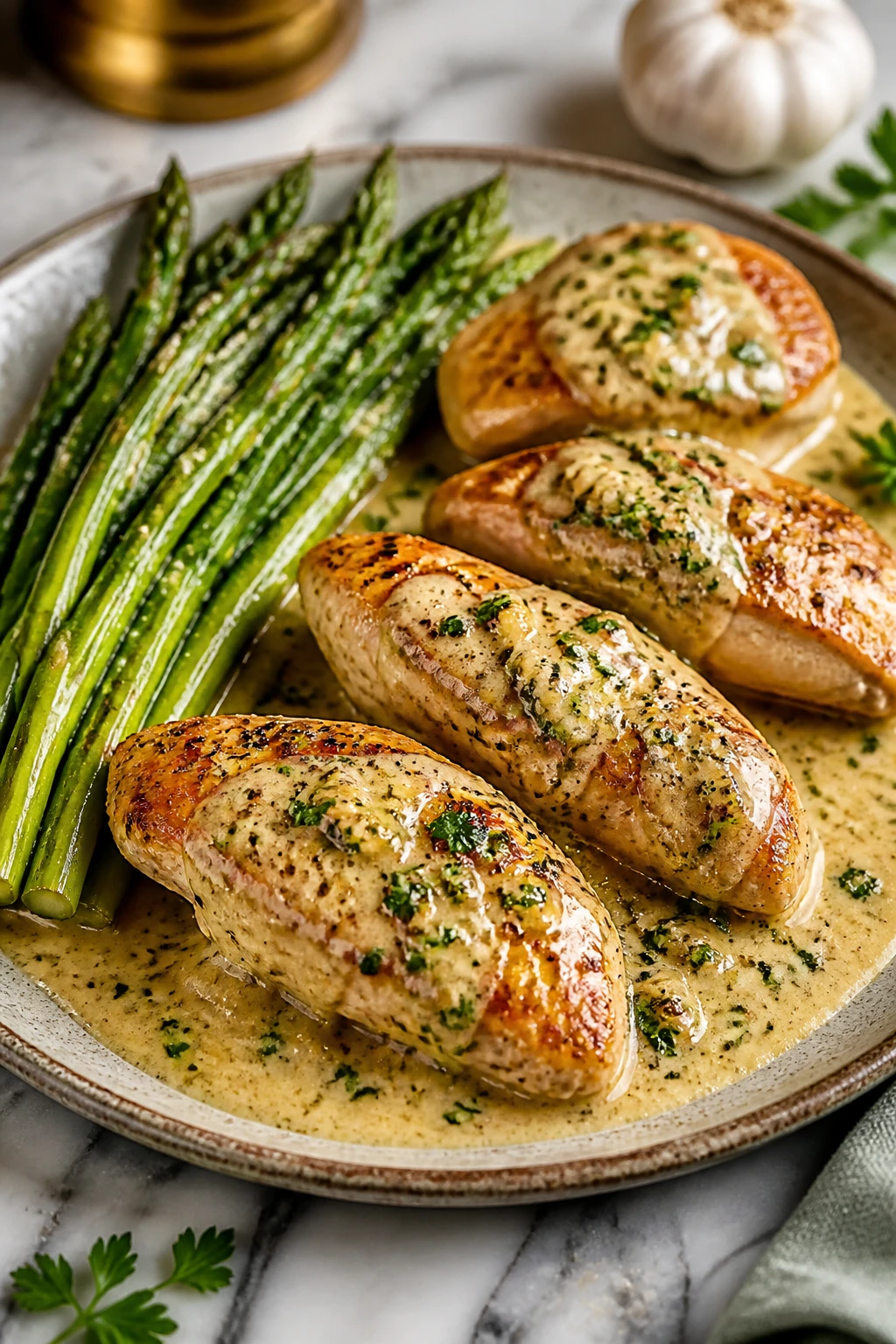
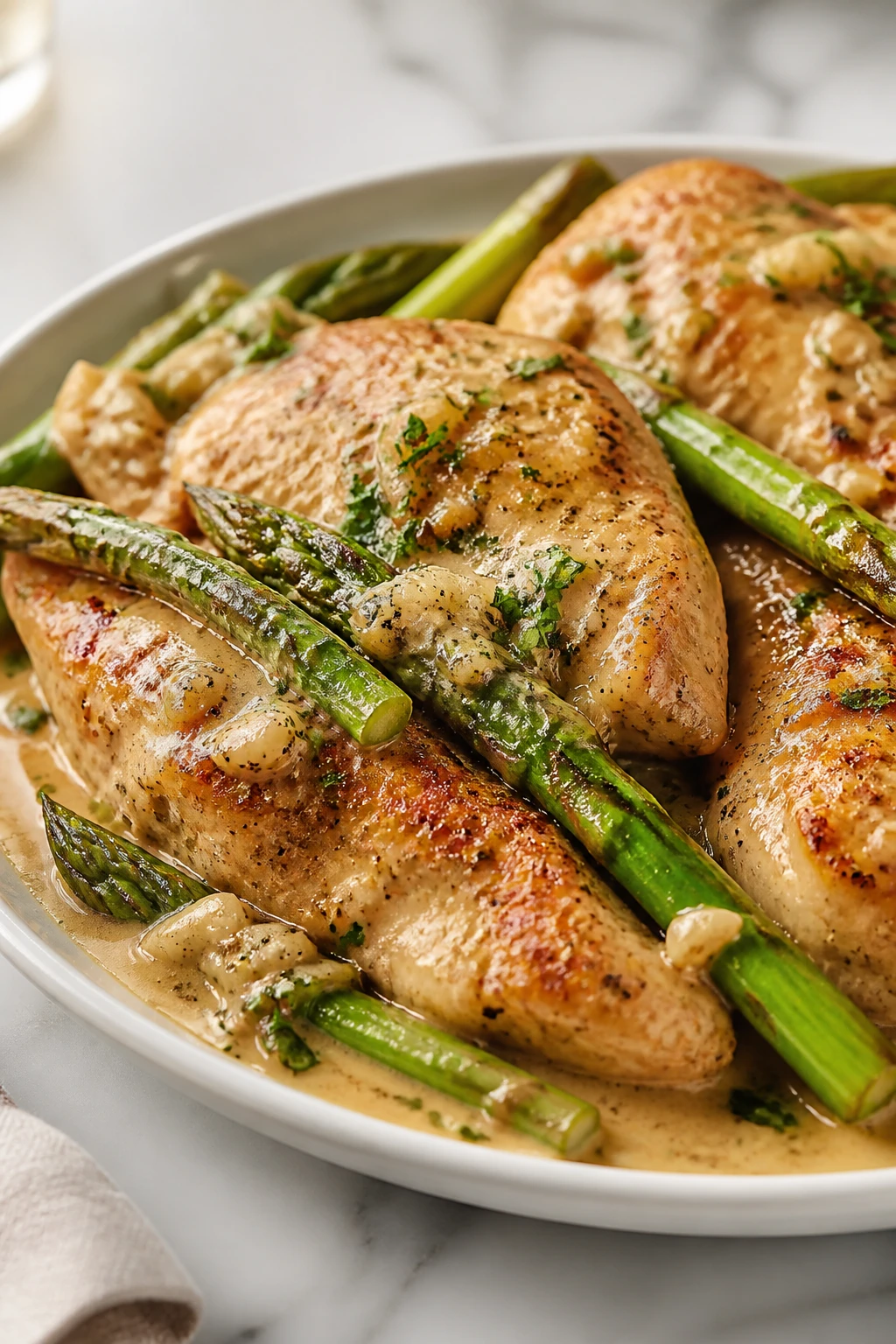
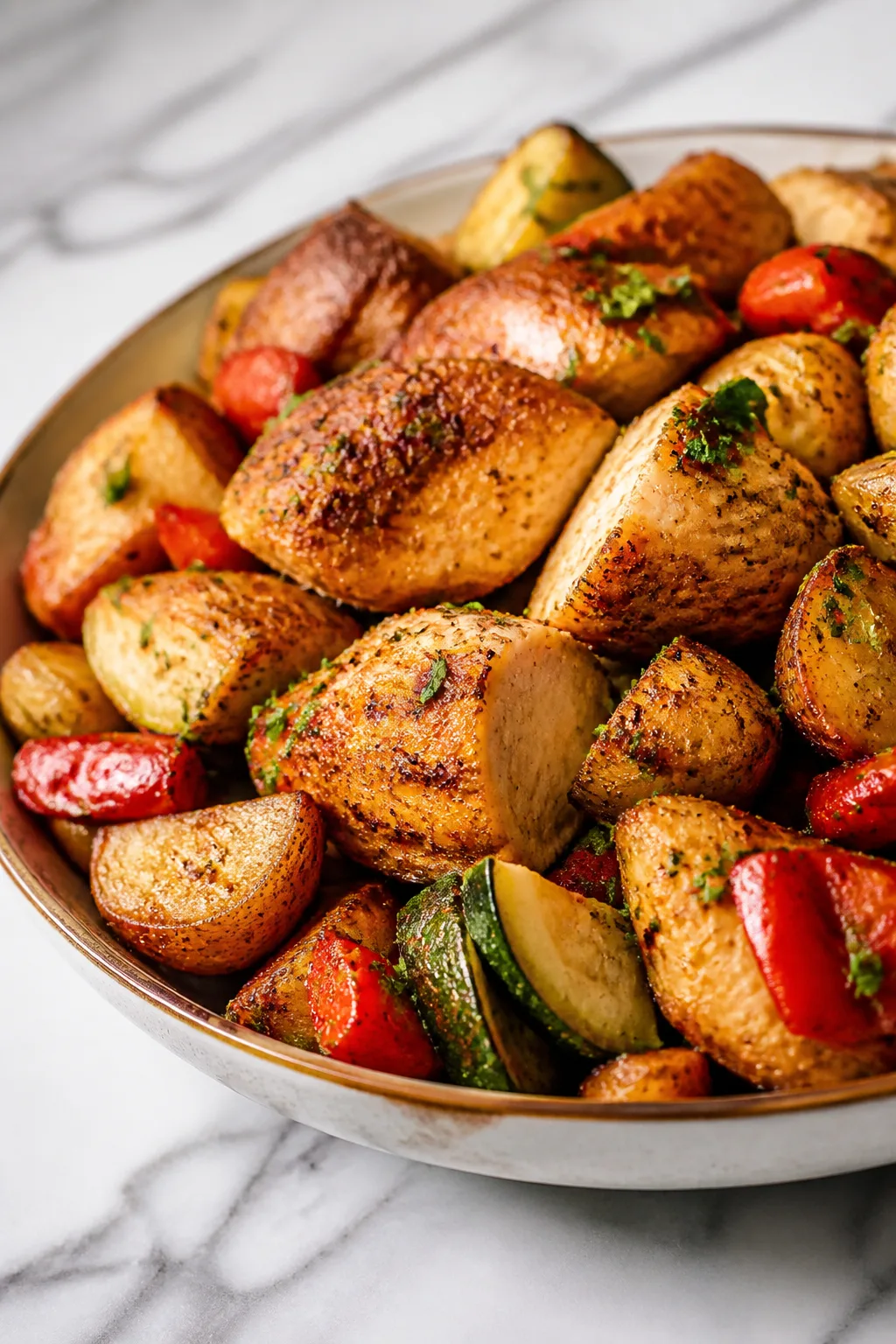
This creamy garlic chicken with asparagus is a lifesaver on busy nights. The silky sauce comes together in minutes, making it both comforting and quick. Perfect for a cozy dinner when you’re short on time!
Introduction
I first made this creamy garlic chicken dish on a hectic weeknight when I wanted something comforting but didn’t have much time. It quickly became a favorite in my house because it’s both simple and impressive. What sets this recipe apart is the silky garlic sauce that comes together so quickly yet tastes rich and satisfying. I love how the asparagus adds a fresh, tender crunch that balances the creaminess perfectly. The trick I learned is to slice the chicken thinly so it cooks evenly and stays juicy, and to not rush the garlic step — that flavor build-up is key. The finished dish looks inviting with a glossy sauce coating the chicken and asparagus, and the Parmesan adds just the right touch of savory depth. It’s perfect for busy weeknights when you want to feel like you’re treating yourself without spending hours in the kitchen. Plus, it reheats well, making great leftovers for lunch the next day. I hope you enjoy making it as much as I do!
How To Do It
Step 1
Start by prepping your chicken breasts: slice them into thin, even pieces about 1/2 inch thick. This helps the chicken cook quickly and evenly without drying out. Heat the olive oil in a large skillet over medium-high heat until shimmering. Add the chicken in a single layer and let it sear undisturbed for about 3-4 minutes to develop a nice golden crust — don’t overcrowd the pan or stir too soon, or you’ll miss out on that caramelized flavor. Flip and cook the other side until just cooked through but still juicy. Remove the chicken from the pan and set aside. This step ensures the chicken is tender and flavorful, not rubbery or overcooked.
⏱ Time: 8
✓ Doneness: Chicken is golden brown on both sides and no longer pink inside.
Step 2
In the same skillet, lower the heat to medium and add the minced garlic. Stir it around for about 30 seconds until fragrant — this quick step unlocks the garlic’s sweet, mellow flavor without burning it, which would cause bitterness. Immediately pour in the chicken broth and scrape up any browned bits stuck to the pan; these bits add delicious depth to your sauce. Let the broth simmer for 2 minutes to reduce slightly, concentrating the flavors. This foundation is what makes your sauce taste rich and layered.
⏱ Time: 3
✓ Doneness: Garlic is fragrant and broth has reduced slightly, with browned bits dissolved into the liquid.
Step 3
Pour in the heavy cream and stir to combine with the broth and garlic mixture. Bring it to a gentle simmer over medium heat. This step thickens the sauce and gives it that creamy texture without needing any flour or cornstarch. Keep stirring occasionally to prevent scorching. The sauce should start to thicken after about 3-4 minutes. This slow simmer lets the cream reduce and concentrate, making it luscious and velvety.
⏱ Time: 5
✓ Doneness: Sauce thickens slightly and coats the back of a spoon.
Step 4
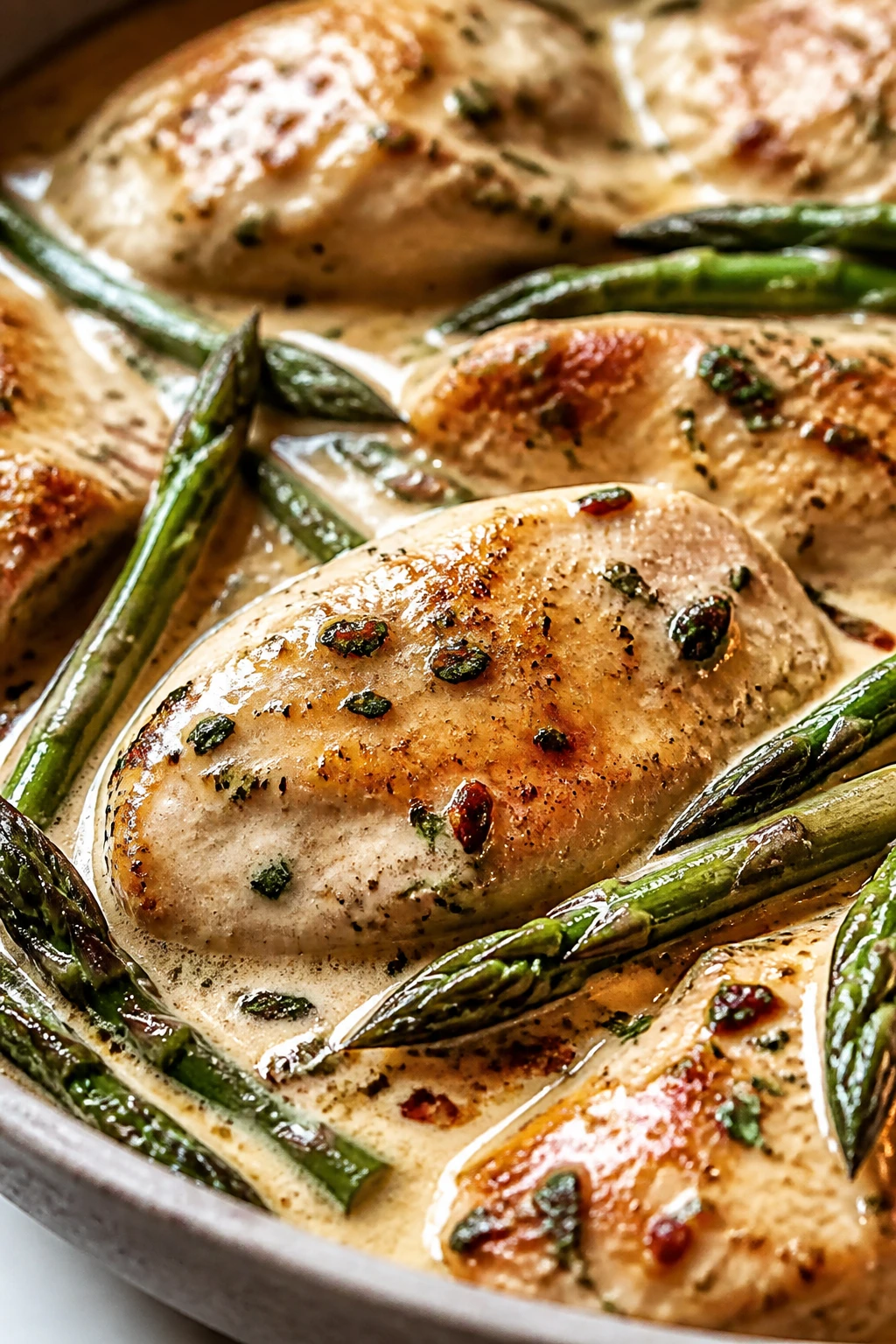
Add the asparagus pieces to the sauce and stir. Cover the pan with a lid and let the asparagus steam in the simmering sauce for about 5 minutes, or until it’s tender but still bright green and crisp. This gentle steaming cooks the asparagus perfectly without turning it mushy, preserving its fresh flavor and vibrant color. Avoid overcooking here because asparagus can quickly become limp.
⏱ Time: 5
✓ Doneness: Asparagus is tender when pierced with a fork but still firm and bright green.
Step 5
Return the cooked chicken to the skillet with the sauce and asparagus. Stir gently to coat the chicken in the creamy sauce and warm it through for 2-3 minutes. This step melds all the flavors together and ensures the chicken is hot without drying out. Taste the sauce and season with salt, pepper, and dried Italian herbs or fresh parsley to your liking. These final touches brighten and balance the dish.
⏱ Time: 3
✓ Doneness: Chicken is heated through and sauce is creamy and well-seasoned.
Step 6
Sprinkle the grated Parmesan cheese over the skillet and stir it in until melted and fully incorporated into the sauce. Parmesan adds a nutty, savory depth that rounds out the creamy garlic flavor perfectly. Be sure to use freshly grated cheese rather than pre-shredded for the best melt and taste. Stir quickly so it melts evenly without clumping.
⏱ Time: 2
✓ Doneness: Cheese is melted and sauce looks smooth and glossy.
Step 7
Turn off the heat and let the dish rest for a minute or two. This brief resting allows the sauce to thicken a bit more and the flavors to meld together. It also prevents the sauce from being too runny when serving. Use this time to prepare your plates or side dishes.
⏱ Time: 2
✓ Doneness: Sauce thickened slightly, coating chicken and asparagus beautifully.
Step 8
Serve the creamy garlic chicken and asparagus over cooked rice, pasta, or alongside crusty bread to soak up the sauce. Garnish with extra chopped parsley or a sprinkle of Parmesan if desired. This plating step adds freshness and a nice presentation touch. It’s a simple but elegant way to enjoy this quick and comforting meal.
⏱ Time: 0
✓ Doneness: Dish plated attractively and garnished with fresh herbs or cheese.
Step 9
Enjoy immediately while warm and creamy. If you have leftovers, store them properly and reheat gently to preserve the sauce texture and chicken tenderness. This dish is best eaten fresh but holds up well for next-day lunches. The creamy garlic sauce really shines and makes every bite satisfying.
⏱ Time: 0
✓ Doneness: Dish served warm with creamy sauce and tender chicken and asparagus.
Variations
Add Mushrooms for Earthy Flavor
Sauté sliced mushrooms with the garlic to add a rich, earthy dimension to the sauce. Mushrooms soak up the creamy sauce beautifully and add an umami boost. This variation makes the dish heartier without much extra effort.
Note: Cook mushrooms until browned and their moisture evaporates before adding broth and cream to avoid watery sauce.
Use Coconut Milk for Dairy-Free Option
Swap heavy cream with full-fat coconut milk for a dairy-free, slightly tropical twist. The sauce remains creamy but with a subtle coconut flavor that pairs nicely with garlic and asparagus.
Note: Simmer gently as coconut milk can separate if boiled too hard; flavor profile shifts to a more exotic tone.
Spicy Kick with Red Pepper Flakes
Add a pinch of red pepper flakes with the garlic sauté to introduce a mild heat. This variation livens up the creamy sauce, perfect if you like a little spice without overpowering the garlic flavor.
Note: Adjust amount of red pepper flakes to taste; too much can dominate the delicate creaminess.
Serve Over Mashed Potatoes
Instead of pasta or rice, serve the creamy garlic chicken and asparagus over buttery mashed potatoes. The sauce soaks into the potatoes wonderfully, making the meal extra comforting and cozy.
Note: Prepare mashed potatoes ahead; warm them before serving to keep everything hot.
Add Fresh Lemon Zest for Brightness
Stir in a teaspoon of fresh lemon zest just before serving to add brightness and cut through the richness. This adds a fresh, spring-like note that complements the garlic and cream beautifully.
Note: Add zest last to preserve its bright aroma and avoid bitterness from the white pith.
Pro Tips
Slice chicken breasts thinly for quick, even cooking.
Thin slices cook faster and more evenly, preventing dry, tough chicken. Thick pieces take longer and risk overcooking the outside before the center is done.
Don’t rush sautéing the garlic; cook until fragrant but not browned.
Garlic releases its sweet aroma when gently cooked, but burns quickly and turns bitter. Watching this step carefully ensures the sauce has a mellow garlic flavor.
Use heavy cream, not half-and-half, for the sauce’s silky texture.
Heavy cream has enough fat to thicken the sauce smoothly without curdling, unlike lighter creams that may separate when heated.
Add asparagus towards the end to keep it crisp and bright.
Cooking asparagus too long makes it mushy and dull in color. Adding it late lets it steam gently in the sauce, preserving texture and freshness.
Deglaze the pan with chicken broth to lift flavorful browned bits.
These browned bits contain concentrated flavor from the seared chicken. Scraping them into the sauce adds richness and depth.
Simmer sauce gently; avoid boiling to prevent cream from breaking.
High heat can cause the cream to curdle or separate. A gentle simmer thickens the sauce evenly and keeps it smooth.
Use freshly grated Parmesan for best melt and flavor.
Pre-grated cheese often contains additives that affect melting and texture. Freshly grated cheese melts smoothly and enhances umami taste.
Common Mistakes to Avoid
Cooking chicken too thick or unevenly.
Why it happens Many think thicker pieces are juicier, but uneven thickness leads to overcooked edges or undercooked centers.
Fix Slice chicken breasts thinly and uniformly for even cooking. Pound thicker pieces gently if needed to ensure consistent thickness.
Burning the garlic during sauté.
Why it happens Garlic cooks very quickly and is easy to overcook if left unattended or on too high heat.
Fix Cook garlic on medium heat just until fragrant, about 30 seconds to 1 minute. Stir constantly and remove from heat if it starts to brown.
Boiling the cream sauce aggressively.
Why it happens High heat can cause the cream to curdle or separate, ruining the sauce texture.
Fix Simmer sauce gently over medium or medium-low heat. Stir often and avoid rapid boiling.
Overcooking asparagus until mushy.
Why it happens Leaving asparagus in the sauce too long or cooking on high heat breaks down its texture.
Fix Add asparagus late in the cooking process and steam gently with the lid on for just a few minutes until tender-crisp.
Skipping seasoning or adding too late.
Why it happens Underseasoned sauce tastes bland, but adding salt too late can’t fully develop flavors.
Fix Season gradually throughout cooking, tasting as you go to balance flavors well before serving.
Nutrition
Per Serving:
Nutritional values are estimates and may vary based on specific ingredients used.
Storage & Tips
Room Temperature
This dish can safely sit at room temperature for up to 2 hours covered. Beyond that, bacterial growth increases, so refrigerate promptly. Keep it covered loosely to avoid drying.
Refrigerator
Store leftovers in an airtight container for up to 3 days. The sauce may thicken when chilled; reheat gently to restore creaminess. Flavors often deepen overnight, making leftovers taste even better.
Freezer
Freeze in a sealed container for up to 2 months. Wrap tightly to prevent freezer burn. Thaw overnight in the fridge before reheating. Sauce texture may slightly change but still delicious.
Reheating
Reheat gently on stovetop over low heat, stirring often. Add a splash of chicken broth or water if sauce thickens too much. Avoid high heat or microwave to prevent cream from separating.
Make Ahead
Prepare chicken and sauce up to 1 day ahead and refrigerate separately if possible. Assemble and warm asparagus just before serving for best texture and freshness.
FAQ
Can I use chicken thighs instead of breasts?
Absolutely! Chicken thighs are juicier and more forgiving if slightly overcooked. Slice them thinly as you would breasts for even cooking. They add a richer flavor but may require a couple more minutes to cook through.
What can I substitute for heavy cream?
You can use half-and-half or whole milk mixed with a tablespoon of flour to thicken, but the sauce won’t be as rich or creamy. Coconut milk is a great dairy-free option, providing creaminess with a subtle flavor twist.
How do I prevent the sauce from curdling?
Simmer the sauce gently over medium or lower heat and avoid boiling. Adding cream slowly to the broth base and stirring constantly helps prevent curdling. High heat or rapid boiling breaks down the cream’s fat structure.
Can I make this recipe gluten-free?
Yes! The recipe is naturally gluten-free if you use gluten-free chicken broth and ensure your Parmesan is free of additives. Serve it with gluten-free pasta or rice for a complete gluten-free meal.
What’s the best way to reheat leftovers?
Warm leftovers gently on the stovetop over low heat, stirring frequently. Add a splash of broth or water if the sauce thickens too much. Avoid microwaving at high power as it can cause the cream to separate.
Can I add other vegetables?
Definitely! Mushrooms, spinach, or peas work well. Add them at different stages — mushrooms early with garlic, spinach last minute to wilt, peas with asparagus. This adds variety and nutrition.
How do I store leftovers safely?
Cool leftovers to room temperature within 2 hours, then store in airtight containers in the fridge for up to 3 days. For longer storage, freeze in freezer-safe containers for up to 2 months.
Why is my sauce too thin?
If the sauce hasn’t simmered long enough, it won’t thicken properly. Simmer gently until it coats the back of a spoon. Also, using lighter cream or skipping the Parmesan can affect thickness.
Can I prepare this recipe ahead of time?
Yes, you can cook the chicken and sauce a day ahead and refrigerate separately from the asparagus. Add and warm asparagus just before serving to keep it crisp and fresh.
How do I keep asparagus from getting soggy?
Add asparagus late in the cooking process and steam it gently for just a few minutes. Overcooking or boiling reduces its bright color and crisp texture.
Final Thoughts
I hope you give this creamy garlic chicken with asparagus a try soon! It’s a comforting, quick meal that’s become a family favorite. Let me know how it turns out!