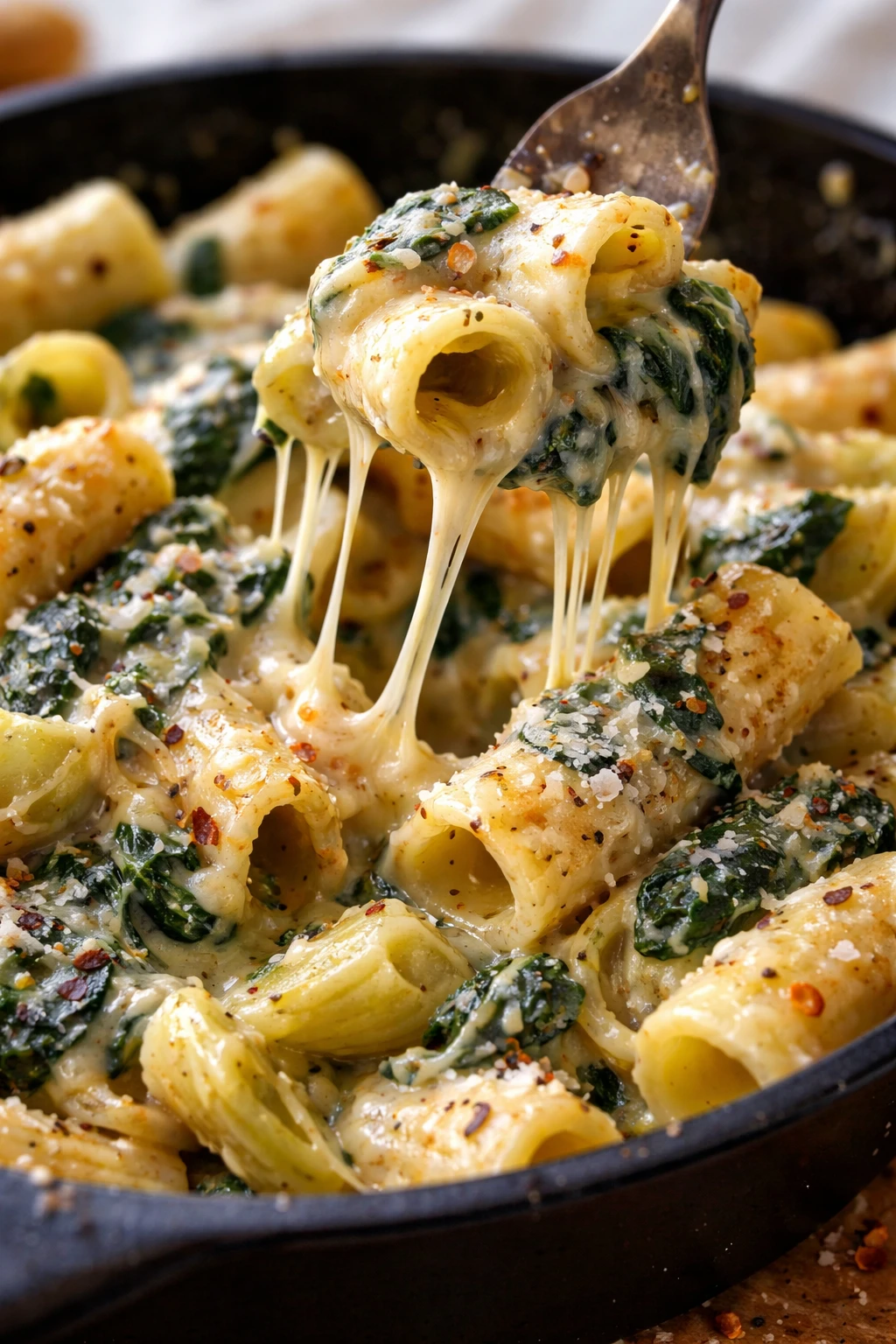
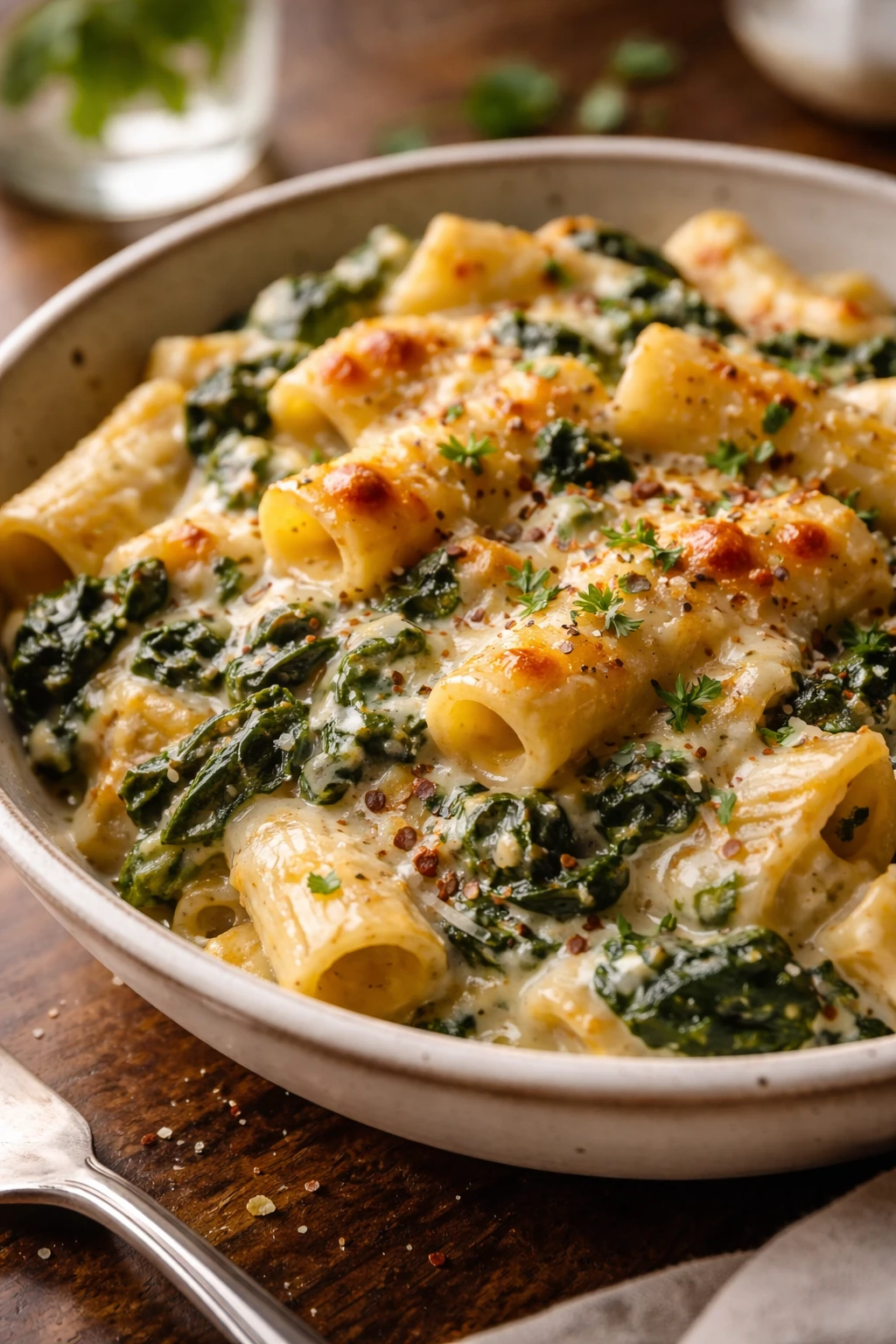
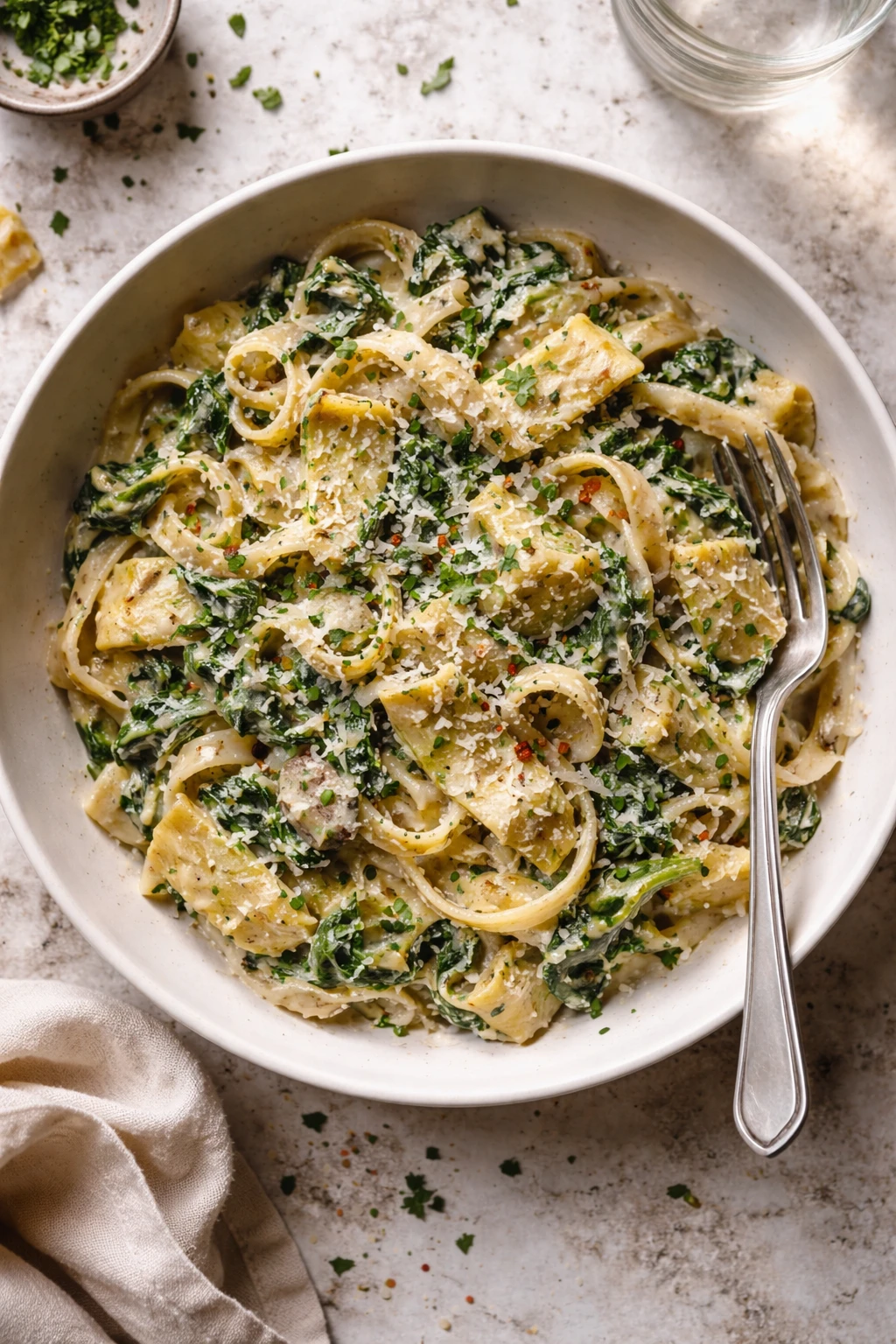
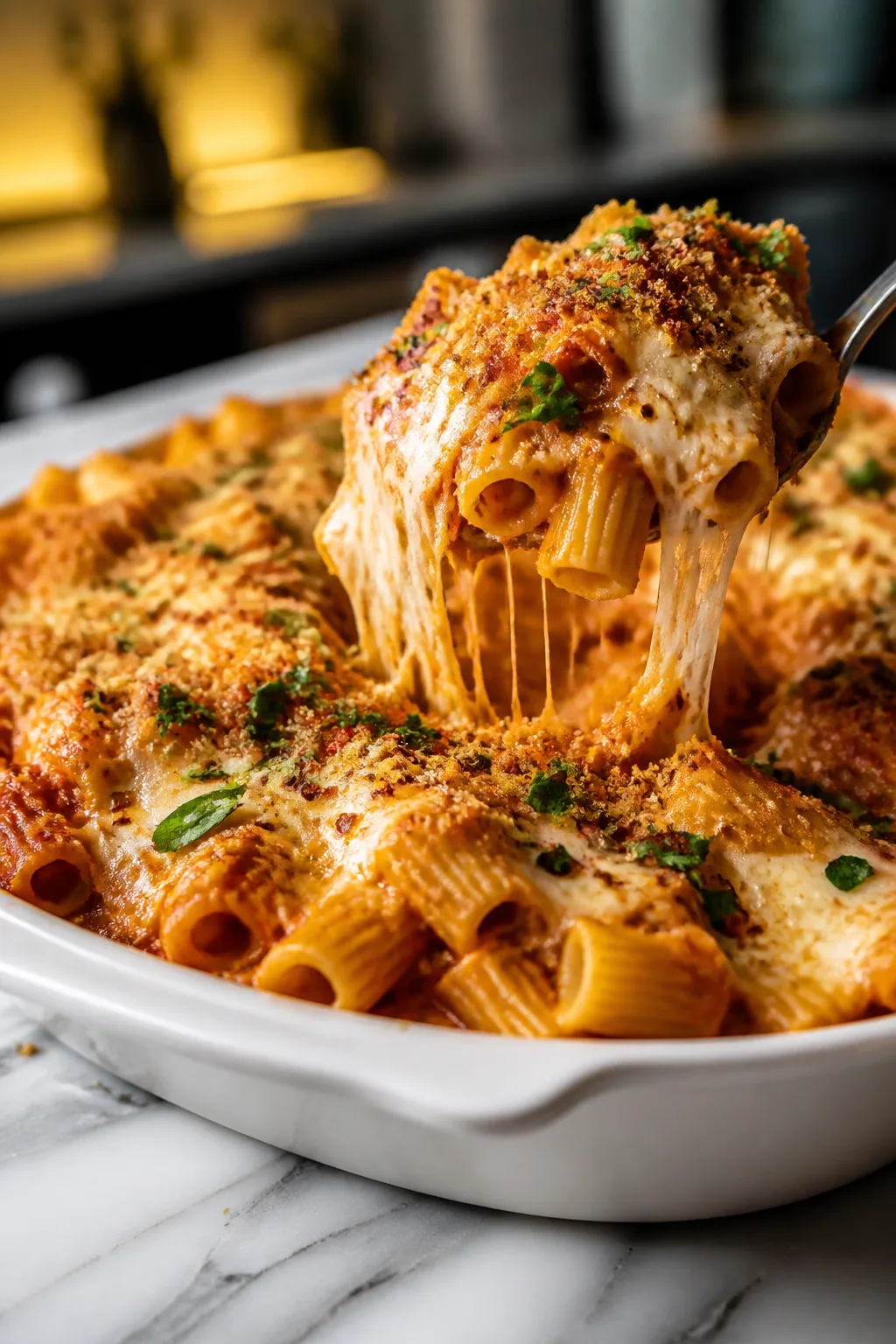
This creamy spinach and artichoke pasta hits all the cozy notes with a silky cream cheese sauce and tender artichokes that add a nice tang. It’s a quick, comforting dinner when you want something rich but easy.
Introduction
I first stumbled upon this creamy spinach and artichoke pasta when I was craving something comforting but didn’t have hours to cook. It reminded me of that classic dip but transformed into a cozy, satisfying dinner. What I love about this recipe is how the cream cheese melts into the sauce, creating a velvety texture that clings perfectly to every pasta bite. The artichokes add a subtle tang that cuts through the richness, balancing the dish beautifully. Over time, I tweaked the sauce by adding fresh spinach at just the right moment so it stays tender but still bright green — it really makes the dish pop visually and flavor-wise. The Parmesan adds that salty depth, and a pinch of red pepper flakes brings a gentle warmth if you want a little kick. This pasta is my go-to when I want something indulgent yet easy — it’s ready in about 30 minutes, making it perfect for weeknights or casual dinners with friends. The finished dish is creamy, comforting, and feels like a warm hug on a plate. Honestly, my family always asks for seconds, and I think you’ll love it just as much!
How To Do It
Step 1
Start by bringing a large pot of salted water to a boil. Cooking the pasta in well-salted water is crucial because it seasons the pasta from the inside out, enhancing overall flavor. Use enough water so the pasta can move freely and cook evenly. Avoid crowding the pot, which can cause the pasta to stick together or cook unevenly. Once boiling, add the pasta and cook according to package instructions until al dente—usually about 9-11 minutes. Al dente pasta holds its shape and texture better once mixed with the sauce. Drain the pasta, reserving about a cup of pasta water to adjust the sauce later if needed.
⏱ Time: 10 minutes
✓ Doneness: Pasta should be tender but still have a slight bite when tasted.
Step 2
While the pasta cooks, heat olive oil in a large skillet over medium heat. Add minced garlic and sauté for about 1 minute until fragrant but not browned. Garlic browns quickly and can become bitter, so watch closely and stir constantly. Then add the chopped artichoke hearts and cook for 3-4 minutes to warm them through and allow their flavors to meld with the garlic. This step softens the artichokes and infuses the oil with their tangy flavor, which is key to the sauce’s depth.
⏱ Time: 5 minutes
✓ Doneness: Garlic should be golden and artichokes slightly softened with a pleasant aroma.
Step 3
Reduce heat to low and add the softened cream cheese to the skillet. Stir gently to melt it into the artichoke mixture. Cream cheese creates a rich and creamy base without needing heavy cream, giving the sauce a luscious texture. Be patient and avoid high heat here, which might cause the cheese to separate or become grainy. Stir continuously until the cream cheese is fully melted and smooth.
⏱ Time: 3 minutes
✓ Doneness: Smooth, creamy sauce coating the artichokes with no lumps.
Step 4
Pour in the milk gradually while stirring to thin the sauce to your desired consistency. Start with half the milk and add more as needed. The milk lightens the sauce and helps it coat the pasta perfectly. If you add too much at once, the sauce can become too thin. Stir in the grated Parmesan cheese, which adds a salty, nutty flavor and helps thicken the sauce slightly. Keep the heat low to avoid curdling the dairy ingredients.
⏱ Time: 4 minutes
✓ Doneness: Sauce should be creamy, smooth, and slightly thickened.
Step 5
Add the chopped fresh spinach to the skillet and gently fold it into the sauce. The spinach wilts quickly in the warm sauce, adding a fresh, vibrant note and a pop of color. Cooking it just until wilted preserves its bright green color and tender texture. Overcooking will make it mushy and dull. Stir occasionally to ensure even wilting.
⏱ Time: 2 minutes
✓ Doneness: Spinach should be wilted but still bright green and tender.
Step 6
Season the sauce with salt, freshly ground black pepper, and crushed red pepper flakes if using. Taste as you go to balance the seasoning. The salt enhances all the flavors, while the pepper adds subtle heat. The red pepper flakes are optional but add a nice background warmth that complements the creamy sauce.
⏱ Time: 1 minute
✓ Doneness: Sauce tastes balanced with a slight kick if flakes are added.
Step 7
Add the drained pasta to the skillet with the sauce. Toss gently but thoroughly to coat every piece of pasta with the creamy spinach and artichoke sauce. If the sauce feels too thick, add a splash of the reserved pasta water to loosen it up and help it cling better to the pasta. The starch in the pasta water also helps emulsify the sauce for a silky finish.
⏱ Time: 2 minutes
✓ Doneness: Pasta is evenly coated with a creamy, glossy sauce.
Step 8
Remove the skillet from heat and let the pasta rest for a minute or two. This helps the sauce thicken slightly and allows the flavors to meld together. Serving immediately while hot ensures the best texture and taste. Avoid letting it sit too long on the heat or it might dry out.
⏱ Time: 2 minutes
✓ Doneness: Sauce thickens slightly and pasta stays creamy.
Step 9
Serve the pasta garnished with freshly chopped parsley for a fresh herbal note and a pop of green. You can also sprinkle extra Parmesan on top if you like. The fresh garnish brightens the dish and adds a lovely contrast to the creamy sauce. Enjoy it right away for the best experience!
⏱ Time: 1 minute
✓ Doneness: Beautifully plated pasta with fresh green garnish.
Variations
Add Grilled Chicken for Extra Protein
Toss in sliced grilled chicken breast to turn this pasta into a heartier meal. The smoky flavor of the grilled chicken pairs wonderfully with the creamy sauce, making it perfect for a filling dinner.
Note: Add cooked chicken to the sauce at the last step and toss gently to warm through without overcooking.
Make It Vegan with Cashew Cream and Nutritional Yeast
Swap cream cheese for a cashew cream sauce blended with nutritional yeast for cheesy flavor. Use vegan pasta and skip Parmesan to keep it fully plant-based while still creamy and delicious.
Note: Blend soaked cashews with water until smooth and heat gently with garlic and artichokes to mimic the original sauce texture.
Spicy Kick with Red Pepper Flakes and Jalapeños
If you love some heat, add extra crushed red pepper flakes or diced jalapeños sautéed with the garlic. This gives a lively spicy contrast to the creamy sauce that wakes up your taste buds.
Note: Adjust spice level carefully and add peppers early in the cooking process to infuse the oil.
Use Sun-Dried Tomatoes for a Tangy Twist
Adding chopped sun-dried tomatoes gives the dish a sweet-tart depth that complements the artichokes nicely. It adds vibrant color and a Mediterranean flair to the pasta.
Note: Add sun-dried tomatoes along with the artichokes to warm them through and release their flavor.
Swap Pasta for Zoodles for a Low-Carb Option
Use spiralized zucchini noodles instead of pasta to lighten the dish and make it low-carb. The creamy sauce clings well to zoodles, and the fresh spinach keeps it vibrant.
Note: Toss zoodles in the sauce briefly just before serving to avoid sogginess.
Pro Tips
Don’t overcook the pasta; aim for al dente.
Al dente pasta has a firmer texture that holds up better when mixed with sauce. Overcooked pasta becomes mushy and can soak up too much sauce, making the dish heavy and less pleasant to eat.
Use room temperature cream cheese for easier melting.
Cold cream cheese lumps and won’t melt smoothly into the sauce, leading to uneven texture. Letting it soften at room temperature ensures it blends evenly, giving a silky, creamy sauce.
Reserve some pasta cooking water before draining.
The starchy pasta water helps loosen the sauce and emulsify it, allowing it to cling better to the pasta. Without this step, the sauce may be too thick or separate.
Add spinach last to keep it fresh and bright.
Cooking spinach too long causes it to lose its vibrant color and become mushy. Adding it at the end lets it wilt just enough to maintain tenderness and a fresh flavor.
Sauté garlic on medium heat until fragrant, not browned.
Garlic burns quickly and turns bitter, spoiling the flavor. Cooking it gently releases its aroma and sweetness without the harsh burnt taste.
Taste and adjust seasoning gradually.
Cream cheese and Parmesan add salt, so seasoning at the end ensures you don’t over-salt the dish. Balancing flavors carefully elevates the overall taste.
Use short pasta shapes that hold sauce well.
Penne or fusilli trap the creamy sauce in their ridges and curves, making every bite flavorful and satisfying compared to smooth long noodles.
Common Mistakes to Avoid
Overcooking the pasta until mushy
Why it happens People often rely solely on package times or forget to check pasta early, leading to overcooking.
Fix Taste the pasta a minute or two before the package recommends. It should be tender but firm to the bite (al dente). Drain immediately once it's perfect to avoid mushiness.
Adding spinach too early and overcooking it
Why it happens Some cooks add spinach at the start, thinking it needs long cooking like other vegetables.
Fix Add spinach in the last 1-2 minutes of cooking. It wilts quickly and retains its color and texture this way.
Heating cream cheese on high heat causing separation
Why it happens Rushing the sauce by using high heat causes dairy to curdle and oils to separate.
Fix Melt cream cheese gently over low heat, stirring constantly to keep sauce smooth and creamy.
Not reserving pasta water before draining
Why it happens Many forget this step, missing the chance to adjust sauce consistency.
Fix Always scoop out a cup of pasta water before draining to loosen and emulsify the sauce if needed.
Using frozen spinach instead of fresh
Why it happens Frozen spinach is convenient but releases excess water, thinning the sauce.
Fix Use fresh spinach for best texture and flavor. If using frozen, thaw and squeeze out excess water thoroughly before adding.
Nutrition
Per Serving:
Nutritional values are estimates and may vary based on specific ingredients used.
Storage & Tips
Room Temperature
This pasta should not be left out at room temperature for more than 2 hours to avoid bacteria growth. Cover it loosely with foil or a clean cloth if you need to keep it out briefly.
Refrigerator
Store leftovers in an airtight container for up to 3 days. The sauce may thicken and the spinach darken slightly, so reheat gently with a splash of milk or water to loosen the sauce before serving.
Freezer
Freeze in a sealed container for up to 2 months. Thaw overnight in the fridge. Reheat slowly on the stovetop to preserve texture; avoid microwaving straight from frozen to prevent curdling.
Reheating
Reheat on low heat in a skillet, stirring frequently. Add a splash of milk or pasta water to restore creaminess. Avoid high heat or long reheating which can cause the sauce to separate.
Make Ahead
You can prepare the sauce and chop vegetables 1-2 days ahead. Store separately from cooked pasta. On the day of serving, reheat sauce gently and toss with freshly cooked pasta for best texture.
FAQ
Can I use frozen spinach instead of fresh?
You can, but frozen spinach contains a lot of water which can make the sauce watery. If using frozen, thaw it completely and squeeze out as much liquid as possible before adding it to the sauce to maintain the right texture.
What pasta shape works best for this recipe?
Short, ridged pasta like penne or fusilli is ideal because they hold the creamy sauce well. Long pasta like spaghetti can work but won’t trap the sauce as effectively.
Can I make this recipe dairy-free?
Yes! Substitute cream cheese with a vegan cream cheese or cashew cream, and use nutritional yeast instead of Parmesan. Use plant-based milk like almond or oat milk to keep it creamy and dairy-free.
How do I prevent the sauce from separating?
Keep the heat low when melting cream cheese and adding milk. High heat causes the fats and proteins to separate. Stir constantly and add liquids gradually to maintain a smooth sauce.
Is it okay to prepare the sauce ahead of time?
Absolutely! You can make the sauce 1-2 days in advance and refrigerate it. Reheat gently before adding fresh pasta, which cooks quickly and tastes best freshly made.
Can I add protein like chicken or shrimp?
Yes, grilled chicken or sautéed shrimp are great additions. Add cooked protein to the sauce at the end and toss gently to warm through without overcooking.
What can I do if the sauce is too thick?
Add reserved pasta water or a splash of milk a little at a time while stirring until you reach your desired consistency. The starch in the pasta water helps loosen and emulsify the sauce beautifully.
How do I store leftovers properly?
Keep leftovers in an airtight container in the fridge for up to 3 days. Reheat gently on the stove with a little milk added to refresh the sauce’s creaminess.
Final Thoughts
Give this creamy spinach and artichoke pasta a try—you’ll love how easy and comforting it is. Don’t forget to share your results; I’d love to hear what you think!