This baked bean casserole is a cozy, flavorful dish that feels like a warm hug on a plate. The secret smoky paprika adds a depth you won’t forget. Perfect for family dinners or casual potlucks.
Introduction
I stumbled upon this baked bean casserole recipe years ago when I was craving something comforting but with a twist. Most baked bean dishes are sweet and a bit bland to me, so I wanted to add a smoky depth without overpowering the beans’ natural flavor. That’s when I discovered smoked paprika—it’s like magic. It adds a rich, smoky warmth that turns a simple casserole into a dish that feels homemade and special. Over time, I refined this recipe by adding fresh onions, garlic, and a bit of mustard to balance the sweetness. The bacon topping is optional but highly recommended for a crispy, savory finish. I’ve made this for family dinners and potlucks, and it always disappears fast. This casserole is easy to prep but bakes low and slow so the flavors meld beautifully. The finished dish is thick, saucy, and bursting with smoky, sweet, and savory notes. It’s the kind of food that warms you from the inside out and makes any meal feel like a celebration. If you want a simple yet impressive side or main dish, give this a try—you won’t regret it!
How To Do It
Step 1
Preheat your oven to 350°F (175°C). This moderate temperature allows the casserole to cook evenly without drying out. While the oven heats, sauté the diced onions and green bell pepper in olive oil over medium heat. Cook them until they’re soft and translucent, about 5-7 minutes. This step is important because it brings out the natural sweetness and mellows the sharpness of the onions and pepper, adding depth to the casserole. Don’t rush this or you might end up with crunchy veggies that don’t blend well with the beans.
⏱ Time: 10 minutes
✓ Doneness: Onions should be translucent and tender, peppers softened but not mushy
Step 2
Add the minced garlic to the pan and cook for another 1-2 minutes, stirring frequently. Garlic cooks quickly and can burn if left unattended, so watch closely. The goal here is to release its fragrant aroma without bitterness, which will enhance the overall flavor of the casserole.
⏱ Time: 2 minutes
✓ Doneness: Garlic is fragrant and slightly golden but not brown
Step 3
In a large mixing bowl, combine the drained navy beans, sautéed vegetables, ketchup, molasses, brown sugar, smoked paprika, Dijon mustard, salt, and black pepper. Stir gently to combine all ingredients evenly without mashing the beans. Mixing carefully preserves the beans’ texture while ensuring every bite carries the smoky-sweet flavor balance. Avoid overmixing to keep the casserole from becoming mushy.
⏱ Time: 5 minutes
✓ Doneness: Mixture is well blended and evenly coated with sauce
Step 4
Transfer the bean mixture into a greased 9x13-inch baking dish, spreading it out evenly. This ensures the casserole cooks uniformly and creates a nice crust on the edges as it bakes. Use a spatula to smooth the top gently without pressing down too hard.
⏱ Time: 3 minutes
✓ Doneness: Mixture is evenly spread and level in the dish
Step 5
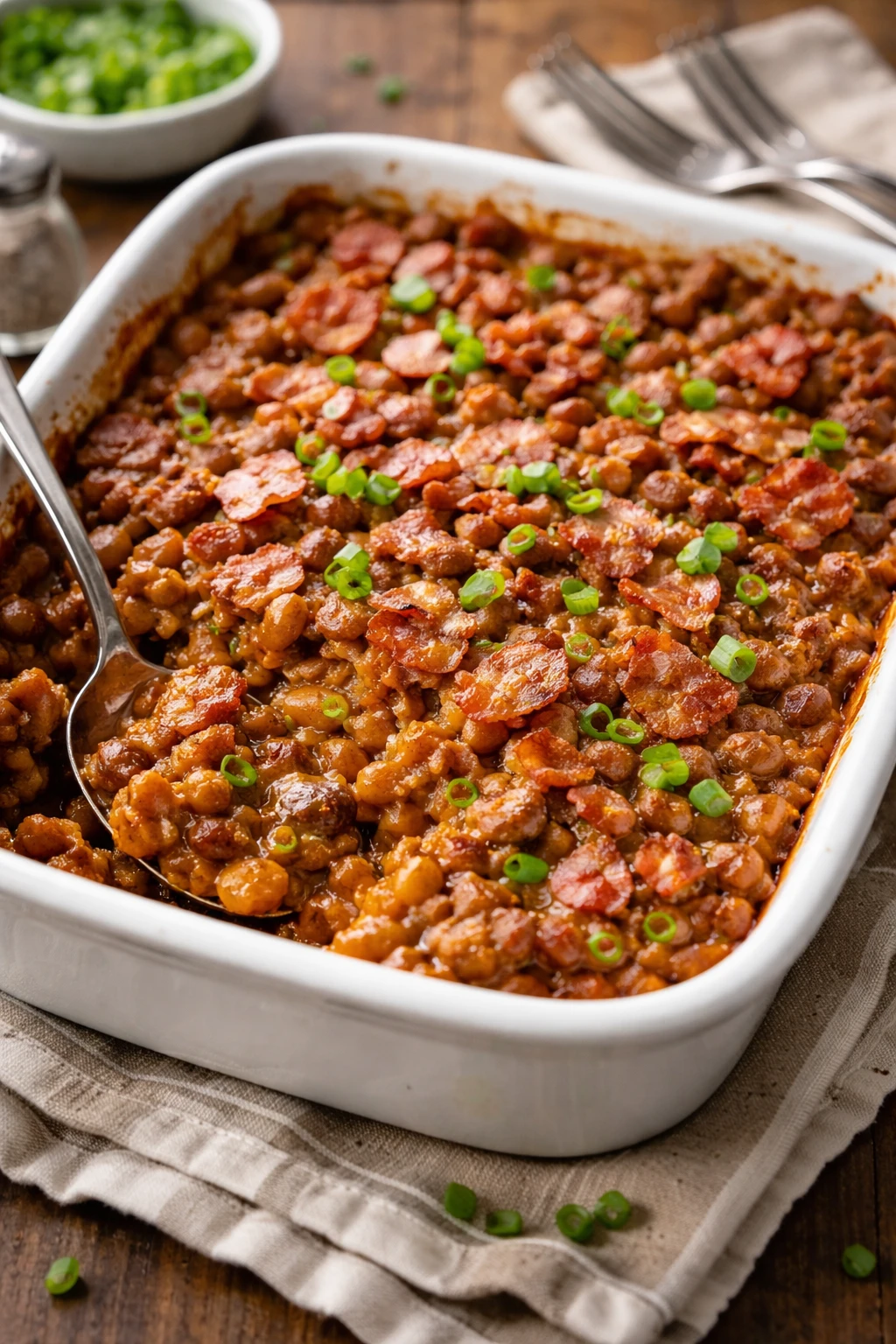
Sprinkle the cooked crumbled bacon evenly over the top of the casserole. Bacon adds a smoky, savory crunch that complements the beans perfectly. If you prefer a vegetarian option, you can skip this step or substitute with smoked paprika alone for that smoky flavor.
⏱ Time: 2 minutes
✓ Doneness: Bacon pieces are evenly distributed over the surface
Step 6
Bake the casserole in the preheated oven for 35-40 minutes. This baking time lets the flavors meld together and the sauce thicken. Keep an eye on the top; the edges should bubble gently and the bacon should crisp up without burning. Avoid opening the oven frequently to maintain steady heat.
⏱ Time: 35-40 minutes
✓ Doneness: Edges are bubbling and bacon is crisp, center is hot and set
Step 7
Remove the casserole from the oven and immediately sprinkle the shredded cheddar cheese over the top. The residual heat will melt the cheese nicely without overcooking it. This final cheesy layer adds richness and a gooey texture that contrasts beautifully with the smoky beans.
⏱ Time: 3 minutes
✓ Doneness: Cheese is melted and slightly gooey, not browned
Step 8
Let the casserole rest for 5-10 minutes before serving. Resting allows the sauce to thicken further and makes it easier to serve clean slices without it falling apart. Plus, the flavors settle and intensify during this time.
⏱ Time: 5-10 minutes
✓ Doneness: Casserole is warm but not runny and holds shape when scooped
Step 9
Serve warm alongside your favorite sides like cornbread or a fresh green salad. This dish works great as a main or a hearty side, especially on chilly evenings or family gatherings. Enjoy the smoky, sweet, and savory layers of flavor in every bite!
⏱ Time: Immediate
✓ Doneness: Dish is plated attractively and steaming hot
Variations
Vegetarian Version
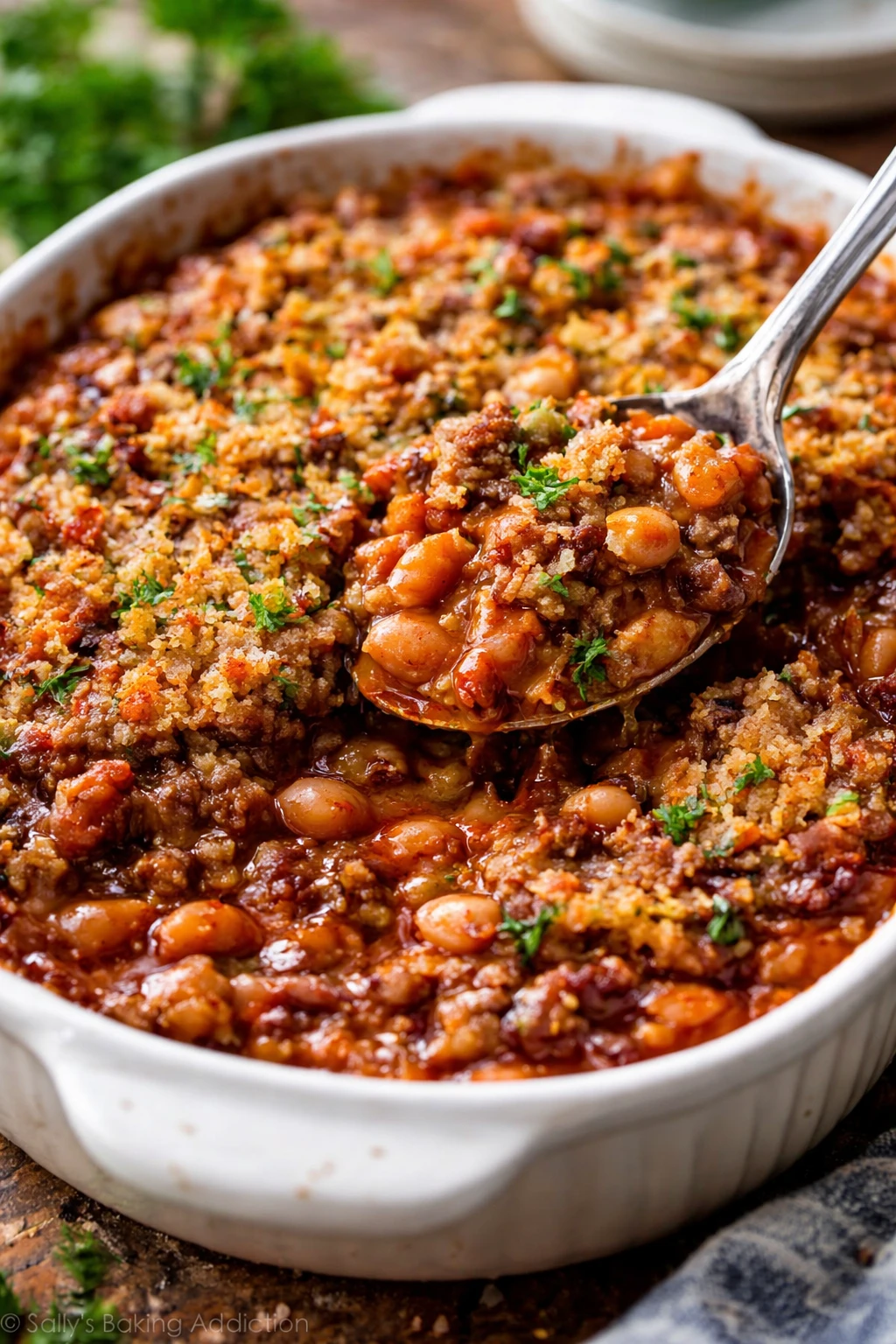
Skip the bacon and add smoked paprika plus a splash of liquid smoke for that smoky depth. You can also top with breadcrumbs mixed with olive oil for a crunchy finish. This version is just as flavorful and perfect for vegetarians.
Note: Without bacon fat, ensure you cook the vegetables well and consider adding a bit more smoked paprika or liquid smoke to maintain the smoky flavor.
Spicy Kick
Add 1/2 teaspoon cayenne pepper or diced jalapeños to the sautéed veggies to give this casserole some heat. It’s a great way to tailor the dish to spice lovers while keeping the smoky balance intact.
Note: Adjust the spice level carefully and taste before baking to avoid overpowering the other flavors.
Cheesy Topping Swap
Try using pepper jack or smoked gouda instead of cheddar for a different cheese flavor profile. These cheeses melt well and add a unique twist, making the casserole feel more gourmet.
Note: Because these cheeses melt differently, watch the baking time closely to avoid over-browning.
Add Ground Meat
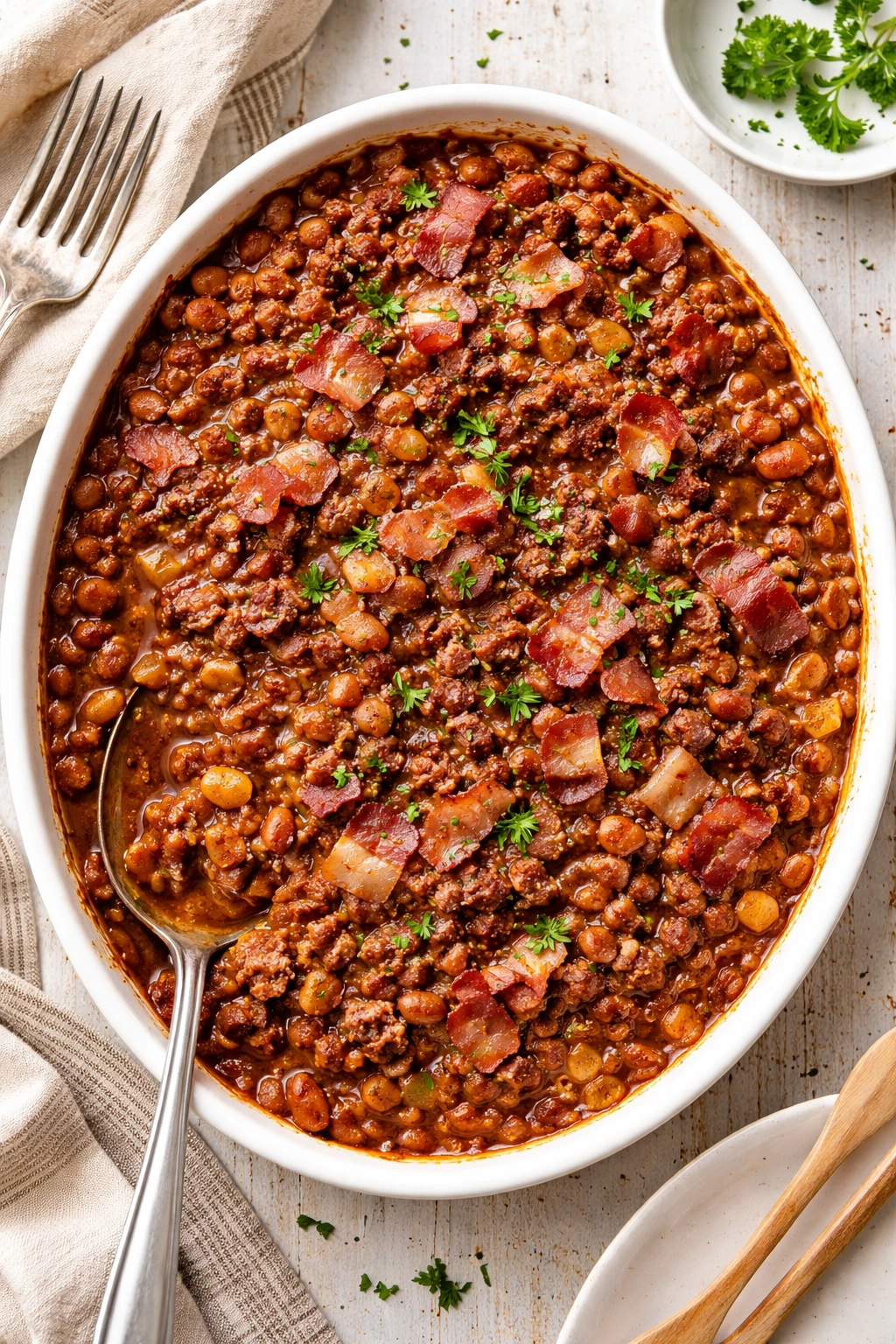
Brown 1/2 pound of ground beef or turkey with onions and garlic before combining with beans. This turns the casserole into a heartier main dish that’s perfect for meat lovers.
Note: Drain excess fat from meat before mixing to prevent greasiness and adjust seasoning accordingly.
Sweet Potato Layer
Add a layer of thinly sliced sweet potatoes at the bottom of the baking dish before adding the bean mixture. This adds natural sweetness and a creamy texture contrast.
Note: Par-cook sweet potatoes slightly before layering to ensure they become tender during baking.
Pro Tips
Don’t skip sautéing the vegetables before mixing them in.
Sautéing onions and peppers softens them and releases their natural sugars, which deepens the casserole’s flavor. Adding them raw would result in a harsh, undercooked bite and a less cohesive dish.
Use smoked paprika instead of regular paprika for the smoky flavor.
Regular paprika lacks the smoky compounds that give this casserole its signature taste. Smoked paprika mimics the flavor of wood smoke, adding complexity without needing a smoker or extra steps.
Let the casserole rest after baking before serving.
Resting allows the sauce to thicken and flavors to meld, making it easier to serve neat portions. Serving immediately can cause the casserole to be too runny and fall apart.
Cook bacon separately and sprinkle on top just before baking.
This prevents the bacon from becoming soggy and keeps it crispy, adding a nice textural contrast to the soft beans. It also controls the amount of fat rendering into the casserole.
Use fresh garlic and add it near the end of sautéing.
Garlic burns quickly and can taste bitter if overcooked. Adding it last ensures it releases its aroma and flavor without turning harsh.
Don’t mash the beans when mixing the sauce.
Keeping the beans intact maintains a pleasant texture and prevents the casserole from becoming mushy. Gentle folding helps coat the beans evenly with sauce.
Use a 9x13-inch baking dish for even cooking.
A larger surface area allows the casserole to cook evenly and develop a nice crust on the edges. Using a smaller dish can result in uneven cooking or sogginess.
Common Mistakes to Avoid
Skipping the rinsing step for canned beans
Why it happens Many people assume canned beans are ready to use straight from the can, but they often contain excess salt and starch.
Fix Always drain and rinse canned beans under cold water to remove excess sodium and starch. This prevents the casserole from becoming too salty or thick and improves the overall flavor balance.
Cooking at too high a temperature
Why it happens In a rush, some might crank up the oven to speed cooking, but this can dry out the casserole or burn the edges.
Fix Bake at 350°F (175°C) to ensure slow, even cooking. This allows flavors to meld and the sauce to thicken without drying out the beans.
Overcooking garlic during sautéing
Why it happens Garlic is added too early or cooked too long, causing bitterness.
Fix Add garlic after the onions and peppers have softened and cook it just 1-2 minutes until fragrant. Watch closely to avoid burning.
Mixing the casserole too vigorously
Why it happens Trying to combine ingredients quickly can mash the beans and result in a mushy texture.
Fix Fold ingredients gently to keep beans intact and preserve textural contrast.
Not letting the casserole rest before serving
Why it happens Impatience leads to serving immediately, causing the sauce to be runny and unstable.
Fix Allow the casserole to rest 5-10 minutes after baking for the sauce to thicken and flavors to settle.
Nutrition
Per Serving:
Nutritional values are estimates and may vary based on specific ingredients used.
Storage & Tips
Room Temperature
You can keep the baked bean casserole at room temperature, covered, for up to 2 hours safely. Beyond that, bacteria can grow, so it’s best to refrigerate promptly.
Refrigerator
Store leftovers in an airtight container for up to 4 days. The casserole may thicken and flavors deepen, so you might want to add a splash of water or broth when reheating to loosen the sauce. It reheats well in the oven or microwave.
Freezer
Freeze in a sealed container or heavy-duty freezer bag for up to 3 months. To avoid freezer burn, wrap the dish tightly with plastic wrap and foil. Thaw overnight in the fridge before reheating.
Reheating
Reheat gently in a 325°F oven for 15-20 minutes or microwave on medium power, stirring halfway through. Add a little water or broth if the casserole seems dry. Avoid overheating to prevent drying out or toughening the beans.
Make Ahead
You can prepare the bean mixture and assemble the casserole up to 1 day ahead, then cover and refrigerate before baking. This lets the flavors meld overnight and saves time on serving day. Add cheese and bacon topping just before baking for best texture.
FAQ
Can I use other types of beans?
Yes! While navy beans are traditional, you can substitute with great northern beans, pinto beans, or black beans. Just make sure they’re cooked and drained well. Different beans will slightly change the texture and flavor, but the casserole will still be delicious.
Is smoked paprika necessary?
Smoked paprika is the key flavor in this recipe, adding that signature smoky depth. If you don’t have it, you can use regular paprika plus a few drops of liquid smoke, but the flavor won’t be quite the same.
How can I make this casserole spicier?
Add cayenne pepper, red pepper flakes, or diced jalapeños during the sautéing step. Start with small amounts and taste as you go to avoid overpowering the other flavors.
Can I make this recipe gluten-free?
Absolutely! All the ingredients used are naturally gluten-free. Just double-check labels on ketchup and other processed ingredients to ensure they don’t contain gluten additives.
What’s the best way to reheat leftovers?
Reheat gently in the oven at 325°F until warmed through, about 15-20 minutes. You can also microwave portions on medium power, stirring occasionally. Add a splash of water or broth if the casserole seems dry.
Can I freeze the baked bean casserole?
Yes, freeze in an airtight container for up to 3 months. Thaw overnight in the fridge before reheating to maintain texture and flavor.
Is there a vegetarian version?
Definitely! Skip the bacon and add extra smoked paprika or a drop of liquid smoke for smoky flavor. You can also sprinkle toasted breadcrumbs on top for texture.
Why do I need to sauté the veggies first?
Sautéing softens the onions and peppers and develops their sweetness, which adds depth and balances the smoky and sweet flavors in the casserole. Raw veggies would be harsh and undercooked.
Final Thoughts
I hope you give this baked bean casserole a try—it’s become a favorite in my home for good reason! Let me know how yours turns out and what tweaks you make.