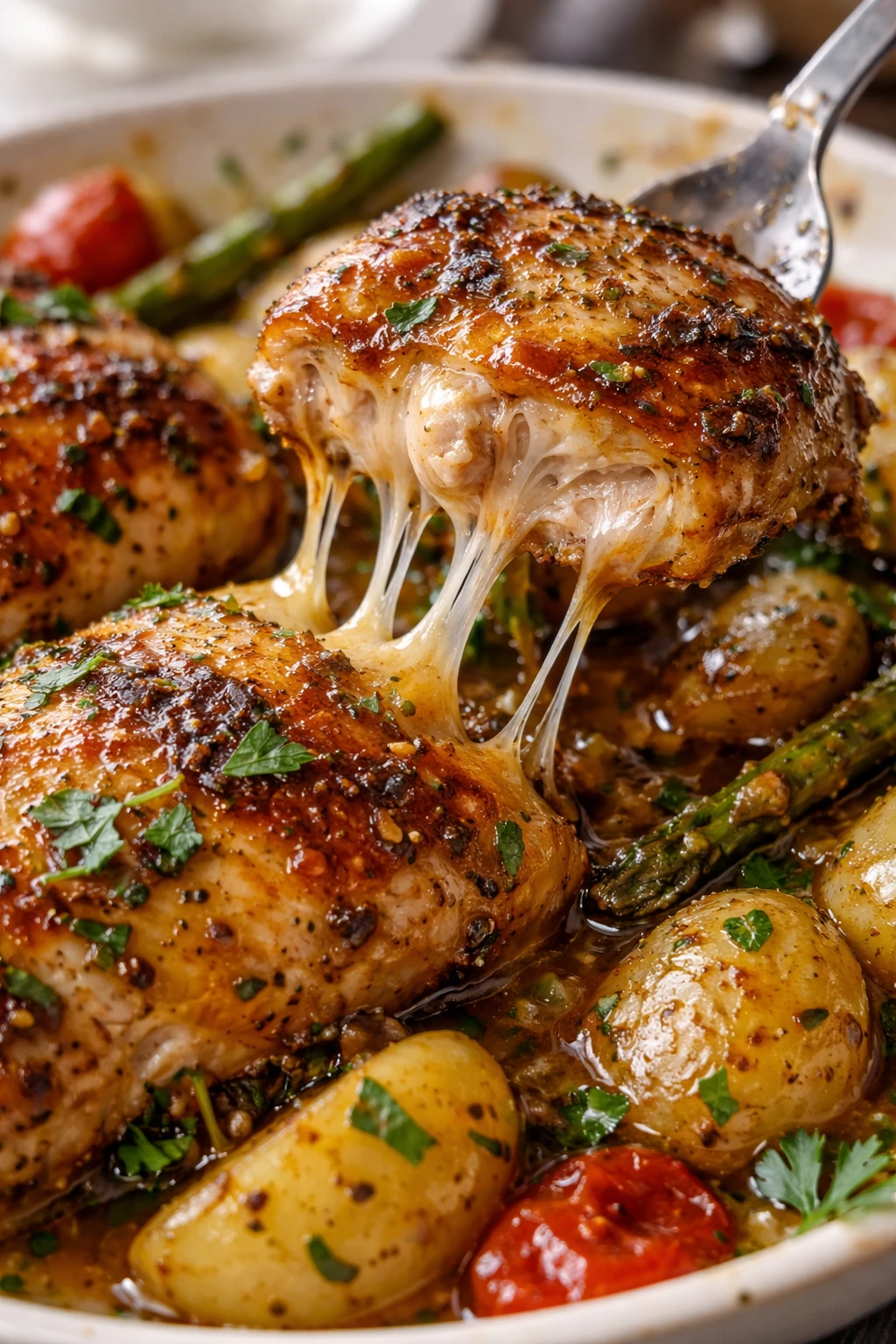
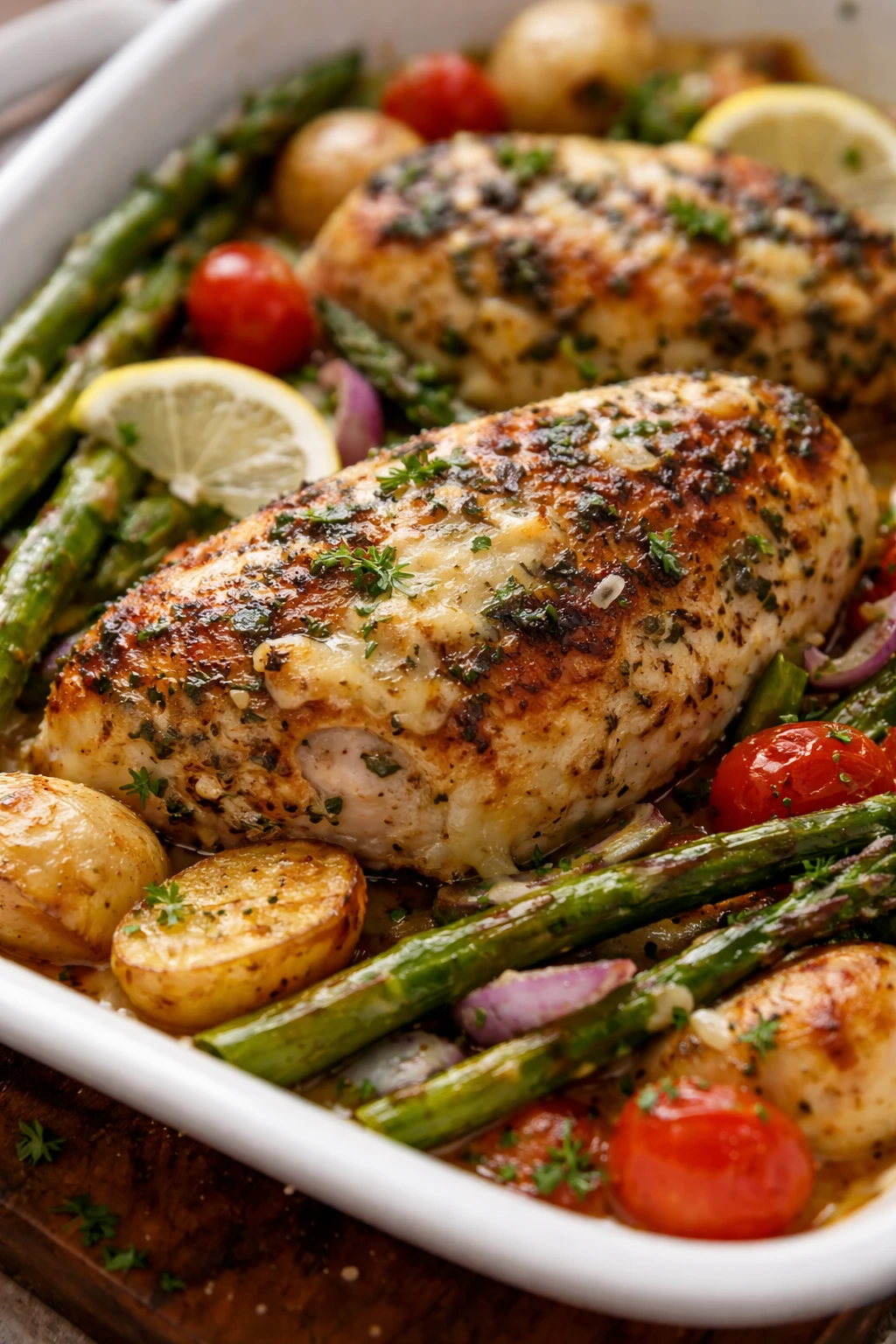
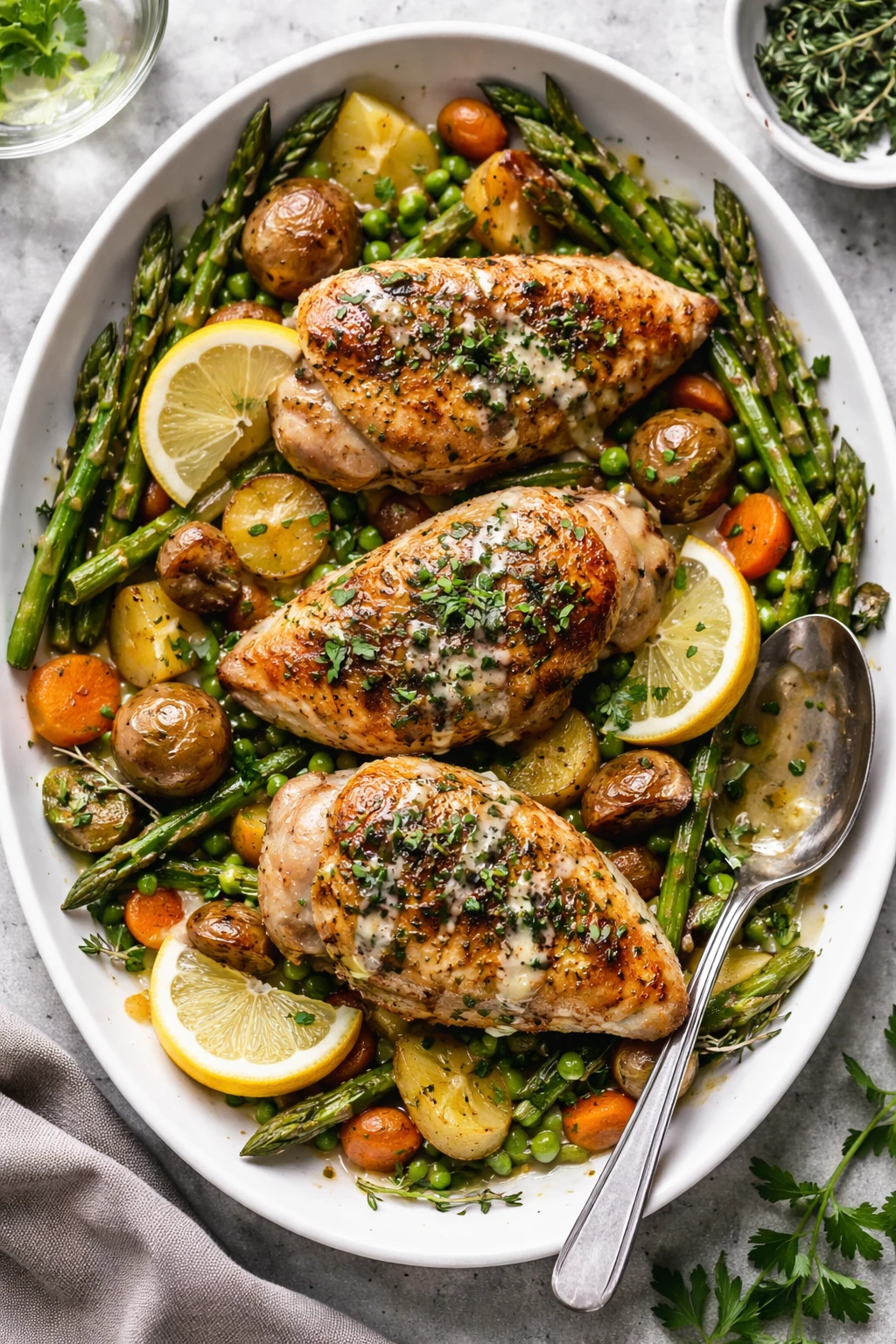
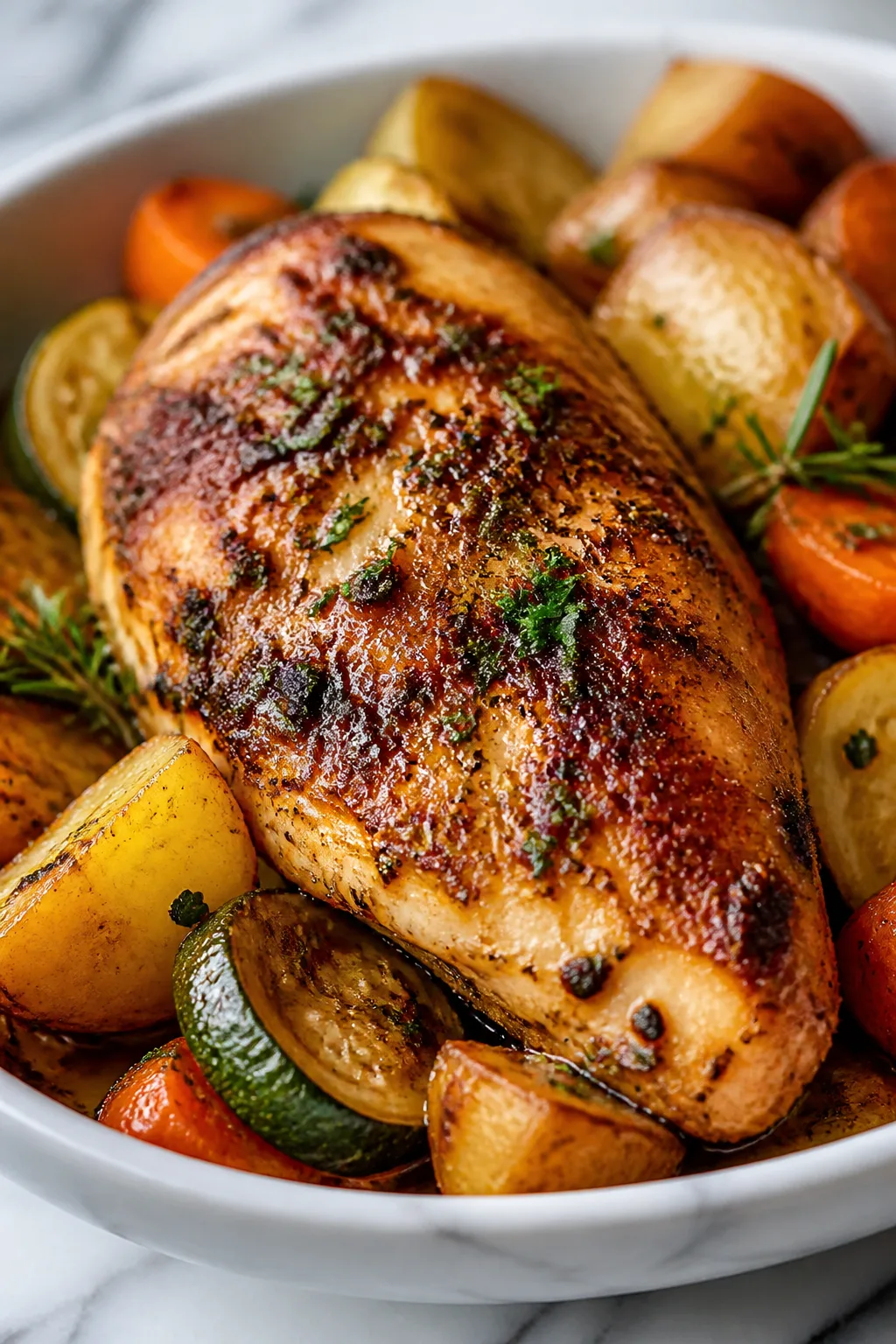
This roasted chicken is brightened with fresh lemon and herbs, paired with tender spring veggies roasted all together. It’s a quick, flavorful dinner that feels special but is super simple—ideal for busy weeknights!
Introduction
I stumbled upon this roasted chicken recipe a few years ago when I wanted something quick but fresh-tasting for weeknight dinners. Most roast chickens I tried before felt heavy or bland, but adding lemon and fresh herbs really brightened things up. What makes this version stand out is roasting the chicken alongside spring vegetables like asparagus and baby carrots, so everything cooks together and the flavors meld beautifully. I've learned that rubbing the chicken with lemon juice and olive oil before seasoning helps keep the meat juicy and adds a subtle tang that wakes up your taste buds. Plus, the herbs infuse the skin as it crisps up, giving it that irresistible aroma. I remember the first time I served this to my family—they loved how tender the chicken was and how the veggies came out perfectly roasted without extra fuss. It’s a recipe that’s both comforting and lively, great for cozy dinners when you want something wholesome but not complicated. The finished dish has a lovely golden skin, zesty notes from the lemon, and a hint of earthiness from the herbs, making it feel special without hours in the kitchen. If you’re looking for a reliable roast chicken recipe that’s easy and bursting with fresh flavors, this one’s a keeper!
How To Do It
Step 1
Preheat your oven to 425°F (220°C). This high temperature helps the chicken skin crisp up nicely while locking in juices. Before roasting, pat the chicken dry with paper towels—moisture on the skin can prevent crisping and lead to steaming instead. Dry skin is key for that golden, crunchy texture everyone loves. Also, placing the chicken on a rack in the roasting pan allows air to circulate underneath, avoiding soggy skin on the bottom.
⏱ Time: 10
✓ Doneness: Chicken skin looks dry and starting to turn golden before roasting
Step 2
In a small bowl, mix olive oil, minced garlic, fresh rosemary, thyme, lemon juice, salt, and pepper. Rub this mixture all over the chicken, including under the skin if possible. This seasoning combo penetrates the meat and adds layers of flavor. Don’t rush this step—massaging the herbs and lemon juice into the chicken ensures each bite is juicy and aromatic.
⏱ Time: 10
✓ Doneness: Chicken is evenly coated with the herb and lemon mixture, skin glistening
Step 3
Place lemon slices inside the chicken cavity along with a few sprigs of rosemary and thyme. This infuses the meat from the inside as it roasts, adding subtle citrus and herb notes that make a big difference in flavor depth. Avoid overstuffing to allow heat to circulate properly.
⏱ Time: 5
✓ Doneness: Lemon slices and herbs fit comfortably inside cavity without crowding
Step 4
Arrange baby potatoes, carrots, pearl onions, and asparagus around the chicken in the roasting pan. Toss the veggies with a bit of olive oil, salt, and pepper beforehand to help them roast evenly and develop caramelized edges. Having everything cook together means the veggies absorb some of the chicken’s juices, making them extra flavorful.
⏱ Time: 10
✓ Doneness: Vegetables are evenly coated and spread out to avoid steaming
Step 5
Roast the chicken and vegetables in the preheated oven for about 25-30 minutes per pound, or until the internal temperature reaches 165°F (74°C) when measured at the thickest part of the thigh. Basting the chicken with pan juices halfway through helps keep it moist and enhances flavor. Avoid opening the oven too often to maintain consistent heat.
⏱ Time: 30
✓ Doneness: Chicken skin is golden brown and juices run clear when pierced
Step 6
Once cooked, remove the chicken from the oven and let it rest for 10-15 minutes. Resting allows the juices to redistribute throughout the meat, resulting in moist, tender slices. If you carve too soon, the juices will run out and the meat can be dry.
⏱ Time: 15
✓ Doneness: Chicken feels warm but not hot, juices settle when pressed
Step 7
While the chicken rests, toss the roasted vegetables gently in the pan juices to coat them with extra flavor. This step elevates the veggies from just roasted to truly delicious, soaking up the savory richness left behind.
⏱ Time: 5
✓ Doneness: Vegetables glisten lightly with pan juices and have a slight caramelized crust
Step 8
Carve the chicken into serving pieces—start by removing the legs and thighs, then the breasts. Use a sharp knife and cut against the grain for tender slices. Arrange the chicken on a platter with the roasted vegetables around it for a beautiful presentation.
⏱ Time: 10
✓ Doneness: Slices are clean, juicy, and easy to cut without shredding
Step 9
Serve immediately with a simple green salad or crusty bread to soak up the pan juices. This meal is satisfying yet light, perfect for a weeknight when you want something homey but fresh. Enjoy the balance of zesty lemon, fragrant herbs, and sweet roasted veggies with every bite.
⏱ Time: 5
✓ Doneness: Dish is warm and aromatic, ready to enjoy
Variations
Spicy Lemon Herb Roast Chicken
Add a pinch of red pepper flakes or cayenne to the herb rub for a gentle heat kick. This variation delivers a bright but spicy flavor profile that pairs well with the lemon and herbs.
Note: Be careful not to add too much spice as it can overpower the delicate herb and lemon notes. Adjust to taste.
Garlic Butter Roasted Chicken
Mix softened butter with garlic and herbs, then spread under the skin before roasting. This adds richness and a luscious garlic flavor while keeping the meat tender.
Note: Butter can brown quickly; watch the chicken closely to avoid burning. Roasting at a slightly lower temp (400°F) can help.
Mediterranean Roasted Chicken with Olives and Tomatoes
Add halved cherry tomatoes and pitted olives to the roasting pan for a Mediterranean twist. The tomatoes roast down into a sweet sauce, complementing the chicken beautifully.
Note: Olives add saltiness, so reduce added salt accordingly. Tomatoes release moisture, so spread veggies to prevent sogginess.
Herb-Roasted Chicken with Root Vegetables
Swap spring veggies for hearty root vegetables like parsnips, sweet potatoes, and turnips for a cozy fall or winter meal. The roasting time may need to increase slightly for denser veggies.
Note: Cut root vegetables into uniform pieces to ensure even cooking and toss with oil and herbs before roasting.
Lemon and Herb Roasted Chicken Thighs
Use bone-in, skin-on chicken thighs instead of a whole bird for a quicker roast. The thighs stay juicy and flavorful, and cooking time drops significantly.
Note: Roast at 425°F for about 25-30 minutes until internal temp reaches 165°F. Watch for crisp skin without drying out.
Pro Tips
Always pat your chicken dry before seasoning.
Removing surface moisture is key to achieving crispy skin. Moisture traps steam and prevents browning, so drying the chicken ensures the Maillard reaction can occur properly, giving you that golden, crunchy finish.
Massage the herb and lemon mixture under the chicken skin.
Applying seasoning beneath the skin allows flavors to infuse directly into the meat rather than just the skin’s surface, resulting in a more flavorful and aromatic chicken throughout.
Use a roasting rack to elevate the chicken.
Elevating the bird allows hot air to circulate beneath, preventing soggy skin on the bottom and promoting even cooking on all sides for a perfectly roasted chicken.
Don’t skip resting the chicken after roasting.
Resting lets juices redistribute evenly inside the meat, preventing them from running out when sliced, which keeps the chicken moist and tender.
Toss vegetables with olive oil before roasting.
Oil helps the vegetables brown and caramelize instead of steaming, adding depth of flavor and a pleasant texture contrast.
Use a meat thermometer to check doneness.
Relying on temperature rather than time ensures your chicken is safely cooked without drying out. The ideal internal temp is 165°F (74°C) for juicy, perfectly cooked meat.
Add lemon slices inside the cavity for subtle citrus aroma.
Roasting lemon inside the chicken imparts gentle citrus notes throughout the meat without overpowering, enhancing the overall flavor complexity.
Common Mistakes to Avoid
Skipping the drying step before roasting.
Why it happens Many cooks underestimate the importance of dry skin and skip patting the chicken dry because it feels like an extra step or they don’t realize its impact.
Fix Always thoroughly pat the chicken with paper towels before seasoning. This removes surface moisture that would otherwise steam the skin, preventing it from crisping. Take the time here for the best texture.
Overcrowding the roasting pan with vegetables.
Why it happens Trying to cook everything at once often leads to crowding, which traps steam and causes uneven roasting.
Fix Give vegetables space to spread out in a single layer. If needed, roast in batches or use a larger pan to ensure they brown properly instead of steaming.
Not resting the chicken after roasting.
Why it happens Impatience or not knowing the importance of resting leads to cutting the chicken immediately and losing juices.
Fix Let the chicken rest uncovered or loosely tented for 10-15 minutes before carving. This allows juices to redistribute, resulting in moister meat.
Skipping the use of fresh herbs and lemon.
Why it happens Some think dried herbs or no citrus is fine and miss out on the bright flavor these fresh ingredients bring.
Fix Use fresh rosemary, thyme, and lemon juice for vibrant, fresh flavor. These ingredients are what make this recipe stand out.
Relying on cooking time instead of temperature.
Why it happens Guessing doneness based on time can lead to undercooked or dry chicken due to variations in oven and bird size.
Fix Use an instant-read meat thermometer to check the thickest part of the thigh reaches 165°F (74°C) for safe, perfectly cooked chicken.
Nutrition
Per Serving:
Nutritional values are estimates and may vary based on specific ingredients used.
Storage & Tips
Room Temperature
This roasted chicken and vegetables can safely sit at room temperature for up to 2 hours if covered loosely with foil. Beyond that, bacteria growth becomes a concern, so refrigerate promptly.
Refrigerator
Store leftovers in an airtight container for up to 4 days. The chicken may firm up and the vegetables soften when cold, so reheat gently to restore moisture and texture.
Freezer
Freeze cooked chicken and vegetables separately in airtight containers or freezer bags for up to 3 months. Wrap tightly to prevent freezer burn. Thaw overnight in the fridge before reheating.
Reheating
Reheat gently in a 350°F oven covered with foil for about 15-20 minutes until warmed through. Add a splash of broth or water to keep chicken moist. Avoid microwaving if possible to prevent drying out.
Make Ahead
You can prep the herb rub and chop vegetables 1-2 days ahead, storing them separately in the fridge. Assemble and roast the day of serving for the freshest flavor and best texture.
FAQ
Can I use chicken breasts instead of a whole chicken?
Yes, but breasts cook faster and can dry out if overcooked. Roast at 400°F for 20-25 minutes, checking internal temperature to avoid dryness. The flavor will be similar but the texture is leaner and less juicy than whole chicken.
What if I don’t have fresh herbs?
Dried herbs can be used in a pinch but use about one-third the amount since they’re more concentrated. Fresh herbs provide brighter, fresher flavor and better aroma, so I recommend them whenever possible.
How do I know when the chicken is fully cooked?
Using a meat thermometer is the safest and most reliable method. Insert it into the thickest part of the thigh; it should read 165°F (74°C). Juices running clear and no pink meat are good visual clues but less precise.
Can I prepare this recipe in advance?
You can prep the chicken and vegetables a day ahead, including seasoning and chopping. Store covered in the fridge and roast fresh the next day. Cooking ahead and reheating can dry out the chicken and veggies, so fresh roasting is best.
How do I keep the chicken skin crispy when reheating?
Reheat uncovered in a hot oven (around 375°F) for a short time to crisp the skin again. Avoid microwaving, which steams the skin and makes it soggy.
What sides go well with this roasted chicken?
Simple green salads, crusty bread, or light grain sides like quinoa or couscous complement the zesty chicken and roasted veggies nicely without overpowering the flavors.
Can I use frozen vegetables?
Frozen vegetables tend to release more water and might become mushy when roasted. Fresh or thawed veggies are preferable for roasting to ensure caramelization and good texture.
Is it okay to use lemon zest instead of lemon slices inside the cavity?
Lemon slices provide moisture and subtle citrus aroma as they roast inside the chicken, whereas zest adds more intense lemon oils. You can use either or both depending on your flavor preference.
Final Thoughts
I hope you give this zesty herb-roasted chicken a try soon! It’s an easy way to get a flavorful, comforting dinner on the table with minimal fuss. Let me know how it turns out!