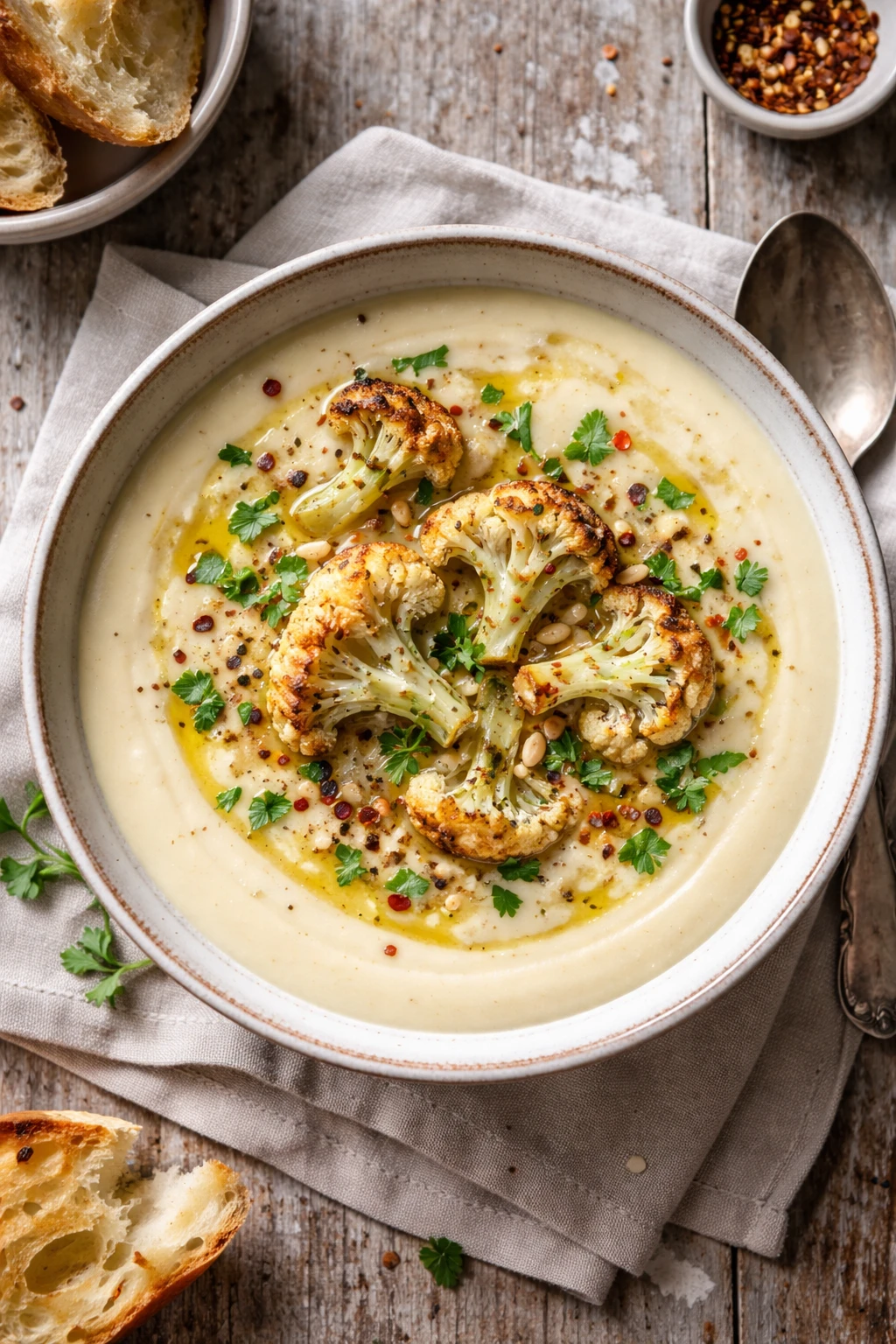
This creamy cauliflower soup is the ultimate cozy comfort food. Roasting the cauliflower first brings out a rich, nutty flavor that makes every spoonful feel like a warm hug. Perfect for chilly spring nights!
Introduction
I first made this roasted cauliflower soup on a chilly spring evening when I craved something warm but light. What I quickly learned is that roasting the cauliflower before blending it makes all the difference—it adds a deep, nutty flavor that you just don’t get from boiling. I’ve tried many cauliflower soups, but this one stands out because it’s super creamy without being heavy, and the subtle smokiness from the roasted bits gives it such a comforting depth. The trick I learned was to roast the cauliflower until it’s golden and slightly caramelized, which really amps up the taste. Plus, finishing the soup with a splash of cream makes it silky smooth and indulgent without overdoing it. The result is a velvety, rich soup that feels like a warm hug in a bowl. It’s perfect for those evenings when you want something nourishing but quick, and it pairs wonderfully with crusty bread or a simple salad. Honestly, this recipe has become a staple in my kitchen—I love how easy it is and how it always impresses guests who think it took way more effort. Give it a try and you’ll see why roasting is the secret weapon here!
What You'll Need
Approximately 6 cups, 4 servings
- 1 large head cauliflower, cut into florets
- 2 tablespoons olive oil
- 1 medium onion, chopped
- 3 garlic cloves, minced
- 4 cups vegetable broth
- 1/2 cup heavy cream or coconut cream
- Salt and freshly ground black pepper, to taste
- 1/4 teaspoon smoked paprika (optional)
- Fresh parsley or chives for garnish
How To Do It
Step 1
Preheat your oven to 425°F (220°C). Toss the cauliflower florets with 1 tablespoon of olive oil and a pinch of salt on a baking sheet. Spread them out in a single layer so they roast evenly. Roasting at this high temperature caramelizes the edges, bringing out a sweet, nutty flavor that’s key to the soup’s depth. Avoid overcrowding the pan, or the cauliflower will steam instead of roast, which makes it less flavorful.
⏱ Time: 25
✓ Doneness: Cauliflower is golden brown on the edges and tender when pierced with a fork.
Step 2
While the cauliflower roasts, heat the remaining 1 tablespoon of olive oil in a large pot over medium heat. Add the chopped onion and cook gently until soft and translucent, about 5-7 minutes. This slow cooking releases the onions’ natural sweetness, which balances the soup’s savory notes. Stir occasionally to prevent browning too quickly; you want softness, not crispiness here.
⏱ Time: 7
✓ Doneness: Onions look translucent and smell sweet but are not browned.
Step 3
Add the minced garlic to the pot and cook for another 1-2 minutes until fragrant. Garlic cooks quickly and can burn easily, so keep an eye on it and stir constantly. The garlic adds a subtle aromatic layer that enhances the overall flavor without overpowering the soup.
⏱ Time: 2
✓ Doneness: Garlic aroma fills the kitchen, but no browning on the garlic.
Step 4
Once the cauliflower is roasted, transfer it to the pot with the onions and garlic. Pour in the vegetable broth and bring everything to a gentle boil. The broth dissolves the roasted flavors and creates the soup base. Avoid boiling vigorously, which can toughen the cauliflower fibers.
⏱ Time: 10
✓ Doneness: Broth is simmering gently with cauliflower floating and soft.
Step 5
Reduce the heat and simmer the soup uncovered for 10-15 minutes to let the flavors meld and the cauliflower soften further. This step ensures the soup blends smoothly and the taste deepens. Don’t rush it; simmering lets the soup thicken naturally.
⏱ Time: 15
✓ Doneness: Cauliflower is very soft and easily pierced with a spoon.
Step 6
Using an immersion blender, blend the soup directly in the pot until completely smooth and creamy. If you don’t have an immersion blender, carefully transfer the soup in batches to a blender. Blending while hot helps emulsify the soup, creating that luxurious velvety texture. Be cautious with hot liquids in a blender to avoid splatters.
⏱ Time: 5
✓ Doneness: Soup looks smooth and thick with no chunks remaining.
Step 7
Stir in the heavy cream or coconut cream, and season with salt, pepper, and smoked paprika if using. The cream adds richness and a silky mouthfeel, while the paprika introduces a gentle smoky note that complements the roasted cauliflower perfectly. Taste and adjust seasoning gradually to avoid over-salting.
⏱ Time: 3
✓ Doneness: Soup is creamy, well-seasoned, and has a subtle smoky aroma.
Step 8
Warm the soup gently over low heat for another 2-3 minutes to meld the cream with the broth. Avoid boiling to prevent curdling. This final warming helps the flavors come together beautifully and ensures the soup is served hot and comforting.
⏱ Time: 3
✓ Doneness: Soup is steaming and smooth without any curdling.
Step 9
Serve the soup hot, garnished with freshly chopped parsley or chives. The fresh herbs add a pop of color and a bright, herbaceous note that balances the creamy richness. Pair with crusty bread or a light salad for a complete meal.
⏱ Time: 2
✓ Doneness: Soup looks inviting with green herb garnish and is piping hot.
Variations
Vegan Version with Coconut Milk
Swap heavy cream for full-fat coconut milk for a luscious vegan option. The coconut adds a subtle sweetness that pairs beautifully with the roasted cauliflower. Use vegetable broth to keep it plant-based.
Note: Coconut milk may slightly thin the soup; simmer a bit longer to thicken if needed.
Add a Spicy Kick with Cayenne or Chili Flakes
For those who love heat, add a pinch of cayenne pepper or red chili flakes when seasoning. It gives the soup a warming spice that contrasts nicely with the creamy base.
Note: Start with a small amount and adjust to taste to avoid overpowering the delicate flavors.
Cheesy Cauliflower Soup
Stir in 1/2 cup sharp cheddar or Parmesan cheese just before serving for an indulgent twist. The cheese melts into the soup for extra richness and a savory punch.
Note: Add cheese off heat to prevent clumping and maintain smooth texture.
Herb-Infused Soup with Thyme or Rosemary
Add fresh thyme or rosemary sprigs to the broth while simmering for an herbal aroma that elevates the soup’s complexity. Remove herbs before blending for a clean finish.
Note: Simmer herbs gently to infuse flavor without bitterness.
Roasted Garlic and Cauliflower Soup
Roast whole garlic cloves alongside the cauliflower for mellow, sweet garlic flavor. Blend roasted garlic into the soup for a deeper, richer taste that complements the caramelized cauliflower.
Note: Roast garlic until soft and golden to avoid bitterness.
Pro Tips
Make sure to roast the cauliflower in a single layer without overcrowding.
Overcrowding traps steam, which prevents caramelization and leads to soggy cauliflower. Roasting in a single layer ensures the florets brown evenly, creating those delicious nutty flavors that are essential for a rich soup.
Use an immersion blender directly in the pot for smoother blending and less cleanup.
Immersion blenders allow you to blend the soup to your preferred texture without transferring hot liquids back and forth, reducing the risk of spills or burns. It also helps emulsify the soup for a silky finish.
Don’t skip the slow sauté of onions and garlic before adding broth.
This step builds a flavor base by softening and sweetening the aromatics. Skipping it results in a less flavorful soup that tastes flat. The gentle cooking releases sugars and mellows harsh raw onion and garlic notes.
Add cream at the end and warm gently to prevent curdling.
Adding cream to boiling soup can cause it to separate or curdle. Stirring it in off heat and then warming slowly preserves the smooth texture and rich mouthfeel essential to the soup’s comforting quality.
Season gradually and taste frequently.
Salt and spices develop as the soup cooks. Adding too much early on can’t be undone, so seasoning little by little ensures balanced flavor without overpowering the delicate cauliflower.
Garnish with fresh herbs for a pop of color and freshness.
Herbs like parsley or chives add brightness that cuts through the creamy richness, making each spoonful more vibrant and visually appealing.
Use fresh garlic instead of pre-minced for better flavor.
Fresh garlic has a brighter, more complex aroma. Pre-minced garlic often loses potency and can taste slightly bitter, which changes the soup’s flavor profile.
Common Mistakes to Avoid
Skipping the roasting step and boiling cauliflower instead.
Why it happens Many assume boiling is faster and easier, so they skip roasting to save time.
Fix Roast the cauliflower at a high temperature until golden brown to develop those deep, nutty flavors. If you’re short on time, roast smaller florets to speed cooking but don’t boil if you want richness.
Overcrowding the baking sheet.
Why it happens Trying to roast all florets at once to save time or dishes.
Fix Use two baking sheets or roast in batches so florets have space to brown evenly. Crowding causes steaming and sogginess.
Adding cream too early or boiling after adding it.
Why it happens Rushing the recipe or not knowing cream can curdle under high heat.
Fix Add cream off heat and warm gently to keep soup smooth and creamy without separation.
Using low-quality broth with strong artificial flavors.
Why it happens Convenience or cost-saving leads to using poor broth.
Fix Choose a clean, mild vegetable broth or make your own for a better base that lets the cauliflower shine.
Not seasoning enough or over-seasoning at once.
Why it happens Beginners often under-season or add all salt/spices at start.
Fix Season gradually and taste frequently to balance flavors perfectly.
Nutrition
Per Serving:
Nutritional values are estimates and may vary based on specific ingredients used.
Storage & Tips
Room Temperature
Soup can safely sit at room temperature for up to 2 hours if covered. Beyond that, bacteria growth increases, so refrigerate promptly to maintain food safety.
Refrigerator
Store the soup in an airtight container for up to 4 days. The flavor deepens when chilled, but the texture may thicken. Reheat gently with a splash of broth or water to restore creaminess.
Freezer
Freeze the soup for up to 3 months in a freezer-safe container, leaving space for expansion. Thaw overnight in the fridge before reheating to preserve texture and flavor.
Reheating
Reheat over low heat on the stovetop, stirring often. Add a bit of broth or water if the soup is too thick. Avoid boiling to prevent cream separation. Microwave reheating is fine but stir halfway through.
Make Ahead
You can roast the cauliflower and prepare the sautéed aromatics 1-2 days ahead. Store separately in the fridge and combine with broth and cream when ready to finish the soup for fresher flavor.
FAQ
Can I use frozen cauliflower instead of fresh?
Frozen cauliflower can be used, but it tends to release more water and won’t roast as well, resulting in a less flavorful soup. If you use frozen, roast it on a parchment-lined tray to help dry it out and get some browning, but the soup might be a bit thinner.
How can I make this soup thicker or thinner?
For a thicker soup, simmer it uncovered longer to reduce liquid or add a small potato when cooking and blend it in. To thin it out, simply add more broth or water while reheating until you reach your desired consistency.
Is it necessary to add cream? Can I skip it?
The cream adds richness and a silky texture, but you can skip it for a lighter soup. Substitute with coconut milk for a dairy-free option or omit completely, though the soup will be less creamy and more broth-like.
Why did my soup turn out grainy or lumpy?
This usually happens if the soup isn’t blended thoroughly or if the cauliflower wasn’t cooked soft enough. Use an immersion blender to get a smooth texture and ensure the cauliflower is tender before blending.
Can I prepare this soup in advance and reheat?
Yes, this soup stores well in the fridge for up to 4 days and reheats beautifully. Just warm gently and stir in a little broth or cream if it thickens too much. Avoid boiling after adding cream to prevent separation.
How do I store leftovers properly?
Cool the soup to room temperature within 2 hours, then transfer to airtight containers. Refrigerate for up to 4 days or freeze for up to 3 months. Reheat gently to maintain texture and flavor.
Can I add other vegetables to this soup?
Absolutely! Potato, parsnip, or leek are great additions that blend smoothly and add flavor. Add them with the cauliflower for roasting or sauté them with onions before adding broth.
What herbs go well with cauliflower soup?
Parsley, chives, thyme, and rosemary all complement cauliflower soup beautifully. Fresh parsley or chives are great garnishes, while thyme or rosemary can be simmered with the broth for subtle herbal notes.
Final Thoughts
I hope you enjoy making this cozy roasted cauliflower soup as much as I do. It’s simple, comforting, and perfect for chilly evenings—let me know how it turns out!