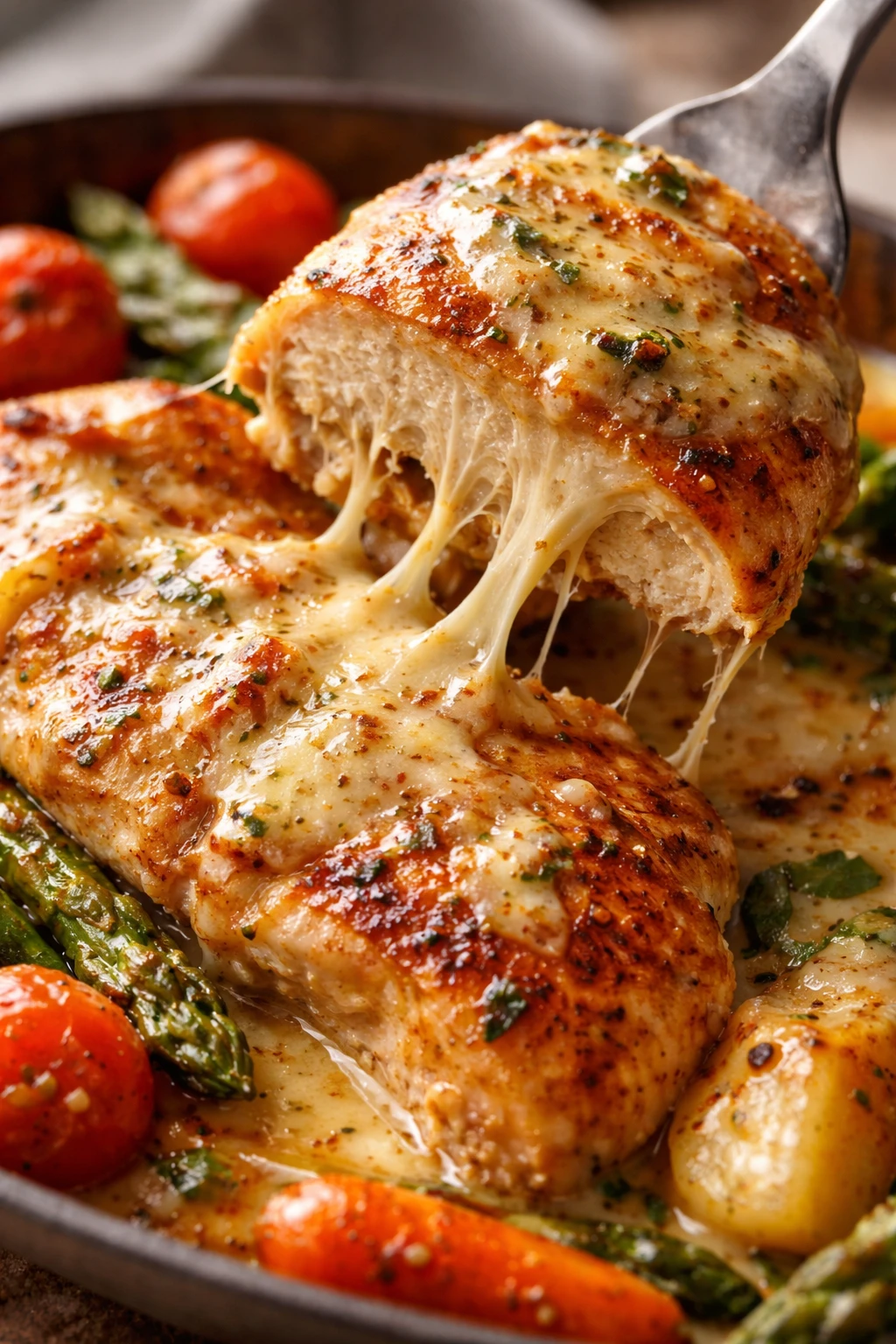
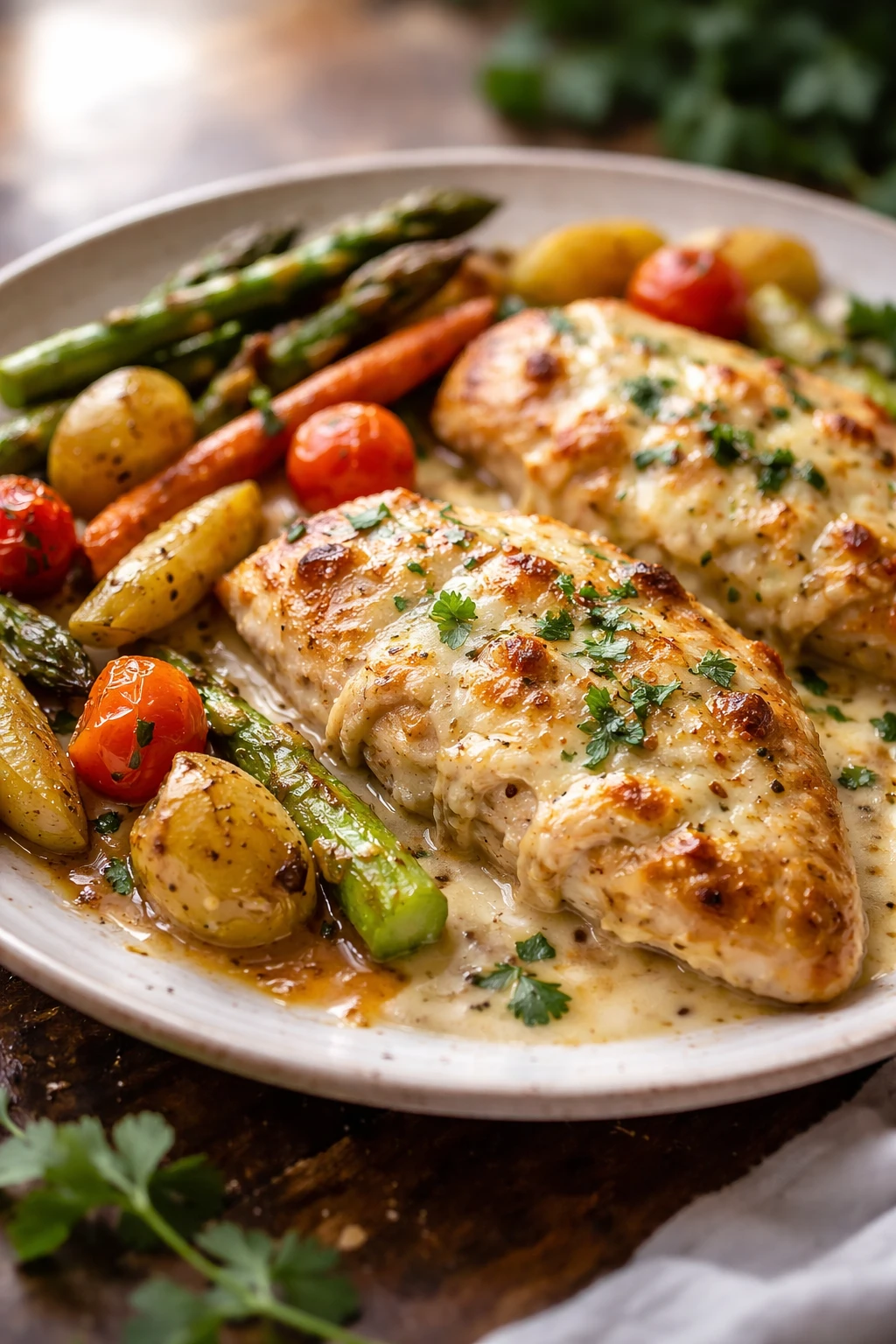
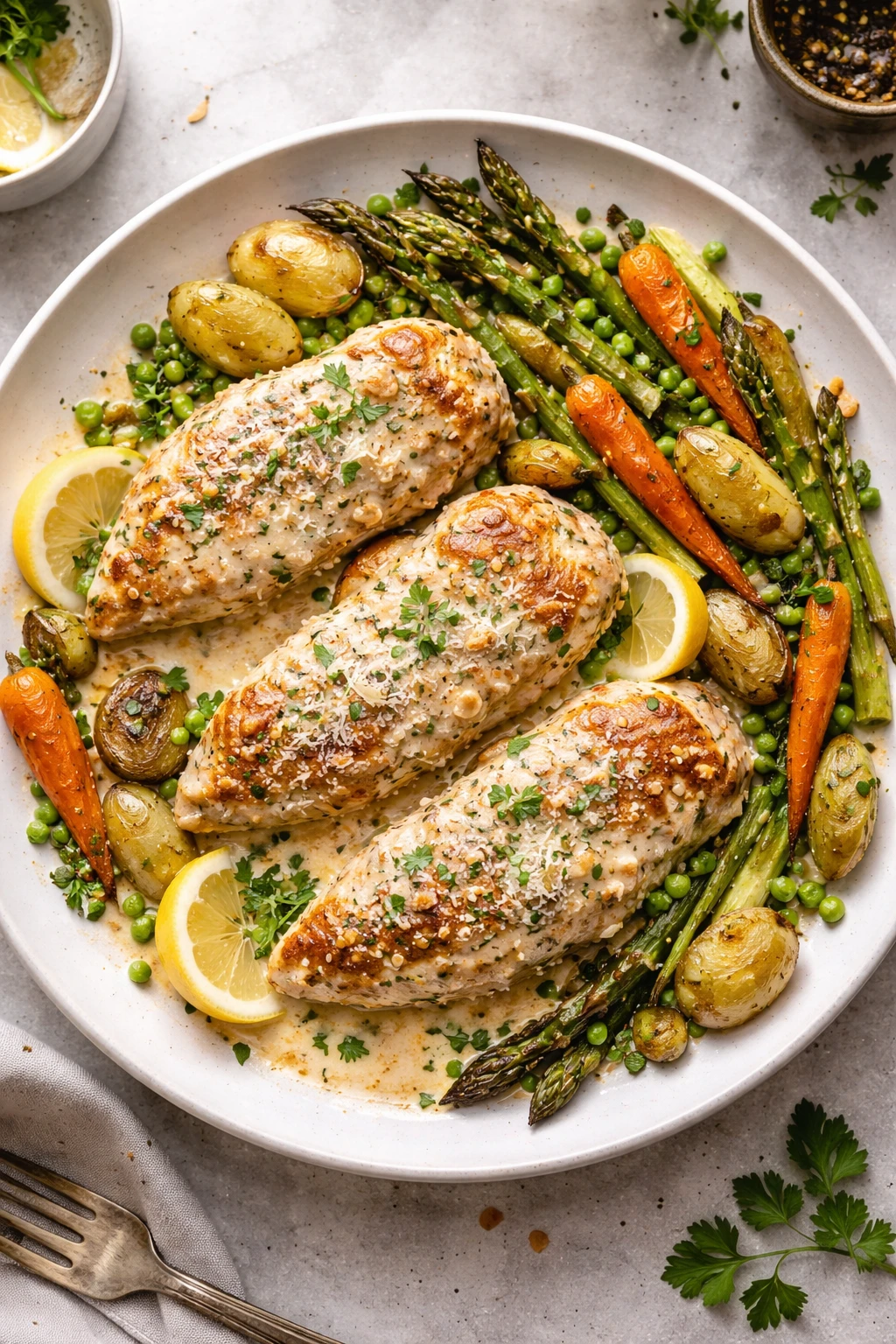
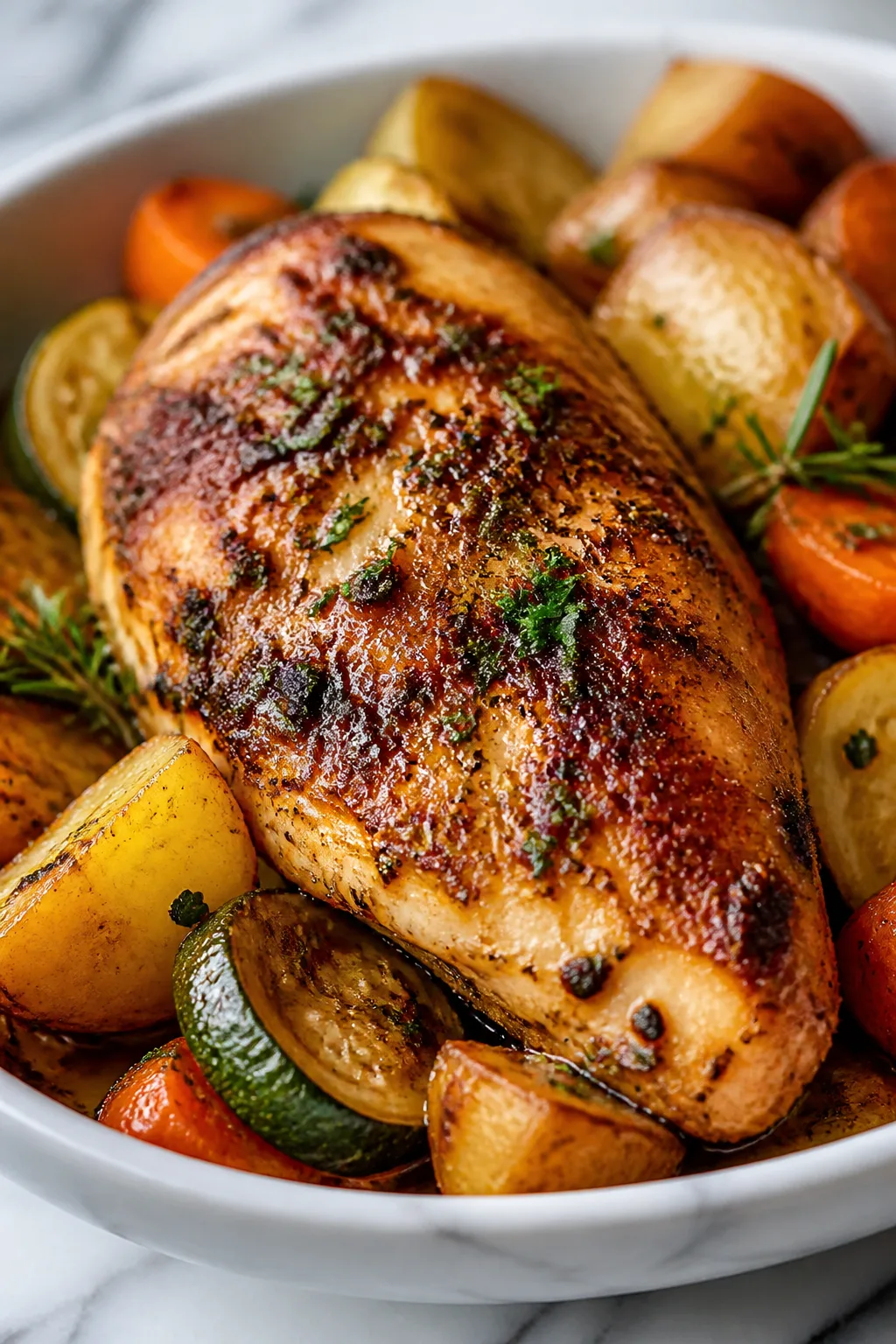
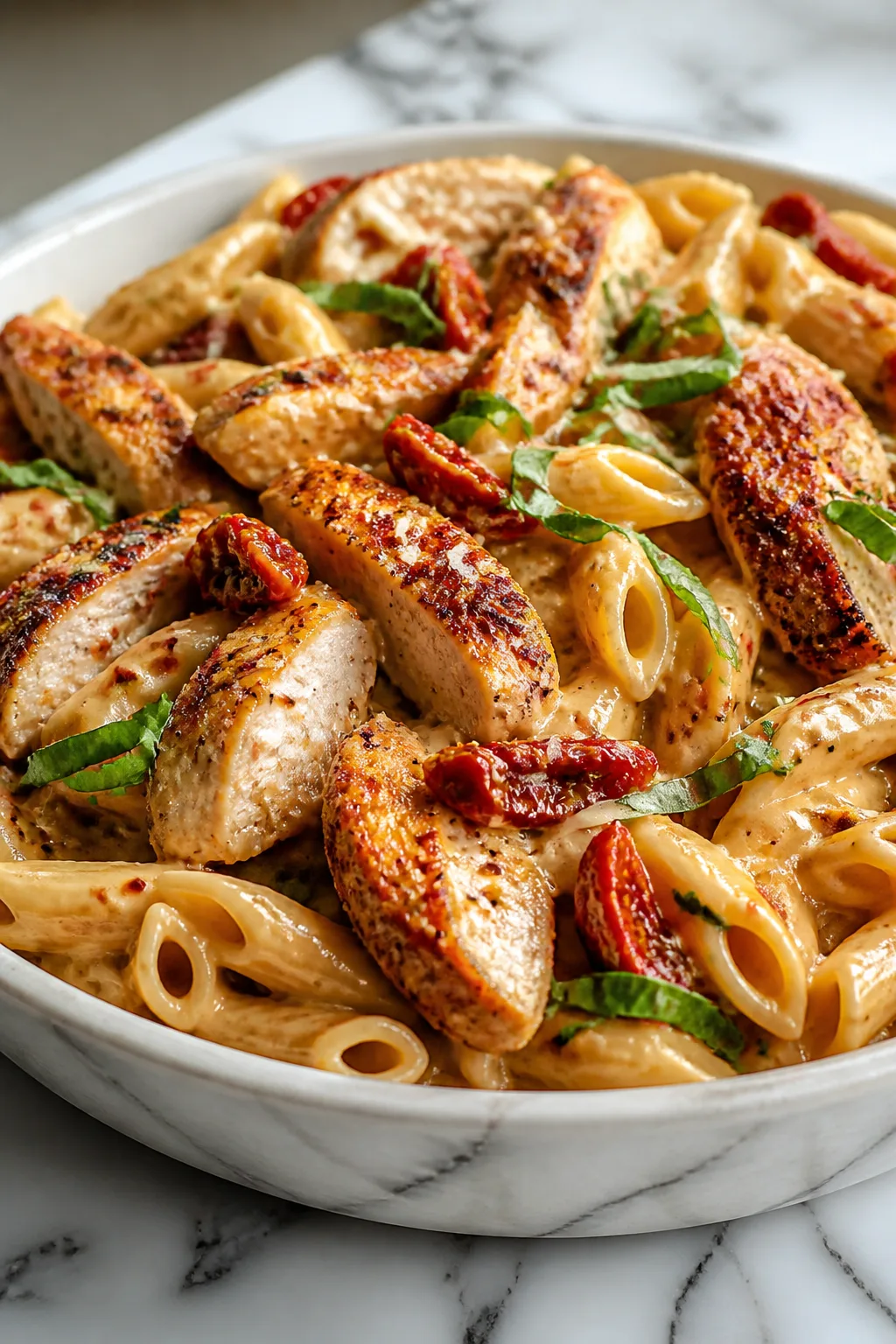
This creamy garlic parmesan chicken is juicy and full of flavor, perfectly paired with slow-roasted spring veggies that bring a sweet crunch. I love serving this for a comforting weekend meal!
Introduction
I've been making this creamy garlic parmesan chicken for a few years now, and it’s quickly become one of my go-to dishes for both busy weeknights and relaxed weekend dinners. The first time I tried combining the chicken with slow-roasted spring veggies, I was amazed at how the caramelization brought out such a deep, natural sweetness that balanced perfectly with the rich, garlicky sauce. What sets this recipe apart is the creamy parmesan sauce that clings to every bite of chicken, making it incredibly tender and flavorful. I also love how the veggies roast slowly alongside the chicken, so everything finishes at the same time with minimal fuss. One secret I’ve learned is not to rush the roasting process; letting the veggies caramelize slowly brings out their best texture and flavor. When this dish comes out of the oven, you’ll notice the chicken is juicy and the sauce silky, while the veggies provide a fresh, crunchy contrast. It’s the kind of meal that feels special but is surprisingly simple to pull off, and it always gets rave reviews from family and friends. I think you’re going to love how effortlessly delicious it is!
How To Do It
Step 1
Preheat your oven to 400°F (200°C). While it heats, season the chicken breasts with salt and pepper on both sides. This basic seasoning is crucial because it enhances the natural flavor of the chicken without overpowering the creamy sauce you'll add later. Make sure to pat the chicken dry before seasoning to help the oil and seasonings stick better, and to ensure a nice sear if you choose to brown the chicken beforehand.
⏱ Time: 5
✓ Doneness: Chicken is evenly seasoned and dry to the touch before cooking
Step 2
In a large ovenproof skillet or baking dish, heat 1 tablespoon of olive oil over medium heat. Add the chicken breasts and sear them for about 2-3 minutes per side until golden brown. This step isn’t about cooking the chicken through but about developing flavor and texture through the Maillard reaction, which creates those delicious browned bits. Don’t skip this step, as it adds depth to the dish and prevents the chicken from being bland.
⏱ Time: 6
✓ Doneness: Chicken has a golden-brown crust on both sides but is still raw inside
Step 3
Remove the chicken from the pan and set aside. Add the remaining tablespoon of olive oil to the pan and toss in the minced garlic. Sauté the garlic for about 30 seconds to a minute until fragrant but not browned. Garlic cooks quickly and can turn bitter if burnt, so keep a close eye on it. This step infuses the oil with garlic flavor, which will carry through the sauce beautifully.
⏱ Time: 1
✓ Doneness: Garlic is aromatic and slightly softened, not browned
Step 4
Pour in the heavy cream and stir to combine with the garlic oil. Bring the mixture to a gentle simmer over medium heat. Stir in the grated Parmesan cheese and Italian seasoning. The cheese will melt and thicken the cream into a luscious sauce. Let it simmer for about 3-4 minutes, stirring occasionally until slightly thickened. Avoid boiling vigorously, as this can cause the sauce to separate.
⏱ Time: 5
✓ Doneness: Sauce is creamy, smooth, and coats the back of a spoon
Step 5
Nestle the seared chicken breasts back into the skillet with the sauce. Arrange the spring vegetables around the chicken. Drizzle a little extra olive oil over the veggies and season with salt and pepper. The vegetables will roast alongside the chicken, absorbing some of the sauce’s flavor while caramelizing beautifully. This step ensures everything cooks evenly and the flavors meld together.
⏱ Time: 3
✓ Doneness: Chicken is covered in sauce and veggies are evenly distributed
Step 6
Transfer the skillet or baking dish to the preheated oven. Roast for 20-25 minutes until the chicken reaches an internal temperature of 165°F (74°C) and the vegetables are tender with caramelized edges. Slow roasting at this temperature allows the veggies to develop sweetness and the chicken to stay moist. Check the chicken with a meat thermometer to avoid overcooking, which can dry it out.
⏱ Time: 25
✓ Doneness: Chicken is fully cooked and veggies have golden-brown caramelized spots
Step 7
Carefully remove the dish from the oven. Let the chicken rest for 5 minutes before serving. Resting allows the juices to redistribute, keeping the chicken juicy and tender. If you slice it right away, the juices will run out and leave the meat dry.
⏱ Time: 5
✓ Doneness: Chicken feels firm but springs back slightly when pressed
Step 8
Garnish the chicken and vegetables with freshly chopped parsley for a pop of color and fresh flavor. This step is optional but adds a nice brightness to balance the richness of the dish. Plus, it makes the presentation pretty and inviting.
⏱ Time: 2
✓ Doneness: Bright green parsley evenly sprinkled over the dish
Step 9
Serve the creamy garlic parmesan chicken with roasted spring veggies immediately while warm. Pair it with crusty bread or a simple side salad if you like. The combination of creamy sauce, tender chicken, and sweet roasted veggies makes for a comforting and satisfying meal that’s perfect any day of the week.
⏱ Time: 1
✓ Doneness: Dish is plated attractively and served warm
Variations
Spicy Garlic Parmesan Chicken
Add a pinch of red pepper flakes to the garlic when sautéing to give the sauce a gentle heat. This variation adds a nice kick without overpowering the creamy flavors. It’s perfect if you like a little spice in your comfort food.
Note: Be careful not to burn the red pepper flakes with the garlic; add them just after the garlic is softened to prevent bitterness.
Chicken Thighs Instead of Breasts
Swap chicken breasts for bone-in, skin-on thighs for a juicier, more flavorful dish. The cooking time will increase slightly, but the skin crisps up beautifully under the sauce, adding texture.
Note: Increase roasting time to about 30-35 minutes and check for an internal temperature of 175°F for thighs.
Dairy-Free Creamy Sauce
Use full-fat coconut milk and nutritional yeast instead of cream and Parmesan for a dairy-free option. The sauce will be slightly sweeter and less sharp but still creamy and satisfying.
Note: Simmer coconut milk gently and stir in nutritional yeast at the end for best flavor; avoid high heat to prevent separation.
Add Mushrooms and Spinach
Toss sliced mushrooms and fresh spinach into the skillet before baking for extra earthiness and greens. Mushrooms add umami, and spinach wilts into the sauce, boosting nutrition and flavor.
Note: Add spinach just before roasting to prevent overcooking; mushrooms should be sliced evenly for uniform cooking.
Lemon Zest and Juice Brightness
Stir in fresh lemon zest and a squeeze of lemon juice into the sauce at the end of cooking to add freshness and cut through the richness. This tweak gives a bright, springy flavor that pairs well with the veggies.
Note: Add lemon juice off heat to preserve its vibrant flavor and avoid bitterness.
Pro Tips
Pat chicken dry before seasoning.
Removing excess moisture ensures the seasoning sticks well and helps develop a golden crust during searing. Moisture on the surface causes steaming instead of browning, resulting in less flavor and a soggy texture.
Don’t rush caramelizing the vegetables.
Slow roasting allows sugars to break down and brown gradually, creating deep, sweet flavors. High heat or flipping veggies too often interrupts this process and leads to uneven cooking or burning.
Use a meat thermometer to check doneness.
Chicken breast can dry out quickly if overcooked. Checking for an internal temperature of 165°F ensures the chicken is safe to eat but still juicy and tender.
Simmer sauce gently, avoid boiling.
High heat can cause the cream to separate and the cheese to become grainy. A gentle simmer allows the sauce to thicken smoothly and maintain a creamy texture.
Let chicken rest after cooking.
Resting allows juices to redistribute throughout the meat instead of spilling out when cut, resulting in moister, more flavorful chicken.
Use fresh Parmesan cheese.
Freshly grated Parmesan melts better and has a richer flavor than pre-grated or powdered forms, which can be dry and less flavorful.
Garnish with fresh herbs before serving.
Fresh herbs add a pop of color and a bright, fresh note that balances the creamy richness of the sauce, enhancing overall flavor and presentation.
Common Mistakes to Avoid
Skipping the sear on chicken.
Why it happens Many assume baking alone is enough and skip searing to save time or effort.
Fix Always sear chicken briefly before baking. This step locks in moisture and develops flavor through browning. Use medium-high heat and avoid overcrowding the pan to get an even crust.
Overcooking the chicken.
Why it happens Without a thermometer, cooks often rely on time and guesswork, leading to dry meat.
Fix Use an instant-read thermometer to check for 165°F internal temperature. Remove the chicken promptly to prevent drying out.
Burning the garlic.
Why it happens Garlic cooks quickly and can burn if left unattended or cooked at too high heat.
Fix Sauté garlic only until fragrant and lightly softened, about 30 seconds to 1 minute, stirring continuously and lowering heat if necessary.
Using low-fat dairy substitutes.
Why it happens Trying to cut calories by using milk or half-and-half instead of heavy cream.
Fix Stick to heavy cream for a stable, rich sauce. If needed, thicken milk with a roux or cornstarch but expect a thinner sauce.
Not seasoning vegetables.
Why it happens Focusing only on chicken seasoning and forgetting the veggies.
Fix Season vegetables with salt, pepper, and a drizzle of olive oil before roasting to enhance their natural flavors and help caramelization.
Nutrition
Per Serving:
Nutritional values are estimates and may vary based on specific ingredients used.
Storage & Tips
Room Temperature
This dish can safely sit at room temperature for up to 2 hours if covered loosely. To keep it fresh, cover with foil or a clean kitchen towel to prevent drying out or contamination.
Refrigerator
Store leftovers in an airtight container for up to 3 days. The sauce may thicken in the fridge, so gently reheat with a splash of cream or milk to loosen the texture. Vegetables might soften but still taste great.
Freezer
Freeze cooked chicken and vegetables in a freezer-safe airtight container for up to 2 months. Wrap tightly with plastic wrap before placing in container to prevent freezer burn. Thaw overnight in the fridge before reheating.
Reheating
Reheat gently on the stovetop over low heat with a splash of cream or water to loosen the sauce, stirring occasionally. Alternatively, microwave in short bursts to avoid drying out. Avoid boiling during reheating to maintain sauce texture.
Make Ahead
You can prepare the sauce and chop vegetables 1-2 days ahead and store separately. Sear the chicken and assemble everything just before roasting to keep flavors fresh and textures perfect.
FAQ
Can I use frozen vegetables instead of fresh spring veggies?
Frozen vegetables contain more moisture, which can prevent proper caramelization and lead to soggy textures. If you must use frozen, thaw and pat dry thoroughly before roasting, and reduce the roasting time slightly to avoid overcooking.
What can I substitute for heavy cream if I want a lighter sauce?
You can use half-and-half or whole milk, but the sauce will be thinner and less rich. To thicken it, consider adding a small amount of flour or cornstarch slurry. Keep the heat low to avoid curdling.
How do I know when the chicken is fully cooked without a thermometer?
Pierce the thickest part of the chicken with a fork or knife; the juices should run clear, not pink. Also, the meat should feel firm and springy to the touch, not soft or jiggly. However, a thermometer is the most reliable method.
Can I make this recipe gluten-free?
Yes! This recipe is naturally gluten-free as long as your Parmesan cheese and seasonings do not contain gluten additives. Always check labels to be sure, especially with pre-grated cheeses.
Is it okay to skip searing the chicken and just bake it?
Skipping searing saves time but sacrifices flavor and texture. Searing develops a savory crust through the Maillard reaction, adding depth to the dish. If you’re in a rush, bake but expect a milder taste and softer texture.
How do I keep the sauce from separating when cooking?
Simmer the sauce gently over medium-low heat and avoid boiling. Adding cheese gradually and stirring continuously helps the sauce emulsify properly. High heat or rapid boiling can cause fat to separate.
Can I prepare this dish in advance for a dinner party?
Absolutely! You can prep the sauce and veggies a day ahead and assemble everything just before roasting. This reduces last-minute work and keeps the dish tasting fresh and vibrant.
What sides go well with this creamy garlic parmesan chicken?
Crusty bread, garlic mashed potatoes, or a simple green salad complement this dish nicely. The bread helps soak up extra sauce, and the salad adds a refreshing contrast.
Final Thoughts
I hope you give this creamy garlic parmesan chicken with roasted spring veggies a try—it’s one of those comforting meals that feels like a warm hug. Let me know how it turns out!