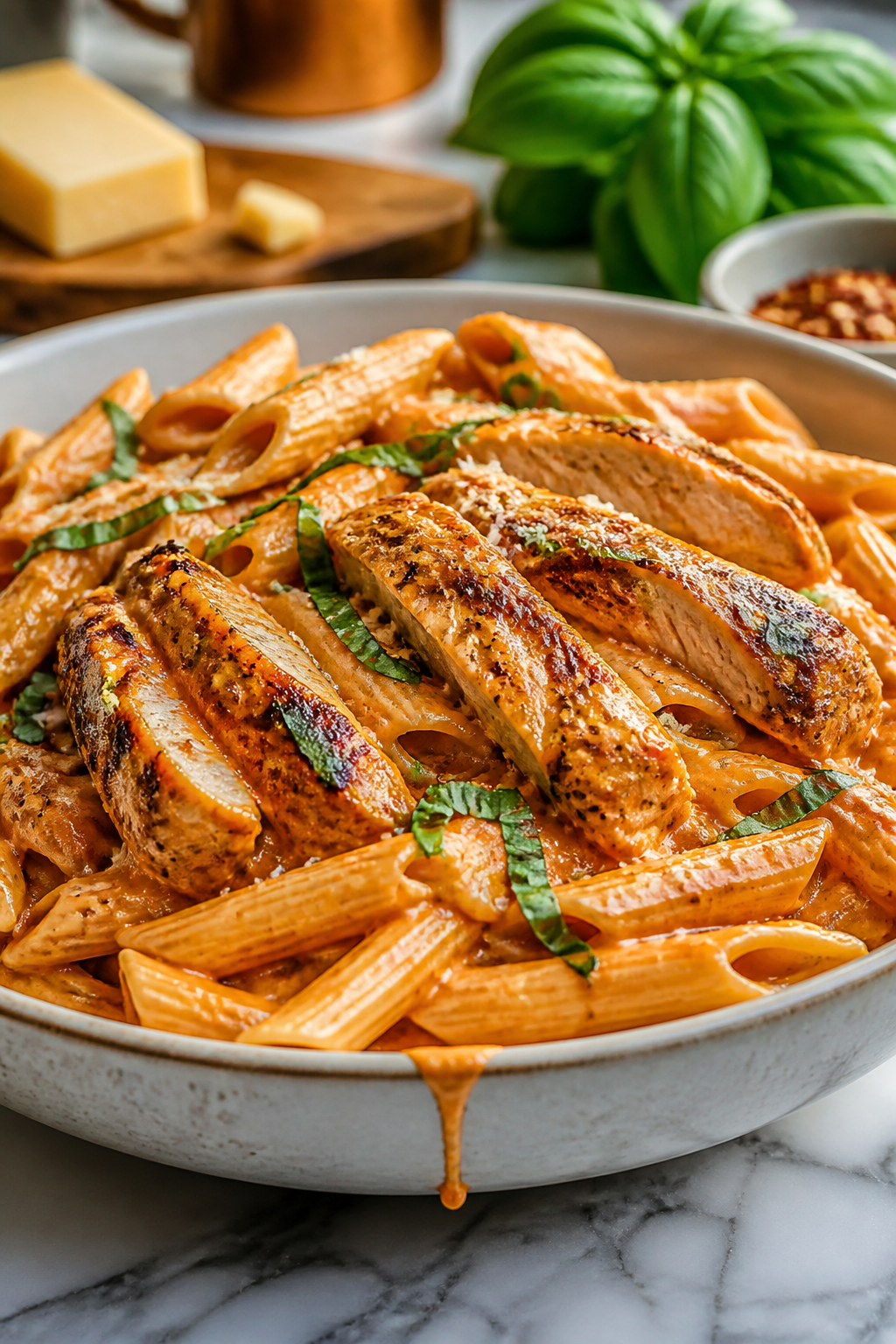
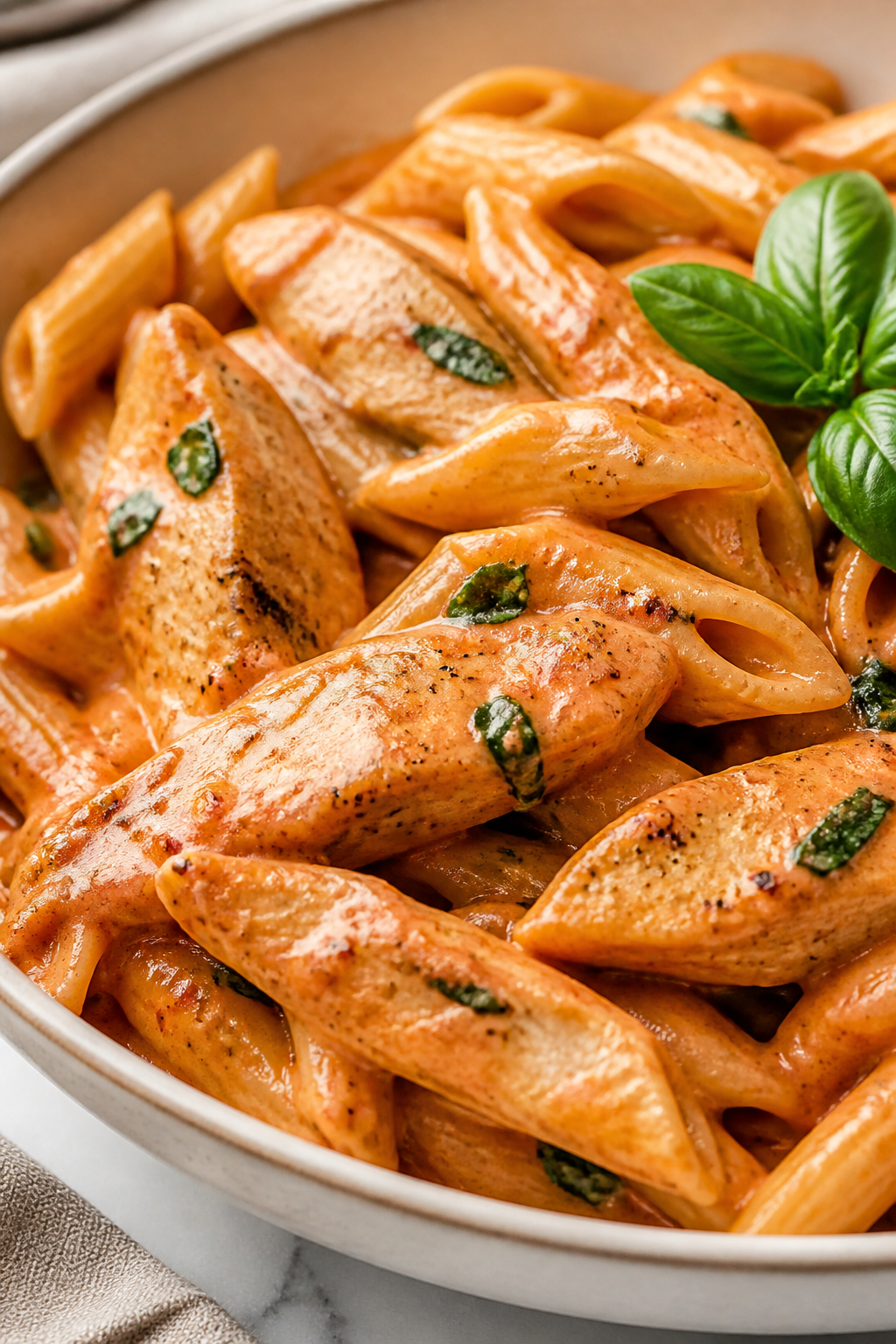
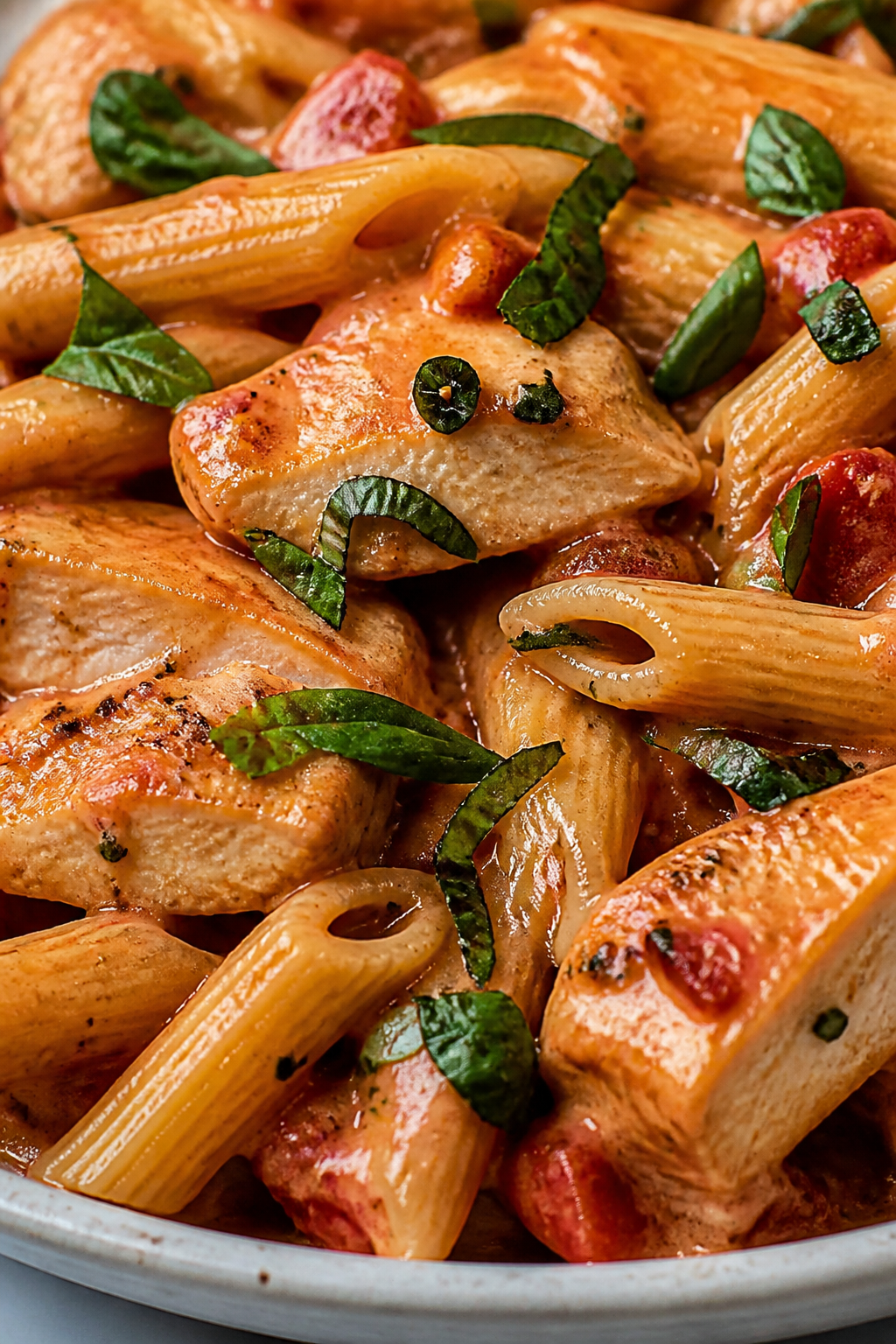
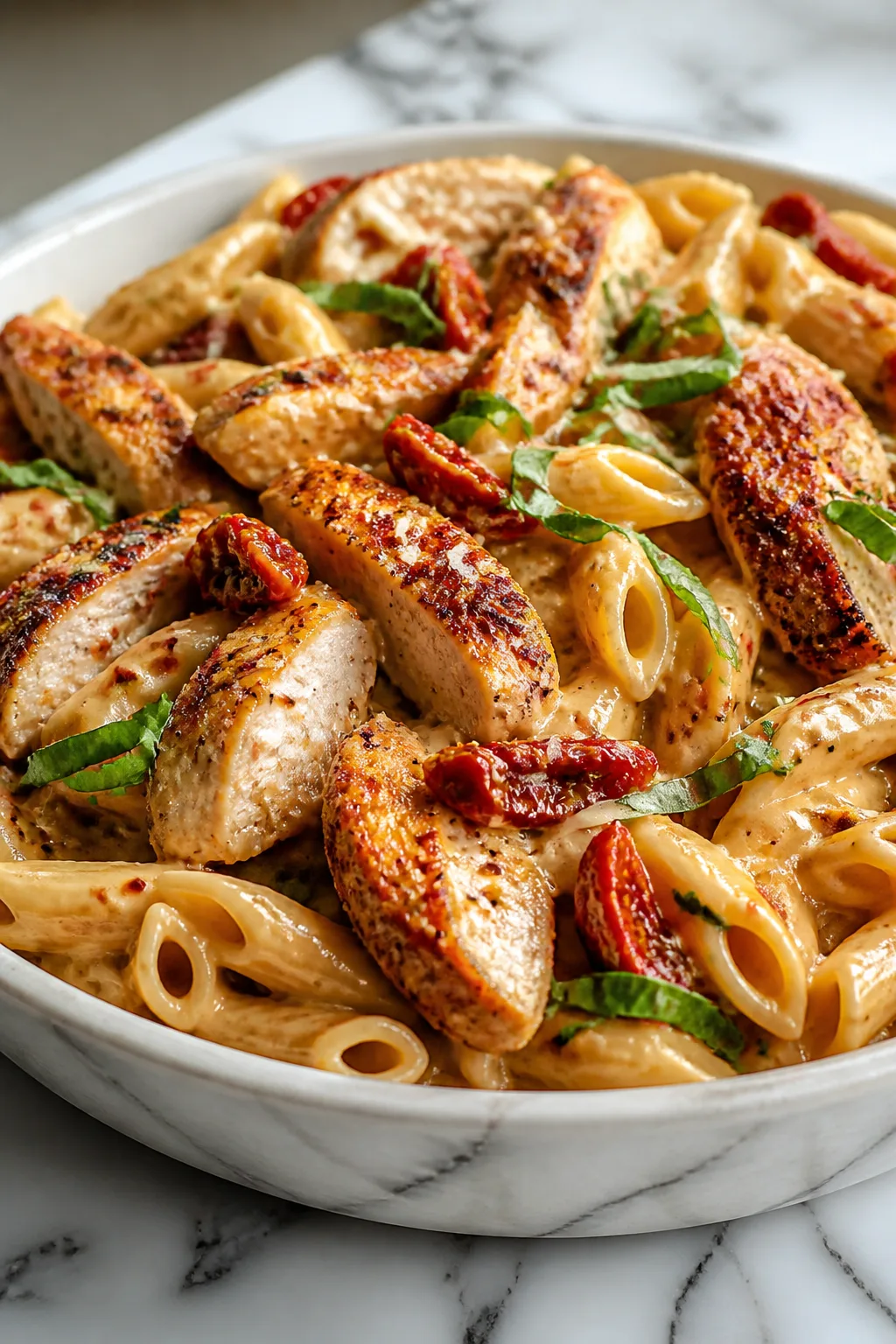
This creamy tomato basil penne with chicken is a total lifesaver when you want something comforting but quick. The fresh basil adds a pop of brightness that makes the rich sauce sing. Perfect for those busy weeknights when you want dinner fast but tasty!
Introduction
I stumbled upon this creamy tomato basil penne with chicken a few years ago when I desperately needed a quick, comforting dinner after a hectic day. What grabbed me immediately was how simple it was—only a handful of ingredients—and yet it felt special thanks to the fresh basil and that luscious sauce. I’ve made plenty of pasta dishes over the years, but this one stands out because it strikes the perfect balance between creamy richness and bright, herbal freshness. The trick I learned is to add the cream at the end to keep the sauce velvety without overpowering the tomato’s natural tang. Also, cooking the chicken in bite-sized pieces helps it stay tender and cook evenly. When it’s done, you get a cozy, satisfying bowl that feels like a hug from the inside. It’s become a go-to for busy weeknights or whenever I want dinner on the table fast without sacrificing flavor. I think you’ll love how easy it comes together and how the fresh basil really lifts the whole dish. It’s just the kind of homey, no-fuss meal I always crave.
How To Do It
Step 1
Bring a large pot of salted water to a boil. Add the penne pasta and cook according to the package directions until al dente, usually about 10-12 minutes. Don't overcook the pasta because it will continue cooking slightly when mixed with the sauce. Drain the pasta, reserving about a cup of the pasta water to adjust sauce consistency later if needed. Setting the pasta aside properly ensures it doesn’t get mushy and helps the sauce cling perfectly to each piece.
⏱ Time: 10-12 minutes
✓ Doneness: Pasta should be tender but still have a slight bite when you taste it
Step 2
While the pasta is cooking, heat olive oil in a large skillet over medium-high heat. Add the chicken pieces and season with salt and pepper. Cook the chicken for about 6-8 minutes, stirring occasionally, until it’s golden brown and cooked through. Avoid crowding the pan to ensure the chicken sears nicely instead of steaming. Properly cooked chicken will have a nice crust and be juicy inside, which adds great texture to the dish.
⏱ Time: 6-8 minutes
✓ Doneness: Chicken should be opaque throughout with a light golden color on the edges
Step 3
Add the minced garlic to the skillet with the chicken and sauté for about 1 minute until fragrant. Be careful not to burn the garlic as it can turn bitter quickly. This step infuses the chicken with subtle garlic aroma and flavor, which forms the base for the sauce.
⏱ Time: 1 minute
✓ Doneness: Garlic should be soft and fragrant but not browned
Step 4
Pour the crushed tomatoes into the skillet with the chicken and garlic. Stir to combine and bring the mixture to a gentle simmer. Let it cook for about 10 minutes to allow the flavors to meld and the sauce to thicken slightly. This simmering step deepens the tomato flavor and helps cook off any rawness from the canned tomatoes.
⏱ Time: 10 minutes
✓ Doneness: Sauce should thicken slightly and have a rich, vibrant red color
Step 5
Lower the heat and slowly stir in the heavy cream, mixing well to create a smooth, creamy sauce. Heat through for another 2-3 minutes without boiling to prevent the cream from curdling. Adding cream at this stage softens the acidity of the tomatoes and gives the sauce a velvety texture that coats the pasta beautifully.
⏱ Time: 2-3 minutes
✓ Doneness: Sauce will look smooth, creamy, and slightly lighter in color
Step 6
Add the cooked penne pasta to the skillet with the sauce and toss everything together gently. If the sauce seems too thick, add a splash of the reserved pasta water to loosen it up. This helps the sauce cling evenly to the pasta and prevents dryness in the final dish.
⏱ Time: 2 minutes
✓ Doneness: Pasta should be evenly coated with creamy sauce, glossy but not soupy
Step 7
Fold in the chopped fresh basil right before serving to preserve its bright flavor and color. Basil adds a fresh, herbal note that balances the richness of the sauce perfectly. Stir gently so the leaves don't bruise or lose their vibrant green.
⏱ Time: 1 minute
✓ Doneness: Basil leaves should look fresh and vibrant, evenly distributed
Step 8
Taste and adjust seasoning with salt and pepper as needed. Sometimes the acidity of the tomatoes needs a pinch more salt to really shine. Tasting at this stage ensures the flavors are balanced and the dish is just right.
⏱ Time: 1 minute
✓ Doneness: Well-seasoned with no bland or overpowering notes
Step 9
Serve the creamy tomato basil penne hot, sprinkled with freshly grated Parmesan cheese. The cheese adds a salty, nutty finish that complements the creamy tomato sauce and tender chicken beautifully. Enjoy immediately for the best texture and flavor.
⏱ Time: Immediate
✓ Doneness: Dish is steaming hot with melted cheese topping
Variations
Spicy Creamy Tomato Basil Penne
Add a pinch of red pepper flakes when cooking the garlic for a subtle heat that complements the creamy sauce. This variation adds a nice kick without overwhelming the fresh basil flavor.
Note: Be careful not to add too much spice early; start with a small amount and adjust after tasting.
Vegetarian Version with Mushrooms
Swap chicken for sautéed mushrooms like cremini or portobello for a meaty texture and earthy flavor. This keeps the dish hearty while making it vegetarian-friendly.
Note: Cook mushrooms until golden and their moisture evaporates before adding tomatoes to avoid watery sauce.
Gluten-Free Penne Pasta
Use your favorite gluten-free penne to make this dish safe for gluten-sensitive eaters. The creamy tomato basil sauce pairs well with many gluten-free pasta textures.
Note: Cook gluten-free pasta carefully according to package as it can become mushy faster.
Add Roasted Red Peppers
Blend in some roasted red peppers with the crushed tomatoes for a smoky sweetness that adds complexity and a lovely color variation.
Note: Puree peppers smoothly before adding to the sauce to keep texture consistent.
Use Half-and-Half Instead of Heavy Cream
For a lighter sauce, substitute heavy cream with half-and-half. The sauce will be less rich but still creamy and flavorful.
Note: Heat gently and avoid boiling to prevent curdling with lower-fat dairy.
Pro Tips
Reserve some pasta water before draining.
The starchy pasta water helps loosen the sauce and allows it to cling better to the noodles. Without it, the sauce can become too thick or dry. The starch acts as a natural thickener and binder, improving texture and mouthfeel.
Cut chicken into uniform pieces.
Uniform pieces cook evenly and prevent some bites from drying out while others stay undercooked. This consistency ensures every bite is tender and juicy, making the dish more enjoyable.
Add fresh basil last, off the heat.
Basil’s delicate oils and bright flavor are volatile and diminish with heat. Adding it at the end preserves its aroma and vibrant green color, enhancing both taste and appearance.
Don’t rush simmering the tomato sauce.
Simmering allows flavors to meld and acidity to mellow. Rushing this step results in a raw tomato taste and watery sauce. Slow simmering thickens the sauce and deepens flavor complexity.
Use a heavy-bottomed skillet for cooking chicken.
A heavy pan distributes heat evenly, helping the chicken brown nicely without burning or sticking. This sear creates flavor through Maillard reaction, critical for a tasty dish.
Season the sauce gradually and taste as you go.
Tomato sauces can change flavor as they cook. Adding salt and pepper slowly ensures the seasoning is balanced at the end, preventing over-salting or blandness.
Serve immediately after mixing pasta and sauce.
The sauce thickens as it cools and pasta absorbs liquid, which can dry out the dish. Serving promptly keeps it creamy and fresh, preserving ideal texture.
Common Mistakes to Avoid
Overcooking the pasta
Why it happens Many cooks leave pasta boiling too long thinking it’ll soften more, but it actually becomes mushy and loses texture.
Fix Set a timer and cook pasta just until al dente (firm to the bite). Drain immediately and toss with sauce to finish cooking gently.
Burning the garlic
Why it happens Garlic cooks very fast and can burn if added too early or cooked on high heat without stirring.
Fix Add garlic after chicken is mostly cooked, keep heat medium, and stir constantly for just about a minute until fragrant.
Adding cream too early
Why it happens Cream can curdle if boiled or cooked too long, ruining the sauce texture.
Fix Add cream last, off high heat, and warm gently without boiling to keep sauce smooth.
Skipping seasoning adjustments
Why it happens Assuming canned tomatoes are perfectly balanced can leave the dish bland or overly acidic.
Fix Taste sauce before serving and add salt or pepper gradually until balanced.
Cooking basil too early
Why it happens Basil loses flavor and color if cooked for too long.
Fix Add basil at the very end, off heat, just before serving.
Nutrition
Per Serving:
Nutritional values are estimates and may vary based on specific ingredients used.
Storage & Tips
Room Temperature
This creamy penne should not be left out at room temperature for more than 2 hours. Cover it loosely with foil or a clean towel if you plan to serve shortly but avoid long exposure to keep it safe and fresh.
Refrigerator
Store leftovers in an airtight container in the fridge for up to 3 days. The sauce may thicken and pasta can absorb more liquid, so add a splash of cream or water when reheating to loosen it back up. It tastes best warmed gently rather than cold.
Freezer
Freeze in a sealed container for up to 2 months. To prevent freezer burn, wrap the container in plastic wrap or foil. Thaw overnight in the fridge before reheating slowly on the stovetop, adding a little cream or broth to refresh the sauce texture.
Reheating
Reheat on the stovetop over low-medium heat, stirring frequently. Add a splash of cream, milk, or reserved pasta water to loosen the sauce if it’s too thick. Avoid microwaving at high power, which can dry out the pasta and curdle the sauce.
Make Ahead
You can cook the chicken and prepare the sauce up to 2 days ahead and store separately in the fridge. Cook the pasta fresh or just before serving. Combining everything just before mealtime ensures the best texture and flavor.
FAQ
Can I use chicken thighs instead of breasts?
Absolutely! Chicken thighs add more flavor and stay juicy due to higher fat content. Just cut them into bite-sized pieces and cook until no longer pink inside. They might take a minute or two longer to cook than breasts, so watch for doneness.
What if I don’t have heavy cream?
You can substitute with half-and-half or whole milk for a lighter sauce, but the texture won’t be as rich or silky. Add dairy slowly and avoid boiling to prevent curdling. For a dairy-free option, coconut cream works but changes the flavor profile noticeably.
How do I keep the basil from turning dark and slimy?
Add fresh basil at the very end of cooking, off the heat, just before serving. Cooking basil too long causes it to lose color and flavor. Also, chop it right before adding to preserve freshness.
Can I make this recipe vegan?
For a vegan version, replace chicken with tofu or mushrooms, use coconut cream or cashew cream instead of heavy cream, and choose vegan pasta. Keep in mind the flavor and texture will differ but still be delicious.
What’s the best way to reheat leftovers without drying them out?
Reheat gently on the stovetop over low heat, stirring often. Add a splash of cream, broth, or pasta water to loosen the sauce and keep it creamy. Avoid high heat or microwave reheating at full power, which can dry the pasta.
Can I prepare the sauce in advance?
Yes! The sauce can be made 1-2 days ahead and stored in the fridge. Reheat gently and stir in fresh basil just before serving to keep the flavor bright. Cook pasta fresh for best texture.
What pasta shapes work best besides penne?
Other tubular shapes like rigatoni, ziti, or even farfalle work great since they hold the sauce well. Avoid very thin or delicate pastas which may get lost in the rich sauce.
How can I make the sauce thicker or thinner?
Simmer the sauce longer uncovered if you want it thicker, which concentrates flavors. For a thinner sauce, add reserved pasta water or a splash of broth when mixing with pasta.
Final Thoughts
I hope you give this creamy tomato basil penne with chicken a try—it’s one of my favorites for quick, comforting dinners. Let me know how it turns out and share your tweaks!