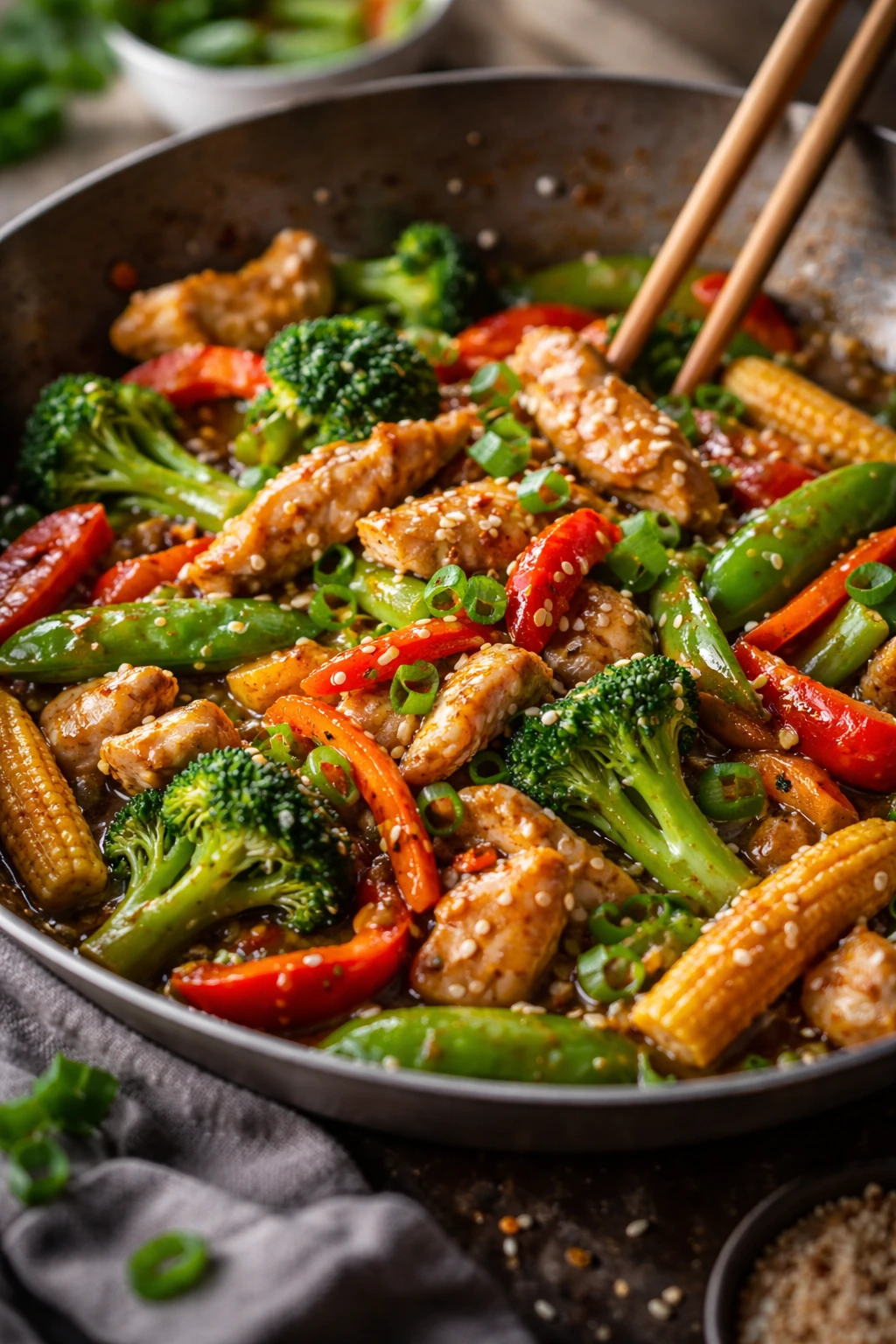
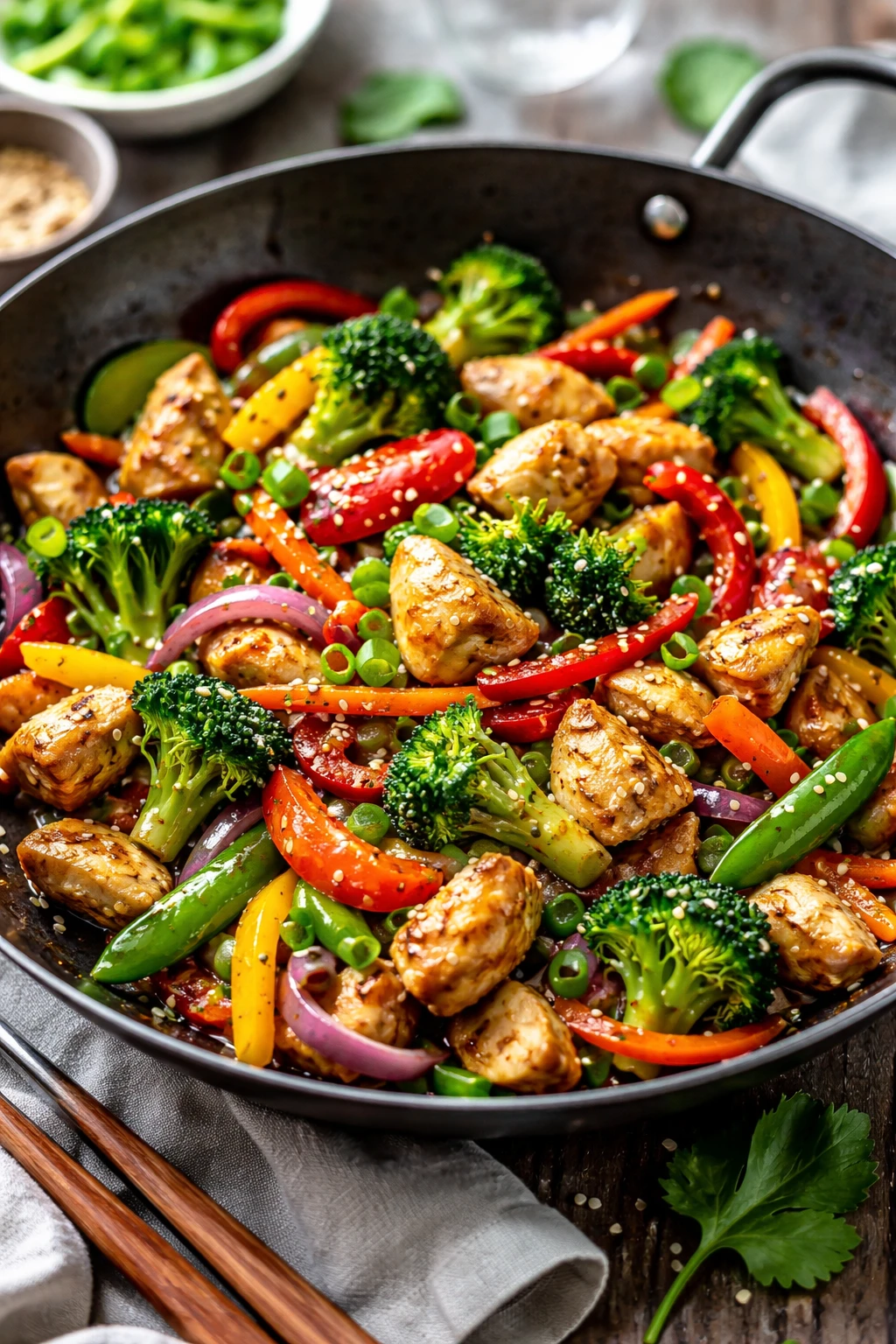
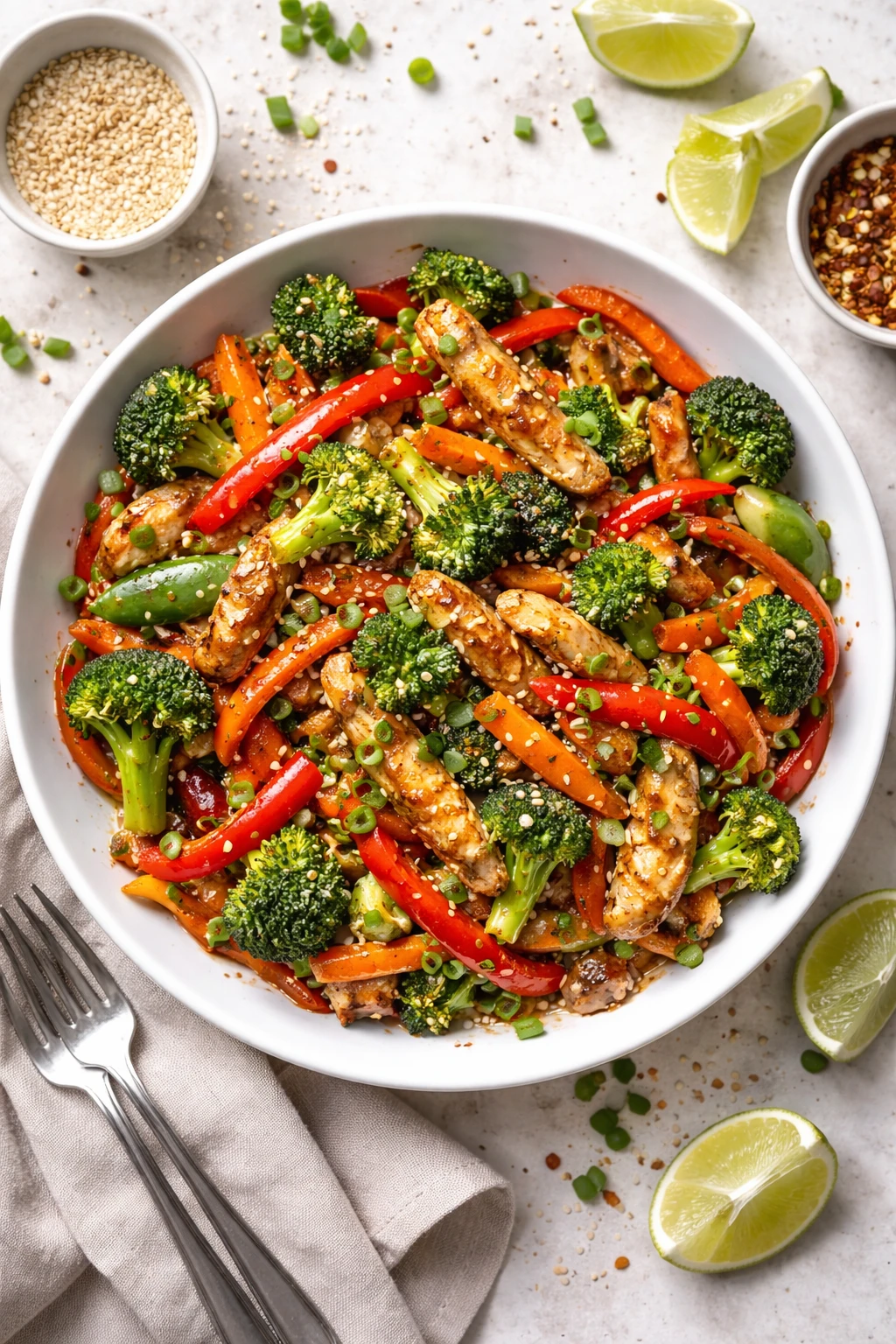
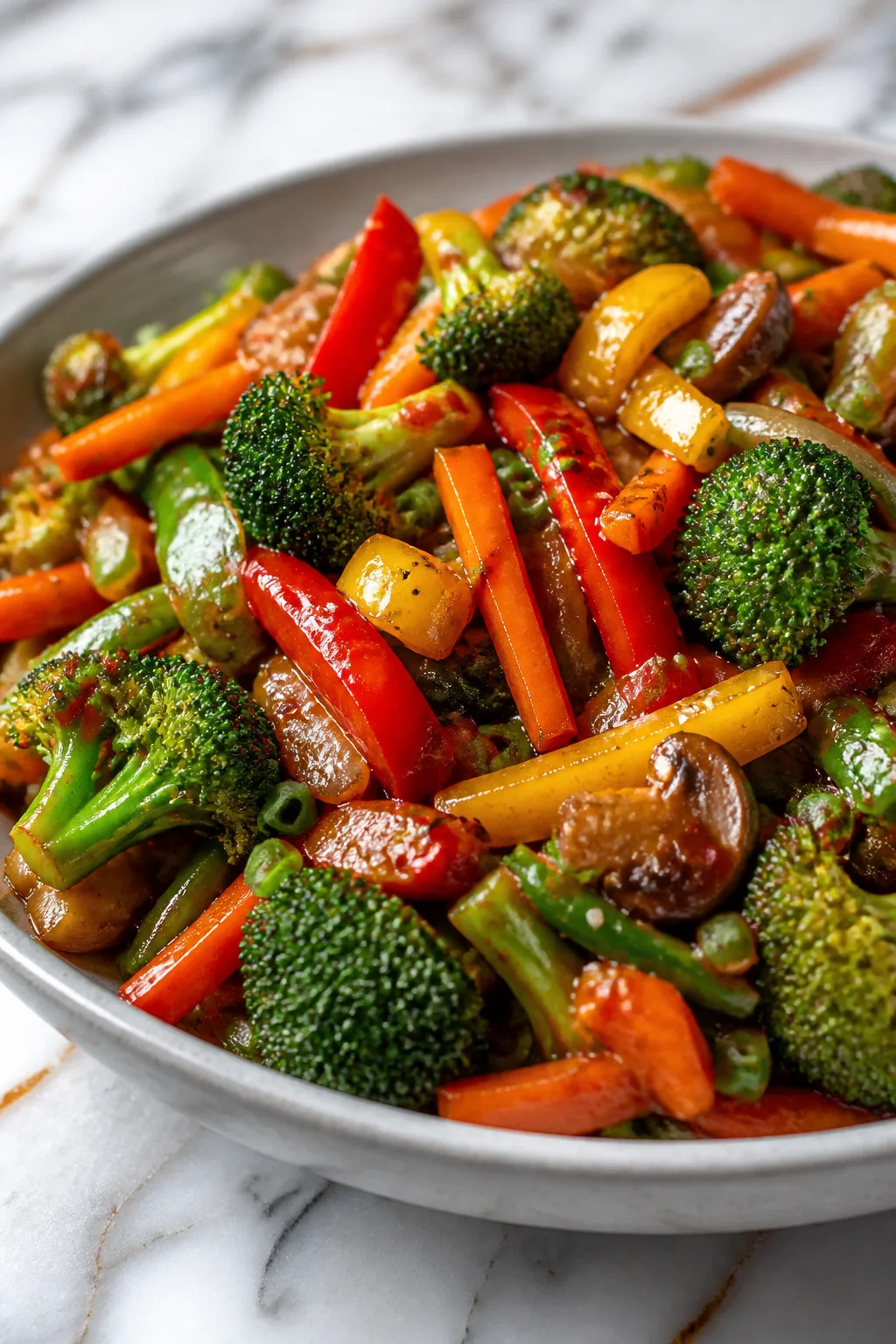
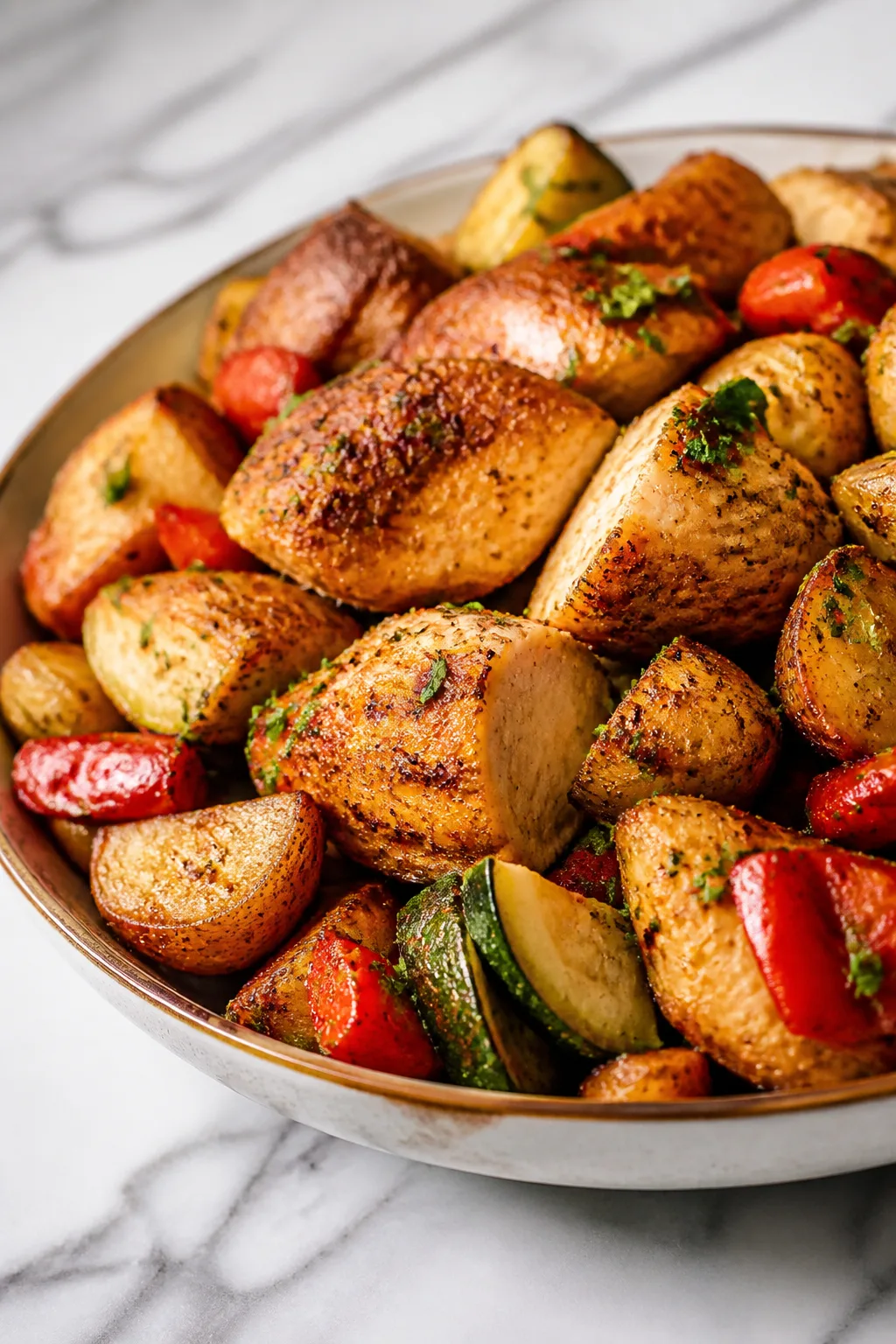
This stir fry is a vibrant mix of fresh veggies and juicy chicken, tossed in a savory sauce that’s just right. The quick sear keeps everything crisp and colorful. Perfect for a speedy weeknight meal!
Introduction
I stumbled upon this crunchy chicken stir fry during a hectic week when I needed something quick but satisfying. What makes this recipe stand out is the high-heat sear that locks in the chicken's juiciness while keeping the veggies perfectly crisp. I've tried stir fries before that ended up soggy or bland, but this one nails the balance every time. The secret is cooking the chicken and vegetables separately and then bringing them together at the end with a simple but savory sauce. The fresh ginger and garlic add a punch that wakes up your taste buds without overpowering the dish. Plus, the cornstarch slurry helps the sauce cling to every piece, giving each bite a nice glaze. When it's done, you get a colorful plate that looks as good as it tastes, with tender chicken and veggies that still have a satisfying crunch. I love serving this for weeknight dinners because it’s fast, healthy, and always a crowd-pleaser. It’s definitely become a staple in my kitchen, especially when I want something wholesome without a ton of fuss.
How To Do It
Step 1
Heat 1 tablespoon of vegetable oil in a large skillet or wok over high heat until shimmering but not smoking. Add the sliced chicken in a single layer, seasoning lightly with salt and pepper. Sear without moving for about 2 minutes until the bottom is golden brown. This quick sear locks in the juices and builds flavor through the Maillard reaction. Avoid overcrowding the pan, or the chicken will steam instead of sear, resulting in less flavorful, rubbery pieces.
⏱ Time: 3 minutes
✓ Doneness: Chicken pieces are golden on one side and release easily from the pan
Step 2
Flip the chicken pieces and cook for another 2-3 minutes, stirring occasionally until cooked through but still tender. Remove the chicken from the pan and set aside on a plate. Cooking the chicken separately ensures it’s perfectly done without overcooking the vegetables later, which should stay crisp and vibrant.
⏱ Time: 3 minutes
✓ Doneness: Chicken is opaque and firm to the touch but juicy inside
Step 3
Add the remaining 1 tablespoon of oil to the pan. Toss in the minced garlic and grated ginger, stirring quickly over high heat to release their aromas without burning. This step infuses the oil with flavor, which will coat the veggies nicely. Be careful not to let the garlic brown too much as it can turn bitter.
⏱ Time: 1 minute
✓ Doneness: Fragrant aroma fills the kitchen, garlic is golden but not dark
Step 4
Add the red bell pepper, broccoli florets, carrot, and zucchini to the pan. Stir-fry vigorously over high heat for 4-5 minutes, tossing constantly. The goal is to cook the vegetables until just tender but still crisp, preserving their bright colors and fresh taste. If you cook too long, the veggies lose their crunch and become mushy.
⏱ Time: 5 minutes
✓ Doneness: Vegetables are bright, tender-crisp, and slightly softened
Step 5
Return the cooked chicken to the pan with the vegetables. Stir everything together to combine evenly. This reunites the components, allowing flavors to meld before adding the sauce. It also helps the chicken reheat gently without drying out.
⏱ Time: 1 minute
✓ Doneness: Chicken and veggies are mixed well and steaming gently
Step 6
In a small bowl, whisk together soy sauce, oyster sauce, and sesame oil. Pour this sauce over the chicken and vegetables. Stir quickly to coat everything evenly. The soy and oyster sauce add a savory umami depth, while sesame oil brings a subtle nuttiness that rounds out the flavors perfectly.
⏱ Time: 1 minute
✓ Doneness: Sauce evenly coats ingredients with a glossy sheen
Step 7
Give the cornstarch slurry a quick stir and pour it into the pan. Stir constantly over medium-high heat until the sauce thickens and clings to the chicken and veggies, about 1-2 minutes. This step creates a luscious, slightly sticky sauce that binds the dish together. Don't skip this or the sauce will be watery and won't coat the ingredients well.
⏱ Time: 2 minutes
✓ Doneness: Sauce is thickened and shiny, evenly covering the stir fry
Step 8
Taste and adjust seasoning with a pinch of salt or pepper if needed. This final adjustment brings all the flavors into balance. Remember, soy sauce is salty, so add salt carefully to avoid over-seasoning.
⏱ Time: 1 minute
✓ Doneness: Balanced savory flavor with no overpowering saltiness
Step 9
Transfer the stir fry to a serving dish and garnish with sesame seeds and chopped green onions. These add a delightful crunch and fresh brightness that elevate the dish visually and taste-wise. Serve immediately with steamed rice or noodles for a complete meal.
⏱ Time: 1 minute
✓ Doneness: Dish looks vibrant and garnished attractively
Variations
Spicy Szechuan Style Stir Fry
Add 1 teaspoon of chili flakes or Szechuan peppercorns for a spicy kick. Swap oyster sauce for hoisin sauce for a sweeter twist. This variation brings heat and complexity to the classic stir fry, perfect if you love bold flavors.
Note: Adjust the chili quantity to taste. Adding spices early in cooking helps release their aroma.
Vegetarian Tofu Stir Fry
Replace chicken with firm tofu pressed and cubed. Cook tofu separately until golden and crispy before adding veggies. This swap keeps the dish protein-packed while making it vegetarian-friendly with a satisfying texture.
Note: Use a nonstick pan or well-seasoned wok to prevent tofu from sticking.
Beef and Snap Pea Stir Fry
Swap chicken for thinly sliced flank steak and add snap peas for extra crunch. Marinate the beef briefly in soy sauce and cornstarch for tender, flavorful meat. This variation offers a heartier, richer flavor profile.
Note: Cook beef quickly over high heat to avoid toughness.
Low Sodium Stir Fry
Use low-sodium soy sauce and reduce oyster sauce by half. Add fresh herbs like cilantro or basil for extra flavor without salt. Great for those watching sodium intake but still craving tasty meals.
Note: Taste and adjust herbs and spices to compensate for reduced saltiness.
Gluten-Free Stir Fry
Use tamari instead of soy sauce and check oyster sauce labels for gluten-free options. This makes the dish safe for gluten-sensitive eaters without sacrificing flavor or texture.
Note: Ensure all sauces are certified gluten-free to avoid contamination.
Pro Tips
Always preheat your pan until very hot before adding oil.
A properly heated pan ensures a quick sear and prevents sticking. When the pan is hot, the chicken instantly starts browning, creating flavorful crusts and locking in juices. If the pan is not hot enough, the chicken will release moisture and steam, resulting in a mushy texture.
Slice all vegetables uniformly to ensure even cooking.
Different sized pieces cook at different rates, which can lead to some veggies being overdone while others remain raw. Uniform slices allow everything to cook evenly during the short stir-fry time, preserving texture and flavor balance.
Cook chicken and vegetables separately before combining.
This prevents the chicken from steaming and becoming rubbery. It also allows you to control doneness perfectly for both components. Vegetables cooked separately will retain their vibrant color and crispness, while chicken gets a nice sear.
Use a cornstarch slurry to thicken the sauce at the end.
Cornstarch thickens the sauce quickly, helping it cling to the ingredients for better flavor distribution. Adding it too early or without stirring can cause lumps or a gummy texture. Waiting until the end ensures a smooth, glossy finish.
Add aromatics like garlic and ginger to hot oil briefly before veggies.
This step releases their flavors into the oil, infusing the entire dish with a fragrant base. Overcooking aromatics causes bitterness, so a quick stir-fry just until fragrant is ideal.
Don’t overcrowd the pan to maintain high heat.
Crowding lowers the pan temperature, causing ingredients to steam rather than sear. This leads to soggy veggies and less flavorful chicken. Cook in batches if needed to keep the heat high.
Serve immediately after cooking for best texture.
Stir fry ingredients continue to soften as they sit, losing their crispness and vibrant color. Eating right away preserves the fresh, crunchy texture and bright flavors.
Common Mistakes to Avoid
Overcooking the vegetables
Why it happens Many cooks assume vegetables need to be very soft, so they cook them too long. This often happens when cooking at too low heat or stirring too slowly.
Fix Cook vegetables quickly over high heat, stirring constantly to keep them moving. Remove from heat as soon as they’re tender-crisp to preserve texture and color.
Adding chicken and veggies together
Why it happens It seems easier to cook everything in one step, but this causes the chicken to steam instead of sear, losing flavor and texture.
Fix Cook chicken first in a hot pan until browned and cooked through, then remove. Stir fry vegetables separately, then combine at the end.
Not preheating the pan enough
Why it happens Impatience or unfamiliarity with high-heat cooking leads to adding ingredients too soon.
Fix Wait until the pan is very hot before adding oil and ingredients. This ensures a proper sear and prevents sticking.
Skipping the cornstarch slurry
Why it happens Some think the sauce will thicken on its own or don’t know how to make a slurry.
Fix Always prepare a cornstarch slurry and add it near the end of cooking while stirring to get a glossy, well-coated sauce.
Using too much soy sauce
Why it happens Soy sauce adds salt and flavor, but overusing it can make the dish overly salty and mask other flavors.
Fix Use low-sodium soy sauce and taste as you go. Adjust seasoning gradually to keep balance.
Nutrition
Per Serving:
Nutritional values are estimates and may vary based on specific ingredients used.
Storage & Tips
Room Temperature
The stir fry can safely sit at room temperature for up to 2 hours if covered loosely. Leaving it out longer risks bacterial growth and loss of freshness.
Refrigerator
Store leftovers in an airtight container for up to 3 days. The veggies may soften slightly and lose some crunch when cold. Reheat gently to restore texture.
Freezer
Freeze in a sealed container for up to 2 months. To prevent freezer burn, wrap tightly and remove excess air. Thaw overnight in the fridge before reheating.
Reheating
Reheat in a skillet over medium heat with a splash of water or broth to loosen the sauce. Avoid microwaving too long as it can make the veggies soggy.
Make Ahead
You can prep and slice all ingredients 1 day ahead, storing them separately in the fridge. Cook chicken and veggies fresh for best texture, then assemble and heat the sauce just before serving.
FAQ
Can I use frozen vegetables for this stir fry?
Frozen vegetables can be used, but they tend to release extra water when cooked, which may make the stir fry soggy. If you do use frozen veggies, thaw and drain them well, then stir fry quickly over high heat to minimize moisture.
How do I prevent the chicken from sticking to the pan?
Make sure your pan is hot before adding oil, and use enough oil to coat the surface. Don’t move the chicken too soon—let it sear undisturbed for a couple of minutes so it naturally releases when browned.
Can I make this stir fry vegan?
Yes! Replace chicken with tofu or tempeh and swap oyster sauce for a vegan alternative like mushroom soy sauce. The cooking method stays the same and you’ll get a delicious plant-based meal.
What if I don’t have oyster sauce?
You can substitute with hoisin sauce or a mix of soy sauce and a little sugar for sweetness. The flavor won’t be exactly the same but will still be tasty and savory.
Is it okay to use chicken thighs instead of breasts?
Absolutely! Chicken thighs are juicier and more forgiving if slightly overcooked. Just slice them thinly and adjust cooking time as thighs take a bit longer to cook through.
How do I keep the vegetables crunchy?
Cook veggies quickly over high heat and stir constantly. Avoid overcrowding the pan to prevent steaming. Remove them from the heat as soon as they’re tender-crisp.
Can I prepare this dish ahead of time?
You can chop vegetables and slice chicken a day ahead, but for best texture, cook everything fresh just before serving. The stir fry tastes best hot and fresh.
What’s the best oil for stir frying?
Use oils with a high smoke point like vegetable, canola, or peanut oil. They tolerate high heat without burning and impart a neutral flavor that lets the ingredients shine.
Final Thoughts
I hope you enjoy making this crunchy chicken stir fry as much as I do. Give it a try and let me know how it turns out in your kitchen!