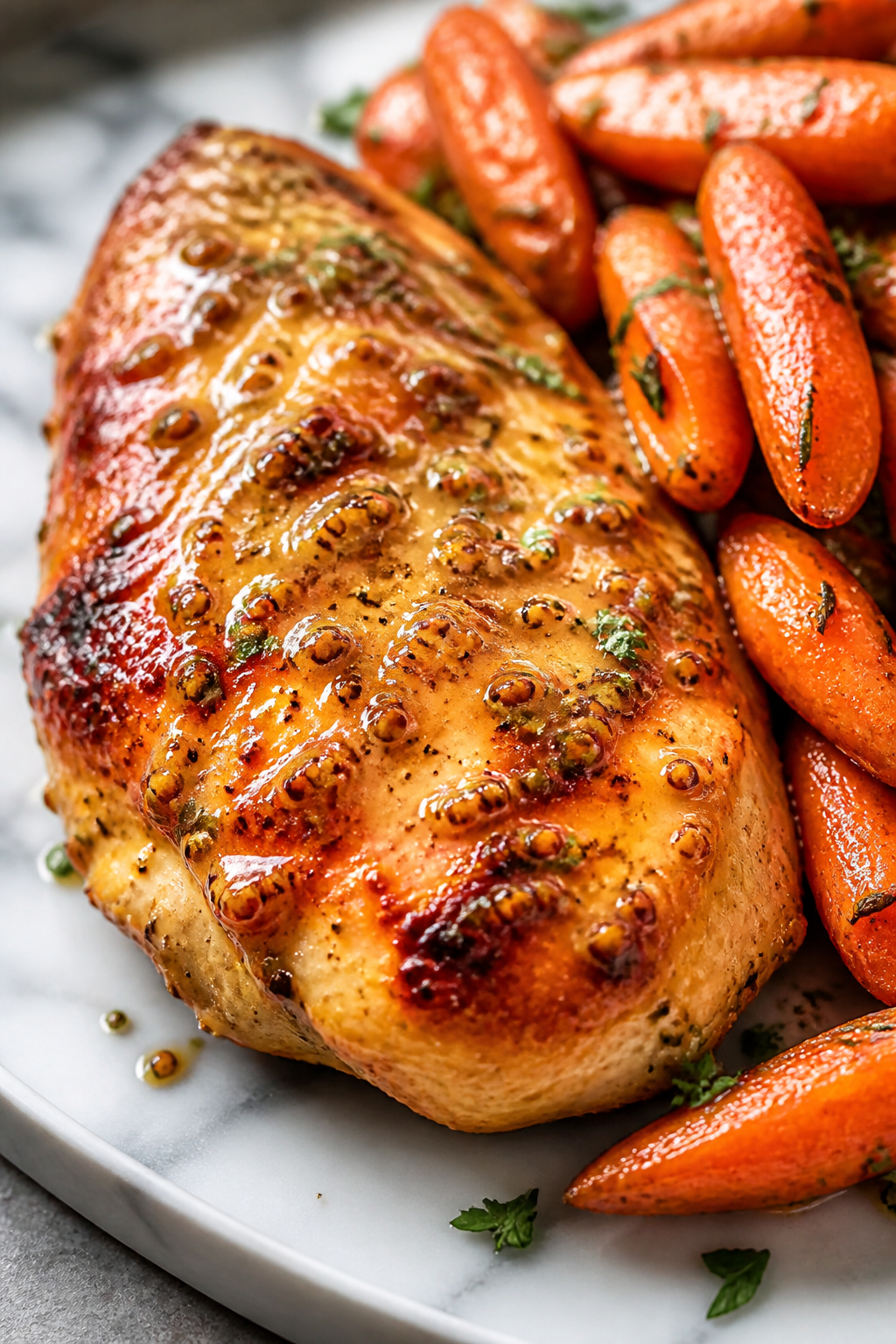
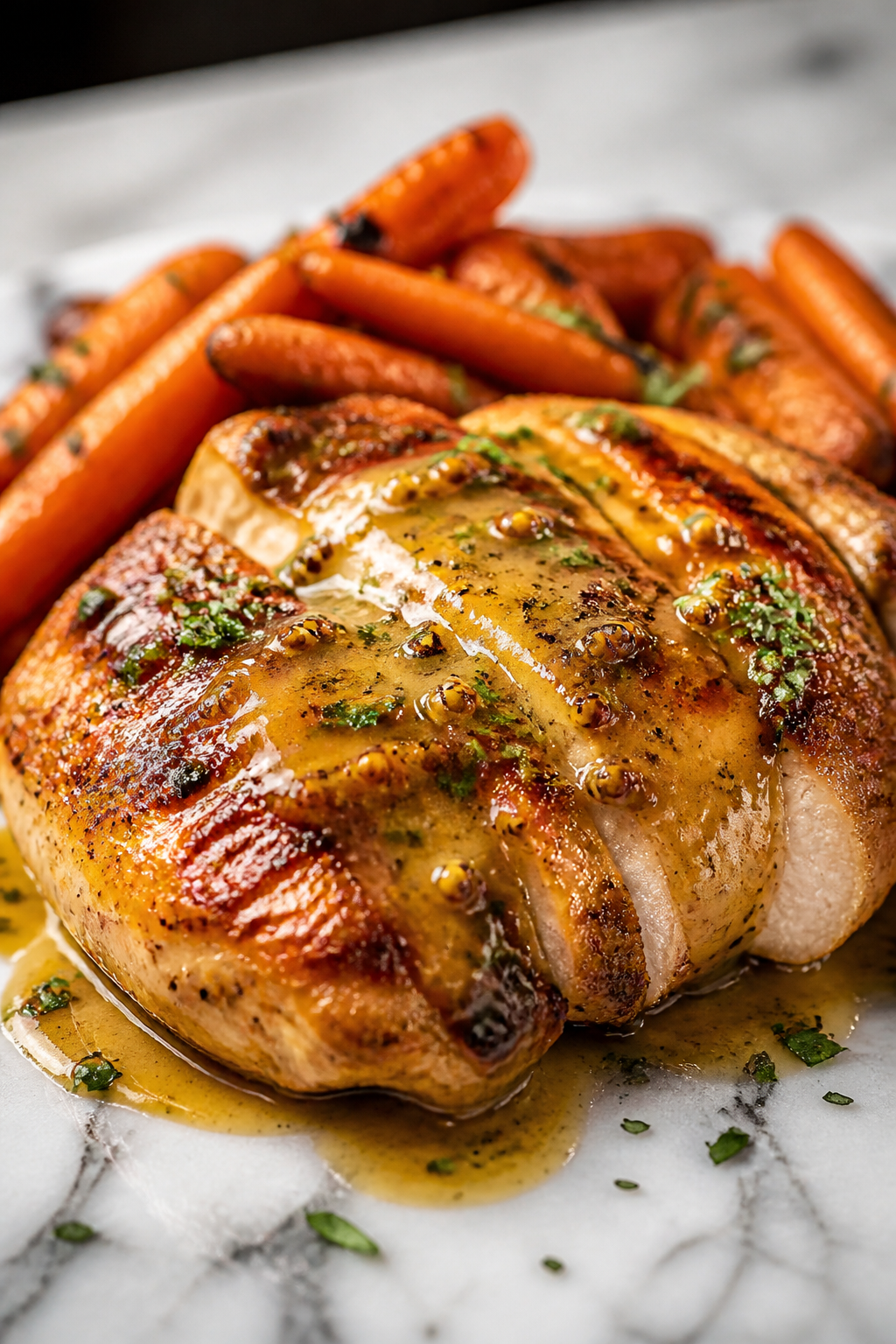
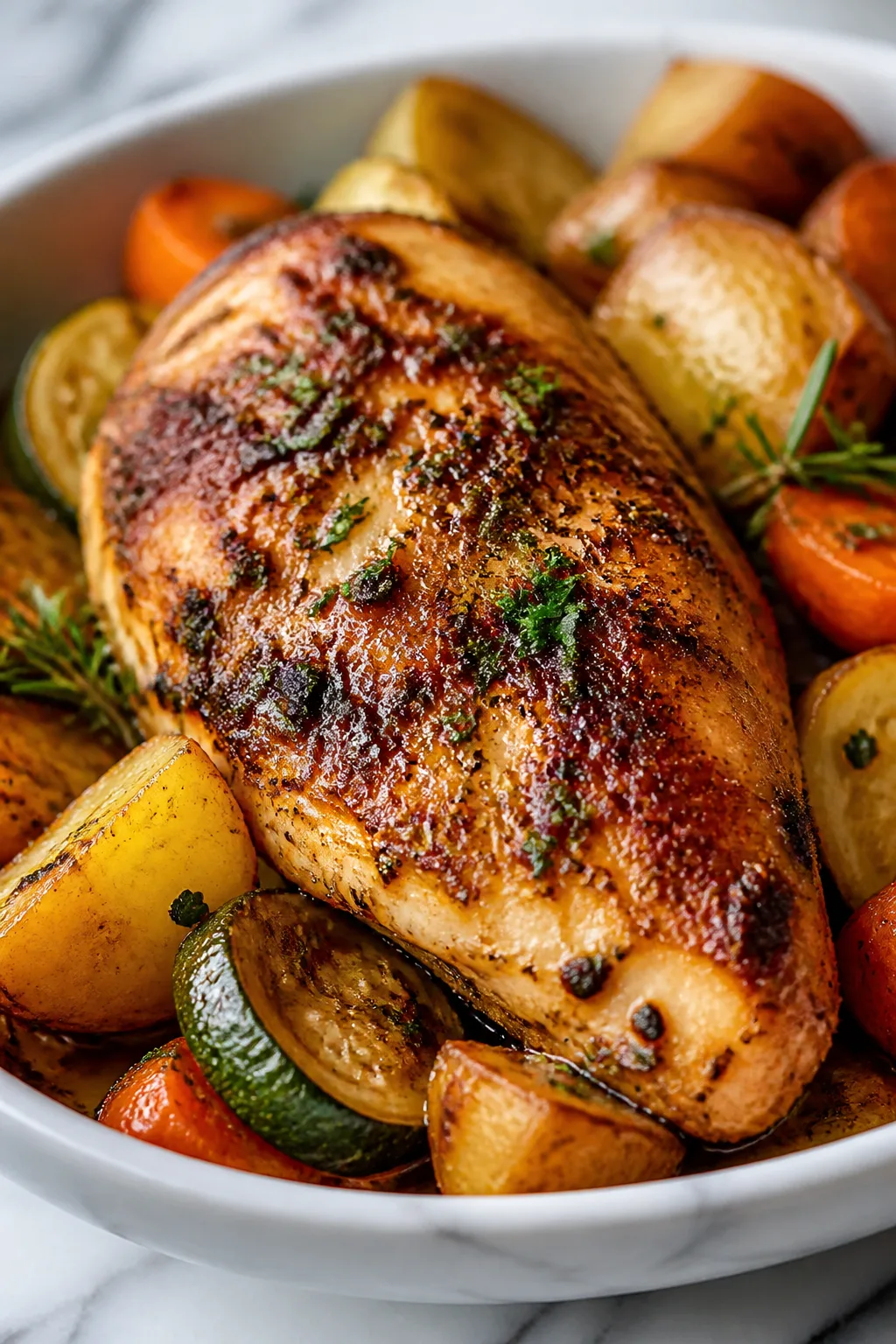
This honey mustard chicken is my go-to quick dinner. The tangy-sweet glaze caramelizes beautifully, and the roasted baby carrots add a tender, earthy touch. Perfect for busy weeknights when you want comfort without the fuss!
Introduction
I first made this honey mustard chicken on a hectic weeknight when I had almost no time but still wanted a comforting homemade dinner. The tangy-sweet glaze that caramelizes on the chicken instantly won me over. Over time, I tweaked the sauce balance, adding a splash of apple cider vinegar for brightness and using Dijon mustard for a bit of kick. What makes this recipe stand out is the way the honey and mustard meld during roasting, creating a sticky, flavorful coating that keeps the chicken juicy. Plus, roasting baby carrots alongside means you get a sweet, tender veggie side with almost no extra effort. I’ve tried many honey mustard chicken recipes before, but this one hits the right notes every time — juicy, flavorful, and fuss-free. The trick I learned early on is not to rush the roasting; letting the glaze caramelize slowly brings out the best texture and flavor. When it’s done, the chicken has a beautiful golden crust, and the carrots are soft with a slight caramel sweetness. It’s exactly the kind of meal I want when I’m tired but still want something satisfying and homemade.
How To Do It
Step 1
Preheat your oven to 400°F (200°C). This temperature is perfect for roasting the chicken and carrots together, allowing the glaze to caramelize without drying out the meat. Make sure your oven is fully heated before placing the dish inside to ensure even cooking and proper browning of the glaze.
⏱ Time: 10 minutes
✓ Doneness: Oven reaches a steady 400°F before starting
Step 2
In a small bowl, whisk together the Dijon mustard, honey, olive oil, apple cider vinegar, salt, and pepper. This mixture forms the glaze that will coat the chicken, balancing sweetness and tanginess. Whisking thoroughly ensures the honey blends smoothly with the mustard and oil, preventing clumps and promoting even coverage.
⏱ Time: 5 minutes
✓ Doneness: Smooth, glossy glaze with no separation
Step 3
Place the chicken breasts in a baking dish and brush each generously with the honey mustard glaze. Don’t skimp here – the more glaze, the better the caramelized crust and flavor. Reserve a small amount of glaze to baste later in cooking. Properly coating the chicken ensures it stays moist and flavorful.
⏱ Time: 5 minutes
✓ Doneness: Chicken breasts fully coated and shiny with glaze
Step 4
Add the peeled baby carrots around the chicken in the baking dish. Toss them with the remaining glaze, fresh thyme leaves, and a pinch of salt. This allows the carrots to roast in the same flavorful sauce, absorbing the honey mustard notes and thyme aroma, resulting in tender, sweet veggies.
⏱ Time: 5 minutes
✓ Doneness: Carrots evenly coated with glaze and herbs
Step 5
Dot the carrots with small pieces of unsalted butter. This adds richness and helps the carrots caramelize beautifully while roasting. Butter also enhances the mouthfeel and balances the tangy glaze with a creamy note.
⏱ Time: 2 minutes
✓ Doneness: Visible butter pieces on carrots before roasting
Step 6
Place the baking dish in the preheated oven and roast for 20 minutes. Halfway through, baste the chicken with any glaze that has pooled in the dish. This helps build layers of flavor and keeps the chicken moist. Avoid opening the oven door too often to maintain heat consistency.
⏱ Time: 20 minutes
✓ Doneness: Chicken surface starts to brown and glaze thickens
Step 7
After 20 minutes, check the chicken’s internal temperature with a meat thermometer; it should read 165°F (74°C). If not quite there, continue roasting 3-5 more minutes. The carrots should be tender when pierced with a fork and slightly caramelized on edges.
⏱ Time: 5 minutes
✓ Doneness: Chicken thermometer reads 165°F; carrots tender and browned
Step 8
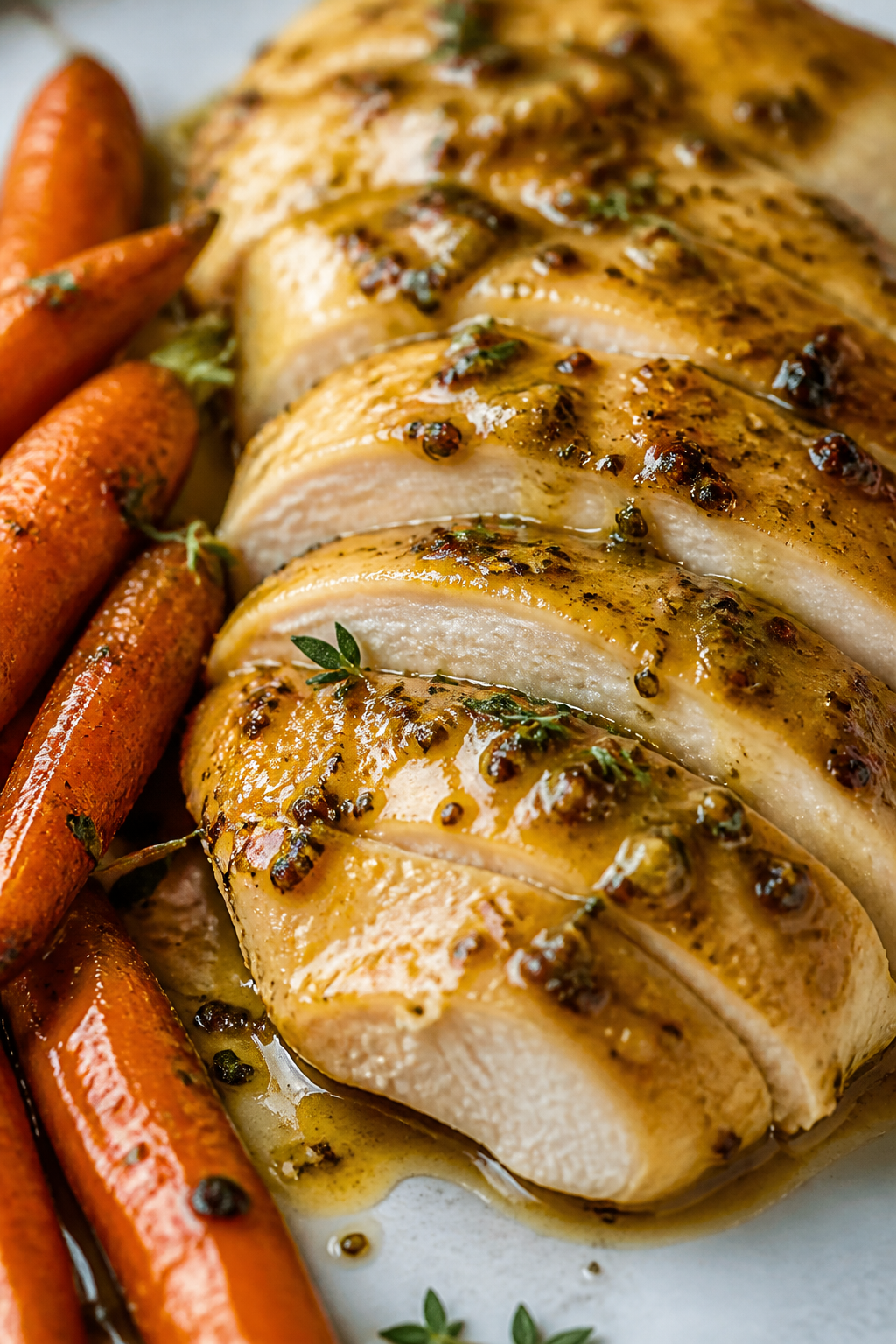
Remove the baking dish from the oven and let the chicken rest for 5 minutes before serving. Resting allows juices to redistribute, ensuring juicy, tender bites. Don’t skip this step, or the chicken can end up dry when sliced immediately.
⏱ Time: 5 minutes
✓ Doneness: Chicken rests and juices settle, no longer steaming
Step 9
Serve the honey mustard chicken with the roasted baby carrots on the side. Spoon any extra glaze from the pan over the top for extra flavor. Garnish with fresh thyme if desired. Enjoy this simple yet flavorful meal that’s perfect for busy weeknights or casual dinners.
⏱ Time: 2 minutes
✓ Doneness: Dish plated attractively with glossy glaze and vibrant carrots
Variations
Spicy Honey Mustard Chicken
Add 1/2 teaspoon cayenne pepper or a dash of hot sauce to the glaze for a spicy kick. The heat pairs beautifully with the sweetness and adds depth. Expect a slightly bolder flavor profile that livens up the dish.
Note: Adjust spice level carefully to avoid overpowering the honey's sweetness.
Honey Mustard Chicken Thighs
Swap chicken breasts for bone-in, skin-on thighs for juicier meat and extra flavor. Roast a bit longer (about 35-40 minutes) until thighs reach 175°F. Skin crisps nicely under the glaze, offering a delicious texture contrast.
Note: Increase cooking time and monitor temperature closely to ensure doneness without drying.
Garlic Herb Honey Mustard Chicken
Mix 2 minced garlic cloves and 1 teaspoon chopped rosemary into the glaze. This adds a fragrant, savory layer that complements the honey mustard perfectly. Great for garlic lovers seeking a more aromatic dish.
Note: Be cautious not to burn garlic during roasting; keep temperature steady.
Honey Mustard Chicken with Roasted Potatoes
Replace baby carrots with small potatoes or fingerlings tossed in the glaze. Potatoes roast up crispy on the outside and tender inside, absorbing the tangy-sweet sauce for a hearty side.
Note: Cut potatoes evenly for uniform cooking; may need slightly longer roasting time.
Dairy-Free Honey Mustard Chicken
Omit the butter on carrots and use olive oil instead to keep it dairy-free. The carrots still roast beautifully with a slight crisp, and the chicken remains flavorful. Perfect for those avoiding dairy without sacrificing taste.
Note: Olive oil has a higher smoke point, so it’s safe for roasting at 400°F.
Pro Tips
Use a meat thermometer to check doneness.
Chicken breast can dry out if overcooked, so using a thermometer ensures you hit the perfect 165°F. This precision prevents guesswork and guarantees juicy, tender meat every time.
Reserve some glaze for basting halfway through roasting.
Basting adds moisture and builds layers of flavor, helping the glaze thicken and stick to the chicken. Skipping this step can lead to a less sticky, less flavorful crust.
Let the chicken rest before slicing.
Resting allows juices to redistribute throughout the meat. Cutting immediately causes the juices to run out, resulting in dry chicken. Even a short rest makes a big difference.
Don’t overcrowd the baking dish.
Giving space between chicken and carrots allows hot air to circulate, promoting even roasting and caramelization. Crowding traps steam, leading to soggy veggies and less crispy chicken.
Use fresh thyme instead of dried.
Fresh thyme releases essential oils during roasting, imparting a more vibrant, herbaceous flavor. Dried thyme can be used but doesn’t provide the same aromatic punch.
Peel carrots if they aren’t pre-peeled.
Peeling removes the tougher outer skin, making carrots tender and more pleasant to eat. It also helps the glaze adhere better during roasting.
Apply glaze evenly with a brush.
Brushing ensures the glaze covers every surface, promoting even caramelization. Pouring glaze on top can cause uneven coating and patchy browning.
Common Mistakes to Avoid
Skipping the resting period after cooking.
Why it happens Many cooks want to serve immediately, assuming the chicken is done once out of the oven. This impatience leads to juices escaping when slicing.
Fix Allow the chicken to rest for at least 5 minutes on a cutting board before slicing. Cover loosely with foil to retain warmth. This step lets the meat fibers relax and reabsorb moisture, ensuring juicy results.
Using too high an oven temperature.
Why it happens Some think higher heat means faster cooking, but it can burn the glaze and dry the chicken.
Fix Stick to 400°F for roasting. This temperature balances caramelization and gentle cooking. If your oven runs hot, consider reducing temp slightly or shortening cooking time.
Not coating the carrots well with the glaze.
Why it happens It’s easy to focus only on the chicken and neglect the veggies.
Fix Toss the carrots thoroughly with the glaze and herbs before roasting. This ensures they absorb flavor and caramelize nicely alongside the chicken.
Overcrowding the pan.
Why it happens Trying to cook everything in a small dish to save time or dishes.
Fix Use a large enough baking dish so ingredients aren’t touching. Proper airflow is essential for roasting and caramelization.
Using thick honey that doesn’t mix well.
Why it happens Some honeys are very thick or crystallized, making the glaze uneven.
Fix Use runny honey or gently warm thick honey before mixing. This makes a smooth glaze that coats evenly and caramelizes properly.
Nutrition
Per Serving:
Nutritional values are estimates and may vary based on specific ingredients used.
Storage & Tips
Room Temperature
You can leave the cooked dish covered at room temperature for up to 2 hours safely. Beyond that, bacteria growth increases, so refrigerate promptly. Cover with foil or a lid to keep it moist and prevent contamination.
Refrigerator
Store leftovers in an airtight container for up to 3 days. The chicken and carrots may firm up when cold, so reheat gently to restore tenderness. Flavor remains great, but texture is best warmed.
Freezer
Freeze cooked chicken and carrots separately in airtight freezer bags or containers for up to 2 months. Wrap tightly to avoid freezer burn. Thaw overnight in the fridge before reheating to maintain texture.
Reheating
Reheat in a 350°F oven covered with foil for 15-20 minutes until warmed through. Alternatively, microwave covered on medium power, stirring carrots occasionally. Add a splash of water or broth to keep moist and avoid drying out.
Make Ahead
You can prepare the glaze and peel carrots 1-2 days ahead, storing them separately in the fridge. Assemble the baking dish just before roasting to keep ingredients fresh and ensure the best caramelization.
FAQ
Can I use chicken thighs instead of breasts?
Absolutely! Chicken thighs are juicier and more forgiving if slightly overcooked. Just increase the roasting time to about 35-40 minutes and check for an internal temperature of 175°F. The skin crisps up nicely under the glaze, adding extra flavor.
What if I don’t have Dijon mustard?
You can substitute with yellow mustard, but the flavor will be milder and less tangy. If you want a closer match, mix yellow mustard with a splash of white wine vinegar. Avoid spicy mustards as they change the taste profile significantly.
How can I make the glaze thicker?
If your glaze seems too runny, mix the honey and mustard well and let it sit for 5 minutes before applying. During roasting, basting halfway helps it thicken naturally. Avoid heating the honey too much beforehand to prevent it becoming too thin.
Can I prepare this recipe ahead of time?
Yes! You can mix the glaze and marinate the chicken in it for up to 24 hours in the fridge. This deepens the flavor. Keep carrots separate until roasting day to avoid sogginess. Assemble and roast fresh for best texture.
What sides go well with this honey mustard chicken?
Roasted vegetables like Brussels sprouts or green beans, simple rice, or a fresh salad pair wonderfully. The sweet and tangy chicken glaze balances well with crisp, green veggies or creamy mashed potatoes.
How do I prevent the glaze from burning?
Monitor your oven temperature carefully and avoid cooking at temperatures above 400°F. Also, basting the chicken halfway through helps prevent the sugars in honey from burning by keeping the surface moist.
Is it possible to make this recipe dairy-free?
Yes, simply omit the butter on the carrots and use olive oil instead. The carrots will still roast beautifully and absorb the glaze’s flavors. This adjustment keeps the dish dairy-free without sacrificing taste.
Can I use frozen chicken breasts?
It’s best to thaw chicken breasts fully before roasting to ensure even cooking and proper glaze caramelization. Cooking from frozen often results in uneven texture and undercooked spots.
Final Thoughts
Give this honey mustard chicken a try—you’ll love how easy and flavorful it is. Don’t forget to share how it turns out for you!