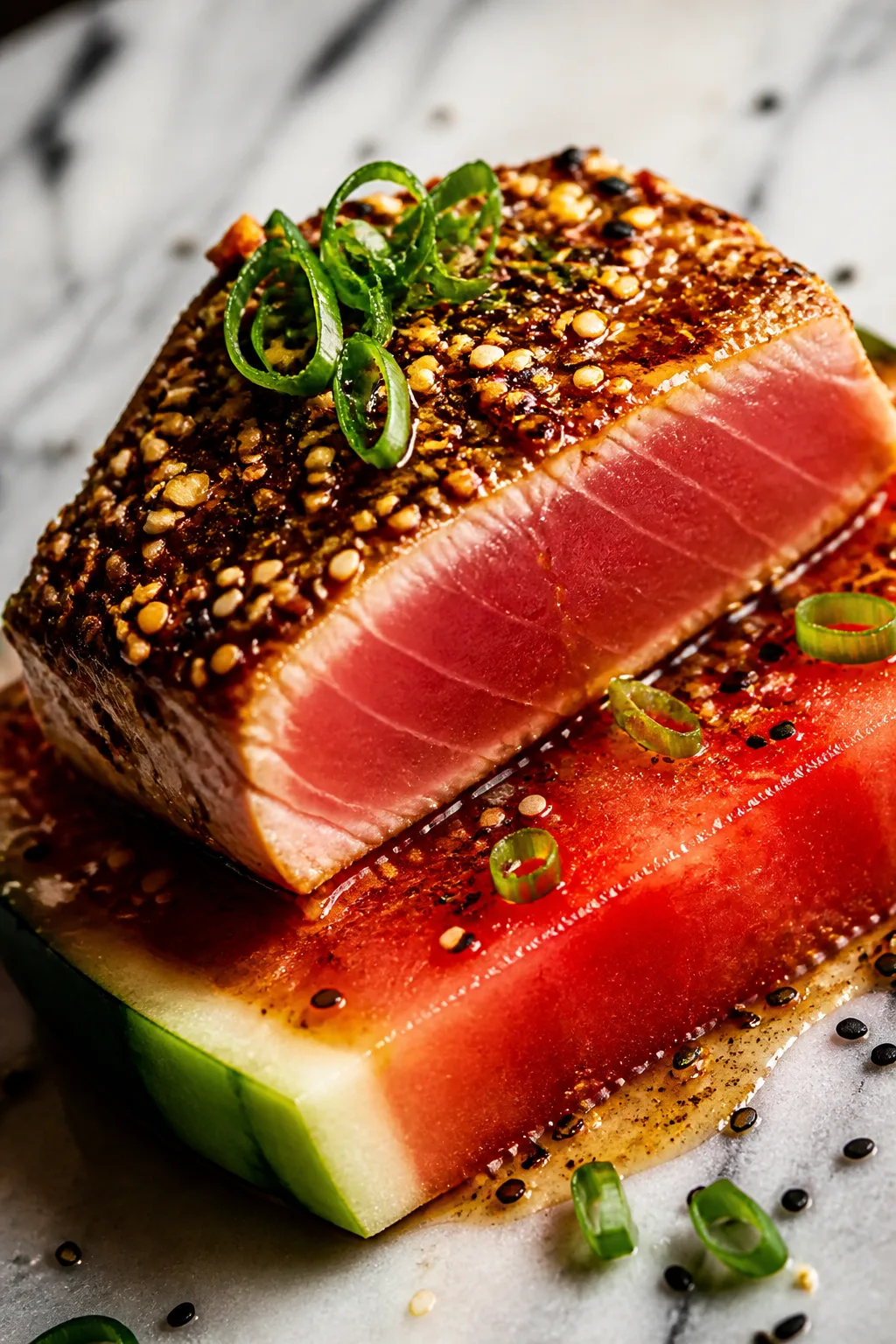
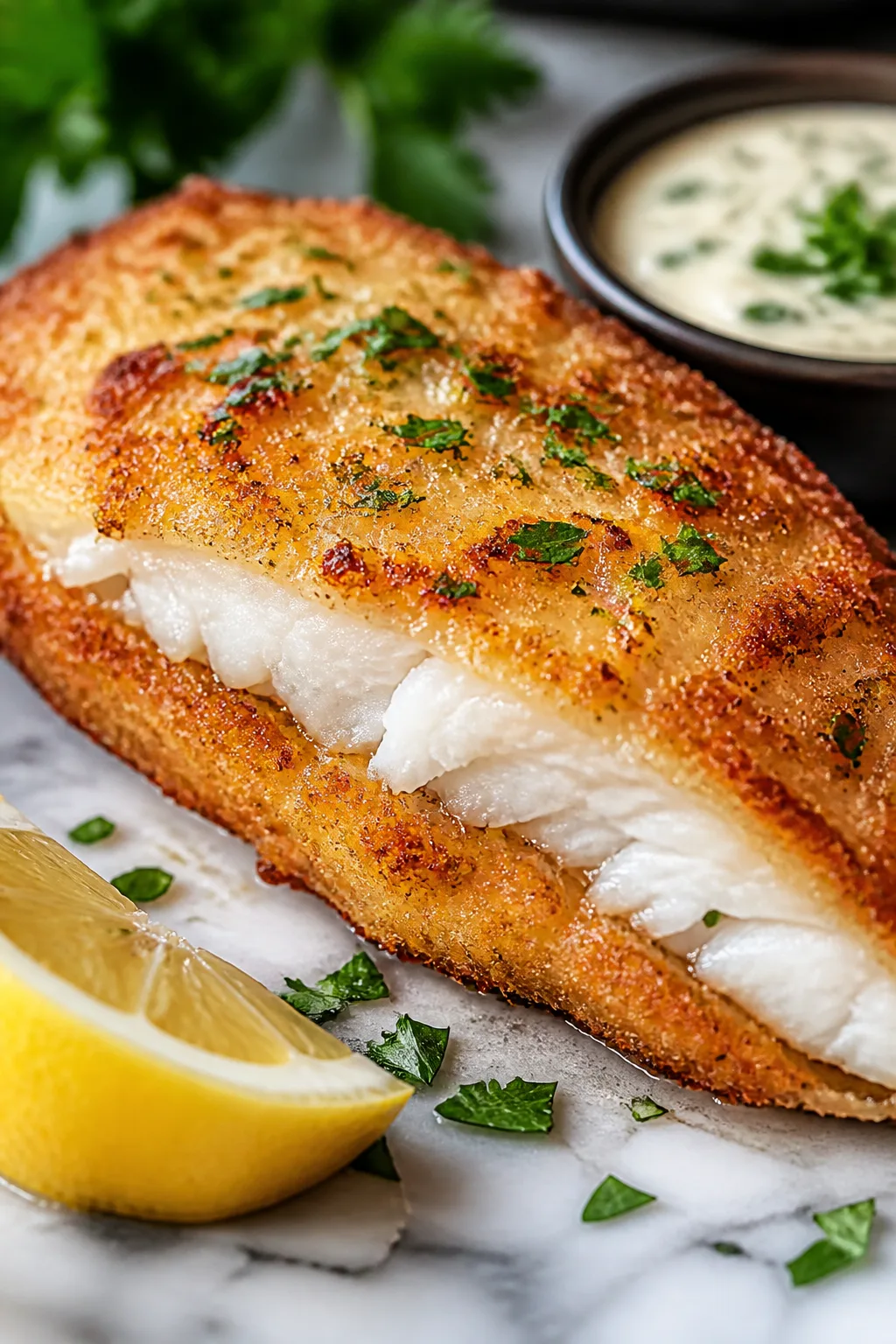
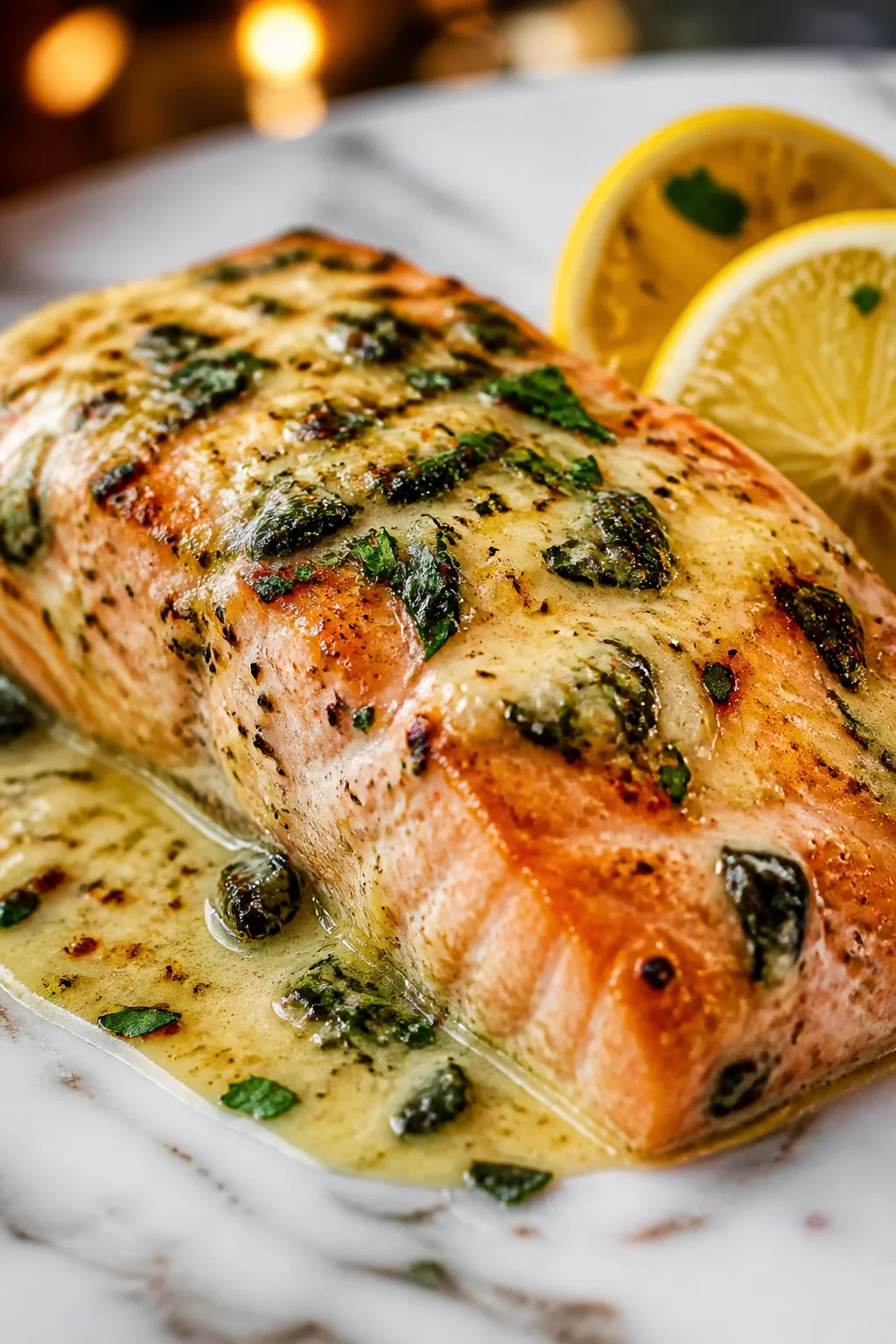
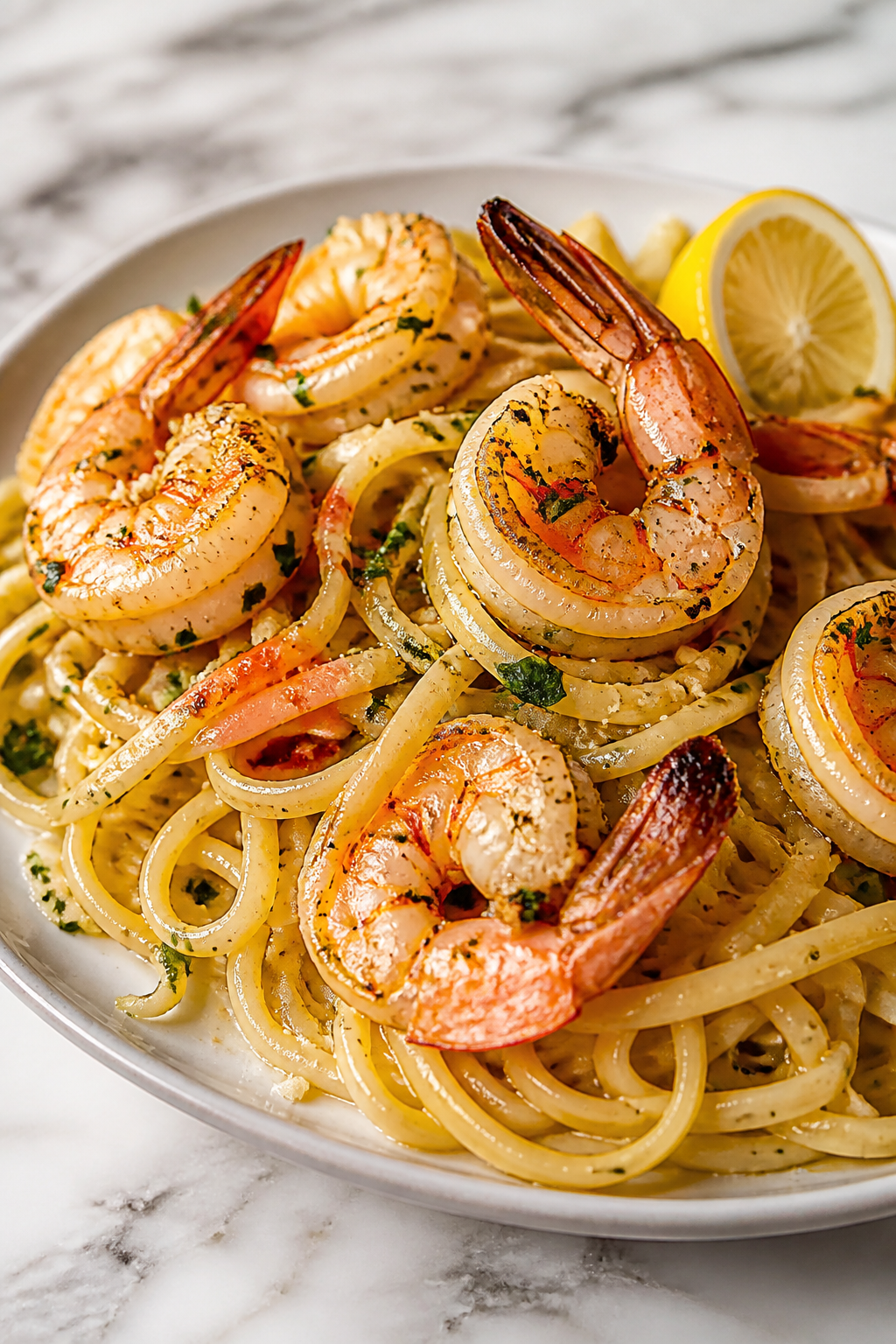
This baked watermelon tuna dish is a delightful mix of juicy sweetness and savory tuna flavor. The watermelon adds a fresh twist that’s perfect for a light summer dinner or when you want something different and easy.
Introduction
I stumbled upon this baked watermelon tuna recipe one summer when I wanted something light but flavorful for dinner. Tuna is usually cooked with bold spices or grilled, but pairing it with watermelon was a happy accident that brought a fresh sweetness I hadn’t expected. This version is different because it bakes the tuna gently alongside juicy watermelon cubes, letting the flavors meld beautifully without overpowering each other. The trick I learned was to use fresh ginger and lime juice to brighten the dish and balance the sweetness of the watermelon. Plus, baking instead of searing means the tuna stays tender and moist. When it’s done, you get this lovely mix of savory, sweet, and tangy with a refreshing finish that feels perfect for warm evenings. It’s light enough for a family meal but special enough to serve guests. I love how simple it is yet feels thoughtfully put together — a real crowd-pleaser in my experience!
How To Do It
Step 1
Preheat your oven to 375°F (190°C). Prepare a baking dish by lightly oiling it to prevent sticking. This step ensures the tuna and watermelon cook evenly without drying out or sticking to the pan. It's important to preheat the oven fully so the tuna bakes gently and retains moisture. Avoid rushing this step because a cold oven can cause uneven cooking, making the tuna tough.
⏱ Time: 10 minutes
✓ Doneness: The oven should be fully heated to 375°F before placing the dish inside.
Step 2
In a small bowl, mix olive oil, soy sauce, grated ginger, minced garlic, lime juice, salt, and pepper. This marinade combines savory, zesty, and aromatic flavors that complement both the tuna and watermelon. The olive oil helps keep the tuna moist while baking, and the acidity from lime juice brightens the overall dish. Don’t skip the ginger—it adds a subtle warmth that balances the sweetness of the watermelon.
⏱ Time: 5 minutes
✓ Doneness: The marinade should be smooth and well combined with no lumps.
Step 3
Place the tuna steaks in the baking dish and spoon half of the marinade over them, coating evenly. Arrange watermelon cubes around the tuna, then drizzle the remaining marinade over the watermelon. This arrangement allows the watermelon to soak up some of the marinade flavors without overpowering the tuna. Be gentle when mixing to keep the watermelon cubes intact. If you toss too aggressively, the watermelon may break down and become mushy.
⏱ Time: 5 minutes
✓ Doneness: Tuna steaks are evenly coated and watermelon cubes glisten with marinade.
Step 4
Bake the tuna and watermelon in the preheated oven for about 20-25 minutes. The baking process gently cooks the tuna through while warming the watermelon, which releases its juices and infuses the fish with subtle sweetness. Keep an eye on the tuna so it doesn’t overcook—tuna is best when slightly pink in the center. Overbaking can dry it out and reduce tenderness.
⏱ Time: 20-25 minutes
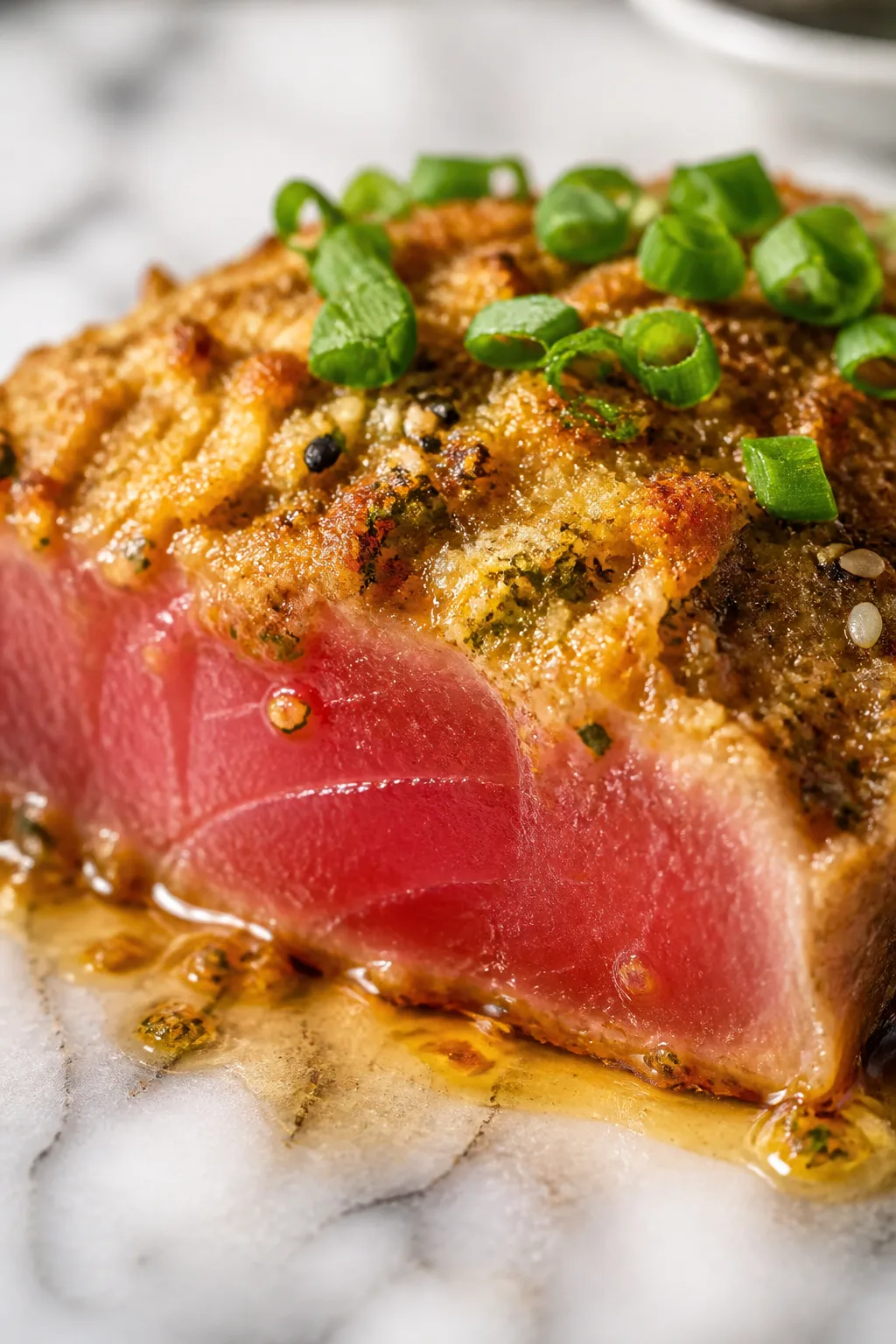
✓ Doneness: Tuna should be opaque on the outside but slightly pink in the center; watermelon should be soft but maintain shape.
Step 5
Remove the dish from the oven and let it rest for 5 minutes. Resting allows the juices to redistribute within the tuna, making each bite juicy and tender. It also gives the watermelon a moment to cool slightly, balancing the warm and fresh elements in the dish. Resist the urge to serve immediately as cutting into hot tuna can cause moisture loss.
⏱ Time: 5 minutes
✓ Doneness: Tuna is firm but yields slightly to touch; watermelon is warm but not hot.
Step 6
Garnish with fresh mint leaves before serving. The mint adds a refreshing herbal note that complements the sweet and savory flavors beautifully. If you don’t have mint, fresh basil or cilantro work well as alternatives. This small finishing touch elevates the dish visually and flavor-wise.
⏱ Time: 2 minutes
✓ Doneness: Bright green mint leaves scattered over the fish and watermelon.
Step 7
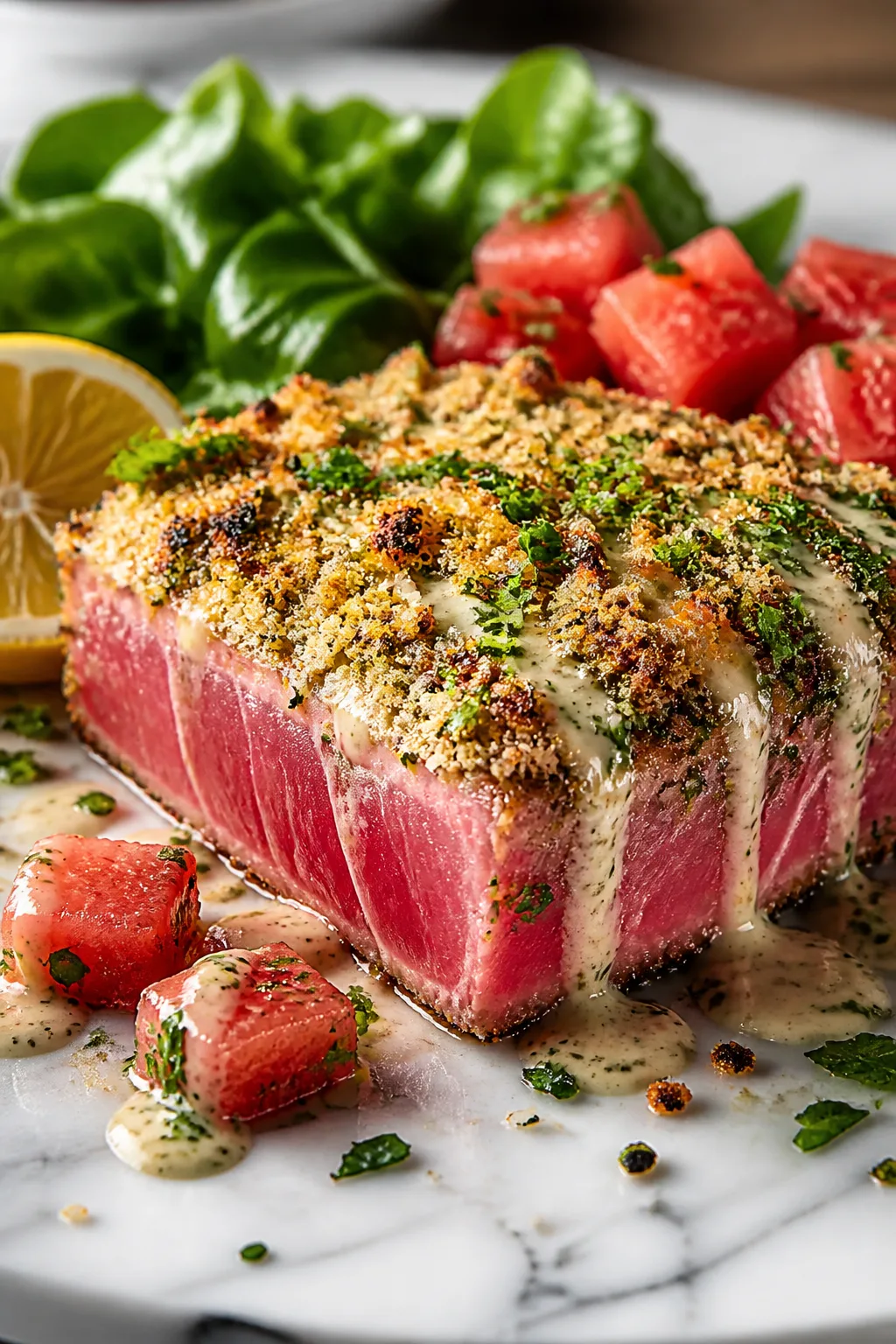
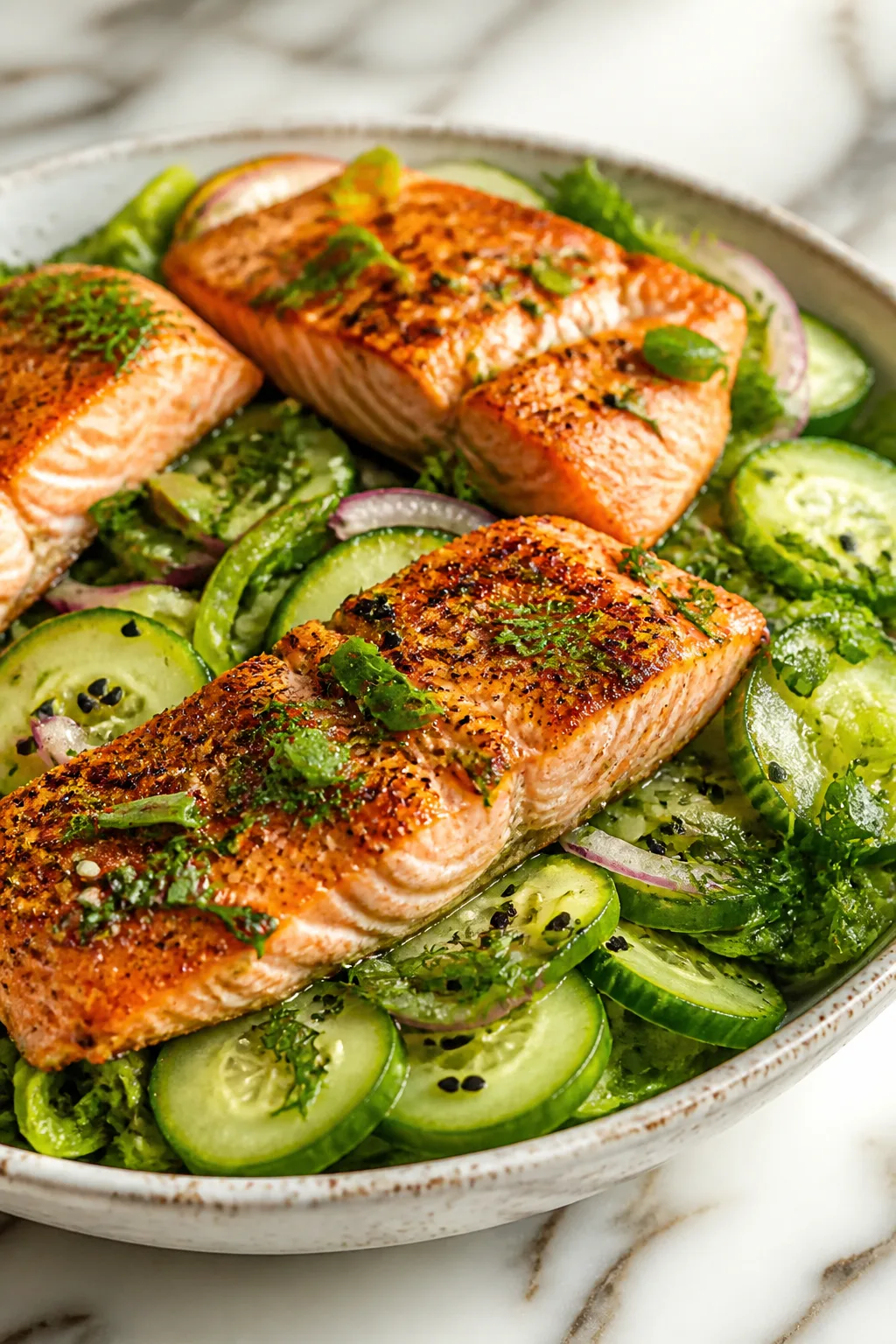
Serve the baked watermelon tuna with a side of steamed jasmine rice or a crisp green salad. The rice soaks up the flavorful juices, while the salad adds crunch and freshness. This pairing makes the meal balanced and satisfying without feeling heavy, perfect for warm weather dinners.
⏱ Time: 0 minutes (serve immediately)
✓ Doneness: Plated dish looks colorful and inviting with balanced portions.
Step 8
If you want a bit more zing, squeeze an extra splash of lime juice over the tuna just before eating. The acidity brightens the flavors and cuts through the richness. This final touch is optional but highly recommended if you enjoy a lively flavor contrast.
⏱ Time: 1 minute
✓ Doneness: Fresh lime aroma noticeable and enhances the dish’s brightness.
Step 9
Enjoy your meal! This dish pairs wonderfully with a chilled white wine or sparkling water with lime. The combination of sweet watermelon and savory tuna is surprisingly refreshing and satisfying. Don’t forget to savor each bite slowly to appreciate the contrasting flavors and textures.
⏱ Time: 0 minutes
✓ Doneness: Dish consumed with enjoyment and no leftover bitterness or dryness.
Variations
Spicy Baked Watermelon Tuna
Add a teaspoon of chili flakes or a dash of sriracha to the marinade for a spicy kick. The heat pairs surprisingly well with the sweetness of the watermelon, creating a more complex flavor profile. Expect a bit more warmth and depth in every bite.
Note: Spicy ingredients can intensify during baking, so adjust chili amounts to taste and watch for any burning.
Herb-Crusted Watermelon Tuna
Coat the tuna steaks with a mix of chopped fresh herbs like parsley, cilantro, and basil before baking. This adds a fresh, green flavor and a slight texture contrast. The watermelon remains the sweet counterpoint, making the dish vibrant and aromatic.
Note: Press herbs gently onto the tuna to help them adhere during baking without falling off.
Grilled Watermelon Tuna
Instead of baking, grill the tuna steaks and watermelon cubes for a smoky flavor. This variation adds charred notes and a slightly firmer texture, perfect for outdoor cookouts. Brush with marinade while grilling to keep moist.
Note: Grilling times are shorter; watch carefully to avoid overcooking tuna.
Watermelon Tuna Salad Bowl
Chop the baked tuna and watermelon into bite-sized pieces and toss with mixed greens, avocado, and a light vinaigrette. This turns the dish into a refreshing salad, great for lunch or a light dinner. The textures and flavors stay balanced and fresh.
Note: Cool the tuna and watermelon completely before mixing with greens to avoid wilting.
Citrus Glazed Watermelon Tuna
Add orange or grapefruit juice to the marinade for a citrus glaze. This variation enhances the tang and adds a bit of sweetness that complements the watermelon beautifully. The glaze caramelizes slightly during baking for extra flavor.
Note: Monitor baking closely as citrus sugars can caramelize quickly and burn if overcooked.
Pro Tips
Marinate the tuna for at least 15 minutes before baking.
Allowing the tuna to marinate gives the flavors time to penetrate the flesh, enhancing taste without overpowering the natural tuna flavor. The acid in lime juice also helps tenderize the fish slightly, making it more succulent after baking.
Use a sharp knife to cut watermelon into uniform cubes.
Uniform cubes ensure even cooking and consistent texture. If the watermelon pieces vary too much in size, some may overcook and become mushy while others remain too firm, disrupting the balance of the dish.
Don’t overbake the tuna—aim for medium rare to medium doneness.
Tuna is best enjoyed when it’s still slightly pink inside. Overbaking dries it out, making it tough and less flavorful. Baking gently at 375°F and checking doneness early helps achieve tender, juicy results.
Let the dish rest for a few minutes after baking before serving.
Resting allows juices to redistribute throughout the tuna, resulting in a moister, more flavorful bite. Serving immediately can cause the juices to run out, drying the fish.
Garnish with fresh herbs like mint or basil just before serving.
Fresh herbs add a pop of color and a refreshing herbal aroma that complements the sweet and savory flavors. Adding herbs too early can cause them to wilt and lose vibrancy.
Serve with a simple side like steamed rice or a crisp salad.
A neutral side helps balance the sweet-savory main without overwhelming it. Rice absorbs the flavorful juices, while salad adds crunch and freshness for textural contrast.
Use a glass or ceramic baking dish for even heat distribution.
These materials conduct heat gently and evenly, preventing hot spots that can cause uneven cooking or burning. Metal pans may heat too quickly and risk drying the tuna.
Common Mistakes to Avoid
Overcooking the tuna
Why it happens Many cooks rush the baking time or use too high a temperature, thinking the fish needs to be fully cooked through. Tuna cooks quickly and can easily dry out.
Fix Bake at 375°F and check for doneness early, aiming for a slightly pink center. Use a timer and avoid opening the oven frequently to maintain consistent temperature.
Using watery or underripe watermelon
Why it happens Sometimes watermelon is chosen based on size or price rather than ripeness, leading to a bland or mushy texture after baking.
Fix Select firm, ripe watermelon with a sweet aroma. Avoid pieces that are overly soft or pale, as they won’t hold up well during cooking.
Skipping the marinade
Why it happens Some think the tuna alone is flavorful enough and skip marinating to save time.
Fix Even a short marinating time enhances flavor and tenderness. Prepare the marinade ahead and coat tuna well for best results.
Not resting the fish after baking
Why it happens Impatience leads to serving immediately, causing juices to run out and the tuna to be dry.
Fix Let the tuna rest for 5 minutes after baking to allow juices to redistribute, ensuring moistness.
Using bottled lime juice instead of fresh
Why it happens Convenience often leads cooks to use bottled juice, which lacks brightness and can taste dull.
Fix Always use freshly squeezed lime juice for the best flavor and aroma.
Nutrition
Per Serving:
Nutritional values are estimates and may vary based on specific ingredients used.
Storage & Tips
Room Temperature
This dish can safely sit at room temperature for up to 2 hours. Cover it loosely with foil or a clean cloth to protect from contaminants. Beyond this time, bacteria growth increases, so refrigerate promptly.
Refrigerator
Store leftovers in an airtight container for up to 3 days. The flavors meld further when chilled, though the watermelon may soften more. It’s best served cold or gently reheated.
Freezer
Freezing is not recommended as the watermelon’s texture degrades significantly. If necessary, freeze tuna separately for up to 1 month in a vacuum-sealed bag to preserve quality. Thaw in the refrigerator overnight.
Reheating
Reheat gently in a low oven (about 300°F) for 10-15 minutes or in a microwave on low power to avoid overcooking the tuna. Adding a splash of water or broth helps maintain moisture. Avoid high heat which toughens the fish.
Make Ahead
You can prepare the marinade and cut the watermelon 1 day ahead, storing them separately in the fridge. Assemble the dish and bake on the day of serving for best freshness and texture.
FAQ
Can I use canned tuna instead of fresh tuna steaks?
Canned tuna has a very different texture and flavor and isn’t suitable for baking with watermelon in this way. Fresh tuna steaks provide the meaty texture and mild flavor needed for this dish’s balance. If you want a quick alternative, try a fresh tuna salad with watermelon instead.
What if I don’t have fresh ginger?
Fresh ginger adds brightness and warmth that powdered ginger can’t replicate. If you must substitute, use a small pinch of ground ginger, but reduce the amount since it’s more concentrated. The flavor won’t be as fresh or vibrant, but it’ll still add some spice.
Can I grill this instead of baking?
Yes! Grilling tuna and watermelon adds a smoky char that’s delicious. Just watch the cooking time carefully as grilled tuna cooks faster. Brush with marinade and grill on medium heat for about 3-4 minutes per side for tuna, grilling watermelon briefly to warm and soften.
How do I know when the tuna is done?
Tuna is best served medium rare to medium, meaning it should be opaque on the outside but still pink and tender inside. Overcooked tuna becomes dry and tough. Use a timer and check by touch—the fish should be firm but yield slightly under finger pressure.
What sides go well with this dish?
Simple sides like steamed jasmine rice, quinoa, or a crisp green salad complement the flavors without overpowering them. The rice soaks up the delicious juices, while salad adds freshness and crunch, balancing the meal perfectly.
Can I prepare this dish ahead of time?
You can prepare the marinade and cut watermelon a day ahead, storing them separately in the fridge. Assemble and bake just before serving to keep watermelon fresh and tuna tender. Avoid baking too far in advance to prevent texture loss.
Is this recipe suitable for picky eaters?
Because it combines sweet and savory flavors gently, this dish tends to please a variety of palates, including picky eaters. If someone doesn’t like watermelon, you can serve it on the side or swap for mild fruit like mango.
What if I want a spicier version?
Add chili flakes or a dash of hot sauce to the marinade to introduce heat. Start with small amounts to avoid overpowering the sweet watermelon, and adjust to taste. This adds an exciting contrast that works well with the existing flavors.
Final Thoughts
I hope you give this baked watermelon tuna a try—it’s such a fun and refreshing way to enjoy tuna. Please let me know how it turns out and if you add your own twist!