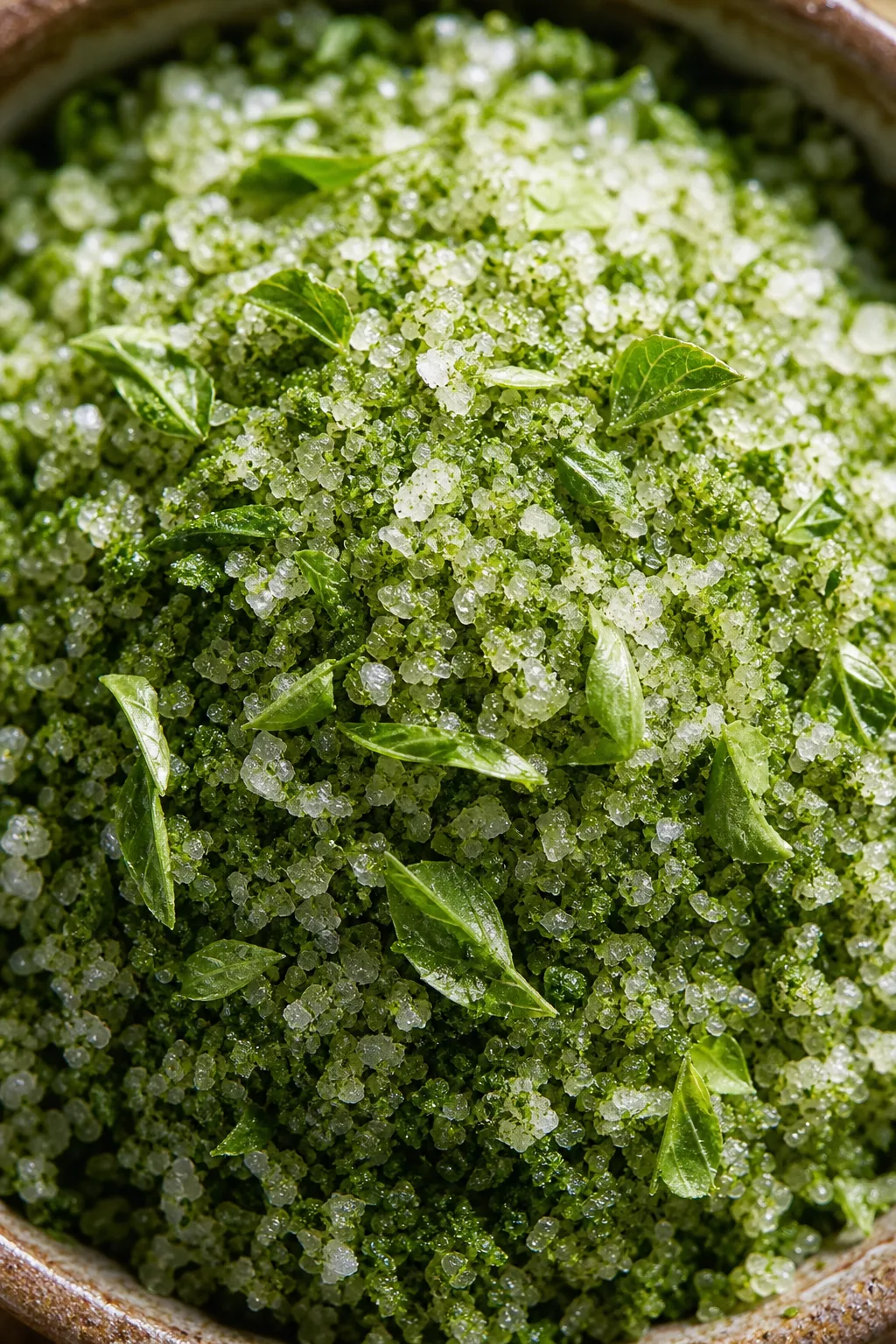
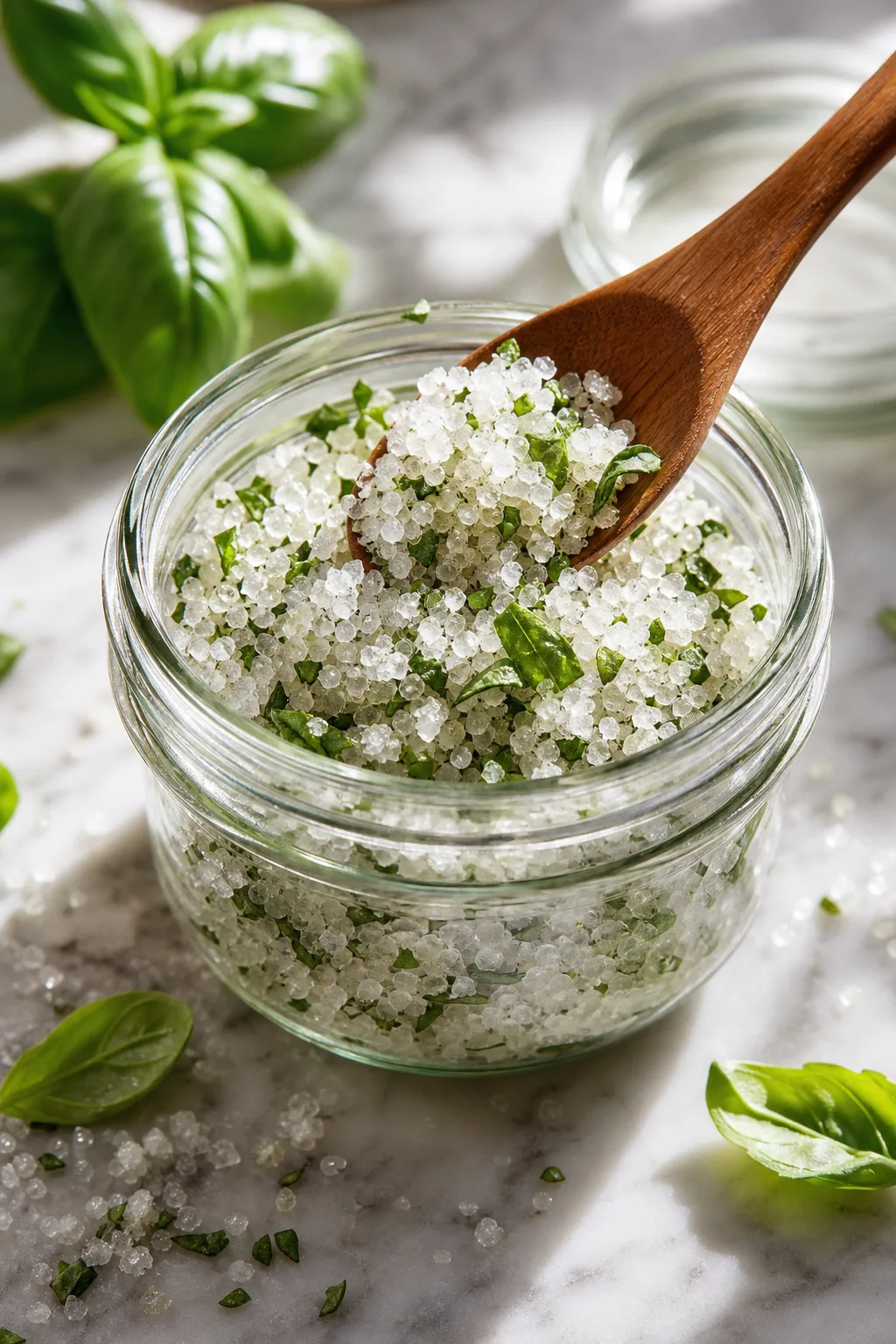
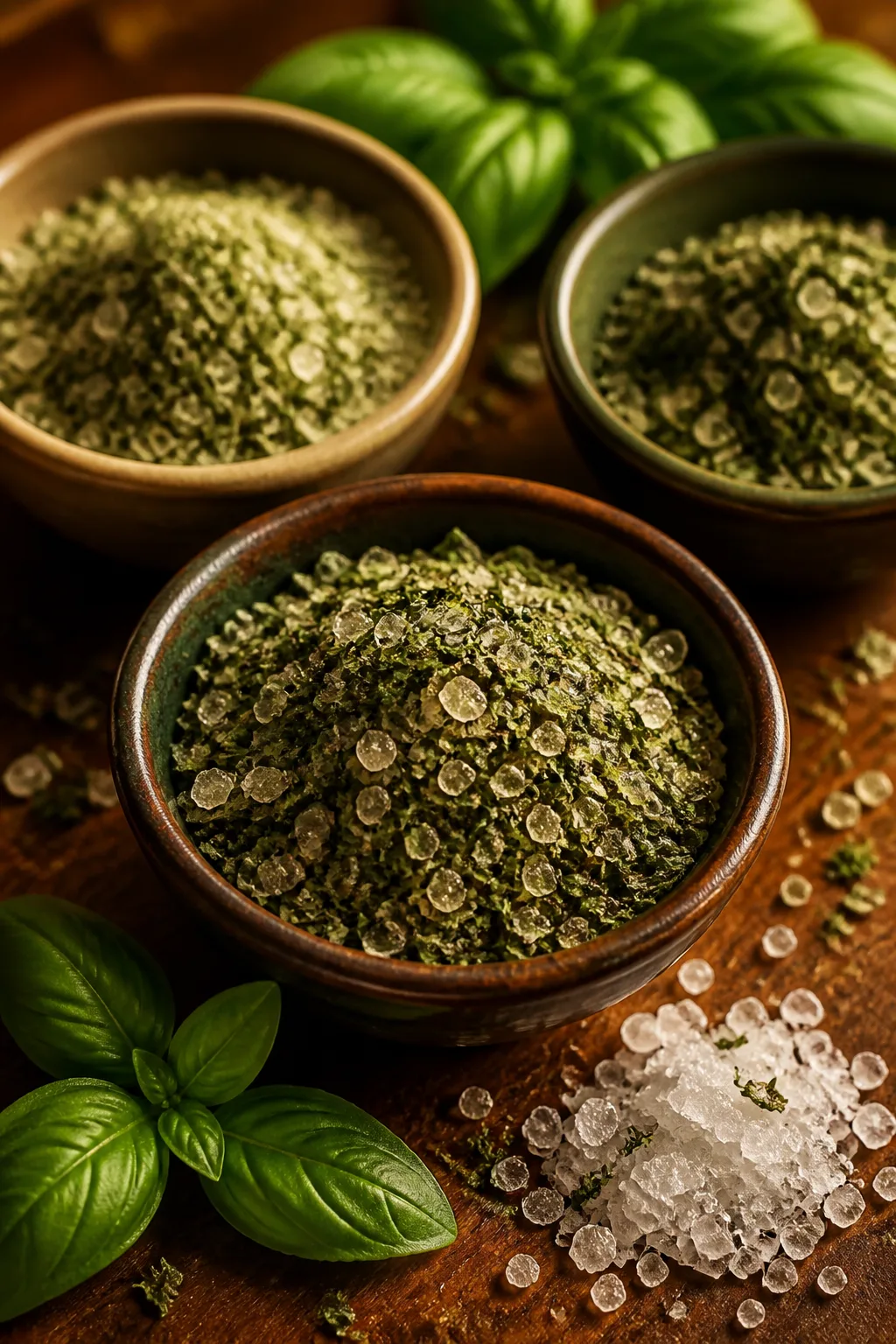
This easy basil salt blends dried basil with coarse sea salt for a fresh, herby kick. I use it on everything from roasted veggies to grilled chicken. It’s a quick way to brighten meals anytime!
Introduction
I first stumbled upon basil salt when I wanted a quick way to add fresh herb flavor to dishes without chopping fresh basil every time. It’s such a simple mix — just dried basil and coarse sea salt — but it makes a surprisingly big difference. What I love most is how versatile it is; I sprinkle it on roasted veggies, grilled chicken, or even popcorn for a little extra punch. Over time, I figured out that using coarse sea salt rather than fine salt gives it a nice texture and keeps the herbal flavor from getting lost. Plus, drying the basil well before mixing helps the flavors concentrate without any bitterness. It’s a tiny thing that livens up meals in a snap, especially on busy nights when you want something flavorful but fuss-free. The finished basil salt looks and smells bright and inviting, with just enough herb aroma to perk up whatever you add it to. Honestly, once you make this, you’ll want a jar of it in your kitchen all the time!
What You'll Need
About 3/4 cup basil salt, enough for multiple uses
- 1/4 cup dried basil leaves
- 1/2 cup coarse sea salt
How To Do It
Step 1
Start by gently crushing the dried basil leaves in your hands or with a mortar and pestle. This releases the essential oils and brightens the herb flavor. Avoid pulverizing it into a powder — you want small flakes for texture and visual appeal. If the basil feels damp or clumpy, spread it on a baking sheet and dry it in a low oven for 10 minutes to remove moisture. This step is key because any moisture can cause the salt to clump later.
⏱ Time: 10 minutes
✓ Doneness: Basil flakes are dry to the touch and slightly crumbly but not powdery
Step 2
Measure out the coarse sea salt and combine it with the crushed basil in a mixing bowl. Stir thoroughly to evenly distribute the herb throughout the salt. Using coarse salt rather than fine ensures the basil flavor stands out and the seasoning has a nice crunch when used. If you mix it too roughly or with fine salt, the basil can get lost or the texture becomes less interesting.
⏱ Time: 5 minutes
✓ Doneness: Salt grains are evenly coated with basil flakes, no clumps
Step 3
Transfer the basil salt to a clean, airtight jar for storage. Keep it in a cool, dry place away from direct sunlight to preserve the flavor and prevent moisture buildup. Label the jar with the date — it’s best used within 3 months for peak freshness. Over time, the herbs may lose potency, so making small batches works well.
⏱ Time: 2 minutes
✓ Doneness: Jar is tightly sealed and basil salt looks dry and fluffy
Step 4
To use your basil salt, sprinkle it generously over roasted vegetables, grilled meats, or pasta dishes right before serving. It also works surprisingly well on popcorn or scrambled eggs for a subtle herbaceous twist. The coarse texture adds a nice crunch and bursts of basil flavor with every bite. Experiment to find your favorite combos!
⏱ Time: As needed
✓ Doneness: Flavorful herb aroma and balanced saltiness enhance the dish
Step 5
If you want to enhance the basil flavor further, try blending in a pinch of garlic powder or lemon zest. This adds complexity and brightness. Add these extras sparingly so they complement but don’t overpower the basil’s fresh notes. Mix well after adding and test on a small dish first.
⏱ Time: 5 minutes
✓ Doneness: Seasoning blend smells fresh and balanced without harsh notes
Step 6
For a finer texture basil salt, pulse the mixture in a spice grinder for a few seconds. Be careful not to overdo it or you’ll lose the pleasant coarse crunch. This version works better as a finishing salt on delicate dishes like fish or salads where you want a subtler texture.
⏱ Time: 1 minute
✓ Doneness: Salt is fine but still visibly speckled with basil flakes
Step 7
Avoid adding fresh basil directly to salt for this recipe, as the moisture will cause clumping and spoilage. Always use dried basil that’s completely dry. This keeps your seasoning shelf-stable and easy to sprinkle.
⏱ Time: N/A
✓ Doneness: N/A
Step 8
If you want to make a larger batch, maintain the same 1:2 ratio of dried basil to salt for balanced flavor. Mix in small portions to ensure even distribution. Large batches can lose flavor faster, so store in smaller jars and rotate usage.
⏱ Time: 10 minutes
✓ Doneness: Consistent texture and flavor throughout all jars
Step 9
Before each use, give the jar a quick shake or stir to redistribute any settled herbs. This keeps the basil salt fresh and ensures you get an even flavor boost with every sprinkle.
⏱ Time: 30 seconds
✓ Doneness: Herbs and salt appear well mixed and fluffy
Variations
Lemon Basil Salt
Add freshly grated lemon zest to the basil and salt mixture for a bright, citrusy twist that pairs wonderfully with seafood and salads.
Note: Use fresh zest and mix just before storing to preserve the citrus oils and prevent bitterness.
Garlic Basil Salt
Mix in a teaspoon of garlic powder for a savory, aromatic seasoning perfect for grilled meats or roasted potatoes.
Note: Add garlic powder sparingly to avoid overpowering the basil flavor and ensure even mixing.
Spicy Basil Salt
Include a pinch of crushed red pepper flakes for a subtle kick that livens up vegetables and snacks.
Note: Balance the heat carefully so it complements without overwhelming the herbaceous notes.
Herb Blend Salt
Combine dried thyme, oregano, and basil with sea salt for a versatile Italian herb seasoning great for pastas and bread dips.
Note: Adjust ratios to keep basil as the dominant flavor and ensure all herbs are thoroughly dried.
Smoked Basil Salt
Use smoked sea salt instead of regular salt to add a deep, smoky flavor that’s fantastic on grilled dishes.
Note: Smoked salt can be more potent; start with less and adjust to taste.
Pro Tips
Always ensure your dried basil is completely dry before mixing.
Moisture in the basil will cause your salt to clump and spoil faster. Drying the basil thoroughly removes residual moisture, allowing the salt to absorb and preserve the herb’s flavor longer. This keeps the seasoning free-flowing and easy to sprinkle.
Use coarse sea salt instead of fine salt for better texture and flavor.
Coarse salt provides a satisfying crunch and holds the basil flakes well, enhancing both the visual appeal and taste experience. Fine salt can overpower the herb and create a powdery texture that’s less appealing.
Crush the dried basil leaves gently to release their oils without pulverizing.
Breaking the leaves into flakes releases aromatic oils that brighten flavor. Pulverizing into powder loses the textural contrast and can make the salt blend less visually attractive.
Store basil salt in a cool, dark place in an airtight container.
Exposure to heat, light, or moisture can degrade the basil’s flavor and cause clumping. Proper storage preserves freshness and extends the shelf life of your homemade seasoning.
Shake or stir the jar before each use to redistribute herbs and salt.
Herbs tend to settle at the top and salt at the bottom over time. Mixing ensures an even distribution of flavor with every sprinkle.
Make small batches to enjoy peak freshness.
Herbs lose potency over time, so smaller batches ensure you’re always using vibrant seasoning. Larger batches risk stale flavor and clumping.
Experiment with adding complementary herbs or spices like garlic powder or lemon zest.
These additions can add depth and brightness to your basil salt, but should be balanced carefully to avoid overpowering the basil’s delicate flavor.
Common Mistakes to Avoid
Using fresh basil instead of dried basil.
Why it happens Many assume fresh basil will give a stronger flavor, but its moisture causes salt clumping and spoilage.
Fix Always use completely dried basil for this recipe. If you have fresh basil, dry it thoroughly in a low oven or dehydrator before mixing with salt.
Using fine table salt instead of coarse sea salt.
Why it happens Fine salt is more common in kitchens and seems like an easy substitute.
Fix Choose coarse sea salt for better texture and flavor release. It absorbs herb oils well and prevents the seasoning from becoming powdery.
Not crushing the basil leaves before mixing.
Why it happens Skipping this step is faster but results in less flavor.
Fix Gently crush dried basil to release aromatic oils and enhance the herbaceous notes in the salt.
Storing basil salt in a humid or warm environment.
Why it happens Some may store it near the stove or in sunlight for convenience.
Fix Keep your basil salt in a cool, dry, dark place to maintain freshness and prevent clumping.
Making large batches and storing them too long.
Why it happens It seems efficient but herbs lose potency over time.
Fix Make smaller batches every few weeks to enjoy the freshest flavor.
Nutrition
Per Serving:
Nutrition values are minimal per serving as this is a seasoning; sodium content is significant.
Storage & Tips
Room Temperature
Basil salt keeps well at room temperature for up to 3 months when stored in an airtight jar away from heat and humidity. Keep it in a pantry or cupboard, not near the stove or sink to avoid moisture exposure.
Refrigerator
Refrigeration is not necessary and may introduce moisture causing clumping. If you live in an extremely humid climate, a sealed container with a desiccant packet can help preserve dryness.
Freezer
Freezing is not recommended as it can cause condensation and degrade texture/flavor. Best to keep basil salt at room temperature in a dry environment.
Reheating
No reheating needed for basil salt. Simply sprinkle on hot or cold dishes as a finishing seasoning.
Make Ahead
You can prepare basil salt weeks in advance and store in a sealed jar. For maximum freshness, make small batches every few weeks and keep out of direct light and moisture.
FAQ
Can I use fresh basil instead of dried basil for this salt?
Fresh basil contains moisture which will cause your salt to clump and spoil quickly. It’s best to use fully dried basil for this recipe. If you only have fresh basil, dry it thoroughly in a low oven or dehydrator before mixing with salt.
Why do you recommend coarse sea salt instead of regular table salt?
Coarse sea salt has larger crystals that hold the basil flakes well and provide a pleasant crunch. It also absorbs moisture from the herbs, keeping the seasoning free-flowing. Fine table salt can make the mixture powdery and mask the herb’s flavor.
How long does homemade basil salt last?
When stored properly in an airtight container away from heat and moisture, basil salt stays fresh for about 3 months. After that, the basil’s flavor will fade, so it’s best to make small batches regularly.
Can I add other herbs or spices to basil salt?
Absolutely! Garlic powder, lemon zest, or crushed red pepper flakes are great additions. Just add them sparingly so they complement, not overpower, the basil. Mix well and test flavors before storing.
Will basil salt dissolve in cooking or should it be used as a finishing salt?
Basil salt is best used as a finishing salt to preserve the fresh herb flavor and crunchy texture. Adding it early in cooking can cause the basil flavor to diminish and the texture to soften.
How do I prevent basil salt from clumping?
Ensure the dried basil is completely moisture-free before mixing. Store the seasoning in a dry, airtight container away from humidity. Occasionally shaking the jar before use helps keep it fluffy.
Can I grind the basil salt to a finer texture?
Yes, you can pulse it briefly in a spice grinder for a finer texture. Just be careful not to over-grind or you’ll lose the appealing texture and some flavor nuances.
Is basil salt suitable for low-sodium diets?
Since it contains salt, basil salt should be used sparingly if you’re limiting sodium. It can add flavor so you might use less overall salt, but it still contributes sodium to your diet.
Final Thoughts
Give this basil salt a try and keep it handy for quick flavor boosts. I’d love to hear how you use it in your cooking—share your favorites!