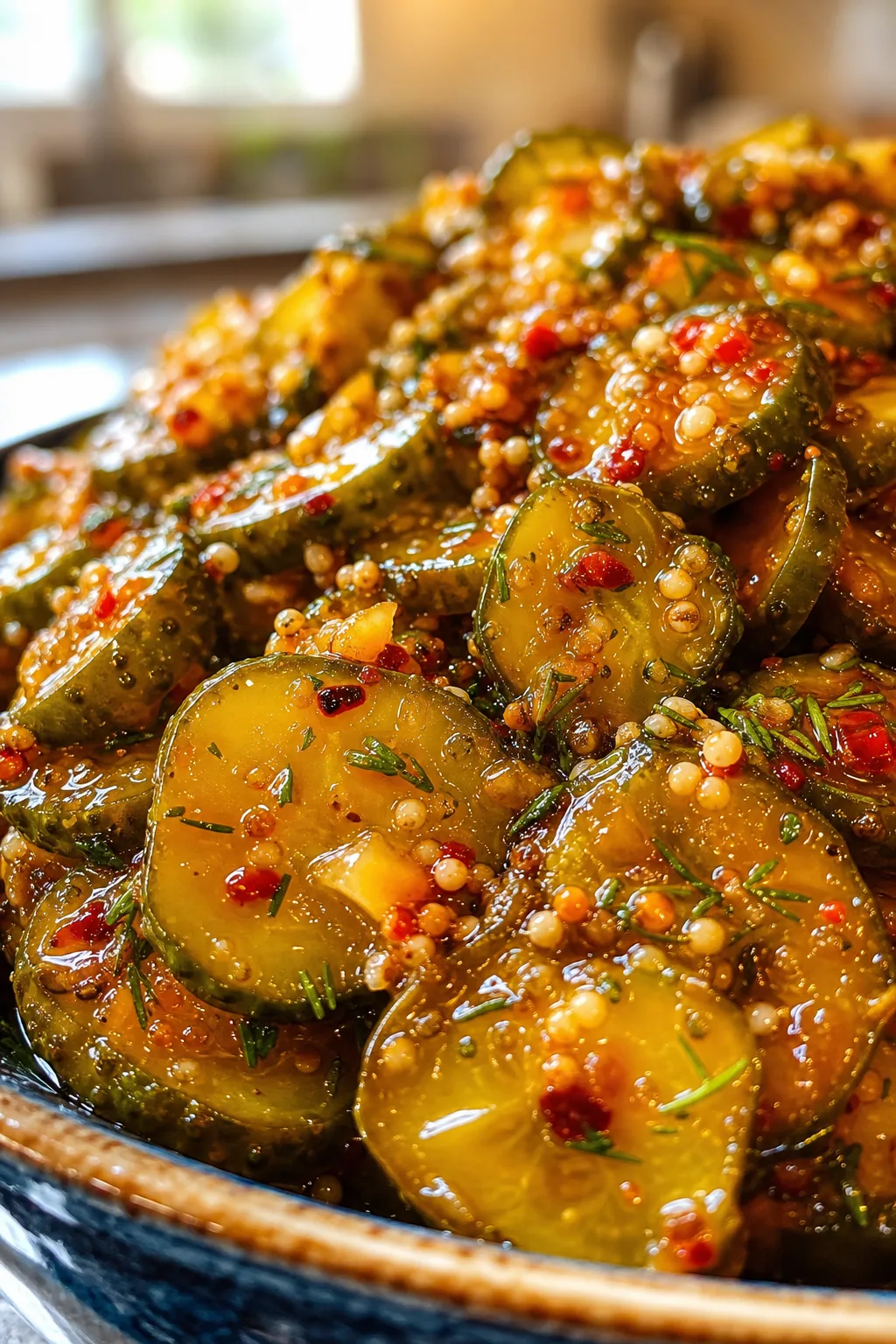
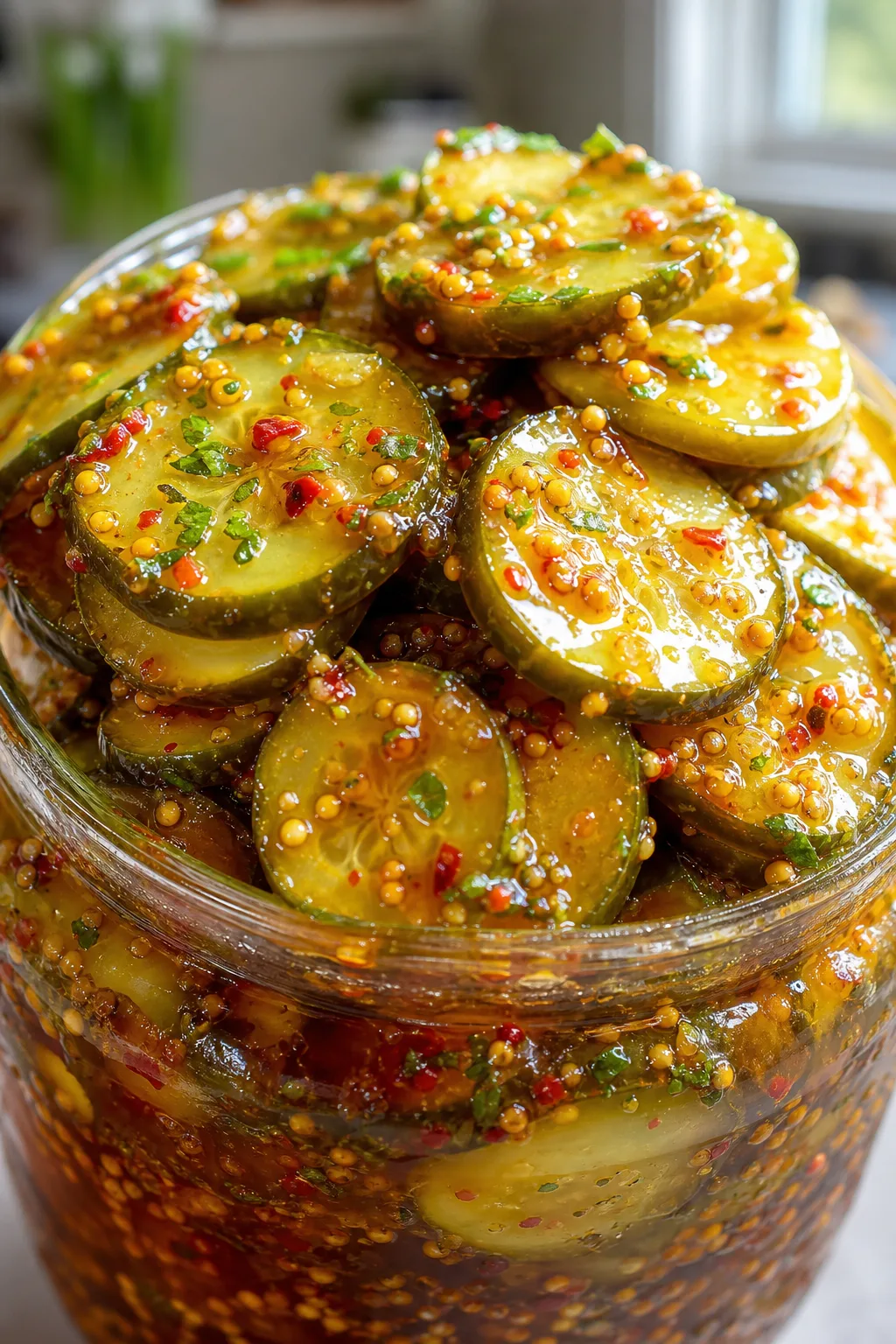
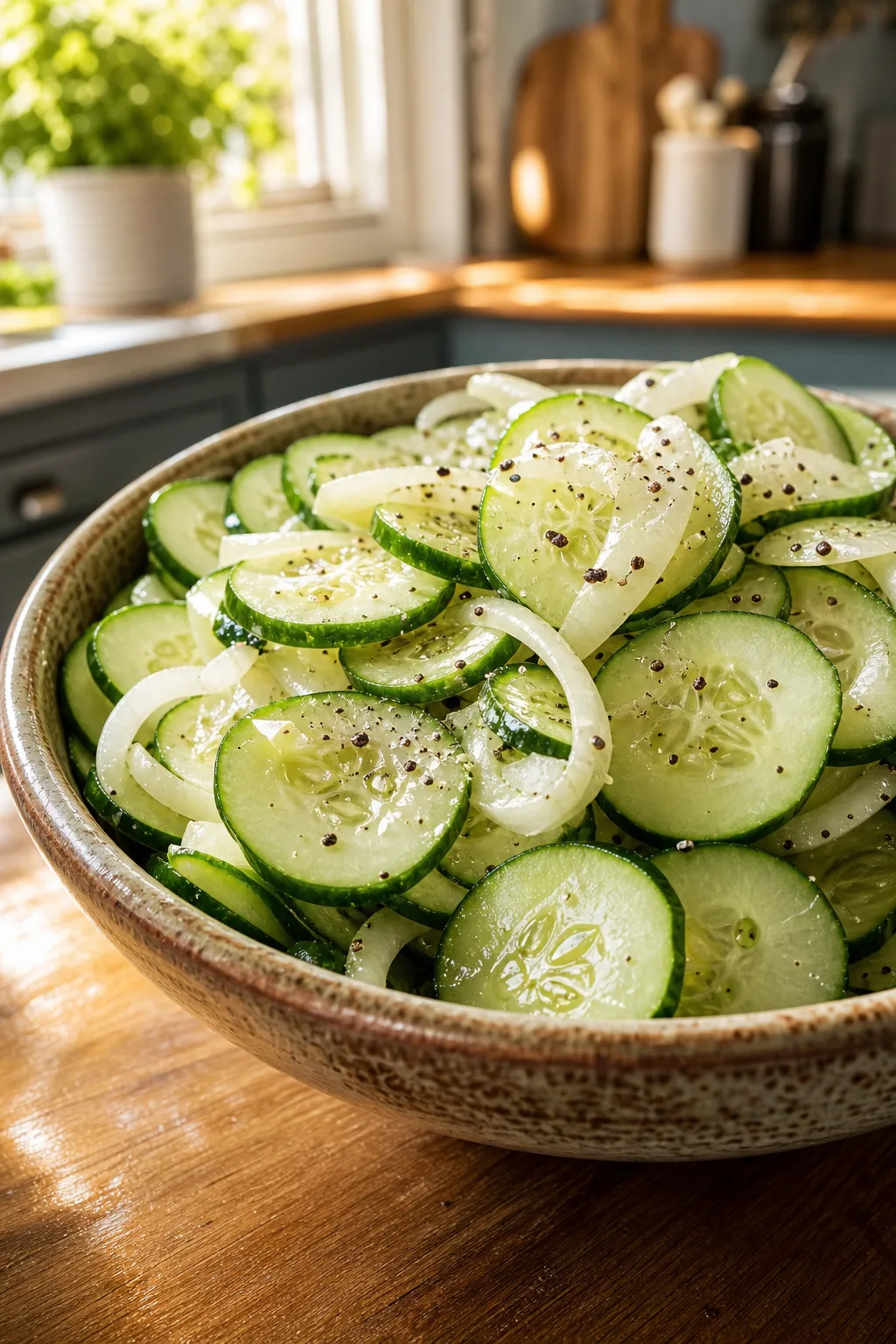
These sweet refrigerator pickles strike the perfect balance between tangy and sugary. They come together quickly using pantry staples and are fantastic for summer BBQs or a crisp snack anytime.
Introduction
I first stumbled upon this sweet refrigerator pickle recipe during a hectic summer when I wanted something fresh but super quick. Unlike traditional pickles that need days or weeks to develop flavor, this version is ready in just a few hours, making it perfect for last-minute gatherings or when you just want a crisp, tangy snack. What makes these pickles stand out is the balance of sugar and vinegar paired with a subtle hint of turmeric for color and mild earthiness. I learned that slicing cucumbers thinly and letting them sit in the fridge allows the flavors to really soak in without getting mushy. Over the years, I’ve tweaked the sugar level and added garlic cloves for a little punch. The result? Bright, crunchy pickles that taste homemade but without the fuss. They’re perfect alongside grilled meats or just straight from the jar when you want a refreshing bite. Honestly, I can’t get enough of these, and once you try them, I think you’ll feel the same!
What You'll Need
Approximately 4 cups, 4 servings
- 4 cups thinly sliced cucumbers, fresh
- 1 cup white vinegar
- 1 cup water
- 3/4 cup granulated sugar
- 1 tablespoon kosher salt
- 1 teaspoon mustard seeds
- 1/2 teaspoon celery seeds
- 1/2 teaspoon turmeric powder
- 2 cloves garlic, peeled and smashed
How To Do It
Step 1
Start by washing your cucumbers thoroughly and slicing them into thin rounds, about 1/8 inch thick. Thin slices absorb the pickling brine faster and stay crisp. Avoid cutting too thick or the pickles won’t soak up the flavors as well. Using a sharp knife or mandoline helps get even slices, which is key for consistent texture. Place the sliced cucumbers in a large bowl and sprinkle with kosher salt. Toss gently to coat evenly. Let them sit for about 30 minutes. This step draws out excess moisture, ensuring the pickles don’t get soggy and instead stay crunchy once pickled.
⏱ Time: 30 minutes
✓ Doneness: Cucumbers will release water and look slightly wilted but still firm
Step 2
While the cucumbers are sweating, prepare the pickling brine. In a saucepan, combine white vinegar, water, granulated sugar, mustard seeds, celery seeds, turmeric powder, and smashed garlic cloves. Heat the mixture over medium heat, stirring occasionally until the sugar dissolves completely. This step is crucial because fully dissolving the sugar creates a smooth, balanced brine that penetrates the cucumbers evenly. Avoid boiling vigorously as it can dull the vinegar’s brightness. Once the sugar is dissolved and the brine is aromatic, remove from heat and let it cool slightly before pouring over the cucumbers.
⏱ Time: 10 minutes
✓ Doneness: Sugar fully dissolved and liquid is fragrant but not boiling
Step 3
Drain the excess water from the salted cucumbers and gently rinse them under cold water to remove some saltiness, then drain well. This prevents the pickles from becoming overly salty and helps balance the flavors. Pat the cucumbers dry with a clean towel or paper towels to remove surface moisture, which can dilute the brine. Transferring cucumbers with too much water can lead to watery pickles that lack punch.
⏱ Time: 5 minutes
✓ Doneness: Cucumbers feel firm and only slightly damp
Step 4
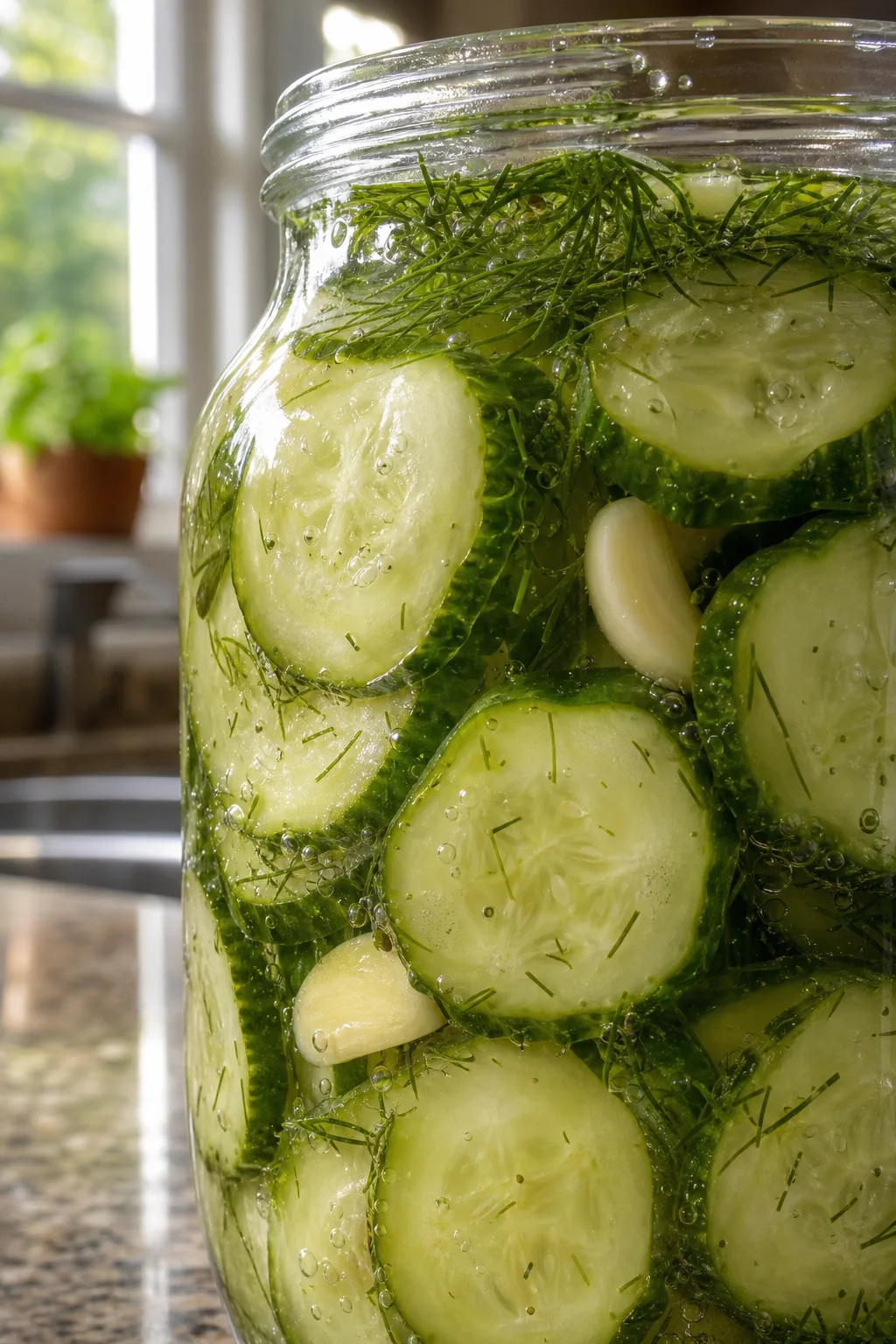
Place the cucumbers into a clean glass jar or airtight container. Carefully pour the warm brine over the cucumbers, making sure they’re fully submerged. Using a non-reactive container like glass is important to avoid any metallic taste and preserve the bright flavors. If needed, press down the cucumbers gently with a spoon to keep them under the liquid. Cover tightly with a lid to trap in freshness and prevent contamination.
⏱ Time: 5 minutes
✓ Doneness: Cucumbers fully immersed in brine with no air pockets
Step 5
Refrigerate the pickles for at least 4 hours before eating, though I recommend overnight for best flavor. The cold temperature slows fermentation and helps the flavors meld without turning the cucumbers mushy. Unlike traditional canned pickles, these are not shelf-stable and must be stored in the fridge. The longer they sit, the more pronounced the sweet and tangy flavors become. You can enjoy them straight from the jar or add them to sandwiches and salads.
⏱ Time: 4+ hours
✓ Doneness: Pickles taste balanced—crisp with a sweet yet tangy bite
Step 6
Before serving, give the jar a gentle shake or stir the pickles to redistribute the spices and garlic. This refreshes the flavors and ensures every bite is perfectly seasoned. If you find the pickles too sweet or tangy for your taste, feel free to adjust the sugar or vinegar next time. This recipe is very forgiving and easy to customize to your preference.
⏱ Time: 2 minutes
✓ Doneness: Evenly coated pickles with visible mustard and celery seeds
Step 7
If you want to add a bit of heat, consider tossing in a few chili flakes or sliced jalapeños with the cucumbers before adding the brine. This adds a nice spicy kick that complements the sweetness. Just be sure to taste after refrigeration to gauge heat level, as it intensifies over time. This step is optional but highly recommended if you like a little zing in your pickles.
⏱ Time: Optional
✓ Doneness: Pickles have a subtle warming spice without overpowering sweetness
Step 8
For an even crisper texture, try soaking the cucumbers in an ice bath after salting and rinsing but before adding the brine. This extra cold shock tightens the cucumber flesh, giving you that perfect crunch. Just be sure to dry them thoroughly afterward to avoid watering down your brine.
⏱ Time: Optional 10 minutes
✓ Doneness: Cucumbers feel extra firm and snap when bitten
Step 9
Enjoy your sweet refrigerator pickles as a snack, side dish, or topping. They pair wonderfully with burgers, grilled chicken, or even on a cheese board. Store any leftovers in the fridge for up to two weeks, but they’re usually gone before then! This recipe is a fast and flavorful way to enjoy pickles year-round without the wait or fuss of canning.
⏱ Time: N/A
✓ Doneness: Pickles remain crisp and flavorful after storage
Variations
Spicy Sweet Refrigerator Pickles
Add sliced jalapeños or red pepper flakes to the brine for a spicy twist. The heat balances the sweetness and adds complexity. These pickles are great for sandwiches or tacos.
Note: Spicy ingredients intensify over time, so start with a small amount and adjust after refrigeration.
Dill and Garlic Refrigerator Pickles
Include fresh dill sprigs and extra garlic cloves for a classic dill pickle flavor with a sweet edge. Dill adds freshness and aroma that complements the sugar and vinegar.
Note: Use fresh dill for best flavor; dried dill won’t have the same aromatic impact.
Bread and Butter Style Pickles
Boost sugar to 1 cup and add sliced onions for a sweeter, tangier pickle reminiscent of bread and butter pickles. The onions add a mild crunch and subtle sweetness.
Note: Longer refrigeration (up to 24 hours) helps meld the onion flavor into the brine.
Honey-Sweetened Refrigerator Pickles
Replace granulated sugar with honey for a floral sweetness and softer texture. Honey adds depth but will darken the brine slightly. Great for a more natural sweetener option.
Note: Warm the brine gently to dissolve honey fully without overheating, which can alter flavor.
Quick Pickled Cucumber Spears
Instead of slices, cut cucumbers into spears for chunkier pickles that hold up well in sandwiches or as crudité. Spears take slightly longer to pickle but offer a satisfying crunch.
Note: Increase refrigeration time by a few hours to ensure flavor penetrates thicker pieces.
Pro Tips
Slice cucumbers thinly and evenly using a mandoline.
Uniform thin slices absorb brine faster and pickle evenly, preventing some slices from being too soft or others under-flavored. Mandolines help achieve consistency and speed up prep.
Salt cucumbers and let them sit to draw out excess water before pickling.
This step prevents sogginess by removing moisture that would dilute the brine. It also firms up the cucumber flesh, resulting in crunchier pickles.
Use a non-reactive container like glass for pickling.
Metal containers can react with the acidic vinegar, imparting off-flavors and discoloring the pickles. Glass maintains purity of flavor and is easy to clean.
Do not boil the brine vigorously.
Boiling can cause the vinegar to lose its bright acidity and alter sugar balance, resulting in dull-tasting pickles. Warm the brine gently just until sugar dissolves.
Add spices whole rather than ground.
Whole spices release flavor slowly and add texture, while ground spices can make the brine cloudy and overpower the delicate cucumber taste.
Refrigerate pickles immediately after preparing.
Cold slows down fermentation and bacterial growth, keeping pickles fresh and crisp without the need for canning.
Taste your pickles after 4 hours and adjust sweetness or tang next time.
Pickling is flexible, and personal preference varies. Experimenting with sugar and vinegar ratios helps you find your perfect balance.
Common Mistakes to Avoid
Skipping the salting step
Why it happens Some cooks assume pickling brine alone is enough to keep cucumbers crisp and flavorful, overlooking the importance of drawing out water first.
Fix Always salt and rest cucumbers before pickling to remove excess moisture. This step is crucial for crunch. Rinse and dry them well afterward to avoid over-salting.
Using slicing cucumbers instead of pickling types
Why it happens It’s common to use whatever cucumbers are on hand without considering texture differences.
Fix Choose pickling cucumbers like Kirby for firmer flesh and fewer seeds. They hold up better in brine and create crisp pickles.
Boiling the brine too long or too hard
Why it happens Some think boiling is necessary to sterilize, but it can harm flavor.
Fix Heat brine just until sugar dissolves and it’s aromatic. Avoid vigorous boiling to preserve vinegar's bright acidity.
Not fully submerging cucumbers in brine
Why it happens Inattention or using a container that’s too small can leave cucumbers exposed to air.
Fix Use a container large enough to cover cucumbers completely. Press them down gently or use a weight to keep them submerged.
Leaving pickles at room temperature too long
Why it happens Some believe quick pickles don’t need refrigeration, risking spoilage.
Fix Store pickles in the fridge immediately to maintain freshness and prevent unwanted fermentation or bacterial growth.
Nutrition
Per Serving:
Nutritional values are estimates and may vary based on specific ingredients used.
Storage & Tips
Room Temperature
These pickles should not be kept at room temperature for more than 2 hours. Keep the jar covered and refrigerated promptly to avoid spoilage and maintain crispness.
Refrigerator
Store pickles in an airtight glass container in the fridge for up to 2 weeks. Flavor intensifies over time, but texture remains crisp. Best enjoyed cold or at room temperature.
Freezer
Freezing is not recommended as cucumbers lose their crunch and become mushy upon thawing, ruining the texture of these pickles.
Reheating
No reheating needed. Serve chilled or at room temperature. If desired, bring to room temp for 10-15 minutes before serving to soften the chill.
Make Ahead
You can prepare the brine and slice cucumbers a day ahead. Salt cucumbers and refrigerate overnight, then rinse and add brine the next day for quick pickling.
FAQ
Can I use regular cucumbers instead of pickling cucumbers?
You can, but regular slicing cucumbers tend to be more watery and less firm, which may result in softer pickles. If you use them, slice thicker and salt longer to help maintain crunch.
How long do these refrigerator pickles last?
Stored properly in the fridge, they last about 2 weeks. After that, they may start to lose crunch and develop off flavors. Always keep them submerged in brine and sealed tightly.
Do I have to boil the brine?
Boiling isn’t necessary. Just warm the brine enough to dissolve sugar and infuse spices. Overheating can dull the vinegar’s bright flavor.
Can I omit the garlic?
Yes, garlic adds flavor but is optional. Without it, the pickles will be milder. You can substitute with shallots or onion slices for different flavor notes.
Why do my pickles get soggy?
Usually this happens when cucumbers aren’t salted first to draw out moisture or if they’re left at room temp too long. Always salt, rinse, dry, and refrigerate promptly.
Can I make these pickles spicy?
Definitely! Add sliced jalapeños or red pepper flakes to the brine before refrigerating. Start with a small amount and adjust based on your heat preference.
Is it safe to store pickles in plastic containers?
Glass is preferred because plastic can absorb odors and may react with vinegar over time. If using plastic, choose food-grade, BPA-free containers and avoid long-term storage.
Can I add other vegetables to this pickling brine?
Yes, carrots, onions, or green beans work well. Just adjust slicing thickness and pickling time accordingly since different veggies absorb flavors differently.
Final Thoughts
I hope you give these sweet refrigerator pickles a try—they’re a quick, tasty way to brighten any meal. Let me know how yours turn out!