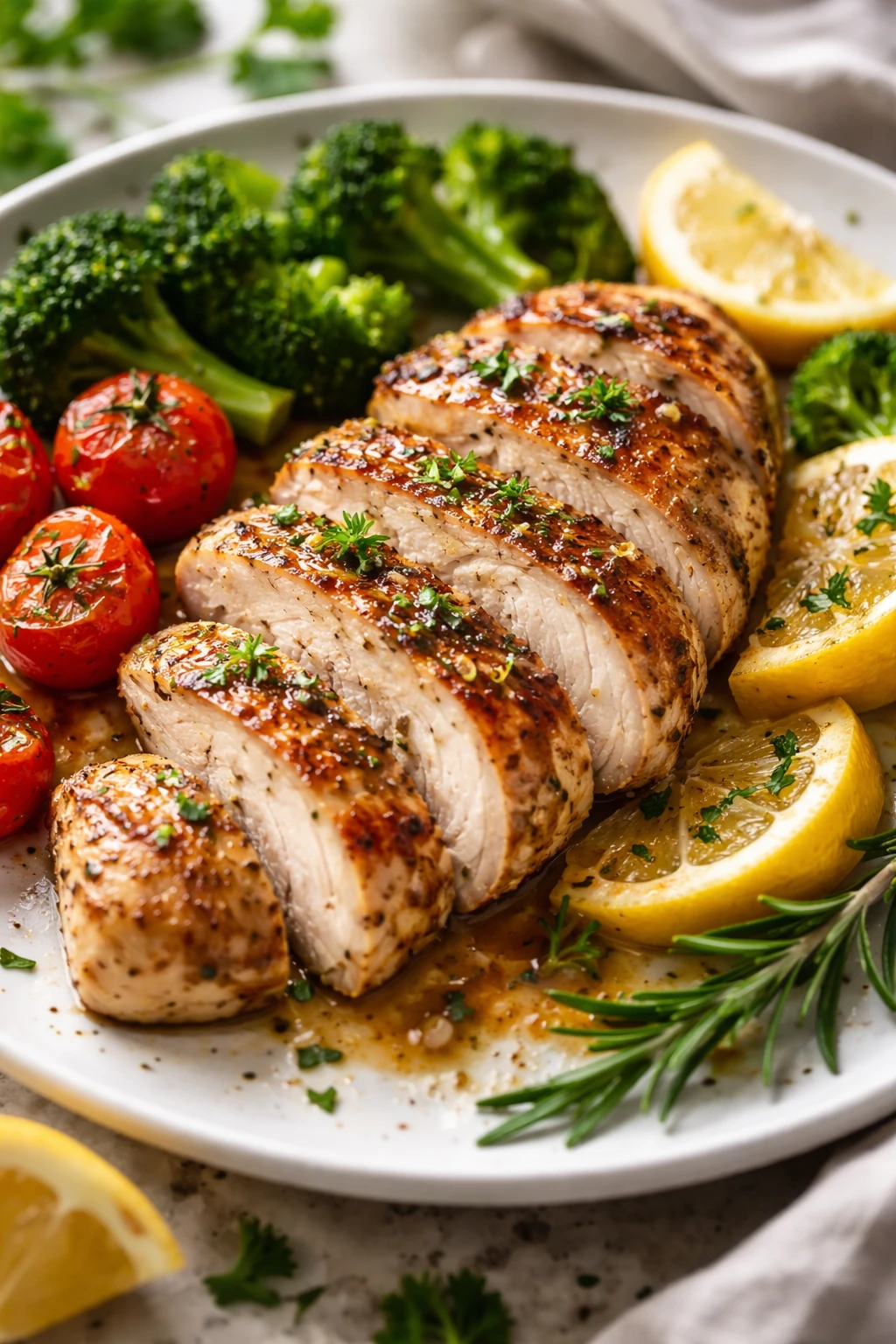
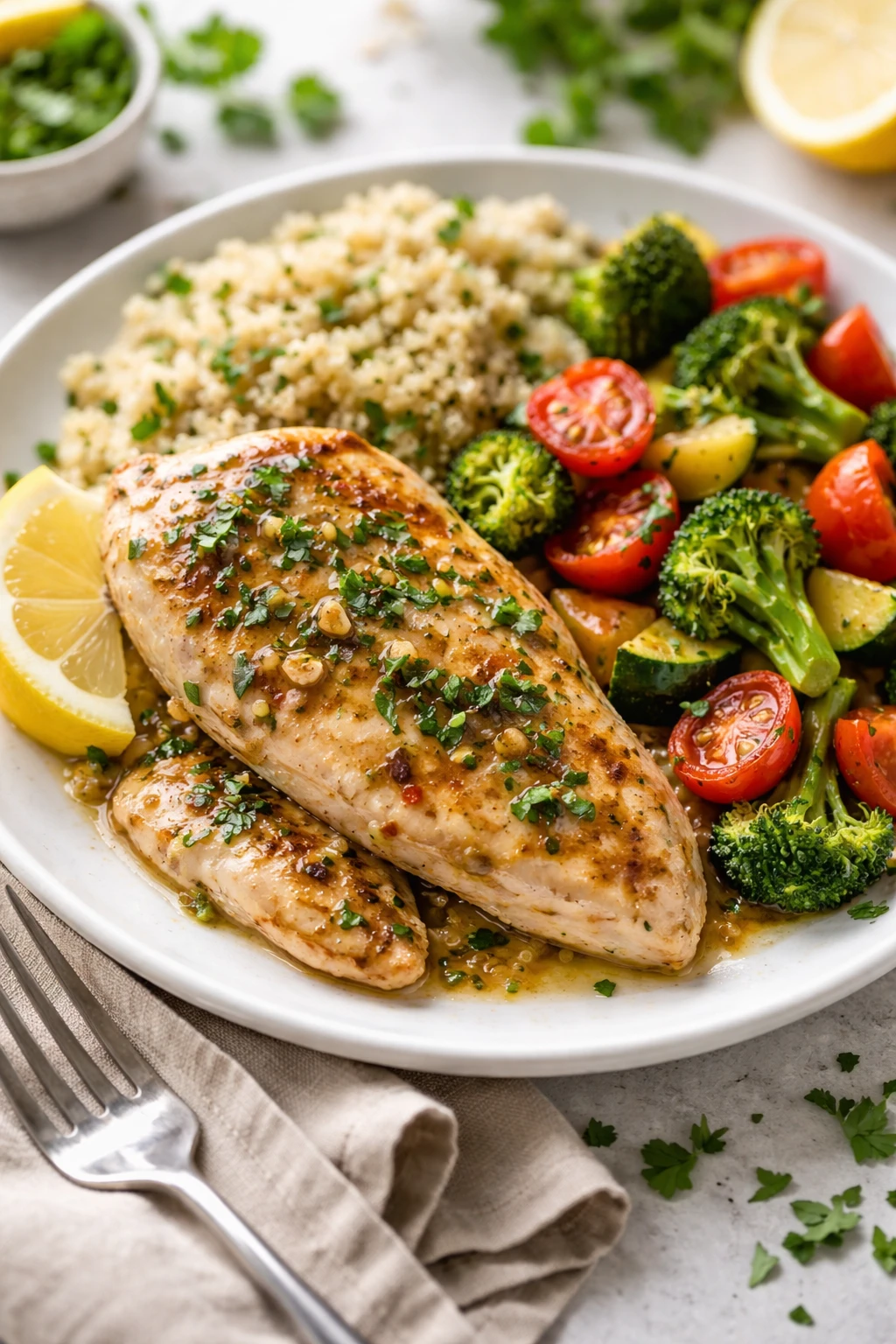
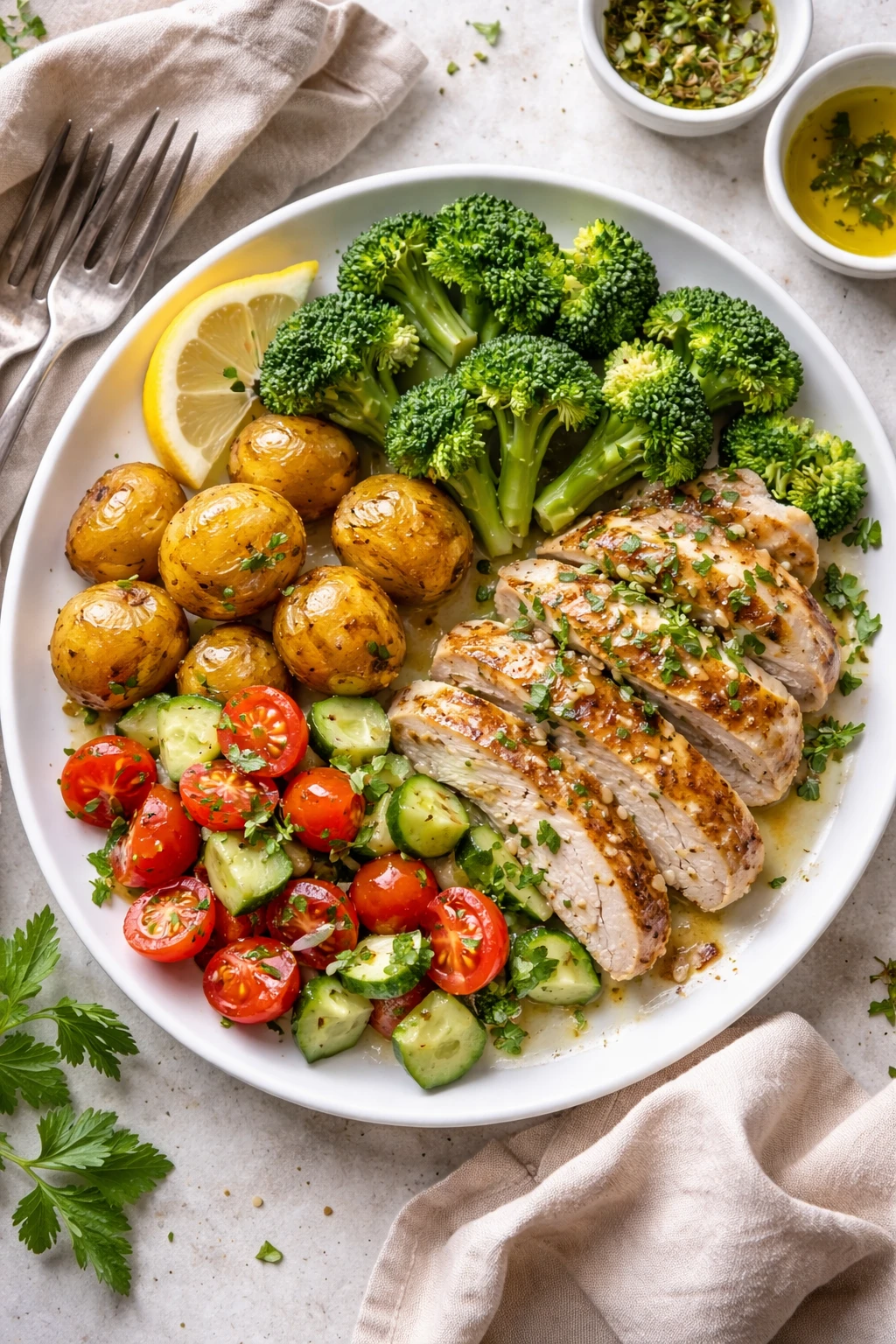
This chicken dinner is all about fresh herbs and garlic, giving you big flavor without heaviness. The secret? A simple marinade that keeps the meat juicy and tender. Perfect for a quick, guilt-free weeknight meal!
Introduction
I first stumbled upon this herb-marinated garlic chicken recipe during a busy week when I craved something fresh yet satisfying that wouldn’t weigh me down. What really hooked me was how the marinade, packed with fresh herbs and garlic, transformed simple chicken breasts into juicy, tender bites bursting with flavor. Unlike typical heavy sauces, this recipe keeps it light but never bland. The trick I learned is to let the chicken marinate for at least 30 minutes — it really makes the meat soak up those bright, aromatic flavors. Plus, cooking it just right ensures the chicken stays moist instead of drying out, which has been a struggle for me in the past. When it’s done, you get a beautiful golden crust with a tender interior that pairs perfectly with almost any side. I love serving this for a quick weeknight dinner or even when friends pop over unexpectedly. It’s straightforward, versatile, and honestly, one of my favorite ways to enjoy chicken without fuss or guilt.
How To Do It
Step 1
Start by preparing your marinade in a medium bowl. Combine the minced garlic, olive oil, lemon juice, and chopped fresh herbs – rosemary, thyme, and parsley. The acid from the lemon helps tenderize the chicken while the herbs infuse it with fresh, vibrant flavor. Make sure the garlic is finely minced so it evenly distributes and doesn’t overpower a single bite. Mix everything together well to create a balanced marinade.
⏱ Time: 5 minutes
✓ Doneness: The marinade should be well combined with no large chunks of garlic or herbs clumped together.
Step 2
Place the chicken breasts in a shallow dish or resealable plastic bag and pour the marinade over them. Use your hands or a spoon to ensure each piece is fully coated. Seal the bag or cover the dish tightly and refrigerate for at least 30 minutes, up to 2 hours. This resting time is crucial as it allows the lemon juice and herbs to penetrate the meat, resulting in a tender and flavorful chicken. Avoid skipping this step or shortening it too much, or the chicken will taste bland and less juicy.
⏱ Time: 30 to 120 minutes
✓ Doneness: Chicken should appear evenly coated and slightly glossy from the marinade.
Step 3
Preheat your oven to 400°F (200°C). While it heats, remove the chicken from the marinade, letting excess drip off but don’t wipe it clean. This leftover marinade helps create a flavorful crust when cooking. Season the chicken lightly with salt and pepper on both sides. Avoid over-salting here since the marinade already has seasoning. The oven’s high temperature will help caramelize the chicken’s exterior, locking in moisture.
⏱ Time: 10 minutes
✓ Doneness: Chicken should be room temperature and lightly seasoned, ready for roasting.
Step 4
Place the chicken breasts on a baking sheet lined with parchment paper or a lightly greased roasting pan. Roast in the preheated oven for 20 to 25 minutes. Cooking time depends on thickness; thicker breasts may require a few extra minutes. Avoid opening the oven door frequently to keep the heat stable. The goal is a golden brown crust with juicy interior. Use a meat thermometer to check for an internal temperature of 165°F (74°C) to ensure safety without overcooking.
⏱ Time: 20 to 25 minutes
✓ Doneness: Chicken is golden brown on top and registers 165°F internally.
Step 5
Once cooked, remove the chicken from the oven and let it rest for 5 minutes before slicing. Resting allows the juices to redistribute throughout the meat, making each bite moist and tender rather than dry. Resist the urge to cut right away; this step is key to juicy chicken. While resting, you can cover loosely with foil to keep warm.
⏱ Time: 5 minutes
✓ Doneness: Chicken feels warm to the touch and juices have settled inside the meat.
Step 6
Slice the chicken against the grain into thick strips or medallions to maximize tenderness. Arrange on a serving plate and garnish with a sprinkle of fresh parsley or a lemon wedge for an extra pop of brightness. This presentation adds a fresh visual and flavor boost, making it perfect for sharing at the dinner table.
⏱ Time: 5 minutes
✓ Doneness: Slices reveal juicy, tender meat with visible herb flecks.
Step 7
Serve immediately with your favorite sides—steamed veggies, a crisp salad, or fluffy rice all work beautifully. The light herb and garlic flavor pairs well with many accompaniments, so feel free to mix and match depending on your mood or pantry. This chicken also reheats well, making it a great option for meal prep.
⏱ Time: 0 minutes
✓ Doneness: Dish is plated attractively and ready to enjoy.
Step 8
If you want to add a little extra flavor punch, drizzle a touch of good-quality olive oil or a squeeze of fresh lemon juice over the chicken just before serving. This brightens the dish and enhances the herbaceous notes without overpowering the natural chicken taste.
⏱ Time: 1 minute
✓ Doneness: Chicken glistens lightly with the finishing drizzle.
Step 9
For a slightly crispier finish, you can broil the chicken for the last 2 minutes of cooking. Watch it carefully to avoid burning—the broiler adds a lovely golden crust that contrasts nicely with the tender interior. This extra step is optional but recommended if you like a bit of crunch on your chicken.
⏱ Time: 2 minutes
✓ Doneness: Chicken surface is golden and slightly crisp without charring.
Variations
Spicy Herb Garlic Chicken
Add 1 teaspoon of red pepper flakes or a dash of cayenne to the marinade for a subtle kick. This variation brings warmth and depth without overpowering the fresh herb flavors. Great if you like a little heat in your meal.
Note: Be cautious with timing; spicy herbs can intensify quickly during marination, so stick to 30-60 minutes to avoid overwhelming the chicken.
Mediterranean Style
Mix in chopped kalamata olives, sun-dried tomatoes, and a sprinkle of feta cheese when serving. This gives the chicken a Mediterranean twist with salty, tangy notes that pair beautifully with the garlic and herbs.
Note: Add these ingredients after cooking to preserve their texture and freshness.
Grilled Herb Garlic Chicken
Instead of oven roasting, grill the marinated chicken over medium-high heat for 6-7 minutes per side. This adds smoky char and a slightly different texture that’s perfect for summer meals.
Note: Watch closely to prevent flare-ups and overcooking; use indirect heat if needed.
Creamy Herb Garlic Chicken
After roasting, make a quick pan sauce by deglazing the baking pan with a splash of chicken broth and stirring in a spoonful of cream or Greek yogurt. This creates a rich, velvety sauce that complements the herbaceous chicken.
Note: Add cream or yogurt off the heat to prevent curdling.
Herb Garlic Chicken with Vegetables
Roast chopped vegetables like bell peppers, zucchini, and cherry tomatoes alongside the chicken. The veggies absorb the marinade flavors and make a complete one-pan meal with minimal cleanup.
Note: Cut vegetables uniformly for even cooking and toss with a little olive oil and salt before roasting.
Pro Tips
Marinate the chicken for at least 30 minutes but no longer than 2 hours.
Marinating for too short a time won’t tenderize the chicken or infuse enough flavor, while too long can break down the proteins excessively, resulting in a mushy texture. The 30-minute to 2-hour window strikes the perfect balance for juicy, flavorful meat.
Let the chicken rest at room temperature for 10-15 minutes before cooking.
Allowing the chicken to come closer to room temperature promotes even cooking. If you cook chicken straight from the fridge, the outside may overcook before the inside reaches the right temperature, leading to dryness.
Use a meat thermometer to check for doneness at 165°F (74°C).
Relying on visual cues alone can be tricky and often results in under- or overcooked chicken. A thermometer ensures the chicken is safe to eat but still juicy, preventing the common mistake of drying out the meat.
Broil the chicken for the last 2 minutes if you want a crispier crust.
The broiler applies intense direct heat that quickly browns the surface, creating a flavorful crust without drying the interior. However, it requires close attention to avoid burning.
Slice the chicken against the grain for maximum tenderness.
Cutting against the grain shortens the muscle fibers, making the meat easier to chew and enhancing the perception of tenderness. Slicing with the grain results in tougher bites.
Use fresh herbs instead of dried for brighter, fresher flavors.
Fresh herbs release essential oils that infuse the chicken during marination, which dried herbs lack. They also add a vibrant color and aroma that dried versions can’t match.
Avoid rinsing the chicken after marinating to preserve flavor.
Rinsing removes the flavorful marinade coating and can wash away the seasoning. Instead, let excess marinade drip off but keep the flavorful layer intact for roasting.
Common Mistakes to Avoid
Skipping the marinating step
Why it happens Sometimes cooks rush dinner prep and skip marinating, assuming it’s optional or won’t make a big difference.
Fix Set aside at least 30 minutes for marinating. Even a short soak in the herb and lemon mixture vastly improves flavor and tenderness, turning a basic chicken breast into something special.
Overcooking the chicken
Why it happens Chicken breasts dry out quickly if cooked too long, especially at high heat, because they lack fat.
Fix Use a meat thermometer and remove chicken at 165°F. Also, rest the chicken after cooking to keep juices locked in and avoid slicing immediately.
Using dried herbs instead of fresh
Why it happens Dried herbs are more convenient and sometimes people forget fresh herbs offer better flavor.
Fix Always opt for fresh herbs when possible. Their essential oils and bright flavors make a noticeable difference, especially in a simple marinade.
Not letting chicken rest before slicing
Why it happens Impatience leads to cutting chicken right out of the oven, causing juices to run out.
Fix Let chicken rest 5 minutes to allow juices to redistribute. This results in moister, more flavorful slices.
Cutting chicken with the grain
Why it happens Many don’t realize the direction of muscle fibers affects tenderness.
Fix Always slice against the grain to shorten fibers and produce tender bites.
Nutrition
Per Serving:
Nutritional values are estimates and may vary based on specific ingredients used.
Storage & Tips
Room Temperature
This cooked chicken can safely sit at room temperature for up to 2 hours when covered loosely with foil or a clean cloth. Beyond this, bacteria can grow, so refrigerate promptly.
Refrigerator
Store leftovers in an airtight container for up to 3 days. The chicken may firm up and lose some juiciness when cold, so reheat gently to restore moisture. It’s best reheated in a low oven or microwave with a splash of water or broth to keep it tender.
Freezer
Freeze cooked chicken in airtight freezer bags or containers for up to 3 months. Wrap tightly to prevent freezer burn. Thaw overnight in the refrigerator before reheating. Texture may be slightly drier after freezing but still tasty.
Reheating
Reheat chicken on the stovetop over low heat or in the oven at 300°F until warmed through (about 10-15 minutes). Add a splash of broth or olive oil to keep it moist. Avoid overheating as it dries out quickly.
Make Ahead
Marinate the chicken up to 24 hours ahead and keep refrigerated. You can also roast the chicken fully and reheat before serving. Preparing the marinade and chopping herbs the day before saves time on busy nights.
FAQ
Can I use chicken thighs instead of breasts?
Absolutely! Chicken thighs have more fat and tend to stay juicy even if slightly overcooked. Adjust cooking time to about 25-30 minutes at 400°F, and check for an internal temperature of 165°F. The marinade works beautifully on thighs, offering the same fresh herb flavor.
Why is resting the chicken important?
Resting allows the juices to redistribute throughout the meat instead of running out when you slice it. This results in a moister, more tender bite.
Final Thoughts
I hope you give this herb-marinated garlic chicken a try soon — it’s one of my favorite easy dinners that always impresses. Let me know how it turns out!