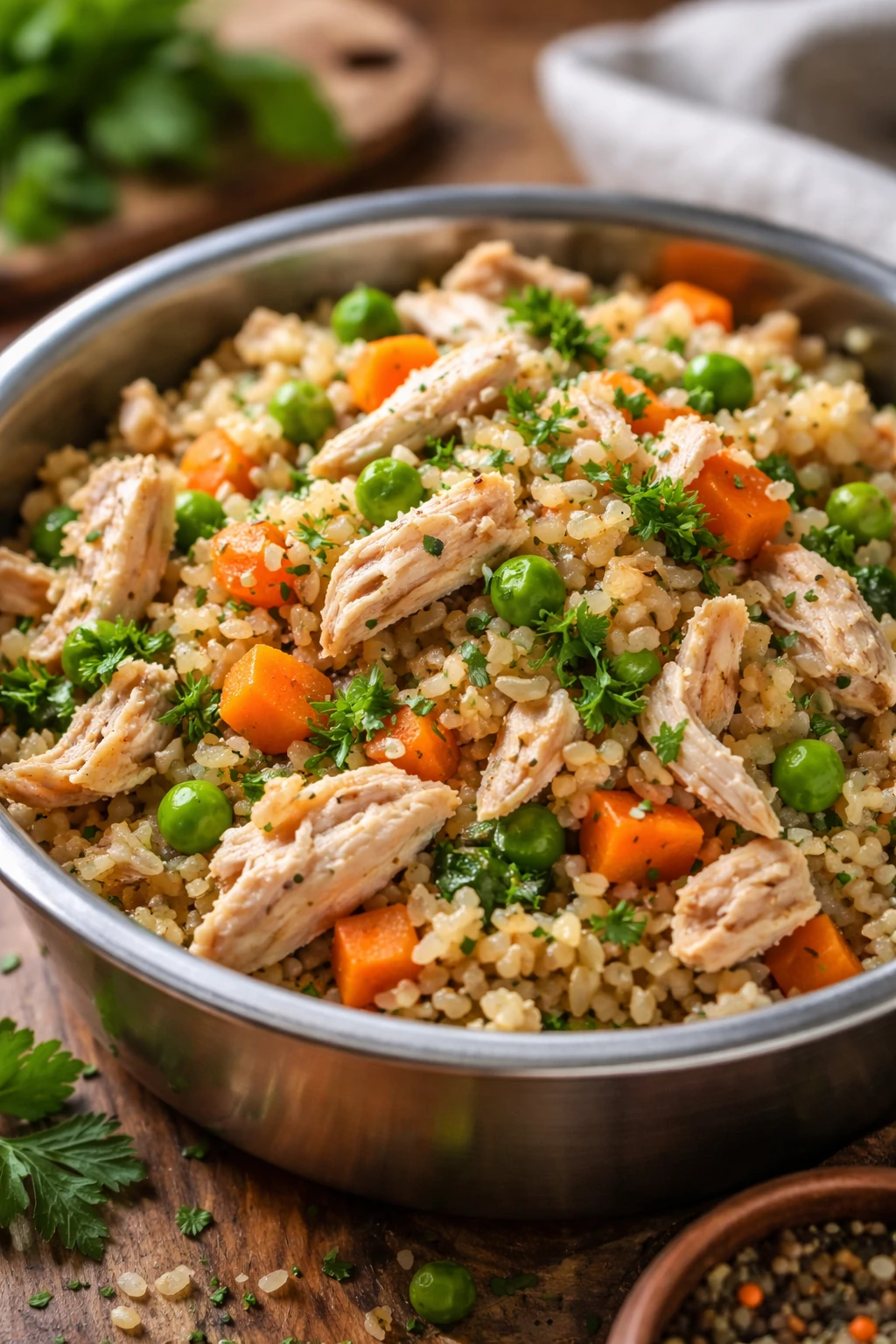
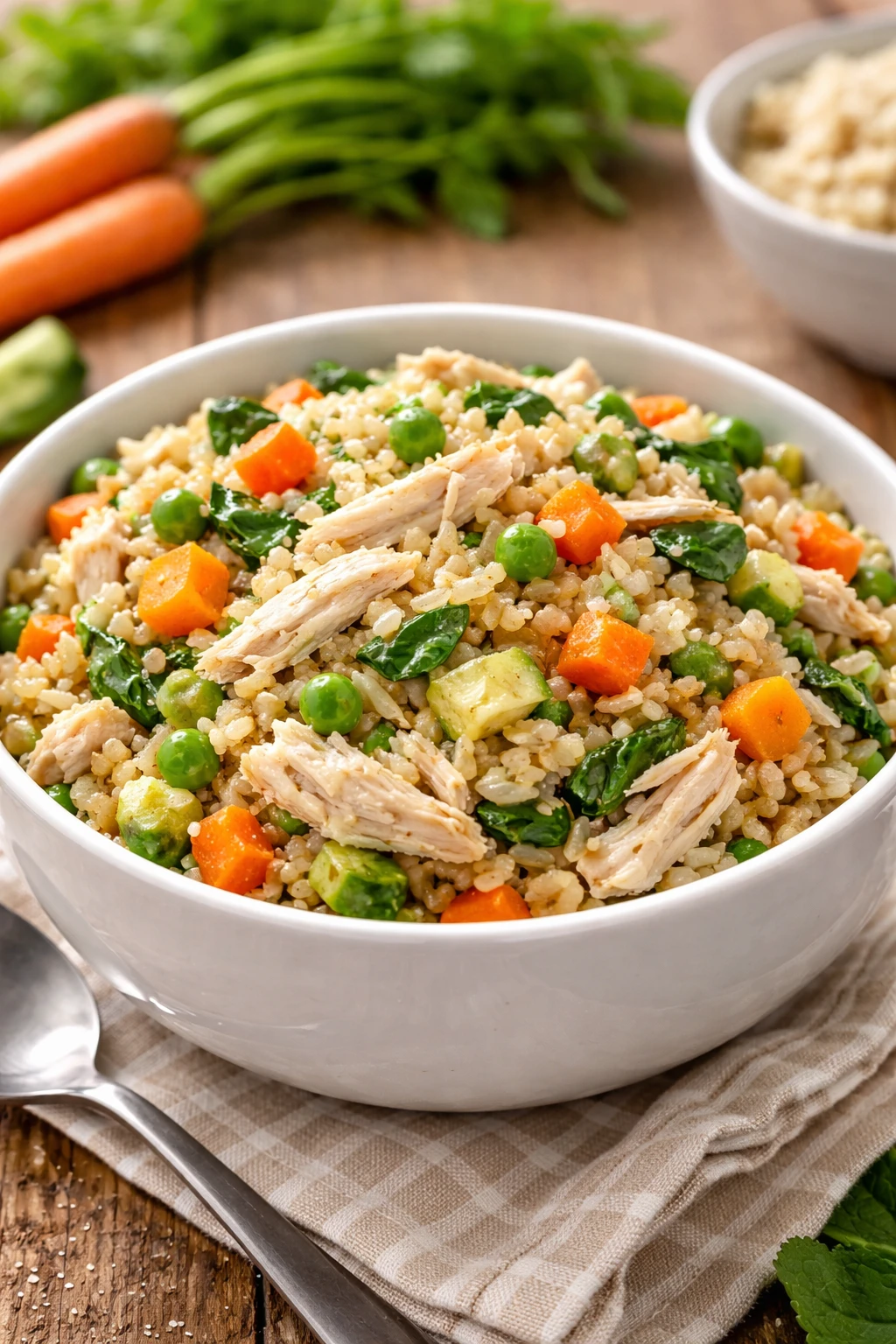
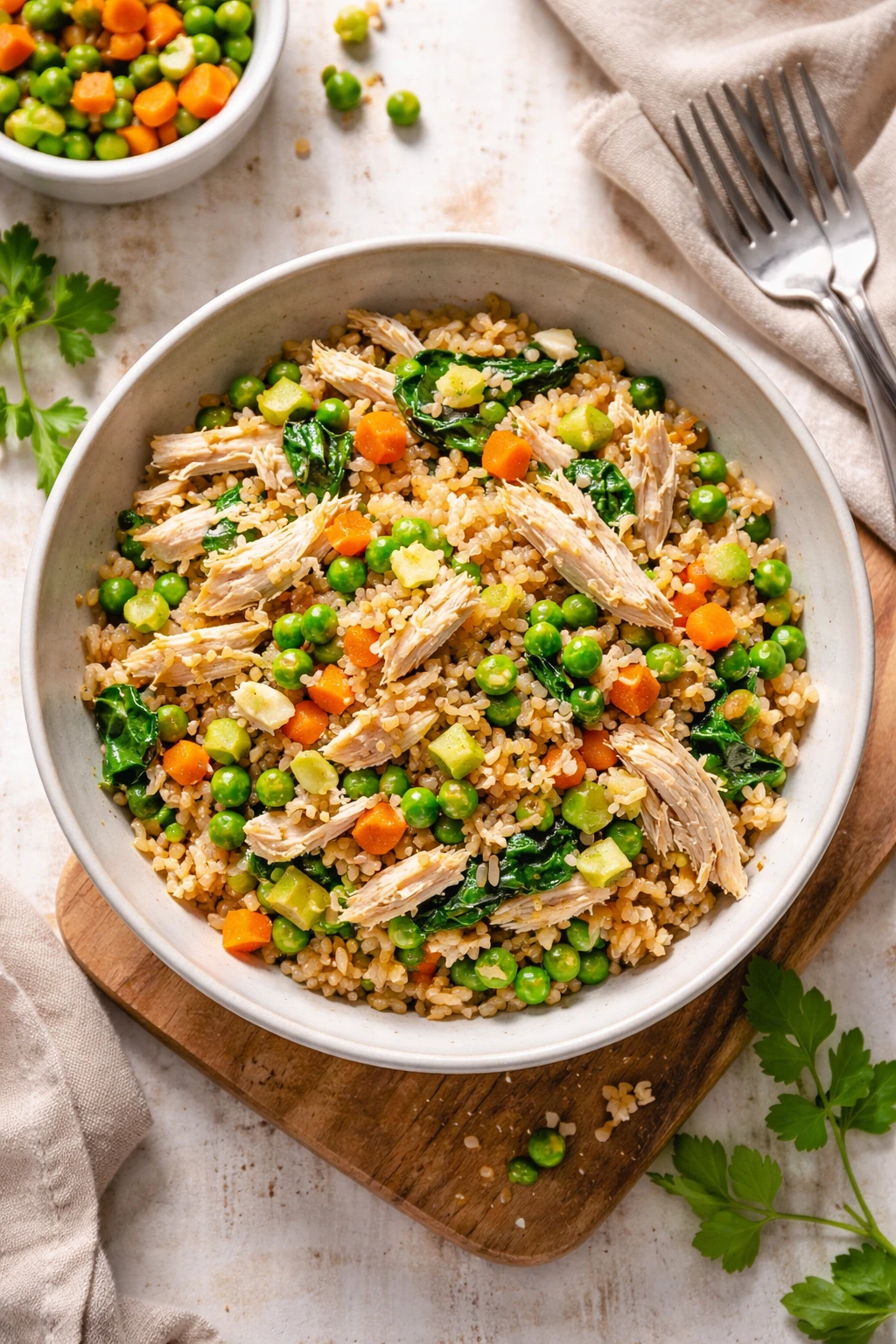
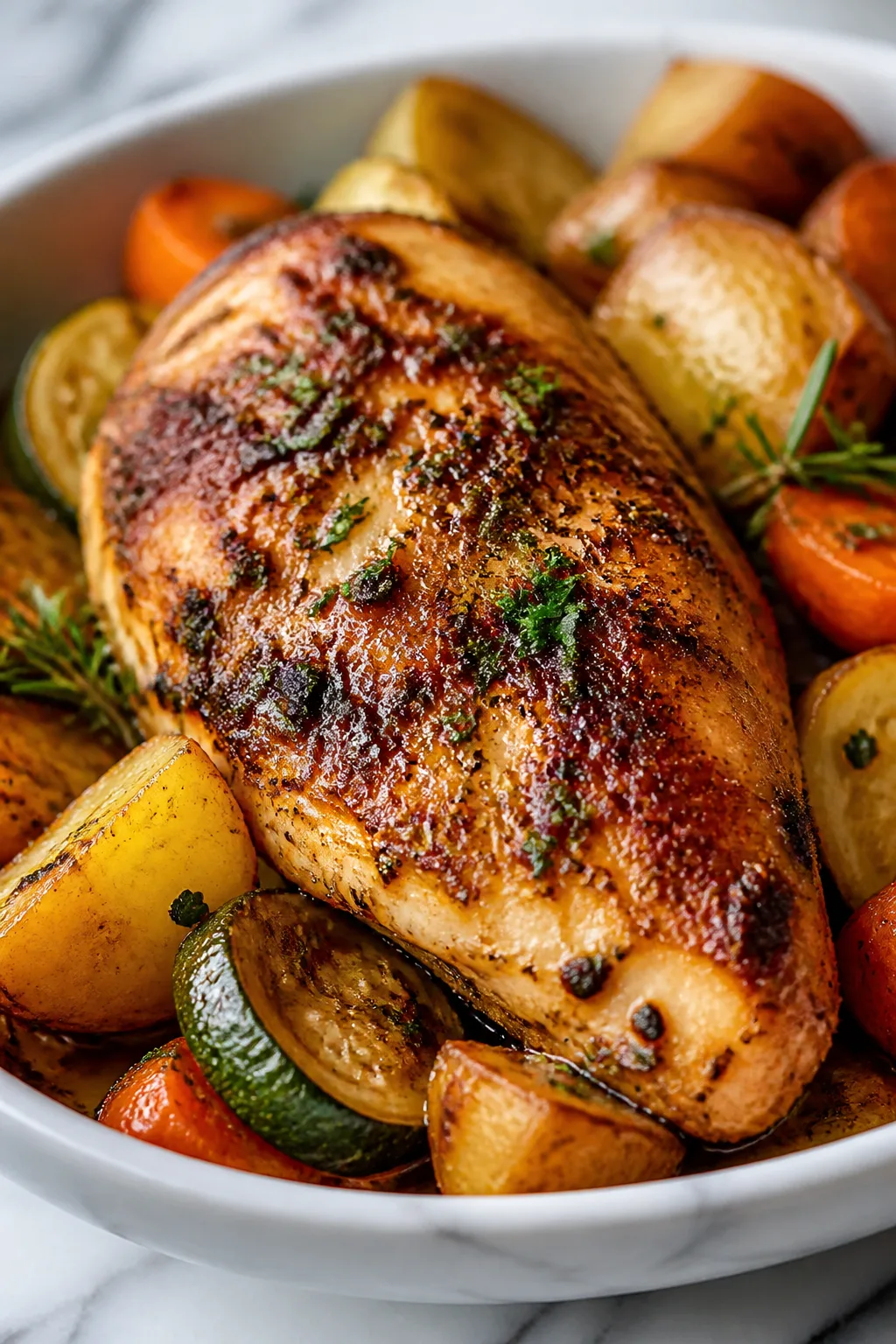
This chicken dog food recipe is super simple and packed with fresh ingredients. I love how the veggies add a little natural sweetness and nutrients. Great for everyday meals or spoiling your furry friend!
Introduction
I first started making homemade dog food when I noticed my pup wasn’t thriving on commercial kibble alone. I wanted something fresh and simple, with ingredients I could recognize and trust. This chicken dog food recipe quickly became a staple in our house because it’s easy, nutritious, and my dog absolutely loves it. What I love most is how the chicken thighs stay tender and juicy, while the veggies add just the right amount of texture and flavor. The brown rice helps keep him full and satisfied, and the olive oil adds a little healthy fat that’s great for his coat. I’ve tried other recipes before, but this one strikes the perfect balance—no weird extras, just wholesome food. It’s also versatile enough to serve daily or as a special treat. The trick I learned is to cook everything gently to maintain nutrients and flavor, which makes a huge difference in how my dog responds to the meal. When it’s ready, it looks vibrant and smells fresh, and I always feel good feeding it to him. If you’re thinking about trying homemade dog food, this recipe is a great place to start!
How To Do It
Step 1
Start by rinsing the brown rice under cold water until the water runs clear. This removes excess starch and prevents the rice from becoming too sticky or mushy once cooked. Cooking the rice separately ensures it cooks evenly and absorbs the right amount of liquid for a perfect texture. Avoid skipping this rinsing step to keep the final dish from getting gummy, which dogs might not enjoy as much.
⏱ Time: 5 minutes
✓ Doneness: Rice grains appear translucent and separate when cooked
Step 2
In a large pot, heat the olive oil over medium heat. Add the chopped chicken thighs and cook gently until they turn opaque and start to brown slightly. Cooking chicken thighs slowly helps keep them tender and juicy, which is better for your dog's digestion and enjoyment. Avoid high heat as it can dry out the meat and make it tough.
⏱ Time: 8 minutes
✓ Doneness: Chicken is no longer pink inside and has a light golden color
Step 3
Add the diced carrots, green beans, and peas to the pot with the chicken. Stir everything together and cook for a few minutes to start softening the vegetables. This step releases their natural flavors and makes them easier for your dog to digest. Watch for veggies getting too soft or mushy; you want them tender but still holding shape.
⏱ Time: 5 minutes
✓ Doneness: Vegetables are slightly tender but not falling apart
Step 4
Pour in the rinsed brown rice and the water or low sodium chicken broth. Stir to combine all ingredients evenly. The broth adds flavor and nutrients, making the meal more appetizing and wholesome. Using low sodium broth helps keep the salt content safe for your dog’s health.
⏱ Time: 2 minutes
✓ Doneness: Ingredients are well mixed and liquid covers rice
Step 5
Bring the mixture to a gentle boil, then reduce the heat to low and cover the pot with a tight-fitting lid. Let it simmer gently for about 25 minutes. Cooking on low heat allows the rice and veggies to absorb the flavors slowly while the chicken finishes cooking through without drying out. Avoid lifting the lid too often as it releases steam and can affect cooking time.
⏱ Time: 25 minutes
✓ Doneness: Rice is tender and liquid is absorbed
Step 6
After simmering, turn off the heat and let the pot sit covered for 5 minutes. This resting period lets the steam finish cooking the rice and melds the flavors together. It also cools the food slightly, making it safer to serve to your dog.
⏱ Time: 5 minutes
✓ Doneness: Food is slightly cooled and well combined
Step 7
Fluff the mixture gently with a fork to separate the rice and evenly distribute the chicken and veggies. This prevents clumps and makes portioning easier. It also makes the texture more appealing for your dog to eat.
⏱ Time: 2 minutes
✓ Doneness: Mixture looks light and even in texture
Step 8
Allow the food to cool to room temperature before serving it to your dog. Serving hot food can burn their mouth and cause discomfort. You can store leftovers in an airtight container in the fridge to keep it fresh for later meals.
⏱ Time: 15 minutes
✓ Doneness: Food is warm but not hot to the touch
Step 9
Serve the desired portion to your dog, adjusting based on their size and dietary needs. You can refrigerate or freeze the rest for convenience. Always introduce new foods gradually to monitor for any sensitivities or allergies.
⏱ Time: Varies
✓ Doneness: Portion is appropriate for your dog’s size and appetite
Variations
Turkey and Sweet Potato Dog Food
Swap chicken thighs for lean ground turkey and replace brown rice with mashed sweet potatoes. This variation adds a slightly sweeter flavor and is great for dogs with rice sensitivities or allergies.
Note: Adjust cooking time slightly as sweet potatoes soften faster than rice; mash well for easy digestion.
Beef and Pumpkin Dog Food
Use lean ground beef instead of chicken and add pureed pumpkin instead of peas. This combo is rich in iron and fiber, supporting digestion and energy levels.
Note: Cook beef thoroughly and avoid overcooking pumpkin to preserve nutrients and texture.
Fish and Quinoa Dog Food
Try flaky white fish like cod with cooked quinoa replacing rice. Quinoa offers a complete protein source and is great for dogs with grain allergies.
Note: Quinoa cooks faster than rice; rinse well to remove bitterness before cooking.
Chicken and Brown Rice with Spinach
Add chopped fresh spinach to the original recipe for extra vitamins and antioxidants. Spinach adds a mild flavor and a boost of iron.
Note: Add spinach near the end of cooking to prevent overcooking and loss of nutrients.
Pumpkin and Chicken Stew
Make a stew by increasing the broth and adding canned pumpkin puree with chicken. This is a comforting meal for dogs needing hydration and digestion support.
Note: Simmer gently to blend flavors and maintain a soupy consistency.
Pro Tips
Always rinse brown rice before cooking to remove starch.
Rinsing brown rice prevents it from becoming sticky or gummy, ensuring a better texture that's easier for your dog to eat and digest. Excess starch can also cause the rice to clump, which affects cooking consistency.
Cook chicken thighs on medium heat to keep them juicy.
Chicken thighs contain enough fat to stay moist when cooked gently. High heat can dry them out, making the texture tough and less palatable for dogs.
Chop vegetables into small, uniform pieces.
Smaller pieces cook more evenly and soften just enough for easy digestion without losing texture or flavor. Uneven sizes lead to some veggies overcooking while others stay hard.
Use low sodium broth instead of water for cooking.
Broth enhances flavor naturally without adding too much salt, which can be harmful to dogs. It also adds extra nutrients, making the meal more appealing.
Let the food rest after cooking before serving.
Resting allows steam to finish the cooking process gently and cools the food to a safe temperature, preventing burns and improving flavor melding.
Store leftovers in airtight containers promptly.
Proper storage keeps the food fresh longer and prevents bacterial growth. Exposure to air and moisture can cause spoilage and reduce nutrient quality.
Introduce new foods gradually to monitor for allergies.
Dogs can be sensitive to new ingredients; gradual introduction helps detect any adverse reactions and prevents digestive upset.
Common Mistakes to Avoid
Skipping the rice rinsing step
Why it happens Many overlook rinsing rice because it feels like an unnecessary extra step or to save time.
Fix Take a few extra minutes to rinse the rice under cold water until clear. This simple step prevents sticky, gummy rice, improving texture and making the meal more palatable.
Cooking chicken on too high heat
Why it happens Rushing the cooking process or wanting to brown the meat quickly leads to high heat use.
Fix Cook chicken thighs over medium heat slowly to keep them moist. High heat dries out the meat and can make it tough and less digestible.
Using plain water instead of broth
Why it happens Some think plain water is simpler or healthier without realizing flavor impact.
Fix Use low sodium chicken broth to add flavor and nutrients safely. Avoid broth with added salts or onion/garlic.
Overcooking vegetables until mushy
Why it happens Cooking too long or on high heat breaks down veggies excessively.
Fix Cook veggies just until tender but still holding shape to retain nutrients and texture dogs prefer.
Serving food too hot
Why it happens Impatience or not letting food cool properly before feeding.
Fix Always cool food to warm or room temperature to avoid burning your dog’s mouth and ensure safe eating.
Nutrition
Per Serving:
Nutritional values are estimates and may vary based on specific ingredients used.
Storage & Tips
Room Temperature
This homemade dog food can safely stay at room temperature for up to 2 hours. Always cover it with a clean cloth or lid to avoid contamination. If left out longer, bacteria can grow rapidly, so refrigerate promptly.
Refrigerator
Store in an airtight container in the fridge for up to 3 days. The texture may firm up slightly when cold, so warming gently before serving helps restore softness and aroma.
Freezer
Freeze portions in airtight containers or freezer bags for up to 2 months. Wrap tightly to prevent freezer burn. Thaw overnight in the fridge and reheat gently before serving to maintain texture and flavor.
Reheating
Reheat on the stovetop over low heat or in the microwave at medium power. Add a splash of water or broth if the mixture seems dry. Avoid overheating to preserve nutrients and prevent hot spots that could burn your dog’s mouth.
Make Ahead
You can prepare the entire batch 1-2 days ahead and refrigerate. For longer storage, freeze in meal-sized portions. Just thaw and warm on serving day for quick and fresh meals.
FAQ
Can I use chicken breast instead of thighs?
Yes, but chicken breast is leaner and can dry out more easily. Cook it gently and avoid overcooking to keep it tender. Thighs are preferred for their fat content, which helps with flavor and moisture.
Is brown rice necessary, or can I use white rice?
Brown rice is better nutritionally because it contains more fiber and nutrients. White rice cooks faster and is easier to digest but offers fewer health benefits. You can substitute if needed, just adjust cooking time accordingly.
Can I add supplements to this recipe?
You can add vet-approved supplements like fish oil or vitamins if your dog needs them. Always consult your vet before adding supplements to homemade meals to ensure balanced nutrition and safety.
How do I know what portion size to feed?
Portion size depends on your dog’s weight, age, and activity level. A general guideline is about 2-3% of your dog’s body weight daily. Consult your vet for personalized advice, especially if your dog has special dietary needs.
Can I freeze leftovers?
Absolutely! Freeze in portions for up to 2 months. Thaw in the fridge overnight and warm gently before serving. Freezing helps preserve freshness and makes meal prep easier.
What if my dog has allergies to chicken or rice?
Try alternative proteins like turkey, beef, or fish and substitute grains with sweet potatoes or quinoa. Always introduce new ingredients slowly and monitor for reactions.
Is olive oil necessary in this recipe?
Olive oil adds healthy fats that support skin and coat health. It’s not absolutely necessary but highly recommended. You can omit it if your dog is on a fat-restricted diet, but consult your vet first.
How often should I feed homemade dog food?
You can feed homemade dog food daily or mix it with commercial kibble. Some owners rotate recipes to provide variety. Always ensure meals are balanced and meet your dog’s nutritional needs.
Final Thoughts
I hope you and your pup enjoy this wholesome chicken dog food as much as we do. Give it a try and let me know how your furry friend likes it!