This quick stovetop asparagus recipe keeps the spears bright green and perfectly tender-crisp. Just water and a pinch of salt do the trick. Great for a fresh veggie side anytime you want something easy and healthy.
Introduction
I’ve always loved asparagus but struggled to cook it just right—too soft and mushy, or too raw and tough. A few years ago, I discovered this simple stovetop method that changed everything. Using only water and a pinch of salt, the asparagus stays bright green and tender-crisp every time. It’s one of those easy recipes I keep coming back to when I want a fresh, healthy side without fuss. What I especially like is how quick it is; you can have it ready in under 10 minutes, making it perfect for busy weeknights or last-minute dinners. The trick I learned was to keep the cooking time short and to use just enough water to cover the asparagus tips. This lets the spears steam gently, preserving their texture and vibrant color. The result is asparagus that’s crisp but tender, with a fresh, grassy flavor that pairs well with almost anything. It’s simple but feels a little special, especially when you’re serving it alongside roasted chicken or a hearty grain bowl. Plus, it’s a great way to get veggies on the table fast without losing that ‘just-picked’ freshness.
How To Do It
Step 1
Start by trimming the tough ends off your asparagus. Hold each spear and bend it gently until it snaps—this naturally breaks off the woody part. This step is important because the tough ends won’t soften well and can ruin the texture. If you skip this, your asparagus might end up stringy or chewy. Once trimmed, rinse the spears under cold water to remove any dirt or grit.
⏱ Time: 5 minutes
✓ Doneness: Asparagus ends snap cleanly and feel tender when bent
Step 2
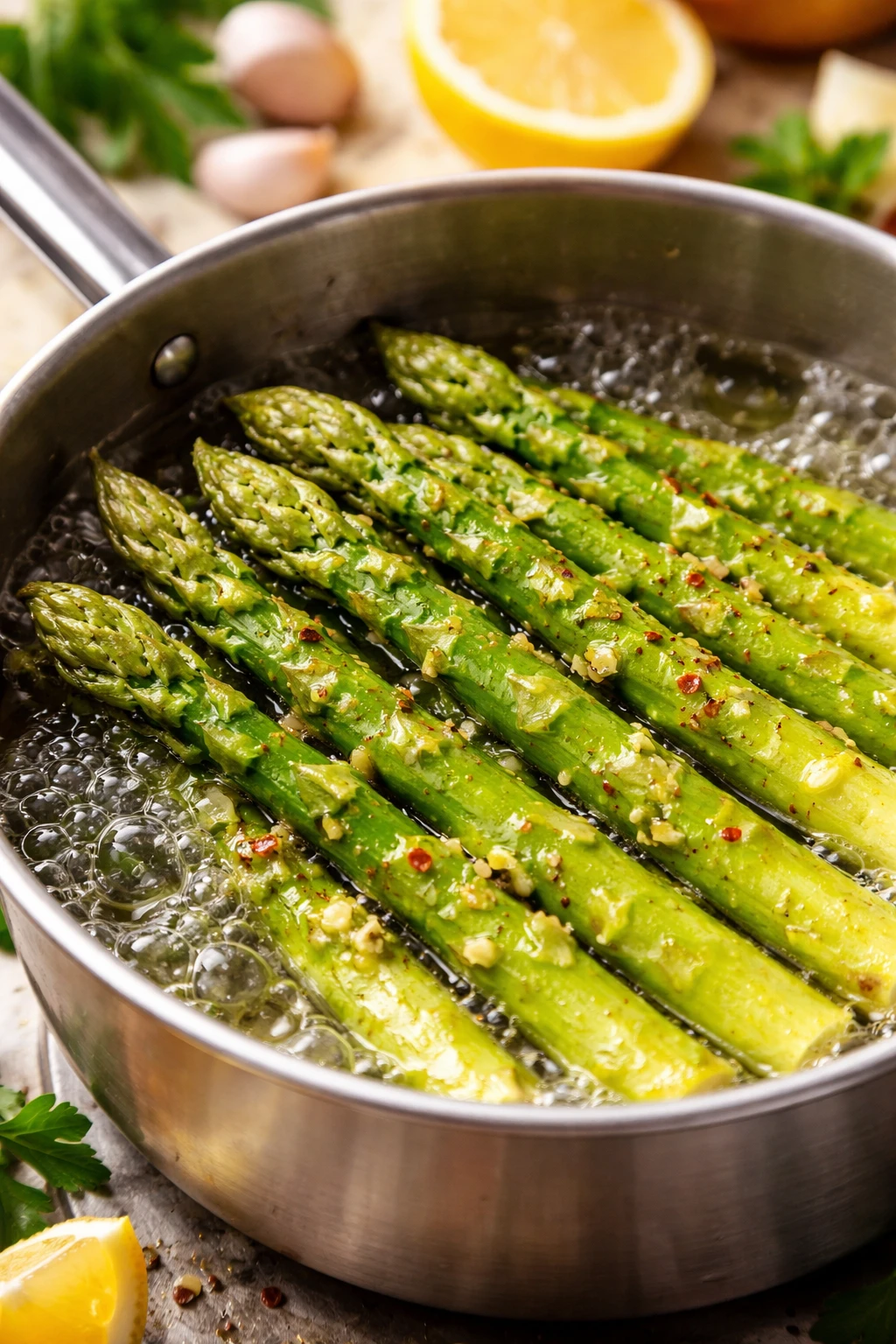
Pour about 4 cups of water into a wide pot and add 1/2 teaspoon of salt. Bring it to a gentle boil over medium-high heat. Salt seasons the asparagus and helps maintain its bright green color during cooking. Avoid boiling too vigorously, which can break the spears and cause uneven cooking.
⏱ Time: 3-5 minutes
✓ Doneness: Water is gently boiling with small bubbles rising steadily
Step 3
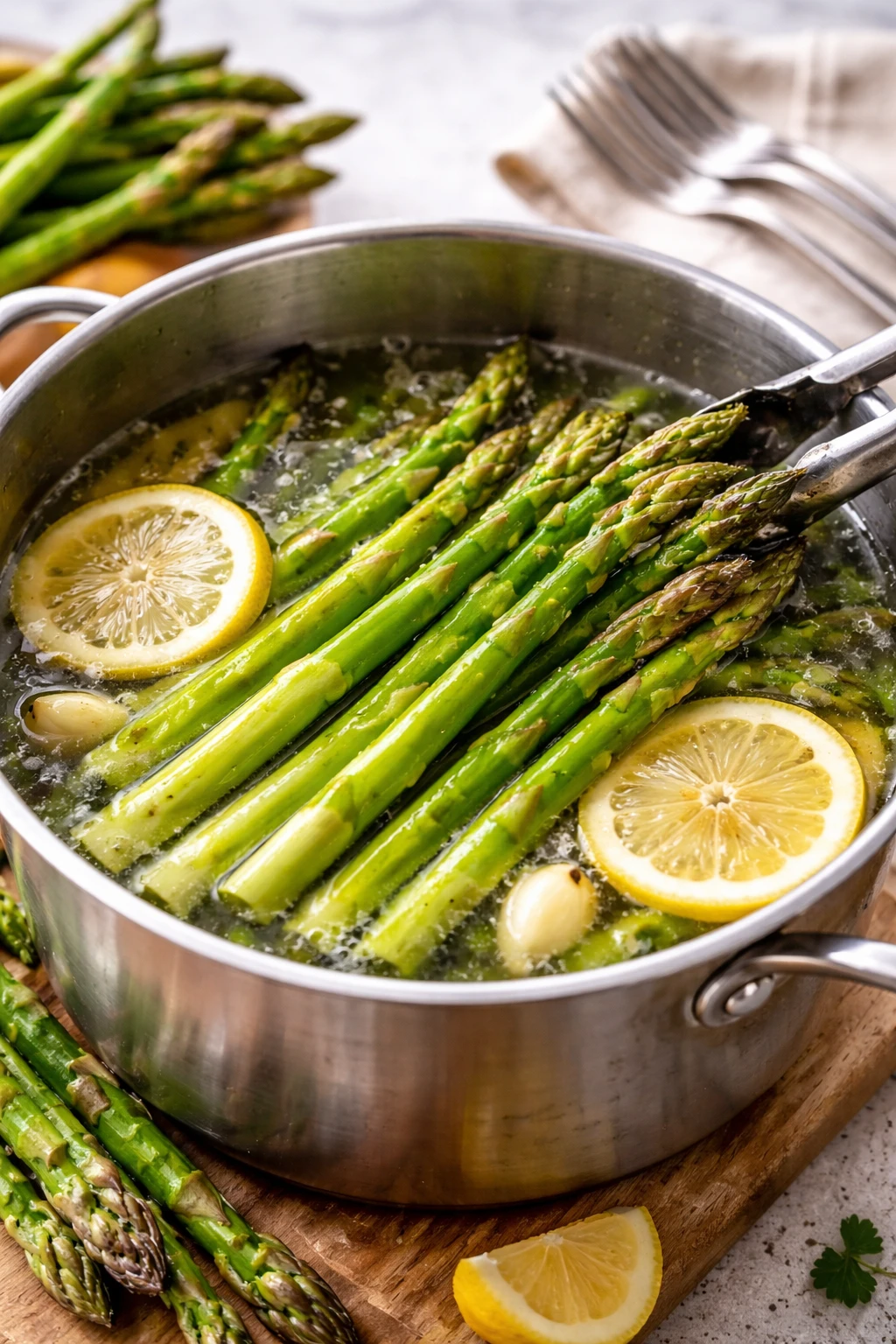
Add the asparagus spears to the pot, making sure they are mostly submerged but not overcrowded. Cover the pot with a lid to trap steam. This steaming effect cooks the asparagus evenly, locking in moisture and color. Crowding the pot can lead to uneven cooking, so use a pot large enough or cook in batches if needed.
⏱ Time: 1 minute
✓ Doneness: Asparagus spears start to turn bright green and steam accumulates on the lid
Step 4
Let the asparagus cook for 3-5 minutes depending on thickness. Thinner spears need less time, while thicker ones take a bit longer. Check doneness by piercing a spear with a fork; it should be tender but still have a slight snap. Overcooking will make the spears mushy and dull in color.
⏱ Time: 3-5 minutes
✓ Doneness: Fork pierces easily but asparagus still resists slightly when bent
Step 5
Once cooked to your liking, immediately drain the asparagus in a colander and run under cold water or plunge into an ice bath. This stops the cooking process and preserves that bright green color and crisp texture. Skipping this step means the asparagus will keep cooking from residual heat and become mushy.
⏱ Time: 2 minutes
✓ Doneness: Asparagus feels cool to the touch and retains vibrant green color
Step 6
Pat the asparagus dry gently with a clean kitchen towel or paper towels. Removing excess water helps when seasoning or serving to avoid sogginess. Be gentle so you don’t bruise the spears.
⏱ Time: 1-2 minutes
✓ Doneness: Spears feel dry but still firm and fresh
Step 7
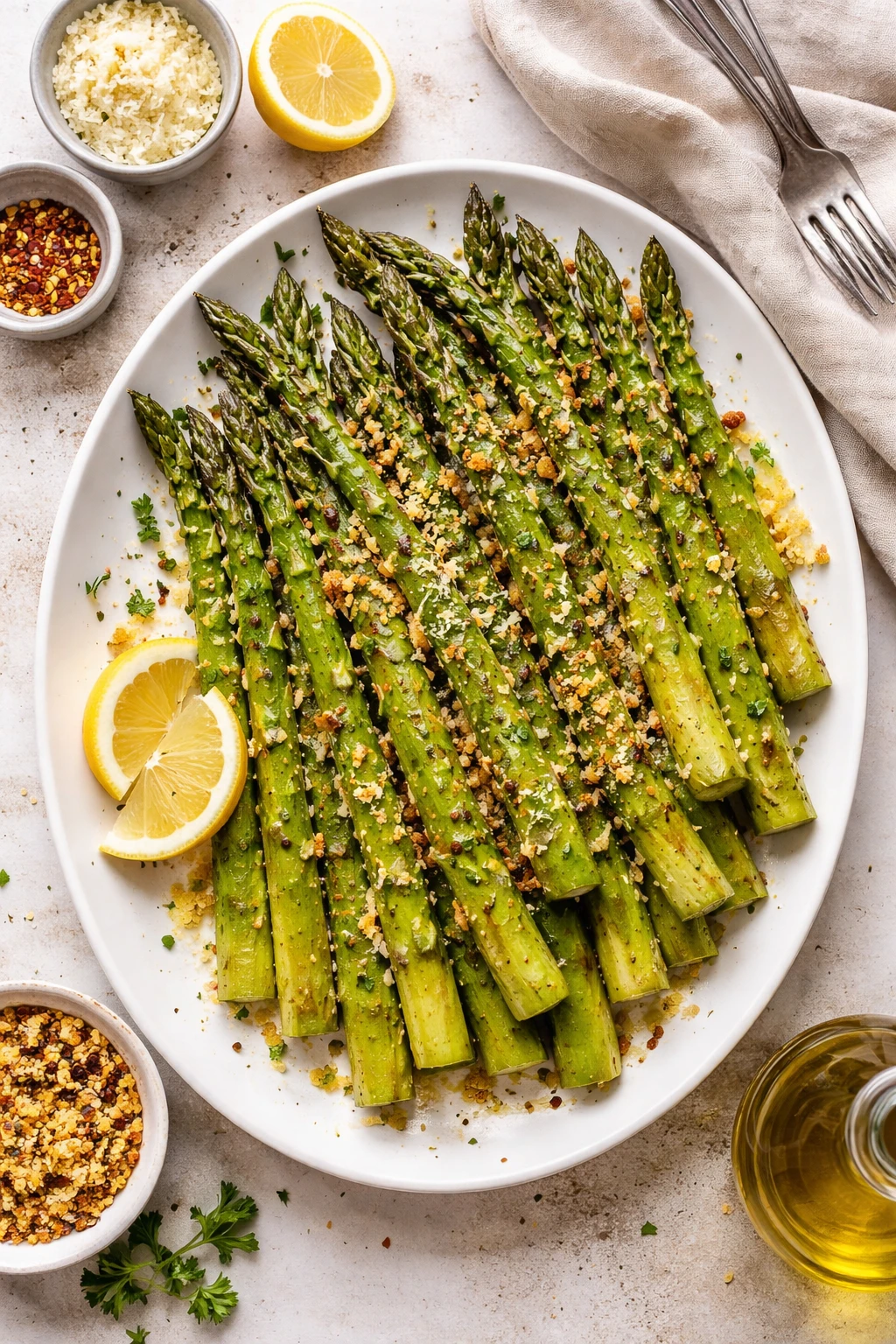
Season the asparagus simply with a drizzle of olive oil, a squeeze of lemon juice, and a pinch of black pepper or flaky sea salt. These light additions enhance the natural flavor without overpowering it. You can also try sprinkling some grated Parmesan or toasted almonds for extra texture and taste.
⏱ Time: 2 minutes
✓ Doneness: Asparagus glistens lightly and smells fresh and zesty
Step 8
Serve immediately while warm as a side dish alongside your favorite main course. The asparagus is great with roasted meats, pasta, or grain bowls. If you want to serve it chilled, refrigerate for up to a day and add dressing just before serving.
⏱ Time: 0 minutes
✓ Doneness: Asparagus plated attractively and ready to eat
Step 9
If you have leftovers, store them in an airtight container in the fridge. Reheat gently by steaming or microwaving with a splash of water to keep them tender but not mushy. Avoid overheating, which degrades texture and flavor.
⏱ Time: 0 minutes
✓ Doneness: Asparagus warmed through but still firm and bright
Variations
Garlic Butter Asparagus
After cooking, toss asparagus with melted butter and minced garlic sautéed until fragrant. This adds richness and a savory depth that pairs wonderfully with the natural sweetness of the spears.
Note: Melt butter gently to avoid burning garlic; toss asparagus immediately after cooking to retain crispness.
Parmesan Roasted Asparagus
Instead of boiling, roast trimmed asparagus with olive oil, salt, and a sprinkle of Parmesan cheese. Roasting brings out nutty flavors and a slight crispness on the edges.
Note: Roast at 425°F for 10-12 minutes, turning once, until cheese is golden and asparagus is tender-crisp.
Lemon and Herb Asparagus
After cooking, toss asparagus with fresh lemon zest, chopped parsley, and a drizzle of olive oil for a bright, fresh flavor profile that’s perfect for spring and summer meals.
Note: Add herbs just before serving to preserve their vibrant color and flavor.
Spicy Chili Asparagus
Add a pinch of red chili flakes or a drizzle of chili oil after cooking for a spicy kick that complements the fresh vegetable flavor well.
Note: Adjust chili quantity to taste; add after cooking to maintain heat intensity.
Asparagus Salad with Vinaigrette
Chill cooked asparagus and toss with a simple vinaigrette of olive oil, Dijon mustard, vinegar, and shallots for a refreshing salad that’s light and tangy.
Note: Cool asparagus completely before dressing to keep texture firm and crisp.
Pro Tips
Trim asparagus by snapping rather than cutting.
Snapping the asparagus naturally removes the tough, woody end where the spear breaks easily, ensuring you don’t waste the tender part. Cutting can sometimes leave behind fibrous bits that won’t soften properly and can make eating less pleasant.
Use just enough water to cover the tips, not the whole spear.
This creates a steaming environment inside the pot, cooking the asparagus gently and evenly. Too much water leads to boiling rather than steaming, which can cause uneven texture and loss of nutrients.
Shock asparagus in ice water after cooking.
Plunging the hot asparagus into cold water stops the cooking immediately, preventing over-softening and preserving the bright green color. It’s a simple step that makes a big difference in appearance and texture.
Cook asparagus in batches if your pot is small.
Overcrowding reduces steam circulation and causes uneven cooking, with some spears underdone and others overcooked. Cooking in smaller batches ensures each spear gets the right amount of heat and steam.
Don’t skip drying the asparagus after cooking.
Excess water dilutes seasoning and can make the dish soggy. Patting dry helps the oil and lemon juice cling better, enhancing flavor and presentation.
Season asparagus after cooking, not before.
Adding salt or acidic ingredients before cooking can draw out moisture and affect texture. Finishing with seasoning preserves the crispness and fresh flavor.
Serve asparagus immediately for best texture.
Asparagus loses its crispness as it cools. Serving right away ensures it retains that perfect tender-crisp bite that makes it so enjoyable.
Common Mistakes to Avoid
Overcooking asparagus until mushy.
Why it happens Many cooks assume asparagus needs a long boil to soften, but this breaks down fibers and causes loss of color.
Fix Use a timer and check tenderness early by piercing with a fork. Remove asparagus as soon as it’s tender but still crisp to avoid mushiness.
Skipping the trimming step.
Why it happens It’s tempting to save time by not trimming, but the woody ends remain tough and unpleasant.
Fix Always snap or cut off the bottom 1-2 inches before cooking to remove the fibrous part for a better texture.
Boiling asparagus rapidly instead of steaming gently.
Why it happens Using too much water or high heat can break spears and cause uneven cooking.
Fix Use less water and cover the pot to create steam, cooking at a gentle boil rather than a rolling boil.
Not shocking asparagus in cold water after cooking.
Why it happens Without this step, residual heat continues cooking and dulls color and texture.
Fix Immediately transfer cooked asparagus to ice water to stop cooking and preserve color.
Seasoning before cooking.
Why it happens Salt or acidic marinades before cooking can draw moisture out and affect texture negatively.
Fix Add salt, oil, lemon, or other seasonings after cooking for best flavor and texture.
Nutrition
Per Serving:
Nutritional values are estimates and may vary based on specific ingredients used.
Storage & Tips
Room Temperature
Cooked asparagus can be left at room temperature for up to 2 hours if covered loosely to prevent drying out. Beyond that, it’s best to refrigerate to avoid spoilage.
Refrigerator
Store cooked asparagus in an airtight container in the fridge for up to 3 days. The flavor is best when served cold or gently reheated. Avoid reheating multiple times to preserve texture.
Freezer
Asparagus doesn’t freeze well cooked because it becomes mushy. If freezing, blanch raw spears briefly, cool, and freeze separately to preserve texture better.
Reheating
Reheat asparagus gently by steaming or microwaving with a splash of water for 30-60 seconds. Avoid overheating which can make it limp and dull.
Make Ahead
Prepare and cook asparagus 1 day ahead, cool completely, then store in the fridge without seasoning. Add oil, lemon, and salt just before serving for fresh flavor.
FAQ
Can I use frozen asparagus for this recipe?
Frozen asparagus is usually pre-blanched and can be more watery or mushy when cooked. You can cook it similarly but reduce cooking time and skip the ice bath since it’s already cooked. The texture won’t be as crisp as fresh.
What if I don’t have a pot large enough to cover asparagus?
You can cut the spears in half or cook in batches to avoid overcrowding. Alternatively, use a steamer basket in a smaller pot to steam the asparagus evenly without submerging in water.
Why does my asparagus turn yellow or dull after cooking?
Add salt to the water to help maintain color and always cool quickly after cooking.
Can I season asparagus before cooking?
Finish with seasoning like olive oil, lemon, salt, or spices after cooking for best texture and flavor.
How do I know when asparagus is perfectly cooked?
Check at 3 minutes and adjust cooking time based on spear thickness.
Is blanching the same as boiling asparagus?
This recipe uses a gentle boil and steam approach followed by shocking, which is a form of blanching.
Can I add other vegetables to cook with asparagus?
Overcrowding can lead to uneven cooking, so adjust quantities accordingly.
What’s the best way to reheat leftover asparagus?
Serve immediately after reheating to enjoy the best texture.
Final Thoughts
Give this simple asparagus recipe a try—you’ll love how easy it is to get perfect, tender-crisp spears every time. Let me know how it turns out!