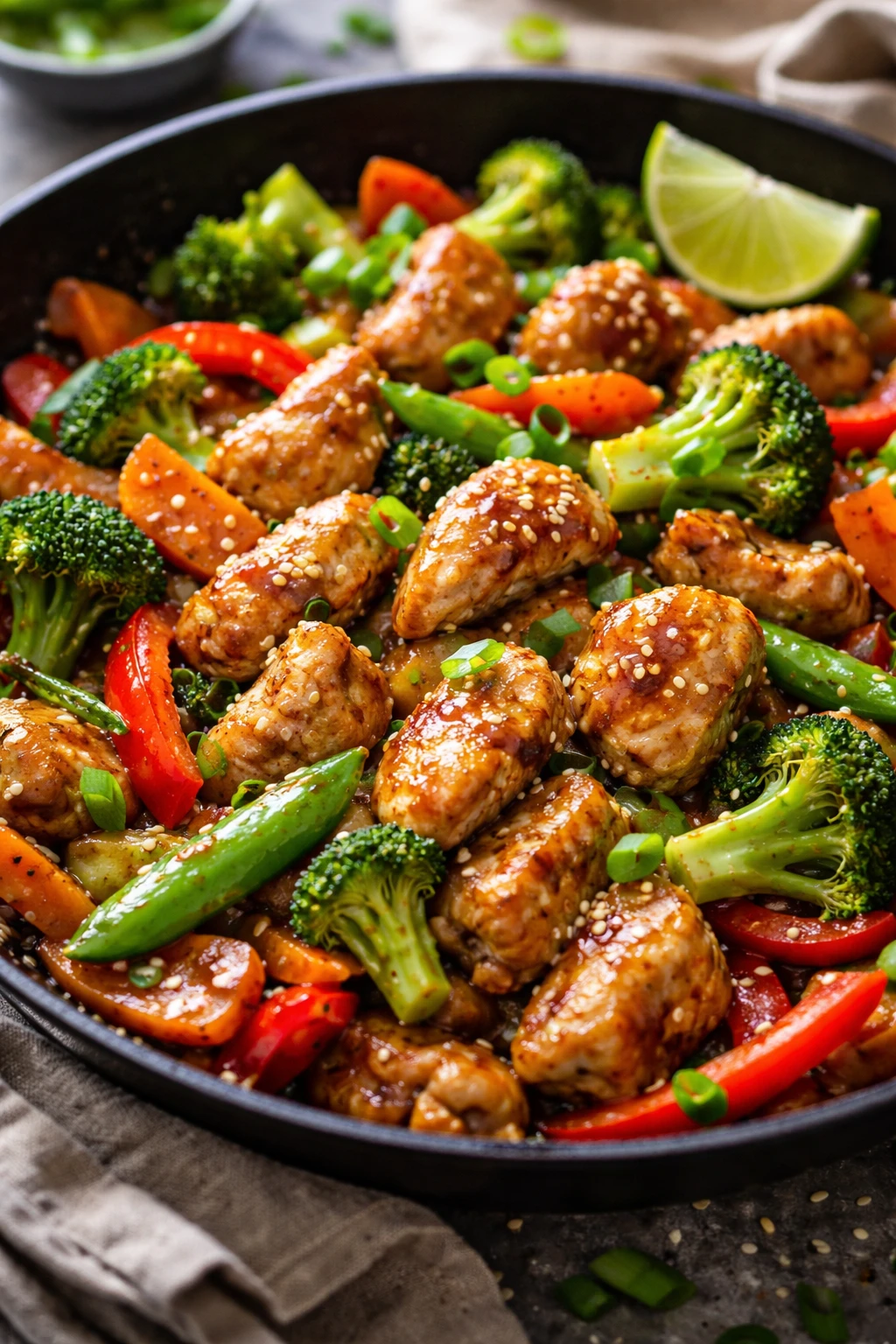
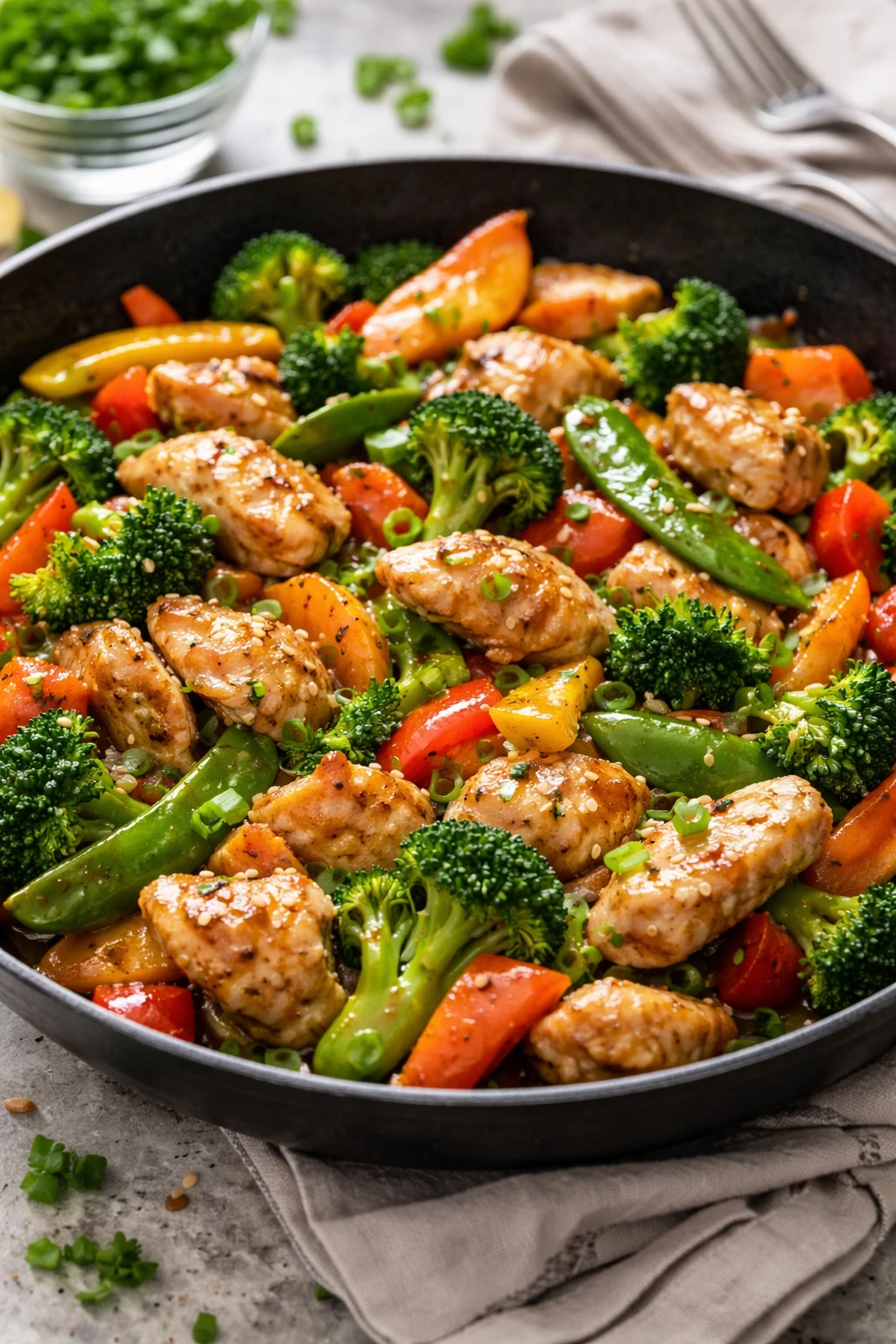
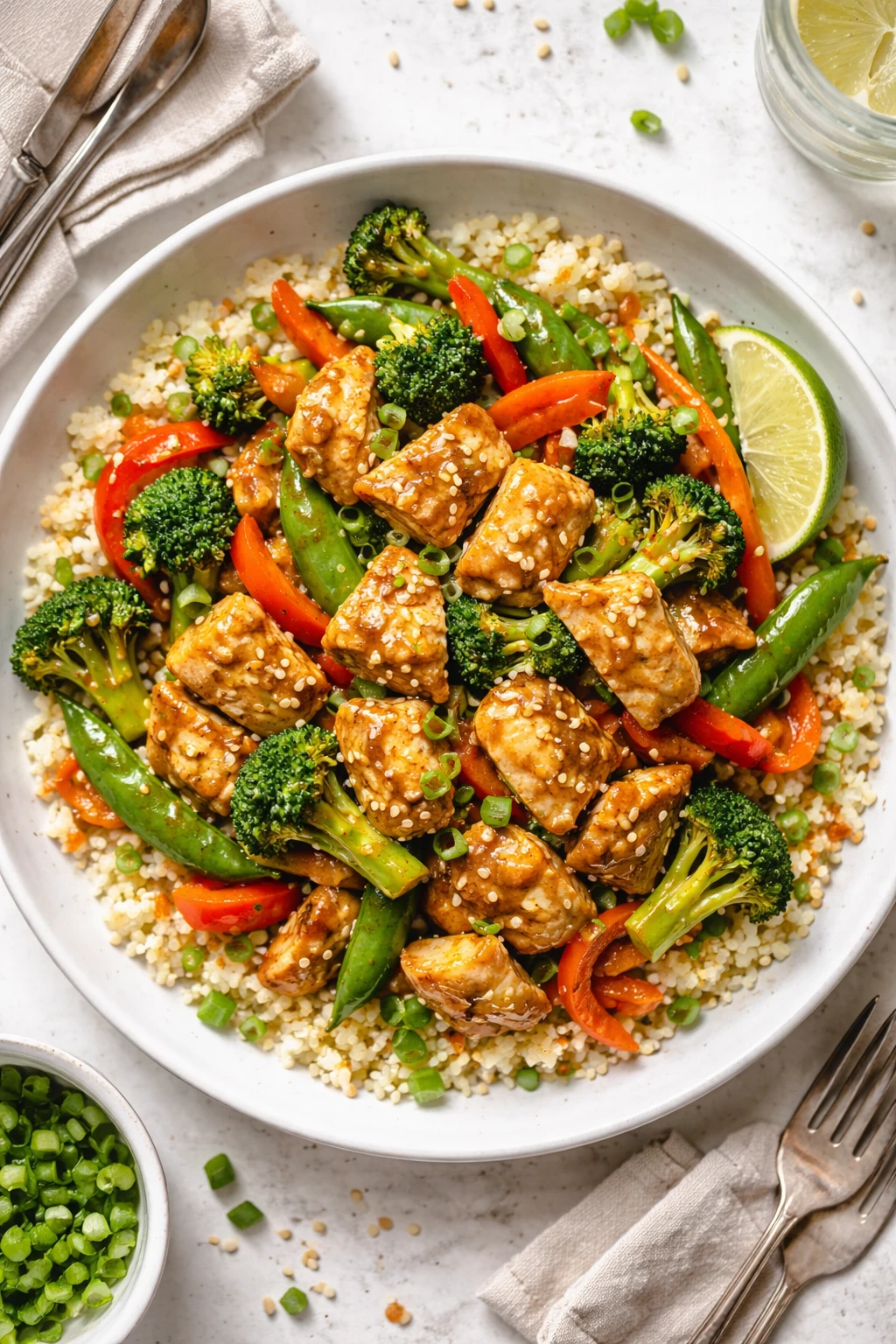
This stir fry is my go-to for busy nights—light, packed with protein, and loaded with fresh veggies. The secret? A quick marinade that keeps the chicken juicy without extra calories. Perfect for a healthy dinner that’s ready in no time!
Introduction
I first stumbled upon this chicken stir fry recipe a few years ago when I needed something quick but still healthy for weeknights. What I love most about it is the marinade—it’s so simple but really locks in the chicken’s juiciness without adding a ton of oil or calories. I’ve tweaked the veggies over time, adding more color and crunch with bell peppers and carrots, which makes it feel fresh and vibrant every time. Plus, the ginger and garlic combo gives it a nice punch that makes the dish anything but boring. One trick I learned is to slice the chicken thinly and marinate it for at least 10 minutes to keep it tender and flavorful. When it’s all done, you get this colorful, satisfying dish that’s perfect for dinner any night of the week. I’ve had my share of overcooked stir fries, but this method keeps the chicken juicy and the veggies crisp—exactly how I like it.
How To Do It
Step 1
Start by slicing the chicken breasts into thin strips. This allows the marinade to penetrate better and the chicken to cook quickly and evenly. Place the chicken in a bowl and add soy sauce, rice vinegar, sesame oil, honey, minced garlic, and grated ginger. Stir everything together to coat the chicken well. Let it marinate for at least 10 minutes—this step is crucial because it tenderizes the meat and infuses all those flavors. Avoid skipping this or rushing it; the marinade is what keeps the chicken juicy during cooking.
⏱ Time: 10 minutes
✓ Doneness: Chicken pieces are evenly coated and slightly glossy from the marinade.
Step 2
While the chicken marinates, prepare your vegetables. Slice the bell pepper, julienne the carrot, cut broccoli into small florets, and slice the onion thinly. Having everything ready before you start cooking is important because stir frying happens quickly and you don’t want to overcook anything. Also, uniform slicing ensures even cooking. If you chop the veggies too big, they won’t cook properly; too small, and they’ll get mushy.
⏱ Time: 5-7 minutes
✓ Doneness: Veggies are sliced evenly and ready to toss in the pan.
Step 3
Heat 1 tablespoon of vegetable oil in a large skillet or wok over medium-high heat. When the oil is hot but not smoking, add the marinated chicken in a single layer. Cook without stirring for about 2 minutes to get a nice sear, then stir and cook for another 3-4 minutes until the chicken is cooked through and slightly caramelized. This searing step locks in flavor and texture. Avoid overcrowding the pan or stirring too much, or the chicken will steam instead of sear.
⏱ Time: 6 minutes
✓ Doneness: Chicken is opaque, slightly browned, and cooked through.
Step 4
Remove the chicken from the pan and set aside. Add the remaining tablespoon of oil to the same pan. Toss in the onion and carrot first since they take longer to soften. Stir fry for about 2 minutes until they start to soften but still have some crunch. The goal is to keep the veggies vibrant and crisp, so don’t overcook them.
⏱ Time: 2 minutes
✓ Doneness: Onions are translucent and carrots slightly tender yet crisp.
Step 5
Add the broccoli florets and bell pepper slices to the pan. Stir fry everything together for another 3-4 minutes. The broccoli should turn bright green and stay crisp-tender. If you cook it too long, it will lose its color and texture. Keep the heat high enough so the veggies cook fast but don’t burn.
⏱ Time: 4 minutes
✓ Doneness: Veggies are vibrant, tender-crisp, and slightly caramelized.
Step 6
Return the chicken to the pan with the veggies. Toss everything together and stir fry for an additional 1-2 minutes just to reheat the chicken and blend flavors. This final step brings the dish together and ensures every bite is flavorful and warm. Avoid overcooking here to keep the chicken tender and veggies crisp.
⏱ Time: 2 minutes
✓ Doneness: Dish is hot, glossy, and well combined.
Step 7
Taste and season with salt and pepper as needed. Sometimes the soy sauce in the marinade is enough, but a pinch of salt can enhance the flavors. Be cautious not to oversalt since soy sauce is already salty. If you want a little extra zing, a splash of fresh lime juice works wonders here.
⏱ Time: 1 minute
✓ Doneness: Balanced seasoning with no overpowering saltiness.
Step 8
Turn off the heat and sprinkle optional sesame seeds and sliced green onions on top for a fresh finish. These garnishes add a nice texture contrast and a subtle nutty flavor that complements the stir fry perfectly.
⏱ Time: 1 minute
✓ Doneness: Garnishes evenly distributed and visually appealing.
Step 9
Serve your chicken stir fry immediately, ideally over steamed rice or noodles. The dish is best enjoyed fresh while the veggies maintain their crunch and the chicken stays juicy. If you wait too long, the veggies can become soggy and lose their vibrant color.
⏱ Time: Serve immediately
✓ Doneness: Fresh, hot, and vibrant stir fry ready to eat.
Variations
Spicy Szechuan Chicken Stir Fry
Add a tablespoon of Szechuan chili paste to the marinade and toss in some dried red chilies during cooking for a fiery kick. This variation gives the dish a bold, spicy profile that pairs perfectly with steamed jasmine rice.
Note: Be mindful of spice levels; add chilies gradually and taste as you go to avoid overpowering the other flavors.
Honey Garlic Chicken Stir Fry
Double the garlic and increase honey in the marinade for a sweeter, garlicky twist. Finish with a drizzle of extra honey over the stir fry before serving for a glossy, sticky finish that kids will love.
Note: Watch cooking temperature closely to avoid burning the honey, which can turn bitter if overheated.
Thai Basil Chicken Stir Fry
Swap out the veggies for green beans and add fresh Thai basil leaves at the end. Use fish sauce instead of soy sauce for authentic Thai flavor. This version is aromatic and herbaceous, perfect for adventurous eaters.
Note: Add basil just off heat to preserve its fragrance and avoid bitterness.
Vegetarian Tofu Stir Fry
Replace chicken with firm tofu pressed and cubed. Marinate tofu in the same sauce and stir fry until golden. This plant-based option is just as satisfying and loaded with protein.
Note: Press tofu well to remove moisture; this helps it crisp up and absorb marinade flavors better.
Peanut Chicken Stir Fry
Add 2 tablespoons of peanut butter to the marinade and finish with chopped peanuts on top. This variation adds a creamy, nutty flavor that’s rich and comforting but still quick to make.
Note: Thin the peanut butter with a little warm water or soy sauce to keep the marinade pourable and easy to coat the chicken.
Pro Tips
Always marinate the chicken for at least 10 minutes before cooking.
Marinating allows flavors to penetrate the meat and tenderizes it. Without this step, the chicken can taste bland and dry. The acid and oils in the marinade break down proteins gently, leading to juicier, more flavorful results.
Use a very hot pan and don’t overcrowd it when searing the chicken.
High heat promotes the Maillard reaction, which creates that delicious browned crust and complex flavor. Overcrowding traps steam and causes the chicken to steam instead of sear, resulting in a soggy texture and less flavor.
Slice vegetables uniformly and add them in stages based on cooking time.
Different veggies cook at different rates. Starting with denser veggies like carrots and onions ensures everything finishes cooking evenly. This technique keeps the stir fry crisp and colorful instead of mushy.
Use fresh ginger and garlic in the marinade rather than powders.
Fresh aromatics release essential oils that brighten the dish with vibrant flavor. Powdered substitutes lack the depth and can taste flat or artificial, diminishing the overall taste.
Toss the chicken back with the veggies at the end just long enough to heat through.
This final step melds flavors without overcooking. Overheating can make the chicken tough and veggies soggy, so a quick toss keeps the dish balanced and fresh.
Serve immediately after cooking for best texture and flavor.
Stir fry is meant to be eaten fresh; waiting too long causes veggies to lose their crispness and chicken to dry out. Immediate serving preserves the contrast in textures that makes this dish great.
Add a splash of lime juice or sprinkle sesame seeds just before serving.
Acidity from lime brightens the flavors and adds freshness, while sesame seeds provide a nutty crunch. These small touches elevate the dish visually and taste-wise.
Common Mistakes to Avoid
Skipping the marinade or marinating too briefly
Why it happens Sometimes cooks rush or underestimate how much flavor the marinade adds. They might think it’s optional or just a quick toss.
Fix Set aside at least 10 minutes for the chicken to soak up the marinade. Even a short marinate deepens flavor and tenderizes the meat, preventing dryness and blandness.
Overcrowding the pan when cooking the chicken
Why it happens Trying to cook everything at once to save time leads to steaming instead of searing.
Fix Cook chicken in batches if needed. This ensures a high heat sear that locks in juices and creates flavor through caramelization.
Cooking vegetables all at once without staging
Why it happens Not all veggies cook at the same speed, but some skip this step for convenience.
Fix Add veggies in order of hardness—start with carrots and onions, then peppers and broccoli. This keeps everything crisp-tender and colorful.
Using low heat or cold pan for stir frying
Why it happens Some may think slower cooking is better for tenderness or don’t preheat properly.
Fix Always preheat the pan until very hot before adding oil and ingredients. High heat cooks quickly and preserves texture and flavor.
Overcooking the stir fry by leaving it on heat too long
Why it happens Inexperience or distractions can lead to overheating, drying out chicken and softening veggies.
Fix Cook quickly and remove from heat as soon as chicken is cooked through and veggies are tender-crisp. Timing is key for freshness.
Nutrition
Per Serving:
Nutritional values are estimates and may vary based on specific ingredients used.
Storage & Tips
Room Temperature
This stir fry can safely sit at room temperature for up to 2 hours if covered loosely. Beyond that, bacteria growth increases, so refrigerate promptly to keep it safe and fresh.
Refrigerator
Store leftovers in an airtight container for up to 3 days. The veggies may soften slightly when chilled, so reheat gently to restore some crunch. Stir fry tastes best fresh but reheats well.
Freezer
Freeze in a sealed container or heavy-duty freezer bag for up to 2 months. To prevent freezer burn, remove as much air as possible. Thaw overnight in the fridge before reheating.
Reheating
Reheat in a skillet over medium heat with a splash of water or broth to loosen the sauce and prevent drying. Avoid microwaving for long periods to keep textures intact.
Make Ahead
You can marinate the chicken up to 24 hours ahead and chop veggies in advance, storing them separately in the fridge. Just stir fry everything fresh when ready to eat for best texture.
FAQ
Can I use chicken thighs instead of breasts?
Absolutely! Chicken thighs have more fat, which means more flavor and juiciness. Just slice them thinly like the breasts and adjust cooking time slightly since thighs can take a bit longer to cook through.
What can I substitute for soy sauce if I’m gluten-free?
Tamari is a great gluten-free alternative to soy sauce with a similar flavor profile. Coconut aminos also work well but are sweeter and less salty, so you might want to adjust the marinade accordingly.
How do I keep vegetables crisp and not soggy?
Cook veggies on high heat for short periods and add them in stages based on their cooking times. Avoid overcooking by removing the pan from heat once they’re bright and tender-crisp.
Can I make this stir fry vegan?
Yes, swap chicken for firm tofu or tempeh, and use tamari instead of soy sauce if needed. The same marinade works well, just press the tofu to remove excess water for better texture.
Is it okay to marinate chicken overnight?
Yes! Marinating overnight can deepen flavors even more. Just make sure to keep it refrigerated and use a non-reactive container like glass or plastic to avoid any metallic taste.
Why is my chicken dry even after marinating?
Overcooking is often the culprit. Thin slices cook quickly, so watch the time closely. Also, make sure your pan is hot enough to sear the chicken quickly, locking in juices.
Can I add other vegetables to this stir fry?
Definitely! Snap peas, mushrooms, zucchini, or baby corn are great options. Just keep in mind their cooking times and add them accordingly to maintain texture.
What’s the best oil for stir frying?
Use oils with high smoke points like vegetable, canola, or peanut oil. They tolerate high heat without burning and won’t impart strong flavors that compete with your dish.
Final Thoughts
I hope you give this chicken stir fry a try soon—it's a quick, tasty way to get dinner on the table without stress. Let me know how it turns out!