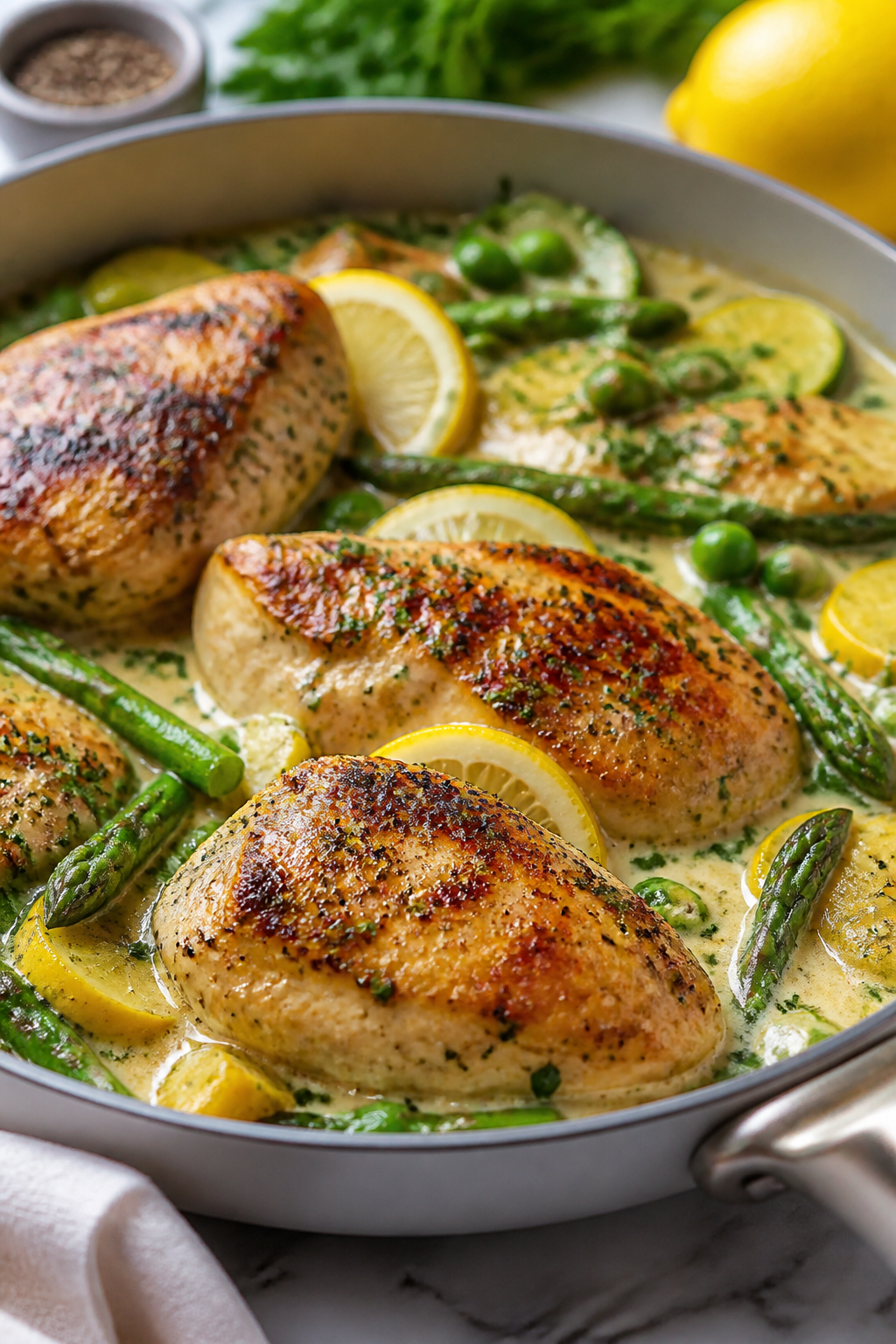
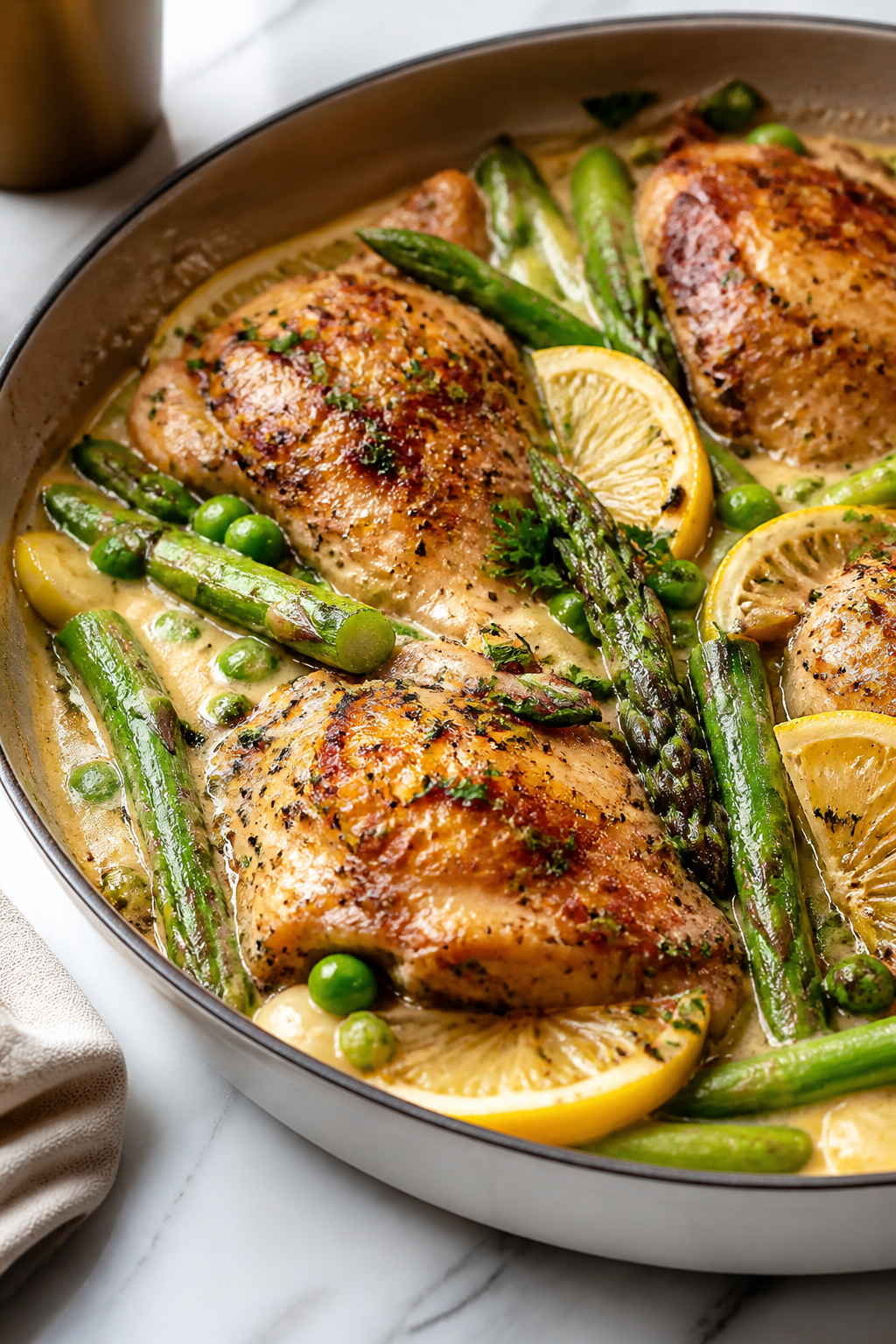
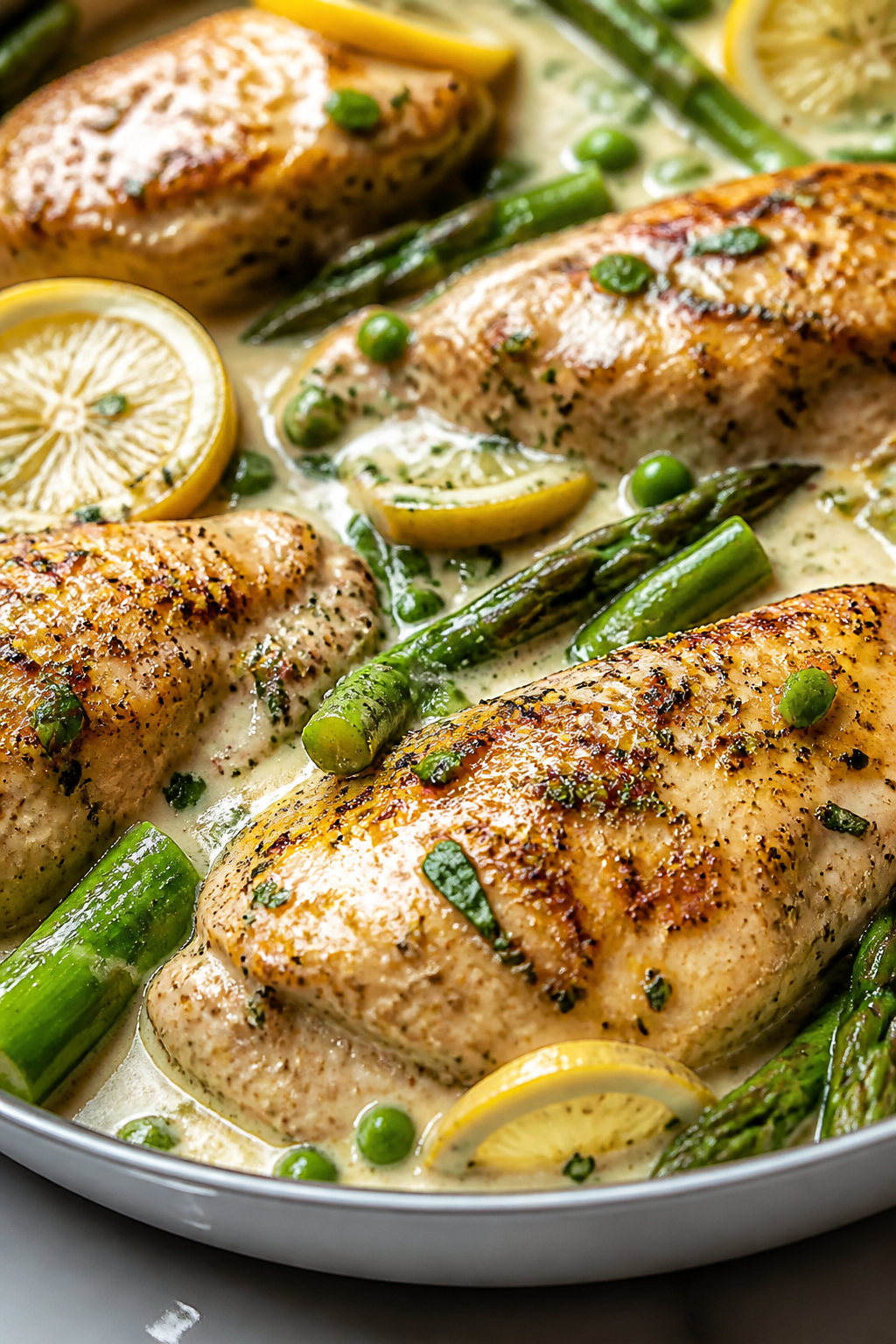
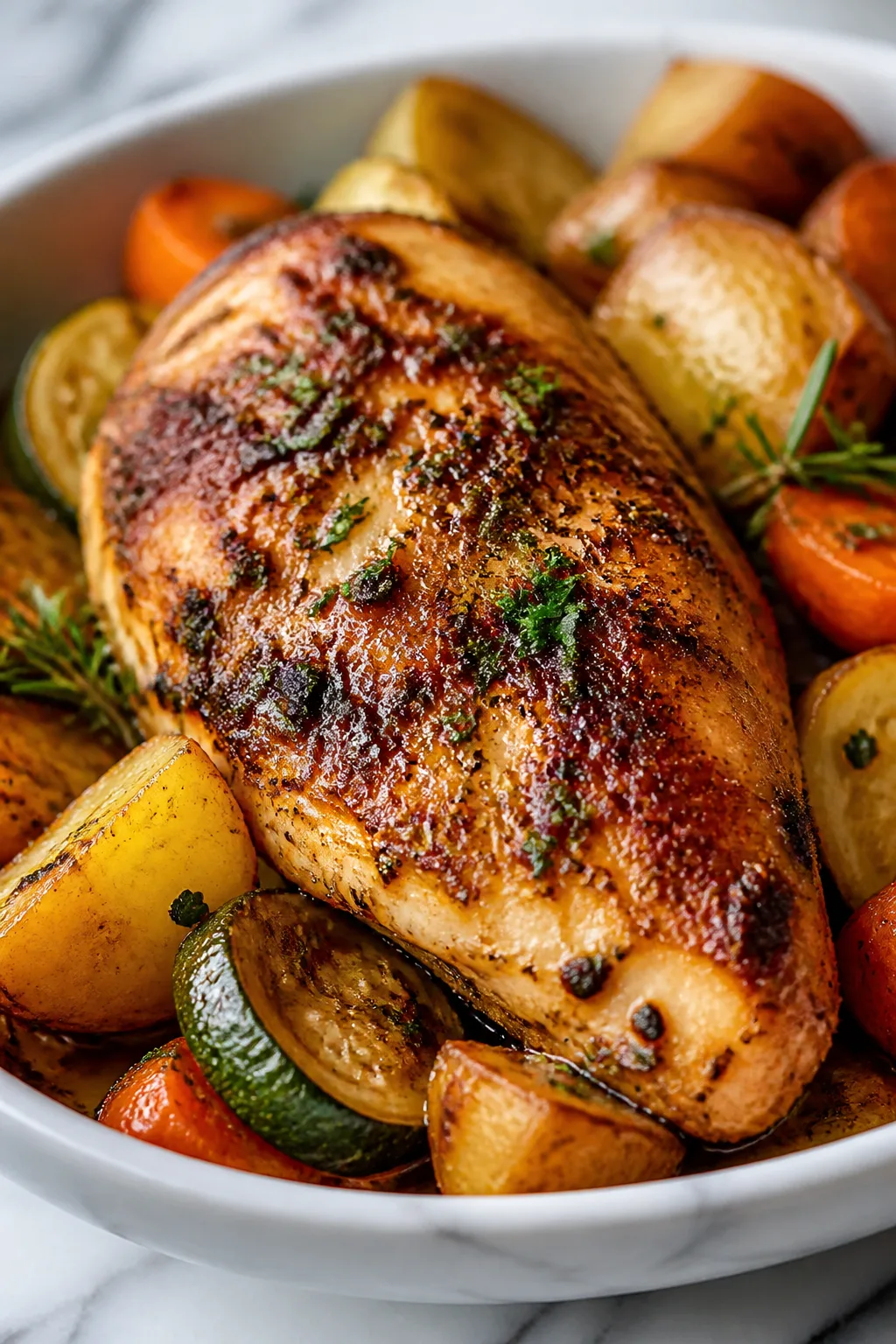
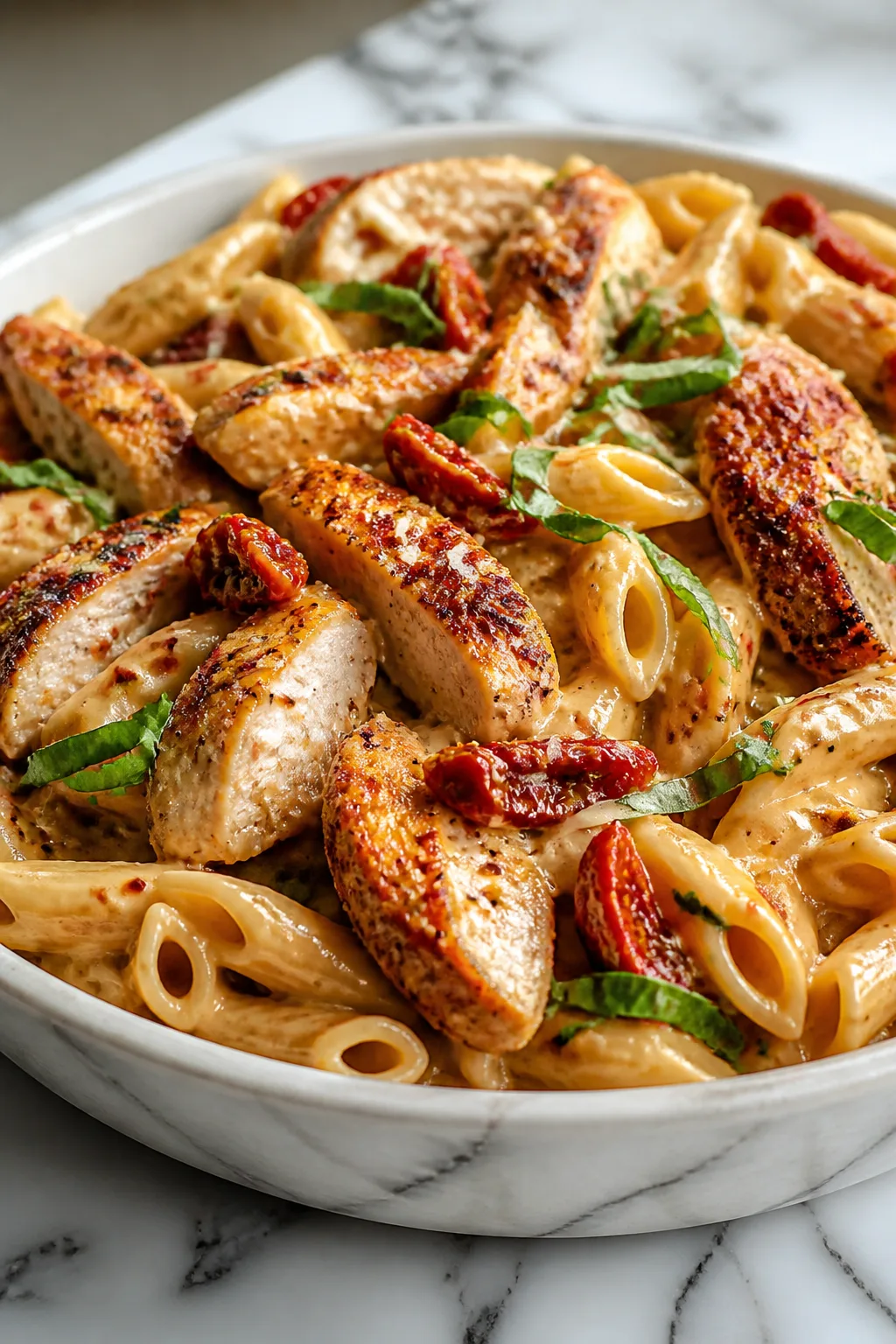
This one-pan chicken is creamy and bright with lemon-garlic sauce, loaded with fresh spring veggies. It’s quick to whip up and feels elegant enough for a weeknight treat.
Introduction
I first stumbled upon this creamy lemon garlic chicken recipe during a busy spring week when I wanted something fresh but fuss-free. I remember trying a few versions before finally perfecting this one-pan wonder that’s zesty, creamy, and full of seasonal veggies. What makes this recipe stand out is the lemon-garlic sauce that’s bright and silky, coating tender chicken thighs and crisp asparagus and snap peas. I love how everything cooks together in one skillet, which means less cleanup and more time to relax. The trick I learned was to sear the chicken first to lock in juiciness, then gently simmer it in the lemony cream sauce, letting the flavors meld perfectly. When it’s done, the sauce has this lovely balance of tang and richness that feels special but is so easy to make. It’s become a go-to for weeknight dinners, especially when I want something that’s both comforting and fresh-looking. Plus, the vibrant green veggies add a nice crunch and pop of color on the plate. Honestly, the first time I made it, I was worried the cream might make it too heavy, but the lemon zest and juice cut through beautifully, making it light and satisfying. Give it a try—you’ll see why I keep coming back to this recipe!
How To Do It
Step 1
Start by patting the chicken thighs dry with paper towels and seasoning them generously with salt and pepper. This step is crucial because drying the chicken helps it sear properly, creating that golden crust that locks in juices. Heat the olive oil in a large skillet over medium-high heat until shimmering but not smoking. Add the chicken thighs skin-side down (if skin-on) or just one side if skinless, and cook without moving for 5-6 minutes until nicely browned. Avoid overcrowding the pan to ensure even searing. Flip and brown the other side for another 3-4 minutes. Proper searing sets the foundation for juicy chicken and flavorful sauce.
⏱ Time: 10
✓ Doneness: Chicken is golden brown on both sides and releases easily from the pan.
Step 2
Remove the chicken from the skillet and set aside. Lower the heat to medium and add minced garlic to the same pan. Stir frequently for about 1-2 minutes until fragrant but not burnt. Garlic burns quickly and turns bitter, so watch closely. Then pour in the chicken broth, scraping the bottom of the pan to lift all those tasty browned bits. This deglazing step adds depth to the sauce. Let the broth simmer and reduce slightly for 3-4 minutes to concentrate flavor.
⏱ Time: 5
✓ Doneness: Broth has reduced by about a quarter and the pan bottom is free of stuck bits.
Step 3
Stir in the heavy cream, lemon zest, and lemon juice. Bring the mixture to a gentle simmer, stirring occasionally. The acid from the lemon brightens the sauce and balances the creaminess, so don’t skip the zest and juice. Simmer for about 2 minutes until the sauce slightly thickens. If you rush this step, the sauce might be too thin or the flavors won’t meld properly.
⏱ Time: 3
✓ Doneness: Sauce coats the back of a spoon with a smooth, slightly thickened texture.
Step 4
Return the chicken thighs to the skillet, nestling them into the sauce. Add the asparagus and sugar snap peas around the chicken. Cover the skillet with a lid and reduce heat to low. Let everything simmer gently for 10-12 minutes until the chicken is cooked through and the veggies are tender-crisp. The lid traps steam, cooking the veggies without turning them mushy. Avoid high heat here to keep the sauce silky and prevent the cream from curdling.
⏱ Time: 12
✓ Doneness: Chicken registers 165°F internally and veggies are bright green and tender yet firm.
Step 5
Sprinkle grated Parmesan cheese over the chicken and veggies. Stir gently to incorporate the cheese into the sauce, allowing it to melt and thicken the sauce further. Parmesan adds a savory depth and creamy texture. Taste and adjust seasoning with salt and pepper as needed. Be careful not to add too much salt at once since Parmesan is salty.
⏱ Time: 3
✓ Doneness: Cheese is fully melted and sauce has thickened slightly with a rich, cheesy aroma.
Step 6
Remove the skillet from heat and let the dish rest uncovered for 2-3 minutes. This resting time allows the sauce to thicken a bit more and flavors to settle. Serving immediately might result in a thinner sauce, so a brief rest enhances texture and taste.
⏱ Time: 3
✓ Doneness: Sauce has thickened just enough to coat the chicken and veggies beautifully.
Step 7
Garnish with freshly chopped parsley for a pop of color and fresh herbaceous note. The parsley adds brightness and balances the richness of the sauce. Serve the chicken and veggies hot, spooning extra sauce over the top. This dish pairs wonderfully with crusty bread or a light side salad.
⏱ Time: 2
✓ Doneness: Bright green parsley sprinkled evenly and dish looks vibrant and inviting.
Step 8
If you want to make this meal ahead, cook through step 5, then cool completely before storing in the fridge. Reheat gently on the stovetop over low heat with a splash of broth or water to loosen the sauce. Avoid high heat to prevent the cream from separating.
⏱ Time: 5
✓ Doneness: Reheated dish is warmed through with sauce smooth and creamy.
Step 9
For an extra touch, squeeze a little fresh lemon juice over the plated chicken just before serving. This final burst of acidity lifts all the flavors and adds freshness. It’s a simple step that makes a big difference in taste.
⏱ Time: 1
✓ Doneness: Dish smells bright and fresh with a subtle lemon aroma.
Variations
Add Mushrooms for Earthy Flavor
Sauté 1 cup of sliced cremini or button mushrooms with the garlic for an earthy twist. Mushrooms add umami and deepen the sauce’s flavor, complementing the lemon and cream nicely. This variation gives the dish a heartier feel.
Note: Cook mushrooms until golden and liquid evaporates before adding broth to prevent excess moisture and maintain sauce consistency.
Use Chicken Breasts Instead of Thighs
Swap thighs for boneless skinless chicken breasts for a leaner option. Be careful not to overcook breasts—they cook faster and can dry out. Pound breasts to even thickness for uniform cooking.
Note: Reduce simmer time by a few minutes; check internal temperature to avoid dryness.
Make It Dairy-Free with Coconut Cream
Replace heavy cream with full-fat coconut cream for a dairy-free version. The coconut adds subtle sweetness that pairs well with lemon and garlic. Use nutritional yeast or omit Parmesan for vegan adaptation.
Note: Simmer gently to avoid coconut cream separating; flavor will be richer and slightly tropical.
Add Red Pepper Flakes for Heat
Sprinkle 1/4 teaspoon red pepper flakes into the garlic step for a spicy kick. The heat balances the creaminess and adds excitement to the flavor profile without overpowering the dish.
Note: Add flakes early with garlic to infuse oil and distribute heat evenly.
Serve Over Rice or Pasta
Instead of serving as a one-pan dish, spoon the creamy lemon garlic chicken and veggies over cooked rice or pasta. This makes it a more filling meal and stretches servings. The sauce acts as a perfect coating for grains or noodles.
Note: Prepare grains separately and keep sauce consistency slightly thinner to coat well.
Pro Tips
Make sure to pat the chicken dry before seasoning and searing.
Moisture on the chicken surface creates steam when it hits the hot pan, preventing a proper sear. Dry chicken browns better, developing that flavorful crust through Maillard reaction, which locks in juices and adds delicious complexity.
Don’t rush the simmering of sauce after adding cream and lemon.
Simmering gently allows the sauce to thicken and flavors to meld without curdling the cream. High heat can cause the cream to separate, ruining the smooth texture and appearance of the sauce.
Add the spring veggies later in cooking and cover the pan.
Vegetables like asparagus and snap peas cook quickly and need steam to become tender-crisp. Covering traps steam and cooks them evenly without overcooking or losing their vibrant color and fresh flavor.
Use fresh lemon zest and juice rather than bottled lemon juice.
Fresh lemon zest contains essential oils that add brightness and aroma, while fresh juice offers a clean tang. Bottled lemon juice tends to be dull and can impart a bitter or artificial taste, weakening the sauce's freshness.
Let the dish rest for a few minutes off heat before serving.
Resting lets the sauce thicken slightly and the flavors settle. Serving immediately might leave the sauce too thin and less flavorful, while resting improves texture and taste.
Use freshly grated Parmesan cheese for the best melt and flavor.
Pre-grated cheese often contains anti-caking agents that affect melting and texture. Freshly grated Parmesan melts smoothly, adding savory depth and helping to thicken the sauce naturally.
Reheat leftovers gently with a splash of broth or water.
Cream-based sauces can separate or curdle if reheated too quickly or at high heat. Adding a little liquid and warming slowly preserves the smooth texture and prevents the sauce from breaking.
Common Mistakes to Avoid
Skipping the searing step on chicken
Why it happens Many cooks want to save time and skip searing, assuming it’s unnecessary if the chicken will cook in sauce.
Fix Take the time to sear chicken first. It locks in juices and creates a flavorful crust through Maillard browning. Without it, chicken can be pale and less flavorful. Heat oil well and avoid overcrowding the pan for best results.
Burning the garlic
Why it happens Garlic cooks quickly and is often left unattended or cooked on too high heat.
Fix Add garlic after searing chicken and cook on medium heat just until fragrant, about 1-2 minutes. Watch closely and stir frequently to avoid bitterness from burnt garlic.
Adding veggies too early and overcooking
Why it happens Some add asparagus and snap peas with the chicken at the start, leading to mushy veggies.
Fix Add veggies after the sauce is simmering and chicken is returned to the pan. Cover and cook briefly until tender-crisp to maintain vibrant color and texture.
Using bottled lemon juice
Why it happens Convenience leads to using bottled lemon juice, which lacks flavor.
Fix Always use fresh lemon zest and juice. The zest adds essential oils and aroma, while fresh juice brightens the sauce naturally.
Boiling the cream sauce vigorously
Why it happens Rushing the sauce thickening step by turning heat too high.
Fix Simmer sauce gently to avoid curdling. A slow simmer thickens the sauce smoothly and preserves creaminess.
Nutrition
Per Serving:
Nutritional values are estimates and may vary based on specific ingredients used.
Storage & Tips
Room Temperature
This dish can safely sit at room temperature for up to 2 hours when covered. Beyond that, bacteria growth increases, so refrigerate promptly to keep it safe.
Refrigerator
Store leftovers in an airtight container for up to 3 days. The sauce may thicken and flavors meld further. It can be served cold or reheated gently for best texture and taste.
Freezer
Freeze in airtight containers or heavy-duty freezer bags for up to 2 months. Wrap tightly to prevent freezer burn. Thaw overnight in the fridge and reheat gently to restore sauce texture.
Reheating
Warm leftovers on the stovetop over low heat with a splash of chicken broth or water to loosen the sauce. Avoid microwaving at high power as it may cause sauce separation.
Make Ahead
Cook through the sauce and chicken steps, then cool and refrigerate up to 2 days ahead. Reheat gently with a bit of broth, adding fresh lemon juice before serving to brighten flavors.
FAQ
Can I use chicken breasts instead of thighs?
Yes! You can swap chicken thighs for boneless skinless breasts, but breasts cook faster and can dry out if overcooked. Pound them to an even thickness and reduce simmer time. Check the internal temperature to ensure juicy results.
How do I prevent the cream sauce from curdling?
Simmer the sauce gently over low to medium heat and avoid boiling. Adding acid like lemon juice can cause curdling if the temperature is too high. Stir frequently and keep the heat moderate for a smooth sauce.
Can I make this recipe dairy-free?
Definitely! Substitute heavy cream with full-fat coconut cream for creaminess and use nutritional yeast or omit Parmesan cheese for a vegan-friendly version. The flavor will be slightly different but still delicious.
What’s the best way to reheat leftovers?
Reheat gently on the stovetop over low heat with a splash of broth or water to loosen the sauce. Avoid microwaving at high power to prevent the cream from separating and the sauce from becoming grainy.
Can I add other vegetables?
Sure! Mushrooms, bell peppers, or zucchini work well. Add them according to their cooking times—denser veggies earlier, tender ones later—to keep texture balanced and avoid overcooking.
Why is searing the chicken important?
Searing creates a flavorful crust through the Maillard reaction, locking in juices and adding depth to the dish. Skipping this step can result in bland, pale chicken and a less flavorful sauce.
How do I know when the chicken is done?
Chicken is safely cooked when it reaches an internal temperature of 165°F (74°C). The meat should be opaque and juices run clear. Using a meat thermometer is the most accurate method.
Can I prepare this recipe ahead of time?
Yes! You can cook the chicken and sauce, then cool and refrigerate for up to 2 days. Reheat gently before serving and add fresh lemon juice to refresh the flavors.
Final Thoughts
I hope you enjoy making this creamy lemon garlic chicken as much as I do! It’s a simple recipe that feels special—perfect for sharing with friends or family. Let me know how it turns out!