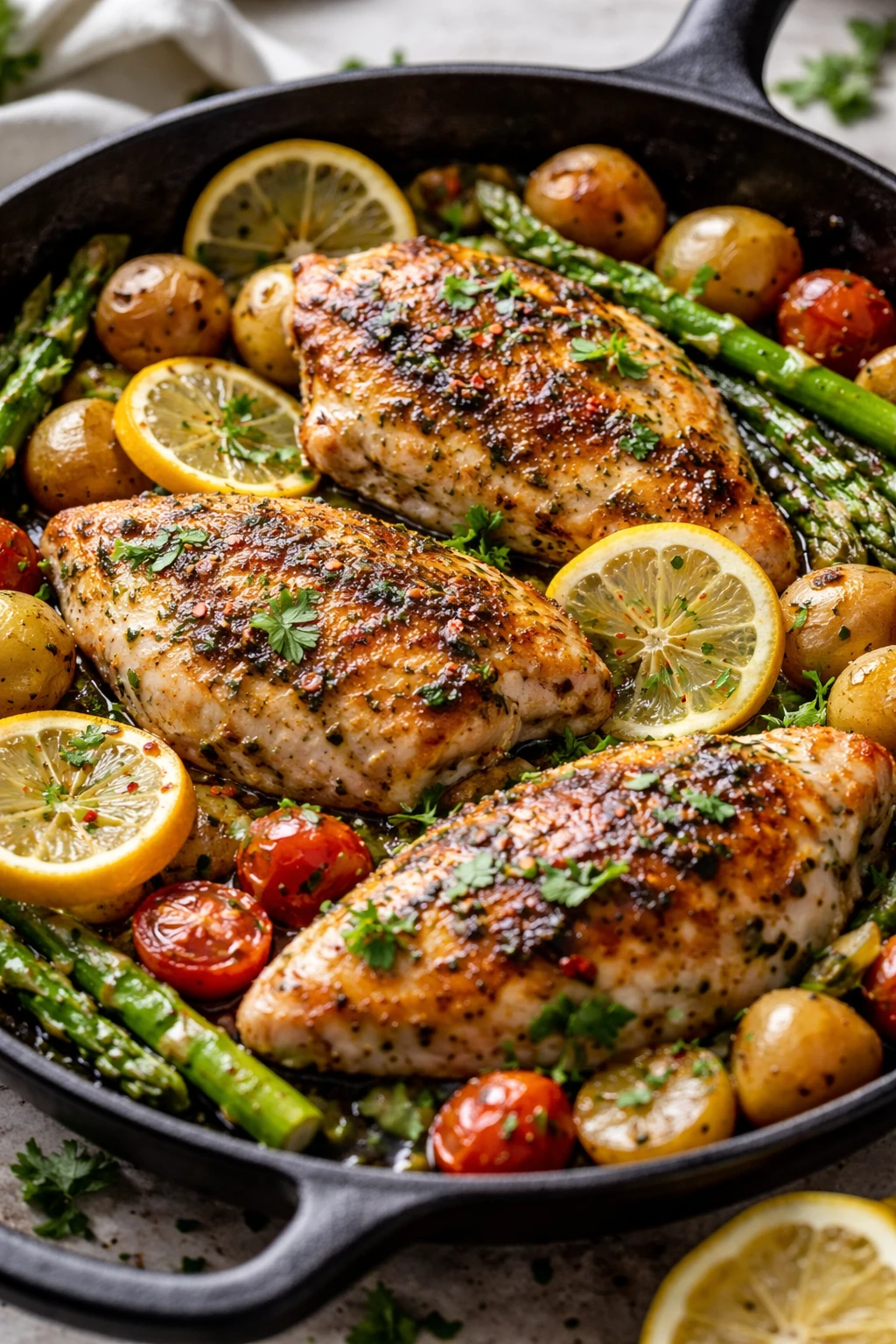
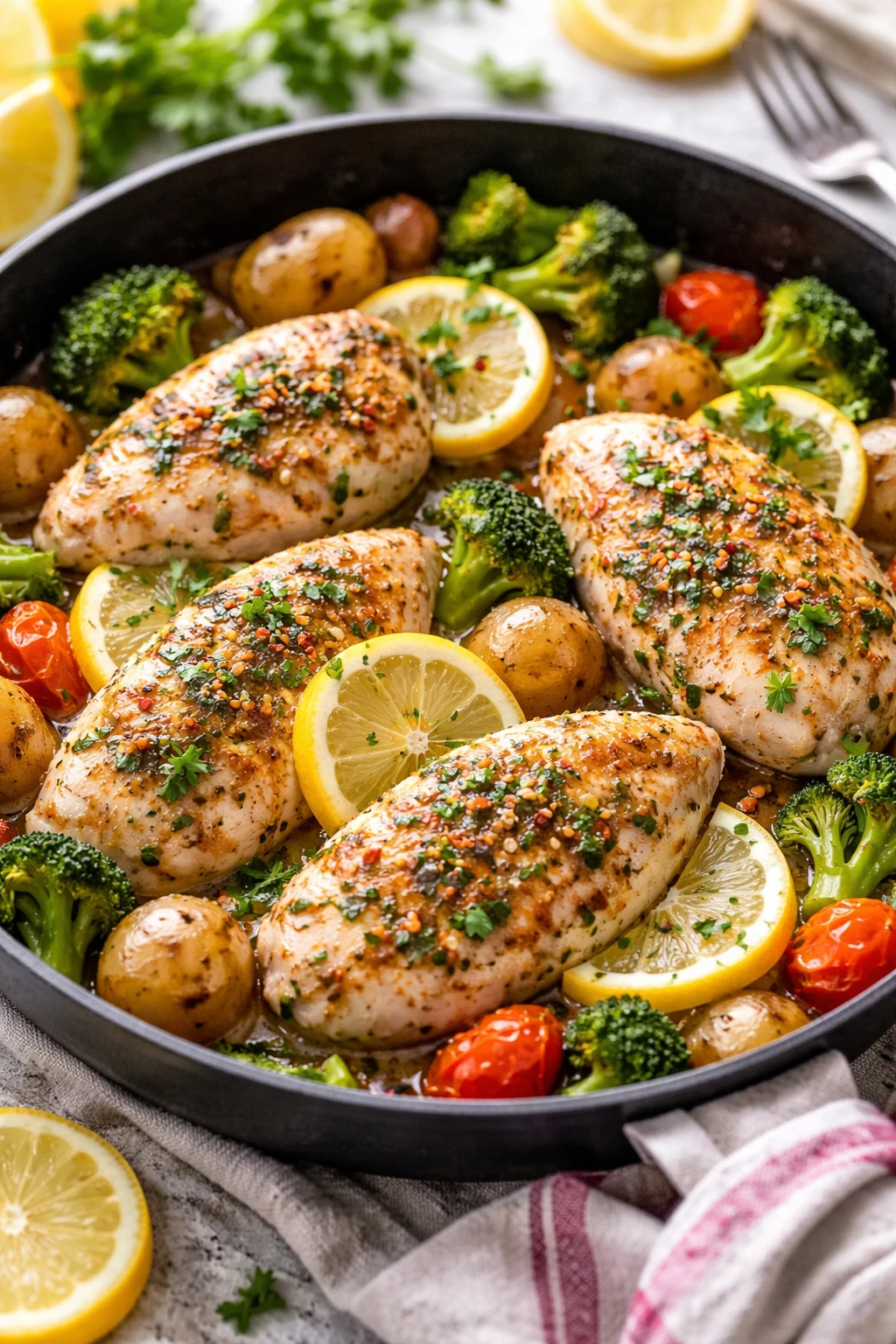
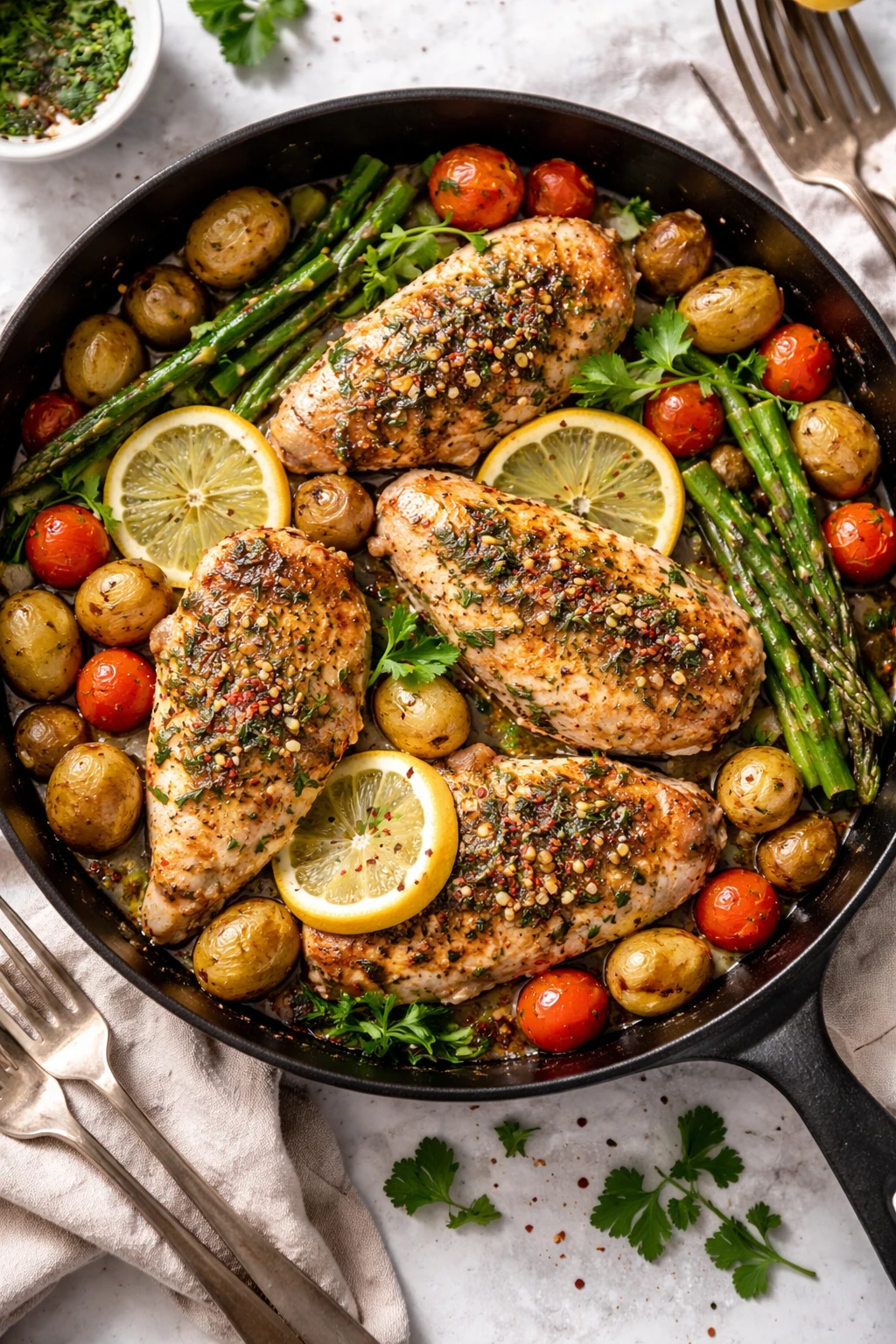
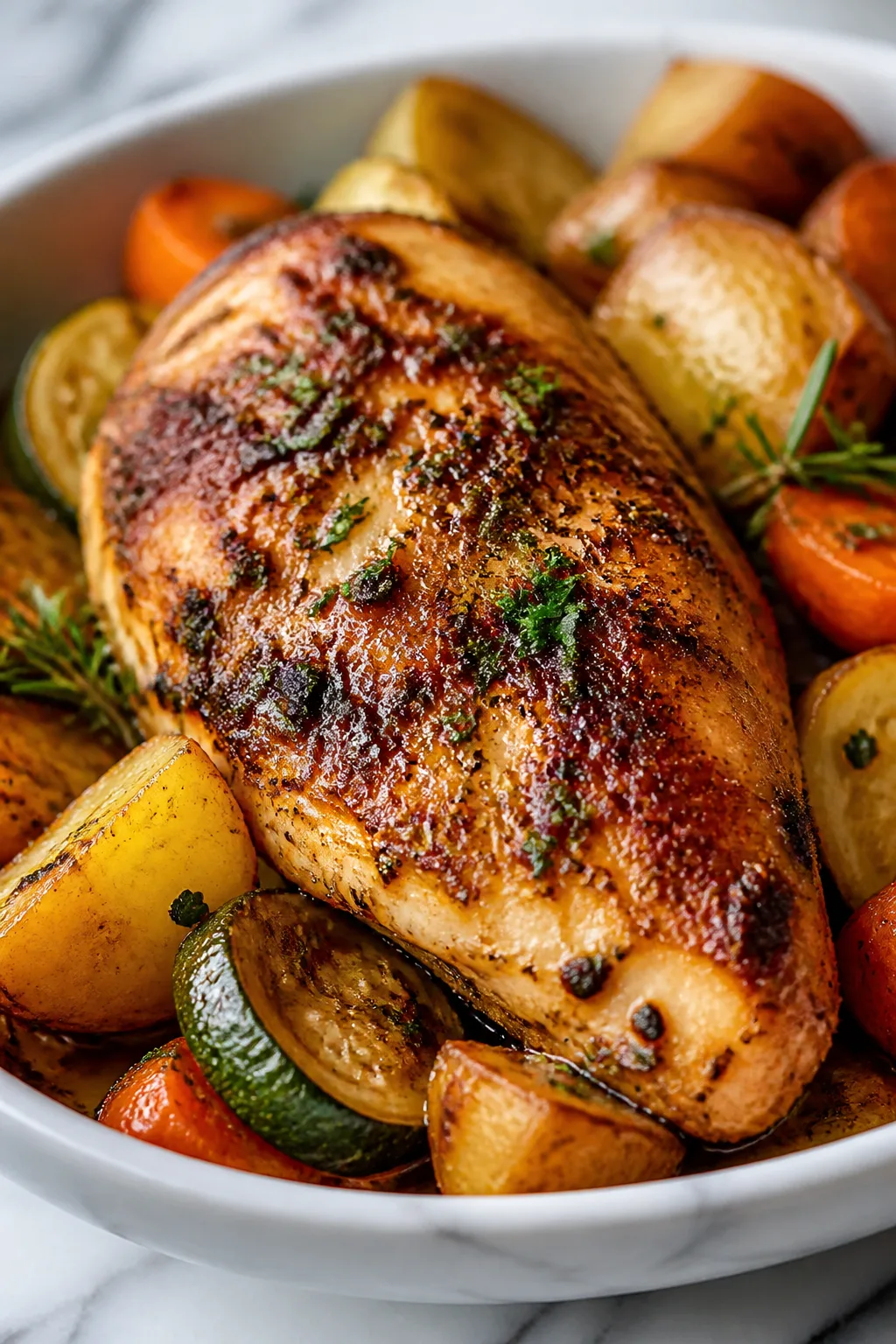
This one-pan lemon herb chicken is my quick fix for busy evenings. Fresh lemon juice and fragrant herbs make it bright and flavorful, and it’s all done in one skillet. Great for a cozy dinner when you want something light but satisfying.
Introduction
I first stumbled upon this one-pan lemon herb chicken recipe on a hectic weeknight when I wanted something quick but fresh. I’d tried lemon chicken before, but it was often too heavy or bland. This version is different because the fresh lemon juice and zest, combined with garlic and herbs, really brighten the dish without weighing it down. Plus, cooking everything in one pan means less cleanup—which is a lifesaver after a long day. The trick I learned is to sear the chicken first to get a golden crust, then simmer it gently with lemon juice and herbs so the flavors soak in without drying the meat. The finished dish is juicy, tangy, and fragrant, with a lovely balance of savory and citrus notes. It’s perfect for a cozy weeknight dinner or when you want to impress friends without spending hours in the kitchen. I love how versatile it is too—you can easily add veggies or serve it over rice or salad. Honestly, this recipe has become a staple in my home because it’s so simple, satisfying, and reliably delicious.
How To Do It
Step 1
Start by patting the chicken breasts dry with paper towels—this helps them brown nicely instead of steaming. Season both sides with salt, pepper, oregano, and thyme. Heat olive oil over medium-high heat in a large skillet until shimmering. Add the chicken breasts and sear them without moving for about 4-5 minutes per side, or until they develop a golden crust. This step locks in juices and builds flavor through the Maillard reaction, which is why it’s important not to rush or crowd the pan.
⏱ Time: 10 minutes
✓ Doneness: Chicken has an even golden-brown crust on both sides and releases easily from the pan
Step 2
Reduce heat to medium-low and add the minced garlic to the pan, stirring quickly to avoid burning—garlic cooks fast and can turn bitter if overdone. Immediately pour in the lemon juice and sprinkle the lemon zest over the chicken. This acidity will start to gently cook the chicken further and infuse it with bright flavor. Cover the pan and let everything simmer for about 8-10 minutes, turning the chicken halfway through. Avoid skipping the simmering to ensure the chicken cooks through evenly and stays tender.
⏱ Time: 10 minutes
✓ Doneness: Chicken is cooked through (internal temperature 165°F) and the sauce is slightly reduced with a fresh lemon aroma
Step 3
Remove the lid and let the sauce reduce for a few more minutes if needed, stirring occasionally. This concentrates the flavors and thickens the sauce slightly. Taste and adjust seasoning with more salt or pepper if needed. The final sauce should be bright and tangy but balanced with the herbs.
⏱ Time: 5 minutes
✓ Doneness: Sauce coats the back of a spoon and smells vibrant
Step 4
Sprinkle freshly chopped parsley over the chicken just before serving to add a fresh herbal note and a pop of color. This final touch brightens the dish visually and flavor-wise.
⏱ Time: 1 minute
✓ Doneness: Parsley looks vibrant and fresh, enhancing the presentation
Step 5
Serve the chicken warm with your choice of sides like steamed veggies, rice, or a simple salad. The lemony sauce pairs wonderfully with almost anything, making this a flexible meal.
⏱ Time: 0 minutes
✓ Doneness: Dish is plated attractively and ready to enjoy
Step 6
If you want to add vegetables, consider tossing in halved cherry tomatoes or green beans during the last 5 minutes of simmering. They’ll cook gently in the lemon sauce and add natural sweetness and texture.
⏱ Time: 5 minutes
✓ Doneness: Vegetables are tender but still vibrant in color
Step 7
For extra richness, stir in a tablespoon of butter at the end of cooking. It will mellow the acidity and give the sauce a silky texture. Use unsalted butter so you can control the saltiness.
⏱ Time: 1 minute
✓ Doneness: Sauce looks glossy and smooth
Step 8
Let the chicken rest in the pan off heat for 3-4 minutes before slicing. Resting helps the juices redistribute inside the meat, making each bite juicy and tender rather than dry.
⏱ Time: 4 minutes
✓ Doneness: Chicken feels slightly firm but springs back when pressed
Step 9
Slice the chicken against the grain to maximize tenderness. Arrange on plates and spoon some of the pan sauce over the top. This finishing step makes the dish look restaurant-quality and ensures every bite is flavorful.
⏱ Time: 2 minutes
✓ Doneness: Slices are clean and juicy, sauce evenly coating
Variations
Creamy Lemon Herb Chicken
Add a splash of heavy cream or coconut milk during the simmering step for a rich, creamy sauce. This changes the texture to silky and adds indulgence while keeping the bright lemon flavor. Perfect if you want a comforting twist.
Note: Simmer gently to prevent cream from curdling and reduce sauce slightly to thicken.
Lemon Herb Chicken with Roasted Vegetables
Toss chopped carrots, potatoes, and onions in olive oil and herbs, roasting them separately. Serve alongside the chicken for a hearty meal with varied textures and natural sweetness balancing the lemony chicken.
Note: Roast veggies at 400°F for 25-30 minutes for tender, caramelized edges.
Spicy Lemon Herb Chicken
Add red pepper flakes or cayenne pepper to the seasoning mix for a spicy kick. This elevates the flavor profile and pairs nicely with the fresh lemon notes, giving the dish a lively heat.
Note: Adjust spice level carefully to avoid overpowering the lemon and herbs.
Grilled Lemon Herb Chicken
Marinate chicken breasts in lemon juice, garlic, and herbs for 30 minutes, then grill over medium heat. This adds smoky char flavor and a slightly firmer texture, great for outdoor meals.
Note: Watch grill temperature to prevent drying out; flip once for even cooking.
Lemon Herb Chicken with Quinoa Salad
Serve the chicken atop a fresh quinoa salad with cucumber, tomato, and feta. This adds a refreshing, light side that complements the zesty chicken and makes a complete meal.
Note: Prepare quinoa ahead and chill for best texture and flavor contrast.
Pro Tips
Always pat chicken dry before seasoning and searing.
Removing surface moisture helps the chicken brown properly instead of steaming. The Maillard reaction that creates flavor and color requires dry heat contact. Skipping this results in pale, flavorless chicken.
Don’t add lemon juice until after searing the chicken.
Lemon juice’s acidity can toughen chicken if cooked too long at high heat. Adding it after searing allows gentle simmering that tenderizes and flavors without drying out the meat.
Use a heavy-bottomed skillet for even heat distribution.
A thick pan prevents hot spots that can cause uneven cooking or burning. It helps maintain steady heat for a golden crust and gentle simmering of the lemon sauce.
Let the chicken rest for a few minutes before slicing.
Resting allows juices to redistribute, making the meat juicier and more tender. Cutting immediately causes juices to run out, leaving dry chicken.
Add fresh parsley just before serving.
Fresh herbs add a pop of color and bright flavor that diminishes when cooked. Adding at the end preserves their vibrancy.
Season generously but taste before adding more salt after cooking.
Salt draws out moisture and enhances flavor but can concentrate during cooking. Tasting at the end prevents over-salting.
Use fresh lemon zest for maximum aroma.
Zest contains essential oils that add intense citrus fragrance. Pre-packaged zest is often dry and less flavorful.
Common Mistakes to Avoid
Skipping the sear and going straight to simmering.
Why it happens Some think simmering alone cooks the chicken just fine and saves time.
Fix Take the extra minutes to sear the chicken first. This locks in juices and develops flavor through browning, which simmering alone can’t create. Without the crust, the dish tastes flat.
Adding lemon juice too early or cooking it too long.
Why it happens People often add lemon juice at the start to infuse flavor quickly.
Fix Add lemon juice after searing and reduce heat. This prevents the acid from toughening the protein and keeps the chicken tender.
Overcrowding the pan.
Why it happens Trying to cook all chicken at once to save time.
Fix Cook in batches if needed. Overcrowding traps steam and prevents browning, resulting in soggy chicken.
Not letting chicken rest before slicing.
Why it happens Eager to eat, people cut immediately after cooking.
Fix Wait 3-5 minutes to let juices redistribute. This makes the chicken moist instead of dry.
Burning the garlic.
Why it happens Adding garlic to a very hot pan or cooking it too long.
Fix Add garlic after reducing heat post-sear and stir quickly. Burnt garlic tastes bitter and ruins the dish.
Nutrition
Per Serving:
Nutritional values are estimates based on standard ingredient brands and may vary.
Storage & Tips
Room Temperature
This dish can sit safely at room temperature for up to 2 hours if covered loosely. Beyond that, bacteria growth increases, so refrigerate promptly after serving.
Refrigerator
Store leftovers in an airtight container for up to 3 days. The chicken may firm up slightly when cold but reheats well. Reheat gently to avoid drying out, adding a splash of water or broth if needed.
Freezer
Freeze cooked chicken in airtight containers or heavy-duty freezer bags for up to 2 months. To prevent freezer burn, remove as much air as possible. Thaw overnight in the fridge before reheating.
Reheating
Reheat on the stovetop over low heat or in the microwave at medium power. Add a teaspoon of water or broth and cover to retain moisture. Avoid high heat which can dry out the chicken.
Make Ahead
You can season and sear the chicken up to 1 day ahead, then refrigerate. Finish simmering with lemon and herbs just before serving for freshest flavor and texture.
FAQ
Can I use chicken thighs instead of breasts?
Absolutely! Boneless, skinless thighs work well and stay juicy. Since thighs are fattier, they may need slightly less cooking time. Adjust simmering accordingly and ensure internal temperature reaches 165°F.
What can I substitute for dried herbs?
Fresh herbs like oregano and thyme can be used but add them near the end of cooking to preserve their flavor. Use about three times more fresh herbs than dried since fresh herbs are less concentrated.
Is it okay to use bottled lemon juice?
Bottled lemon juice lacks the vibrant freshness and can taste flat, so fresh is preferred.
How do I know when the chicken is done?
Avoid cutting early to check doneness as it releases juices and dries the meat.
Can I double the recipe?
Proper browning is essential, so don’t rush by crowding the pan.
What sides go best with this chicken?
Choose sides that balance the tangy, fresh flavors of the chicken.
Can I make this recipe vegan or vegetarian?
Texture and cooking times differ, so watch closely to avoid overcooking.
How do I prevent garlic from burning?
Lower heat and quick stirring preserve garlic’s sweet aroma.
Final Thoughts
Give this one-pan lemon herb chicken a try—it’s quick, fresh, and truly satisfying. I’d love to hear how it turns out for you!