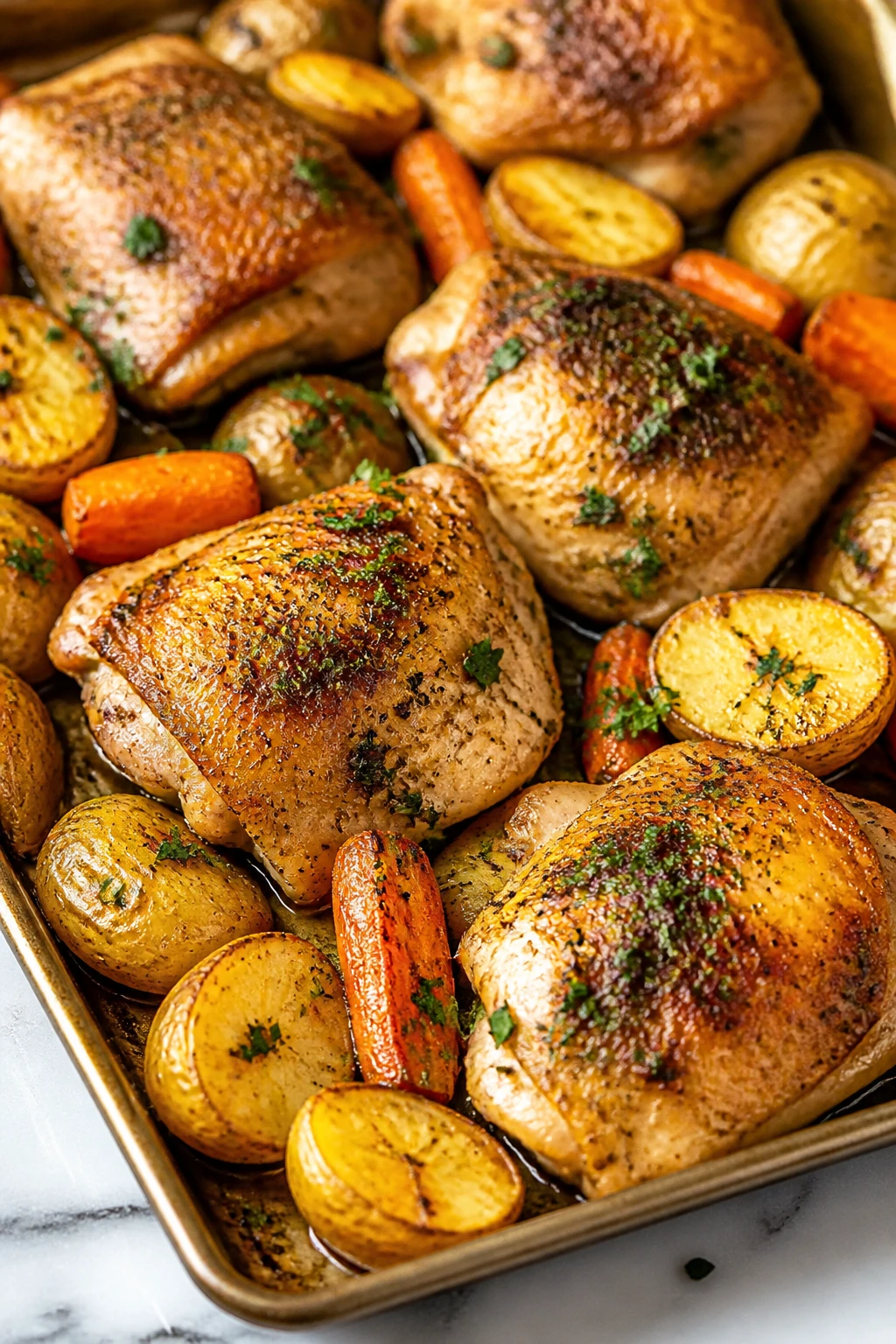
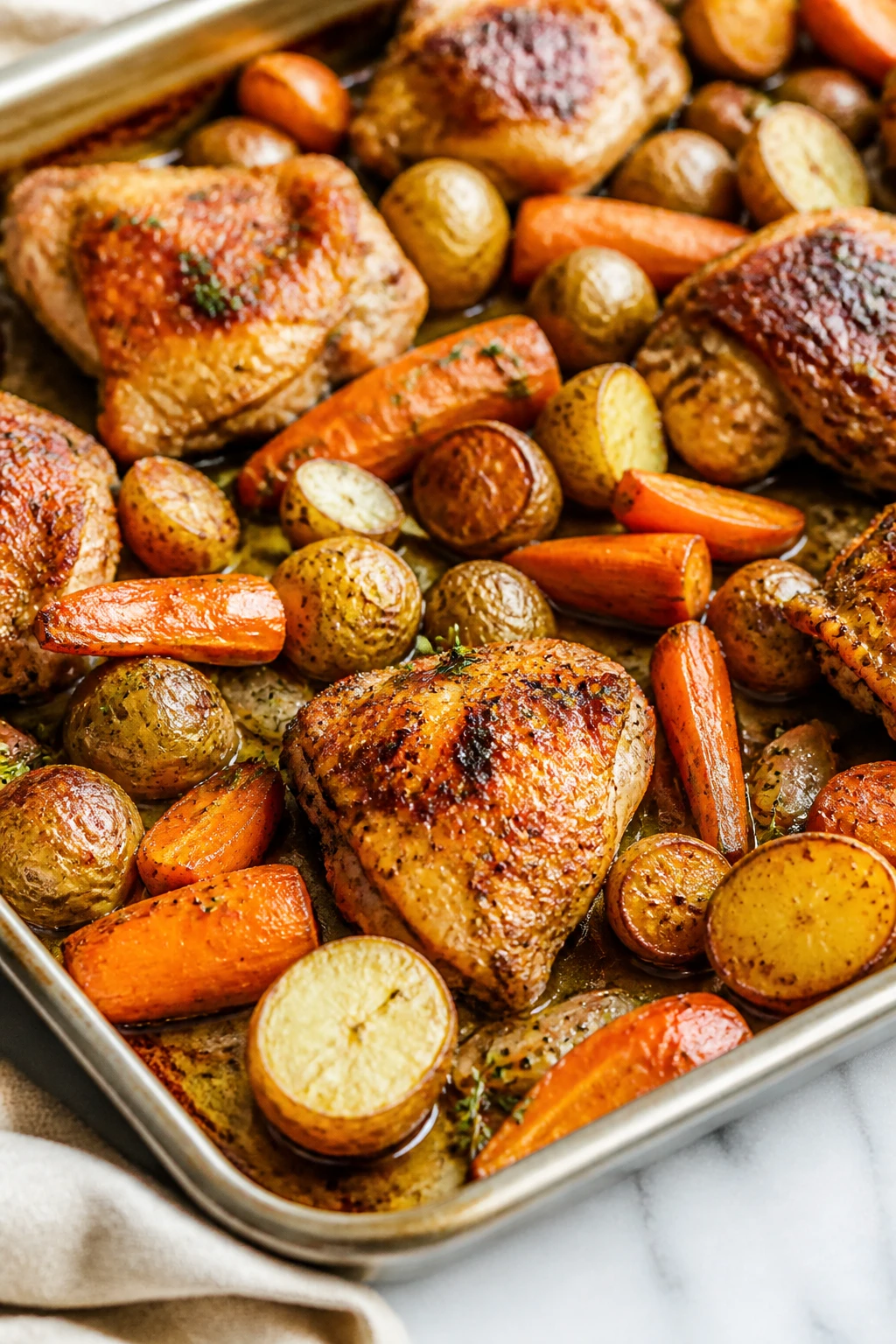
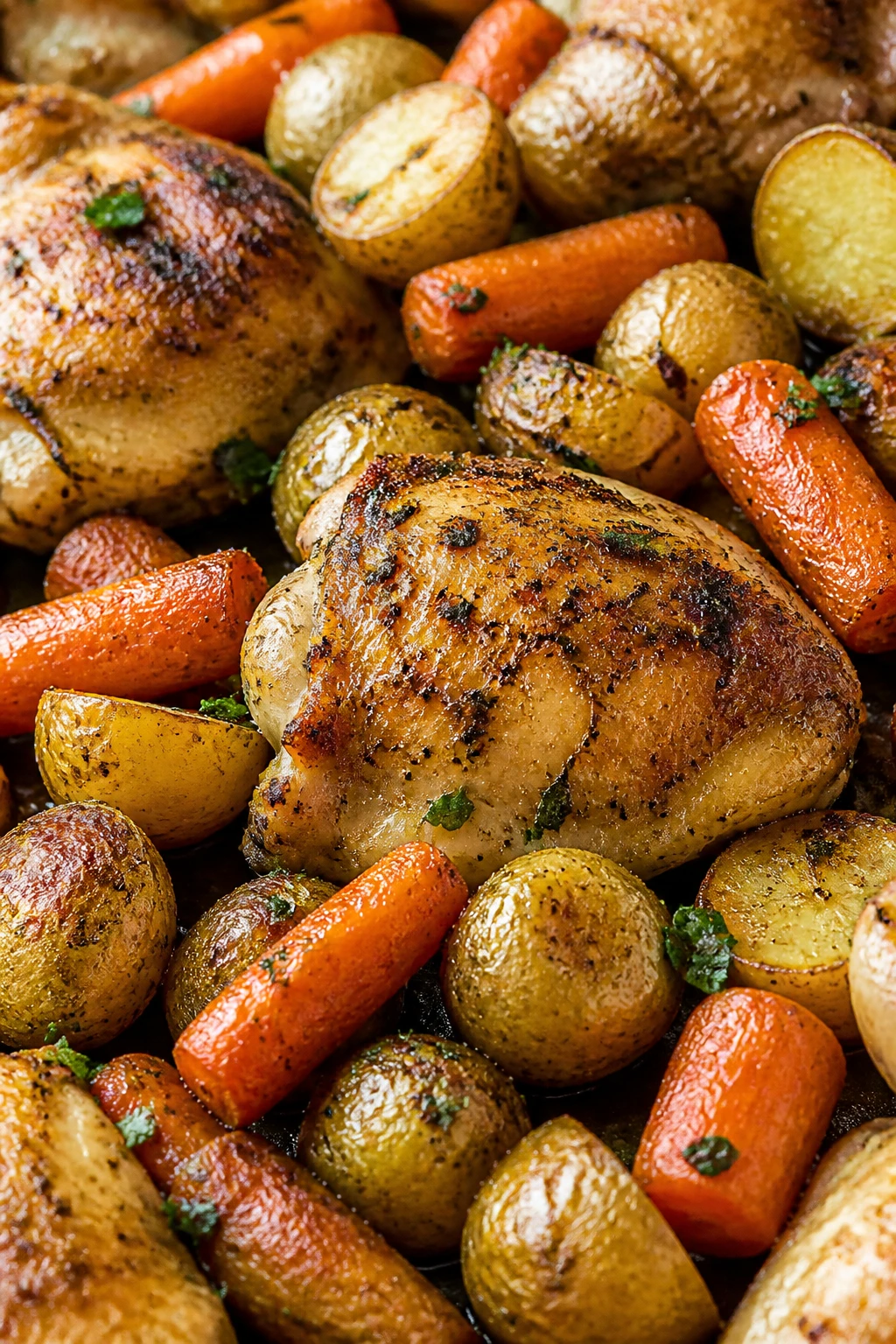
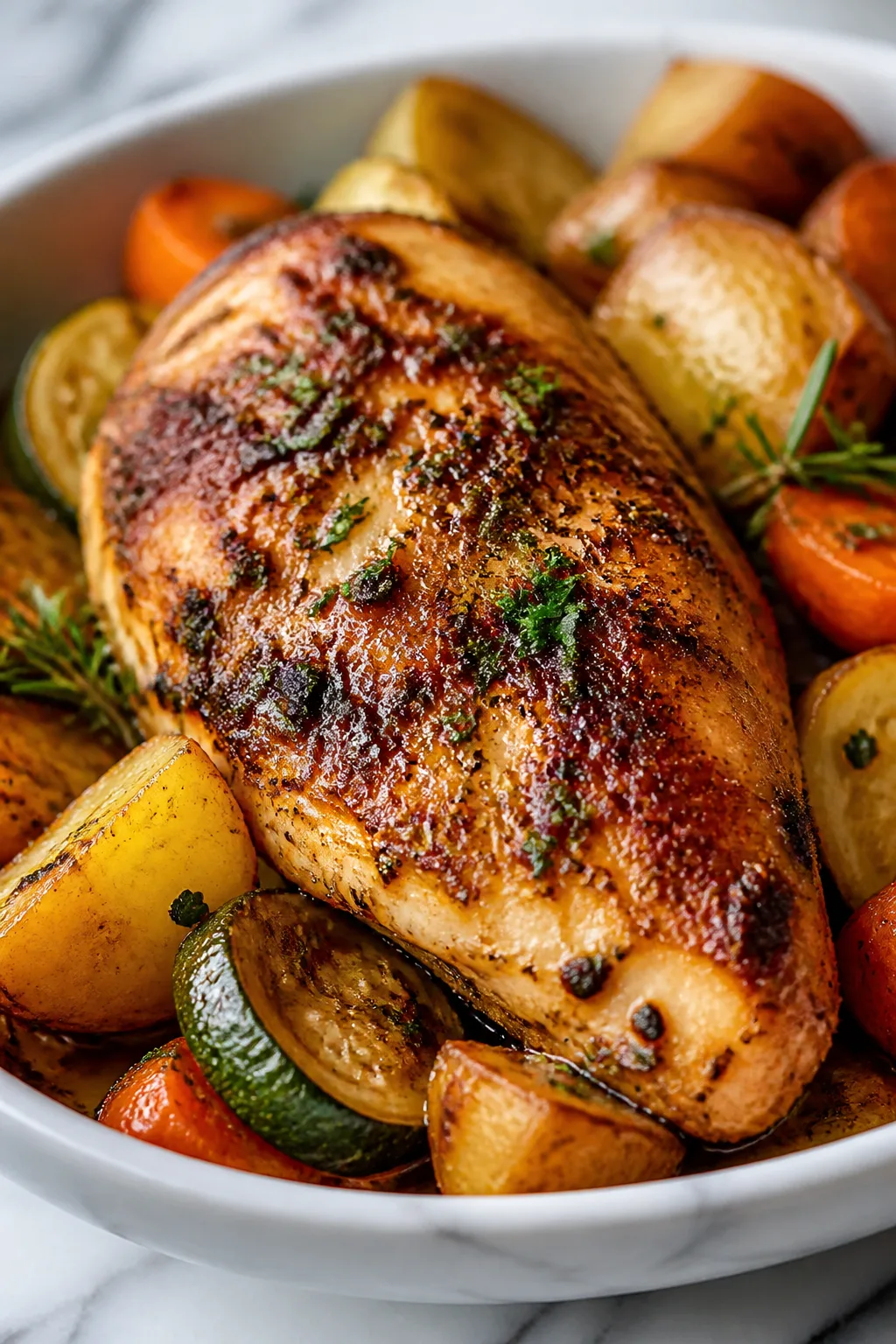
This one-pan chicken dinner is pure comfort—juicy chicken bakes alongside tender baby potatoes and sweet carrots, all infused with fresh herbs. It’s an easy, fuss-free meal perfect for busy weeknights or lazy Sundays.
Introduction
I first stumbled upon this one-pan chicken dinner during a hectic week when I needed something quick but still satisfying. What I love about this recipe is how it combines tender, juicy chicken with perfectly roasted baby potatoes and sweet carrots—all baked together in one pan. It’s a total time-saver and cleanup is a breeze, which is a win in my book. Over time, I tweaked the seasoning a bit, adding dried thyme and rosemary to give it a rustic, herbaceous flavor that feels so cozy. The trick I learned is to start the chicken skin-side down in the pan to get that beautiful crispiness before roasting. The result? Crispy skin, juicy meat, and veggies roasted to tender perfection with those lovely caramelized edges. It’s simple, comforting, and perfect for those busy weeknights when you want a wholesome meal without fuss.
How To Do It
Step 1
Preheat your oven to 425°F (220°C). Pat the chicken thighs dry with paper towels; this helps the skin crisp up beautifully during roasting. Season both sides generously with salt, pepper, garlic powder, thyme, and rosemary. Dry skin is key here — if the chicken is damp, the skin won’t get crispy. Set aside while you prep the veggies.
⏱ Time: 10
✓ Doneness: Chicken skin looks dry and seasoned evenly
Step 2
In a large bowl, toss the halved baby potatoes and carrot chunks with olive oil, a pinch of salt, and some pepper. Make sure each piece is coated well — the oil helps the veggies roast evenly and develop that gorgeous golden color. Proper coating prevents soggy spots and encourages caramelization.
⏱ Time: 5
✓ Doneness: Veggies appear glossy and evenly coated
Step 3
Heat a large oven-safe skillet over medium-high heat. Place the chicken thighs skin-side down and cook without moving them for about 5-7 minutes. This step renders the fat and crisps up the skin, which adds great texture and flavor. Don’t rush or move the chicken too soon or the skin will stick and tear.
⏱ Time: 7
✓ Doneness: Skin is golden brown and crisp
Step 4
Flip the chicken thighs over and nestle the potatoes and carrots around the chicken in the skillet. Spread everything out so nothing is overcrowded — this helps everything roast evenly. Crowding traps moisture and can steam the ingredients instead of roasting them.
⏱ Time: 5
✓ Doneness: Chicken flipped, veggies arranged evenly in pan
Step 5
Transfer the skillet to the preheated oven and roast for 25-30 minutes. The chicken should reach an internal temperature of 165°F (74°C), and the veggies should be tender with browned edges. Keep an eye on the veggies to make sure they don’t burn, stirring gently halfway if needed.
⏱ Time: 30
✓ Doneness: Chicken juices run clear; veggies are tender and caramelized
Step 6
Remove the skillet from the oven and let the chicken rest for 5 minutes before serving. Resting allows the juices to redistribute, making the meat juicier and more flavorful. Skipping this step can result in drier chicken.
⏱ Time: 5
✓ Doneness: Chicken feels firm but juicy when pressed gently
Step 7
Sprinkle chopped fresh parsley over the chicken and veggies for a pop of color and fresh flavor. This finishing touch brightens the dish and balances the savory herbs. Fresh herbs can make a simple meal feel special.
⏱ Time: 2
✓ Doneness: Parsley looks vibrant and fresh on top
Step 8
Serve the chicken thighs hot, alongside the roasted potatoes and carrots. You can add a simple green salad or steamed greens if you want to round out the meal. This dish pairs well with a light white wine or sparkling water with lemon.
⏱ Time: 0
✓ Doneness: Meal plated attractively and ready to eat
Step 9
Clean up is easy since everything cooks in one pan—just soak the skillet after serving. This saves you time and effort, making weeknight dinners less stressful. Plus, the pan juices make a delicious sauce if you like to spoon some over the chicken.
⏱ Time: 0
✓ Doneness: Pan cleaned up quickly with minimal scrubbing
Variations
Lemon Garlic One-Pan Roast
Add fresh lemon slices and minced garlic to the chicken and veggies before roasting. The lemon brightens the dish with citrusy notes while garlic adds savory depth. Expect a slightly tangier and aromatic flavor profile that pairs well with the herbs.
Note: Add lemon slices on top of chicken before roasting; garlic can brown quickly, so mince finely and toss with veggies to avoid burning.
Spicy Paprika Chicken Bake
Mix smoked paprika and cayenne pepper into the seasoning blend for a smoky, spicy kick. This version brings warmth and depth with a subtle heat that complements the natural sweetness of the roasted carrots and potatoes.
Note: Adjust cayenne quantity to taste; paprika helps with color and flavor without overpowering the dish.
Mediterranean Style with Olives and Feta
Add pitted Kalamata olives and crumble feta cheese over the dish just before serving. This variation introduces briny, salty flavors and a creamy texture contrast that elevates the simple roast into a Mediterranean feast.
Note: Add olives during the last 10 minutes of roasting to warm through but retain texture; sprinkle feta right before serving.
Honey Mustard Glazed Chicken
Brush the chicken thighs with a mixture of honey and Dijon mustard before roasting. This glaze caramelizes beautifully, adding a sweet and tangy layer of flavor that pairs wonderfully with the roasted veggies.
Note: Apply glaze after searing chicken skin-side down to avoid burning sugars; add more glaze halfway through roasting.
Vegetarian Version with Tofu and Root Vegetables
Replace chicken with firm tofu cubes marinated in herbs and olive oil. Roast with a mix of root vegetables like parsnips and sweet potatoes for a hearty vegetarian meal with similar roasting techniques and flavors.
Note: Press tofu to remove excess moisture; roast tofu on a separate sheet to avoid sogginess from veggie juices.
Pro Tips
Pat the chicken skin dry before seasoning.
Dry skin is essential for crispiness because moisture creates steam that prevents browning. Patting the skin removes excess water, allowing the heat to render the fat and develop that golden, crunchy texture everyone loves.
Don’t overcrowd the pan with veggies and chicken.
Crowding traps moisture and causes steaming instead of roasting. Spreading ingredients out lets hot air circulate evenly, which promotes caramelization and crispy edges on both the meat and vegetables.
Use a heavy oven-safe skillet for even heat distribution.
A sturdy pan like cast iron retains heat well and avoids hot spots, ensuring the chicken skin crisps evenly and the veggies roast uniformly. Thin pans can cause uneven cooking and burnt spots.
Flip the chicken only once during cooking.
Moving the chicken too much can tear the skin and interrupt the crisping process. Letting it cook undisturbed skin-side down first develops a stable, golden crust that locks in juices.
Let the chicken rest after roasting.
Resting allows juices to redistribute throughout the meat, preventing them from spilling out when cut. This results in juicier, more flavorful chicken rather than dry or stringy bites.
Season generously and evenly.
Proper seasoning enhances all the ingredients’ natural flavors and balances the dish. Uneven seasoning can lead to bland bites or overly salty spots, so take time to coat everything well.
Use dried herbs for roasting and fresh herbs for garnish.
Dried herbs tolerate oven heat better and release flavor slowly, while fresh herbs added at the end provide a fresh, bright contrast that lifts the dish visually and taste-wise.
Common Mistakes to Avoid
Skipping the drying of chicken skin.
Why it happens Many cooks assume seasoning alone is enough and overlook that wet skin prevents crisping.
Fix Always pat the chicken skin dry with paper towels before seasoning and cooking. This simple step ensures the skin will crisp up nicely instead of steaming.
Overcrowding the pan with veggies and chicken.
Why it happens Trying to fit everything in one pan quickly without considering space.
Fix Use a large enough pan or roast in batches if needed. Spread ingredients out so hot air can circulate and promote even roasting.
Flipping chicken too soon or too often.
Why it happens Impatience or fear of burning leads to moving the chicken too much.
Fix Let the chicken cook undisturbed skin-side down until golden and crisp, about 5-7 minutes, then flip just once.
Not checking internal temperature of chicken.
Why it happens Relying on time alone rather than temperature can lead to undercooked or dry chicken.
Fix Use a meat thermometer to confirm the thickest part reaches 165°F (74°C) for safe and juicy results.
Not letting chicken rest before serving.
Why it happens Eagerness to eat often leads to skipping resting.
Fix Allow the chicken to rest for 5 minutes after roasting so juices redistribute, improving moisture and flavor.
Nutrition
Per Serving:
Nutritional values are estimates and may vary based on specific ingredients used.
Storage & Tips
Room Temperature
This dish can safely be left at room temperature for up to 2 hours if covered loosely with foil. Beyond that, bacteria growth risk increases, so refrigerate promptly.
Refrigerator
Store leftovers in an airtight container for up to 3 days. The chicken and veggies may dry out slightly but reheating gently with a splash of water or broth helps restore moisture. They can be eaten cold but are best warmed.
Freezer
Freeze cooked chicken and vegetables in a freezer-safe container or bag for up to 2 months. Wrap tightly to prevent freezer burn. Thaw overnight in the fridge before reheating.
Reheating
Reheat gently in a 350°F oven for 15-20 minutes, covered with foil to retain moisture. Alternatively, microwave on medium power in short bursts, adding a splash of broth if needed. Avoid high heat which can dry out the chicken.
Make Ahead
You can prep and season the chicken and chop veggies 1-2 days ahead, storing them separately in the fridge. Assemble and roast fresh on the day of serving for best texture and flavor.
FAQ
Can I use chicken breasts instead of thighs?
Yes, but chicken breasts cook faster and can dry out more easily. To keep them juicy, reduce roasting time and consider brining beforehand. Also, skin-on breasts will crisp better than skinless.
What if I don’t have fresh herbs?
Dried herbs work perfectly for roasting since they withstand oven heat better and infuse flavor slowly. Use about half the amount of dried herbs compared to fresh since they’re more concentrated.
Can I add other vegetables?
Absolutely! Vegetables like Brussels sprouts, parsnips, or sweet potatoes roast well alongside chicken. Just cut them into similar sizes for even cooking and adjust roasting time as needed.
How do I know when the chicken is done?
The safest way is to use a meat thermometer. Chicken is done at an internal temperature of 165°F (74°C). The juices should run clear, and the meat should feel firm but springy.
What’s the best pan to use?
A heavy, oven-safe skillet like cast iron is ideal because it retains heat evenly and crisps the chicken skin well. If you don’t have one, a rimmed baking sheet works too but won’t brown as evenly.
Can I make this gluten-free?
Yes! This recipe is naturally gluten-free as long as you use gluten-free seasoning blends and check labels on any packaged ingredients.
How do I prevent the veggies from burning?
Make sure to toss them evenly in oil and spread them out in the pan. If the edges start to burn, cover loosely with foil during the last part of roasting or stir once halfway through.
Can I prepare this recipe ahead for meal prep?
You can chop and season everything a day ahead, keeping chicken and veggies separate in the fridge. Roast fresh when ready to eat for best texture. Leftovers reheat well for lunches.
Final Thoughts
I hope you give this cozy one-pan chicken dinner a try—it's one of my favorite easy meals to make when life gets busy. Let me know how it turns out, I’d love to hear your twists!