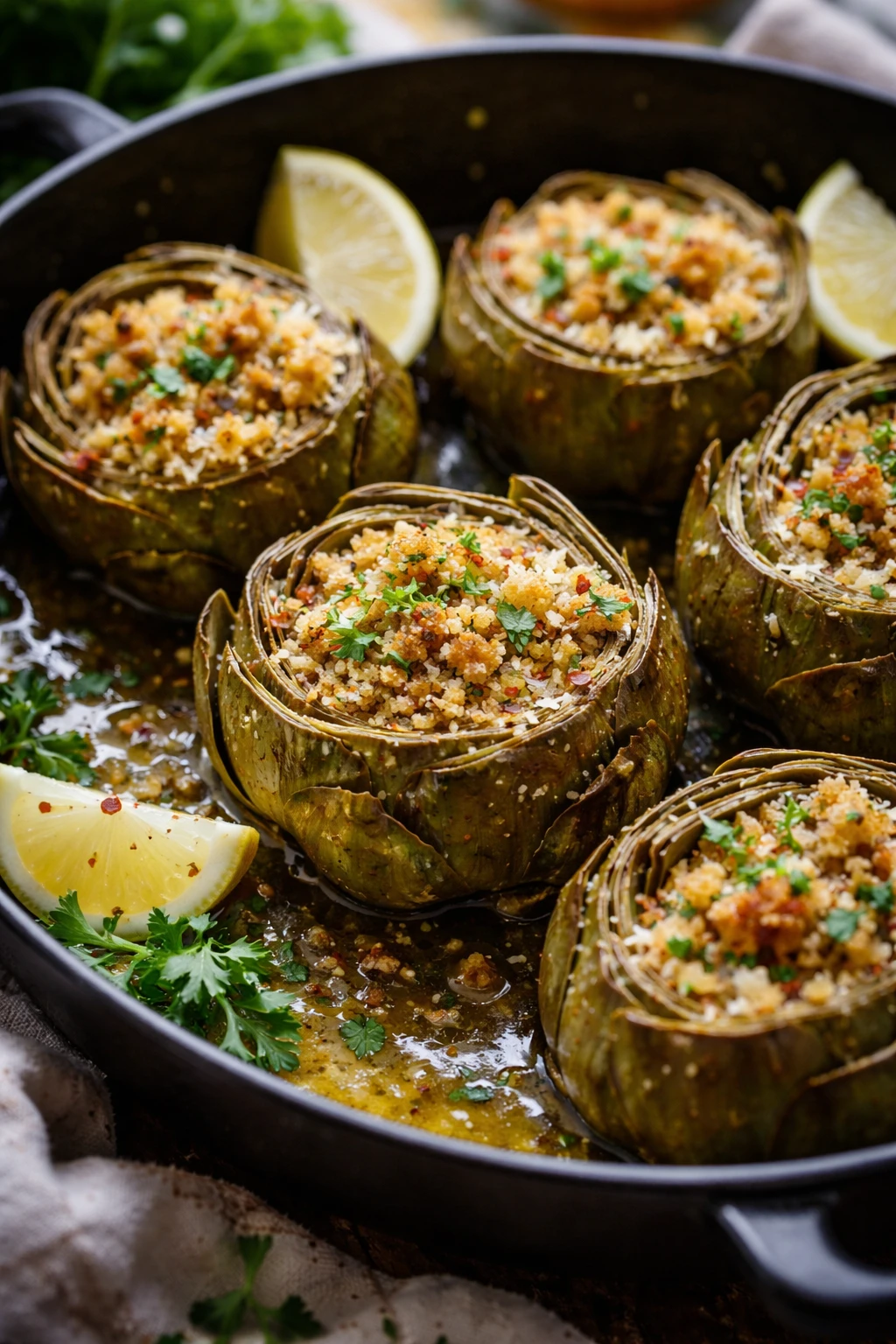
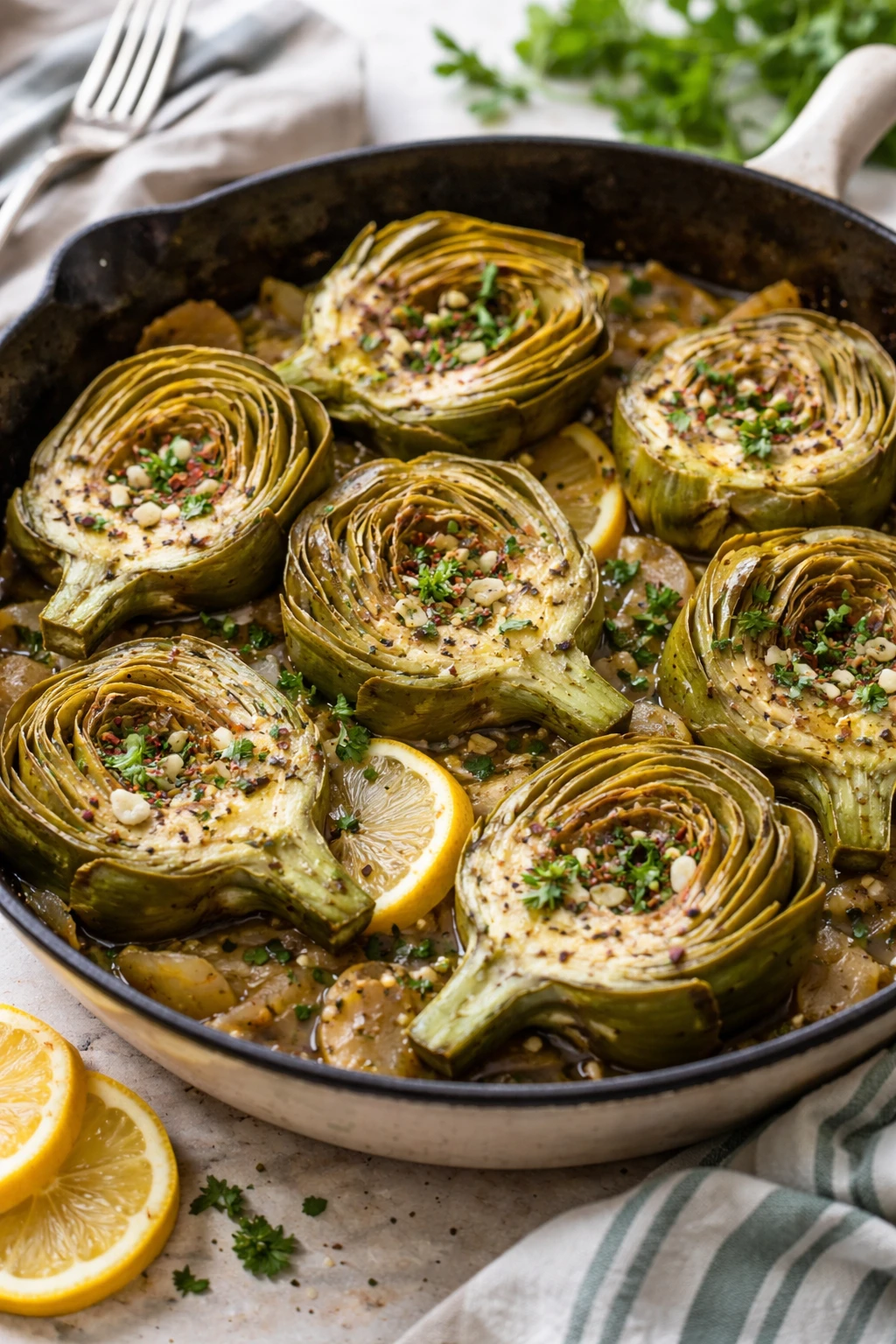
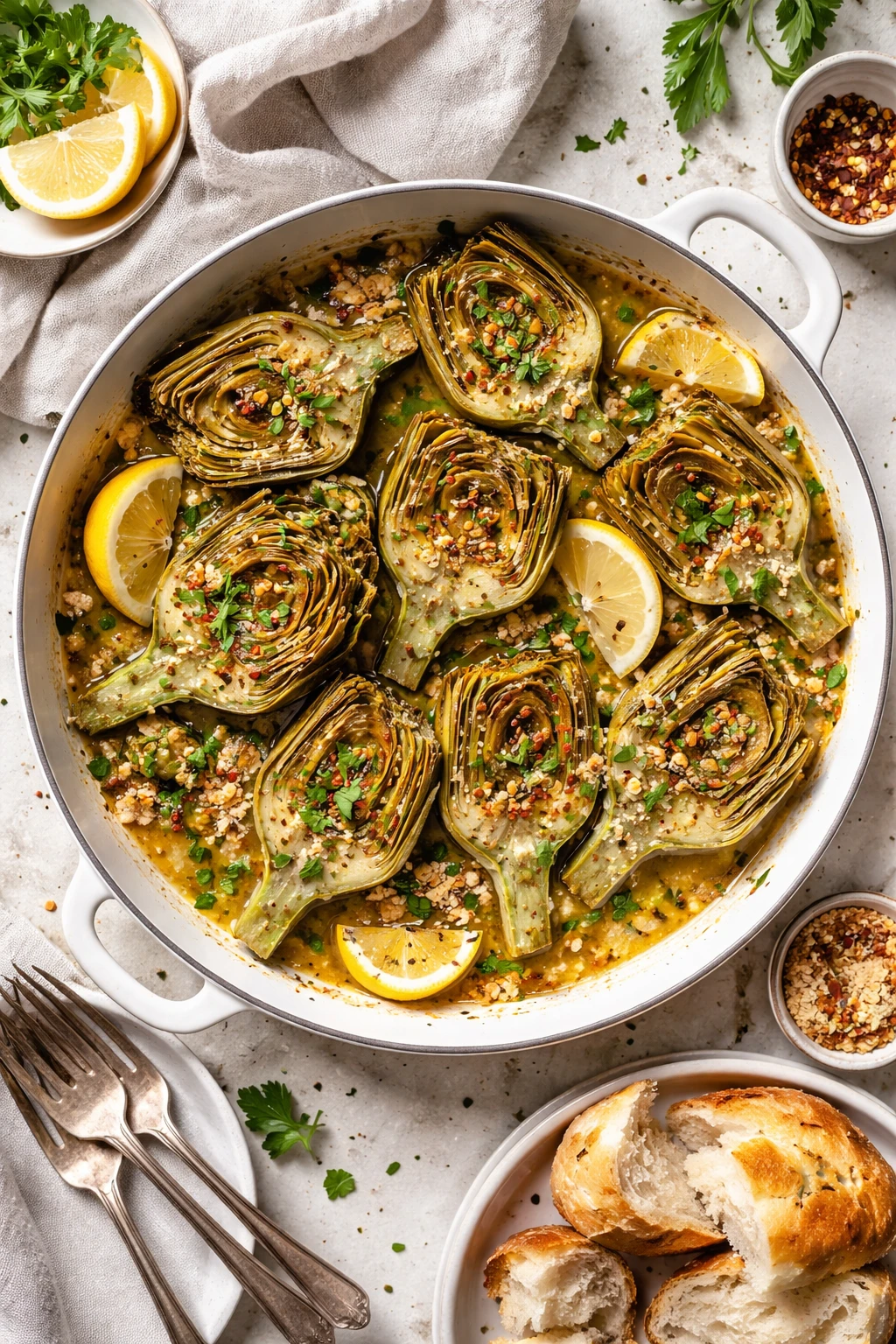
These artichokes simmer slowly in garlic, lemon, and herbs, soaking up all that fresh flavor. It’s a simple, fuss-free dish that’s perfect for a chill weekend appetizer or side. Trust me, you’ll want to make this again!
Introduction
I first tried making these one-pot artichokes on a lazy weekend when I wanted something fresh but fuss-free. The slow simmering in garlic and herbs really transforms the artichokes, making them tender and bursting with flavor. What I love about this recipe is how simple it is — no complicated prep or fancy equipment, just fresh ingredients and time. Over the years, I tweaked it to use lemon slices instead of juice for a subtle brightness throughout the dish. The trick I learned is to trim the artichokes carefully and simmer them gently, so they don’t get mushy but still soak up all that garlicky goodness. When it’s done, the artichokes are soft, fragrant, and perfect as a weekend appetizer or alongside your favorite mains. It feels like a little celebration of spring in every bite. Honestly, sometimes I make extra just to snack on them cold the next day. If you’re a garlic lover like me, this is a must-try!
How To Do It
Step 1
Start by preparing the artichokes carefully. Trim the tough outer leaves until you reach the more tender pale green ones, then cut them in half lengthwise. Don’t forget to snip off the thorny tips with kitchen scissors — it makes eating way easier and safer. This step is crucial because it ensures the artichokes cook evenly and become tender without any unpleasant tough bits. Rinse them under cold water to remove any grit trapped inside the leaves. Taking your time here means the final dish will be silky and enjoyable, not chewy or fibrous.
⏱ Time: 10 minutes
✓ Doneness: Artichoke halves are cleanly trimmed with no tough outer leaves or sharp tips remaining
Step 2
In a large pot, heat the olive oil over medium heat. Add the minced garlic and sauté gently for about 1-2 minutes until fragrant but not browned. This releases the garlic’s aroma and flavor without bitterness. Next, add the lemon slices along with the dried thyme and oregano, stirring for another minute to bloom the herbs. Adding the herbs early lets their flavors infuse the oil, which will then coat the artichokes beautifully. Be careful not to let the garlic burn here — low and slow is the key to mellow, sweet garlic notes.
⏱ Time: 5 minutes
✓ Doneness: Garlic is soft and fragrant with no browning; herbs and lemon slices look fresh and glossy
Step 3
Nestle the trimmed artichoke halves into the pot, cut side down, arranging them snugly. Pour in the vegetable broth or water until it covers about two-thirds of the artichokes. The liquid will slowly steam and simmer the artichokes, making them tender while imparting flavor. Season with salt and pepper to taste. Cover the pot with a tight-fitting lid to trap steam and cook evenly. This gentle simmer method ensures the artichokes soften perfectly without drying out or overcooking.
⏱ Time: 2 minutes
✓ Doneness: Artichokes are partially submerged in liquid, and pot is covered securely
Step 4
Bring the pot to a gentle simmer over medium heat, then reduce to low to maintain a slow simmer. Let the artichokes cook covered for about 25-30 minutes. Resist the urge to lift the lid too often — you want to keep the steam trapped for even cooking. The slow simmer allows the artichokes to absorb the garlic, lemon, and herb flavors deeply. Check occasionally near the end by piercing the base with a fork; it should slide in easily when done.
⏱ Time: 30 minutes
✓ Doneness: Artichoke bases are tender when pierced with a fork and leaves pull away easily
Step 5
Once cooked, carefully remove the artichokes from the pot with tongs, letting excess liquid drip back in. Arrange them on a serving plate and spoon some of the garlicky lemon broth over the top. Scatter freshly chopped parsley for a pop of color and fresh herb aroma. This finishing touch brightens the dish visually and adds a fresh contrast to the rich flavors. Serve warm or at room temperature as a delightful appetizer or side.
⏱ Time: 5 minutes
✓ Doneness: Artichokes are glossy with broth, garnished with bright green parsley
Step 6
If you want to amp up the flavor, drizzle a little extra virgin olive oil just before serving. This adds richness and a lovely mouthfeel. Also, a squeeze of fresh lemon juice right before eating can lift the flavors even more. These small touches make a big difference and personalize the dish to your taste. Don’t be shy with seasoning here — artichokes love bold flavor.
⏱ Time: 2 minutes
✓ Doneness: Artichokes glisten with a light coating of olive oil and fresh lemon juice
Step 7
For a heartier version, you can sprinkle toasted pine nuts or grated Parmesan over the artichokes before serving. The nuts add a delightful crunch and the cheese a savory depth. This makes the dish feel more substantial if you’re serving it as a light main or alongside a grain salad. Toast pine nuts gently in a dry pan until golden and fragrant to avoid bitterness.
⏱ Time: 5 minutes
✓ Doneness: Nuts are golden and fragrant; Parmesan is freshly grated and evenly distributed
Step 8
If you prefer a spicier kick, add a pinch of red pepper flakes to the garlic when sautéing. This small addition introduces a subtle heat that complements the lemon and garlic beautifully. Start with a small amount and adjust to your heat tolerance. Spices like this can really enhance the complexity of simple vegetable dishes.
⏱ Time: 1 minute
✓ Doneness: Red pepper flakes are evenly mixed with garlic and herbs, releasing a warm aroma
Step 9
Clean up by discarding the lemon slices if you’d like or leaving them on for extra zest. You can also strain and save the remaining broth for a light vegetable soup base or cooking grains. This broth is packed with flavor and makes a great use of leftovers. Reducing waste and maximizing flavor is always a win in my book!
⏱ Time: 2 minutes
✓ Doneness: Broth is strained and stored or discarded, kitchen is tidy
Variations
Spicy One-Pot Artichokes
Add a pinch or two of red pepper flakes when sautéing the garlic to introduce a gentle heat that complements the lemon and herbs. This variation adds complexity and warmth without overpowering the fresh flavors.
Note: Be sure to add red pepper flakes early in the oil to bloom their flavor but monitor carefully to avoid burning, which causes bitterness.
Cheesy Garlic Artichokes
Sprinkle freshly grated Parmesan or Pecorino over the cooked artichokes just before serving for a savory, umami boost. This makes the dish richer and more indulgent, perfect as a light main or side.
Note: Use freshly grated cheese and add it off heat to prevent melting too much and losing texture.
Herb Swap
Try fresh herbs like rosemary and basil instead of dried thyme and oregano. Add fresh herbs during the last 5 minutes of cooking to preserve their bright, vibrant flavors.
Note: Fresh herbs are more delicate, so add late to avoid bitterness and loss of aroma.
Vegan Creamy Artichokes
After cooking, toss the artichokes with a splash of coconut cream or cashew cream for a luscious, dairy-free twist. This adds richness and creaminess while keeping the dish plant-based.
Note: Add cream after cooking and gently warm through without boiling to maintain smooth texture.
Roasted Lemon Artichokes
Instead of simmering, roast trimmed artichokes with lemon slices, garlic, and olive oil at 400°F until tender and caramelized. This gives a deeper, nuttier flavor and crispy edges.
Note: Roast for about 40-45 minutes, turning halfway; watch carefully to avoid drying out.
Pro Tips
Trim artichokes thoroughly to remove tough outer leaves and prickly tips.
Removing the tougher parts ensures the artichokes cook evenly and are pleasant to eat. Leaving the thorny tips can cause an unpleasant texture and even minor injuries while eating. Proper trimming also helps the flavors penetrate better during simmering.
Sauté garlic gently on low heat before adding liquid.
Garlic browns quickly and can turn bitter if cooked too fast or at too high heat. A gentle sauté releases sweet, mellow flavors that infuse the oil and subsequently the artichokes. This step adds depth to the dish without overpowering it.
Simmer artichokes slowly with the lid on to trap steam.
Slow simmering with a covered pot uses steam to cook the artichokes gently, breaking down fibers without drying them out. It also allows flavors from lemon, garlic, and herbs to meld deeply. Rushing this step can result in tough or unevenly cooked artichokes.
Use lemon slices instead of juice for a subtler citrus flavor.
Lemon slices release flavor gradually and contribute essential oils from the peel. Adding juice at the start can make the dish overly acidic or bitter. Slices also add a nice visual element and infuse the broth gently.
Season the broth well with salt and pepper for balanced flavor.
Since the artichokes absorb the cooking liquid, seasoning the broth properly ensures the final dish isn’t bland. Salt enhances natural sweetness, while pepper adds subtle warmth. Skimping on seasoning leads to a dull-tasting dish.
Garnish with fresh parsley just before serving.
Fresh parsley adds a bright, herbaceous note and a pop of color that contrasts the rich, garlicky artichokes. Adding it too early can wilt the leaves and lose freshness. A sprinkle at the end keeps flavors vibrant.
Don’t overcook; check tenderness with a fork near the end.
Overcooking artichokes makes them mushy and less appealing. Testing with a fork lets you catch the perfect tender texture where leaves pull away easily but still hold shape. This balance is key to great mouthfeel.
Common Mistakes to Avoid
Not trimming artichokes properly
Why it happens Many cooks underestimate how tough the outer leaves and thorny tips can be, leaving them on to save time or out of unfamiliarity.
Fix Take the extra few minutes to snip off the tips and remove outer tough leaves. Use kitchen scissors for safety and ease. This makes eating safer and the texture much nicer.
Cooking at too high a heat
Why it happens Rushing the cooking process or wanting to speed things up often leads to boiling or high heat simmering.
Fix Maintain a low simmer so the artichokes cook gently with steam. This prevents toughness and allows flavors to infuse fully. Adjust heat as needed to keep a gentle bubble.
Burning the garlic
Why it happens Garlic cooks quickly and can easily go from fragrant to burnt if the heat is too high or you leave it unattended.
Fix Sauté garlic on low heat and watch closely. Remove from heat or add liquid as soon as it becomes aromatic to avoid bitterness.
Adding lemon juice too early
Why it happens Some add lemon juice at the start for flavor but don’t realize it can cause bitterness during the long simmer.
Fix Use thin lemon slices instead to infuse flavor gradually, or add juice only at the end for brightness without harshness.
Undersalting the broth
Why it happens Because it’s a vegetable dish, some assume less salt is needed or forget to season the cooking liquid.
Fix Season the broth generously enough so that the artichokes absorb enough salt. Taste the broth before cooking and adjust accordingly.
Nutrition
Per Serving:
Nutritional values are estimates and may vary based on specific ingredients used.
Storage & Tips
Room Temperature
You can keep the cooked artichokes covered at room temperature for up to 2 hours safely. Beyond that, bacteria can grow, so it’s best to refrigerate promptly. Cover with a clean cloth or lid to prevent drying out.
Refrigerator
Store leftovers in an airtight container for up to 3 days. The artichokes may firm up slightly and the flavors meld even more. Reheat gently or enjoy cold as a salad topping or snack.
Freezer
Artichokes don’t freeze well due to texture changes but you can freeze the cooking broth separately for up to 3 months. Wrap tightly in freezer-safe containers to prevent freezer burn. Thaw in the fridge overnight before reheating.
Reheating
Reheat artichokes gently on the stovetop over low heat with a splash of broth or water to prevent drying. Microwave on medium power in short bursts works too. Avoid high heat which toughens them. Add fresh lemon or olive oil after reheating for brightness.
Make Ahead
You can trim and prep artichokes 1 day ahead and store in water with lemon juice to prevent browning. The broth and garlic mixture can be made ahead too. Assemble and cook fully on the day you plan to serve for best texture and flavor.
FAQ
Can I use canned or frozen artichokes instead of fresh?
While canned or frozen artichokes are convenient, they lack the fresh texture and flavor of fresh ones. They’re already cooked, so this recipe’s simmering step isn’t necessary and might make them mushy. Use fresh artichokes for the best results and texture.
How do I know when the artichokes are done cooking?
Pierce the base of the artichoke with a fork or knife — it should slide in easily without resistance. The leaves should also pull away gently. If it feels tough or hard, simmer a bit longer and check every 5 minutes.
What if I don’t have dried herbs? Can I use fresh instead?
Yes, fresh herbs work well but add them near the end of cooking to preserve their bright flavors. Adding fresh herbs too early can cause bitterness or loss of aroma due to prolonged heat exposure.
Can I make this recipe vegan?
Absolutely! This recipe is naturally vegan as long as you use vegetable broth and omit any cheese toppings. For a creamy twist, add coconut or cashew cream after cooking.
How long can I store leftovers safely?
Store artichokes in an airtight container in the fridge for up to 3 days. They’re best eaten within this time for optimal flavor and texture. Avoid leaving them out at room temperature for more than 2 hours.
What’s the best way to reheat without drying them out?
Reheat gently over low heat with a splash of broth or water to keep moisture. Microwaving at medium power in short intervals also works well. Avoid high heat which can toughen the artichokes.
Can I prepare artichokes ahead of time?
Yes, you can trim and prep artichokes a day ahead and store them submerged in water with lemon juice to prevent browning. Keep the broth and garlic mixture ready too, then cook fully on the day you plan to serve.
Why do my artichokes sometimes taste bitter?
Bitterness often comes from using tough outer leaves, not trimming thorny tips, or adding lemon juice too early. Proper trimming and using lemon slices instead of juice during cooking helps avoid this. Also, don’t burn the garlic.
Final Thoughts
I hope you give these one-pot lemony artichokes a try—they’re such a simple way to enjoy fresh, vibrant flavors. Let me know how yours turn out!