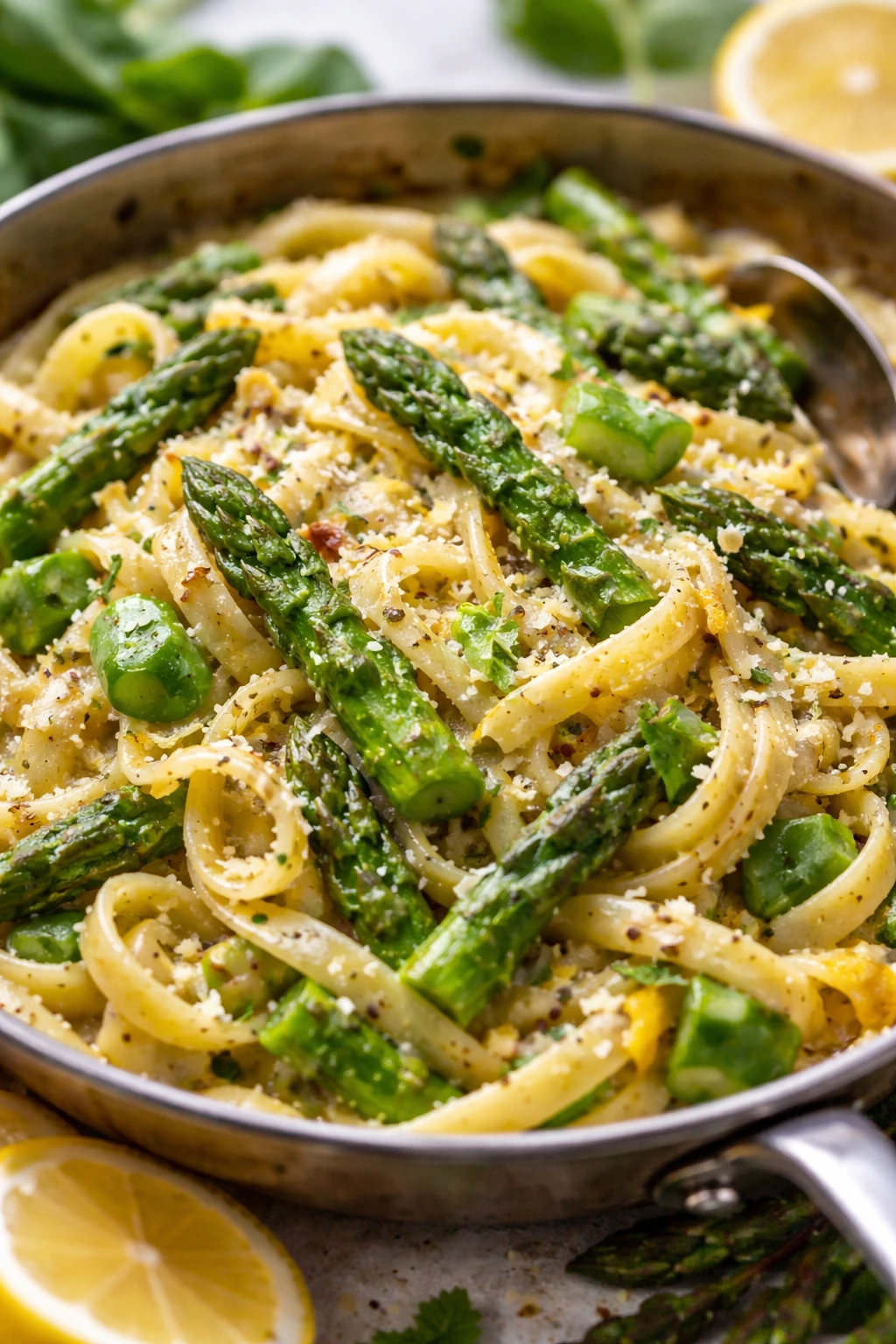
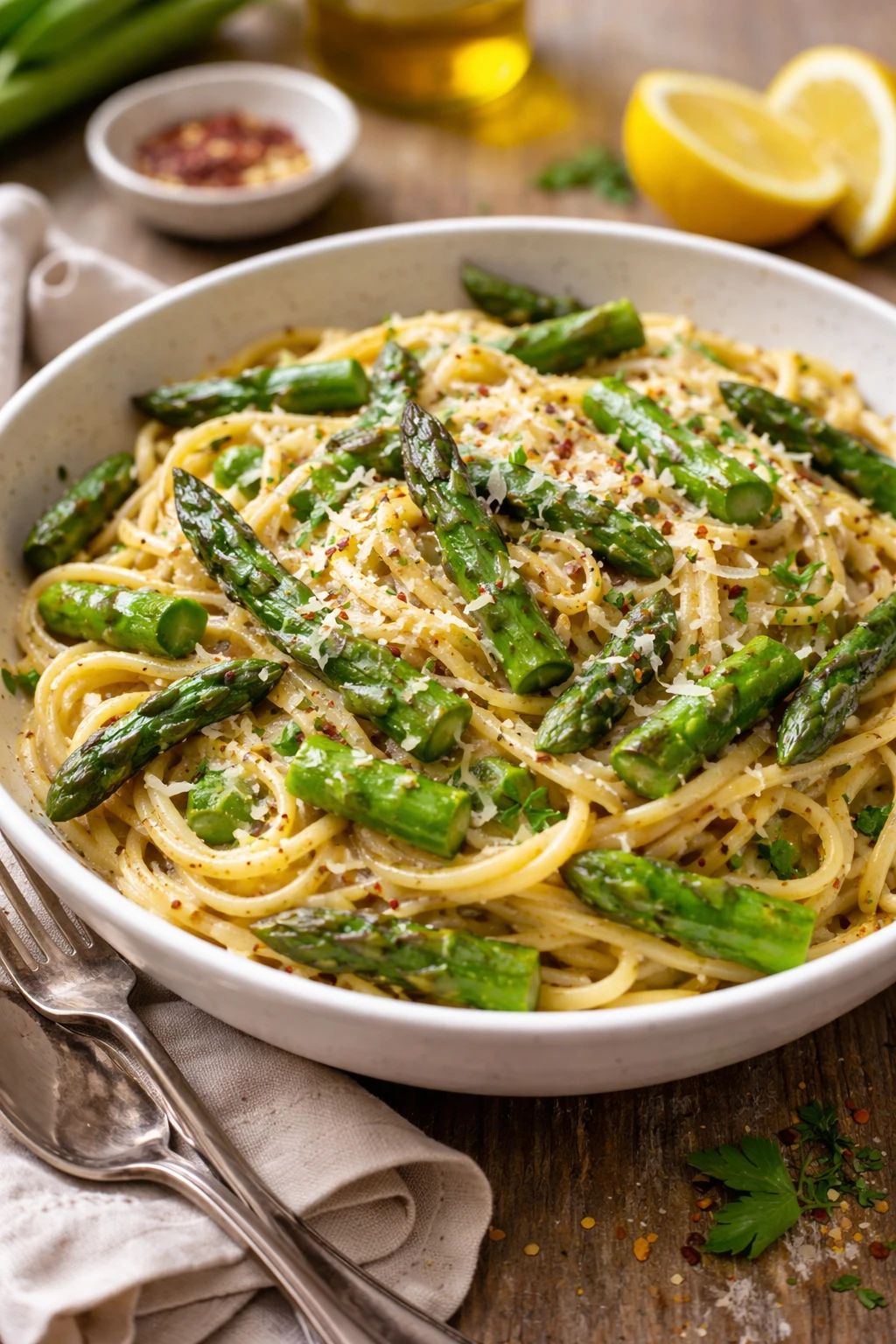
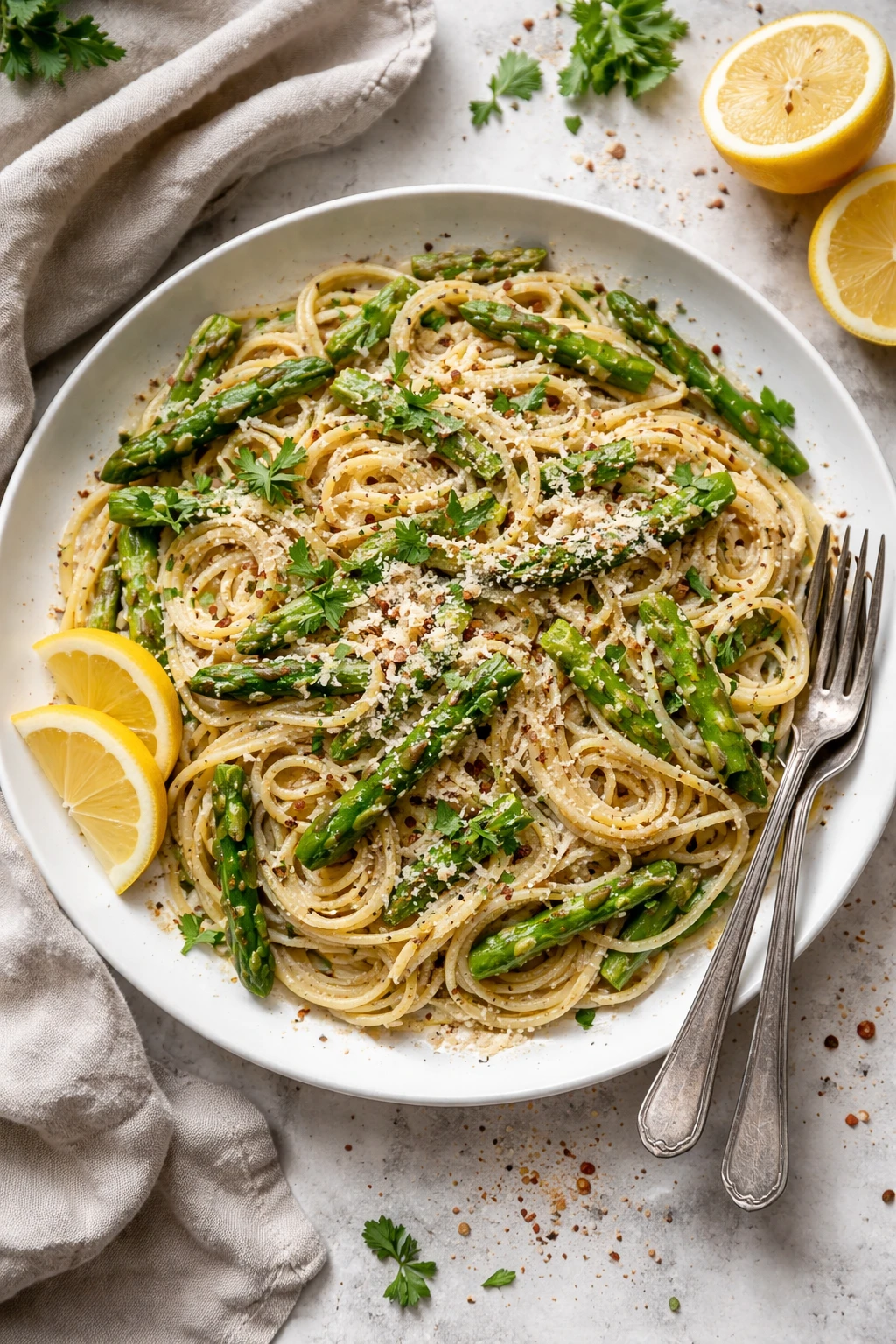
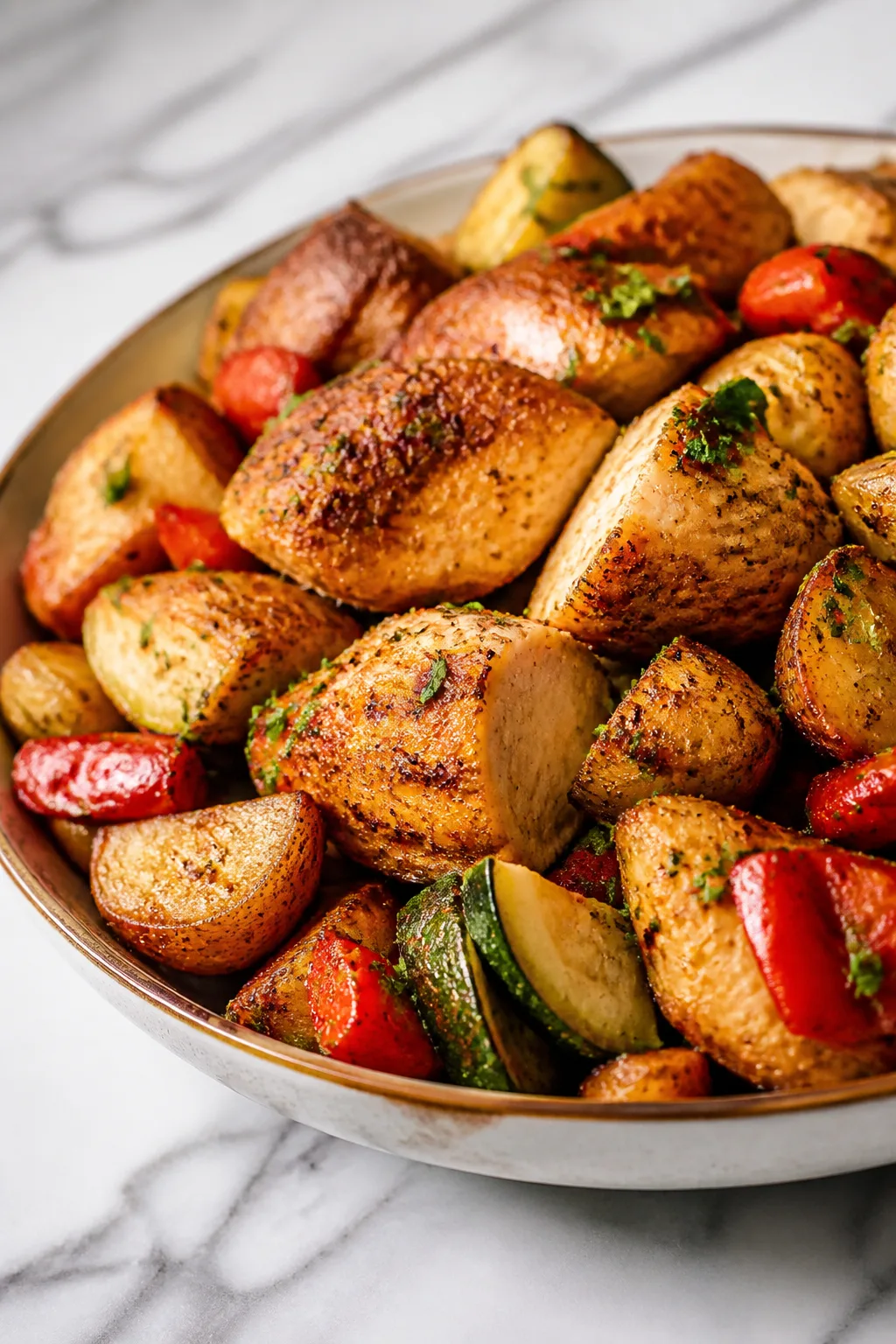
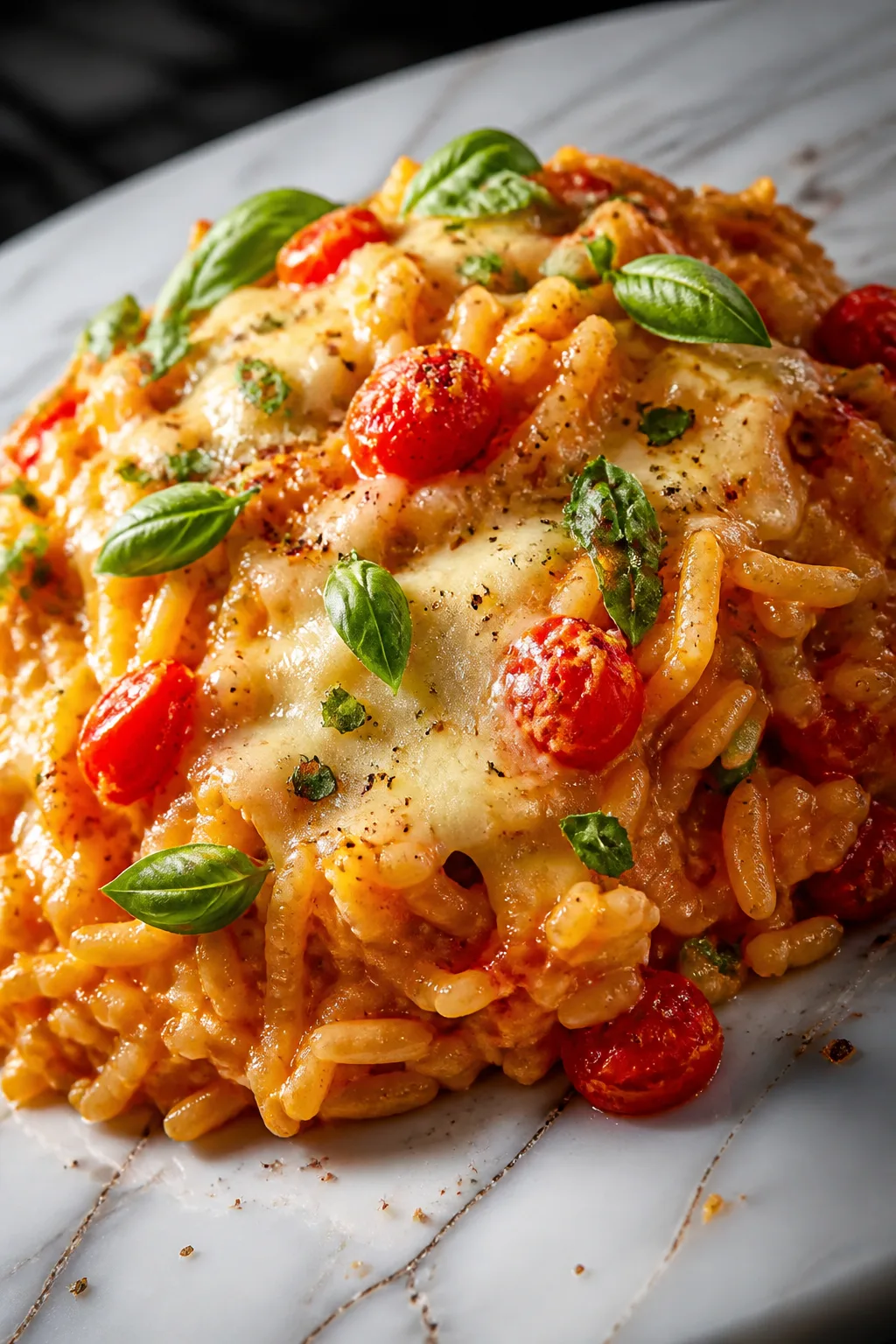
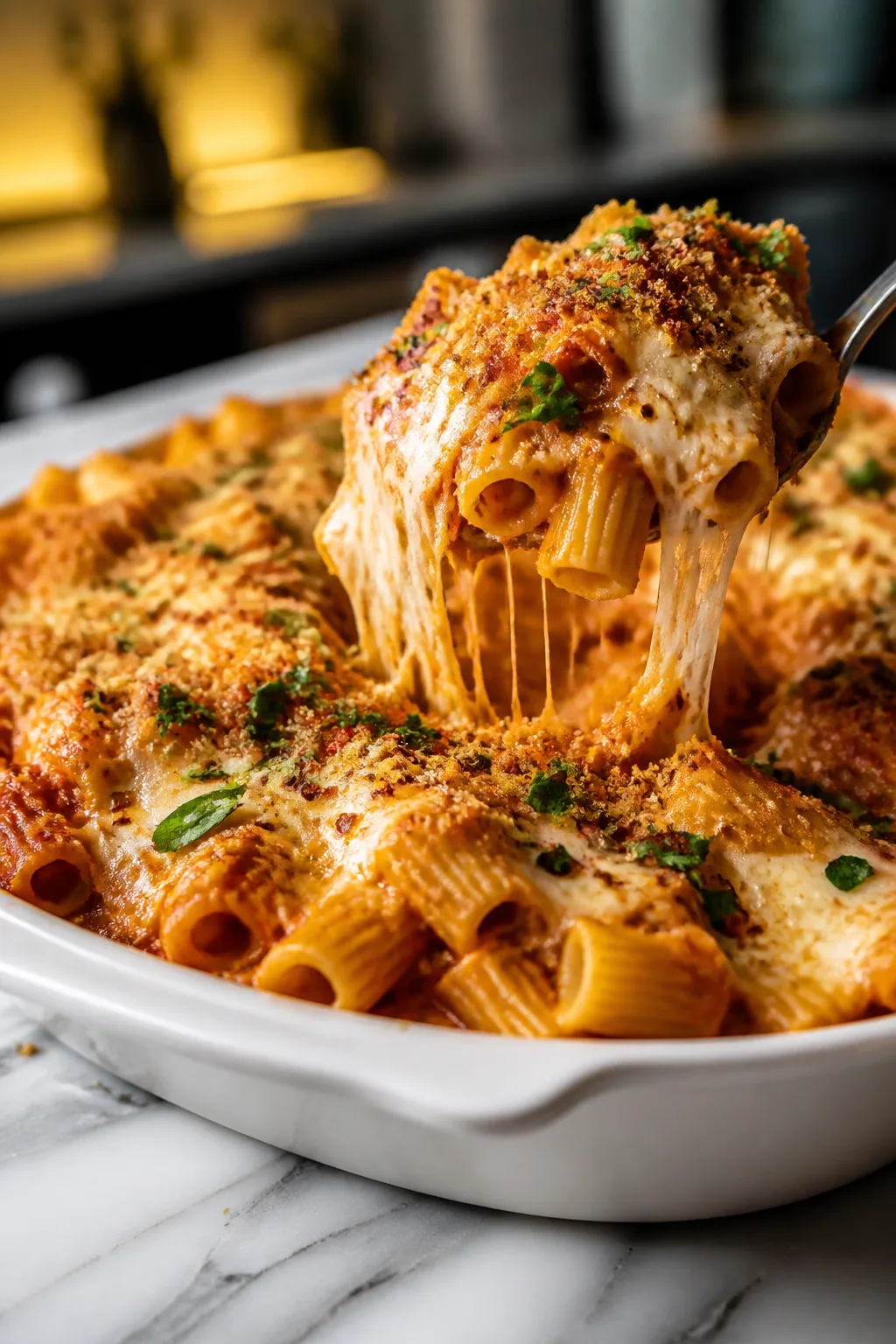
This creamy asparagus pasta is a quick, fresh dinner that feels homemade without the fuss. The asparagus adds a crisp bite, and cooking it all in one pot means less mess. Perfect for busy weeknights when you want something comforting and easy.
Introduction
I stumbled upon this one pot asparagus pasta recipe on a particularly hectic weeknight when I needed dinner on the table fast but didn’t want to sacrifice flavor or freshness. What I love about this dish is how the asparagus stays crisp-tender, adding a lovely springtime crunch that pairs perfectly with the creamy sauce. Instead of cooking the pasta and sauce separately, everything simmers together in one pot, which means less time washing dishes and more time enjoying dinner. The trick I learned is to add the asparagus late enough so it doesn’t get mushy but still cooks through just right. Plus, stirring in fresh lemon zest at the end brightens up the whole dish, balancing the richness beautifully. This pasta is creamy, comforting, and just a little bit special—perfect for a quick weeknight meal or a casual dinner with friends. It’s become a favorite in my house, especially when asparagus is in season and I want something easy but fresh. I think you’ll love how simple it is to pull off without feeling like you’re rushing a complicated recipe.
How To Do It
Step 1
Start by heating the olive oil in a large deep skillet or wide pot over medium heat. Add the minced garlic and sauté gently for about 1 minute until fragrant but not browned. This step is crucial because garlic releases its flavor quickly and can turn bitter if overcooked. Keeping the heat moderate lets the garlic infuse the oil with a subtle aromatic base that flavors the entire dish.
⏱ Time: 2
✓ Doneness: Garlic is fragrant and lightly softened, not browned or burnt.
Step 2
Add the uncooked penne pasta to the pot along with the vegetable broth and heavy cream. Stir everything together and bring to a gentle simmer over medium-high heat. This liquid will cook the pasta right in the pot, absorbing all the creamy flavors. It’s important to keep the temperature steady so the pasta cooks evenly without sticking or drying out.
⏱ Time: 10
✓ Doneness: Pasta begins to soften and the liquid is simmering gently.
Step 3
After about 10 minutes of simmering, add the asparagus pieces to the pot. Stir to combine and continue cooking for another 5-7 minutes. Adding asparagus later prevents it from becoming mushy and keeps its vibrant green color and fresh snap. Watch the pasta closely; you want it tender but still firm to the bite (al dente).
⏱ Time: 7
✓ Doneness: Asparagus is bright green and tender-crisp, pasta is al dente.
Step 4
Once the pasta and asparagus are cooked, remove the pot from heat and stir in the grated Parmesan cheese. The cheese will melt into the sauce, thickening it slightly and adding a rich, savory depth. Stirring it in off the heat prevents the cheese from clumping or becoming stringy.
⏱ Time: 3
✓ Doneness: Sauce is creamy and smooth, cheese fully incorporated.
Step 5
Add lemon zest and season with salt and freshly ground black pepper to taste. The lemon zest adds a burst of freshness that cuts through the richness of the cream and cheese, balancing the flavors perfectly. Taste and adjust seasoning gradually so the flavors are bright but harmonious.
⏱ Time: 2
✓ Doneness: Aromatic lemon scent with balanced seasoning.
Step 6
Let the pasta rest for 2 minutes before serving to allow the sauce to thicken a bit more. This resting step helps the flavors meld together and prevents the sauce from being too runny when plated.
⏱ Time: 2
✓ Doneness: Sauce slightly thickened, pasta glossy and coated.
Step 7
Serve the pasta garnished with chopped fresh parsley for a pop of color and a touch of herbal brightness. The parsley also adds a fresh contrast to the creamy sauce, making each bite more lively and appealing.
⏱ Time: 1
✓ Doneness: Bright green parsley scattered on top for visual appeal.
Step 8
If desired, add an extra sprinkle of Parmesan cheese on top before serving for a cheesy finish. This step is optional but highly recommended if you love that umami-rich cheese flavor.
⏱ Time: 1
✓ Doneness: Cheese topping melts slightly and enhances flavor.
Step 9
Enjoy immediately while the pasta is warm and creamy. If you need to reheat leftovers, do so gently to avoid drying out the sauce. This dish tastes best fresh but can be warmed carefully.
⏱ Time: 0
✓ Doneness: Pasta creamy and warm with fresh flavors intact.
Variations
Add Grilled Chicken for Protein
Toss in grilled chicken strips for a heartier meal. Marinate the chicken in lemon and herbs, then grill and slice before adding it on top of the pasta. This adds a smoky, savory element and makes it a full dinner.
Note: Grill chicken separately to avoid overcooking in the pasta pot; add just before serving.
Swap Asparagus for Broccoli or Green Beans
Use broccoli florets or green beans instead of asparagus for a different texture and flavor. Both vegetables hold up well in one pot cooking and add vibrant color and nutrition.
Note: Adjust cooking time slightly; broccoli may need a minute longer than asparagus.
Make it Vegan with Coconut Cream and Nutritional Yeast
Replace heavy cream with coconut cream and Parmesan with nutritional yeast for a plant-based creamy pasta. The coconut adds richness while yeast mimics cheesy flavor.
Note: Use unsweetened coconut cream and add yeast gradually to taste.
Add Red Pepper Flakes for a Spicy Kick
Sprinkle in red pepper flakes along with garlic for a subtle heat that livens up the creamy sauce. It’s a great way to add complexity without overpowering the asparagus flavor.
Note: Add flakes early with garlic to infuse oil with heat.
Use Whole Wheat or Gluten-Free Pasta
Swap regular penne for whole wheat or gluten-free pasta to suit dietary needs. Cooking times may vary, so check pasta texture frequently to avoid overcooking.
Note: Adjust liquid amount as gluten-free pasta can absorb more water.
Pro Tips
Add asparagus towards the end of cooking to keep it crisp and vibrant.
Asparagus cooks quickly and can become mushy if boiled too long. Adding it late preserves its fresh flavor, bright color, and crisp texture, which provides a nice contrast to the creamy pasta.
Use freshly grated Parmesan instead of pre-grated for smoother melting.
Pre-grated cheese often contains anti-caking agents that prevent it from melting smoothly, resulting in clumps. Freshly grated cheese melts better and enriches the sauce with a creamier texture.
Simmer pasta gently in broth and cream rather than boiling rapidly.
A gentle simmer allows the pasta to cook evenly and release starch gradually, which helps thicken the sauce naturally. Rapid boiling can cause uneven cooking and a watery sauce.
Finish with lemon zest to brighten the rich, creamy sauce.
Lemon zest adds fresh, aromatic citrus notes that cut through the heaviness of cream and cheese, balancing flavors and enhancing the overall dish.
Let the pasta rest off heat for a couple of minutes before serving.
Resting allows the sauce to thicken slightly and the flavors to meld, resulting in a more cohesive, luscious dish.
Use a wide pot or deep skillet to cook everything evenly in one pot.
A wide pot ensures the pasta cooks in a single layer and the liquid evaporates evenly, preventing sticking or uneven cooking.
Season gradually and taste before adding more salt or pepper.
Because broth and Parmesan already contain salt, gradually seasoning helps avoid over-salting and keeps the flavor balanced.
Common Mistakes to Avoid
Adding asparagus too early and overcooking it.
Why it happens Many assume all ingredients cook together from the start for convenience, but asparagus is delicate and cooks faster than pasta.
Fix Add asparagus in the last 5-7 minutes of cooking to keep it tender-crisp and bright green. Watch closely to avoid limp vegetables.
Using pre-grated Parmesan cheese that clumps in the sauce.
Why it happens Pre-grated cheese contains anti-caking agents that interfere with smooth melting.
Fix Grate fresh Parmesan yourself; it melts better and creates a creamier sauce.
Boiling pasta too rapidly causing uneven cooking.
Why it happens High heat can cause pasta to cook unevenly and release starch too quickly, resulting in a watery sauce.
Fix Maintain a gentle simmer to ensure even cooking and gradual sauce thickening.
Skipping the resting step before serving.
Why it happens In the rush to eat, resting is often skipped but it’s key for sauce texture.
Fix Let the pasta rest off heat for 2 minutes so the sauce thickens and flavors meld.
Over-seasoning early without tasting.
Why it happens Broth and cheese add salt, so adding too much salt upfront can over-salt the dish.
Fix Season in stages and taste as you go to maintain balanced flavor.
Nutrition
Per Serving:
Nutritional values are estimates and may vary based on specific ingredients used.
Storage & Tips
Room Temperature
This pasta should not be kept at room temperature for more than 2 hours to avoid food safety risks. Cover it loosely if you need to keep it out briefly.
Refrigerator
Store leftovers in an airtight container for up to 3 days. The sauce may thicken and the asparagus soften when cold, so reheat gently to restore creaminess.
Freezer
Freeze in a freezer-safe container for up to 1 month. Wrap tightly to prevent freezer burn. Thaw overnight in the fridge before reheating.
Reheating
Reheat on the stovetop over low heat with a splash of cream or broth to loosen the sauce. Avoid microwaving at high power to prevent drying out.
Make Ahead
You can prepare the sauce and chop asparagus a day ahead, storing them separately. Combine and cook pasta and asparagus just before serving for best texture.
FAQ
Can I use a different type of pasta for this recipe?
Absolutely! While penne works great because its shape holds the sauce well, you can use other shapes like rigatoni, fusilli, or farfalle. Just keep in mind that cooking times might vary slightly depending on the pasta thickness. Be sure to check for doneness early to avoid overcooking.
What if I don’t have heavy cream? Can I substitute it?
You can substitute heavy cream with half-and-half or whole milk mixed with a bit of butter for richness, but the sauce will be less creamy and thick. For a dairy-free option, coconut cream works well, though it will add a slight coconut flavor to the dish.
How do I prevent the pasta from sticking while cooking in one pot?
Stir the pasta frequently during cooking to prevent sticking, especially in the first few minutes. Make sure there’s enough liquid to cover the pasta and keep the heat at a gentle simmer rather than a rolling boil to cook evenly.
Can I prepare this dish ahead of time?
You can chop the asparagus and prepare the sauce base a day ahead and refrigerate separately. Cook the pasta and combine everything just before serving to keep the asparagus crisp and the flavors fresh.
Why does the sauce sometimes turn grainy or clumpy?
This usually happens if the cheese is added over high heat or if pre-grated cheese with additives is used. To avoid this, grate Parmesan fresh and stir it in off the heat to ensure a smooth, creamy sauce.
Is it okay to use frozen asparagus?
Frozen asparagus can be used, but it tends to be softer and may release extra water, which can thin the sauce. Add frozen asparagus a bit earlier to allow excess moisture to cook off, and adjust seasoning accordingly.
How can I make this recipe vegan?
Replace heavy cream with coconut cream or a cashew cream, and use nutritional yeast instead of Parmesan for a cheesy flavor. Use olive oil or vegan butter instead of dairy butter if used. The texture and flavor will be slightly different but still delicious.
What’s the best way to reheat leftovers without drying them out?
Reheat gently on the stove over low heat, adding a splash of broth or cream to loosen the sauce. Avoid high heat or microwave reheating at full power, which can dry out the pasta and cause the sauce to separate.
Final Thoughts
I hope you give this creamy one pot asparagus pasta a try — it’s a real winner for easy, fresh weeknight dinners. Let me know how it turns out and what your favorite add-ins are!