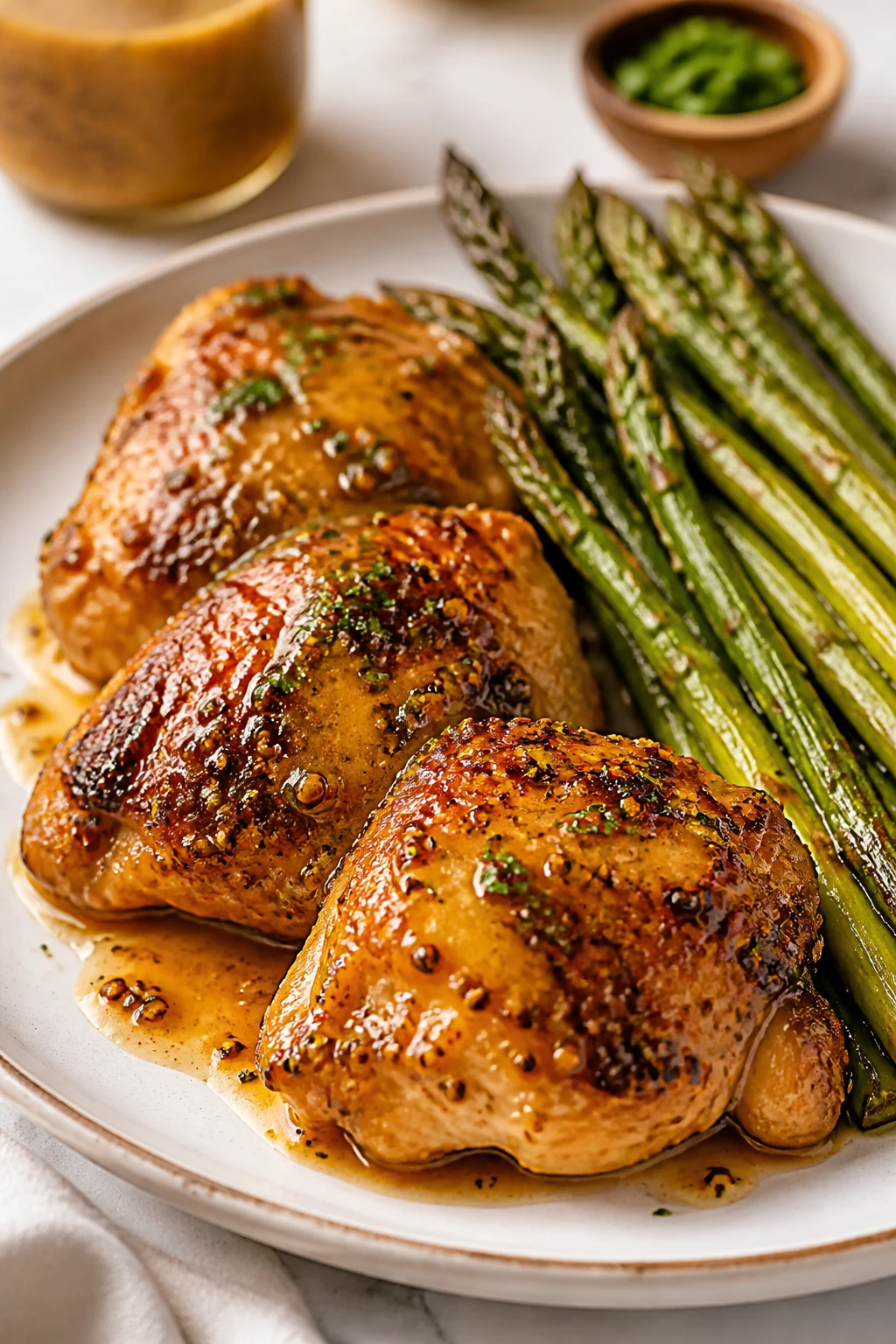
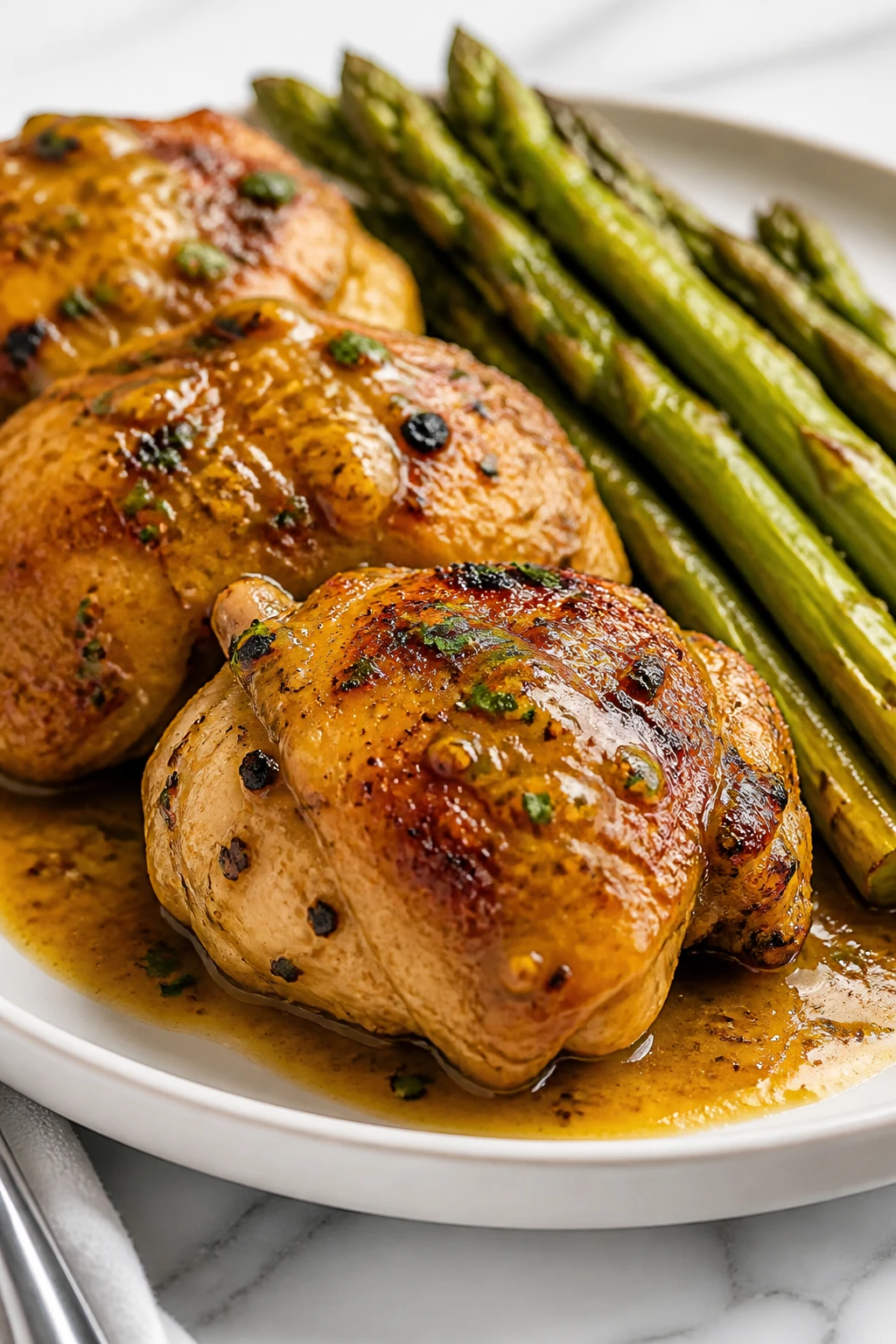
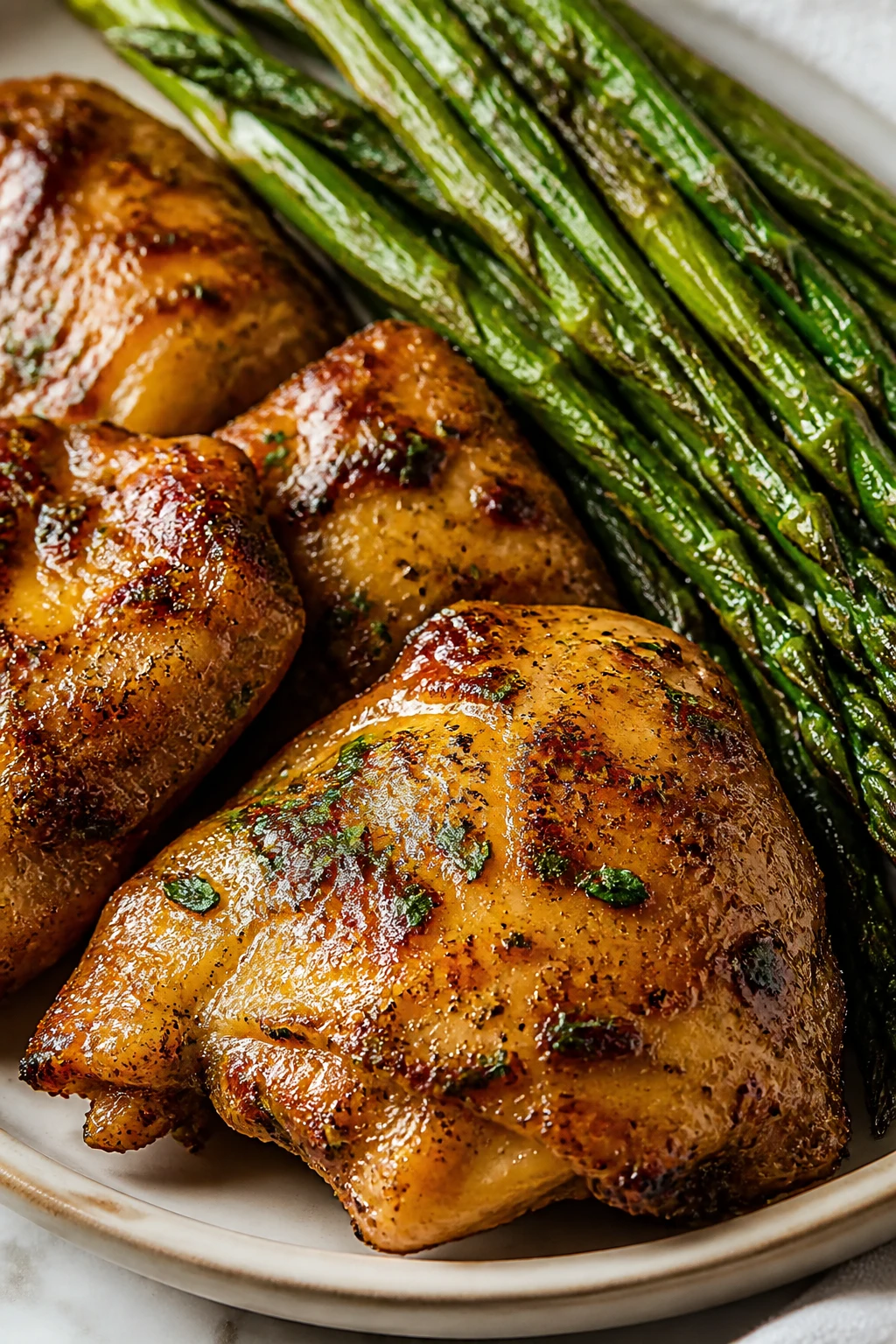
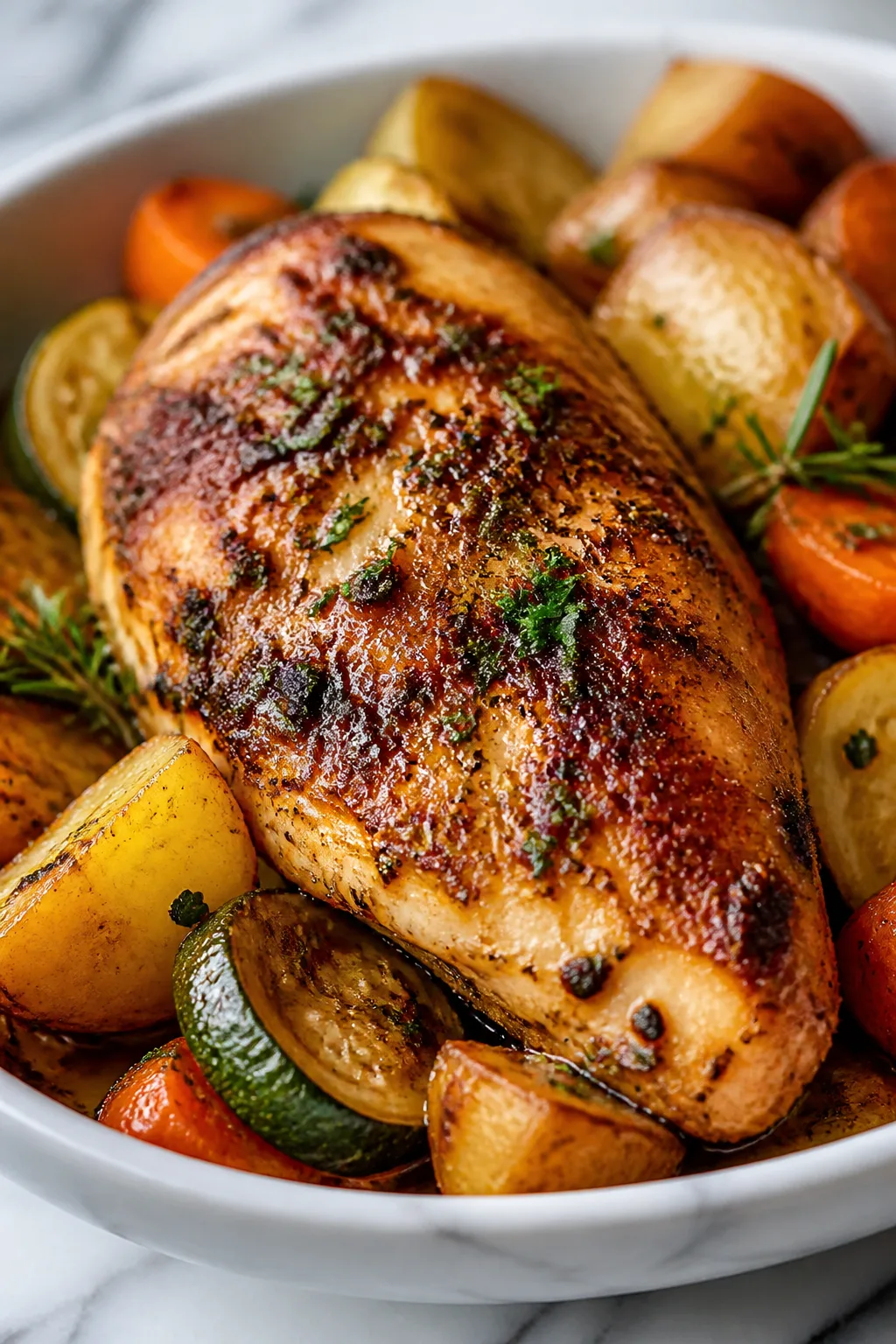
Juicy chicken thighs glazed with a tangy honey mustard sauce paired with crisp roasted asparagus. The honey adds a perfect touch of sweetness to balance the mustard's zing. Ready in under 45 minutes—ideal for quick dinners!
Introduction
I first tried making honey mustard chicken thighs a few years ago when I needed a quick, satisfying dinner after a long day. What makes this recipe stand out is the balance between the sweet honey and the sharp Dijon mustard, which creates a glaze that’s both tangy and comforting. Unlike some recipes that use just a simple sauce, I like to add a splash of apple cider vinegar and fresh garlic to deepen the flavor. Roasting the asparagus alongside the chicken not only saves time but infuses the veggies with a subtle garlicky aroma that complements the chicken perfectly. I’ve had my share of dry chicken fails before, but the trick I learned here is to keep the skin on and roast at a high temperature, which keeps the meat juicy and the skin crispy. When it’s done, you get tender, flavorful chicken with a sticky glaze and vibrant green asparagus that still has a little snap. This dish is perfect for busy weeknights when you want something homemade but don’t have hours to spend in the kitchen.
How To Do It
Step 1
Preheat your oven to 425°F (220°C). Pat the chicken thighs completely dry with paper towels—this helps the skin crisp up beautifully during roasting. Season both sides generously with salt and pepper. Dry skin is key here; if the skin is wet, it will steam instead of crisping, leaving you with soggy skin instead of that golden crunch everyone loves.
⏱ Time: 10 minutes
✓ Doneness: Chicken skin looks dry before roasting and feels slightly tacky after seasoning.
Step 2
In a small bowl, whisk together Dijon mustard, honey, apple cider vinegar, and minced garlic. This combination creates a tangy-sweet glaze that will caramelize nicely during roasting. Make sure to mix well so the honey is fully incorporated; otherwise, it might settle at the bottom and not coat the chicken evenly.
⏱ Time: 5 minutes
✓ Doneness: The glaze is smooth and uniform with no separation of honey and mustard.
Step 3
Heat a large oven-safe skillet over medium-high heat and add olive oil. Once shimmering, place chicken thighs skin-side down. Sear for about 5 minutes without moving them to develop a deep golden crust. This step locks in juices and starts rendering the fat beneath the skin, key for crispiness. Avoid flipping too early or the skin might stick and tear.
⏱ Time: 5 minutes
✓ Doneness: Skin is deeply golden brown and releases easily from the pan.
Step 4
Flip the chicken thighs over and brush the skin side generously with half of the honey mustard glaze. This layering helps build flavor and ensures the chicken stays moist. Don’t rush this step—take your time to coat each piece evenly for a sticky, flavorful finish.
⏱ Time: 5 minutes
✓ Doneness: Glaze clings evenly to the chicken skin, appearing glossy.
Step 5
Arrange the trimmed asparagus around the chicken in the skillet. Drizzle the asparagus with a little olive oil and season with salt and pepper. The asparagus will roast in the chicken's juices, absorbing all those delicious flavors. Make sure the asparagus is in a single layer for even roasting.
⏱ Time: 2 minutes
✓ Doneness: Asparagus is lightly coated and spread evenly around chicken.
Step 6
Transfer the skillet to the preheated oven and roast for 15 minutes. Then, remove the skillet and brush the chicken with the remaining glaze. Return to the oven and roast for an additional 10 minutes or until the internal temperature reaches 165°F (74°C). The glaze will caramelize and thicken, giving the chicken a beautiful sticky finish.
⏱ Time: 25 minutes
✓ Doneness: Chicken juices run clear, and glaze is bubbly and caramelized.
Step 7
Once cooked, remove from the oven and let the chicken rest for 5 minutes. Resting allows the juices to redistribute, keeping the meat juicy and tender. If you cut in too soon, the juices will run out and dry the chicken.
⏱ Time: 5 minutes
✓ Doneness: Chicken feels firm but springs back slightly when pressed.
Step 8
Optional: Sprinkle lemon zest over the asparagus and chicken before serving for a fresh, bright note that cuts through the richness. This little touch elevates the dish and adds a lovely aroma.
⏱ Time: 1 minute
✓ Doneness: Lemon zest is evenly scattered and aromatic.
Step 9
Serve the chicken thighs alongside the roasted asparagus immediately. The skin should be crispy, the meat juicy, and the asparagus tender with a slight snap. This dish pairs well with a simple side of rice or crusty bread to soak up the extra glaze.
⏱ Time: Immediate
✓ Doneness: Plated dish looks vibrant with crispy skin and tender veggies.
Variations
Spicy Honey Mustard Chicken
Add 1/2 teaspoon cayenne pepper or a dash of hot sauce to the honey mustard glaze for a spicy kick. This variation balances sweet, tangy, and heat for those who like a little fire. The roasting times remain the same, but the flavor profile becomes bolder and livelier.
Note: Incorporating spice won’t affect cooking time, but watch for burning glaze if spice includes sugars—reduce oven time by a few minutes if needed.
Lemon Herb Honey Mustard Chicken
Mix fresh chopped herbs like thyme or rosemary into the glaze and add lemon juice for bright, herbal notes. This twist freshens the dish and pairs beautifully with the asparagus. Expect a more aromatic and vibrant flavor with a slight citrus tang.
Note: Adding lemon juice slightly thins the glaze; brush on in thinner layers to avoid dripping.
Gluten-Free Honey Mustard Chicken
Use gluten-free Dijon mustard and check all labels to keep the dish gluten-free. This adaptation is perfect for those with gluten sensitivities without compromising flavor or texture.
Note: No changes in technique or timing are needed; just ensure all condiments are certified gluten-free.
Honey Mustard Chicken with Roasted Potatoes
Swap asparagus for baby potatoes tossed in olive oil and herbs, roasting alongside the chicken. This variation offers a heartier side and a comforting, crispy potato texture that soaks up the glaze beautifully.
Note: Potatoes need slightly longer to roast; parboil them for 5 minutes before adding to the pan to ensure they cook through.
Sheet Pan Honey Mustard Chicken and Veggies
Add carrots, bell peppers, and red onions to the asparagus on a large sheet pan. Roast everything together for a colorful, veggie-packed meal. The extra veggies add texture and sweetness, complementing the chicken’s glaze.
Note: Cut vegetables into uniform sizes for even cooking and adjust roasting time to ensure all veggies are tender but not mushy.
Pro Tips
Always pat chicken skin dry before seasoning.
Removing moisture from the skin is essential for achieving that coveted crispy texture. Wet skin steams rather than crisps in the oven, which results in a rubbery, less appetizing texture. Dry skin allows the Maillard reaction to happen quickly, producing golden, crunchy skin.
Don’t skip searing the chicken skin-side down first.
Searing starts the browning process and renders fat from under the skin, helping it crisp up beautifully in the oven. Skipping this step often leads to pale, soggy skin and less flavor development.
Use a high oven temperature (425°F) for roasting.
High heat encourages rapid caramelization of the glaze and crisps the skin without drying out the meat. Lower temperatures can result in limp skin and less vibrant flavors.
Brush the glaze on twice: before and during roasting.
Layering the glaze builds flavor depth and creates a sticky, caramelized finish. Applying it only once can lead to uneven coating and less pronounced sweetness and tang.
Trim asparagus ends before roasting.
Woody ends are tough and unpleasant to eat. Trimming ensures even cooking and a tender bite. Plus, removing the dry ends helps the asparagus absorb the chicken drippings better.
Let chicken rest after roasting before slicing.
Resting allows juices to redistribute inside the meat, keeping it moist and tender. Cutting too soon causes the juices to run out, resulting in drier chicken.
Use an oven-safe skillet to go from stovetop to oven.
This saves time and reduces cleanup by allowing you to sear and roast in the same pan. It also helps the chicken cook evenly and soak up flavors from the glaze and asparagus.
Common Mistakes to Avoid
Not drying the chicken skin before cooking.
Why it happens Many cooks overlook this step, assuming seasoning is enough. Moisture on the skin prevents it from crisping properly.
Fix Always pat the chicken skin completely dry with paper towels before seasoning and cooking. This ensures the skin crisps up nicely instead of steaming.
Skipping the sear and going straight to the oven.
Why it happens Sometimes people want to save time or avoid using multiple cooking methods.
Fix Take the extra 5 minutes to sear skin-side down in a hot pan. This develops flavor and texture that roasting alone can’t achieve.
Overcrowding the pan with asparagus.
Why it happens Trying to cook everything at once can lead to uneven cooking and soggy veggies.
Fix Arrange asparagus in a single layer around the chicken so it roasts evenly and gets slightly crispy.
Applying glaze only once at the beginning.
Why it happens Rushing or forgetting to brush again during cooking reduces flavor impact.
Fix Brush the glaze on before roasting and again halfway through to build a sticky, flavorful coating.
Cutting chicken immediately after roasting.
Why it happens Excited to eat, many cut too soon, causing juice loss.
Fix Let the chicken rest for at least 5 minutes to keep it juicy and tender.
Nutrition
Per Serving:
Nutritional values are estimates and may vary based on specific ingredients used.
Storage & Tips
Room Temperature
This dish can safely sit at room temperature for up to 2 hours if covered loosely with foil or a clean kitchen towel. Beyond that, bacteria growth can occur, so refrigerate promptly.
Refrigerator
Store leftover chicken and asparagus in an airtight container for up to 3 days. The chicken skin may lose crispness, so reheat gently in the oven to restore texture. The asparagus may soften but still tastes great cold or warmed.
Freezer
Freeze cooked chicken thighs and asparagus separately in freezer-safe containers or bags for up to 2 months. Wrap tightly to avoid freezer burn. Thaw overnight in the refrigerator before reheating.
Reheating
Reheat in a preheated 350°F oven for 15-20 minutes until warmed through. Add a splash of water or chicken broth to prevent drying. Avoid microwaving if possible, as it can make the chicken rubbery and the asparagus soggy.
Make Ahead
You can prepare the honey mustard glaze and trim asparagus 1-2 days ahead, storing them separately in the fridge. Chicken can be seasoned but not glazed until ready to cook to keep skin dry for crispiness.
FAQ
Can I use chicken breasts instead of thighs?
Yes, but chicken breasts cook faster and can dry out more easily. Use boneless, skin-on breasts and reduce cooking time accordingly. To keep them juicy, avoid overcooking and consider brining beforehand.
What if I don’t have apple cider vinegar?
You can substitute with white wine vinegar or lemon juice. These provide acidity to balance the sweetness but may slightly alter the flavor. Avoid stronger vinegars like balsamic, which can overpower the glaze.
How do I know when the chicken is done?
Use a meat thermometer to check the internal temperature—it should reach 165°F (74°C). The juices should run clear when pierced. Overcooking will dry the chicken, so keep an eye on the thermometer.
Can I make this recipe gluten-free?
Absolutely! Just ensure your Dijon mustard and other condiments are labeled gluten-free. The rest of the ingredients are naturally gluten-free, making this recipe safe for gluten-sensitive diets.
How do I keep the chicken skin crispy after reheating?
Reheat in a hot oven (about 375°F) on a wire rack so air circulates around the chicken. This helps restore crispness. Avoid microwaving as it tends to make the skin soggy.
Can I prepare this meal entirely on the stovetop?
While you can sear the chicken and cook asparagus on the stovetop, roasting in the oven ensures even cooking and crisp skin. Stovetop-only methods may result in unevenly cooked chicken and less crispy skin.
What sides go well with this dish?
Simple sides like rice, quinoa, or crusty bread work well to soak up the glaze. Roasted potatoes or a fresh salad also complement the flavors nicely without overpowering the chicken.
Can I use frozen asparagus?
Fresh asparagus is best for roasting due to its texture. Frozen asparagus tends to become mushy when roasted. If using frozen, thaw and pat dry thoroughly, then roast carefully to avoid sogginess.
Final Thoughts
Give this honey mustard chicken with roasted asparagus a try—you’ll love how quick and flavorful it is! Don’t forget to share how it turns out with your friends and family.