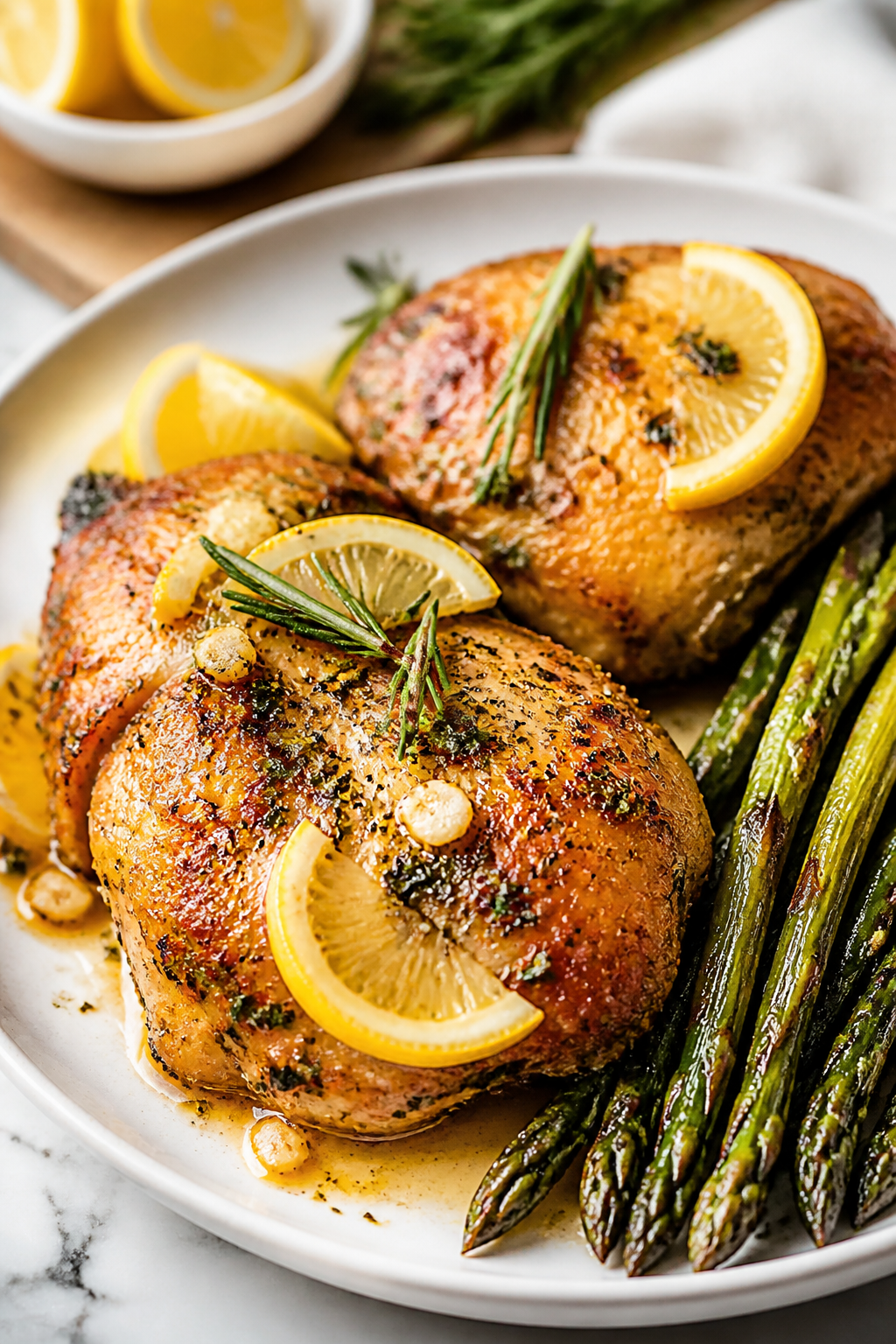
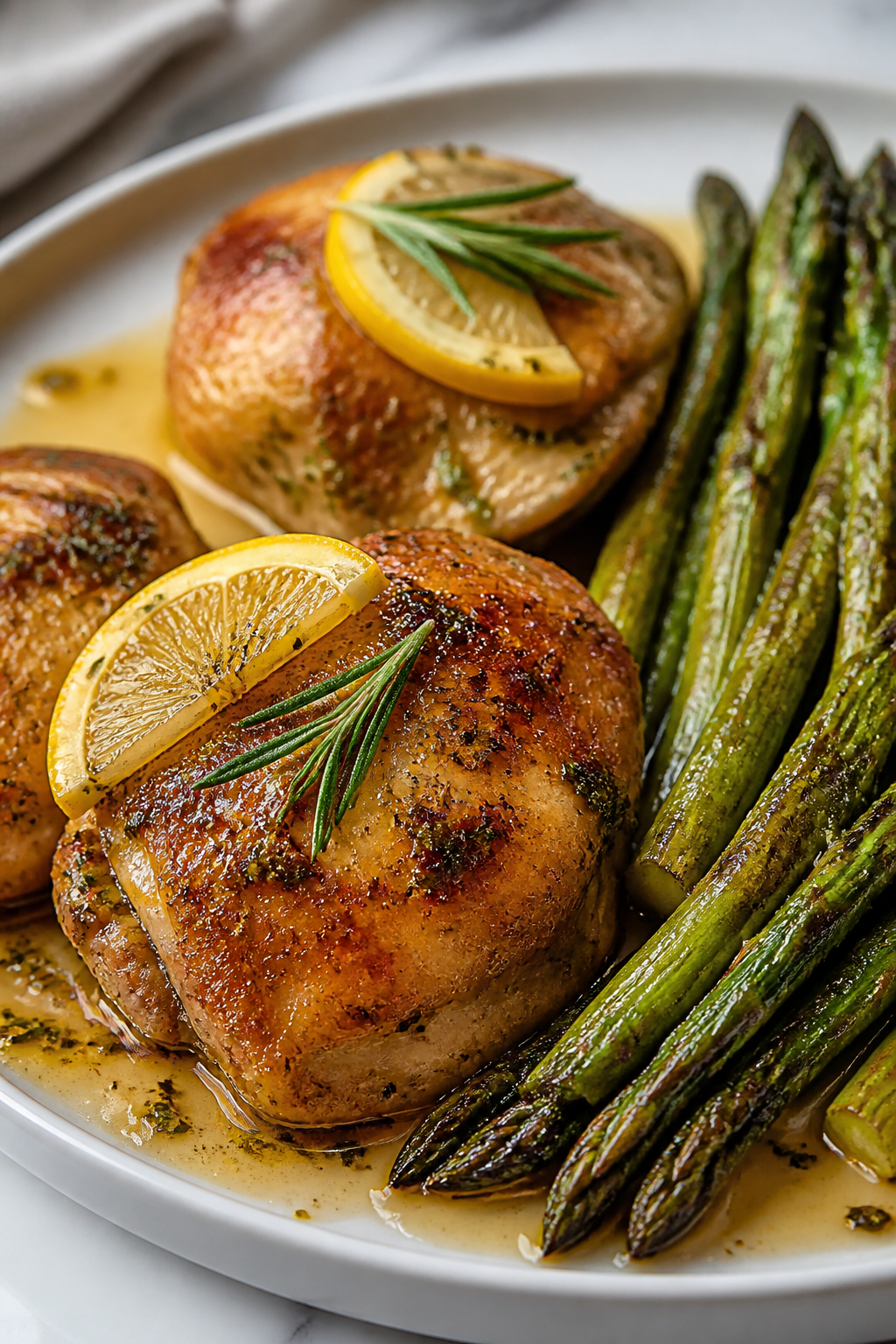
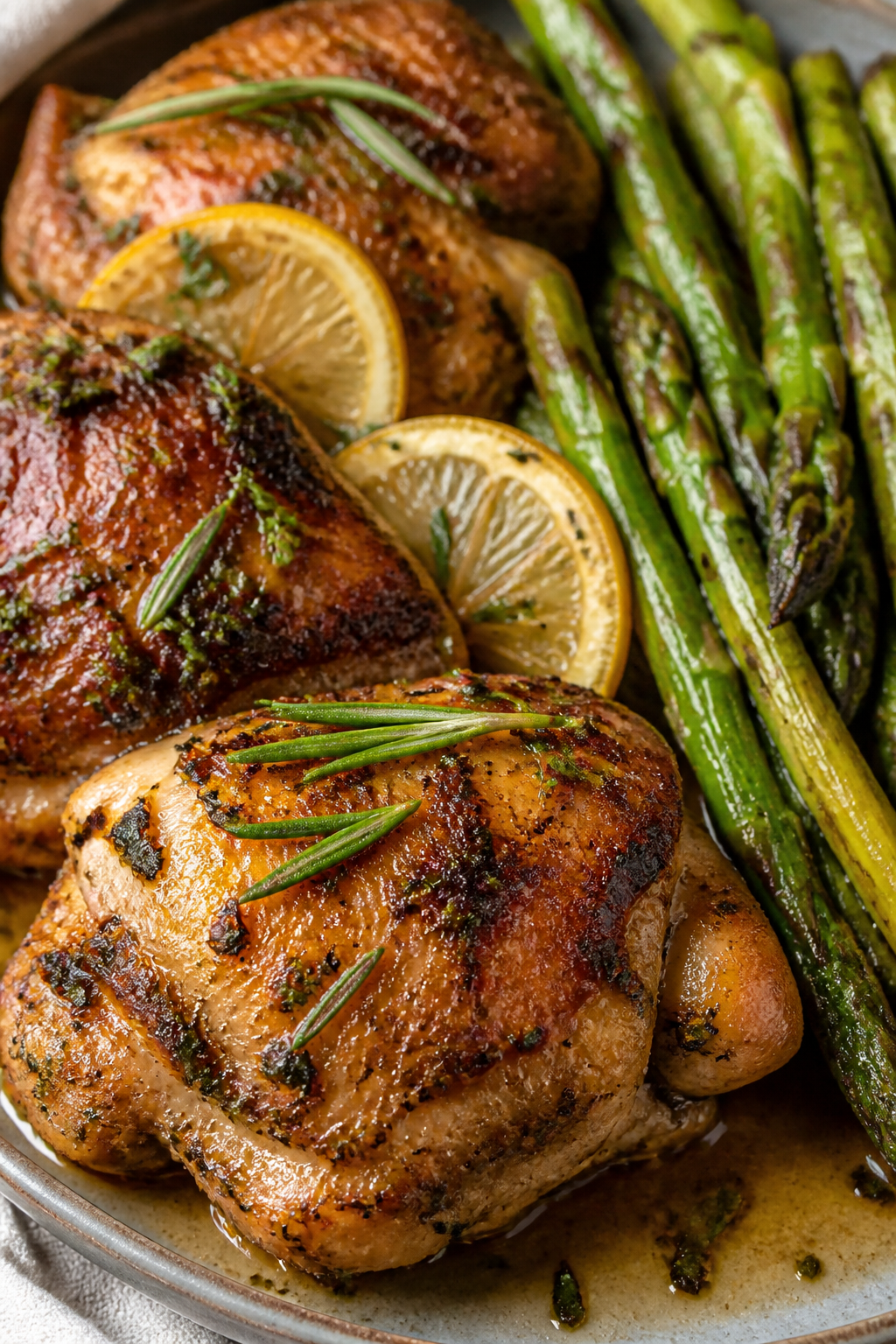
This dish is my go-to when I want juicy chicken thighs bursting with lemon and rosemary flavor. The roasted asparagus adds a tender, fresh touch. Perfect for a cozy weeknight dinner that feels effortlessly special.
Introduction
I first made this lemon rosemary chicken a few years ago when I wanted a dinner that felt special but didn’t require hours in the kitchen. The combination of juicy chicken thighs with bright lemon and fragrant rosemary instantly became a family favorite. What sets this recipe apart is the simple marinade that infuses the chicken with flavor without needing to marinate overnight—just a quick toss before cooking. Plus, roasting the asparagus alongside the chicken makes cleanup a breeze and adds a fresh, tender vegetable that balances the meal perfectly. I used to overcook chicken thighs until they were dry, but the trick I learned here is to start skin-side down in a hot pan to get that crispy golden crust, then finish in the oven. The end result is juicy, flavorful chicken with a crispy skin and tender meat. I love serving this on busy weeknights when I want comfort food that’s also bright and fresh. It looks beautiful on the plate too, which always makes dinner feel a little more festive even if it’s just a regular Tuesday.
How To Do It
Step 1
Preheat your oven to 425°F (220°C). While the oven heats, pat the chicken thighs dry with paper towels—this is key to getting crispy skin. In a small bowl, whisk together the lemon zest, lemon juice, 2 tablespoons olive oil, minced garlic, chopped rosemary, salt, and pepper. This marinade is bright and herbaceous, infusing the chicken with fresh flavors without overpowering it.
⏱ Time: 10 minutes
✓ Doneness: Chicken skin looks dry before cooking and marinade is well combined and fragrant.
Step 2
Place the chicken thighs in a large bowl or zip-top bag. Pour the marinade over the chicken, tossing gently to coat each piece evenly. Let it sit at room temperature while you prep the asparagus; this brief marination allows the flavors to penetrate without waiting hours. Avoid marinating longer than 30 minutes at room temp to keep food safe.
⏱ Time: 10 minutes
✓ Doneness: Chicken is evenly coated and slightly glossy from the marinade.
Step 3
Trim the woody ends off the asparagus and place them on a rimmed baking sheet. Drizzle with the remaining 1 tablespoon olive oil and sprinkle with a pinch of salt and red pepper flakes if using. Toss to coat evenly. This adds a subtle heat that complements the lemon and rosemary beautifully.
⏱ Time: 5 minutes
✓ Doneness: Asparagus is evenly coated and spread in a single layer on the pan.
Step 4
Heat a large oven-safe skillet over medium-high heat. Once hot, add the chicken thighs skin-side down without overcrowding. Press them lightly so the skin makes full contact with the pan. This step is crucial for rendering fat and achieving a deeply golden, crispy skin. Cook undisturbed for about 6-8 minutes until the skin is deeply browned but not burnt.
⏱ Time: 8 minutes
✓ Doneness: Skin is golden brown and releases easily from the pan.
Step 5
Flip the chicken thighs over and transfer the skillet to the preheated oven. Arrange the asparagus on the same baking sheet if you have space or on a separate sheet. Roast everything for 20–25 minutes until the chicken reaches an internal temperature of 165°F (74°C) and the asparagus is tender but still bright green.
⏱ Time: 20-25 minutes
✓ Doneness: Chicken juices run clear, and asparagus is tender when pierced with a fork.
Step 6
Remove the chicken and asparagus from the oven. Let the chicken rest for 5 minutes before serving—this helps the juices redistribute, keeping the meat moist and tender. While resting, the asparagus will finish cooking gently in the residual heat, staying crisp-tender.
⏱ Time: 5 minutes
✓ Doneness: Chicken skin remains crispy, and juices are clear when cut.
Step 7
Taste the asparagus and season with additional salt or lemon juice if needed. The lemon juice brightens the roasted veggies and ties the whole dish together. Serve the chicken thighs alongside the asparagus with lemon wedges for extra zing.
⏱ Time: 5 minutes
✓ Doneness: Asparagus tastes fresh and balanced with a hint of acidity.
Step 8
Optional: For a little extra flavor, drizzle some of the skillet juices over the chicken just before serving. These pan juices are packed with lemon, rosemary, and garlic notes that elevate the dish. Avoid pouring too much liquid or the skin will lose crispness.
⏱ Time: 2 minutes
✓ Doneness: Chicken glistens with a light sauce without sogginess.
Step 9
Plate your lemon rosemary chicken thighs with roasted asparagus and garnish with fresh rosemary sprigs or lemon slices if you like. This simple presentation makes it look inviting and appetizing, perfect for a casual dinner or sharing with friends.
⏱ Time: 3 minutes
✓ Doneness: Dish looks colorful, fresh, and well plated.
Variations
Garlic Butter Lemon Chicken
Swap olive oil for melted garlic butter in the marinade and baste chicken with it before roasting. This adds a rich, savory depth that pairs beautifully with lemon and rosemary. The texture will be slightly richer and more indulgent.
Note: Watch the butter carefully during searing to avoid burning; lower the heat slightly if needed.
Spicy Lemon Rosemary Chicken
Add cayenne pepper or chili flakes to the marinade for a spicy kick. This variation adds excitement and warmth, making it perfect for those who like a little heat in their meals.
Note: Adjust spice level to taste and omit red pepper flakes on asparagus to balance heat.
Herbed Quinoa and Roasted Veggie Bowl
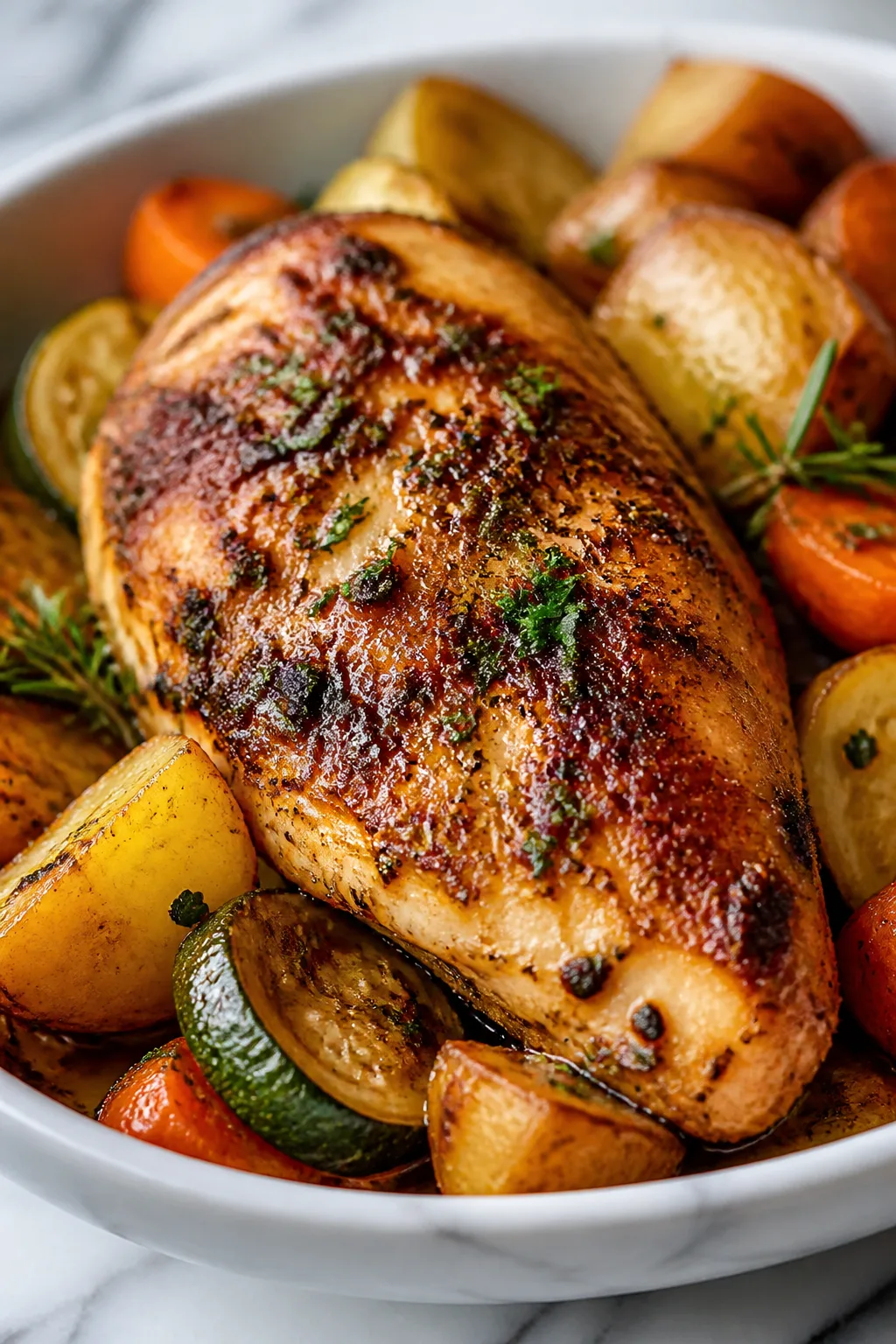
Serve the chicken and asparagus over a bed of herbed quinoa with additional roasted vegetables like bell peppers and zucchini. This makes a hearty, balanced meal with more textures and flavors.
Note: Roast extra veggies at the same temperature and time, watching for doneness.
Lemon Rosemary Chicken Skewers
Cut chicken thighs into chunks, marinate as usual, and thread onto skewers with lemon slices and rosemary sprigs. Grill or broil for a fun twist that’s great for summer cookouts.
Note: Reduce cooking time to about 10-12 minutes, turning frequently for even char.
Creamy Lemon Rosemary Sauce
After cooking, make a quick sauce by deglazing the pan with chicken broth and stirring in a splash of cream and extra lemon juice. Pour over the chicken for a luscious finish.
Note: Simmer sauce gently to avoid curdling and don’t add cream too early.
Pro Tips
Pat chicken skin dry before marinating.
Dry skin crisps up better because moisture creates steam that prevents browning. Patting the skin dry ensures a golden, crunchy crust when searing.
Use a cast iron or heavy oven-safe skillet.
Heavy pans retain heat better, creating a consistent sear and allowing you to transfer the pan to the oven without changing cookware. This keeps cooking seamless and efficient.
Don’t overcrowd the pan when searing.
Crowding traps steam and prevents skin from crisping. Leave space between pieces so each chicken thigh gets direct contact with the hot pan.
Let chicken rest after roasting.
Resting allows juices to redistribute evenly through the meat, resulting in tender, juicy chicken rather than dry or stringy.
Trim asparagus ends before roasting.
Removing woody bottoms prevents tough, fibrous bites and ensures the entire stalk cooks evenly and tastes tender.
Use fresh lemon zest and juice.
Zest contains flavorful oils that boost aroma, while fresh juice adds bright acidity. Bottled juice lacks this freshness and can dull the flavor.
Add red pepper flakes to asparagus for subtle heat.
A pinch of spice contrasts nicely with the lemon and rosemary, adding complexity without overwhelming the dish.
Common Mistakes to Avoid
Skipping the skin drying step
Why it happens Many cooks forget to dry the chicken skin before cooking, assuming the marinade is enough.
Fix Always pat the chicken skin dry before marinating and cooking. This ensures the skin crisps up properly instead of steaming and staying soggy.
Cooking chicken straight from the fridge
Why it happens Rushing dinner, cooks sometimes put cold chicken directly in the pan.
Fix Let chicken come to room temperature for about 15 minutes before cooking. This promotes even cooking and helps the skin brown better.
Overcrowding the pan when searing
Why it happens Trying to cook all pieces at once to save time.
Fix Sear chicken in batches if needed, leaving space between pieces. This avoids steaming and ensures crispy skin.
Not resting chicken after cooking
Why it happens Impatience to eat leads to cutting into chicken immediately.
Fix Let chicken rest 5 minutes before slicing to keep juices locked in and meat tender.
Using old or woody asparagus
Why it happens Buying asparagus without checking freshness or skipping trimming.
Fix Select firm, bright green asparagus with closed tips. Trim woody ends before roasting to avoid tough bites.
Nutrition
Per Serving:
Nutritional values are estimates and may vary based on specific ingredients used.
Storage & Tips
Room Temperature
You can keep cooked chicken at room temperature for up to 2 hours if covered loosely. Beyond that, bacteria growth increases, so refrigerate promptly to keep it safe.
Refrigerator
Store chicken and asparagus separately in airtight containers for up to 3 days. The chicken may lose some crispness but reheats well; asparagus is best eaten cold or gently reheated to avoid mushiness.
Freezer
Freeze cooked chicken thighs wrapped tightly in plastic wrap and foil for up to 3 months. Asparagus doesn’t freeze well and is best eaten fresh. Thaw chicken overnight in the fridge before reheating.
Reheating
Reheat chicken in a 350°F oven for 10-15 minutes, adding a splash of broth to keep moist. Avoid microwaving as it can make skin soggy. Asparagus can be eaten cold or warmed briefly on the stovetop.
Make Ahead
Marinate chicken up to 1 day ahead, then store covered in the fridge. Trim and prep asparagus the day before. On the day of serving, sear and roast everything fresh for best texture and flavor.
FAQ
Can I use boneless chicken thighs instead of bone-in?
You can use boneless thighs but the cooking time will be shorter, about 15-20 minutes in the oven. Bone-in thighs stay juicier and have more flavor, but boneless is fine if you’re short on time. Just watch carefully so they don’t dry out.
What if I don’t have fresh rosemary?
Dried rosemary can be used but reduce the amount to about 1 teaspoon since it’s more concentrated and can be bitter. Fresh rosemary adds a brighter, fresher flavor that really shines in this recipe.
Can I make this recipe gluten-free?
Yes, this recipe is naturally gluten-free as long as you use pure olive oil and fresh ingredients. Just double-check any seasoning blends for hidden gluten if you use pre-mixed spices.
How do I know when the chicken is fully cooked?
The best way is to use a meat thermometer. The internal temperature should reach 165°F (74°C). The juices should run clear when pierced, and the meat should feel firm but not dry.
Can I prepare this recipe in advance?
You can marinate the chicken up to 24 hours ahead and store it in the fridge. Trim the asparagus and keep it wrapped in paper towels in a container. Cook everything fresh for the best texture and flavor.
What’s the best way to reheat leftovers?
Reheat chicken in a 350°F oven for 10-15 minutes with a splash of broth to keep it moist. Avoid microwaving if you want to keep the skin crispy. Asparagus reheats quickly on the stove or can be eaten cold.
Can I add other vegetables to roast with the chicken?
Absolutely! Bell peppers, cherry tomatoes, or baby potatoes work well. Just adjust roasting times accordingly—denser veggies like potatoes need longer, so add them first.
How can I make this recipe spicier?
Add red pepper flakes to the marinade or sprinkle cayenne pepper on the chicken before cooking. You can also add a pinch to the asparagus for a subtle heat that balances the lemon.
Final Thoughts
I hope you enjoy making this lemon rosemary chicken as much as I do! It’s simple, flavorful, and perfect for busy nights. Let me know how it turns out!