This peach cobbler offers a lighter take on the southern classic, featuring a crunchy cinnamon oat crust that adds a lovely spice. It’s perfect for a summer dessert when you want something sweet but not too heavy.
Introduction
I stumbled upon this peach cobbler recipe last summer when I wanted a dessert that felt indulgent but didn’t leave me feeling weighed down. Traditional cobblers are delicious, but sometimes that heavy biscuit topping can be too much, especially in the summer heat. So I experimented with swapping out the usual dough for a crunchy cinnamon oat crust, inspired by some of my favorite granola bars. The result? A cobbler that still has that warm, cozy feeling but with a lighter, textured twist that’s just perfect alongside juicy peaches. I love how the oats add a little chew and the cinnamon brings a subtle spice that balances the fruit’s sweetness. It’s super easy to throw together, too, which makes it a favorite for casual dinners or weekend get-togethers. I’ll admit, my first attempt was a bit soggy because I didn’t let the peaches macerate properly, but once I let that step rest, the flavors really melded beautifully. The finished cobbler is golden, crunchy on top, and bursting with fresh peach goodness. Trust me, once you try this, you’ll want to make it all summer long!
How To Do It
Step 1
Start by preparing the peaches. Peel and slice them evenly, then toss with granulated sugar, lemon juice, and vanilla extract. Let this mixture sit for at least 15 minutes to macerate. This step is crucial because it draws out the natural juices, sweetens the fruit, and infuses it with the vanilla flavor, ensuring the peaches become juicy and tender during baking without drying out.
⏱ Time: 15 minutes
✓ Doneness: Peach slices should look glossy and slightly softened, with some liquid released at the bottom.
Step 2
While the peaches are macerating, combine the rolled oats, all-purpose flour, brown sugar, cinnamon, and salt in a mixing bowl. Stir these dry ingredients together so the flavors and textures distribute evenly. This mixture forms the crunchy topping, and mixing it well ensures every bite has a balanced blend of sweetness and spice.
⏱ Time: 5 minutes
✓ Doneness: The oat mixture should look uniform with no clumps and have a sandy texture.
Step 3
Pour in the melted butter to the oat mixture and stir until everything is moistened and holds together loosely. The butter is what binds the oats and flour into a crisp, golden crust once baked. Make sure the butter is warm but not hot so it coats the ingredients evenly without cooking the sugar prematurely.
⏱ Time: 3 minutes
✓ Doneness: The topping should clump when pressed but still be crumbly and moist.
Step 4
Preheat your oven to 350°F (175°C). Pour the macerated peaches along with their juices into a greased baking dish, spreading them out evenly. This ensures the peaches cook uniformly and the juices don’t pool too heavily in one spot, which could make parts soggy.
⏱ Time: 10 minutes
✓ Doneness: Peaches evenly spread with juice covering the bottom of the dish.
Step 5
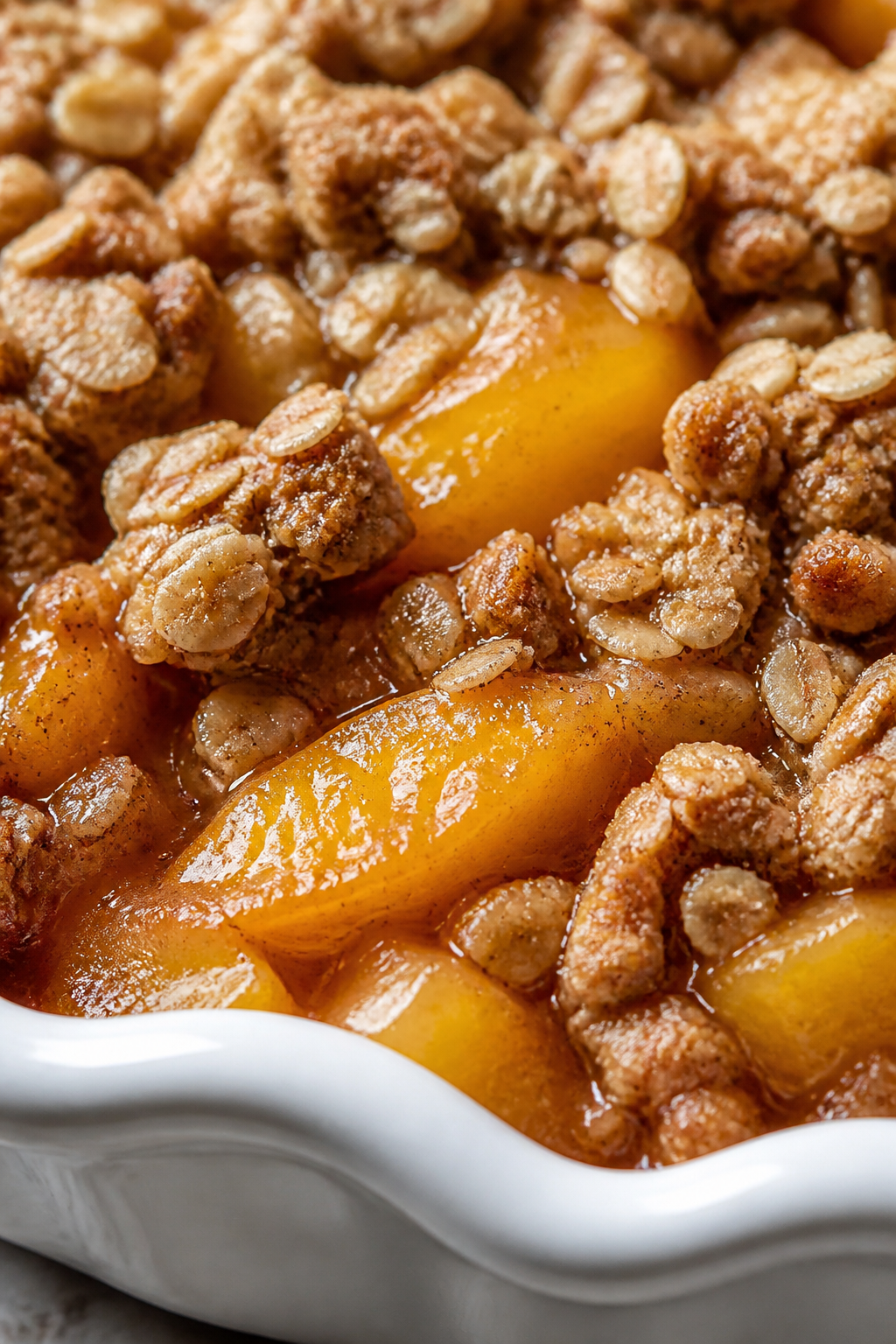
Sprinkle the oat topping evenly over the peaches, pressing gently in some areas to help it adhere. If you like, scatter chopped pecans on top for extra crunch and a nutty flavor. The topping should fully cover the fruit but not be packed too tightly; this allows steam to escape and the crust to crisp.
⏱ Time: 5 minutes
✓ Doneness: Oat topping looks evenly spread, crumbly, with nuts visible if added.
Step 6
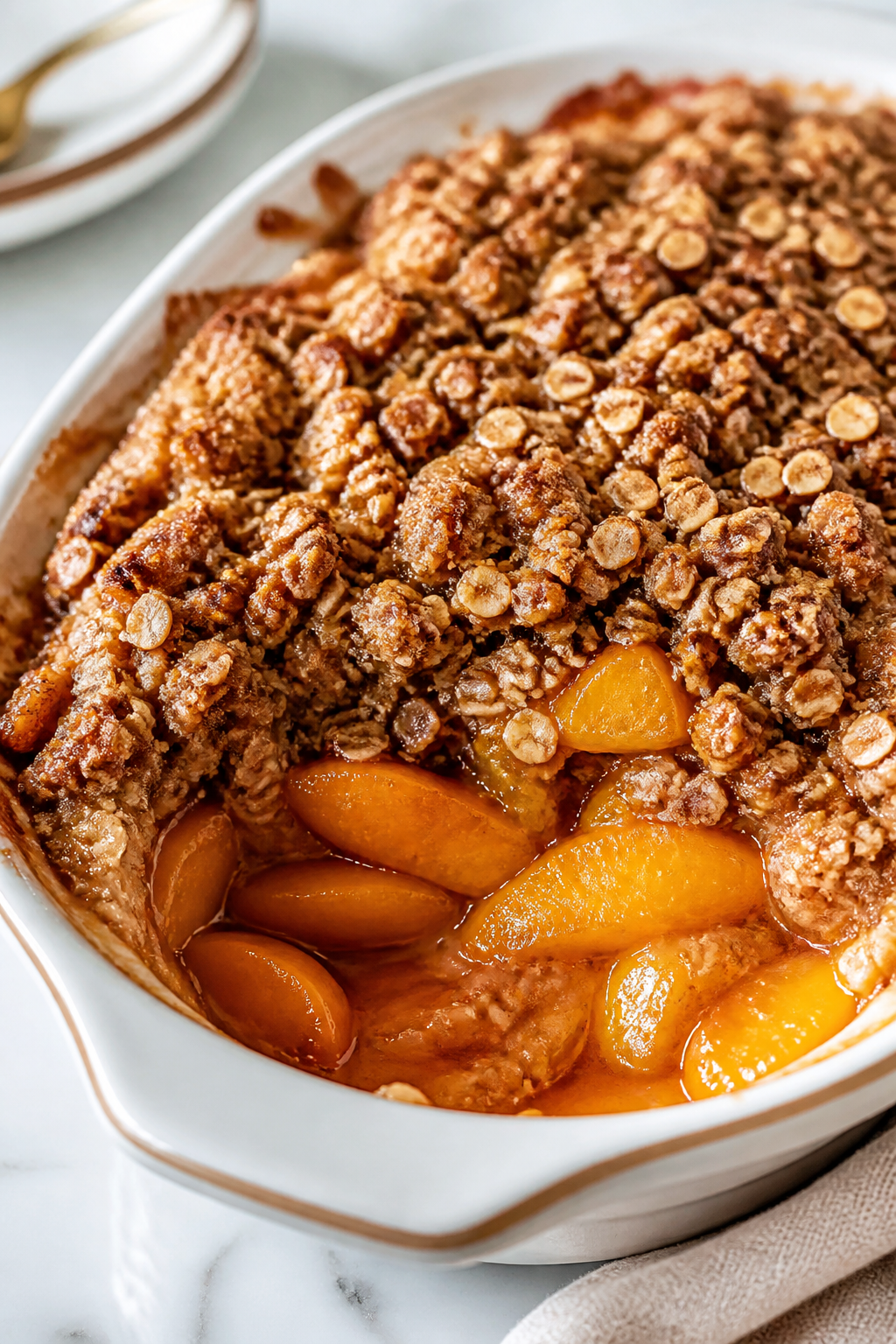
Bake the cobbler in the preheated oven for about 30 minutes. The goal is to get the topping golden brown and crunchy while the peaches bubble gently underneath. Avoid opening the oven door frequently as this can lower the temperature and affect browning.
⏱ Time: 30 minutes
✓ Doneness: Topping is golden brown with bubbling peach juices visible around edges.
Step 7
Once baked, remove the cobbler and let it cool for at least 10 minutes before serving. This resting time allows the juices to thicken slightly and the topping to set, so it doesn’t crumble apart when you scoop it.
⏱ Time: 10 minutes
✓ Doneness: Cobbler feels warm but not hot, topping is crisp and holds shape.
Step 8
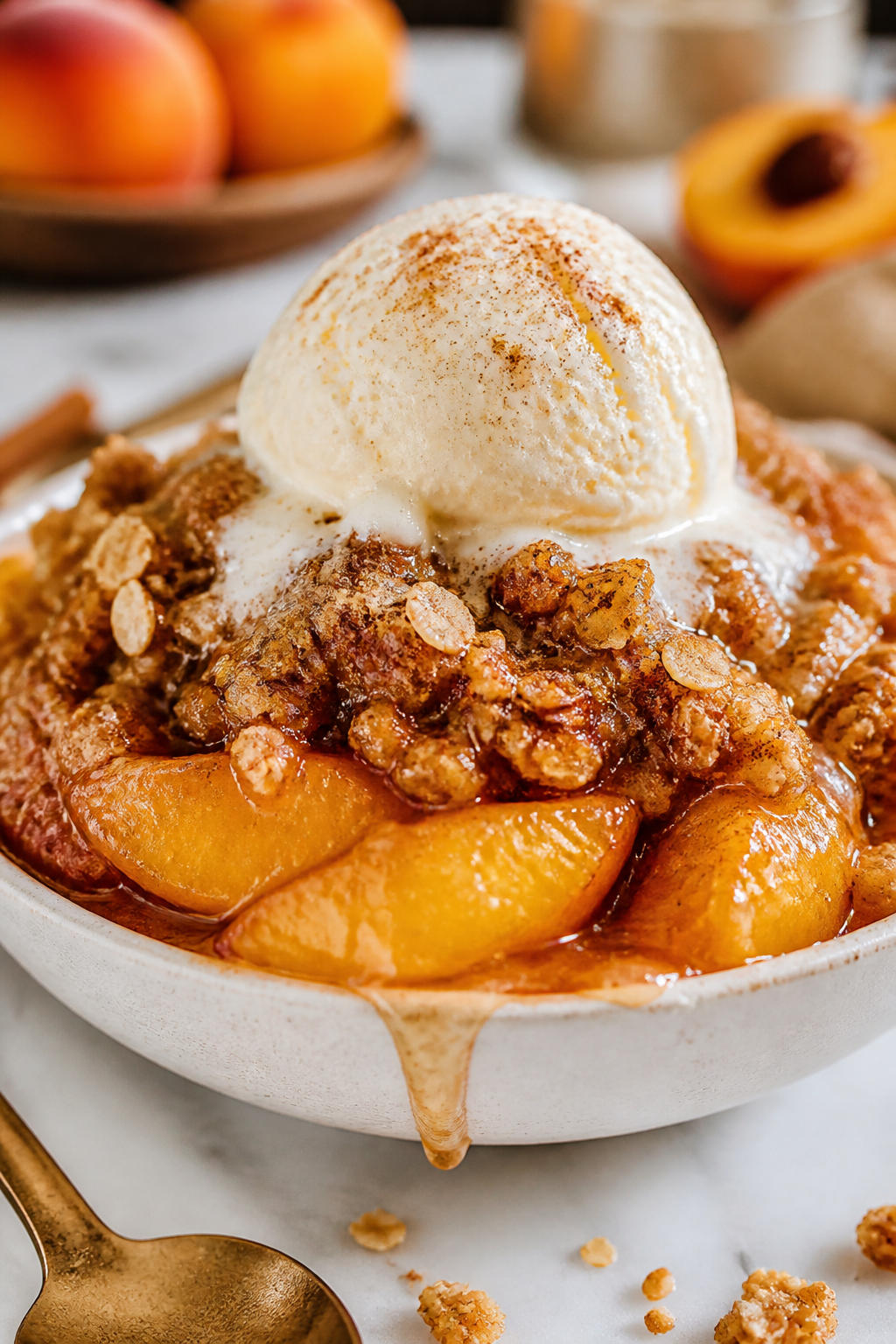
Serve the cobbler warm, ideally with a scoop of vanilla ice cream or a dollop of whipped cream. The contrast between the warm, spiced fruit and the cold cream is what makes this dessert truly irresistible.
⏱ Time: Immediate
✓ Doneness: Ice cream or cream slightly melting on warm cobbler.
Step 9
Store any leftovers in an airtight container in the fridge. When reheating, warm gently to preserve the crunchy topping by using a low oven setting rather than a microwave, which can make it soggy.
⏱ Time: N/A
✓ Doneness: Cobbler warmed through with topping still crisp.
Variations
Gluten-Free Peach Cobbler
Swap the all-purpose flour with a gluten-free flour blend and ensure your oats are certified gluten-free. This variation keeps the same crunchy texture and warm cinnamon spice but is safe for gluten-sensitive eaters.
Note: Gluten-free flours absorb liquids differently, so watch the topping moisture and adjust butter slightly if needed.
Vegan Peach Cobbler
Replace butter with melted coconut oil or vegan butter substitute. Use maple syrup instead of brown sugar for a natural sweetness. The texture remains crunchy with a subtle coconut aroma that complements the peaches.
Note: Coconut oil solidifies when cold, so serve the cobbler warm for best texture.
Spiced Peach and Blueberry Cobbler
Add 1 cup fresh blueberries to the peaches for a colorful, tangy twist. Increase cinnamon slightly and add a pinch of nutmeg for extra warmth. This combo adds complexity and a burst of flavor.
Note: Blueberries release more juice, so monitor baking time to avoid sogginess.
Peach Cobbler with Almond Crust
Incorporate 1/4 cup finely ground almonds into the oat topping for a nutty flavor and extra crunch. Almonds add richness and a subtle floral note that pairs beautifully with peaches.
Note: Ground almonds can brown faster; keep an eye on crust color during baking.
Low-Sugar Peach Cobbler
Reduce granulated and brown sugar by half and add a splash of vanilla extract to enhance natural sweetness. This version is lighter on sugar but still flavorful and satisfying.
Note: Less sugar means less caramelization, so the crust may be paler and less crisp.
Pro Tips
Macerate the peaches for at least 15 minutes before baking.
This step draws out the juices, softens the fruit, and infuses it with sugar and lemon, creating a natural syrup that keeps the filling moist and flavorful during baking.
Use old-fashioned rolled oats for the topping instead of quick oats.
Rolled oats maintain their shape and provide the desired crunchy texture in the crust. Quick oats tend to become mushy and won’t give that satisfying crunch.
Melt the butter before mixing it into the oat topping.
Melted butter coats the dry ingredients evenly, ensuring a uniform crisp crust. Using cold or softened butter can cause uneven clumps and less crispness.
Let the cobbler rest for 10 minutes after baking before serving.
This allows the peach juices to thicken and the topping to set, which makes serving easier and improves the textural contrast between juicy fruit and crunchy crust.
Add a sprinkle of chopped pecans on top for extra crunch.
Pecans add a nutty flavor and additional texture, enhancing the overall experience without overpowering the delicate peach and cinnamon flavors.
Avoid opening the oven door frequently while baking.
Maintaining a steady oven temperature is crucial for even baking and proper browning of the crust. Opening the door causes heat loss and can lead to uneven cooking.
Use fresh ground cinnamon for the oat topping.
Fresh spices have more potent flavor and aroma, which elevates the entire dessert. Pre-ground or old cinnamon can taste flat and less vibrant.
Common Mistakes to Avoid
Skipping the maceration step for the peaches
Why it happens Many cooks rush to bake without letting the fruit sit, assuming it will be juicy enough on its own.
Fix Take the time to toss the peaches with sugar and lemon juice and let them rest at least 15 minutes. This creates a natural syrup and prevents the fruit from drying out during baking.
Using quick oats instead of rolled oats
Why it happens Quick oats are often more convenient and mistakenly thought to be interchangeable.
Fix Always choose rolled oats for a crunchy topping. Quick oats will become mushy and ruin the texture.
Adding cold butter directly to the oat mixture
Why it happens Some believe softened butter works best for mixing, but cold butter can clump.
Fix Melt the butter first so it coats the oats evenly, ensuring a crisp, golden crust after baking.
Not letting the cobbler rest before serving
Why it happens Impatience to serve can lead to a runny filling and crumbly topping.
Fix Allow the cobbler to cool for 10 minutes so the juices thicken and the topping sets, improving texture and ease of serving.
Overbaking the cobbler at too high a temperature
Why it happens Trying to speed up baking can cause burning or drying out.
Fix Bake at a moderate temperature (350°F) to ensure the peaches soften and the crust crisps evenly without burning.
Nutrition
Per Serving:
Nutritional values are estimates and may vary based on specific ingredients used.
Storage & Tips
Room Temperature
You can keep the peach cobbler at room temperature for up to 2 hours covered loosely with foil or a clean cloth. Beyond this, refrigeration is recommended to prevent spoilage.
Refrigerator
Store leftovers in an airtight container for up to 4 days. The crust may soften when chilled but can be crisped again by reheating in the oven. Serving cold is also pleasant if you prefer a chilled dessert.
Freezer
Freeze the cobbler in a freezer-safe container for up to 2 months. Wrap tightly to prevent freezer burn. Thaw overnight in the fridge before reheating to restore texture and flavor.
Reheating
Reheat in a 325°F oven for 15-20 minutes until warmed through and the topping regains some crispness. Avoid microwaving, which can make the crust soggy. Adding a splash of fruit juice before reheating can refresh the filling.
Make Ahead
You can prepare the peach mixture and oat topping separately up to 1 day ahead and store them in the fridge. Assemble and bake the cobbler the day of serving for the freshest texture and flavor.
FAQ
Can I use canned peaches instead of fresh?
Yes, but drain canned peaches well to avoid excess liquid that can make the cobbler soggy. You might also reduce the sugar in the recipe since canned peaches are often sweetened.
What if I don’t have rolled oats?
You can substitute with quick oats, but the topping will be less crunchy and more crumbly. For best texture, I recommend using rolled oats whenever possible.
How do I make this cobbler vegan?
Replace butter with melted coconut oil or a vegan butter substitute. Use maple syrup or coconut sugar in place of brown sugar if desired. The texture and flavor will remain delicious with these swaps.
Can I prepare this cobbler ahead of time?
Absolutely! Prepare the peach filling and oat topping separately and keep them refrigerated. Assemble and bake just before serving for best results.
Why is my topping soggy instead of crunchy?
This usually happens if the peaches weren’t macerated properly or if the oat topping was packed too tightly. Make sure to let peaches release juices and keep the topping loose for steam to escape.
Can I add other fruits?
Yes! Blueberries, raspberries, or blackberries complement peaches well. Just be mindful that berries release more juice, which can affect the crust’s crispness.
Is it better to peel the peaches?
Peeling is recommended for a smoother texture and to avoid chewy skin in the dessert, but if you like a rustic feel, you can leave the skin on after washing well.
How do I store leftovers?
Store in an airtight container in the fridge for up to 4 days. Reheat in the oven to regain crispness or enjoy cold if preferred.
Final Thoughts
Give this light peach cobbler a try and enjoy a fresh, crunchy twist on a southern favorite. I’d love to hear how yours turns out—don’t forget to share your pics!