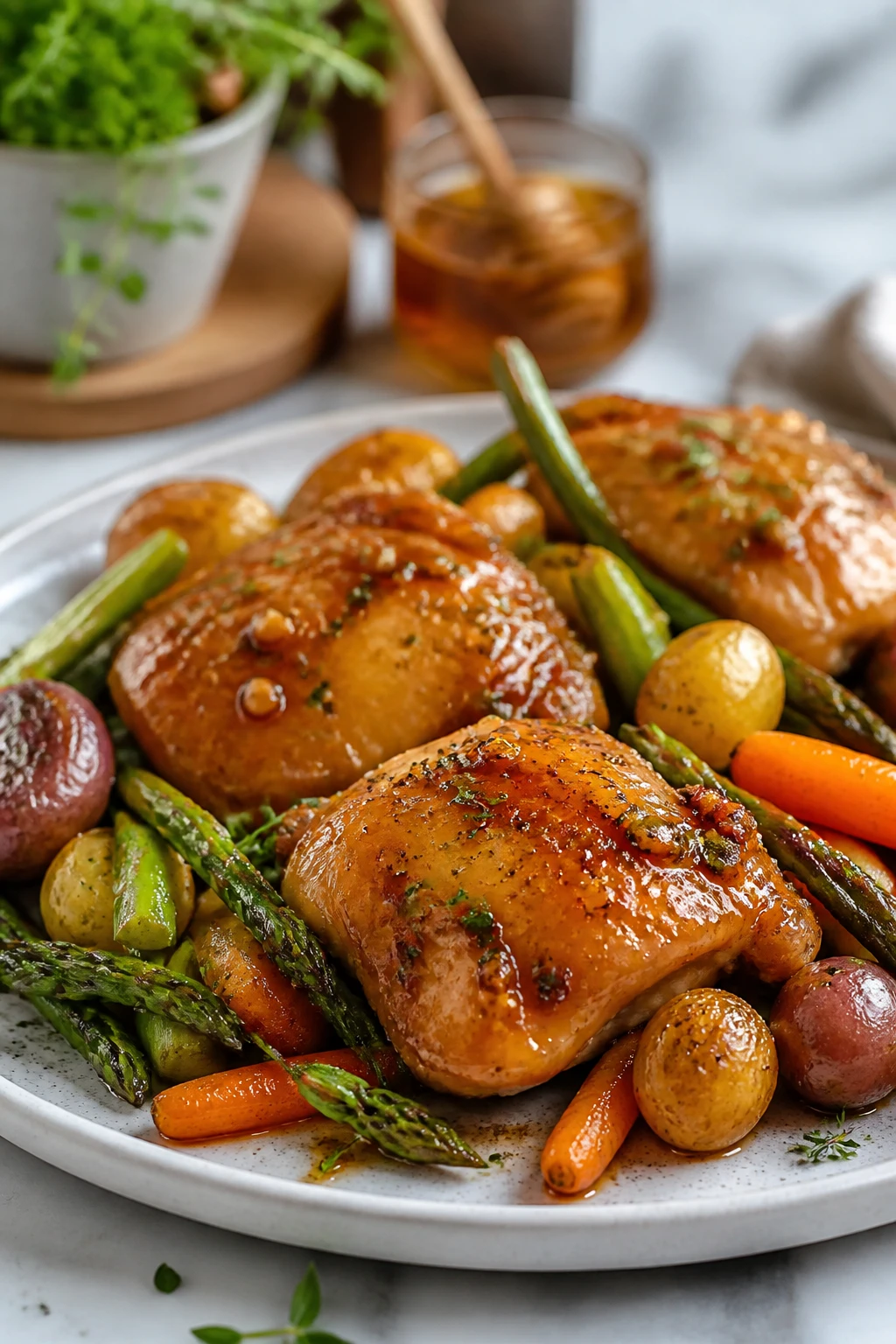
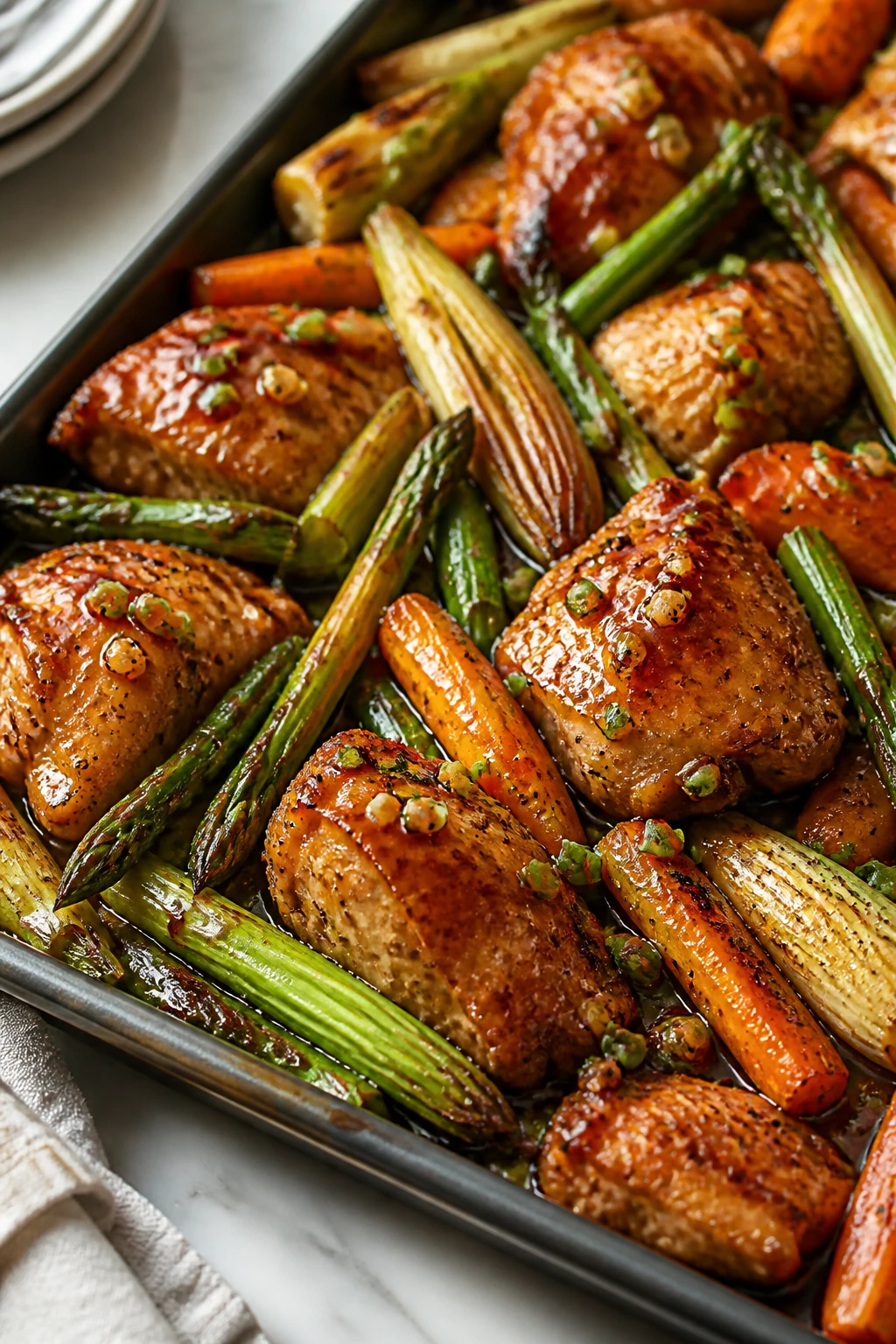
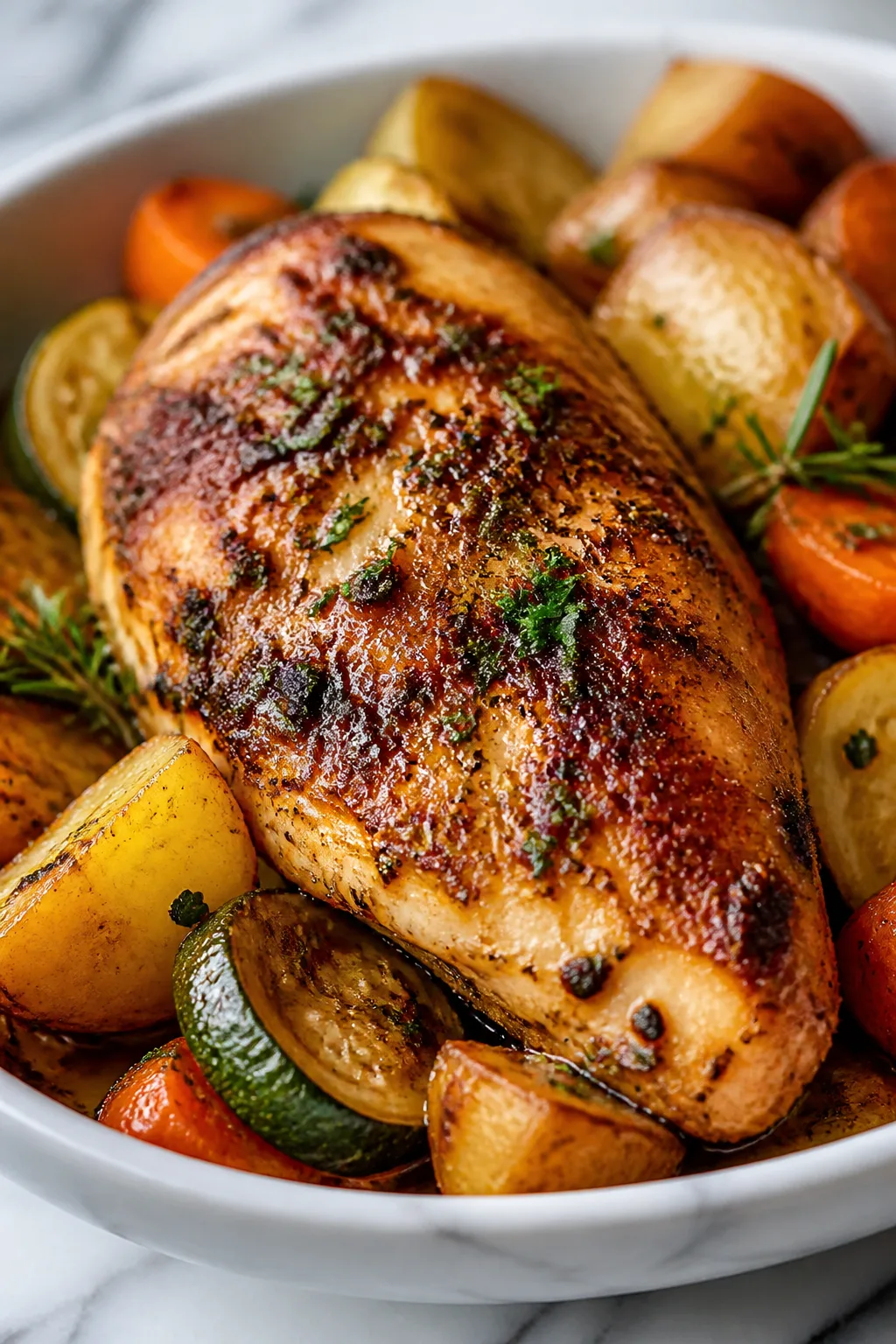
Juicy chicken thighs glazed in a sweet honey garlic sauce paired with crisp roasted spring veggies. It’s a simple sheet pan dinner that’s ready in under an hour — perfect for busy weeknights or casual meals.
Introduction
I first stumbled upon this honey garlic chicken recipe on a hectic weeknight when I needed something quick but still satisfying. What I love about this version is how the honey balances out the garlic perfectly—without being overpowering—and it creates this beautiful glaze that keeps the chicken juicy and tender. Plus, roasting the veggies right alongside the chicken makes cleanup a breeze, which is a total win after a long day. I used bone-in, skin-on thighs because they stay moist and develop a crispy skin that’s just irresistible. The trick I learned is to toss the veggies with a bit of olive oil and thyme before roasting, so they come out crisp and aromatic. The finished dish looks inviting with caramelized edges on the chicken and bright, tender veggies. It’s one of those meals that feels like you put in way more effort than you actually did, and my family always asks for seconds!
How To Do It
Step 1
Preheat your oven to 425°F (220°C). This high temperature helps the chicken skin crisp up nicely while roasting the vegetables perfectly. Make sure your oven is fully preheated before you start cooking, so everything cooks evenly. If you rush this step, the chicken skin might not get that golden crispiness we all love.
⏱ Time: 10
✓ Doneness: Oven reaches a steady 425°F, chicken skin starts to crisp and brown during cooking
Step 2
In a small bowl, whisk together honey, minced garlic, soy sauce, olive oil, and apple cider vinegar. This mixture forms the glaze that’ll coat the chicken and veggies. The vinegar adds a subtle tang that balances the sweetness of the honey, while soy sauce brings in umami depth. If you skip the vinegar, the glaze may taste too sweet and one-dimensional.
⏱ Time: 5
✓ Doneness: Glaze is smooth, well combined, and aromatic with garlic and soy
Step 3
Pat the chicken thighs dry with paper towels—this step is crucial for crispy skin. Place them skin-side up on a large rimmed baking sheet. Season both sides generously with salt and pepper. Dry skin means less steam, so the skin crisps instead of becoming soggy. Don’t skip this or you’ll miss out on that perfect crunch.
⏱ Time: 5
✓ Doneness: Chicken skin feels dry to the touch before roasting
Step 4
Toss the asparagus, baby carrots, and snap peas with a drizzle of olive oil, dried thyme, and a pinch of salt and pepper. Spread the veggies around the chicken on the sheet pan. Coating the veggies in oil helps them roast evenly and develop those delicious caramelized edges. Avoid overcrowding the pan; it’ll steam instead of roast.
⏱ Time: 5
✓ Doneness: Veggies are evenly coated and spread in a single layer around chicken
Step 5
Brush half of the honey garlic glaze over the chicken thighs and drizzle some over the veggies. This initial glaze will start to caramelize during roasting and infuse flavor. Don’t add all the glaze now, or it might burn in the oven. Adding some halfway through cooking keeps the flavor bright and fresh.
⏱ Time: 5
✓ Doneness: Chicken and veggies have a thin, even coat of glaze
Step 6
Place the sheet pan in the preheated oven and roast for 15 minutes. This initial roasting cooks the chicken through and softens the veggies. Avoid opening the oven door repeatedly, or you’ll lose heat and slow down cooking. Use this time to prep any sides or clean up.
⏱ Time: 15
✓ Doneness: Chicken juices start to run clear when pierced; veggies begin to soften
Step 7
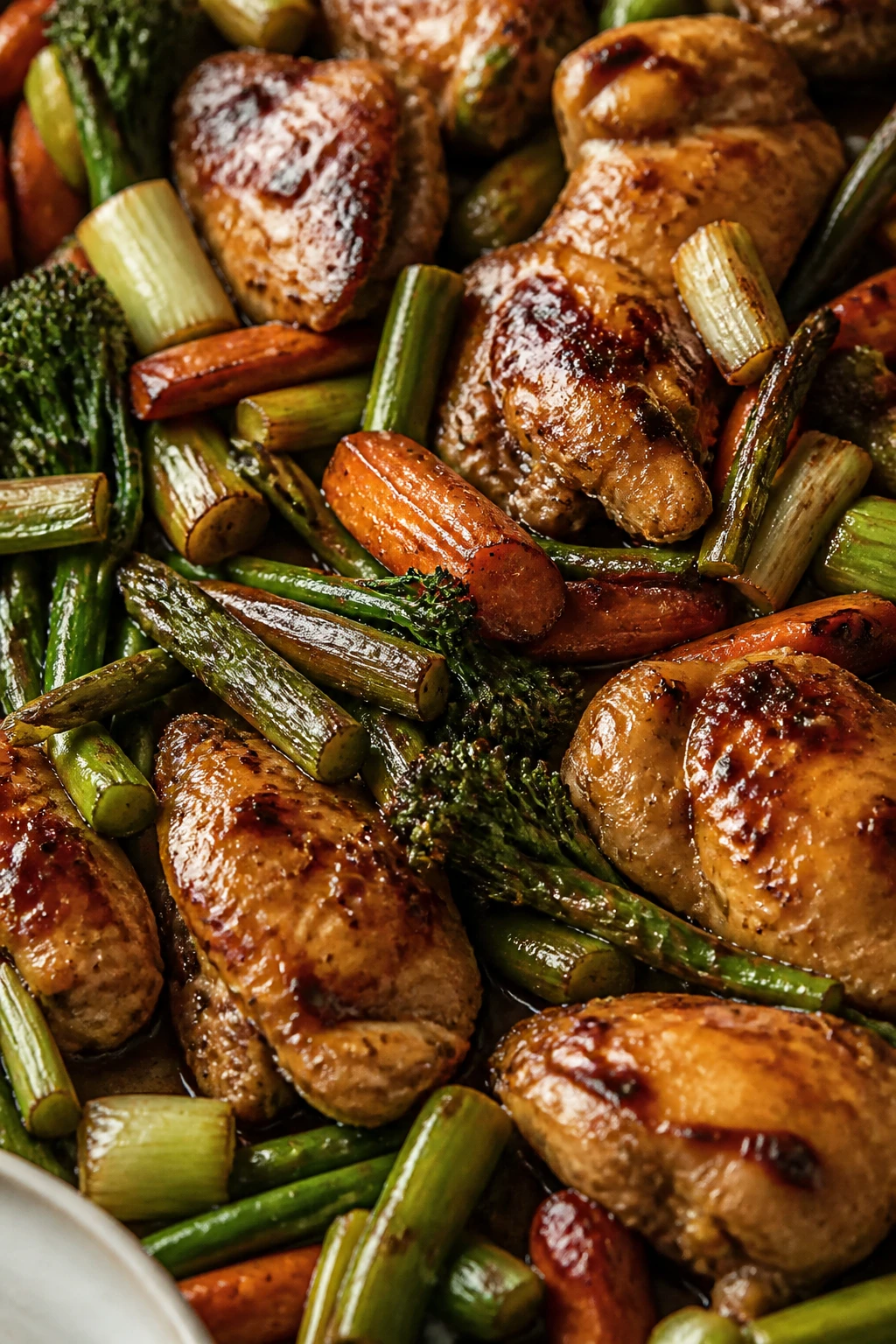
Remove the pan from the oven, brush the remaining glaze on the chicken and veggies, then return to the oven for another 10-15 minutes. This second glaze layer caramelizes to a shiny, sticky finish that locks in moisture and flavor. Keep an eye to avoid burning the honey—if it starts to darken too fast, lower the oven temperature slightly.
⏱ Time: 15
✓ Doneness: Chicken skin is deeply golden and sticky; veggies are tender-crisp
Step 8
Check the chicken’s internal temperature with a meat thermometer; it should read 165°F (74°C) to ensure it’s fully cooked and safe to eat. This step guarantees juicy, perfectly cooked chicken without guesswork. Undercooking risks food safety; overcooking dries it out.
⏱ Time: 5
✓ Doneness: Thermometer reads 165°F in the thickest part of the thigh
Step 9
Let the chicken rest for 5 minutes before serving. Resting allows juices to redistribute, making each bite juicy and tender. If you cut in immediately, the juices will run out and the meat will seem dry. Use this time to plate your veggies and maybe sprinkle fresh herbs on top for a pop of color.
⏱ Time: 5
✓ Doneness: Chicken feels warm and juices settle inside when gently pressed
Variations
Spicy Honey Garlic Chicken
Add a teaspoon of red pepper flakes or a dash of sriracha to the glaze for a spicy kick. This variation adds warmth without overpowering the sweet and garlicky base. The heat complements the honey’s sweetness beautifully.
Note: Adjust the amount of chili to your heat preference and watch closely when glazing the second time to prevent burning the sugars.
Lemon Herb Honey Garlic Chicken
Mix fresh lemon juice and zest into the glaze along with chopped rosemary or thyme. The citrus brightens the dish and adds a fresh herbal note, making it perfect for spring or summer dinners.
Note: Add lemon juice just before roasting to preserve its brightness and avoid bitterness caused by prolonged heat exposure.
Sheet Pan Honey Garlic Salmon
Swap chicken thighs for salmon fillets and roast with the same glaze and veggies. Salmon cooks faster, so reduce roasting time to 12-15 minutes. This variation keeps the sauce but offers a lighter, fish-based meal.
Note: Use a thermometer to check salmon’s internal temperature at 125-130°F for medium doneness.
Honey Garlic Tofu and Veggie Roast
For a vegetarian twist, replace chicken with firm tofu cubes tossed in the honey garlic glaze. Roast alongside the veggies until tofu is golden and slightly crispy. This version is equally flavorful and satisfying.
Note: Press tofu well before marinating to remove excess moisture for better texture.
Garlic Butter Honey Roasted Chicken
Add melted butter to the honey garlic glaze for a richer, more decadent sauce. This gives the chicken an extra layer of flavor and a silky finish, perfect for special occasions.
Note: Brush butter glaze during the last 10 minutes of roasting to avoid burning the butter.
Pro Tips
Pat chicken skin completely dry before roasting.
Dry skin reduces moisture on the surface, which means less steam and more crispiness. Moisture traps heat and prevents browning, so skipping this step results in soggy skin instead of the desired golden crunch.
Use a meat thermometer to check doneness.
Chicken thighs can be tricky to judge by sight alone. A thermometer ensures the meat reaches a safe 165°F without overcooking, preserving juiciness and preventing dryness.
Don’t overcrowd the sheet pan.
Crowding traps moisture and causes veggies and chicken to steam instead of roast. Spreading ingredients out allows hot air to circulate, resulting in caramelized, flavorful edges.
Add the glaze in two stages.
Applying glaze halfway through roasting prevents the sugars from burning while layering flavor. This technique gives a sticky, shiny finish without bitterness.
Let chicken rest after cooking.
Resting allows juices to redistribute through the meat, making it tender and juicy. Cutting too soon causes loss of moisture and a drier texture.
Use fresh garlic for the glaze.
Fresh garlic provides a bright, robust flavor and aroma that pre-minced or powdered garlic can’t match. It also helps create a richer Maillard reaction during roasting.
Preheat the oven fully before roasting.
Starting with a hot oven ensures immediate caramelization and crisping. If the oven is not hot enough, cooking times extend and the texture suffers.
Common Mistakes to Avoid
Skipping drying the chicken skin
Why it happens Many cooks assume seasoning is enough and overlook patting dry, thinking it won’t affect texture much.
Fix Always use paper towels to dry the skin thoroughly before seasoning. This step removes surface moisture that prevents crisping, ensuring a golden, crunchy skin.
Adding all glaze at once
Why it happens Impatience or simplifying steps leads to glazing only once, usually at the start.
Fix Apply half the glaze before roasting and the rest midway. This prevents sugar burn and builds a sticky, layered flavor.
Overcrowding the pan
Why it happens Trying to cook everything at once without enough space.
Fix Use a large enough sheet pan or roast in batches. Leaving space lets heat circulate and caramelizes ingredients properly.
Skipping the resting period
Why it happens Eagerness to eat leads to cutting chicken right after cooking.
Fix Let chicken rest 5 minutes on a plate tented with foil to retain heat and redistribute juices, ensuring moist meat.
Not checking internal temperature
Why it happens Relying on visual cues alone.
Fix Use a meat thermometer to confirm chicken reaches 165°F, ensuring safety and perfect texture.
Nutrition
Per Serving:
Nutritional values are estimates and may vary based on specific ingredients used.
Storage & Tips
Room Temperature
This dish can be safely kept at room temperature for up to 2 hours if covered loosely to avoid drying out. Beyond that, bacteria growth increases, so refrigerate promptly.
Refrigerator
Store leftovers in an airtight container for up to 3 days. The chicken skin may lose some crispness, but reheating in the oven or air fryer restores it well. Veggies might soften but still taste great cold or reheated.
Freezer
Freeze cooked chicken and veggies in airtight containers or heavy-duty freezer bags for up to 2 months. Wrap tightly to prevent freezer burn. Thaw overnight in the fridge before reheating to maintain texture.
Reheating
Reheat in a preheated 350°F oven for 10-15 minutes, adding a splash of water or broth to prevent drying. Avoid microwaving as it can make the chicken rubbery and veggies soggy.
Make Ahead
Prepare the honey garlic glaze and chop veggies 1-2 days in advance and store separately. You can also season the chicken ahead but keep it refrigerated. Assemble and roast fresh on the day for best results.
FAQ
Can I use boneless chicken thighs instead of bone-in?
Yes, boneless thighs work but cook faster and can dry out if overcooked. Reduce roasting time by about 5-10 minutes and check internal temperature earlier to keep them juicy.
What if I don’t have soy sauce? What can I substitute?
You can use tamari for a gluten-free option or coconut aminos for a milder flavor. Avoid using salty sauces like Worcestershire as they can alter the flavor profile significantly.
How do I make the chicken skin extra crispy?
Pat the skin dry before seasoning and roast in a hot oven without covering. Avoid overcrowding the pan to ensure dry heat circulates. Also, resist the urge to baste skin with extra glaze early on, as moisture prevents crisping.
Can I prepare this meal entirely ahead of time?
You can marinate the chicken and prep veggies a day ahead but for best texture, roast fresh. Fully cooked leftovers reheat well but won’t have the same crisp skin.
What are good side dishes to serve with this chicken?
Simple sides like steamed rice, quinoa, or a fresh green salad complement this meal well. The roasted veggies provide plenty of texture and flavor, so keep sides light.
How do I avoid burning the honey in the glaze?
Apply the glaze in two stages, adding the second half partway through roasting. Also, monitor the oven closely during the last 10 minutes and reduce temperature slightly if you notice darkening.
Can I use frozen vegetables instead of fresh?
Fresh veggies roast better and caramelize nicely. Frozen veggies release more moisture and tend to steam rather than roast, resulting in softer textures. If using frozen, pat dry and roast at a slightly higher temperature.
Is this recipe gluten-free?
It can be if you use gluten-free soy sauce or tamari. Regular soy sauce contains wheat, so be sure to choose the right type if you need to avoid gluten.
Final Thoughts
I hope you give this honey garlic chicken a try soon—it’s one of those easy, comforting meals that always impress. Let me know how it turns out and if you add your own twist!