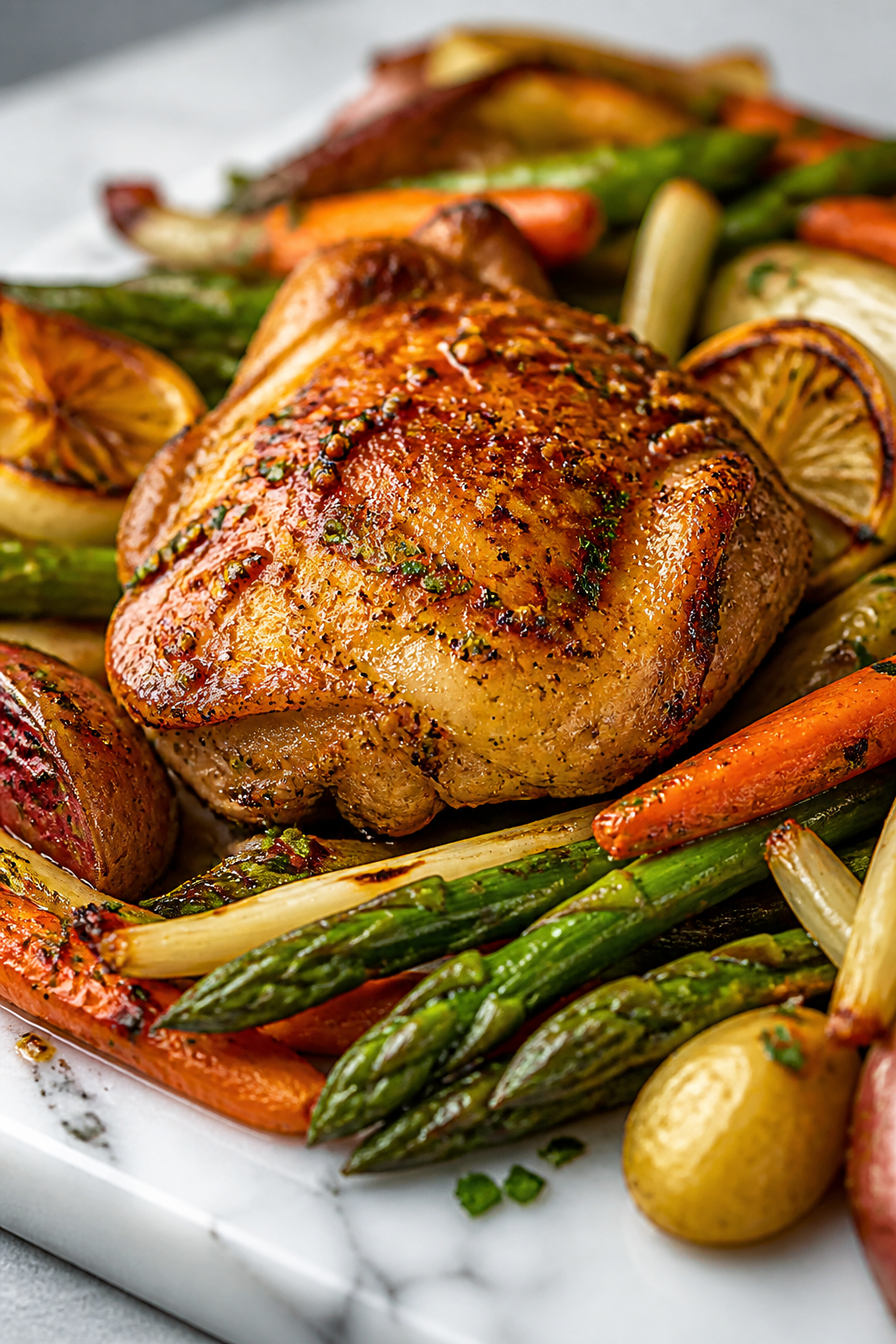
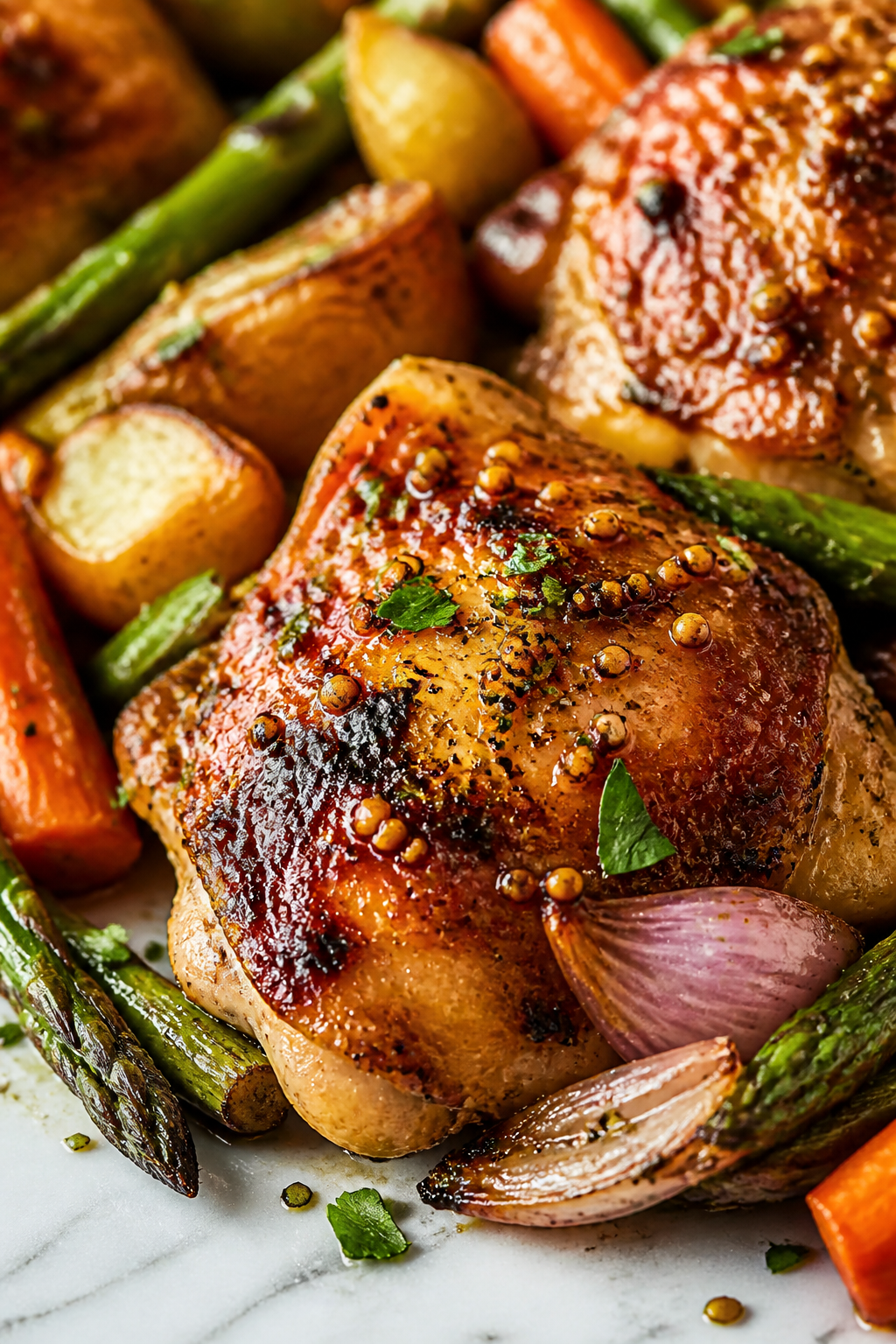
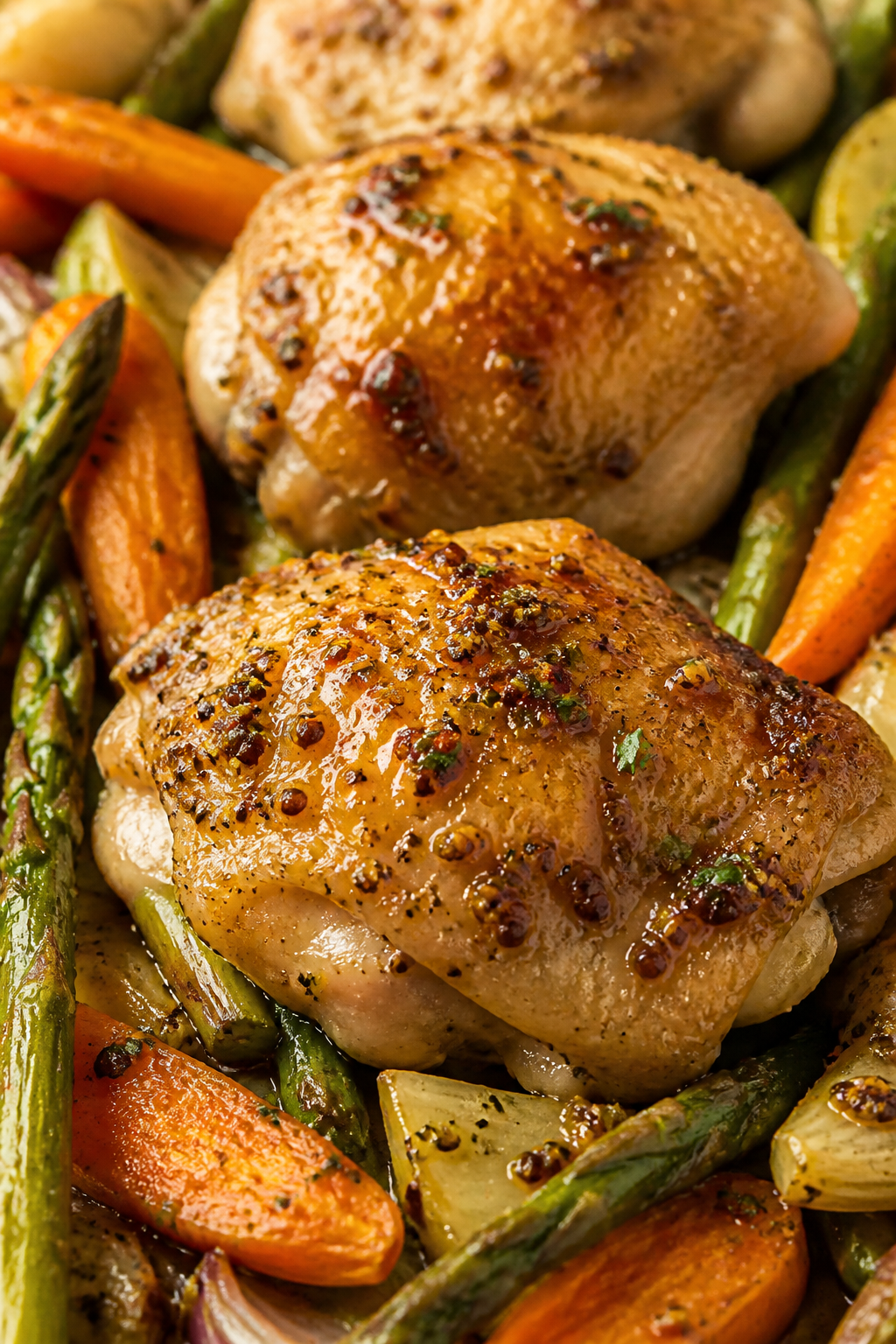
This one-pan chicken dinner is a lifesaver on busy nights. Juicy thighs baked with a honey mustard glaze and fresh spring veggies come together effortlessly. Perfect for sharing any day of the week!
Introduction
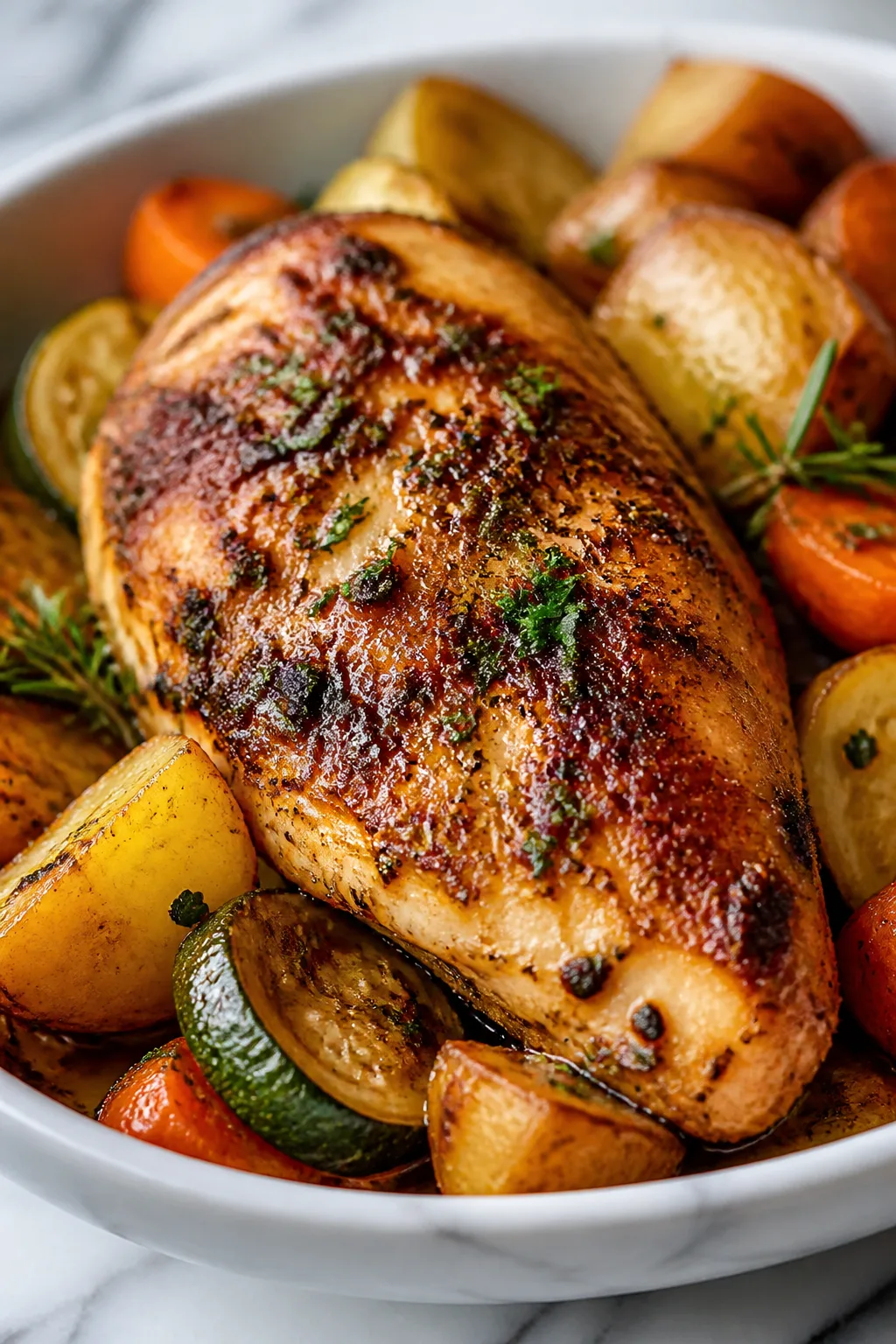
I first made this honey mustard chicken dish on a hectic weeknight when I wanted something flavorful but fuss-free. What I love about this recipe is how it balances sweet and tangy flavors in a sticky glaze that clings perfectly to the chicken’s crispy skin. Roasting everything together on one pan means minimal cleanup and the veggies soak up some of that delicious sauce, making every bite satisfying. One trick I learned is to pat the chicken dry before seasoning — this helps the skin crisp up beautifully instead of steaming in the oven. Plus, tossing the veggies halfway through cooking ensures they roast evenly without getting mushy. When it’s done, you get juicy, tender chicken with a golden glaze and vibrant, caramelized spring veggies. It’s a simple recipe that’s become a go-to for casual dinners, especially when I want something comforting yet fresh. I think you’ll really appreciate how easy it is to pull together, and how the flavors feel both homey and a little special.
How To Do It
Step 1
Preheat your oven to 425°F (220°C). While it heats, pat the chicken thighs dry with paper towels—this is key for getting crispy skin instead of soggy. Season both sides generously with salt and pepper. Dry skin allows the heat to create a golden, crunchy exterior by promoting the Maillard reaction, which develops flavor and texture. Skipping this can lead to less appetizing, rubbery skin.
⏱ Time: 10
✓ Doneness: Chicken skin looks dry and matte before cooking; after roasting it will be golden brown and crisp to the touch.
Step 2
In a small bowl, whisk together Dijon mustard, honey, apple cider vinegar, minced garlic, and olive oil until smooth. This glaze combines acidity from the vinegar with sweetness from honey and sharpness from mustard, balancing flavors and helping caramelize the chicken skin during roasting. Make sure the honey is fully incorporated to avoid clumps.
⏱ Time: 5
✓ Doneness: The glaze should be smooth, slightly runny, and glossy.
Step 3
Arrange the seasoned chicken thighs skin-side up on a large rimmed baking sheet or roasting pan. Spread the baby carrots, asparagus, and red onion wedges evenly around the chicken. Spacing the chicken and veggies out avoids steaming and encourages roasting, which keeps the veggies tender but with a slight caramelized edge.
⏱ Time: 5
✓ Doneness: Ingredients should be evenly spaced in a single layer with no overcrowding.
Step 4
Brush the honey mustard glaze generously over the chicken thighs and drizzle some over the veggies. The glaze not only adds flavor but also helps the chicken skin crisp and the veggies brown slightly. Don’t skip brushing the veggies—it adds a subtle sweetness and helps them caramelize.
⏱ Time: 5
✓ Doneness: Chicken skin is coated with an even, shiny layer of glaze.
Step 5
Place the pan in the oven and roast for 20 minutes. The high heat is important because it cooks the chicken quickly while rendering fat and crisping skin. The veggies start softening and browning. Avoid opening the oven door too often, or the heat will drop, affecting crispiness.
⏱ Time: 20
✓ Doneness: Chicken skin is golden brown and veggies start to caramelize.
Step 6
After 20 minutes, remove the pan and use tongs to flip the carrots and asparagus to promote even roasting. The chicken stays skin-side up to keep that crisp finish. Give the veggies a gentle toss to coat them again with any glaze or juices that have pooled on the pan.
⏱ Time: 5
✓ Doneness: Veggies are turning golden on the edges and feel tender but still firm.
Step 7
Return the pan to the oven for another 10-15 minutes until the chicken reaches an internal temperature of 165°F (74°C) and the vegetables are tender. Using a meat thermometer is the best way to ensure perfect doneness without drying out the chicken. Overcooking will result in dry meat and mushy veggies.
⏱ Time: 15
✓ Doneness: Chicken juices run clear when pierced, and veggies are fork-tender with caramelized edges.
Step 8
Remove the pan from the oven and let the chicken rest for 5 minutes before serving. Resting allows the juices to redistribute, keeping the meat moist and tender. If you cut immediately, the juices will run out and the chicken may dry.
⏱ Time: 5
✓ Doneness: Chicken feels firm but springy to touch, and the glaze has set slightly.
Step 9
Garnish with fresh thyme sprigs if you like, then serve everything straight from the pan for a rustic, cozy meal. The fresh herb adds an aromatic brightness that complements the sweet and tangy glaze. Plus, it makes the presentation feel extra special without extra effort.
⏱ Time: 2
✓ Doneness: Herbs are vibrant and fresh-looking, enhancing aroma.
Variations
Spicy Honey Mustard Chicken
Add 1 teaspoon of smoked paprika and a pinch of cayenne pepper to the glaze for a smoky, spicy kick. This variation adds warmth without overpowering the sweet-tangy balance, perfect if you like a little heat.
Note: Be mindful of spice levels; cayenne cooks quickly and can become bitter if overdone.
Lemon Herb Roasted Chicken
Swap apple cider vinegar for fresh lemon juice and add chopped rosemary and thyme to the glaze. This brightens the dish with citrus notes and fresh herbs for a springtime twist.
Note: Lemon juice is more acidic, so glaze may thin out; apply quickly to maintain coating.
Gluten-Free Version
Ensure your Dijon mustard is gluten-free and use coconut aminos instead of vinegar if sensitive. This keeps the recipe safe for gluten intolerances without sacrificing flavor.
Note: Check labels carefully; some mustards contain wheat or gluten additives.
Vegetarian Roasted Veggie Bowl
Omit chicken and roast a medley of hearty vegetables with the honey mustard glaze, adding chickpeas for protein. This makes a wholesome, plant-based meal with the same sweet and tangy flavors.
Note: Roast chickpeas separately to keep them crispy and add at the end.
Sheet Pan Chicken and Potatoes
Add diced baby potatoes to the vegetable mix for a heartier meal. Roast together with the chicken and veggies for a satisfying, all-in-one dinner.
Note: Cut potatoes small and toss with oil to ensure they cook through in the same time.
Pro Tips
Always pat chicken skin dry before seasoning.
Moisture on the skin creates steam during cooking, which prevents crisping. Dry skin allows the Maillard reaction to occur, resulting in that irresistible golden-brown, crispy skin everyone loves.
Use a meat thermometer to check doneness.
Chicken thighs can look done before they reach a safe internal temperature. Using a thermometer ensures juicy, fully cooked meat without guessing or overcooking.
Toss vegetables halfway through roasting.
Flipping the veggies promotes even caramelization and prevents one side from becoming mushy. This enhances texture and flavor, making the dish more balanced.
Don’t skip resting the chicken after roasting.
Resting allows juices to redistribute throughout the meat. Cutting too soon causes the flavorful juices to escape, resulting in dry chicken.
Use a rimmed baking sheet for roasting.
A rimmed sheet prevents glaze and juices from spilling over, keeping your oven clean and the chicken and veggies evenly coated.
Make the glaze fresh before roasting.
Mixing the honey, mustard, and vinegar just before applying keeps the flavors bright and prevents the honey from crystallizing or separating.
Serve immediately after resting for best flavor and texture.
The glaze is at its best when warm and sticky. Waiting too long can cause it to harden or lose its shine.
Common Mistakes to Avoid
Not drying the chicken skin before cooking
Why it happens Many cooks skip this step thinking it’s unnecessary or don’t realize it affects crispiness.
Fix Always use paper towels to thoroughly dry the chicken skin before seasoning. This simple step prevents steaming and allows the skin to crisp up properly in the oven.
Overcrowding the pan
Why it happens Trying to fit everything in a small pan to save time or dishes.
Fix Use a large enough baking sheet so ingredients aren’t touching. This allows hot air to circulate, ensuring even roasting and preventing sogginess.
Skipping the resting step
Why it happens Impatience to serve or not knowing the importance of resting.
Fix Let the chicken rest 5 minutes after cooking. This keeps the meat juicy and tender by allowing juices to redistribute.
Applying glaze only to chicken, not veggies
Why it happens Assuming glaze is just for the chicken.
Fix Brush some glaze on the veggies too. It adds flavor and helps caramelize them, making the dish more cohesive and delicious.
Cooking at too low a temperature
Why it happens Trying to be gentle with the chicken skin or veggies.
Fix Roast at 425°F (220°C) to crisp skin and caramelize veggies. Lower temps cause steaming and less flavor development.
Nutrition
Per Serving:
Nutritional values are estimates and may vary based on specific ingredients used.
Storage & Tips
Room Temperature
This dish can safely sit out covered for up to 2 hours. Beyond that, bacteria growth increases, so refrigerate promptly to keep it safe.
Refrigerator
Store leftovers in an airtight container for up to 3 days. Flavors meld nicely overnight, but the chicken skin may lose crispness. Reheat gently to avoid drying out.
Freezer
Freeze cooked chicken and veggies separately in airtight containers or freezer bags for up to 2 months. Wrap well to prevent freezer burn. Thaw overnight in the fridge before reheating.
Reheating
Reheat in a 350°F oven for 15-20 minutes covered with foil to retain moisture. Add a splash of water or broth if the veggies seem dry. Avoid microwaving as it can make skin soggy.
Make Ahead
You can prepare the glaze and chop veggies 1 day ahead. Keep chicken seasoned but unglazed until ready to bake. Assemble and roast on the day for freshest results.
FAQ
Can I use boneless chicken thighs instead of bone-in?
Yes, boneless thighs work but cook faster, usually around 20-25 minutes. They might not be as juicy or flavorful since bones add moisture and depth, so watch them closely to avoid overcooking.
What if I don't have apple cider vinegar?
You can substitute with white wine vinegar or lemon juice in equal amounts. Both add acidity to balance the honey, but lemon juice will add a citrus note and white vinegar is slightly sharper.
How do I make the chicken skin extra crispy?
Dry the skin thoroughly before seasoning, roast at a high temperature (425°F), and avoid covering the chicken while cooking. Also, don't overcrowd the pan to allow air circulation.
Can I use frozen vegetables?
It's best to use fresh veggies for roasting as frozen ones release water and can become mushy. If you must use frozen, thaw and pat dry thoroughly, then roast separately to avoid sogginess.
Is this recipe suitable for meal prep?
Absolutely! It reheats well and flavors deepen after a day. Store chicken and veggies separately to help retain texture, and reheat gently to avoid drying out.
Can I make this gluten-free?
Yes, just ensure your Dijon mustard is gluten-free and check all labels. The recipe is naturally gluten-free otherwise, making it great for those with sensitivities.
What sides go well with this dish?
This one-pan meal is complete on its own, but you can serve it with a simple green salad, crusty bread, or steamed rice for extra heartiness.
How do I prevent the honey from burning?
Honey can burn if exposed to too high heat for too long. Roasting at 425°F for 30 minutes is fine because the honey is diluted with mustard and oil. Avoid broiling or cooking longer than recommended.
Final Thoughts
I hope you enjoy making and eating this honey mustard chicken as much as my family does! Don’t forget to share how it turns out — I’d love to hear your thoughts.