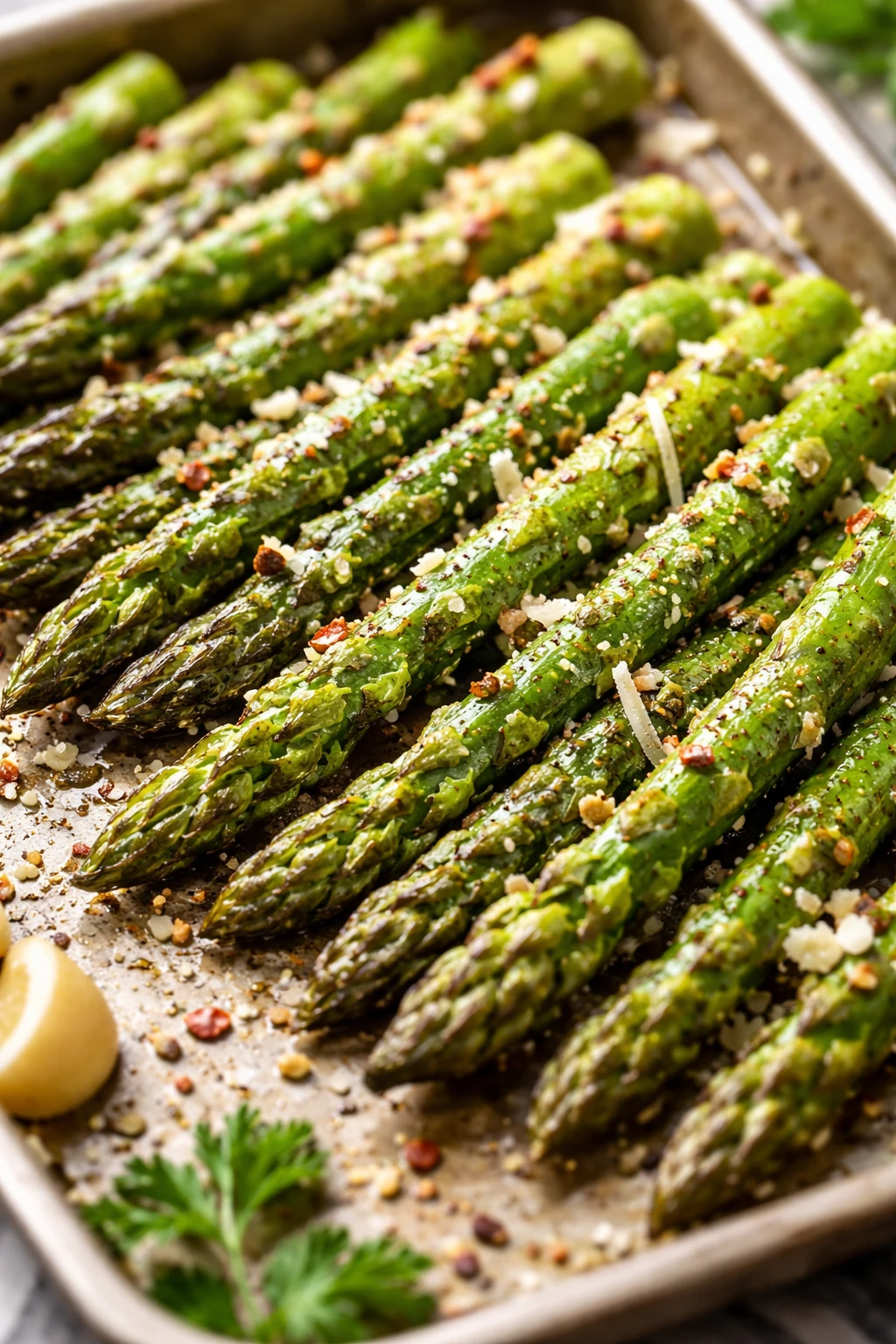
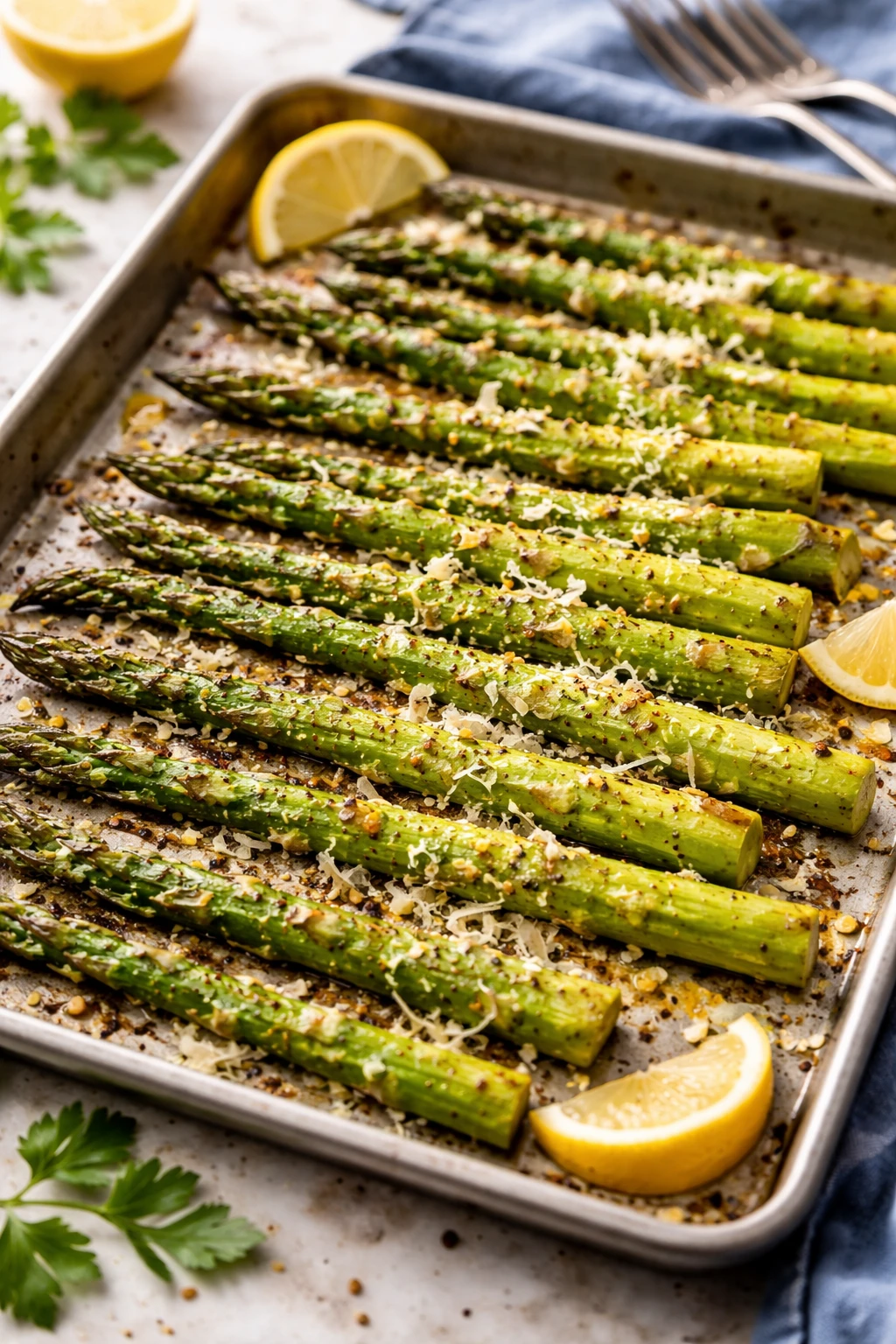
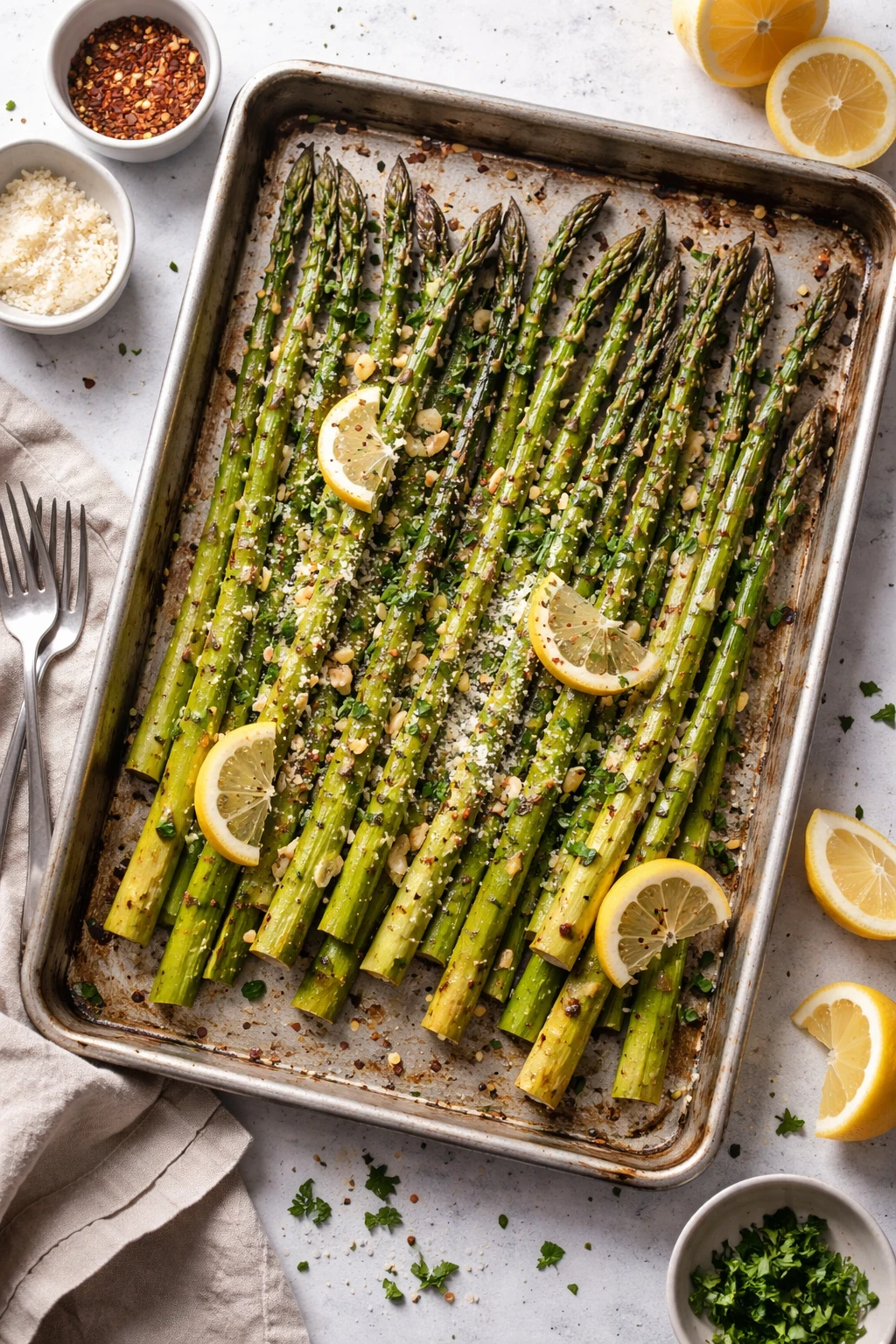
This roasted asparagus recipe is so simple yet bursting with natural sweetness and garlicky goodness. Just olive oil, fresh garlic, and a quick roast bring out the best in this veggie. Great for a healthy side or snack anytime!
Introduction
I first made this roasted asparagus a few years ago when I wanted a quick, healthy side that didn't require much fuss. What I love about this recipe is how roasting brings out the asparagus's natural sweetness, which is so much better than boiling or steaming. The garlic and olive oil combo adds just enough flavor without overpowering the delicate veggie. One trick I learned is not to overcrowd the pan — giving each spear space helps them roast evenly and get that perfect tender-crisp texture. Also, tossing them halfway through cooking really helps with even browning. The finished dish is vibrant green with slightly charred tips, tender but with a nice bite, and so simple you can whip it up on a busy weeknight or serve it alongside your favorite meal with zero stress. Honestly, it’s become a staple in my kitchen because it’s healthy, delicious, and ridiculously easy.
How To Do It
Step 1
Preheat your oven to 425°F (220°C). This higher temperature is key to roasting the asparagus quickly while caramelizing their natural sugars. Line a baking sheet with parchment paper or foil for easy cleanup. Spread the trimmed asparagus out in a single layer on the pan. Avoid crowding them because if they’re too close, they’ll steam instead of roast, losing that crisp-tender texture we want.
⏱ Time: 10 minutes
✓ Doneness: Asparagus should look vibrant green with slightly browned tips and feel tender when pierced with a fork.
Step 2
In a small bowl, whisk together the olive oil, minced garlic, salt, and freshly ground pepper. Drizzle this mixture evenly over the asparagus, then toss gently with your hands or tongs to coat each spear. The olive oil helps conduct heat and the garlic infuses flavor during roasting. Make sure the garlic is minced finely so it doesn’t burn too quickly in the oven.
⏱ Time: 5 minutes
✓ Doneness: The asparagus should be evenly coated, glistening with oil but not dripping.
Step 3
Place the baking sheet in the oven on the middle rack. Roast for about 12-15 minutes, turning the asparagus halfway through with tongs for even cooking and browning. Keep an eye on them after 10 minutes to avoid burning the garlic or tips. The asparagus should be tender when pierced but still have a slight snap.
⏱ Time: 15 minutes
✓ Doneness: Look for golden-brown tips and a bright green color overall.
Step 4
Remove the asparagus from the oven and immediately transfer to a serving dish to prevent further cooking on the hot pan. If you like, squeeze fresh lemon juice over the top for a bright, fresh finish. This adds a nice contrast to the roasted garlic flavor and enhances the natural sweetness.
⏱ Time: 2 minutes
✓ Doneness: Asparagus should be warm, glossy, and lightly fragrant with garlic and lemon.
Step 5
Serve the asparagus warm as a side to grilled meats, roasted chicken, or even tossed into salads. It also works great as a healthy snack or appetizer with a sprinkle of Parmesan or toasted nuts for extra texture and flavor.
⏱ Time: Immediate
✓ Doneness: Asparagus remains tender and flavorful when served right away.
Step 6
If you plan to reheat leftovers, gently warm them in a skillet over medium heat with a splash of olive oil to bring back some crispness without overcooking. Avoid microwaving as it can make the asparagus mushy.
⏱ Time: 5 minutes
✓ Doneness: Reheated asparagus should be warm and slightly crisp, not soggy.
Step 7
For cleaning up, soak your baking sheet immediately if you used foil or parchment. Garlic residue can stick and burn, so a quick soak prevents scrubbing later. This little step saves time and keeps your pans in great shape.
⏱ Time: 5 minutes soak
✓ Doneness: Baking sheet should be easy to wipe clean.
Step 8
To prep in advance, trim and toss the asparagus with oil and garlic, then cover tightly and refrigerate. Roast fresh when ready to eat. This saves time on busy days but keeps the asparagus fresh and flavorful.
⏱ Time: Prep 1-2 days ahead
✓ Doneness: Asparagus should look fresh and evenly coated before roasting.
Step 9
Experiment with adding other seasonings like red pepper flakes, Parmesan, or fresh herbs after roasting. These add layers of flavor and keep this simple dish exciting. Just sprinkle on top before serving for best results.
⏱ Time: Optional garnish time 2 minutes
✓ Doneness: Toppings should complement but not overpower the asparagus.
Variations
Parmesan Roasted Asparagus
Sprinkle freshly grated Parmesan cheese over the asparagus during the last 3 minutes of roasting. This adds a salty, nutty crust and extra richness without overpowering the veggie’s natural flavor.
Note: Add cheese near end to prevent burning and allow it to melt slightly for a perfect finish.
Spicy Red Pepper Flake Asparagus
Add a pinch of red pepper flakes to the garlic and olive oil mix before tossing. This gives the asparagus a gentle kick that pairs well with the sweetness from roasting.
Note: Adjust amount of flakes to your heat preference; toss well to distribute evenly.
Lemon Herb Roasted Asparagus
Toss asparagus with chopped fresh herbs like thyme or rosemary along with the garlic and oil. Finish with fresh lemon zest after roasting for a bright, fragrant twist.
Note: Use sturdy herbs that hold up to roasting without burning; add delicate herbs after cooking.
Balsamic Glazed Asparagus
Drizzle a tablespoon of balsamic vinegar or glaze over the asparagus before roasting for a tangy-sweet flavor. The vinegar caramelizes during roasting adding complexity.
Note: Use a quality balsamic glaze or reduce vinegar slightly before adding to avoid sogginess.
Garlic Butter Roasted Asparagus
Replace olive oil with melted butter mixed with garlic for a richer, indulgent flavor. This variation works great as a side for steak or roasted chicken.
Note: Use clarified butter to avoid burning or add butter after roasting for a fresher taste.
Pro Tips
Don’t overcrowd the baking sheet; give asparagus room to roast evenly.
If the asparagus spears are too close together, they steam instead of roast, resulting in limp texture and less browning. Proper spacing allows hot air to circulate and promotes caramelization for crisp-tender results.
Trim the woody ends of asparagus before cooking.
The bottom part of asparagus stalks can be tough and fibrous, which detracts from the eating experience. Snapping or trimming removes these parts, ensuring tenderness and better flavor.
Turn the asparagus halfway through roasting.
Flipping the spears ensures even cooking and browning on all sides. This prevents uneven texture and helps develop consistent caramelization.
Use finely minced garlic to prevent burning.
Large chunks of garlic can burn quickly in the oven, producing bitterness. Finely minced garlic softens and mellows during roasting, giving a pleasant, aromatic flavor without harshness.
Add lemon juice just before serving.
Lemon’s acidity brightens the dish but can turn bitter if exposed to high heat for too long. Adding it after roasting keeps the flavor fresh and vibrant.
Serve asparagus immediately after roasting for best texture.
Asparagus continues to cook on the hot pan if left too long, which can make it mushy. Serving right away preserves its crisp-tender bite.
Use parchment paper or foil for easy cleanup.
Roasting garlic and oil can leave sticky residue. Lining the pan prevents sticking and saves time scrubbing.
Common Mistakes to Avoid
Overcrowding the pan
Why it happens People often try to fit all asparagus on one pan to save time or effort, assuming it will cook evenly.
Fix Use two pans if needed or roast in batches. Spread asparagus in a single layer with space between spears to ensure even roasting and crisp edges.
Using old or limp asparagus
Why it happens Sometimes asparagus is stored too long or purchased without checking freshness.
Fix Choose firm, bright green stalks with tight tips. Store properly and use within a few days for best texture and flavor.
Not trimming woody ends
Why it happens Some skip trimming to save time or waste less.
Fix Snap or cut off the tough bottom inch before roasting to avoid chewy, unpleasant bites.
Burning the garlic
Why it happens Adding large garlic pieces or cooking too long at high heat can burn it.
Fix Mince garlic finely and toss evenly with oil. Monitor roasting time and stir halfway to prevent burning.
Overcooking until mushy
Why it happens Leaving asparagus in the oven too long or at too high a temperature causes loss of texture.
Fix Roast just until tender-crisp, about 12-15 minutes, checking often after 10 minutes. Remove promptly when done.
Nutrition
Per Serving:
Nutritional values are estimates and may vary based on specific ingredients used.
Storage & Tips
Room Temperature
Roasted asparagus can be left out at room temperature for up to 2 hours covered loosely with foil or a clean kitchen towel. Beyond that, bacteria growth risk increases so refrigerate promptly.
Refrigerator
Store leftovers in an airtight container in the refrigerator for up to 3 days. The asparagus may lose some crispness and become softer when cold but can be reheated gently to restore texture.
Freezer
Freezing roasted asparagus is not recommended as it tends to become mushy and lose flavor after thawing. For best quality, consume fresh or refrigerated leftovers within a few days.
Reheating
Reheat asparagus in a skillet over medium heat with a splash of olive oil for 3-5 minutes, stirring occasionally to warm evenly without overcooking. Avoid microwave reheating which can make it soggy.
Make Ahead
Trim and toss asparagus with garlic and oil 1-2 days ahead, store refrigerated in a sealed container. Roast fresh when ready to eat for best flavor and texture.
FAQ
Can I use frozen asparagus for this recipe?
Frozen asparagus tends to release a lot of water and can become mushy when roasted. If you want to use frozen, thaw and pat dry thoroughly first, then roast at a slightly lower temperature to avoid burning. However, fresh asparagus is recommended for best texture and flavor.
How do I know when asparagus is done roasting?
The asparagus should be vibrant green with slightly browned tips and feel tender but still have a slight snap when pierced with a fork. Overcooked asparagus will be limp and dull in color, so check after 12 minutes to avoid mushiness.
Can I roast asparagus without garlic?
Absolutely! Garlic adds flavor but is not essential. You can simply toss asparagus with olive oil, salt, and pepper. For variety, try adding lemon zest, herbs, or Parmesan instead.
What if my asparagus is very thick?
Thicker stalks take longer to roast. You can either roast longer at the same temperature or slice them lengthwise to speed cooking. Watch carefully to prevent burning the thinner tips.
Can I prepare asparagus ahead of time?
Yes! You can trim and toss with oil and garlic up to 2 days ahead, storing in the fridge covered. Roast fresh just before serving to maintain crispness and flavor.
Is it okay to use other oils besides olive oil?
Olive oil is preferred for flavor and health benefits, but avocado oil or grapeseed oil work well too due to their high smoke points. Avoid butter or oils with low smoke points if roasting at high heat.
How do I prevent garlic from burning in the oven?
Use finely minced garlic and toss it evenly with the olive oil and asparagus. Keep an eye on the roasting time and stir halfway through. Burning usually happens if garlic pieces are too large or exposed without oil coating.
Can I add other seasonings to this recipe?
Definitely! Try red pepper flakes for heat, fresh herbs like thyme or rosemary for aroma, or a sprinkle of Parmesan for richness. Add delicate herbs or acidic ingredients like lemon juice after roasting.
Final Thoughts
I hope you enjoy this simple roasted asparagus as much as I do! It’s such an easy way to elevate a humble veggie, so give it a try and let me know how it turns out.