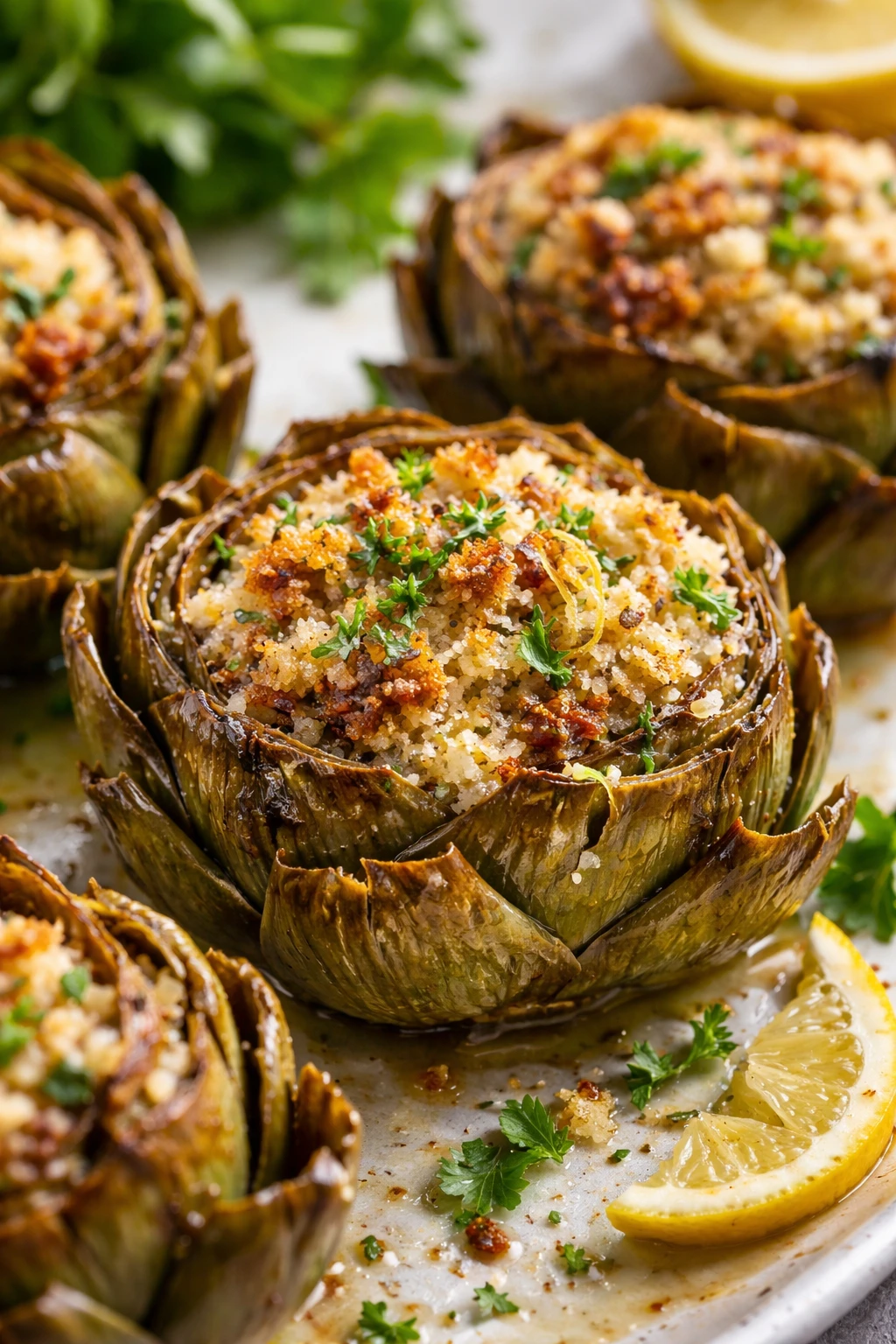
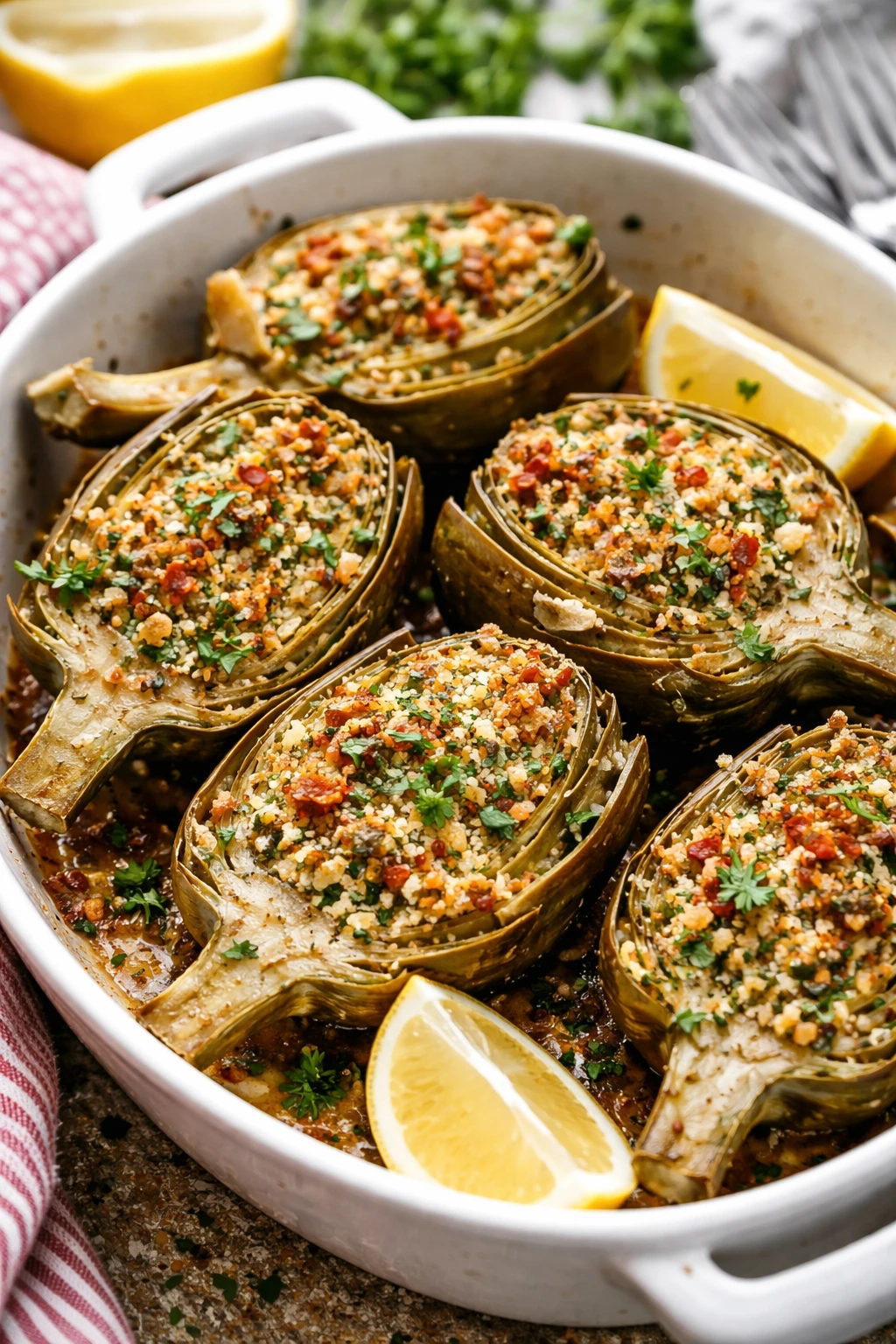
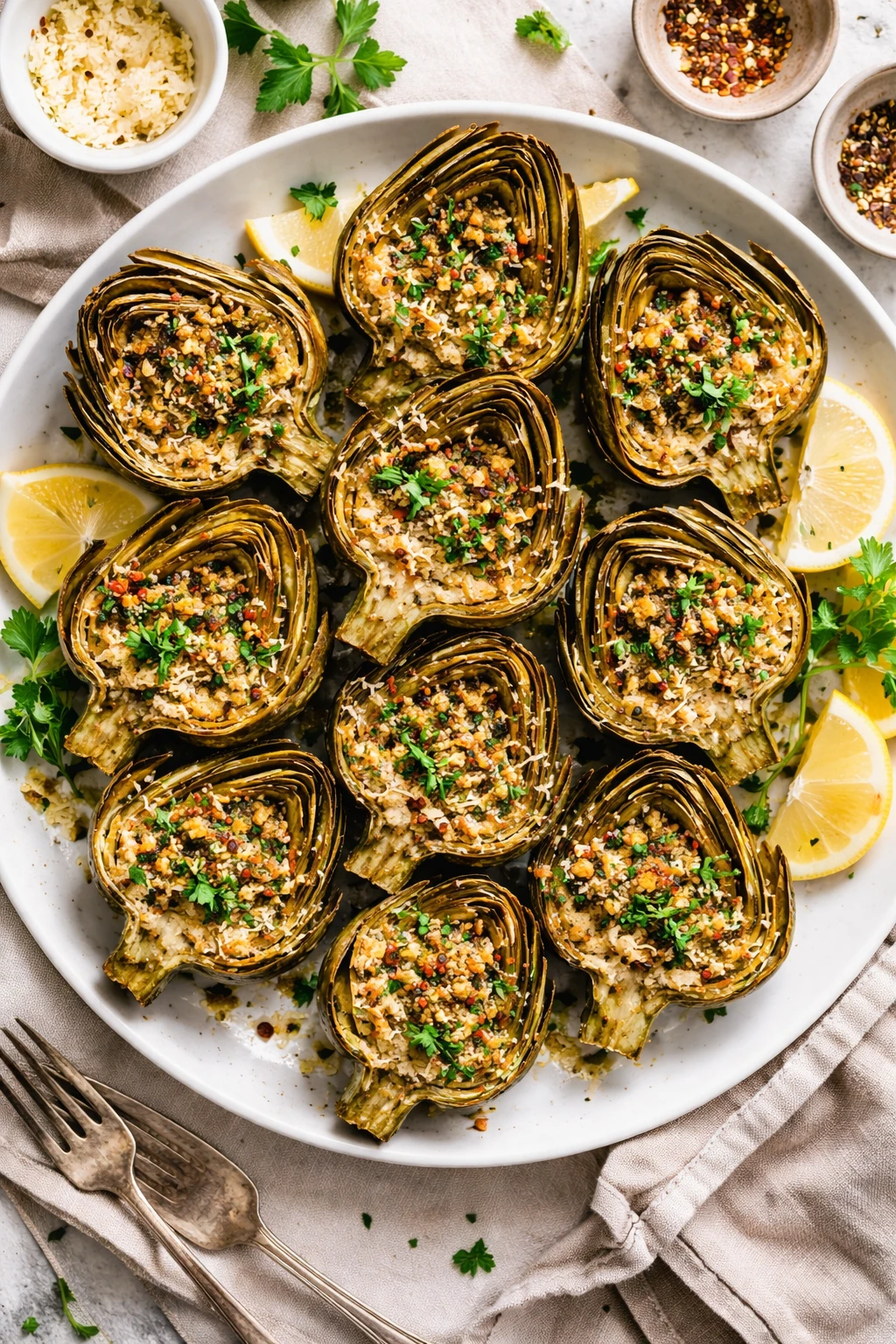
These baked artichokes are tender, garlicky, and loaded with Parmesan, making them a cozy side or appetizer. The herb stuffing brings out deep savory flavors. Perfect for weekend dinners or casual get-togethers!
Introduction
I remember the first time I tried baked artichokes stuffed with garlic and Parmesan at a cozy Italian trattoria during a trip to Tuscany. The flavors were so simple yet surprisingly rich—the tender artichoke hearts perfectly complemented by the savory, cheesy stuffing. Ever since, I’ve been experimenting to recreate that rustic magic at home. My version adds a little extra fresh parsley and a squeeze of lemon to brighten the dish, making it taste fresh but still hearty. The trick I learned? Parboiling the artichokes just enough so they become tender but still hold their shape before baking. This prevents them from getting mushy and helps the garlic-Parmesan mixture soak in beautifully. When baked, the tops get lightly golden, and the aroma fills your kitchen with a warm, inviting scent. It’s a simple dish but feels special—great for family dinners or when you want to impress guests with minimal fuss. Plus, it’s vegetarian and feels like a cozy hug on a plate.
How To Do It
Step 1
Start by prepping your artichokes: trim the tough outer leaves and cut each artichoke in half lengthwise. Use a spoon to scoop out the fuzzy choke from the center, which isn’t edible. This step ensures you’re left with just the tender heart and some soft leaves, which will absorb the flavors during baking. Be sure to rub the cut surfaces with lemon juice immediately to prevent browning. This also adds a subtle brightness to the dish that balances the richness of the cheese and garlic.
⏱ Time: 15
✓ Doneness: Artichoke halves feel firm but slightly tender when pressed; cut surfaces remain pale with no browning
Step 2
Bring a large pot of salted water to a boil and add the artichoke halves. Parboil them for about 10 minutes until they start to soften but are not fully cooked. This pre-cooking step is crucial because it makes sure the artichokes will be tender after baking without turning mushy. Overcooking here can make them fall apart later, so keep an eye on the texture. Once done, drain and pat them dry with a kitchen towel to remove excess moisture.
⏱ Time: 10
✓ Doneness: Artichokes are tender enough to pierce with a fork but still hold their shape firmly
Step 3
In a bowl, combine the minced garlic, grated Parmesan, chopped parsley, dried oregano, olive oil, salt, and pepper. Mix until well blended. This mixture is the flavor powerhouse for the dish, so be sure to use fresh garlic and good-quality Parmesan. The olive oil helps bind everything and keeps the filling moist when baked. Taste and adjust seasoning before stuffing the artichokes.
⏱ Time: 5
✓ Doneness: Mixture is fragrant with garlic and herbs, slightly oily but crumbly
Step 4
Preheat your oven to 375°F (190°C). Arrange the parboiled artichoke halves cut-side up in a baking dish. Spoon the garlic-Parmesan mixture generously into the center of each half, pressing lightly so it sticks well. If you like a bit of crunch, sprinkle breadcrumbs on top for a crispy finish. This step ensures every bite is packed with flavor and the topping crisps nicely in the oven.
⏱ Time: 10
✓ Doneness: Artichokes are evenly stuffed and look moist but not soggy
Step 5
Cover the baking dish loosely with foil and bake for 20 minutes. The foil traps steam, helping the artichokes finish cooking and the flavors meld without drying out. Avoid skipping the foil or baking uncovered at this stage, as it can cause the artichokes to dry and the cheese to brown too quickly before the hearts are tender.
⏱ Time: 20
✓ Doneness: Artichokes are tender when pierced with a fork and cheese mixture is bubbly
Step 6
Remove the foil and bake for an additional 10 minutes to brown the tops. This final step creates a golden, slightly crisp crust on the cheese and breadcrumbs, adding a lovely texture contrast. Watch carefully to avoid burning the topping; it should be golden but not dark brown. The aroma of roasted garlic and Parmesan will fill your kitchen.
⏱ Time: 10
✓ Doneness: Cheese topping is golden and slightly crisp; artichokes emit a fragrant roasted aroma
Step 7
Once baked, let the artichokes rest for 5 minutes before serving. This allows the juices to redistribute and the stuffing to set slightly, so it doesn’t spill out when you cut into it. Serve warm with extra lemon wedges on the side to add a fresh zing if desired.
⏱ Time: 5
✓ Doneness: Artichokes feel warm but not hot; stuffing holds together when sliced
Step 8
For a garnish, sprinkle a little more fresh parsley or a drizzle of good olive oil right before serving. It adds a fresh look and a burst of herbal brightness that complements the rich flavors perfectly. Plus, it makes the dish look extra inviting on the table.
⏱ Time: 2
✓ Doneness: Fresh herbs look vibrant and glossy; oil adds a subtle sheen
Step 9
Enjoy your rustic baked artichokes as a side dish alongside roasted meats, pasta, or simply as a flavorful appetizer with crusty bread. They’re best served warm but still delicious at room temperature, making them a versatile addition to any meal. Leftovers can be gently reheated or eaten cold for a different experience.
⏱ Time: 0
✓ Doneness: Dish is plated attractively and ready to eat
Variations
Spicy Italian Style
Add a pinch of red pepper flakes to the garlic-Parmesan mixture for a subtle heat that complements the richness. You can also sprinkle some chopped sun-dried tomatoes for an extra burst of flavor and color. Expect a slightly spicier, more complex taste with the same tender texture.
Note: Monitor the baking closely as the added ingredients can brown faster; reduce final uncovered bake time if needed.
Vegan Version
Substitute the Parmesan with nutritional yeast and use vegan butter or olive oil instead of cheese. Add extra garlic and fresh herbs to boost flavor. This version keeps the comforting texture but offers a dairy-free option that’s still delicious and savory.
Note: Baking time remains the same, but the topping won’t brown as much without cheese.
Herb and Breadcrumb Crunch
Mix fresh thyme, rosemary, and basil into the breadcrumb topping for an aromatic crunch. This variation adds an earthy dimension and a crisp texture on top, enhancing the rustic feel of the dish.
Note: Add herbs to breadcrumbs before sprinkling and watch to avoid over-browning.
Lemon Zest Brightness
Incorporate finely grated lemon zest into the stuffing mixture for a citrusy zing that brightens the rich garlic and cheese flavors. This adds freshness and a light, fragrant note that pairs beautifully with the artichokes.
Note: Add zest just before stuffing to preserve its aroma.
Cheesy Mozzarella Twist
Mix shredded mozzarella with Parmesan in the stuffing for a gooey, melty texture. This variation makes the dish creamier and more indulgent, perfect for cheese lovers looking for a richer bite.
Note: Mozzarella increases moisture; ensure artichokes are well-drained to avoid sogginess.
Pro Tips
Rub lemon juice on cut artichoke surfaces right after trimming.
Lemon juice prevents oxidation, which causes browning and off-flavors. It keeps the artichokes looking fresh and adds a subtle brightness that complements the richness of the cheese and garlic.
Parboil artichokes just until tender but still firm.
This step softens the tough leaves and hearts, ensuring they cook evenly in the oven without becoming mushy. Overcooking here results in a soggy texture that loses the rustic appeal.
Use freshly grated Parmesan cheese instead of pre-grated.
Fresh Parmesan melts better and has a richer, more complex flavor. Pre-grated cheese often contains additives that prevent proper melting and dull the taste.
Cover the baking dish with foil for the first part of baking.
Foil traps steam, gently cooking the artichokes and melting the cheese without drying out the dish. Removing the foil later allows the topping to brown perfectly.
Press the garlic-Parmesan mixture firmly into the artichoke centers.
This ensures the stuffing adheres well and flavors penetrate the vegetable during baking. Loose stuffing can dry out or fall off, losing flavor impact.
Add fresh parsley and a squeeze of lemon before serving.
Herbs and acidity brighten the dish, balancing the richness and adding fresh color and aroma that elevate the final presentation and taste.
Serve the artichokes warm but allow a short resting period after baking.
Resting lets the juices redistribute and the stuffing set, making it easier to serve without spilling and improving texture.
Common Mistakes to Avoid
Skipping the lemon juice on cut artichokes.
Why it happens Many cooks overlook this step, thinking it’s optional or unnecessary.
Fix Always rub lemon juice on the cut surfaces immediately after trimming to prevent browning and maintain freshness. It also adds a subtle flavor that balances the dish.
Overcooking artichokes during parboiling.
Why it happens Rushing the process or leaving them too long in boiling water can happen if you’re multitasking.
Fix Keep a close timer and test tenderness by piercing with a fork. They should be tender but still firm to avoid mushy baked artichokes.
Using pre-grated Parmesan cheese.
Why it happens Pre-grated cheese is convenient but often less flavorful and doesn’t melt well.
Fix Grate Parmesan fresh from the block for best melting, texture, and taste.
Not covering the dish with foil while baking initially.
Why it happens Some skip this to save time or forget the foil.
Fix Cover the dish for the first 20 minutes to trap steam, ensuring tender artichokes and melted cheese before crisping the topping.
Stuffing the artichokes too loosely.
Why it happens Sometimes the mixture is just spooned on without pressing it in.
Fix Press the stuffing firmly into the artichokes so it adheres well and infuses flavor during baking.
Nutrition
Per Serving:
Nutritional values are estimates and may vary based on specific ingredients used.
Storage & Tips
Room Temperature
Baked artichokes can be kept at room temperature for up to 2 hours if covered loosely with foil or a clean towel. This prevents drying out and contamination. Beyond this time, refrigerate promptly to avoid spoilage.
Refrigerator
Store leftovers in an airtight container for up to 3 days. The flavor may intensify but the texture can firm up. Reheat gently to restore warmth, or enjoy cold as a salad topping or snack.
Freezer
Freeze baked artichokes in a freezer-safe container for up to 2 months. Wrap tightly with plastic wrap and aluminum foil to prevent freezer burn. Thaw overnight in the fridge before reheating to maintain texture.
Reheating
Reheat in a 350°F oven for 10-15 minutes until warmed through. Adding a splash of olive oil or lemon juice before reheating helps refresh the flavors. Avoid microwaving as it can make the artichokes rubbery.
Make Ahead
You can prepare and stuff the artichokes up to 1 day ahead, storing them covered in the fridge. Bake just before serving for the freshest taste and best texture.
FAQ
Can I use canned or frozen artichokes instead of fresh?
While fresh artichokes provide the best texture and flavor, you can use canned or frozen hearts in a pinch. Keep in mind canned ones are softer and may become mushy when baked, and frozen ones should be thawed and patted dry first. Adjust baking time accordingly, usually reducing it since these are pre-cooked.
What can I substitute for Parmesan if I don’t have any?
Pecorino Romano is a great substitute that adds similar salty, sharp flavor. You can also try Asiago or Grana Padano. If avoiding cheese, nutritional yeast works in vegan versions but will change texture and flavor slightly.
Why do my artichokes turn brown after cutting?
Artichokes oxidize quickly when exposed to air, causing browning. Rubbing cut surfaces with lemon juice immediately after trimming prevents this and keeps them looking fresh and appetizing.
How do I know when the artichokes are done baking?
They should be tender when pierced with a fork, and the cheese mixture should be bubbly and golden on top. The leaves should pull away easily but still hold their shape.
Can I prepare this recipe gluten-free?
Yes! Simply omit the breadcrumbs or use gluten-free breadcrumbs for the topping. The rest of the recipe is naturally gluten-free.
What wine pairs well with this dish?
A crisp white wine like Pinot Grigio or Sauvignon Blanc complements the garlic and Parmesan well. If you prefer red, a light Chianti works nicely without overpowering the flavors.
Can I make this recipe ahead and reheat?
Absolutely! Prepare and stuff the artichokes a day ahead and bake just before serving. Leftovers reheat well in the oven, but avoid overcooking to maintain tenderness.
How do I store leftovers properly?
Place cooled artichokes in an airtight container and refrigerate for up to 3 days. Reheat gently in the oven to restore texture. Avoid microwaving as it can affect flavor and texture.
Final Thoughts
Give this rustic baked Italian artichoke recipe a try and enjoy a comforting, flavorful dish that feels like a warm hug. I’d love to hear how it turns out for you!