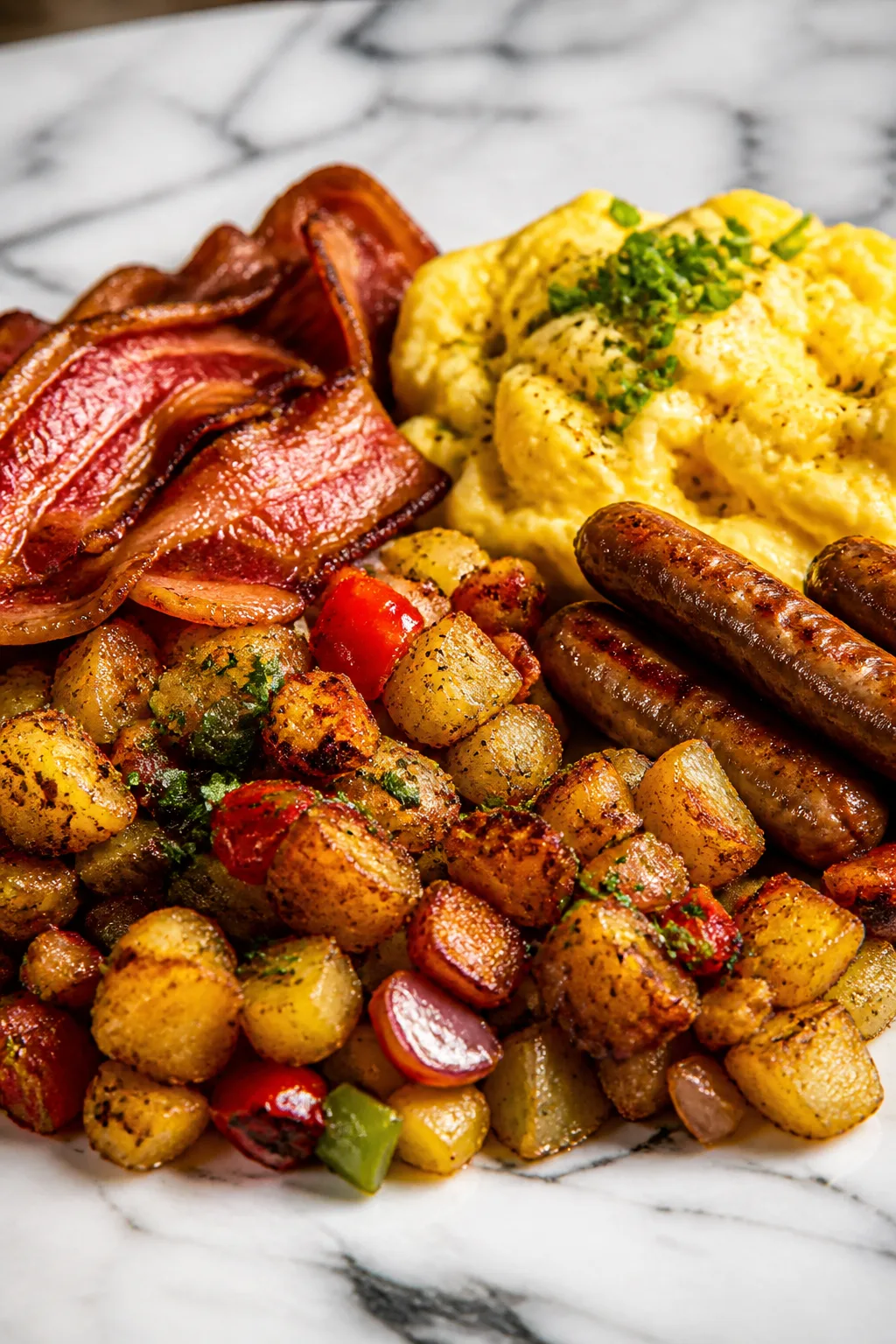
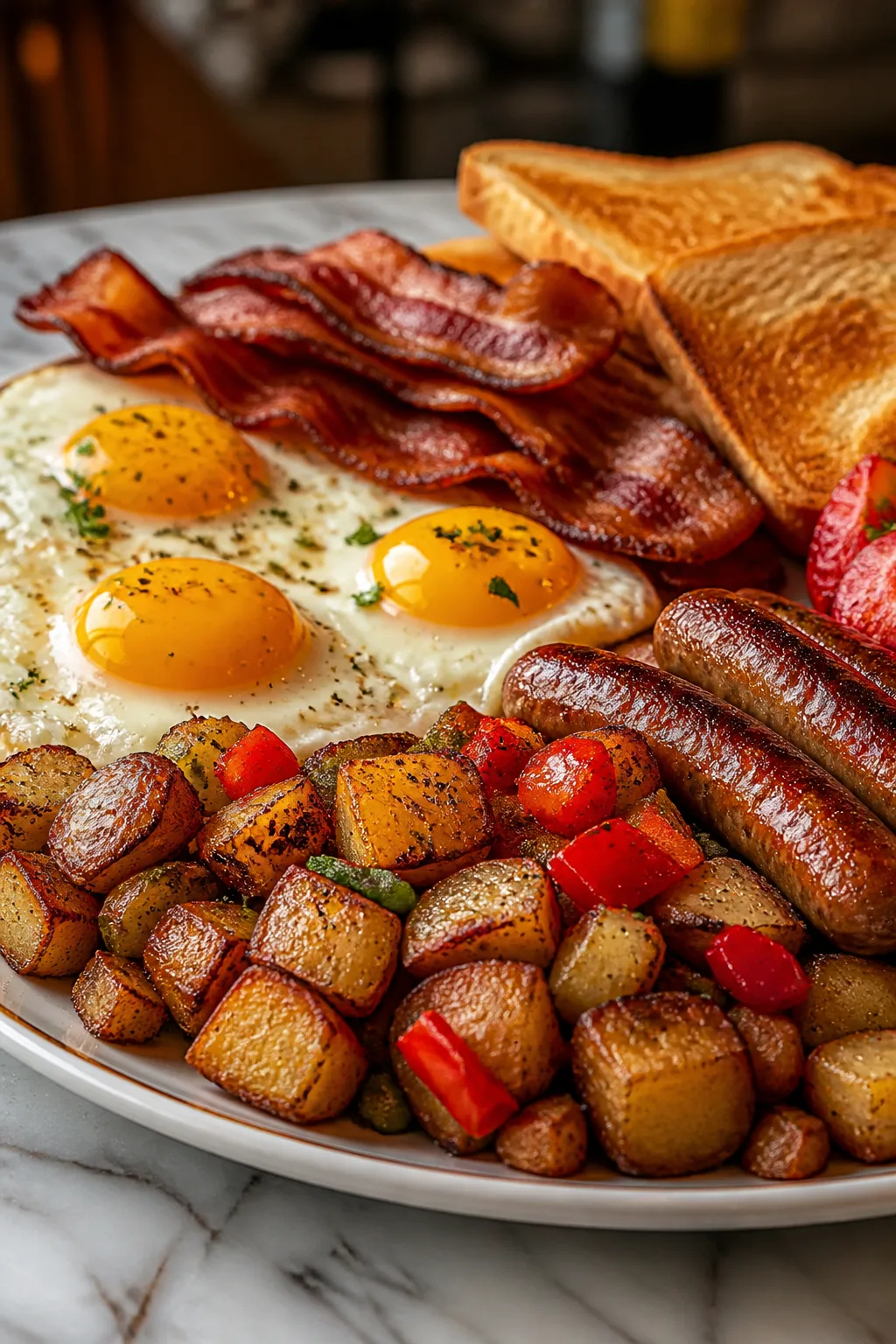
This Blackstone breakfast skillet is all about crispy potatoes, savory sausage, and perfectly cooked eggs. The magic happens with that caramelized sizzle on the griddle. Ideal for a weekend brunch or lazy morning treat!
Introduction
I first tried this Blackstone breakfast skillet a few years ago when a friend invited me over for a weekend brunch. The way those potatoes crisped up on the griddle and the sausage sizzled alongside the eggs was unforgettable. Ever since, I've been making my own version at home whenever I want something hearty and satisfying. What I love about this recipe is how simple it is, yet it delivers that perfect balance of crispy, savory, and fluffy textures. The trick I learned is to let the potatoes sit undisturbed on the griddle long enough to caramelize—that’s where all the flavor lives. Also, cooking the sausage separately lets you control how crispy or juicy you want it. The finished dish is golden, fragrant, and just the right amount of comforting. It’s great for weekend mornings when you’ve got a little more time to savor breakfast or impress your family with a little extra effort. Honestly, sometimes I just crave that crispy potato edge and the runny yolk combo. If you love classic breakfast flavors with a bit of a rustic twist, this skillet is for you.
How To Do It
Step 1
Start by heating 1 tablespoon of olive oil on your griddle or large skillet over medium heat. Once hot, add the diced potatoes and spread them in an even layer. Resist the urge to stir for the first 8-10 minutes; this undisturbed cooking allows the potatoes to develop a golden-brown crust, which adds fantastic texture and flavor. Stirring too soon will prevent this caramelization. After the initial sear, toss the potatoes gently to brown the other sides. Keep an eye on the heat so the potatoes don’t burn—medium heat is key to cooking them through without scorching.
⏱ Time: 10 minutes
✓ Doneness: Potatoes are golden brown and crispy on the edges but tender inside when poked with a fork
Step 2
While the potatoes cook, heat another tablespoon of olive oil in a separate pan over medium-high heat. Add the crumbled breakfast sausage and cook, breaking it up with a spatula, until browned and cooked through, about 7-8 minutes. This step is important because cooking the sausage separately lets you control how crispy it gets without overcrowding the griddle. If you rush this step by turning the heat too high, the sausage may brown unevenly or dry out. Once done, drain any excess fat to keep the dish from being greasy.
⏱ Time: 8 minutes
✓ Doneness: Sausage is browned all over with no pink spots remaining and has a slightly crispy exterior
Step 3
Add the diced onion to the potatoes and continue cooking together for about 5 minutes until the onion softens and becomes translucent. Stir occasionally to avoid burning. This adds a sweet depth of flavor that complements the potatoes and sausage perfectly. If you skip this, the dish might feel a bit one-dimensional. Watch for the onions to turn golden but not overly brown, which can add a bitter note.
⏱ Time: 5 minutes
✓ Doneness: Onions are translucent and tender with slight golden edges
Step 4
Season the potato and onion mixture with salt, black pepper, and smoked paprika. The paprika adds a subtle smoky warmth that gives this skillet a little extra something special. Stir well to evenly coat the potatoes. Taste and adjust seasoning as needed—this step ensures every bite is flavorful. Don’t be shy with the seasoning here because potatoes tend to absorb a lot of salt.
⏱ Time: 2 minutes
✓ Doneness: Seasoning is evenly distributed and aroma is fragrant and inviting
Step 5
Create four wells in the potato mixture and crack one egg into each well. Reduce the heat to medium-low and cover the skillet with a lid. This gentle steaming cooks the eggs evenly without overcooking the potatoes. If you don’t cover the skillet, the eggs might take longer to cook or cook unevenly. For runny yolks, cook for about 4-5 minutes; cook longer if you want firmer yolks.
⏱ Time: 5-7 minutes
✓ Doneness: Egg whites are set and opaque, yolks are cooked to preferred doneness
Step 6
Once eggs are cooked, sprinkle the cooked sausage over the skillet and gently mix some of it into the potatoes if you like. This layering keeps the sausage flavorful and juicy rather than dry. Mixing a bit also distributes the savory meat evenly. Avoid stirring too vigorously to preserve the crispy potato edges.
⏱ Time: 2 minutes
✓ Doneness: Sausage is warmed through and the skillet looks evenly combined
Step 7
Remove the skillet from heat and garnish with fresh chopped parsley for a pop of color and freshness. The parsley brightens the dish and cuts through the richness. If you don’t have parsley, chives or green onions work great too. This finishing touch makes it feel more like a special meal.
⏱ Time: 1 minute
✓ Doneness: Fresh herbs sprinkled evenly with vibrant green color
Step 8
Serve the skillet straight from the griddle while hot. Use a spatula to scoop generous portions onto plates, making sure each serving gets some crispy potatoes, sausage, and an egg. This dish is best enjoyed fresh because the crispy textures soften as it cools. If you’re serving a crowd, keep it warm in a low oven while finishing up any last servings.
⏱ Time: Immediate
✓ Doneness: Dish is hot, with crispy textures intact and eggs fresh
Step 9
For an extra touch, you can add hot sauce, shredded cheese, or avocado slices on top when serving. These add-ins bring more layers of flavor and creaminess that complement the savory skillet beautifully. Customize it to your taste! Just be mindful not to overpower the core flavors that make this dish so comforting.
⏱ Time: Optional
✓ Doneness: Add-ins are evenly distributed and enhance flavor without overwhelming
Variations
Spicy Blackstone Breakfast Skillet
Add diced jalapeños or a pinch of cayenne pepper to the potatoes for a spicy kick. You can also drizzle hot sauce on top when serving. The heat complements the smoky paprika and savory sausage, making it a bold breakfast option.
Note: Add spicy ingredients during the onion cooking step to mellow the heat slightly while preserving flavor.
Vegetarian Blackstone Skillet
Replace sausage with sautéed mushrooms or plant-based sausage alternatives. Use vegetable broth splash to keep potatoes moist if needed. This version keeps the crispy potatoes and eggs but caters to vegetarians without losing heartiness.
Note: Cook mushrooms separately to develop umami and avoid excess moisture in the skillet.
Cheesy Blackstone Breakfast Skillet
Sprinkle shredded cheddar or pepper jack cheese over the potatoes and eggs in the last few minutes of cooking. The melted cheese adds creamy richness and pairs beautifully with the smoky and savory flavors.
Note: Cover the skillet briefly to melt the cheese evenly without overcooking eggs.
Herb-Infused Blackstone Skillet
Add fresh rosemary or thyme to the potatoes while cooking. These herbs infuse the dish with aromatic notes that elevate the flavor profile and make it feel more gourmet.
Note: Add fresh herbs early with the onions to allow their flavors to infuse the potatoes.
Sweet Potato Blackstone Skillet
Swap russet potatoes for diced sweet potatoes for a sweeter, earthier flavor. The cooking technique remains the same, but expect a softer texture and a slightly different caramelization.
Note: Sweet potatoes cook faster, so reduce cooking time slightly to avoid mushiness.
Pro Tips
Don't stir potatoes too soon during cooking.
Allowing potatoes to sit undisturbed develops a Maillard crust, which creates the crispy, flavorful edges. Stirring too early interrupts this browning process and results in soggy potatoes.
Cook sausage separately before combining.
Sausage releases fat that can steam potatoes if cooked together too early. Cooking it separately ensures it crisps up nicely and keeps the skillet from becoming greasy.
Use a lid when cooking eggs on the skillet.
Covering traps steam and cooks eggs gently and evenly, preventing tough whites and overcooked yolks, while also keeping potatoes from drying out.
Season potatoes after initial browning.
Adding salt too early draws moisture out, which can prevent crisping. Season once the potatoes have started to brown to enhance flavor without sacrificing texture.
Use room temperature eggs for best results.
Cold eggs shock the skillet and cook unevenly, leading to rubbery whites. Room temperature eggs cook gently and produce tender whites and creamy yolks.
Don't overcrowd the skillet.
Overcrowding traps steam and prevents proper browning and crisping. Cooking in batches or using a large enough surface ensures even heat distribution.
Garnish with fresh herbs just before serving.
Fresh herbs add brightness and color that contrast the rich, savory flavors, making the dish feel more balanced and visually appealing.
Common Mistakes to Avoid
Stirring potatoes too frequently
Why it happens Many cooks assume stirring often prevents sticking and ensures even cooking, but it disrupts the browning process.
Fix Let potatoes cook undisturbed for 8-10 minutes at a time to develop a crispy crust. Only stir gently after that to brown all sides evenly.
Cooking sausage with potatoes from the start
Why it happens To save time, some add sausage early, but this releases fat that steams potatoes instead of crisping them.
Fix Cook sausage separately to control browning and fat rendering, then add it to the skillet after potatoes are crispy.
Overcooking eggs on the skillet
Why it happens Not using a lid or cooking at too high heat causes eggs to become rubbery or dry.
Fix Cook eggs on medium-low heat covered with a lid to trap steam and cook gently, checking frequently for preferred yolk doneness.
Using waxy potatoes
Why it happens Waxy potatoes are often chosen by mistake and don’t crisp well due to their low starch content.
Fix Select starchy potatoes like russets for the best crispy texture; avoid red or new potatoes for this recipe.
Skipping seasoning or adding it too late
Why it happens Some forget to season or add salt only at the end, leading to bland potatoes.
Fix Season potatoes after initial browning for balanced flavor without losing crispness.
Nutrition
Per Serving:
Nutritional values are estimates and may vary based on specific ingredients used.
Storage & Tips
Room Temperature
This breakfast skillet can be safely left at room temperature for up to 2 hours if covered loosely with foil or a clean towel to prevent drying out and contamination.
Refrigerator
Store leftovers in an airtight container in the refrigerator for up to 3 days. The potatoes may soften, and eggs can become firmer when cold. Reheat gently to restore warmth and texture.
Freezer
Freeze portions in airtight containers or heavy-duty freezer bags for up to 2 months. To prevent freezer burn, remove as much air as possible. Thaw overnight in the fridge before reheating.
Reheating
Reheat skillet portions on the stovetop over low heat with a splash of water or broth to prevent drying. Alternatively, microwave covered for 1-2 minutes, stirring halfway. Avoid high heat to prevent rubbery eggs.
Make Ahead
You can prepare the potato and sausage mixture a day ahead and store it separately. On serving day, reheat the mixture on the griddle, then add fresh eggs and cook as directed for best freshness.
FAQ
Can I use frozen potatoes instead of fresh?
While fresh diced potatoes work best for crispiness, you can use frozen diced potatoes if thawed and patted dry first. Frozen potatoes have more moisture, which may result in softer, less crispy edges.
What if I don’t have a griddle? Can I use a regular pan?
Absolutely! A large heavy skillet or cast iron pan works well. Just make sure it’s big enough to hold the potatoes in a single layer for proper browning.
How do I get runny yolks without undercooked whites?
Covering the skillet while cooking eggs traps steam and cooks whites evenly while keeping yolks soft. Cooking on medium-low heat and checking frequently helps achieve this balance.
Can I make this recipe vegan?
You can replace sausage with plant-based alternatives and omit eggs or use tofu scramble. Adjust seasoning accordingly, but the texture and flavor will differ from the original.
Is smoked paprika necessary?
It adds a lovely smoky depth but can be substituted with regular paprika or a pinch of chili powder. The flavor will be less smoky but still delicious.
How do I prevent potatoes from sticking?
Use enough oil and preheat the pan properly. Let potatoes cook undisturbed to form a crust before flipping or stirring to prevent sticking.
Can I add other vegetables?
Yes! Bell peppers, spinach, or tomatoes can be added. Add them at appropriate cooking times—harder veggies early, delicate ones last—to avoid sogginess.
What’s the best way to store leftovers?
Cool completely before transferring to airtight containers. Refrigerate up to 3 days or freeze up to 2 months. Reheat gently to maintain texture.
Final Thoughts
I hope you enjoy making and eating this Blackstone breakfast skillet as much as I do. It’s a cozy, flavorful way to start your day—don’t forget to share how it turns out!