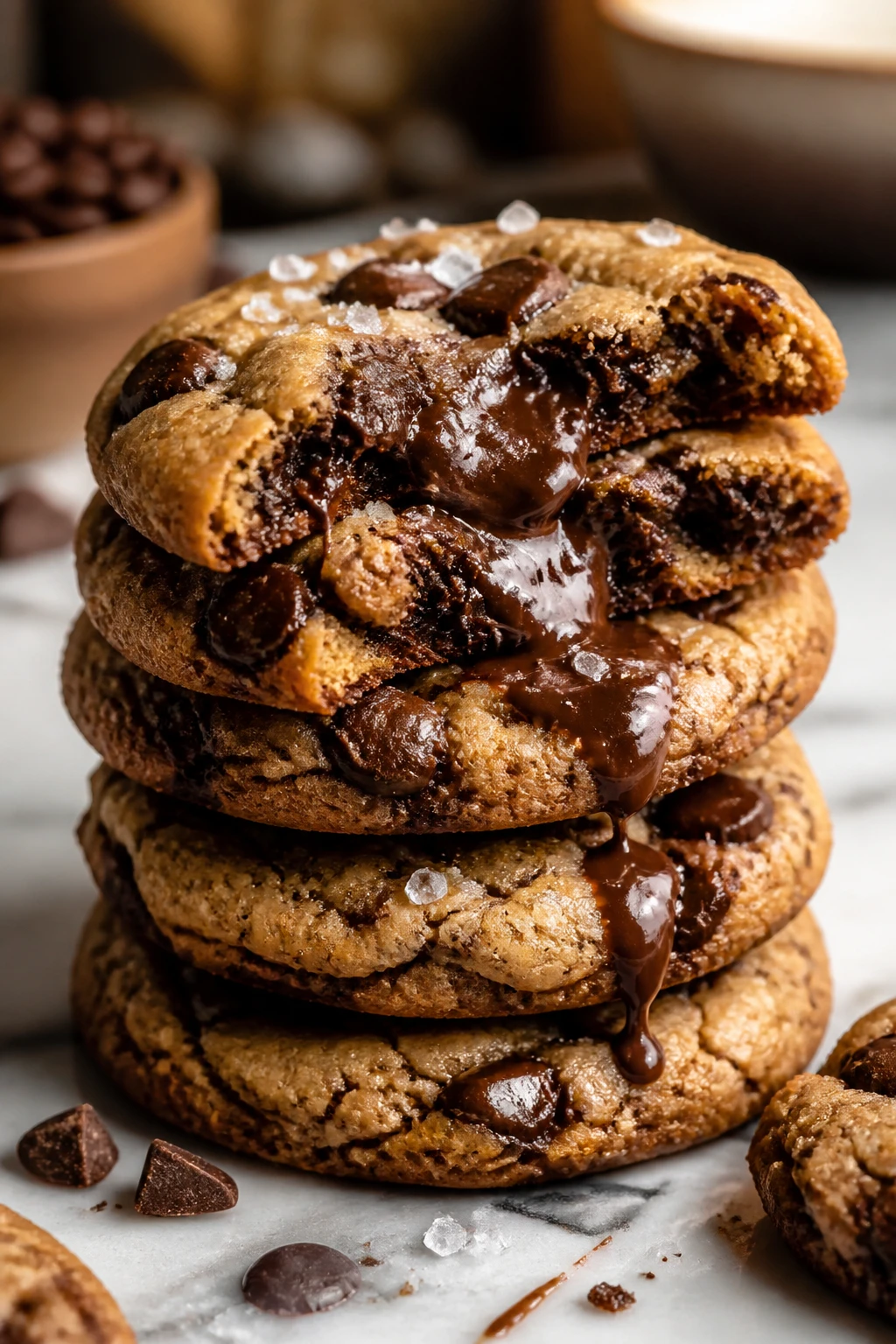
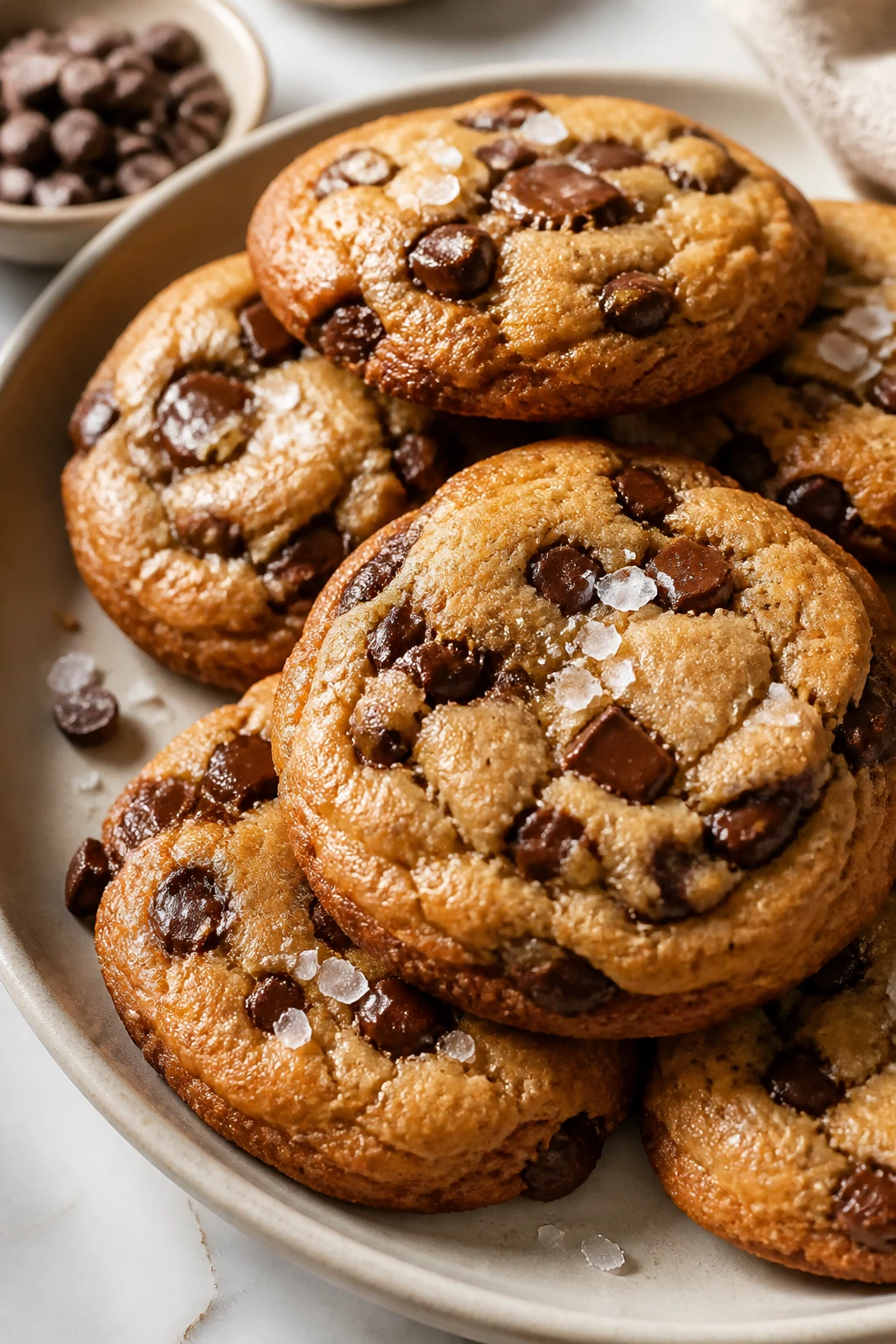
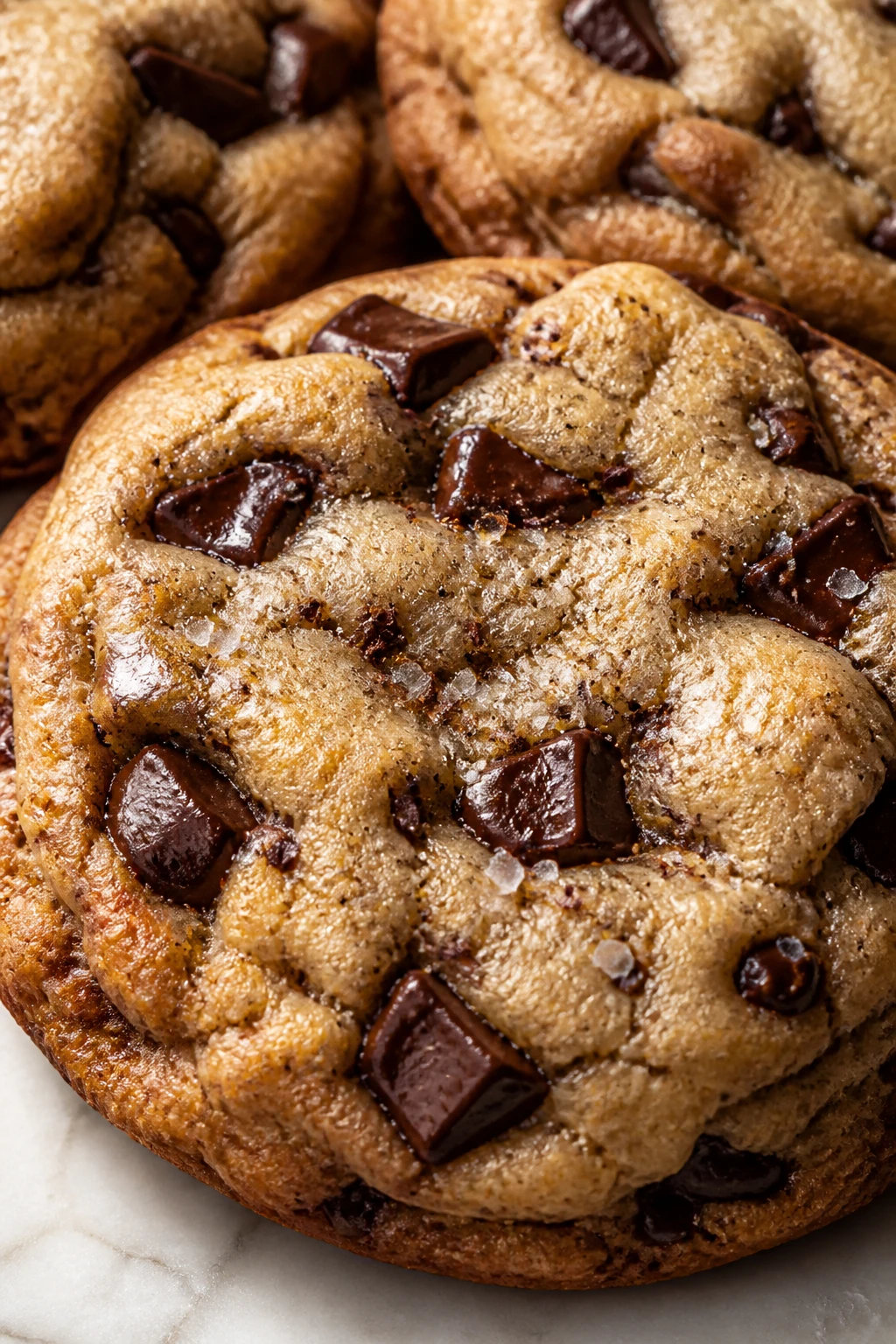
These cookies strike the perfect chewy balance with rich chocolate and a subtle coffee twist. Topped with sea salt for that little pop, they're great for sharing or a cozy afternoon snack.
Introduction
I first made these cookies on a rainy weekend when I was craving something rich but not too sweet. The twist? Adding a touch of espresso powder to bring out the chocolate's depth without overpowering it. I’ve tried many chocolate chip cookie recipes, but this one stands out because it hits that perfect chewy texture every time and the sea salt sprinkle on top just elevates the flavor to another level. One secret I learned is melting the butter instead of creaming it—it keeps the cookies dense and chewy rather than cakey. Also, using both an egg and an extra yolk adds richness and tenderness that you can really taste. When they come out of the oven, they’re soft, gooey in the center, and perfectly crisp at the edges. Honestly, these cookies have become my go-to treat for sharing with friends or just sneaking a few with a cup of coffee. I think you’ll love how the coffee enhances the chocolate without making it bitter—it’s subtle but makes all the difference!
How To Do It
Step 1
In a medium bowl, whisk together the sifted all-purpose flour, baking soda, and 1 teaspoon sea salt. This dry mix ensures even distribution of the leavening agent and salt, which are crucial for texture and flavor balance. Sifting removes lumps and aerates the flour, helping the cookies bake evenly without dense spots. Avoid skipping this or mixing dry ingredients directly with wet, as it can cause uneven rising and texture.
⏱ Time: 5
✓ Doneness: Dry ingredients are well combined with no visible clumps or pockets of baking soda.
Step 2
In a large bowl, whisk the melted butter with both sugars until smooth and glossy. The melted butter creates a denser, chewier cookie compared to creamed butter, while the sugars provide moisture and sweetness. Make sure the butter is cooled slightly to prevent cooking the eggs in the next step, which would ruin the texture. Whisking well also helps dissolve the sugar crystals for a smoother dough.
⏱ Time: 5
✓ Doneness: Mixture looks smooth and shiny, with no gritty sugar texture.
Step 3
Add the instant espresso powder to the butter and sugar mixture and stir until fully dissolved. This step is key to infusing a subtle coffee flavor that enhances the chocolate without overpowering. Instant espresso powder dissolves quickly and evenly, unlike brewed coffee which adds liquid and could change dough consistency.
⏱ Time: 2
✓ Doneness: No visible granules of espresso powder; mixture is uniform in color.
Step 4
Beat in the egg and extra egg yolk, followed by the vanilla extract. The extra yolk adds richness and chewiness, while the egg binds everything together. Beat just until combined to avoid incorporating too much air, which can make the cookies cakier instead of chewy.
⏱ Time: 3
✓ Doneness: Mixture is smooth and slightly thickened, with no streaks of egg white.
Step 5
Gradually fold the dry ingredients into the wet mixture using a spatula. Folding gently preserves some air but doesn’t overwork the gluten, which keeps the cookies tender. Overmixing will develop gluten and result in tougher cookies. Stop mixing as soon as you see no more flour streaks.
⏱ Time: 4
✓ Doneness: Dough is uniform in color and texture, slightly sticky but not wet.
Step 6
Fold in the chocolate chips evenly throughout the dough. This ensures every cookie gets a good amount of chocolate. Use a spatula to distribute them gently so they don’t break or melt prematurely.
⏱ Time: 2
✓ Doneness: Chocolate chips are evenly dispersed in the dough with no clumping.
Step 7
Cover the dough and refrigerate for at least 30 minutes or up to 24 hours. Chilling solidifies the butter, which prevents cookies from spreading too much in the oven and deepens the flavor as the ingredients meld together. Don’t skip this step—it’s what gives these cookies their signature texture.
⏱ Time: 30
✓ Doneness: Dough is firm but scoopable after chilling.
Step 8
Preheat your oven to 350°F (175°C). Line baking sheets with parchment paper or a silicone mat. Use a cookie scoop to portion dough balls about 2 tablespoons each, spacing them 2 inches apart. Uniform size helps them bake evenly. Gently press a few extra chocolate chips on top of each dough ball for a pretty finish.
⏱ Time: 10
✓ Doneness: Oven is fully preheated and dough balls are evenly spaced and ready.
Step 9
Bake for 12-15 minutes until the edges are golden but centers still look soft and slightly underbaked. The cookies will continue to set as they cool, so pulling them out too late makes them hard. Watch the edges carefully—the golden color signals caramelization and perfect chewiness. Sprinkle with a pinch of flaky sea salt immediately after removing from the oven for that flavor pop.
⏱ Time: 15
✓ Doneness: Edges are golden and centers look just set but soft.
Step 10
Let cookies cool on the baking sheet for 10 minutes before transferring to a wire rack. This resting time allows them to firm up without breaking apart. Moving them too soon can cause them to crumble, while leaving them too long on a hot pan can overcook the bottoms.
⏱ Time: 10
✓ Doneness: Cookies hold shape when gently lifted and have a slightly crisp bottom.
Variations
Double Chocolate Sea Salt Cookies
For an extra chocolate hit, swap half the flour for cocoa powder and add white chocolate chips along with semisweet ones. These cookies are richer and more decadent with a beautiful dark color. Expect a slightly drier texture due to the cocoa powder but still chewy and delicious.
Note: Because cocoa powder absorbs moisture, reduce flour slightly or add a tablespoon of milk to keep dough pliable.
Nutty Chocolate Sea Salt Cookies
Add 1 cup chopped toasted walnuts or pecans for crunch and nutty flavor. Nuts add texture contrast and deepen the cookie’s complexity. Perfect if you like a bit of bite and earthiness alongside rich chocolate.
Note: Fold nuts in with the chocolate chips to distribute evenly without breaking them up.
Vegan Chewy Chocolate Cookies
Replace butter with coconut oil and use a flax egg instead of real eggs. Use dairy-free chocolate chips. These changes keep the chewiness and rich flavor while making the recipe plant-based. The coconut oil adds a slight tropical note that pairs well with chocolate.
Note: Chill the dough longer (up to 2 hours) to firm up coconut oil and improve texture.
Spiced Chocolate Sea Salt Cookies
Add 1 teaspoon ground cinnamon and 1/4 teaspoon cayenne pepper for subtle warmth and spice. This unexpected twist complements the coffee and chocolate beautifully, making the cookies more complex and interesting.
Note: Add spices with the dry ingredients to distribute evenly without clumping.
Gluten-Free Chocolate Sea Salt Cookies
Use a 1:1 gluten-free flour blend designed for baking. The texture will be slightly different—less chewy but still tender and delicious. Adding a teaspoon of xanthan gum can improve structure and chewiness in gluten-free doughs.
Note: Watch baking time closely; gluten-free cookies can brown faster and dry out if overbaked.
Pro Tips
Chill the dough for at least 30 minutes before baking.
Chilling solidifies the butter, which prevents cookies from spreading too thin and helps develop richer flavors. It also allows the flour to hydrate fully, improving texture. Skipping this step often leads to flat, greasy cookies.
Use a cookie scoop for uniform dough balls.
Evenly sized cookies bake at the same rate, preventing some from burning while others remain undercooked. A scoop also makes portioning faster and cleaner, ensuring consistent results every time.
Don’t overmix the dough once you add flour.
Overmixing develops gluten, which makes cookies tough and cakey instead of tender and chewy. Fold gently until just combined to keep the perfect texture.
Use both an egg and an extra yolk.
The whole egg provides structure and moisture, while the extra yolk adds richness and chewiness. This combination creates a soft, tender crumb with a slightly dense texture that’s hard to beat.
Add a sprinkle of flaky sea salt right after baking.
Salt enhances sweetness and balances the rich chocolate, plus the flakes add a delightful crunch. Adding it post-bake prevents it from melting away and keeps the texture intact.
Melt the butter and cool it before mixing.
Melted butter coats flour proteins differently, reducing gluten formation and creating chewiness. Cooling prevents cooking the eggs in the next step, which can ruin dough consistency.
Use instant espresso powder instead of brewed coffee.
Instant espresso powder dissolves without adding liquid, intensifying chocolate flavor subtly. Brewed coffee would add moisture and could make the dough too wet or change baking times.
Common Mistakes to Avoid
Skipping the chilling step
Why it happens Many assume cookie dough can go straight to the oven, wanting a quick bake.
Fix Always chill the dough at least 30 minutes. It solidifies fats to control spreading and improves flavor development, preventing flat, greasy cookies.
Overmixing the dough after adding flour
Why it happens It’s tempting to mix thoroughly to avoid flour pockets, but overmixing develops gluten.
Fix Fold the flour in gently with a spatula just until no streaks remain. This keeps the texture tender and chewy.
Using too much espresso powder
Why it happens Thinking more coffee flavor will be better, some add extra powder.
Fix Stick to the recipe amount. Too much espresso powder causes bitterness and can overpower the chocolate flavor.
Not watching the baking time carefully
Why it happens Ovens vary, and it’s easy to leave cookies in too long.
Fix Pull cookies when edges are golden but centers still look soft. They’ll firm up as they cool for perfect chewiness.
Using salted butter without adjusting salt in recipe
Why it happens Some use salted butter thinking it’s interchangeable.
Fix Use unsalted butter and add salt separately to control flavor precisely. Salted butter can make cookies too salty or unevenly seasoned.
Nutrition
Per Serving:
Nutritional values are estimates and may vary based on specific ingredients used.
Storage & Tips
Room Temperature
Cookies keep well at room temperature for up to 2 days when stored in an airtight container. Keep them away from direct sunlight or heat to prevent melting chocolate chips and drying out. Adding a slice of bread in the container can help maintain softness.
Refrigerator
Store cookies in an airtight container in the fridge for up to 5 days. They may harden slightly when cold, so let them come to room temperature before serving or warm briefly in the microwave for 10 seconds to soften.
Freezer
Freeze cookies in a single layer on a baking sheet, then transfer to a freezer-safe container or ziplock bag for up to 3 months. Wrap well to prevent freezer burn. Thaw at room temperature for 30 minutes before eating or warm in the oven at 300°F for 5 minutes.
Reheating
Reheat cookies in a 300°F oven for 5-7 minutes to restore softness and bring out chocolate gooeyness. Avoid microwaving too long or at high power as this can make them rubbery. Adding a small piece of butter on top before warming can enhance moisture.
Make Ahead
Prepare the cookie dough 1-2 days ahead and keep it refrigerated. This resting time improves flavor and texture. On baking day, scoop and bake fresh. You can also freeze dough balls individually for later use—bake straight from frozen adding a minute or two to baking time.
FAQ
Can I use regular brewed coffee instead of espresso powder?
It’s best to use instant espresso powder because it dissolves completely without adding extra liquid. Brewed coffee adds moisture that can alter dough consistency, making cookies spread too much or bake unevenly.
Why do my cookies spread too much and become thin?
Usually this happens if the dough isn’t chilled or the butter is too warm. Chilling solidifies fat and prevents excessive spreading. Also, using too much sugar or low-protein flour can cause spreading.
Can I substitute brown sugar with white sugar?
You can, but brown sugar adds moisture and depth due to molasses, which keeps cookies chewy and flavorful. Using only white sugar may result in crisper, less moist cookies.
How do I keep cookies chewy instead of cakey?
Use melted butter, an extra egg yolk, and avoid overmixing flour. Also, baking just until edges are set but centers remain soft helps maintain chewiness.
What’s the best way to store these cookies to keep them fresh?
Store in an airtight container at room temperature with a slice of bread to keep moisture. Refrigeration is fine but can harden cookies; warm briefly before serving.
Can I make the dough ahead of time?
Absolutely! Refrigerate the dough for up to 24 hours or freeze dough balls for up to 3 months. This resting enhances flavor and texture.
Why do my cookies sometimes come out dry or crumbly?
This can happen if you overbake or use too much flour. Measure flour carefully and remove cookies from oven when centers still look slightly underdone.
Can I use salted butter instead of unsalted?
It’s best to use unsalted butter so you can control salt levels precisely. Salted butter can make cookies too salty or unevenly seasoned.
How important is the sea salt topping?
Sea salt adds a wonderful flavor contrast and crunch that elevates the cookies. You can skip it, but the cookies won’t have that same pop of flavor.
Can I add nuts or other mix-ins?
Yes! Chopped nuts, different types of chocolate chips, or dried fruit all work well. Just fold them in with the chocolate chips before chilling.
Final Thoughts
I hope you give these chewy chocolate sea salt cookies a try and love them as much as I do. Don’t forget to share your baking stories and tweaks!