This bright basil pesto brings garden-fresh flavor with a zing of garlic. It’s super easy to whip up and adds a punch to pasta or sandwiches. Great for quick lunches or light dinners!
Introduction
I first stumbled upon homemade basil pesto during a summer visit to Italy, and I was hooked immediately. There’s just something about the fresh basil and garlic combo that feels like sunshine in a jar. Over time, I’ve tweaked my version to balance the garlic's bite with the richness of Parmesan and the nuttiness of toasted pine nuts. What makes this pesto stand out is the simple technique of toasting the pine nuts lightly before blending – it really brings depth to the flavor. Plus, using good quality olive oil makes a noticeable difference in texture and taste. When you scoop it onto freshly cooked pasta or spread it on a warm sandwich, you get a bright, herbal punch that’s both comforting and refreshing. I love how quick it is to prepare, making it perfect for busy weeknights or a last-minute lunch boost. It’s also incredibly versatile, so once you make a batch, you’ll find yourself wanting to add it to just about everything.
What You'll Need
Approximately 1 cup pesto, 4 servings
- 2 cups fresh basil leaves, packed
- 1/2 cup grated Parmesan cheese
- 1/3 cup pine nuts, toasted
- 2 garlic cloves, minced
- 1/2 cup extra virgin olive oil
- Salt to taste
- Freshly ground black pepper to taste
How To Do It
Step 1
Begin by carefully washing the basil leaves and patting them dry. It’s important to remove any excess water because moisture can dilute the pesto and make the texture runny. Using fresh, vibrant leaves ensures your pesto will have that bright green color and fresh flavor. Avoid bruising the leaves too much, as that can cause them to discolor.
⏱ Time: 5 minutes
✓ Doneness: Leaves are clean, dry, and vibrant green without bruises
Step 2
Toast the pine nuts in a dry skillet over medium heat, stirring frequently. This step is crucial as it brings out the nuts’ natural oils and deepens their flavor without burning them. Watch closely and remove them as soon as they turn golden and start smelling nutty. Burnt nuts will add bitterness, so timing here is everything.
⏱ Time: 3-5 minutes
✓ Doneness: Pine nuts are golden brown and fragrant, not dark or smoky
Step 3
In a food processor, combine the basil leaves, toasted pine nuts, and minced garlic. Pulse a few times to roughly chop the ingredients before adding the oil. This helps maintain a nice texture and prevents over-processing, which can lead to a bitter taste.
⏱ Time: 2 minutes
✓ Doneness: Ingredients are coarsely chopped and evenly mixed
Step 4
Slowly drizzle in the olive oil while the processor runs on low speed. Adding the oil gradually encourages emulsification, creating a creamy and cohesive sauce instead of a separated oily mixture. If you pour it all at once, the pesto might not blend properly and could become greasy.
⏱ Time: 3 minutes
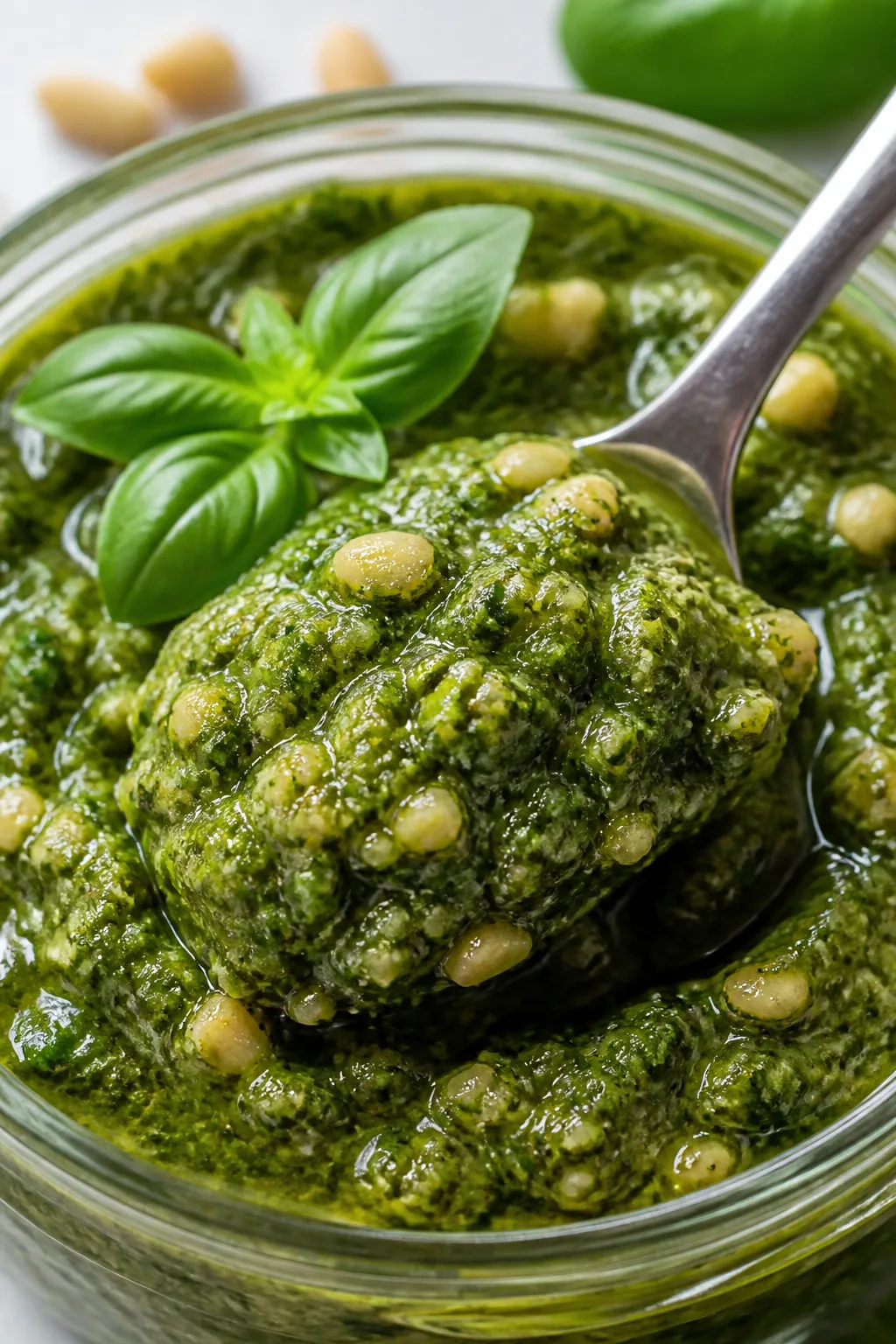
✓ Doneness: Pesto has a smooth, creamy consistency with no oil pooling
Step 5
Add the grated Parmesan cheese and pulse a few more times to combine. The cheese thickens the pesto and adds a salty, umami depth. Be careful not to over-process at this stage, or the cheese can become grainy and affect the texture.
⏱ Time: 1 minute
✓ Doneness: Pesto is thickened but still smooth and vibrant
Step 6
Taste your pesto and season with salt and freshly ground black pepper. Remember, Parmesan is salty, so add salt sparingly. Adjust seasoning gradually to avoid overpowering the fresh basil flavor.
⏱ Time: 2 minutes
✓ Doneness: Balanced flavor with a fresh, garlicky punch and savory notes
Step 7
If the pesto feels too thick, add a little more olive oil or a splash of water and pulse briefly to loosen it up. The right consistency is spreadable but not watery, perfect for coating pasta or spreading on bread.
⏱ Time: 1 minute
✓ Doneness: Pesto is smooth, spreadable, and glossy without separation
Step 8
Transfer the pesto to a clean jar or bowl and cover the surface with a thin layer of olive oil to prevent oxidation. This helps keep the vibrant green color and fresh flavor for longer. Store in the fridge if not using immediately.
⏱ Time: 2 minutes
✓ Doneness: Pesto is sealed with olive oil layer preventing browning
Step 9
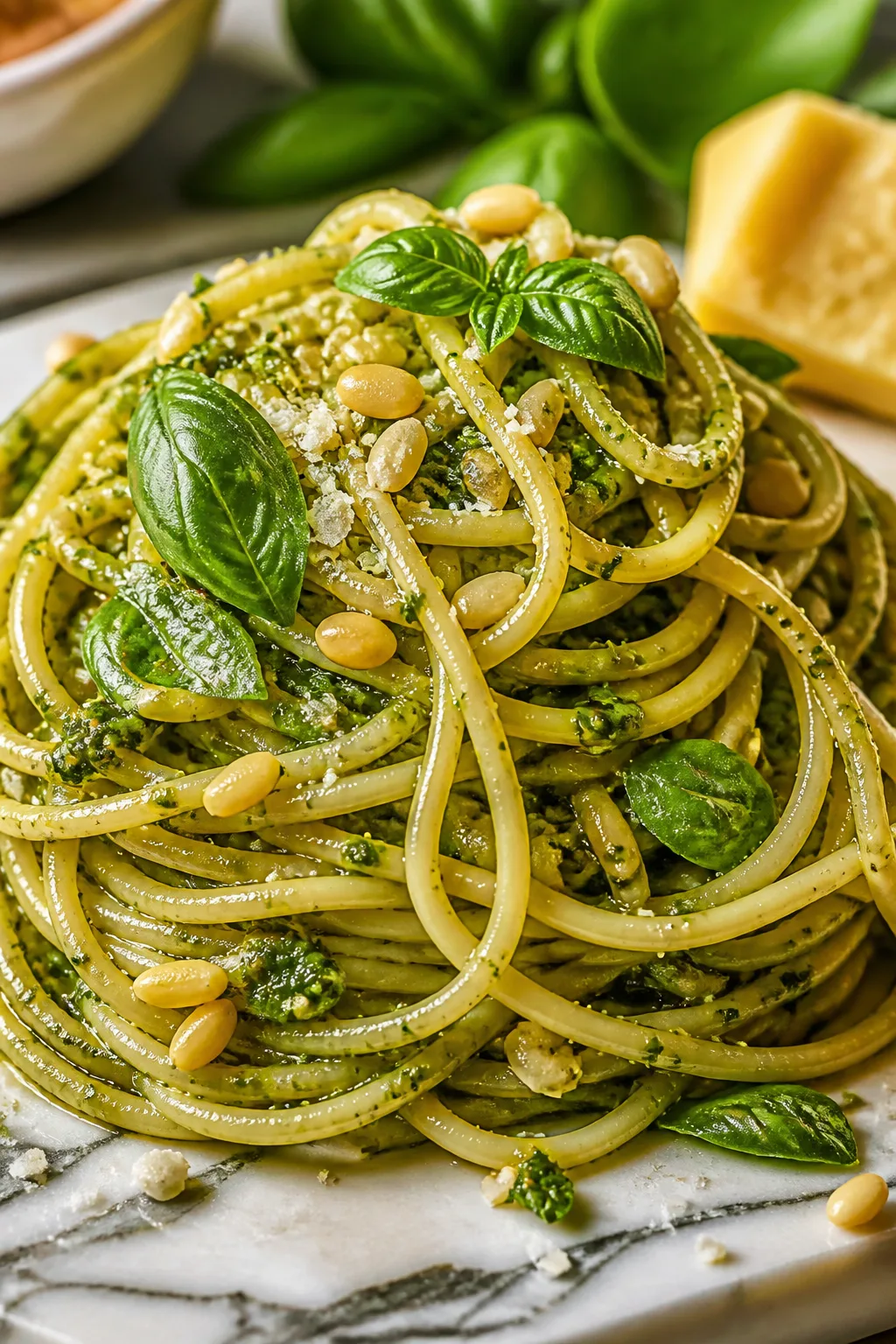
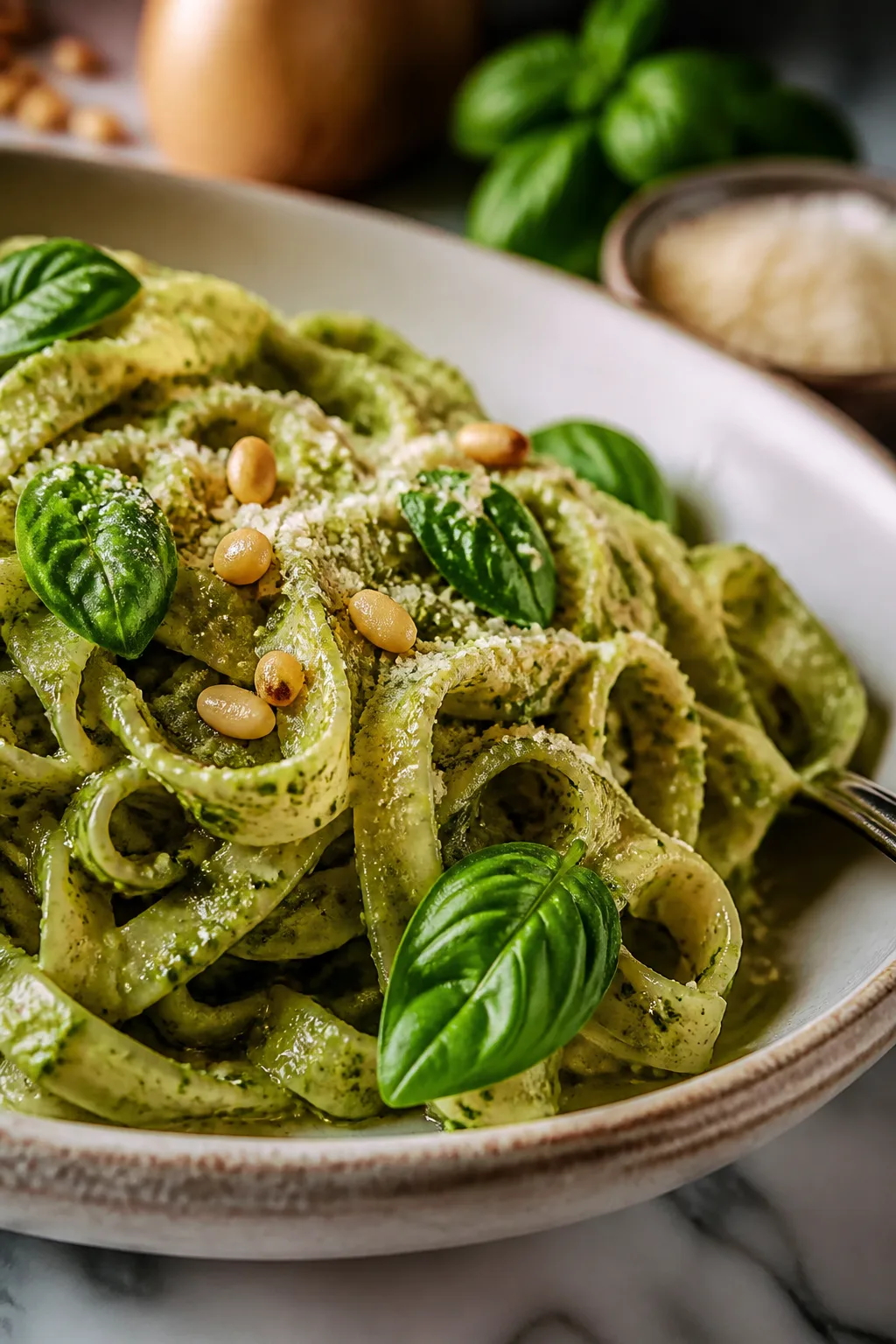
Serve your basil pesto tossed with freshly cooked pasta, drizzled with a little extra olive oil and a sprinkle of Parmesan. Or spread it on sandwiches for an instant flavor upgrade. Fresh herbs and garlic make this sauce bright and irresistible every time.
⏱ Time: 0 minutes
✓ Doneness: Pesto evenly coats pasta or sandwich, vibrant and aromatic
Variations
Walnut Basil Pesto
Swap pine nuts for toasted walnuts for a slightly earthier flavor and a bit more texture. Walnuts are more affordable and still provide a rich nutty base. The pesto will be a bit heartier but just as fresh and vibrant.
Note: Toasting walnuts requires a bit less time than pine nuts; watch carefully to avoid bitterness.
Spinach and Basil Pesto
Add a handful of fresh spinach leaves to the basil for a milder, greener pesto with extra nutrients. This variation is less intense but still flavorful, perfect if you want a subtler herb taste.
Note: Since spinach has higher water content, be careful not to add too much to avoid thinning the pesto.
Vegan Basil Pesto
Replace Parmesan cheese with nutritional yeast or vegan cheese alternatives. This keeps the umami flavor while making the pesto dairy-free and suitable for vegans without sacrificing creaminess.
Note: Adjust salt carefully as vegan cheese substitutes vary in saltiness.
Spicy Basil Pesto
Add a pinch of red pepper flakes or a small fresh chili to the food processor for a spicy kick. This brings a nice heat contrast to the fresh herbaceous notes and works great on grilled meats or pizza.
Note: Add chili gradually to control heat level and avoid overpowering the basil flavor.
Lemon Basil Pesto
Add fresh lemon juice and zest to brighten the pesto with citrus notes. This version is tangier and fresher, perfect for summer dishes or seafood pairings.
Note: Add lemon juice last to preserve its brightness and prevent discoloration.
Pro Tips
Toast pine nuts just until golden and fragrant.
Toasting activates the nuts’ natural oils, intensifying their flavor and adding a toasty depth to the pesto. Over-toasting leads to bitterness, which can ruin the sauce’s balance, so keep a close eye and stir frequently.
Add olive oil slowly while blending.
Gradual addition helps form a stable emulsion, creating a creamy texture without separation. Pouring oil too fast can cause the mixture to break, resulting in a greasy, unappealing finish.
Use a food processor instead of a blender for better texture control.
Food processors chop ingredients coarsely and allow pulsing, preventing over-processing. Blenders tend to liquefy the pesto quickly, causing loss of texture and possible bitterness from bruised basil.
Cover pesto with a thin layer of olive oil before storing.
This prevents exposure to oxygen, slowing oxidation and browning. It keeps the pesto’s vibrant green color and fresh flavor longer in the refrigerator.
Use fresh Parmesan cheese and grate it yourself.
Pre-grated cheese contains additives that can affect texture and flavor. Freshly grated cheese melts smoothly into the pesto, enhancing creaminess and taste.
Dry basil leaves thoroughly before blending.
Water dilutes the pesto and can cause it to separate. Patting leaves dry helps maintain a rich, thick sauce with a concentrated flavor.
Adjust seasoning at the end after combining all ingredients.
Flavors meld during blending, so seasoning too early can lead to over-salting. Tasting last ensures balanced salt and pepper levels.
Common Mistakes to Avoid
Using wet basil leaves.
Why it happens Many cooks wash basil but forget to dry it thoroughly, assuming a quick rinse is enough.
Fix After washing, gently pat leaves dry with paper towels or spin in a salad spinner. This removes excess water that would otherwise thin the pesto and cause separation.
Over-processing the basil in the food processor.
Why it happens It’s easy to get carried away blending and want a perfectly smooth sauce.
Fix Pulse the processor in short bursts to achieve a coarse, fresh texture. Over-blending releases chlorophyll and enzymes that cause bitterness and discoloration.
Skipping the pine nut toasting step.
Why it happens Some assume raw nuts are fine or rush the recipe.
Fix Always toast pine nuts lightly in a dry pan until golden. This step enriches flavor and prevents a raw, bland taste.
Adding all the olive oil at once.
Why it happens Impatience or misunderstanding of emulsification.
Fix Drizzle oil slowly while blending to form a smooth emulsion. Adding oil too fast causes separation and oily texture.
Using pre-grated cheese with additives.
Why it happens Convenience or unaware of impact on texture.
Fix Grate fresh Parmesan yourself to avoid anti-caking agents that can make pesto gritty and affect flavor.
Nutrition
Per Serving:
Nutritional values are estimates and may vary based on specific ingredients used.
Storage & Tips
Room Temperature
Pesto should not be left out at room temperature for more than 2 hours. Always cover it tightly to prevent exposure to air, which can cause browning and spoilage.
Refrigerator
Store pesto in an airtight container with a thin layer of olive oil on top. It keeps fresh in the fridge for up to 5 days. The flavor may mellow slightly, so bring to room temperature before serving to revive brightness.
Freezer
Freeze pesto in small portions using ice cube trays or airtight containers for up to 3 months. Wrap tightly to prevent freezer burn. Thaw in the fridge overnight and stir well before use. Some separation is normal but can be fixed by stirring.
Reheating
Pesto is best served cold or at room temperature. If adding to hot dishes, stir pesto into warm food just before serving to preserve fresh flavor and vibrant color. Avoid heating pesto directly as heat can dull the herbs and cause bitterness.
Make Ahead
You can prepare pesto up to 2 days ahead and store it in the fridge with olive oil on top. For longer storage, freeze portions. This makes meal prep super easy, and you’ll always have fresh sauce ready to go.
FAQ
Can I use frozen basil to make pesto?
Frozen basil tends to lose its bright color and fresh flavor due to cell damage from freezing. While you can use it in a pinch, the pesto will be darker and less vibrant. For best results, always use fresh basil leaves.
What can I substitute for pine nuts if I’m allergic?
Walnuts, almonds, or cashews work well as substitutes. Toast them lightly to bring out flavor, but be aware each nut will slightly change the pesto’s taste and texture. Walnuts are the closest in flavor and richness.
Why is my pesto bitter?
Bitterness usually comes from over-processing the basil or burning the pine nuts. To avoid this, pulse the food processor gently and toast nuts carefully until just golden. Also, avoid bruising basil leaves during prep.
Can I store pesto without adding olive oil on top?
Without the oil layer, pesto will oxidize faster and turn brown. The olive oil acts as a barrier to air, preserving color and flavor. If you want to store it without oil, use airtight containers and consume quickly.
How long does homemade pesto last in the fridge?
Properly stored pesto lasts about 5 days in the refrigerator. Always keep it covered with a thin layer of olive oil and in an airtight container to maintain freshness and prevent browning.
Can I make pesto without a food processor?
Yes! You can finely chop basil, garlic, and nuts with a knife and mix in cheese and olive oil by hand. It takes more time but results in a chunkier, rustic pesto with great flavor.
Should I peel garlic before adding it to pesto?
Yes, always peel garlic cloves to avoid bitterness and harsh texture. Crushing or mincing peeled garlic releases oils and flavor evenly throughout the pesto.
Is it okay to use pre-grated Parmesan cheese?
Pre-grated cheese often contains anti-caking agents that can affect texture and flavor. For best taste and smoothness, grate fresh Parmesan yourself just before making pesto.
Final Thoughts
Give this fresh basil pesto a try—you’ll love how easy it is to make and how much it brightens your meals. Don’t forget to share your pesto creations with friends!