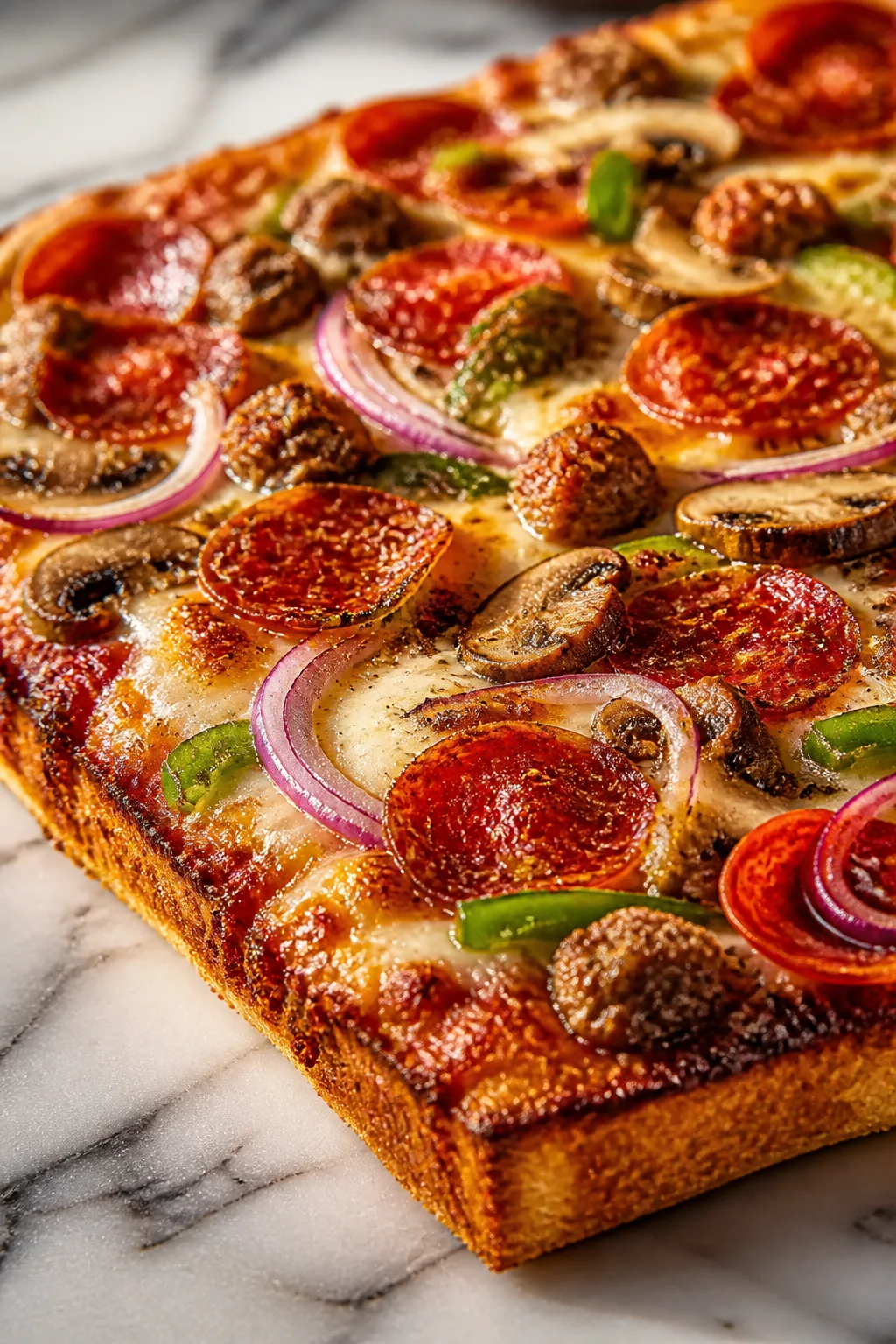
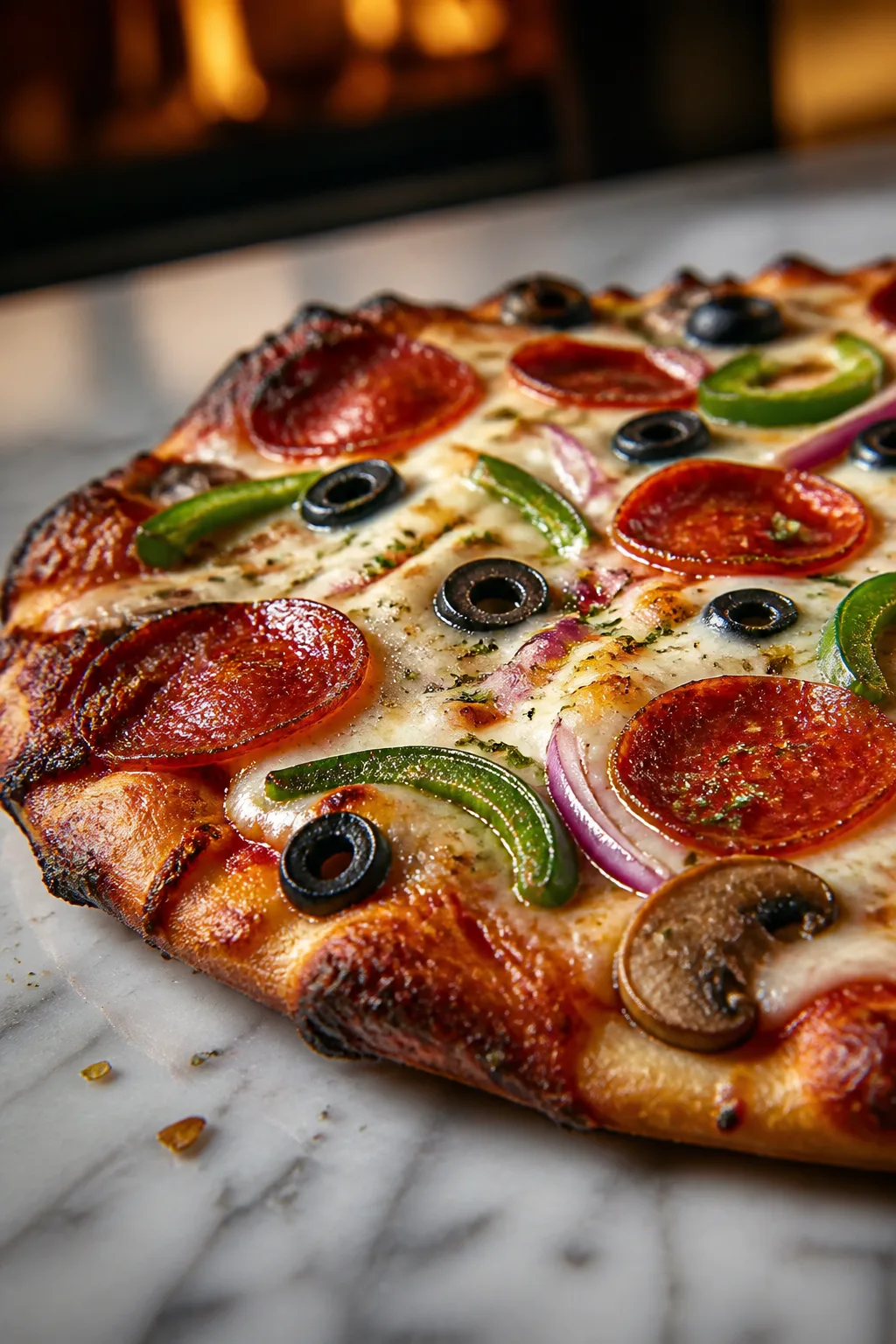
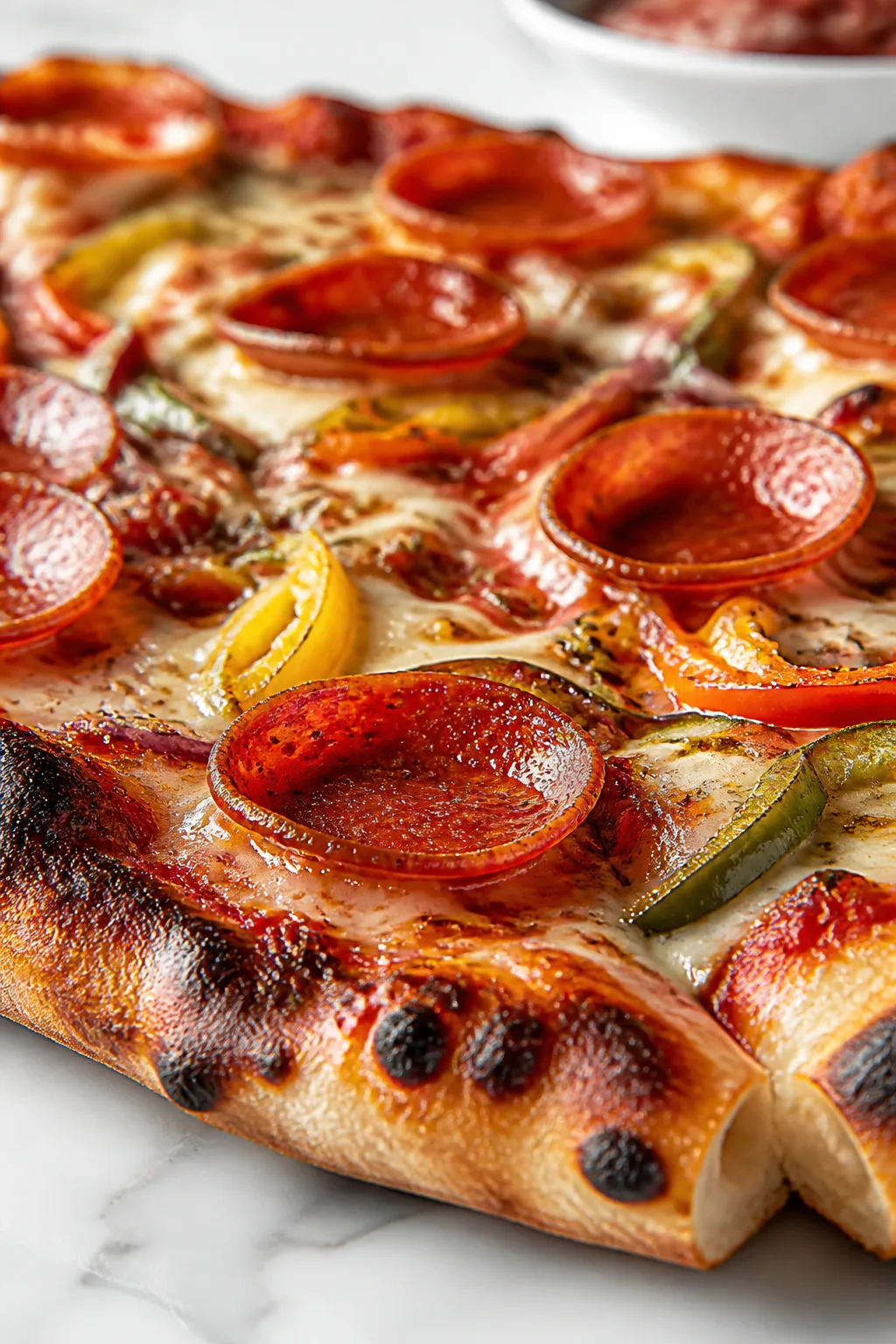
If you love that crispy, smoky crust only a griddle can deliver, this Blackstone pizza is your new go-to. Fresh toppings and a quick cook make it perfect for casual weekend dinners or impromptu gatherings.
Introduction
I first tried making pizza on my Blackstone griddle a couple of years ago, and honestly, it changed how I think about homemade pizza. The crust comes out super crispy with just the right amount of smoky char that you just can’t get in a regular oven. What I love about this recipe is its simplicity—just fresh ingredients and the magic of the griddle’s heat. One trick I learned early on is to make sure the dough isn’t too wet; it needs to hold together but still be soft enough to stretch thin. Also, preheating the griddle well before cooking is key to getting that perfect crust. When it’s done, the pizza has this beautiful golden-brown base with bubbling cheese and fresh basil on top. It’s perfect for casual dinners or when friends drop by unexpectedly. I usually serve it with a simple green salad and a cold drink, and it always feels like a little celebration. If you’ve never tried pizza on a griddle before, this recipe will make you wonder why you waited so long!
What You'll Need
4 individual pizzas, approximately 10-inch each
- 2 cups all-purpose flour, sifted
- 1 teaspoon active dry yeast
- 1 teaspoon sugar
- 3/4 cup warm water (around 110°F)
- 1 tablespoon olive oil, plus extra for griddle
- 1/2 teaspoon salt
- 1/2 cup tomato sauce, preferably homemade or quality store-bought
- 1 1/2 cups shredded mozzarella cheese
- Fresh basil leaves, handful
- 1/2 cup sliced pepperoni or your favorite toppings
- Optional: chili flakes or garlic powder for extra flavor
How To Do It
Step 1
Start by activating your yeast. In a small bowl, combine warm water (around 110°F) with sugar and yeast. Stir gently and let it sit for about 5 minutes until the mixture becomes frothy. This step is crucial because it ensures your yeast is alive and ready to make the dough rise. If it doesn’t froth, your yeast might be dead or the water temperature was off. Using water that’s too hot can kill the yeast, so be careful with the temperature.
⏱ Time: 5 minutes
✓ Doneness: Frothy, bubbly surface indicating active yeast
Step 2
In a large mixing bowl, combine the sifted flour and salt. Make a well in the center and pour in the yeast mixture along with 1 tablespoon of olive oil. Mix everything together with a wooden spoon until it starts coming together into a shaggy dough. This step forms the base of your pizza dough and the oil helps with texture and flavor, making it tender while still crisping well on the griddle.
⏱ Time: 5 minutes
✓ Doneness: Dough begins to form a sticky ball
Step 3
Turn the dough out onto a lightly floured surface and knead it by hand for about 8-10 minutes. Kneading develops gluten, which is what gives the dough elasticity and chewiness. You want the dough to be smooth and slightly tacky but not sticky. If it’s too sticky, sprinkle a little more flour, but be careful not to add too much or the crust will be tough.
⏱ Time: 8-10 minutes
✓ Doneness: Smooth, elastic dough that springs back when poked
Step 4
Form the dough into a ball and place it in a lightly oiled bowl. Cover it with a clean kitchen towel or plastic wrap and let it rise in a warm spot for about 1 hour, or until it doubles in size. This rising time is important because it allows the yeast to produce gas, which makes the dough light and airy. Rushing this step will result in a dense crust.
⏱ Time: 60 minutes
✓ Doneness: Dough doubled in size and looks puffy
Step 5
While the dough is rising, preheat your Blackstone griddle over medium-high heat for at least 10 minutes. A well-heated griddle ensures your pizza crust will cook quickly and develop that signature crispy bottom. If the griddle isn’t hot enough, the dough will absorb too much oil and become soggy instead of crisp.
⏱ Time: 10 minutes
✓ Doneness: Griddle surface feels very hot to the touch (using a quick water drop test)
Step 6
Once the dough has risen, punch it down gently to release excess air. Divide it into 4 equal portions. On a floured surface, stretch or roll out each portion into a roughly 10-inch circle. Try to keep it thin but not so thin that it tears. The thinner the dough, the crispier the crust will be on the griddle.
⏱ Time: 10 minutes
✓ Doneness: Smooth, thin dough circles ready for topping
Step 7
Brush a little olive oil directly onto the griddle to prevent sticking. Place one dough circle onto the hot griddle. Cook for 2-3 minutes until the bottom turns golden brown and crispy. You’ll know it’s ready to flip when the edges start bubbling and the bottom has a nice color. Avoid flipping too early or the dough might stick or tear.
⏱ Time: 2-3 minutes
✓ Doneness: Golden brown, crisp bottom with bubbling edges
Step 8
Flip the dough carefully using a spatula. Quickly spread about 2 tablespoons of tomato sauce evenly over the cooked side. Then sprinkle a generous handful of shredded mozzarella cheese and add your favorite toppings like pepperoni and fresh basil. The cheese will melt quickly thanks to the hot griddle, so work fast but gently to avoid tearing the dough.
⏱ Time: 2 minutes
✓ Doneness: Cheese starts to melt and toppings warm through
Step 9
Cover the pizza loosely with a large metal bowl or lid to trap heat and help the cheese melt evenly without burning the crust. Cook for another 3-4 minutes until the cheese is bubbly and golden in spots. Keep an eye on it to avoid burning. Once done, slide it off the griddle and let it cool for a minute before slicing.
⏱ Time: 3-4 minutes
✓ Doneness: Bubbly, slightly golden cheese and cooked toppings
Variations
Veggie Lover’s Griddle Pizza
Swap out pepperoni for a colorful mix of bell peppers, mushrooms, onions, and olives. This version stays fresh and vibrant with the same crispy crust. Add fresh arugula after cooking for a peppery kick.
Note: Because veggies release moisture, use slightly less sauce and cook a bit longer to avoid soggy crust.
Spicy Jalapeño and Sausage Pizza
Add sliced jalapeños and cooked spicy sausage for a bold flavor twist. The heat from the jalapeños pairs perfectly with the smoky griddle crust for a pizza that wakes up your taste buds.
Note: Pre-cook sausage fully before topping to ensure it cooks through on the griddle.
White Garlic and Herb Pizza
Skip the tomato sauce and instead brush the dough with olive oil and minced garlic, then top with mozzarella, ricotta, and fresh herbs like rosemary and thyme. It’s rich, aromatic, and perfect for garlic lovers.
Note: Watch the garlic closely to avoid burning when brushing the dough.
BBQ Chicken Griddle Pizza
Use BBQ sauce instead of tomato sauce, topped with shredded cooked chicken, red onions, and cheddar cheese. This variation is smoky, tangy, and hearty.
Note: Use pre-cooked chicken to avoid undercooked toppings.
Gluten-Free Griddle Pizza
Use a gluten-free flour blend designed for baking, and add a tablespoon of xanthan gum for elasticity. The result is a tasty, crisp crust suitable for gluten-sensitive diets.
Note: Gluten-free dough is more delicate; handle carefully and cook at slightly lower temperature to prevent burning.
Pro Tips
Preheat your griddle thoroughly before cooking the dough.
A properly heated griddle ensures the dough cooks quickly, forming a crispy crust before the toppings dry out. If the griddle is too cool, the dough absorbs oil and becomes soggy instead of crisp.
Don’t overload the pizza with toppings.
Too many toppings add weight and moisture, which can prevent the dough from cooking evenly and crisping properly. Keeping toppings light helps maintain that perfect griddle crust texture.
Cover the pizza with a metal bowl or lid after adding toppings.
This traps heat and helps melt the cheese evenly without burning the crust. It also creates a mini-oven effect on the griddle, speeding up cooking and ensuring toppings cook through.
Use a gentle hand when stretching the dough.
Overstretching or tearing the dough can cause holes, which leads to toppings leaking and sticking to the griddle. A gentle stretch keeps the dough intact and cooks evenly.
Brush a thin layer of olive oil on the griddle before each pizza.
This prevents sticking and adds a subtle flavor and crispness to the crust. Skipping this step can cause the dough to stick and tear during cooking.
Proof the yeast in warm water with sugar before mixing the dough.
This ensures the yeast is active and ready to ferment the dough. Using dead yeast results in dense, flat crusts that don’t rise properly.
Let the dough rise until doubled in size.
Proper fermentation creates air pockets in the dough, making the crust light and airy instead of dense. Rushing this step produces a heavy, tough crust.
Common Mistakes to Avoid
Using water that’s too hot to activate yeast
Why it happens Many people assume hotter water speeds up yeast activation, but temperatures above 120°F kill yeast cells.
Fix Always test water temperature with a thermometer or your wrist to ensure it’s warm, not hot. If the yeast doesn’t foam after 5 minutes, start over with fresh yeast and properly warmed water.
Not preheating the griddle enough
Why it happens It’s tempting to start cooking right away, especially when hungry, but a cold griddle won’t crisp the dough properly.
Fix Preheat your griddle for at least 10 minutes on medium-high heat. Use a quick water droplet test—if the water sizzles and evaporates immediately, the griddle is ready.
Overloading the pizza with toppings
Why it happens It’s easy to pile on too many toppings wanting a hearty pizza, but this adds moisture and weight.
Fix Limit toppings to a thin layer so the crust crisps and cooks evenly. Use less sauce and cheese if needed to avoid sogginess.
Skipping the dough resting/rising time
Why it happens Rushing the recipe or forgetting to let dough rise leads to dense, chewy crusts.
Fix Allow the dough to rise in a warm place until doubled in size (usually about 1 hour). This step is essential for light, airy pizza bases.
Not covering the pizza during final cooking
Why it happens Without a cover, cheese melts unevenly and toppings may remain undercooked while crust burns.
Fix Use a metal bowl or lid to cover the pizza on the griddle, trapping heat and ensuring even cooking of cheese and toppings.
Nutrition
Per Serving:
Nutritional values are estimates and may vary based on specific ingredients used.
Storage & Tips
Room Temperature
You can safely keep leftover pizza at room temperature for up to 2 hours covered loosely with foil or a clean towel. Beyond that, bacteria growth increases and it’s best to refrigerate.
Refrigerator
Store leftover pizza in an airtight container or wrapped tightly in plastic wrap for up to 3 days. The crust may soften when cold, so reheat in a hot skillet or oven to regain crispness.
Freezer
Wrap pizza slices tightly in plastic wrap and foil to prevent freezer burn. Freeze for up to 2 months. Thaw in the fridge overnight before reheating for best texture.
Reheating
Reheat pizza on a skillet over medium heat for 3-5 minutes to crisp the crust while melting the cheese. Avoid microwaving as it makes the crust soggy. You can also reheat in a 375°F oven for 8-10 minutes.
Make Ahead
You can prepare the dough 1 day ahead and keep it refrigerated, then bring to room temperature before shaping. Sauce and toppings can be prepped in advance. Assemble and cook on the day of serving for freshest results.
FAQ
Can I use store-bought pizza dough for this recipe?
Absolutely! Store-bought dough works well and saves time. Just make sure to let it come to room temperature and stretch it gently before cooking on the griddle. The crust won’t be quite the same as homemade but will still crisp nicely.
What if my dough sticks to the griddle?
If your dough sticks, it usually means the griddle isn’t hot enough or there’s not enough oil. Always preheat thoroughly and brush a thin layer of olive oil before placing the dough. Also, dust your dough lightly with flour to prevent sticking.
How do I get the cheese to melt evenly on the griddle?
Covering the pizza with a metal bowl or lid traps heat and creates a mini-oven effect. This helps the cheese melt evenly without burning the crust. Without a cover, cheese can cook unevenly and toppings may stay cold.
Can I make this pizza vegan?
Yes! Use a plant-based cheese alternative and swap out any meat toppings for veggies or vegan sausage. The dough and sauce are naturally vegan, so it’s an easy adaptation.
How do I store leftover pizza to keep the crust crispy?
Store leftovers in the fridge wrapped tightly, but reheat on a skillet or oven to regain crispness. Avoid microwaving as it makes the crust soggy.
Can I use a different type of flour?
You can experiment with bread flour or whole wheat, but expect changes in texture. Bread flour makes a chewier crust, while whole wheat adds nuttiness but can be denser. Adjust water amounts accordingly.
What temperature should the griddle be for cooking pizza?
Medium-high heat (around 375-400°F) is ideal. Too hot and the crust burns before toppings cook; too low and the crust becomes soggy. Preheat for at least 10 minutes for even heat.
Why didn’t my dough rise properly?
Common causes are expired yeast, water that’s too hot or cold, or insufficient rising time. Always proof yeast first and give the dough enough time in a warm spot to double in size.
Final Thoughts
I hope you enjoy making and sharing this crispy Blackstone griddle pizza as much as I do. Feel free to experiment and let me know how your pizza turns out!