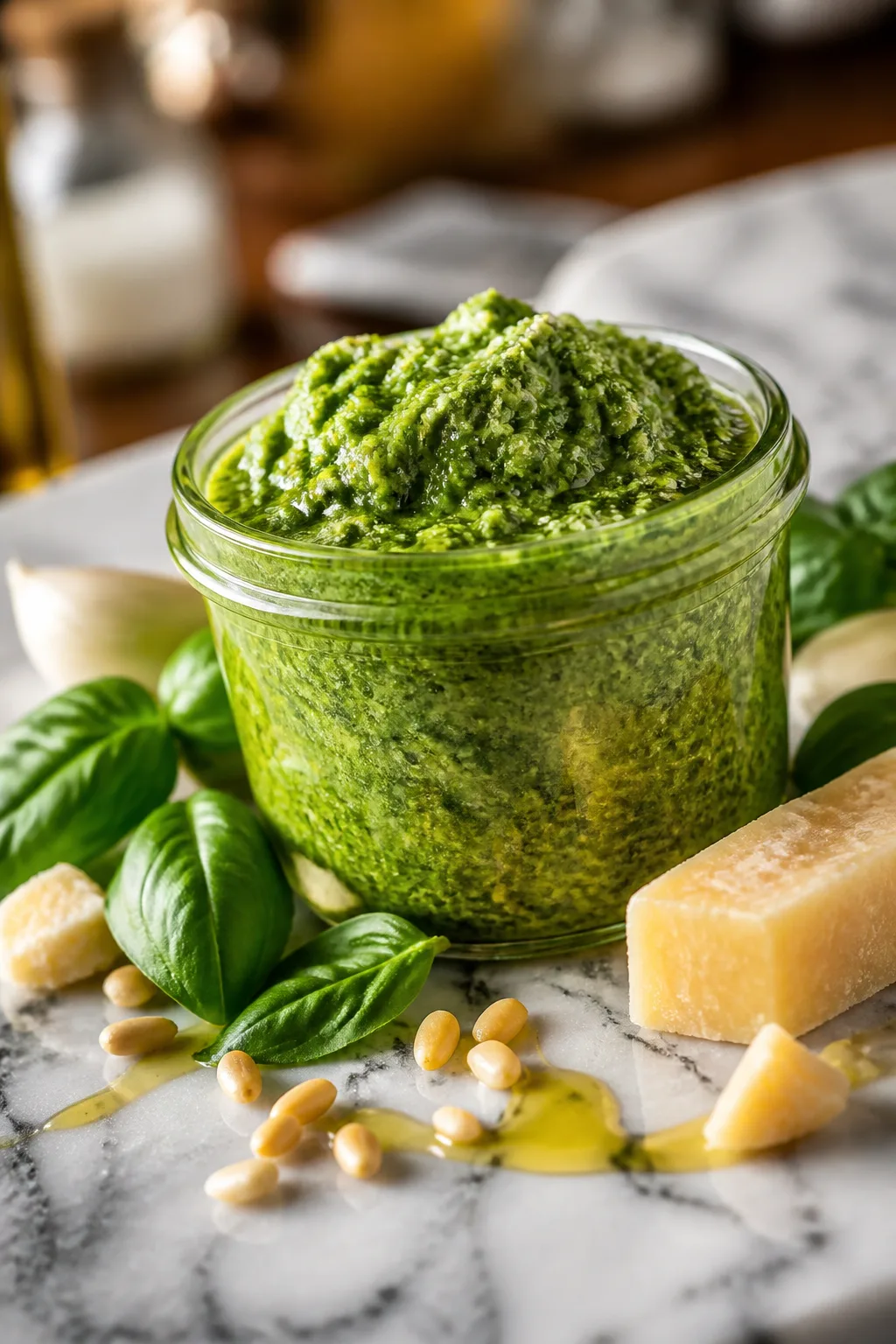
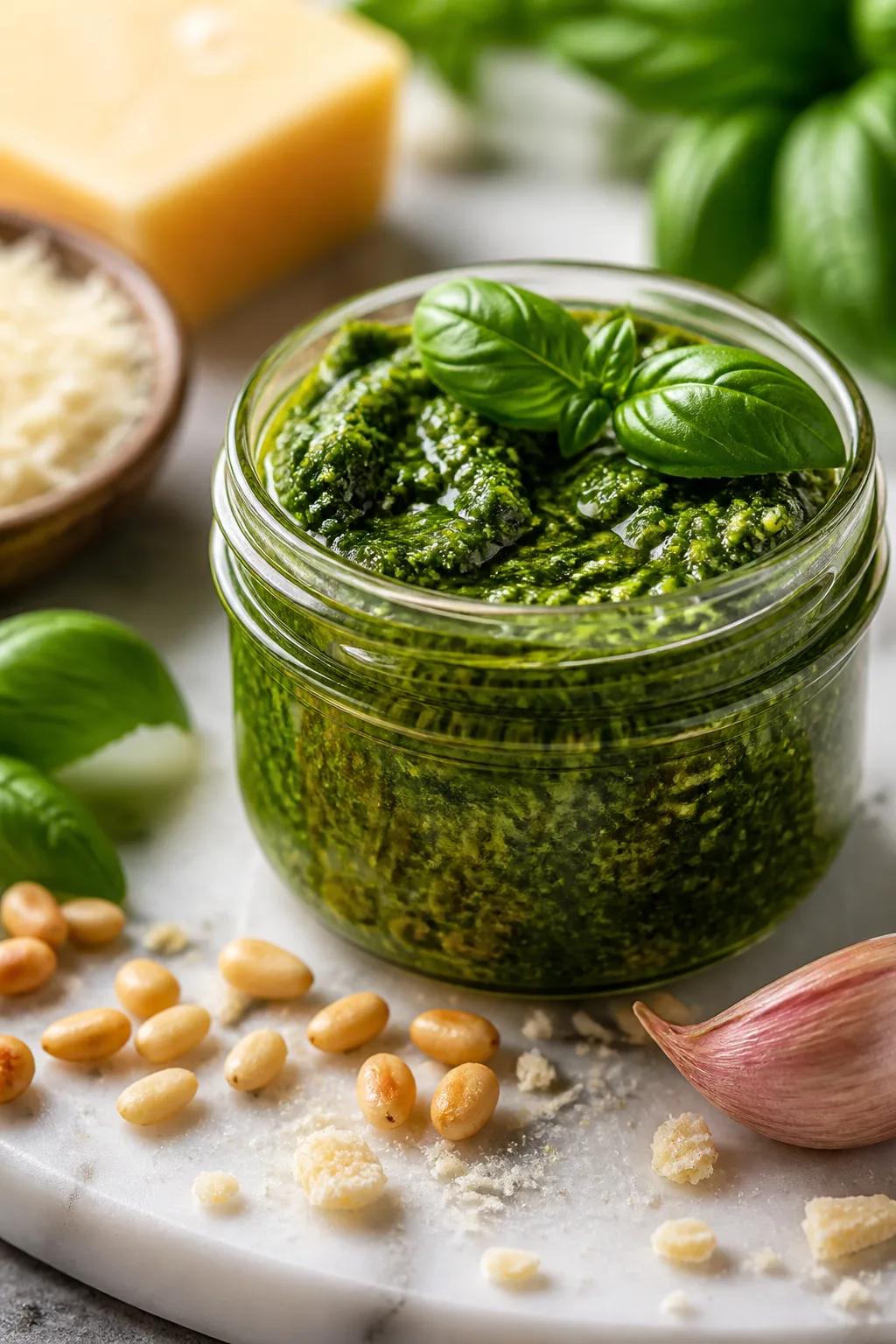
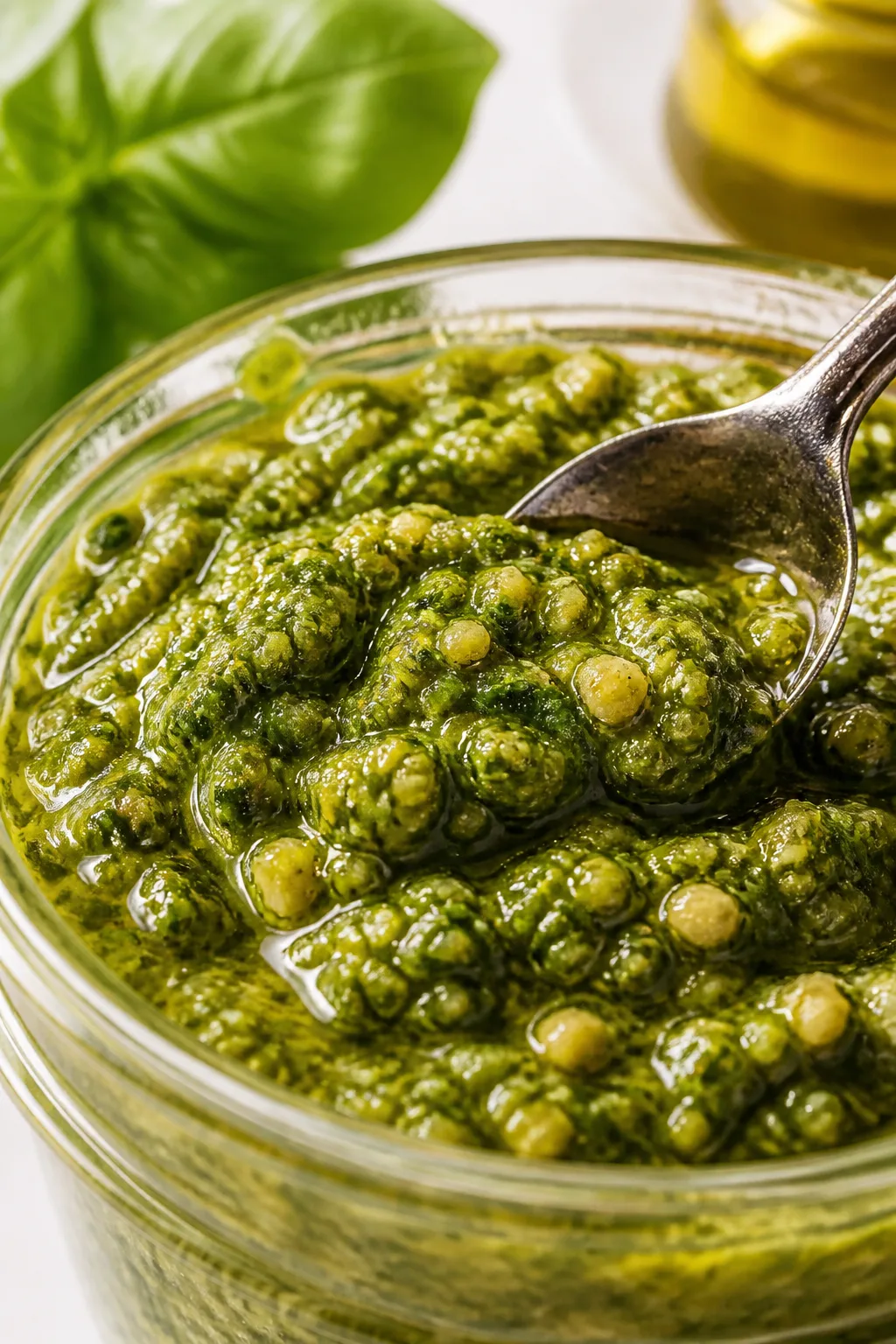
This vibrant basil pesto is my favorite quick sauce to make. Fresh basil and toasted pine nuts shine through with a hint of garlic. Perfect for pasta nights or jazzing up sandwiches when you want flavor fast!
Introduction
I first started making basil pesto years ago when I wanted a fresh, homemade sauce that could quickly elevate simple dishes. The first few attempts were a little off – sometimes too oily, other times too bland – but I learned a few tricks that changed everything. Toasting the pine nuts just right brings out their nutty flavor, and using fresh garlic gives the pesto a gentle kick without overpowering the basil. Plus, adding a squeeze of lemon juice brightens the whole mix and helps keep that vibrant green color. What I love most is how versatile this pesto is — toss it with pasta, spread it on sandwiches, or dollop it over roasted veggies. It’s bright, fresh, and just a little bit indulgent. Whenever I’m short on time but want something delicious, this pesto is my go-to. The finished sauce is thick but silky, with that perfect balance of herbaceous basil, creamy cheese, and rich nuts. If you’ve never made pesto before, don’t worry! It’s forgiving and quick, and I promise you’ll want to make it again and again.
What You'll Need
Approximately 3/4 cup pesto, 4 servings
- 2 cups fresh basil leaves, packed
- 1/3 cup pine nuts, toasted
- 2 cloves garlic, peeled
- 1/2 cup extra virgin olive oil
- 1/2 cup freshly grated Parmesan cheese
- Salt to taste
- Freshly ground black pepper to taste
- 1 tablespoon lemon juice (optional)
How To Do It
Step 1
Start by toasting the pine nuts in a dry skillet over medium heat. Stir frequently and watch carefully because they can burn quickly. Toasting brings out their rich, buttery flavor and adds depth to your pesto. Once they’re golden and fragrant, remove them from the heat and let them cool. Avoid skipping this step or rushing it, as raw pine nuts can taste bland and oily.
⏱ Time: 5 minutes
✓ Doneness: Pine nuts turn a light golden brown and smell nutty and toasty.
Step 2
Place the fresh basil leaves in a food processor along with the peeled garlic cloves. Pulse a few times to chop the herbs and garlic evenly, releasing their aroma. This step is key to ensure the pesto has a fresh, vibrant flavor throughout and avoids big chunks of garlic that can overpower the sauce.
⏱ Time: 2 minutes
✓ Doneness: Basil and garlic are coarsely chopped, bright green with a fragrant smell.
Step 3
Add the cooled pine nuts to the basil and garlic mixture. Pulse a few more times to combine. The nuts provide a creamy texture and a subtle crunch, so don’t over-process or the pesto will turn too pasty. You want a slightly coarse consistency for the best mouthfeel.
⏱ Time: 1 minute
✓ Doneness: The mixture looks slightly chunky but well combined.
Step 4
With the processor running on low, slowly drizzle in the extra virgin olive oil. This gradual addition helps emulsify the sauce, creating a smooth, silky texture. Pouring it in too fast can cause the pesto to separate or become too oily. Keep blending until the mixture is creamy but still has some texture.
⏱ Time: 3 minutes
✓ Doneness: Pesto becomes glossy and thick but not watery.
Step 5
Add the freshly grated Parmesan cheese, salt, and pepper to taste. Pulse a few more times to combine. The cheese adds umami and richness, so taste as you go to avoid overpowering the fresh basil flavor. Seasoning at this stage lets you control the balance perfectly.
⏱ Time: 2 minutes
✓ Doneness: Pesto is smooth with a balanced salty, cheesy flavor.
Step 6
Optional: add a tablespoon of fresh lemon juice to brighten the pesto and help maintain its vibrant green color. Pulse once or twice to mix. The acidity cuts through the richness and adds a fresh note that lifts the whole sauce.
⏱ Time: 1 minute
✓ Doneness: Pesto has a lively, fresh aroma with a slight tang.
Step 7
Taste the pesto and adjust seasoning as needed. If it feels too thick, you can add a little more olive oil or a splash of water to loosen it up. The texture should be spreadable but not runny, perfect for coating pasta or spreading on bread.
⏱ Time: 2 minutes
✓ Doneness: Pesto spreads easily and has a balanced flavor profile.
Step 8
Transfer the pesto to a clean jar or bowl. If not using immediately, cover the surface with a thin layer of olive oil to prevent oxidation and browning. Store in the fridge for up to a week. This step keeps your pesto looking fresh and tasting vibrant longer.
⏱ Time: 5 minutes
✓ Doneness: Pesto surface is smooth and glossy, no discoloration.
Step 9
Serve the pesto tossed with freshly cooked pasta, spread on sandwiches, or dolloped over grilled vegetables or chicken. It’s best enjoyed fresh but can also be gently warmed or stirred into hot dishes for a quick flavor boost. Enjoy the burst of herbal freshness!
⏱ Time: 0 minutes
✓ Doneness: Pesto is evenly distributed and enhances the dish’s flavor.
Variations
Walnut and Basil Pesto
Swap pine nuts for toasted walnuts for a slightly earthier, richer pesto with a bit more bite. Walnuts are more affordable and give a nice crunch. The flavor will be deeper and less sweet but still delicious on pasta or sandwiches.
Note: Toast walnuts gently and chop coarsely to maintain texture. The pesto may be slightly thicker, so adjust olive oil to desired consistency.
Vegan Basil Pesto
Replace Parmesan cheese with nutritional yeast or a vegan hard cheese alternative. This keeps the cheesy, umami flavor while being dairy-free. Perfect for plant-based diets without sacrificing that classic pesto taste.
Note: Nutritional yeast blends smoothly but has a distinct flavor. Adjust quantity to taste and add more lemon juice for brightness.
Spicy Basil Pesto
Add a pinch of red pepper flakes or a small fresh chili to the food processor for a spicy kick. This variation pairs wonderfully with grilled meats or roasted vegetables, adding warmth and complexity.
Note: Add chili early with basil to infuse flavor evenly. Start with a small amount and adjust to heat preference.
Basil and Spinach Pesto
Mix fresh basil with baby spinach for a milder, greener pesto that uses less basil but still tastes fresh. This is great if basil is limited or you want a larger batch with a softer flavor.
Note: Use a 50/50 ratio and blend thoroughly. The texture will be smoother and color a bit darker.
Sun-Dried Tomato Basil Pesto
Add a handful of sun-dried tomatoes to the classic pesto ingredients for a tangy, sweet twist. This variation adds depth and pairs beautifully with grilled chicken or pasta salads.
Note: Soak sun-dried tomatoes if dry, then blend with basil and nuts. The sauce may be thicker; add olive oil to adjust.
Pro Tips
Toast pine nuts gently and watch closely to avoid burning.
Pine nuts toast very quickly due to their small size and high oil content. Burning them causes bitterness that ruins the pesto’s delicate flavor. Toasting releases their natural oils and enhances nuttiness, which is essential for depth. If you skip this step or rush it, the pesto will taste flat and oily.
Add olive oil slowly while blending to create a smooth emulsion.
Slowly drizzling olive oil allows it to combine evenly with basil oils and cheese, forming a creamy texture. Pouring oil too fast can cause separation or a greasy sauce with uneven consistency. This technique mimics making mayonnaise and is key to achieving silky, spreadable pesto.
Use fresh garlic and pulse finely to avoid overpowering raw garlic chunks.
Raw garlic is pungent and can easily dominate the sauce if not processed finely. Pulsing helps distribute garlic flavor evenly without large pieces that give harsh bites. Using pre-minced garlic lacks freshness and can make the pesto taste artificial or dull.
Add a splash of lemon juice to brighten flavors and preserve color.
Lemon juice adds acidity that balances the richness of nuts and cheese while enhancing basil’s fresh notes. It also slows oxidation, helping the vibrant green color last longer. Omitting this can result in duller flavor and pesto that browns quickly.
Use freshly grated Parmesan for best flavor and texture.
Freshly grated cheese melts better and integrates smoothly, adding umami and saltiness. Pre-grated cheese often contains additives that prevent clumping but can affect texture and flavor. Fresh cheese ensures a richer, more authentic pesto.
Pulse ingredients in stages to control texture and flavor intensity.
Starting with basil and garlic ensures herbs are chopped without bruising. Adding nuts next controls chunk size, and slowly blending oil last allows emulsification. This stepwise process prevents overprocessing and maintains a balanced texture.
Store pesto with a thin layer of olive oil on top to prevent browning.
Exposure to air causes basil to oxidize and turn brown. Covering the surface with oil creates a barrier, preserving color and freshness. This simple step extends pesto’s shelf life and keeps it looking appetizing.
Common Mistakes to Avoid
Using pre-packaged, wilted basil instead of fresh leaves.
Why it happens Sometimes people use whatever basil is on hand, assuming it won’t affect flavor much. Pre-packaged basil often lacks aroma and can be limp or discolored.
Fix Always choose fresh, vibrant basil leaves with a strong aroma. If fresh basil isn’t available, consider growing your own or substituting with a combination of fresh herbs like spinach and mint, but note the flavor will differ.
Skipping toasting pine nuts or burning them.
Why it happens Many underestimate how quickly pine nuts toast and either skip the step or leave them unattended on the heat.
Fix Toast pine nuts over medium heat, stirring constantly and removing from heat at the first sign of golden color and aroma. This develops flavor without bitterness.
Adding olive oil too quickly causing separation.
Why it happens Impatience or unfamiliarity with emulsification leads to pouring oil in too fast.
Fix Drizzle olive oil slowly while blending to create a smooth emulsion. This technique is essential for the right texture.
Using old or pre-minced garlic for the pesto.
Why it happens Convenience often tempts cooks to use pre-minced garlic, but it lacks fresh flavor.
Fix Use fresh garlic cloves and pulse finely with basil for the best aromatic punch and texture.
Not seasoning the pesto properly.
Why it happens Some assume the cheese provides enough saltiness and skip additional seasoning.
Fix Always taste and season with salt and pepper to balance the flavors. A well-seasoned pesto shines.
Nutrition
Per Serving:
Nutritional values are estimates and may vary based on specific ingredients used.
Storage & Tips
Room Temperature
Pesto can safely sit at room temperature for up to 2 hours if covered tightly to prevent contamination. Beyond this, refrigerate promptly to avoid spoilage.
Refrigerator
Store pesto in an airtight container with a thin olive oil layer on top for up to 7 days. The flavor remains fresh, though color may darken slightly. Serve cold or let it come to room temperature before use.
Freezer
Freeze pesto in small portions, ideally in ice cube trays covered with olive oil to prevent freezer burn. Freeze for up to 3 months. Thaw in the refrigerator overnight and stir well before use to restore texture.
Reheating
Pesto is best served cold or at room temperature. If adding to hot dishes, stir in at the end to preserve fresh flavor. Avoid overheating, which can dull the bright basil taste and cause oil separation.
Make Ahead
You can prepare pesto 1-2 days ahead and store it refrigerated with an olive oil layer. For longer storage, freeze small portions. On serving day, bring to room temperature or gently warm if mixing with hot dishes.
FAQ
Can I use frozen basil to make pesto?
Frozen basil tends to be watery and loses some aroma, resulting in a less vibrant pesto. If you must, thaw and drain excess liquid before blending, but fresh basil is always best for flavor and color.
What can I substitute if I don’t have pine nuts?
Walnuts, almonds, or cashews are great alternatives. Toast them lightly to bring out flavor, but note that each nut changes the pesto’s taste and texture slightly. Walnuts give earthiness, almonds add mild sweetness.
How do I keep pesto from turning brown?
Basil oxidizes quickly when exposed to air. Covering the pesto surface with a thin layer of olive oil and storing it in an airtight container in the fridge helps maintain its bright green color longer.
Can I make pesto without a food processor?
Yes! Use a mortar and pestle to grind basil, garlic, and nuts into a paste, then mix in oil and cheese. It takes more time but gives a rustic texture and releases fresh flavors beautifully.
Is it okay to use pre-grated Parmesan cheese?
Pre-grated cheese often has additives that affect texture and flavor. Freshly grated Parmesan melts better and blends smoothly, giving a richer, more authentic pesto.
How long does homemade pesto last in the fridge?
Stored properly with a layer of olive oil on top, pesto lasts about 5-7 days refrigerated. Always check for off smells or discoloration before use.
Can I freeze pesto without cheese?
Yes, freezing pesto without cheese helps preserve flavor better. Add cheese fresh when thawing and using to keep it tasting bright and creamy.
What dishes pair best with basil pesto?
Pesto is fantastic with pasta, grilled chicken, roasted vegetables, sandwiches, or as a dip. Its fresh herbal flavor complements a wide range of dishes and adds a quick flavor boost.
Final Thoughts
I hope you enjoy making and sharing this fresh basil pesto as much as I do! Don’t forget to experiment and share how you use it in your favorite dishes.