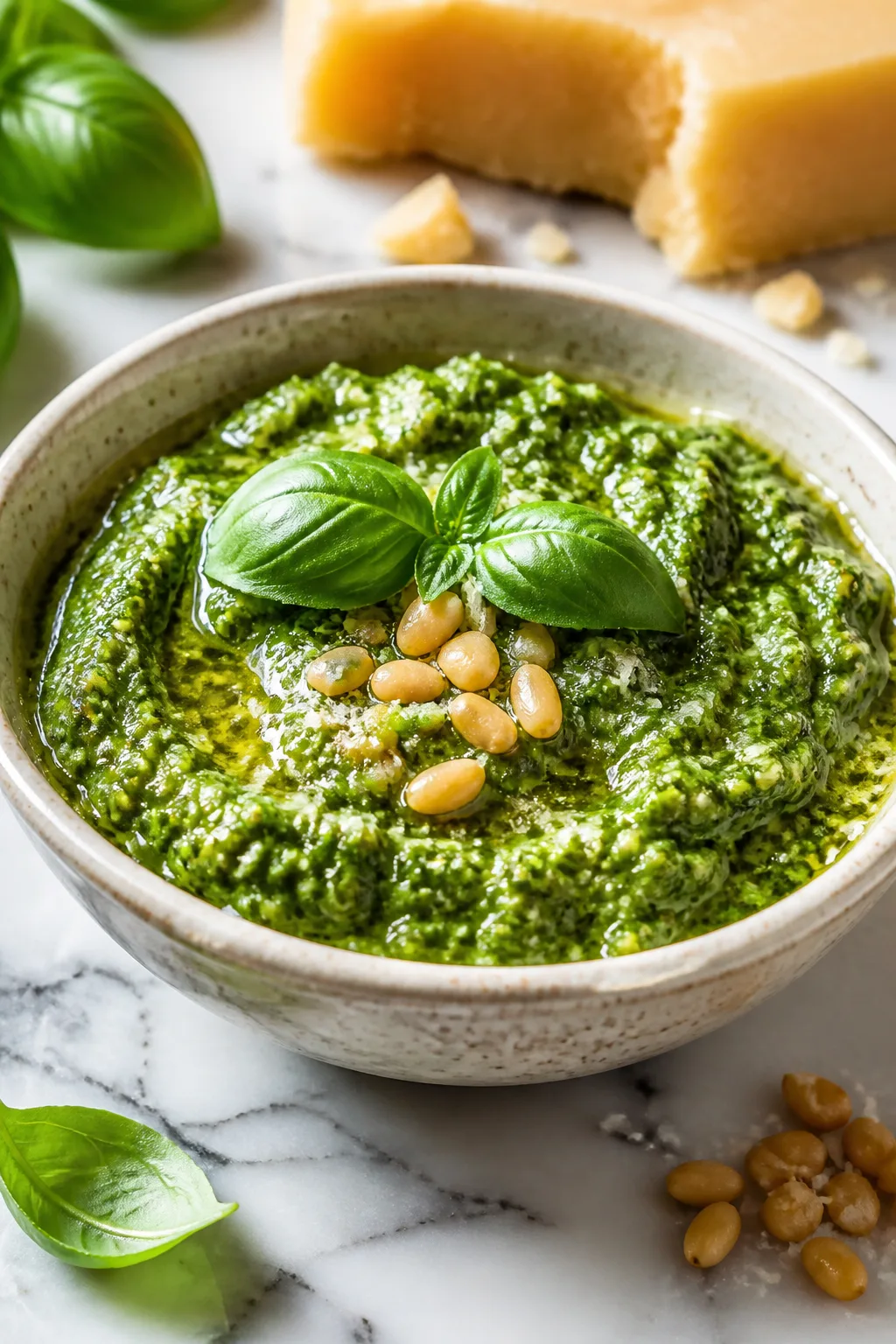
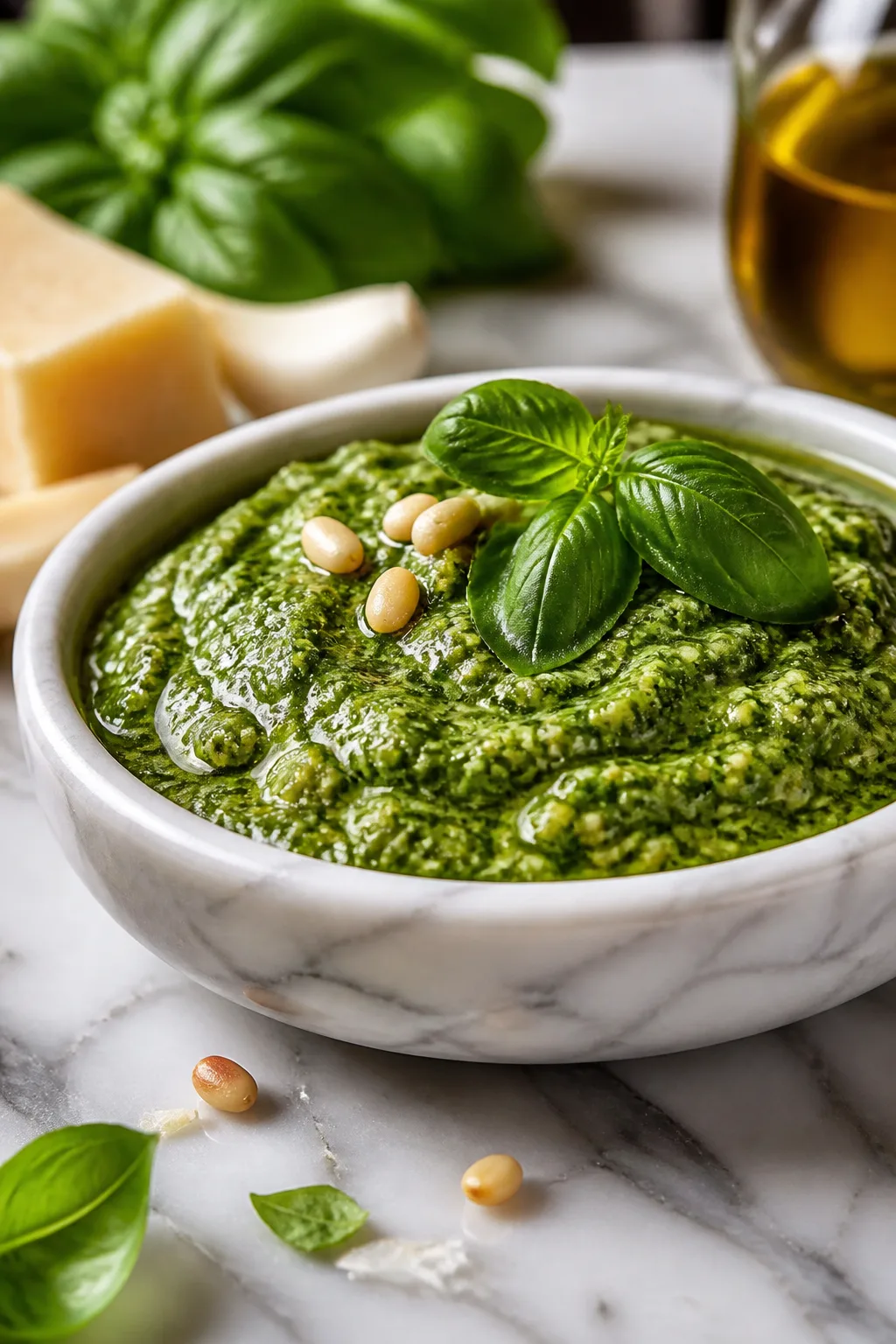
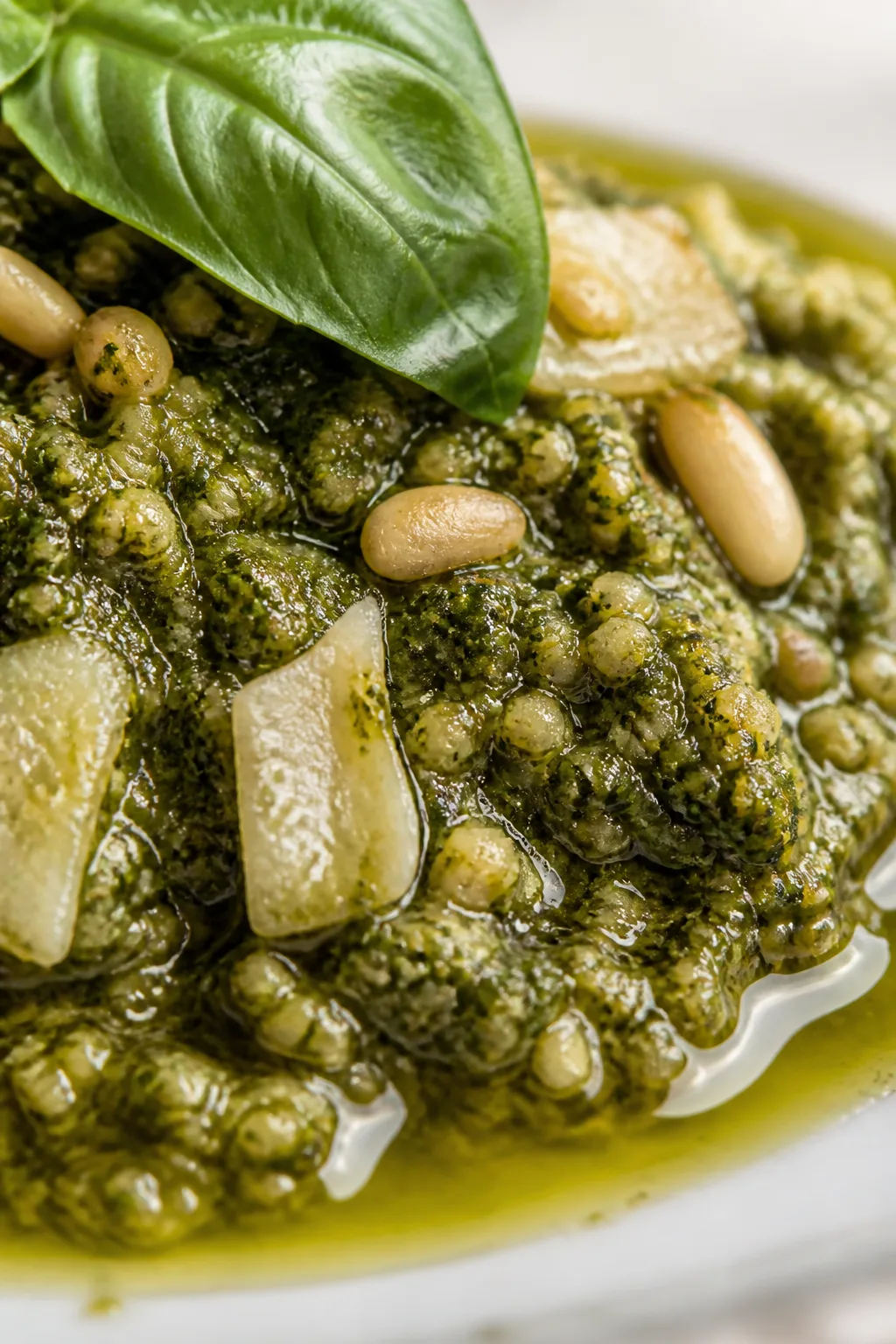
This vibrant basil pesto is bursting with fresh herb flavor and a nutty crunch from lightly toasted pine nuts. It’s a quick sauce that livens up pasta or sandwiches perfectly. I love making it when basil is at its peak!
Introduction
I first fell in love with pesto during a summer trip to Italy, when I tried the freshest version made by a local nonna. Since then, I've been making my own pesto at home, tweaking it a bit each time. What makes this recipe stand out is the simple step of lightly toasting the pine nuts before blending — it adds a subtle depth and crunch that you just don't get with raw nuts. I remember the first time I skipped that step; the pesto tasted flat and missing something vital. Toasting also brings out the nuttiness without overpowering the basil's bright flavor. The trick I learned is to keep an eye on the nuts as they toast because they can burn quickly and turn bitter. The finished pesto is vibrant green, fresh, and a little creamy from the cheese and olive oil. It’s perfect tossed with pasta, spread on sandwiches, or even as a dip for veggies. I love how it transforms simple dishes into something special, especially in summer when basil is at its peak. This recipe is easy enough for a weeknight but impressive enough to serve guests. Plus, it stores well in the fridge or freezer for quick meals later on.
What You'll Need
Approximately 1 cup pesto, 4 servings
- 2 cups fresh basil leaves, packed
- 1/3 cup pine nuts, lightly toasted
- 1/2 cup freshly grated Parmesan cheese
- 2 cloves garlic, peeled
- 1/2 cup extra virgin olive oil
- Salt to taste
- Freshly ground black pepper to taste
- 1 tablespoon lemon juice (optional)
How To Do It
Step 1
Start by toasting the pine nuts in a dry skillet over medium heat. Stir them frequently and watch closely—they’ll turn golden and smell nutty in just a few minutes. This step is crucial because it intensifies the pine nuts’ flavor and adds a toasty crunch to your pesto. Avoid burning them, or the pesto will taste bitter, so keep the heat moderate and stir often. Once toasted, transfer them to a plate to cool before blending.
⏱ Time: 5 minutes
✓ Doneness: Nuts are golden brown and emit a warm, fragrant aroma.
Step 2
Rinse and dry the fresh basil leaves thoroughly to avoid watery pesto. Add the basil, cooled pine nuts, garlic cloves, and grated Parmesan cheese into a food processor or blender. Pulse a few times to roughly chop the ingredients before adding oil. This initial chop helps create a smooth but textured pesto and ensures even blending later.
⏱ Time: 3 minutes
✓ Doneness: Ingredients are coarsely chopped but not pureed.
Step 3
With the processor running on low speed, slowly drizzle in the extra virgin olive oil. Adding the oil gradually helps emulsify the mixture, giving the pesto a creamy texture without separating. If you pour the oil too fast, the sauce might become oily or unevenly mixed. Stop once the pesto reaches your desired consistency — some like it chunkier, others smoother.
⏱ Time: 4 minutes
✓ Doneness: Pesto is creamy and well combined, with no large chunks.
Step 4
Taste your pesto and season with salt and freshly ground black pepper. If you want a bit of brightness, add a tablespoon of lemon juice and pulse again briefly. The lemon juice balances the richness of the cheese and oil, adding a fresh zing. Don’t overdo it though; you want the basil to shine.
⏱ Time: 2 minutes
✓ Doneness: Balanced flavor with fresh, nutty, and slightly tangy notes.
Step 5
Transfer the pesto to a clean jar or bowl. To keep the vibrant green color, pour a thin layer of olive oil on top before sealing. This prevents oxidation and browning. Store it in the fridge for up to a week or freeze in small portions for longer storage. Always bring pesto to room temperature before serving for best flavor.
⏱ Time: 5 minutes
✓ Doneness: Pesto is smooth, bright green, and stored properly to maintain freshness.
Step 6
To serve, toss the pesto with freshly cooked pasta. Reserve a bit of pasta water before draining, then add it a little at a time to loosen the sauce and help it coat the noodles evenly. The starch in the water helps emulsify the pesto and pasta for a silky finish. This step is key for restaurant-quality texture.
⏱ Time: 5 minutes
✓ Doneness: Pasta is evenly coated with glossy, vibrant pesto sauce.
Step 7
Try spreading the pesto on toasted bread or sandwiches for a fresh twist. It adds a punch of flavor and moisture without overpowering other ingredients. For sandwiches, add it just before serving to keep the bread from getting soggy.
⏱ Time: 2 minutes
✓ Doneness: Pesto spread is fresh and vibrant without soggy bread.
Step 8
If you want to store pesto for longer, freeze it in ice cube trays. Once frozen, pop the cubes into a zip-top bag. This way, you can defrost just what you need and keep the rest fresh. Thaw in the fridge overnight or add frozen cubes directly to hot pasta for quick meals.
⏱ Time: 10 minutes active prep, freezing time varies
✓ Doneness: Pesto is frozen solid in portioned cubes, ready for easy use.
Step 9
Before serving leftovers, always stir pesto well as the oil may separate. If it looks dry or thick, stir in a teaspoon of olive oil or a splash of warm water to bring back the creamy texture. This little refresh makes it taste freshly made again.
⏱ Time: 3 minutes
✓ Doneness: Pesto is smooth, creamy, and ready to enjoy.
Variations
Walnut Basil Pesto
Swap pine nuts for toasted walnuts for a more robust, earthy flavor. The texture will be slightly coarser, and the pesto has a deeper nutty aroma. Works great on heartier pastas or roasted veggies.
Note: Walnuts are softer than pine nuts, so toast lightly and pulse less to avoid a paste-like texture.
Vegan Basil Pesto
Replace Parmesan with nutritional yeast or vegan cheese alternatives. The pesto remains creamy and flavorful but is dairy-free. Great for vegan diets or those with dairy allergies.
Note: Nutritional yeast adds umami but less creaminess; consider adding extra nuts or a splash of water to adjust texture.
Spicy Basil Pesto
Add a small fresh chili or a pinch of red pepper flakes for heat. This variation livens up the classic pesto with a spicy kick, perfect for pizza or grilled chicken topping.
Note: Add chili sparingly and taste as you go to keep balance between heat and herbaceousness.
Lemon Basil Pesto
Increase lemon juice and add zest for a bright, citrus-forward pesto. This variation pairs wonderfully with seafood or summer salads for a refreshing twist.
Note: Add zest before blending and juice gradually to prevent overpowering the basil.
Spinach and Basil Pesto
Add fresh spinach leaves alongside basil for a milder, greener pesto with extra nutrients. The flavor is less intense but still fresh and vibrant, suitable for picky eaters.
Note: Use a higher basil to spinach ratio to maintain classic pesto flavor and avoid a watery sauce.
Pro Tips
Toast pine nuts gently over medium heat, stirring constantly.
Toasting activates flavorful compounds through Maillard reactions, enhancing nuttiness and adding depth. If you skip or burn them, the pesto will taste flat or bitter, so watch closely and remove from heat as soon as they turn golden.
Use a food processor instead of a blender for better texture control.
Food processors chop ingredients more gently, preventing overheating and bitterness. Blenders can pulverize the mixture too finely and generate heat that dulls basil’s fresh flavor and color.
Add olive oil slowly while blending to create a smooth emulsion.
Gradual addition allows oil to coat basil and pine nut particles evenly, resulting in a creamy sauce that clings to pasta. Pouring oil too fast risks separation and an oily finish.
Dry basil leaves thoroughly before blending to avoid watery pesto.
Excess moisture dilutes flavor and thins the sauce, making it less vibrant. Pat leaves dry with a kitchen towel or use a salad spinner for best results.
Store pesto with a thin layer of olive oil on top to prevent browning.
The oil creates a barrier against air, reducing oxidation that causes pesto to turn brown and lose flavor. This extends shelf life and keeps it looking fresh.
Reserve some pasta cooking water to loosen pesto when mixing.
Starchy pasta water helps bind pesto to noodles and creates a silkier sauce. It prevents clumping and enhances mouthfeel for a restaurant-quality dish.
Freeze pesto in small portions for easy use later.
Portioning pesto in ice cube trays allows you to thaw only what you need, preventing waste. Freezing also preserves fresh flavor and color for months.
Common Mistakes to Avoid
Skipping toasting the pine nuts
Why it happens People often think raw nuts are fine or want to save time, but raw pine nuts lack the deep flavor toasted ones have.
Fix Take the extra 5 minutes to toast them in a dry pan. Stir constantly and remove as soon as they turn golden to avoid bitterness. This small step makes a huge flavor difference.
Using wet basil leaves
Why it happens Sometimes basil is rinsed but not dried well, or bought pre-washed, causing excess water in the pesto.
Fix Use a salad spinner or pat leaves dry with paper towels before blending. This keeps the pesto thick and flavorful instead of watery and dull.
Adding olive oil all at once
Why it happens Rushing the blending process or not knowing the importance of emulsification leads to poor texture.
Fix Slowly drizzle oil into the mix while the processor runs. This ensures a creamy, smooth sauce rather than oily or separated.
Over-blending the pesto
Why it happens Trying to make the sauce too smooth can cause overheating and loss of fresh basil flavor.
Fix Pulse the ingredients just enough to combine and reach your preferred texture. Stop blending once the pesto is well mixed but still vibrant.
Not seasoning properly
Why it happens Sometimes salt and pepper are forgotten or added too late, resulting in bland pesto.
Fix Taste and season at the end, adding salt and pepper gradually. A little lemon juice can also brighten the flavors.
Nutrition
Per Serving:
Nutritional values are estimates and may vary based on specific ingredients used.
Storage & Tips
Room Temperature
Pesto can safely sit out for up to 2 hours if covered, but prolonged exposure to air causes oxidation and browning. For best freshness, refrigerate promptly.
Refrigerator
Store pesto in an airtight container with a thin olive oil layer on top for up to 5-7 days. The flavor may intensify but the color will darken slightly. Bring to room temperature or stir well before serving.
Freezer
Freeze pesto in small portions (ice cube trays work great) for up to 3 months. Wrap tightly to prevent freezer burn. Thaw in the fridge overnight or add frozen cubes directly to hot dishes.
Reheating
Pesto is best served fresh or at room temperature. If reheating, warm gently on the stovetop or microwave, adding a splash of olive oil or water to loosen the sauce. Avoid overheating, which can dull flavor.
Make Ahead
You can prepare pesto 1-2 days ahead and store it refrigerated. For longer storage, freeze immediately after making. Prepare pasta fresh and toss with pesto just before serving for best texture and flavor.
FAQ
Can I use other nuts instead of pine nuts?
Absolutely! Walnuts, almonds, or cashews can substitute pine nuts, though each will give the pesto a slightly different flavor and texture. Toast them lightly to develop nuttiness. Keep in mind that pine nuts have a unique buttery flavor that’s hard to replicate exactly.
How do I keep pesto from turning brown?
To prevent browning, cover the pesto's surface with a thin layer of olive oil before storing it in an airtight container. Also, keep it refrigerated and minimize air exposure. Using fresh basil and preparing pesto just before serving helps maintain its vibrant green color.
Can I freeze pesto without Parmesan cheese?
Yes, you can freeze pesto without cheese if you prefer adding it fresh later. Cheese can change texture when frozen, so freezing cheese-free pesto lets you add freshly grated Parmesan after thawing for a fresher taste and better texture.
What’s the best way to reheat pesto pasta?
Reheat pesto pasta gently on the stovetop with a splash of pasta water or olive oil to loosen the sauce. Avoid high heat which can cause pesto to lose flavor and turn bitter. Microwaving at medium power in short bursts also works well.
Can I make pesto without a food processor?
Yes! You can finely chop the basil, garlic, and nuts by hand and then mix with cheese and olive oil. It takes more time and effort but results in a chunkier, rustic pesto that’s just as delicious.
How long does homemade pesto last in the fridge?
Stored properly with a layer of olive oil on top, homemade pesto lasts about 5 to 7 days in the refrigerator. Beyond that, it may lose freshness and develop off flavors, so freezing is a good option for longer storage.
Is it okay to use pre-grated Parmesan cheese?
Pre-grated cheese often contains anti-caking agents that can affect the pesto’s texture and flavor. Freshly grated Parmesan melts better and blends more smoothly, giving the pesto a richer taste and creamier consistency.
Why is my pesto bitter?
Bitterness can come from over-blending, burning the pine nuts, or using basil that’s past its prime. To avoid this, toast nuts gently, blend just until combined, and use fresh, vibrant basil leaves.
Final Thoughts
Give this fresh basil pesto a try and see how a simple twist like toasting pine nuts can elevate your meals. I’d love to hear how you use it—share your favorites!