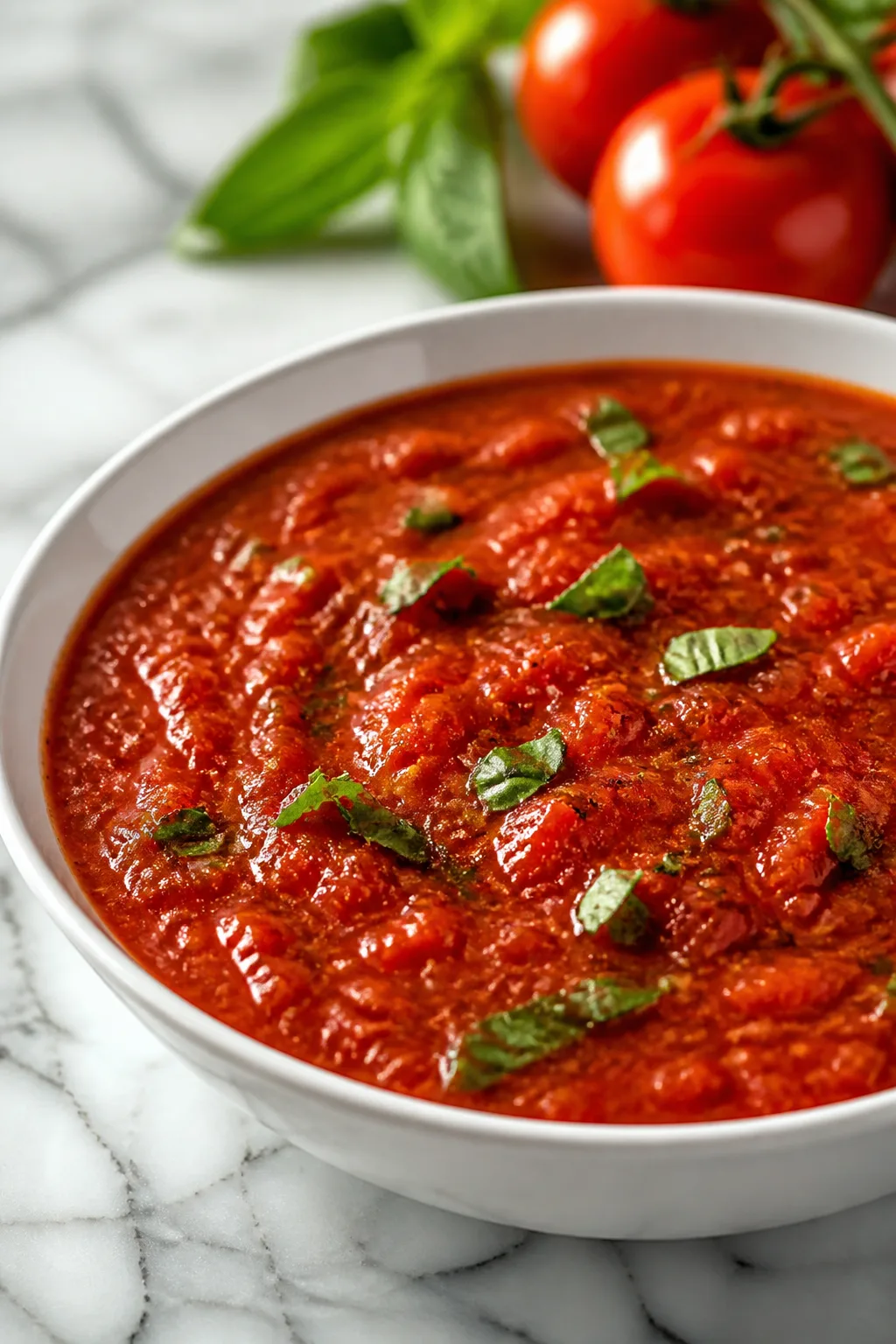
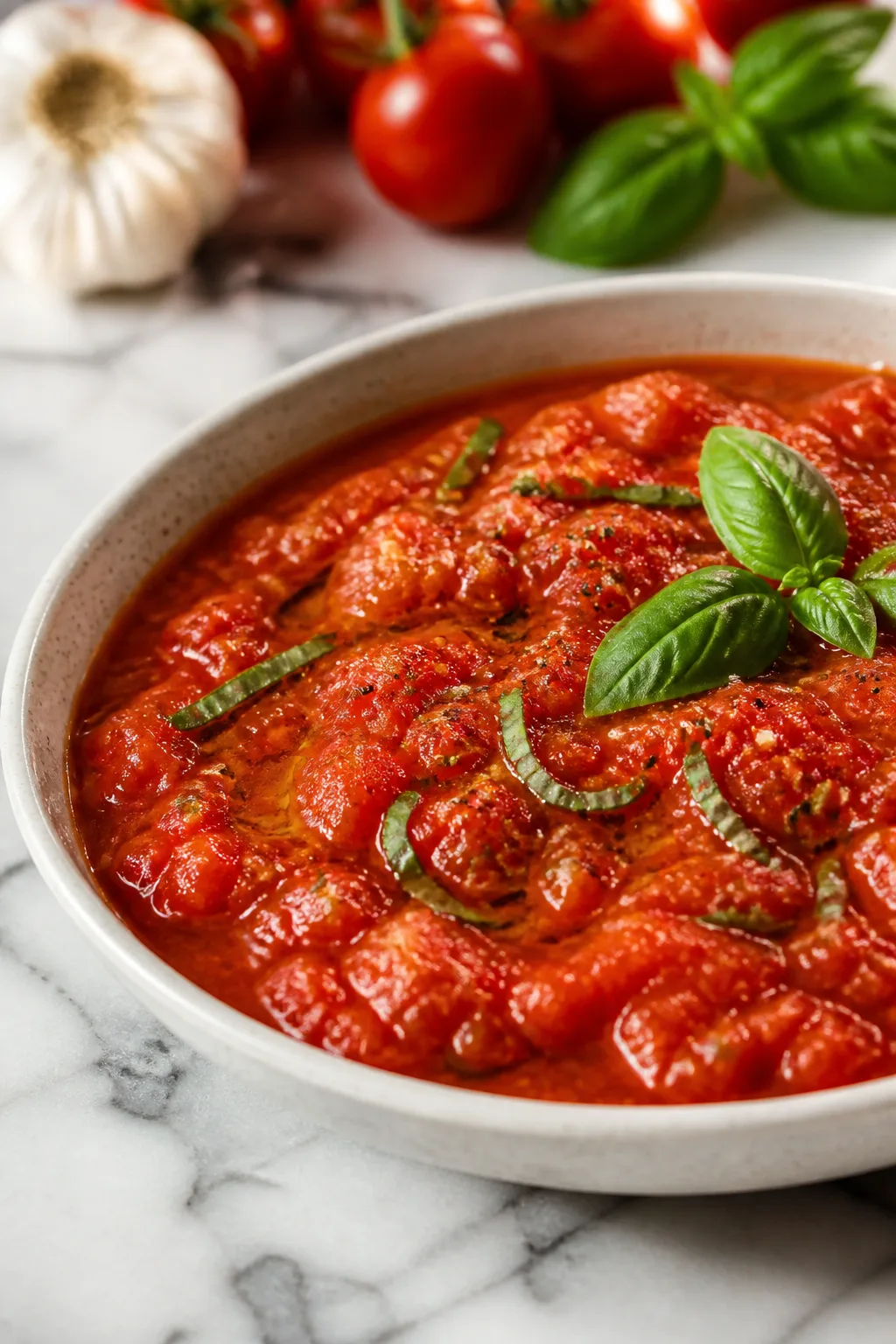
This rich Italian tomato sauce is a staple in my kitchen. Using fresh garlic and letting it simmer slowly really brings out deep flavors. Great for a cozy pasta night or as a base for many dishes!
Introduction
I've been making this Italian tomato sauce for years, and honestly, it's one of the first recipes I mastered when I started cooking. The trick I learned early on was to use fresh garlic sliced thinly and to let the sauce simmer slowly—it really deepens the flavors and softens the acidity of the tomatoes. Unlike some quick sauces that taste flat, this one develops a rich, comforting taste that feels like a warm hug in a bowl. I remember the first time I let it simmer for a full 30 minutes; the kitchen smelled incredible, and the sauce turned out silky with just the right balance of sweetness and tang. It’s perfect for a simple spaghetti dinner or as a base for meatballs or baked dishes. Plus, it’s easy enough to whip up on a weeknight but special enough to impress guests. The finished sauce is thick but not heavy, with that classic bright tomato flavor and a garlicky warmth that keeps me coming back. If you’re looking for a no-fuss sauce that tastes homemade and authentic, this recipe is definitely worth trying.
What You'll Need
Approximately 4 cups, 4 servings
- 2 tablespoons extra virgin olive oil
- 4 cloves garlic, thinly sliced
- 1 can (28 ounces) crushed tomatoes
- 1 teaspoon salt
- 1/2 teaspoon freshly ground black pepper
- 1 teaspoon dried oregano
- 1 teaspoon sugar (optional)
- Fresh basil leaves for garnish (optional)
How To Do It
Step 1
Heat the olive oil in a medium saucepan over medium heat until shimmering but not smoking. Add the thinly sliced garlic and gently sauté for 1-2 minutes, stirring often to prevent burning. This step is crucial because the garlic infuses the oil with flavor, creating a fragrant base for the sauce. Watch closely—the garlic should turn golden but not brown, as burnt garlic will taste bitter and ruin the sauce. The slow release of garlic flavor into the oil sets the tone for the entire sauce.
⏱ Time: 2 minutes
✓ Doneness: Garlic slices are golden and fragrant but not browned or crispy
Step 2
Pour in the crushed tomatoes carefully, stirring to combine with the garlic and oil. Add salt, pepper, oregano, and sugar if using. Bring the sauce to a gentle simmer over medium-low heat. This gradual heating allows the flavors to meld without breaking down the tomatoes too quickly. Rushing this step can cause the sauce to taste raw or overly acidic. Once simmering, reduce the heat to low to maintain a gentle bubble—it should not boil vigorously.
⏱ Time: 5 minutes
✓ Doneness: Sauce is bubbling lightly and starting to thicken
Step 3
Let the sauce simmer uncovered over low heat for 25-30 minutes, stirring occasionally. This slow simmer is what transforms the sauce—water evaporates, flavors concentrate, and the sauce thickens to a luscious texture. Stirring prevents sticking and ensures even cooking. Avoid covering the pot, as trapping moisture will keep the sauce watery. If you see the sauce thickening unevenly or sticking, lower the heat slightly or add a splash of water.
⏱ Time: 25-30 minutes
✓ Doneness: Sauce has thickened, deepened in color, and smells rich and aromatic
Step 4
Taste the sauce and adjust seasoning if needed—more salt, pepper, or a pinch of sugar to balance acidity. This step is important because canned tomatoes vary in sweetness and acidity. Tasting lets you personalize the sauce to your preference. If the sauce feels too thick, add a tablespoon or two of water and stir well.
⏱ Time: 2 minutes
✓ Doneness: Balanced flavor with no harsh acidity or overpowering saltiness
Step 5
Remove the sauce from heat and stir in fresh basil leaves if you like. The residual heat will release the basil’s aroma without cooking it harshly. This adds a fresh, herbal note that brightens the sauce. If you prefer a smoother texture, use an immersion blender to lightly puree the sauce to your liking.
⏱ Time: 1 minute
✓ Doneness: Sauce is vibrant with fresh herb aroma
Step 6
Serve hot over your favorite pasta, or use as a base for dishes like meatballs or eggplant parmesan. The sauce pairs well with any type of pasta but is especially great with spaghetti or penne. If not using immediately, cool to room temperature before storing in an airtight container.
⏱ Time: Immediate
✓ Doneness: Sauce coats pasta evenly and looks glossy
Step 7
To store leftovers, transfer cooled sauce into an airtight container and refrigerate for up to 4 days. Reheat gently on the stove or microwave, adding a splash of water or olive oil to refresh the texture. Avoid boiling again to preserve flavor.
⏱ Time: Storage step
✓ Doneness: Sauce reheats evenly without separation
Step 8
For freezing, portion the cooled sauce into freezer-safe containers or bags, leaving some headspace for expansion. Freeze for up to 3 months. Thaw overnight in the fridge before reheating gently.
⏱ Time: Storage step
✓ Doneness: Sauce retains flavor and texture after thawing
Step 9
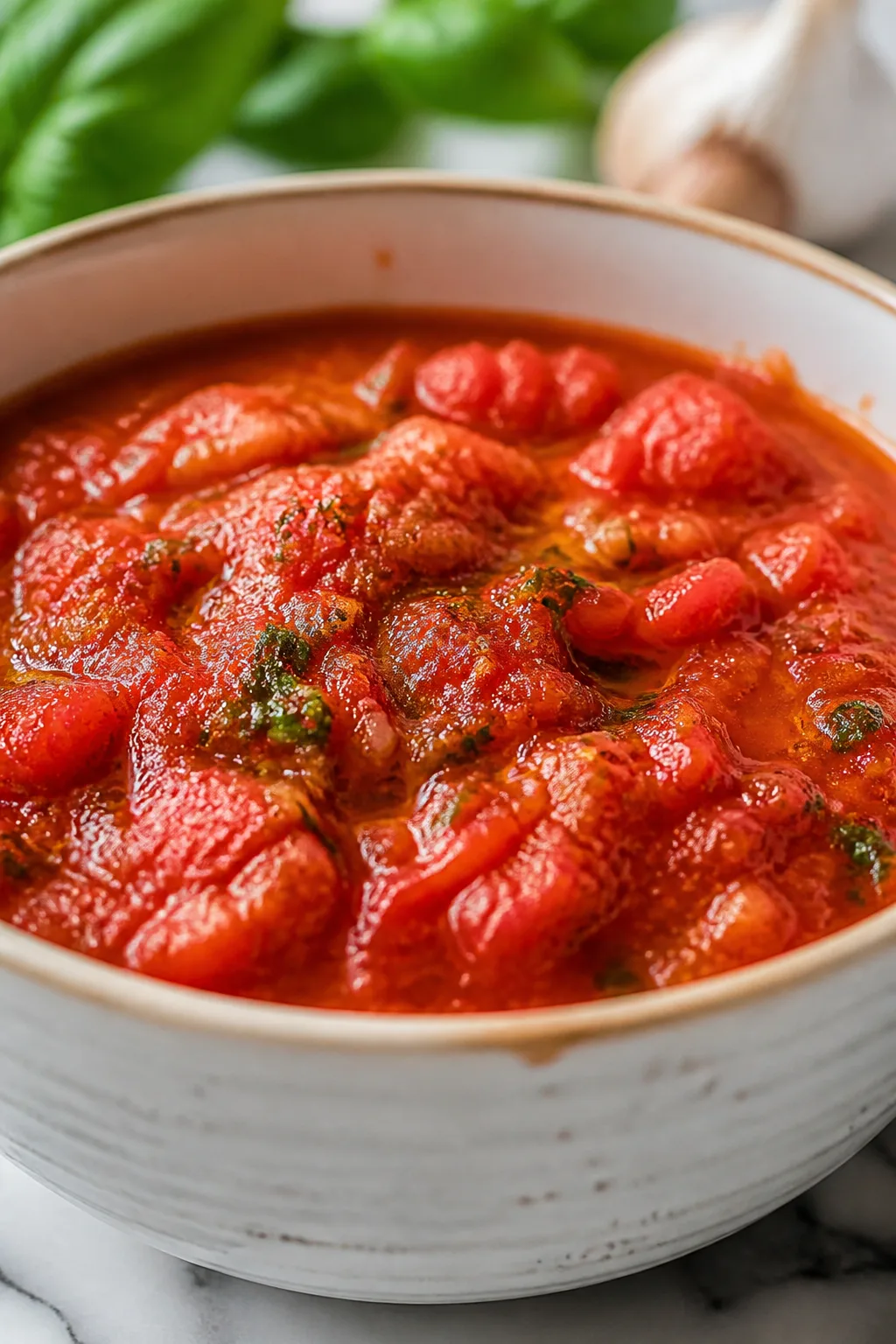
If you want a chunkier sauce, avoid blending and use whole peeled tomatoes instead of crushed. Crush them by hand or with a spoon in the pot to keep texture. This variation adds a rustic feel and works well for hearty dishes.
⏱ Time: Optional technique
✓ Doneness: Sauce has visible tomato chunks and a hearty texture
Variations
Chunky Rustic Tomato Sauce
Use whole peeled tomatoes instead of crushed. Crush them by hand in the pot for a chunkier texture and a more rustic feel. This sauce has a heartier bite and is perfect for pairing with thick pasta or polenta.
Note: Crush tomatoes gently during simmering; avoid pureeing to maintain texture.
Spicy Garlic Tomato Sauce
Add a pinch of red pepper flakes when sautéing garlic to give the sauce a subtle heat. This variation adds warmth and complexity, great for lovers of a spicy kick without overpowering the tomato flavor.
Note: Add chili flakes early with garlic to infuse the oil evenly.
Herby Tomato Sauce with Fresh Oregano and Thyme
Incorporate fresh oregano and thyme along with basil at the end of cooking. The fresh herbs add an earthy, aromatic layer that brightens the sauce and makes it feel garden-fresh.
Note: Add fresh herbs off heat to preserve delicate flavors.
Creamy Tomato Sauce
Stir in a splash of heavy cream or coconut cream at the end for a silky, rich sauce. This version softens the acidity and adds a luxurious texture, perfect for a comforting pasta dish.
Note: Add cream off heat and stir gently to combine without curdling.
Roasted Garlic Tomato Sauce
Roast a whole head of garlic until soft and sweet, then mash and add it to the sauce instead of raw garlic. This gives the sauce a mellow, caramelized garlic flavor that’s less sharp and more nuanced.
Note: Roast garlic at 400°F for 40 minutes; add mashed garlic near the end.
Pro Tips
Always slice garlic thinly instead of mincing for a mellow flavor.
Thin slices release garlic flavor slowly into the oil without burning quickly. Mincing exposes more surface area, which can brown or burn faster, creating bitterness that ruins the sauce.
Simmer the sauce gently and uncovered to thicken and concentrate flavors.
Simmering uncovered allows moisture to evaporate, thickening the sauce and intensifying flavor. Covering traps steam, making the sauce watery and less flavorful.
Use high-quality canned crushed tomatoes with no added salt or preservatives.
Better tomatoes have a fresher, brighter flavor and a natural balance of acidity and sweetness. Low-quality canned tomatoes often taste metallic or overly acidic, which affects the final taste.
Add fresh basil at the end of cooking or just before serving.
Fresh basil’s delicate aroma fades and turns bitter when cooked for long. Adding it late preserves its bright, fresh flavor and adds a lovely herbal note.
Adjust seasoning after simmering to balance acidity and saltiness.
Tomato acidity varies, so tasting and adjusting salt and sugar at the end ensures the sauce suits your palate. Skipping this can result in a sauce that’s too sharp or bland.
Avoid high heat during garlic sauté to prevent burning.
Garlic burns quickly at high temperatures, creating a bitter taste. Cooking it gently over medium or medium-low heat preserves its sweetness and aroma.
Use a heavy-bottomed pan to prevent scorching during simmering.
Heavy pans distribute heat evenly and reduce hot spots that can burn the sauce. Thin pans may cause uneven cooking and bitterness from burnt bits.
Common Mistakes to Avoid
Burning the garlic during sautéing
Why it happens Many cooks use too high heat or leave garlic unattended, causing it to brown or burn quickly.
Fix Lower the heat to medium or medium-low and stir frequently. Watch closely and remove from heat as soon as garlic turns light golden.
Covering the sauce while simmering
Why it happens Some think covering speeds cooking, but it traps moisture, preventing thickening.
Fix Simmer uncovered to allow evaporation. Stir occasionally to prevent sticking.
Skipping seasoning adjustment after cooking
Why it happens Assuming canned tomatoes have consistent flavor leads to under- or overseasoning.
Fix Always taste at the end and add salt, pepper, or sugar as needed.
Using pre-minced garlic or garlic powder
Why it happens Convenience often leads cooks to use processed garlic, which lacks fresh flavor.
Fix Use fresh garlic cloves sliced thinly for best aroma and taste.
Adding fresh basil too early
Why it happens Some add basil at the start, causing loss of flavor and color.
Fix Add fresh basil at the end of cooking or off heat for maximum freshness.
Nutrition
Per Serving:
Nutritional values are estimates and may vary based on specific ingredients used.
Storage & Tips
Room Temperature
This sauce can be safely kept at room temperature for up to 2 hours when covered. Beyond that, bacteria growth increases, so refrigerate promptly. Always use a clean spoon to avoid contamination.
Refrigerator
Store the sauce in an airtight container in the fridge for up to 4 days. The flavor may deepen but the texture can thicken; reheat gently with a splash of water or olive oil to loosen it.
Freezer
Freeze the sauce in freezer-safe containers or bags for up to 3 months. Leave headspace for expansion. To avoid freezer burn, wrap tightly and remove excess air. Thaw overnight in the fridge before reheating.
Reheating
Reheat gently on the stovetop over low heat or in the microwave at medium power. Add a splash of water or olive oil if the sauce is too thick. Avoid boiling again to maintain fresh flavor and texture.
Make Ahead
You can prepare the sauce up to 2 days in advance, store it in the fridge, and reheat before serving. Simmering the sauce a little longer before storing helps deepen flavor. Add fresh basil just before serving for brightness.
FAQ
Can I use fresh tomatoes instead of canned for this sauce?
Yes, you can! Use ripe plum or Roma tomatoes, blanch and peel them, then crush or chop before cooking. Fresh tomatoes will yield a lighter, fresher flavor but may require longer simmering to thicken the sauce properly.
Why does my sauce taste bitter sometimes?
Bitterness often comes from burnt garlic or using tomato products with preservatives. Make sure to sauté garlic gently and avoid burning. Also, adding a pinch of sugar can help balance acidity and reduce bitterness.
How do I make the sauce thicker?
Simmer the sauce uncovered on low heat to reduce water content and thicken naturally. Avoid adding water or covering the pot, which traps moisture and thins the sauce.
Can I add other herbs besides oregano and basil?
Yes, fresh thyme, rosemary, or parsley work well. Add dried herbs early to develop flavor, and fresh herbs at the end to preserve brightness.
Is it okay to use garlic powder instead of fresh garlic?
For best flavor, fresh garlic is recommended. Garlic powder lacks the depth and aroma of fresh garlic and can taste flat or artificial in this sauce.
What pasta goes best with this sauce?
This sauce pairs wonderfully with spaghetti, penne, rigatoni, or any pasta that holds sauce well. The slightly chunky texture clings nicely to ridged or tubular shapes.
Can I make this sauce in advance for meal prep?
Yes, it’s perfect for meal prep! Make it ahead, refrigerate or freeze, and reheat when needed. The flavors often deepen after resting overnight.
Final Thoughts
I hope you give this classic Italian tomato sauce a try — it’s a simple recipe that always delivers big flavor. Let me know how it turns out and what dishes you pair it with!