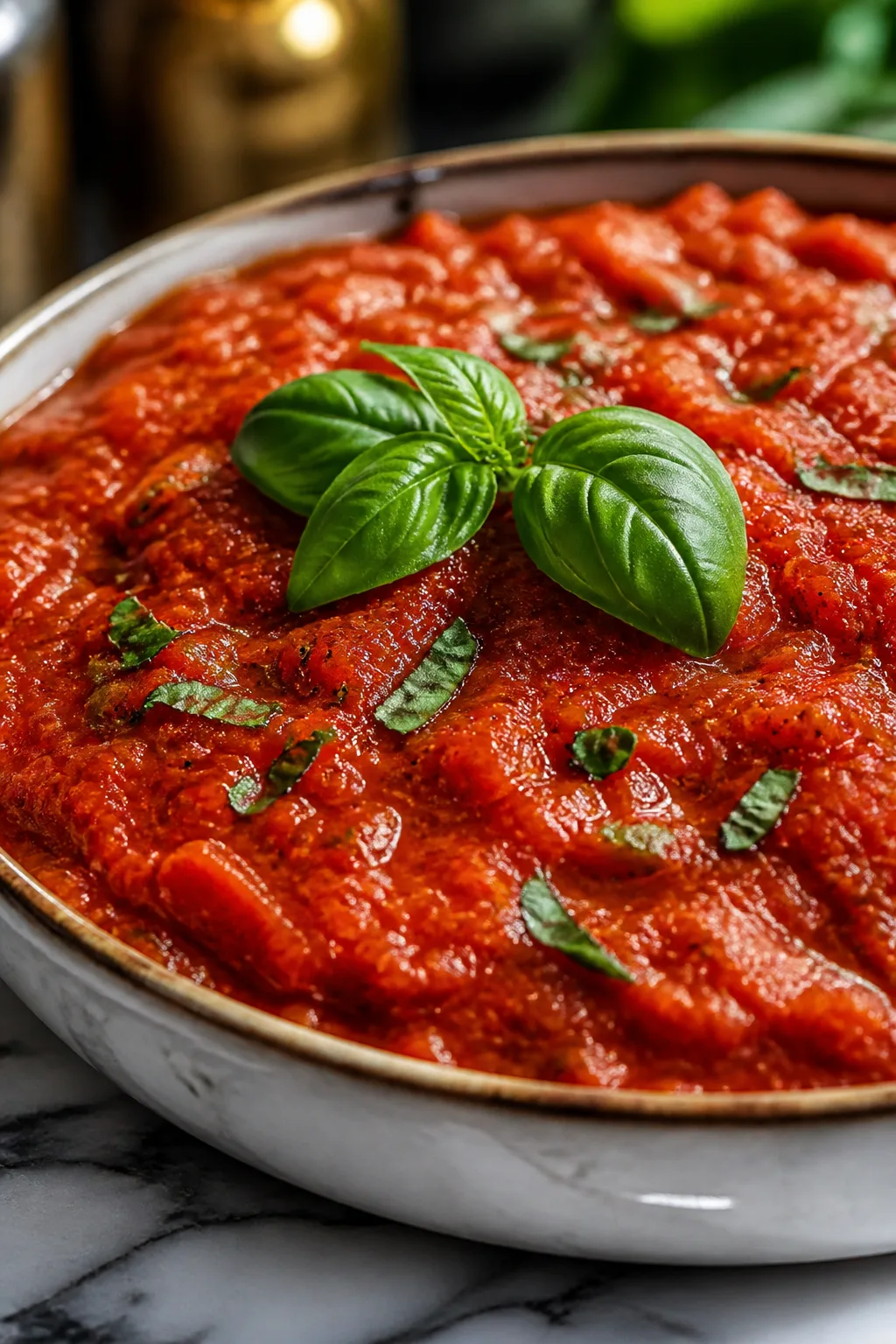
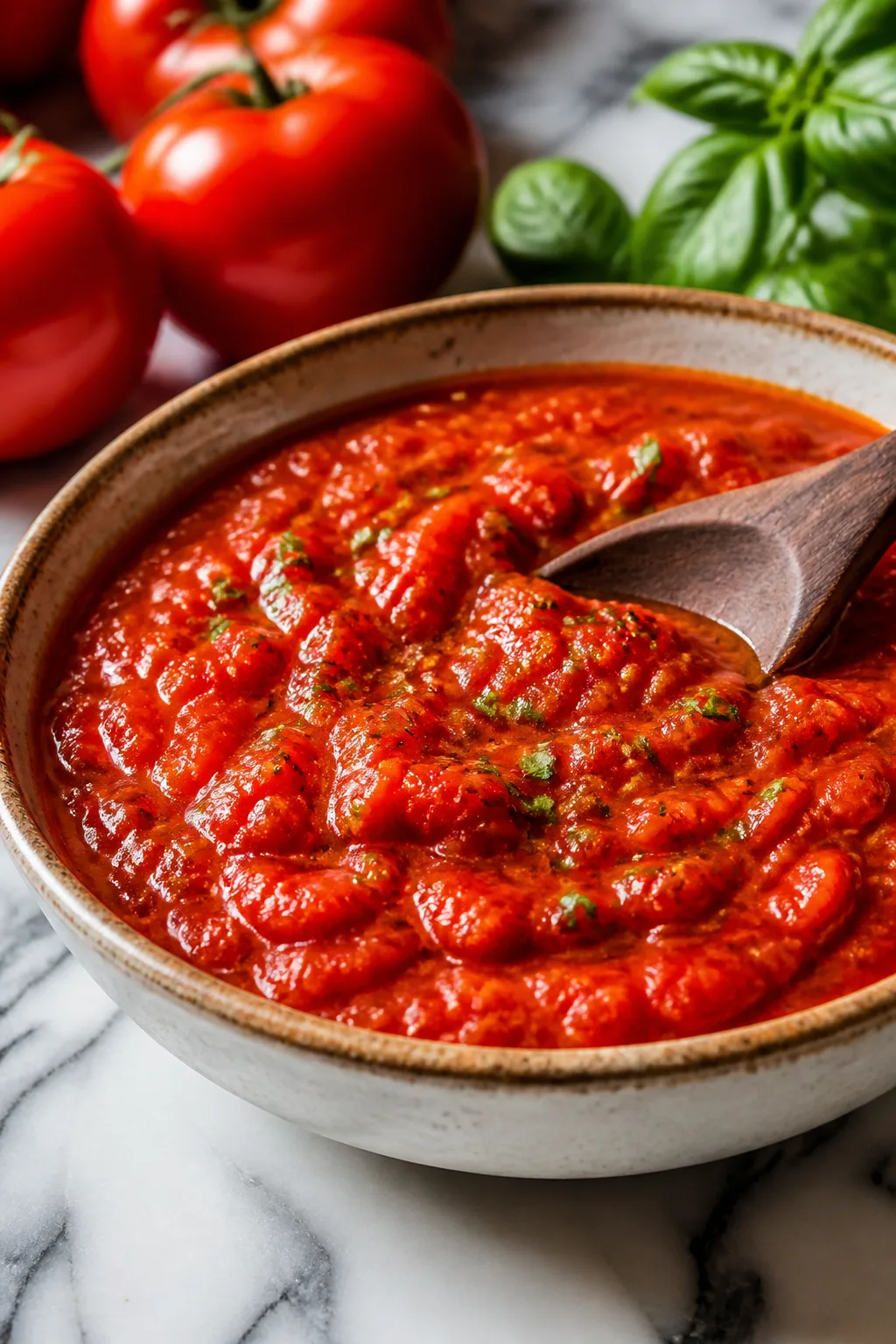
This tomato sauce simmers gently with fresh garlic and basil, creating a rich, comforting flavor. It’s a simple classic that’s great for pasta or any Italian dish you want to jazz up. Super easy and always hits the spot!
Introduction
I still remember the first time I made this tomato sauce from scratch – it was a total game changer for my weeknight dinners. Instead of grabbing a jar from the store, I slowed things down and let fresh garlic and basil really shine in a simple sauce. What makes this version stand out is the gentle simmering that lets the flavors deepen without any bitterness. I’ve tried rushing it, but the trick I learned is patience: slow simmering softens the tomatoes and lets the natural sweetness come forward, balanced by the fresh herbs. This sauce isn’t just for pasta; it’s a cozy base that transforms any Italian dish, from meatballs to shakshuka. Plus, it’s super forgiving – even if you’re not a pro in the kitchen, it’s hard to mess up. When it’s done, you get a vibrant, velvety sauce with just the right hint of garlic and basil, perfect for those comforting meals that feel like a hug from the inside.
What You'll Need
Approximately 4 cups, 4 servings
- 2 tablespoons extra virgin olive oil
- 4 cloves garlic, minced
- 1 small onion, finely chopped
- 28 ounces canned whole peeled tomatoes, crushed by hand
- 1 teaspoon sugar
- 1 teaspoon salt
- 1/2 teaspoon freshly ground black pepper
- 1/4 cup fresh basil leaves, chopped
- 1/2 teaspoon red pepper flakes (optional)
How To Do It
Step 1
Start by heating the olive oil in a medium saucepan over medium heat. Add the minced garlic and finely chopped onion, stirring frequently. This step is crucial because it infuses the oil with aromatic flavors that form the sauce's base. Be careful not to brown the garlic too much; you want it golden and fragrant, not bitter. Watch closely and stir often to prevent burning, which can ruin the sauce’s delicate balance.
⏱ Time: 5 minutes
✓ Doneness: Garlic and onion are softened and fragrant, with no browning spots.
Step 2
Add the crushed canned tomatoes to the saucepan along with sugar, salt, and black pepper. Stir well to combine all the ingredients. The sugar helps to balance the acidity of the tomatoes, which is especially important when using canned varieties. Avoid skipping this step, or your sauce might taste too tangy. Bring the mixture to a gentle simmer over medium-low heat.
⏱ Time: 2 minutes
✓ Doneness: Sauce starts bubbling gently, and the aroma intensifies.
Step 3
Reduce heat to low and let the sauce simmer uncovered for 25-30 minutes. Stir occasionally to prevent sticking and to help the sauce thicken evenly. The slow simmer allows the flavors to meld and the sauce to develop a rich, concentrated taste. Avoid rushing this step by increasing the heat, as that can cause the sauce to burn or lose its fresh tomato flavor.
⏱ Time: 25-30 minutes
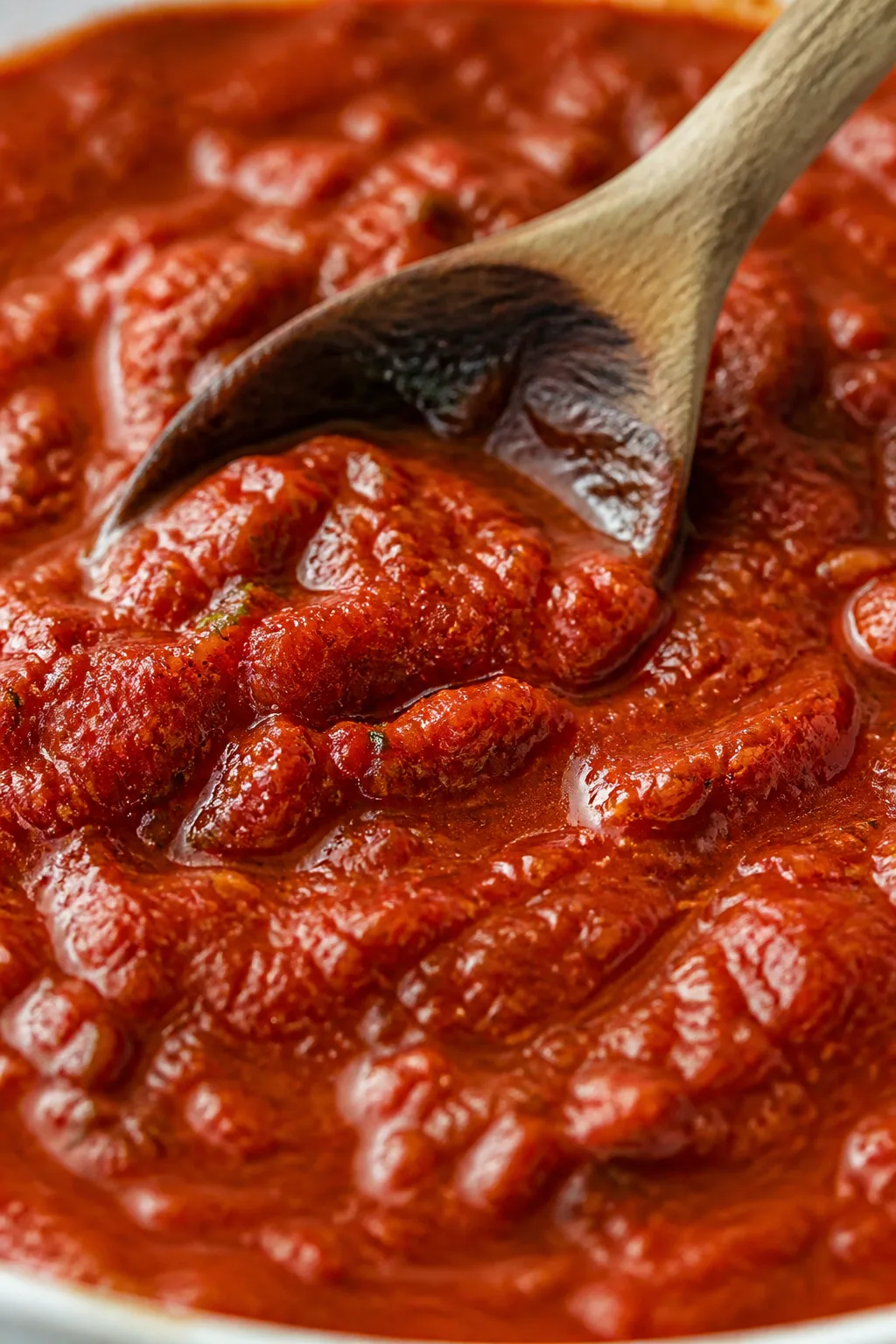
✓ Doneness: Sauce thickens to a slightly chunky, velvety consistency, deep red color.
Step 4
About 5 minutes before the sauce is done, stir in the chopped fresh basil and optional red pepper flakes. Adding basil late keeps its brightness and herbal aroma fresh. If you add it too early, the flavor can become muted or bitter. The red pepper flakes add a subtle kick but can be omitted if you prefer a milder sauce.
⏱ Time: 5 minutes
✓ Doneness: Fresh basil aroma is noticeable and vibrant.
Step 5
Taste the sauce and adjust seasoning if needed. Sometimes a pinch more salt or a dash more sugar can balance the flavors perfectly. This final tasting is important because ingredients can vary in sweetness or acidity. Don’t be shy to tweak it to your liking.
⏱ Time: 2 minutes
✓ Doneness: Balanced flavor with no overpowering acidity or saltiness.
Step 6
If you prefer a smoother sauce, use an immersion blender directly in the pot to puree to your desired consistency. Otherwise, leave it chunky for more texture. Blending is optional but can make the sauce feel more luxurious, especially if you’re serving it with delicate pastas.
⏱ Time: 1-2 minutes
✓ Doneness: Sauce reaches preferred smoothness without losing body.
Step 7
Remove the sauce from heat and let it rest for a few minutes before serving. This resting time helps the flavors settle and intensify. It also cools the sauce slightly so it’s perfect for tossing with pasta or layering in dishes.
⏱ Time: 5 minutes
✓ Doneness: Aroma deepens and sauce thickens slightly as it cools.
Step 8
Serve the sauce warm over your favorite pasta, or use it as a base for dishes like baked ziti or chicken parm. If you’re saving it for later, let it cool completely before storing. This sauce pairs well with grated Parmesan or fresh mozzarella for extra richness.
⏱ Time: 0 minutes
✓ Doneness: Ready to enjoy or store with rich, inviting aroma.
Step 9
Clean your cooking utensils and pot promptly to prevent tomato stains. If you want to enhance the sauce next time, try adding a splash of red wine during the simmer stage for depth or sauté some finely chopped carrots with the onions for natural sweetness.
⏱ Time: 0 minutes
✓ Doneness: Kitchen tidy and ready for next cooking adventure.
Variations
Spicy Arrabbiata Style
Add 1 teaspoon of red pepper flakes at the start with garlic and onion for a spicy kick. This variation adds heat that pairs wonderfully with the sweet tomato base, perfect for those who like a little fire in their sauce.
Note: Simmer the sauce a bit longer to mellow the spice and blend flavors evenly.
Roasted Garlic Tomato Sauce
Roast a whole head of garlic until soft and caramelized, then mash and stir into the sauce instead of raw garlic. This adds a deep, mellow garlic flavor with sweet undertones, creating a richer sauce.
Note: Skip sautéing raw garlic; add roasted garlic towards the end to preserve its creamy texture.
Chunky Vegetable Tomato Sauce
Add diced carrots, celery, and bell peppers sautéed with the onion for a chunky, hearty sauce. This boosts nutrition and adds natural sweetness and texture, great for a more rustic feel.
Note: Sauté vegetables until softened before adding tomatoes; increase simmer time slightly for full flavor meld.
Creamy Tomato Basil Sauce
Stir in 1/4 cup heavy cream or coconut cream at the end for a luscious, creamy finish. This variation softens acidity and makes a great sauce for chicken or seafood pasta dishes.
Note: Add cream off heat and stir gently to prevent curdling; serve immediately.
Fresh Tomato Summer Sauce
Use fresh ripe tomatoes instead of canned, peeled and chopped. This makes a lighter, fresher sauce bursting with summer flavor, perfect for quick meals when tomatoes are in season.
Note: Cook a little less time to preserve freshness and avoid over-reducing watery fresh tomatoes.
Pro Tips
Use hand-crushed canned tomatoes instead of pre-crushed for better texture.
Hand-crushing allows you to control the size of tomato pieces, resulting in a sauce with pleasant chunks and a more rustic feel. Pre-crushed tomatoes can be overly smooth or watery, which affects the final consistency and mouthfeel.
Simmer the sauce uncovered to let excess water evaporate naturally.
Simmering uncovered concentrates flavors and thickens the sauce without added thickeners. Covering traps steam, making the sauce watery and diluting flavor, which weakens the rich tomato taste you want.
Add fresh basil only near the end of cooking.
Basil’s volatile oils are delicate and degrade quickly with heat. Adding it late preserves its bright, fresh aroma and taste, giving the sauce a lively herbal note that contrasts beautifully with the deep tomato flavor.
Avoid high heat to prevent burnt garlic or bitter flavors.
Garlic and onions cook quickly and can burn within seconds at high heat, introducing unpleasant bitterness. Medium to medium-low heat allows gentle softening and flavor development without harsh notes.
Taste and adjust seasoning at the end.
Tomatoes vary in acidity and sweetness depending on brand and harvest. Tasting at the end lets you balance salt, sugar, or pepper for perfect harmony, rather than guessing at the start.
Use a heavy-bottomed pan for even heat distribution.
Heavy pans prevent hot spots that can cause burning or uneven cooking, ensuring the sauce simmers gently and evenly, preserving flavor and texture.
If you want a smoother sauce, blend carefully to avoid over-pureeing.
Blending too much can make the sauce feel thin and watery, losing the rustic charm. Pulse briefly to maintain some texture while achieving a creamy consistency.
Common Mistakes to Avoid
Burning the garlic
Why it happens Rushing the sauté step or using too high heat often causes garlic to burn quickly, leading to a bitter taste that overpowers the sauce.
Fix Cook garlic over medium heat and stir constantly. Remove from heat if it starts browning too fast, then lower heat before continuing. This gentle cooking releases garlic’s sweetness without bitterness.
Skipping the sugar
Why it happens Some assume sugar isn’t needed or want to keep it ‘healthy,’ but canned tomatoes can be quite acidic, making the sauce sharp.
Fix Add a small amount of sugar (about a teaspoon) during cooking to balance acidity. Taste and adjust gradually to avoid over-sweetening.
Adding basil too early
Why it happens Beginners often add herbs at the start to maximize flavor, but basil loses its freshness and can become bitter with prolonged heat.
Fix Add fresh basil only in the last 5 minutes of cooking or right after removing from heat to keep its bright aroma.
Not simmering long enough
Why it happens Impatience leads to undercooked sauce that tastes flat and watery, lacking depth.
Fix Allow at least 25 minutes of low simmering to concentrate flavors and thicken the sauce properly.
Using low-quality canned tomatoes
Why it happens Choosing cheap or heavily processed tomatoes can introduce metallic or off flavors and watery texture.
Fix Select premium canned tomatoes labeled as San Marzano or vine-ripened for best taste and natural sweetness.
Nutrition
Per Serving:
Nutritional values are estimates and may vary based on specific ingredients used.
Storage & Tips
Room Temperature
This sauce can safely sit out covered for up to 2 hours. Beyond that, bacteria growth increases, so it’s best to refrigerate promptly after cooling.
Refrigerator
Store in an airtight container for up to 5 days. The flavors deepen over time, but the sauce may thicken and need thinning with a splash of water or olive oil when reheating.
Freezer
Freeze in a sealed container or heavy-duty freezer bag for up to 3 months. To prevent freezer burn, remove as much air as possible before sealing. Thaw overnight in the refrigerator before reheating.
Reheating
Warm the sauce gently on the stovetop over low heat, stirring occasionally. Add a splash of water or broth if it’s too thick. Avoid boiling to preserve fresh flavors and prevent burning.
Make Ahead
Make the sauce 1-2 days ahead to let flavors meld beautifully. Store in the fridge and reheat before serving. You can also prepare the base (sautéed garlic and onions) and store separately, adding tomatoes and simmering fresh on the day.
FAQ
Can I use fresh tomatoes instead of canned?
Absolutely! Use ripe, peeled, and chopped fresh tomatoes for a fresher flavor. You may need to simmer the sauce a bit less to avoid it becoming too watery. Fresh tomatoes give a lighter taste perfect for summer dishes.
What can I substitute for fresh basil?
If fresh basil isn’t available, you can use dried basil but add it earlier in the cooking process to allow the flavor to develop. Keep in mind dried basil is less vibrant and can taste a bit different than fresh.
How do I prevent the sauce from tasting bitter?
Burnt garlic is the most common cause of bitterness. Cook garlic gently and don’t brown it. Also, balancing acidity with a pinch of sugar helps avoid sharp or sour notes in the sauce.
Can I make this sauce in a slow cooker?
Yes! Sauté garlic and onion first, then add all ingredients to the slow cooker. Cook on low for 4-6 hours, stirring occasionally. This method intensifies flavors even more but watch salt levels as slow cooking concentrates tastes.
Is it okay to freeze homemade tomato sauce?
Definitely. Freeze in airtight containers or bags for up to 3 months. Thaw in the fridge overnight and reheat gently. The texture and flavor hold up well, making it perfect for meal prep.
Can I add meat to this sauce?
Yes! Brown ground beef, sausage, or meatballs separately and stir into the sauce near the end. This turns it into a hearty meat sauce perfect for pasta or lasagna.
Why does my sauce sometimes turn out watery?
Not simmering long enough or covering the pot traps steam, making sauce watery. Simmer uncovered on low heat to evaporate excess liquid and thicken the sauce properly.
How do I get a smoother sauce without a blender?
Use a potato masher or fork to break down tomatoes while simmering. This creates a rustic, slightly chunky texture without needing special equipment.
Final Thoughts
Give this slow-simmered tomato sauce a try—you’ll love how fresh and comforting it tastes. Don’t forget to share your sauce stories with me!