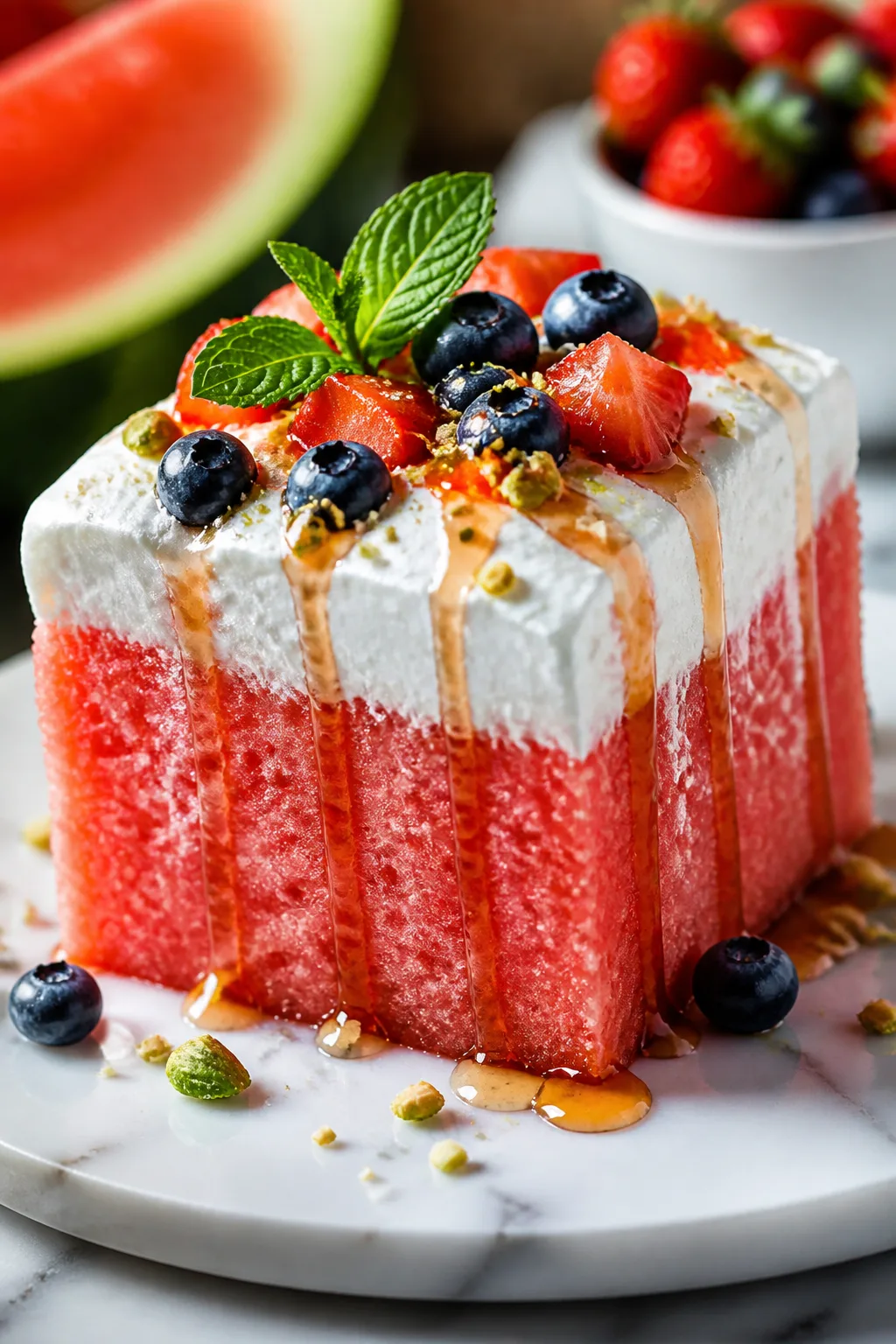
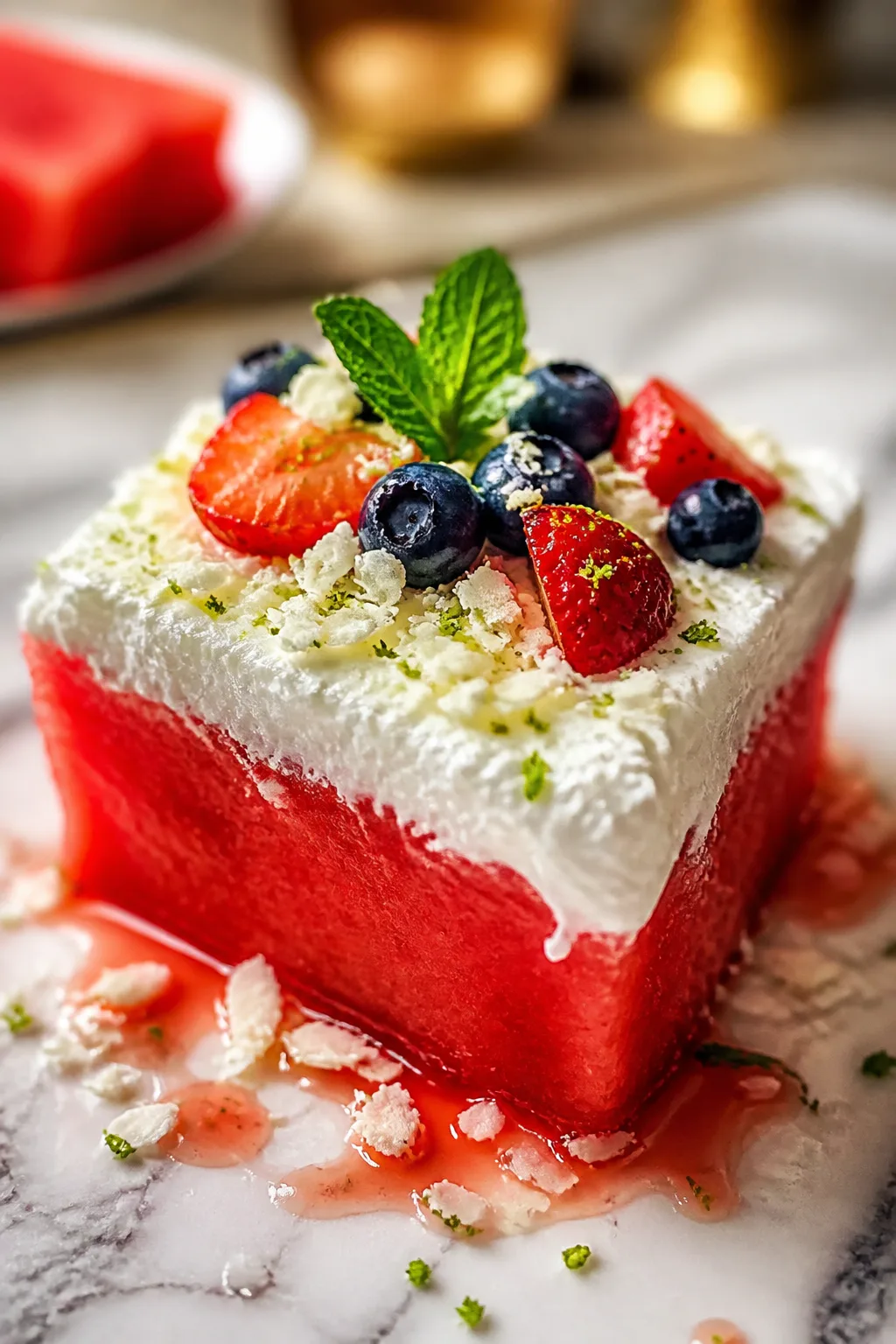
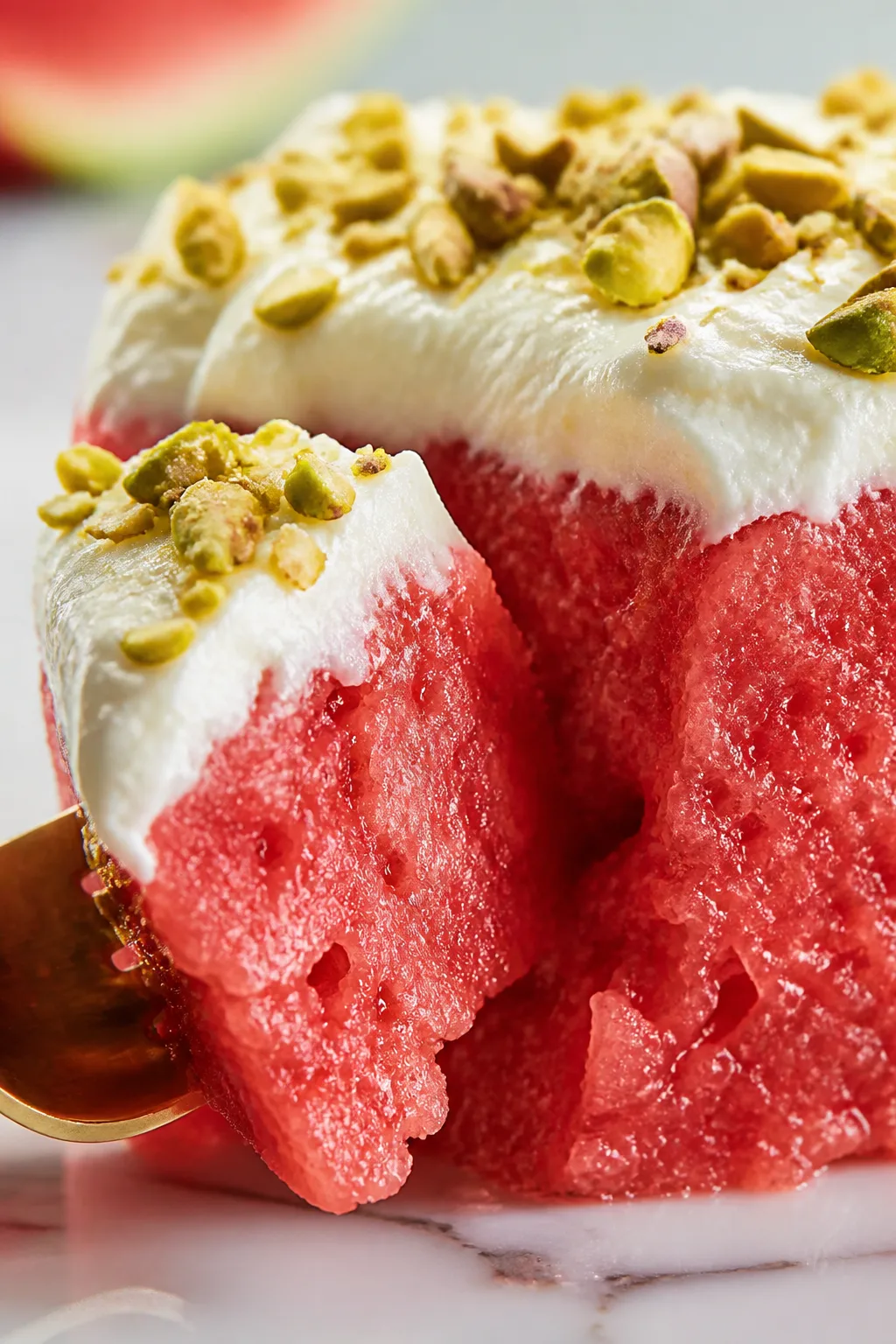
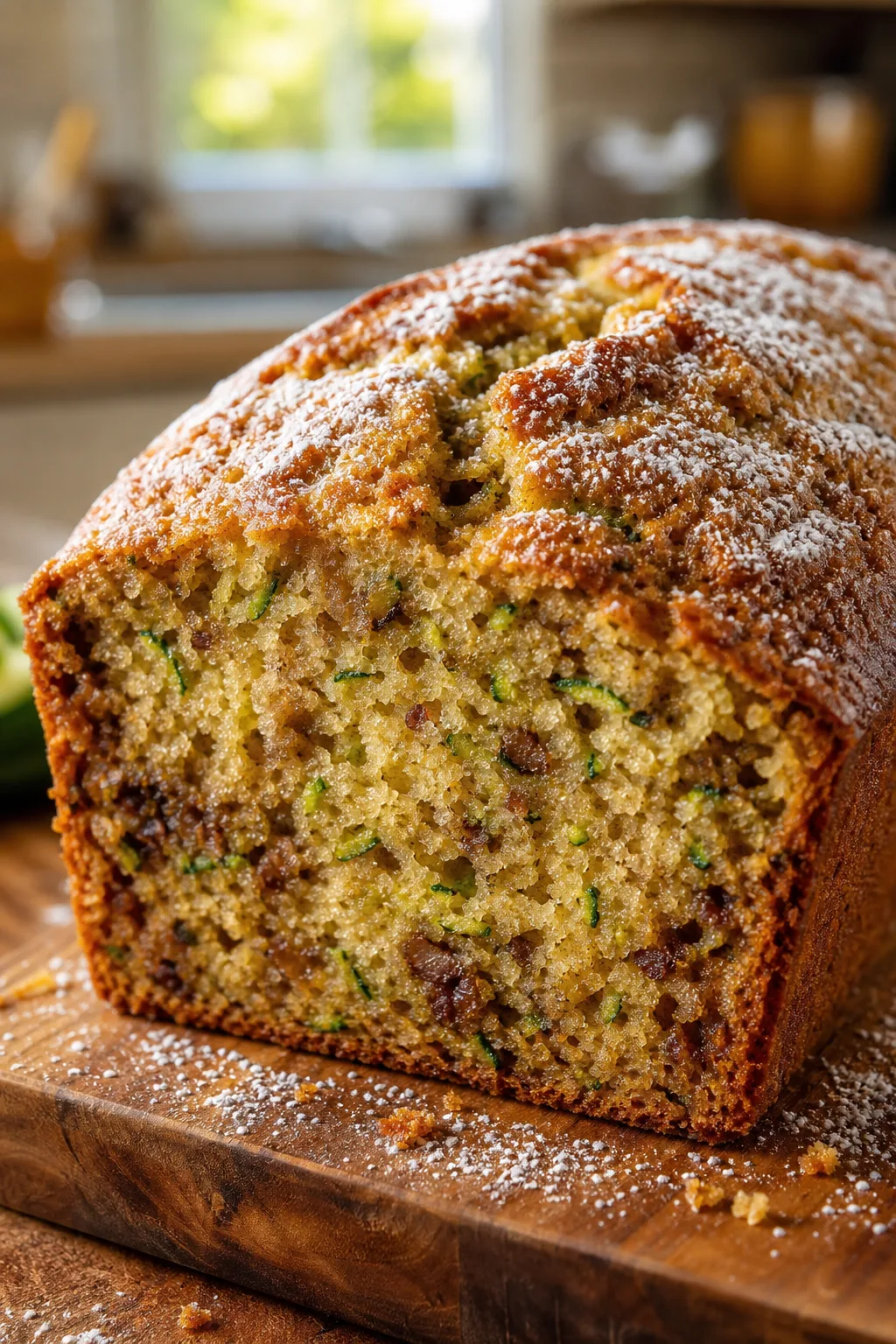
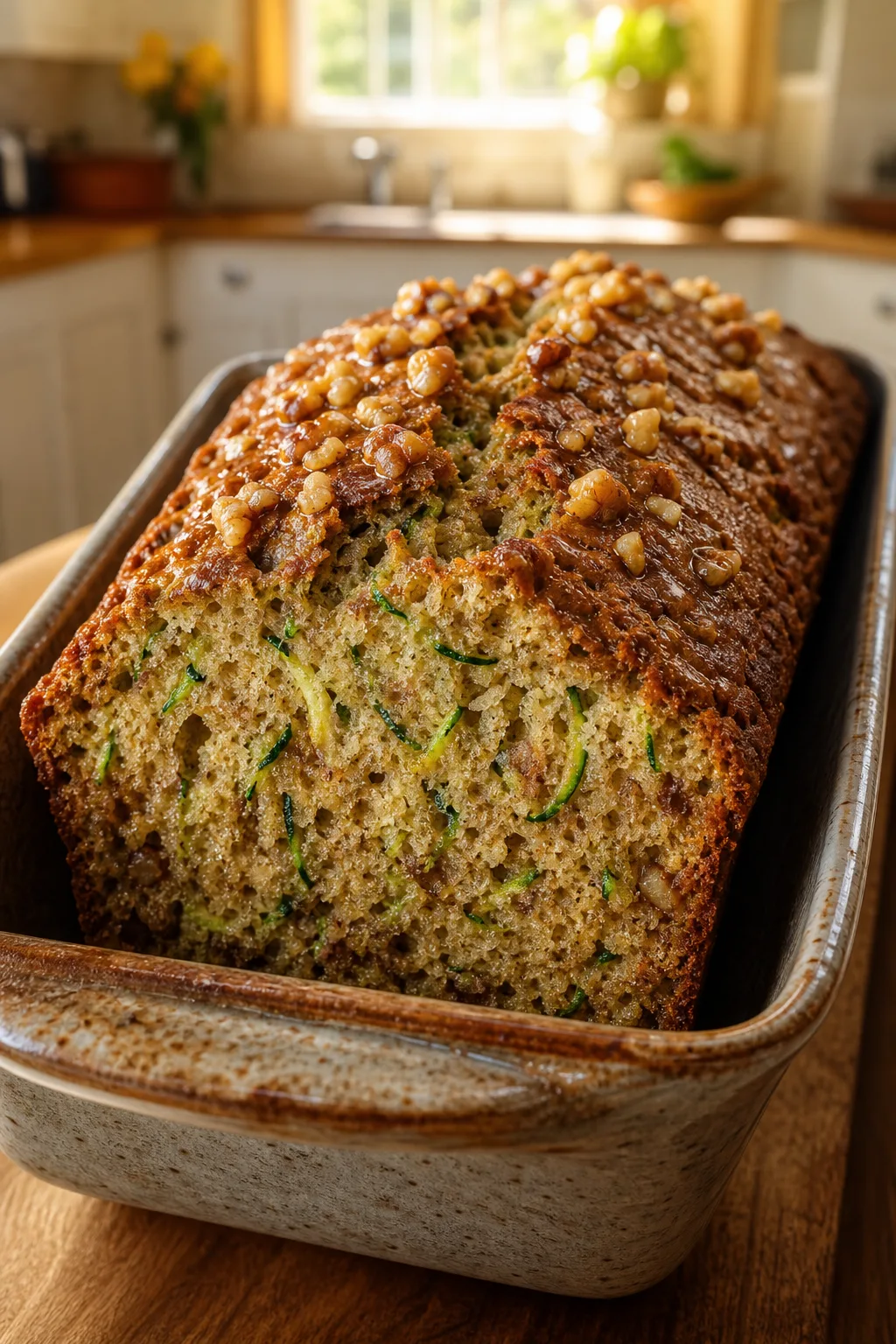
This baked watermelon cake is a fun spin on summer desserts, roasting the watermelon to bring out its natural sweetness with a hint of caramel. It’s perfect for backyard parties or a refreshing treat on hot days.
Introduction
I first stumbled upon the idea of baking watermelon during a particularly hot summer when I wanted something light yet a bit different from the usual cold fruit salad. At first, I was skeptical—baking watermelon sounds odd, right? But the trick I learned is roasting it gently to concentrate the sweetness and bring out a subtle caramelized flavor that’s just amazing. This version is different from your typical watermelon dessert because it’s warm, slightly tender, and has a depth of flavor that fresh watermelon alone can’t offer. Plus, adding a touch of cinnamon and vanilla makes it feel like a cozy summer treat. My family was surprised but loved it, especially when served with fresh mint to brighten it up. It’s perfect for backyard gatherings or any time you want a refreshing yet unique dessert. I’ll warn you, it’s easy to overcook, so keeping an eye on the watermelon while it roasts is key to getting that perfect texture—soft but not mushy. Trust me, once you try this, you’ll want to bake watermelon every summer!
How To Do It
Step 1
Preheat your oven to 350°F (175°C). Line a baking sheet with parchment paper to prevent sticking and make cleanup easier. Slice the watermelon into 1-inch thick rounds, removing any seeds you find. This thickness is important because it allows the watermelon to roast evenly without falling apart. Arrange the slices in a single layer on the baking sheet, making sure they don’t overlap. This step ensures even caramelization and prevents sogginess. Avoid cutting the slices too thin, or they may dry out during roasting.
⏱ Time: 10 minutes
✓ Doneness: Slices should look slightly golden at the edges but still retain some firmness in the center.
Step 2
In a small bowl, whisk together honey, lemon juice, vanilla extract, and ground cinnamon. This mixture will add layers of flavor and balance the watermelon’s natural sweetness with a hint of tartness and warmth. Brush the top of each watermelon slice generously with this glaze, making sure every piece is coated well. The honey helps with caramelization while the lemon brightens the flavor. If you skip this step, the watermelon will taste more plain and less complex.
⏱ Time: 5 minutes
✓ Doneness: Slices will have a shiny, sticky glaze that starts to bubble lightly when baked.
Step 3
Place the baking sheet in the preheated oven and roast the watermelon slices for 20-25 minutes. Keep a close eye after 15 minutes to avoid burning. Roasting gently concentrates the sugars and creates a caramelized surface without drying out the fruit. If your oven runs hot, check earlier to prevent overcooking. The watermelon should soften slightly but not turn mushy. This slow roasting is what transforms the texture and flavor, making it taste almost like a baked fruit tart without the crust.
⏱ Time: 20-25 minutes
✓ Doneness: Edges should be golden brown and caramelized, and the center should be tender when pierced with a fork.
Step 4
Remove the watermelon from the oven and let it cool for about 5 minutes. This resting time allows the juices to redistribute so the slices hold together better when served. If served immediately, the hot glaze might be too runny and the texture less pleasant. Cooling also helps the caramel flavor deepen slightly. Serve warm or at room temperature, garnished with fresh mint leaves for a pop of color and freshness that contrasts beautifully with the sweet roasted fruit.
⏱ Time: 5 minutes
✓ Doneness: Slices are warm but not steaming, and the glaze has thickened slightly.
Step 5
To serve, carefully transfer the watermelon slices onto plates using a wide spatula to keep them intact. You can drizzle any leftover glaze from the baking sheet over the top for extra sweetness. Adding a dollop of whipped cream or a scoop of vanilla ice cream turns this into a decadent summer dessert. The combination of warm, caramelized watermelon with cold cream is a delight. Be gentle when handling the slices as they will be tender and can break easily.
⏱ Time: 5 minutes
✓ Doneness: Slices remain whole on the plate and look glossy and inviting.
Step 6
If you want to add a little extra texture contrast, sprinkle some chopped toasted almonds or pistachios over the top just before serving. The nuts add a crunchy element that complements the softness of the roasted watermelon. This step is optional but highly recommended if you like a bit of crunch. It also adds visual appeal with a splash of color and texture variety.
⏱ Time: 2 minutes
✓ Doneness: Nuts are evenly scattered and slightly warm from the residual heat of the watermelon.
Step 7
For a fresh herbal note, finely chop some fresh mint leaves and sprinkle them over the watermelon slices. Mint pairs beautifully with the sweet and slightly spiced flavors in this recipe, brightening each bite. If you don’t have mint, basil or lemon balm can work as alternatives. Adding herbs at the end preserves their fresh flavor and aroma, which would diminish if cooked.
⏱ Time: 1 minute
✓ Doneness: Mint leaves look vibrant and fresh, not wilted.
Step 8
If you want to prepare this ahead for a party, you can roast the watermelon slices and glaze them, then let them cool completely before storing in an airtight container in the fridge. When ready to serve, bring to room temperature or warm slightly in the oven for 5 minutes at 300°F. This helps revive the caramel flavor and soften the texture without overcooking. Avoid microwaving as it can make the watermelon watery.
⏱ Time: 5 minutes (warming)
✓ Doneness: Slices are warm and glossy again, not soggy or dry.
Step 9
Experiment with flavor variations by adding a pinch of cayenne pepper for heat or swapping cinnamon for ground ginger to change the spice profile. These small tweaks can personalize the dessert and make it fit different occasions. Just be careful with strong spices so they don’t overpower the delicate watermelon flavor. Always add spices to the glaze mixture before brushing to ensure even distribution.
⏱ Time: 2 minutes
✓ Doneness: Glaze appears evenly spiced and aromatic.
Variations
Spicy Baked Watermelon Cake
Add a pinch of cayenne pepper or chili powder to the honey glaze for a spicy kick that contrasts beautifully with the sweet watermelon. This variation adds warmth and complexity, perfect for adventurous eaters who love a little heat.
Note: Be cautious with spice amounts; start with a small pinch and adjust to taste to avoid overpowering the delicate fruit.
Coconut and Lime Baked Watermelon
Swap the cinnamon for shredded toasted coconut and add lime zest to the glaze. This tropical twist pairs well with the fresh watermelon and creates a bright, summery flavor profile that’s refreshing and fun.
Note: Add the toasted coconut as a garnish after baking to keep its crunch and flavor intact.
Berry Compote Topped Watermelon Cake
Top the baked watermelon slices with a warm berry compote made from fresh or frozen berries. The tartness of the berries complements the caramelized watermelon, adding color and extra fruity flavor.
Note: Prepare the compote separately and spoon it over the warm watermelon just before serving.
Grilled Watermelon Cake
Instead of baking, grill the watermelon slices for a smoky flavor and caramelized marks. Brush with the same honey glaze before grilling. This method adds a rustic touch and works beautifully for outdoor cookouts.
Note: Grill on medium heat for 3-4 minutes per side, watching carefully to avoid burning.
Vegan Whipped Cream Topping
Serve the baked watermelon with coconut-based vegan whipped cream for a dairy-free dessert option. The creaminess balances the sweet, roasted fruit and makes it suitable for vegan diets.
Note: Add the whipped cream right before serving to maintain its texture and freshness.
Pro Tips
Use parchment paper to line your baking sheet.
Parchment prevents sticking and makes cleanup easy. Watermelon slices are juicy and sticky when roasted; without a liner, they can caramelize onto the pan, making it tough to clean and risking broken slices when removing.
Don’t slice the watermelon too thin or too thick.
Slices that are too thin dry out quickly and become brittle, while thick slices may not cook evenly inside. About 1-inch thickness is ideal to get a tender but intact texture with proper caramelization on the edges.
Brush the glaze generously but evenly.
The honey-lemon glaze is what caramelizes and flavors the watermelon. Applying it unevenly can cause some spots to burn while others stay bland. Even coating ensures consistent sweetness and a beautiful glossy finish.
Keep an eye on the oven after 15 minutes.
Ovens vary, and watermelon can go from perfectly caramelized to burnt quickly. Monitoring ensures you catch the ideal golden-brown edges without sacrificing juiciness.
Let the baked watermelon rest before serving.
Resting allows juices to redistribute and the glaze to thicken slightly, preventing the dessert from being watery and helping slices hold their shape for a neater presentation.
Garnish with fresh mint just before serving.
Adding mint at the end preserves its vibrant color and fresh aroma, which contrasts beautifully with the warm, sweet watermelon, enhancing the overall eating experience.
Experiment with spices cautiously.
Strong spices like cayenne or ginger can add exciting flavors but may overpower the delicate watermelon. Adding small amounts first lets you find the perfect balance without masking the fruit’s natural sweetness.
Common Mistakes to Avoid
Overcooking the watermelon slices
Why it happens People often leave the watermelon in the oven too long, thinking it needs to be fully cooked like other fruits or vegetables. This results in mushy, watery slices that lose their structure.
Fix Set a timer and start checking the watermelon after 15 minutes. Look for golden edges and slight softness but not collapse. Remove immediately when the caramelization is just right to preserve texture.
Using watermelon that’s too underripe or overripe
Why it happens Sometimes, cooks use melons that aren’t at peak ripeness, either too firm or overly soft, which affects how well they roast and taste.
Fix Choose a ripe watermelon with a deep red flesh and sweet smell. Avoid melons that are pale or mushy. A good melon will roast evenly and develop rich caramel notes.
Skipping the glaze step
Why it happens Some might think roasting watermelon alone is enough, but without the honey-lemon glaze, the dessert lacks depth and caramelization.
Fix Always brush the watermelon with the glaze mixture before roasting. This adds flavor, helps caramelization, and balances the fruit’s natural sweetness with acidity and spice.
Not monitoring oven temperature
Why it happens Ovens can have hot spots or inaccurate thermostats, leading to uneven cooking or burning.
Fix Use an oven thermometer if possible, and rotate the baking sheet halfway through roasting to ensure even heat distribution and caramelization.
Adding fresh herbs too early
Why it happens Some add mint or other herbs before baking, but heat destroys their flavor and color.
Fix Add fresh herbs only after baking and just before serving to preserve their bright aroma and appearance.
Nutrition
Per Serving:
Nutritional values are estimates and may vary based on specific ingredients used.
Storage & Tips
Room Temperature
Baked watermelon cake can be kept at room temperature for up to 2 hours if covered loosely with foil or a clean kitchen towel to prevent drying out. Avoid leaving it out longer to reduce risk of spoilage due to moisture content.
Refrigerator
Store leftovers in an airtight container in the refrigerator for up to 3 days. The watermelon may lose some firmness and become juicier when cold. To enjoy warm, reheat gently in the oven at 300°F for 5-7 minutes.
Freezer
Freezing is not recommended as watermelon’s high water content causes texture degradation. If necessary, freeze in a sealed container for up to 1 month, but expect a mushy texture upon thawing.
Reheating
Reheat in a preheated oven at 300°F for 5-7 minutes to warm through without drying. Avoid microwave reheating as it can make the fruit watery and unevenly heated. Adding a splash of lemon juice before reheating can refresh the flavors.
Make Ahead
Prepare the watermelon slices and glaze up to a day in advance. Store the unbaked slices covered in the fridge. On the day of serving, brush with glaze and roast fresh to preserve texture and flavor.
FAQ
Can I use watermelon with seeds for this recipe?
Yes, but you’ll want to remove as many seeds as possible before roasting to avoid unpleasant bites. Seedless watermelon is ideal for ease and better texture, but seeded watermelon works if you’re careful.
What if I don’t have honey? Can I substitute it?
You can substitute honey with maple syrup or agave nectar. These alternatives also help with caramelization and add sweetness, though the flavor profile will be slightly different. Avoid using granulated sugar alone as it won’t create the same glaze effect.
How do I know when the watermelon is done roasting?
Look for golden brown edges and a slightly softened texture when pierced with a fork. The watermelon should hold its shape but be tender. If it looks dry or shriveled, it’s overcooked.
Can I prepare this dessert ahead of time?
You can slice and glaze the watermelon a day ahead and keep it refrigerated unbaked. Roast it fresh before serving for best results. Roasted slices can be stored in the fridge for a few days but are best enjoyed warm or at room temperature.
Is it safe to bake watermelon at home?
Absolutely! Watermelon is safe to bake as long as you handle it properly. Roasting enhances flavor and doesn’t cause any food safety issues. Just avoid overcooking to maintain texture.
Can I add other fruits to this recipe?
Yes! Fruits like peaches or pineapple can be roasted alongside watermelon, but keep in mind they have different cooking times. Add them in smaller pieces and monitor to avoid over or undercooking.
What equipment do I need?
A baking sheet, parchment paper, a brush for glazing, and a sharp knife for slicing watermelon are the main tools. No special equipment required, making this recipe easy and accessible.
How do I prevent the watermelon from becoming too watery?
Roasting at the right temperature and time helps evaporate excess moisture. Also, resting the slices after baking allows juices to thicken slightly. Avoid microwaving leftovers as it can release water and make the texture soggy.
Final Thoughts
I hope you give this baked watermelon cake a try—it’s such a fun way to enjoy summer fruit with a new twist. Let me know how it turns out and what your favorite variations are!