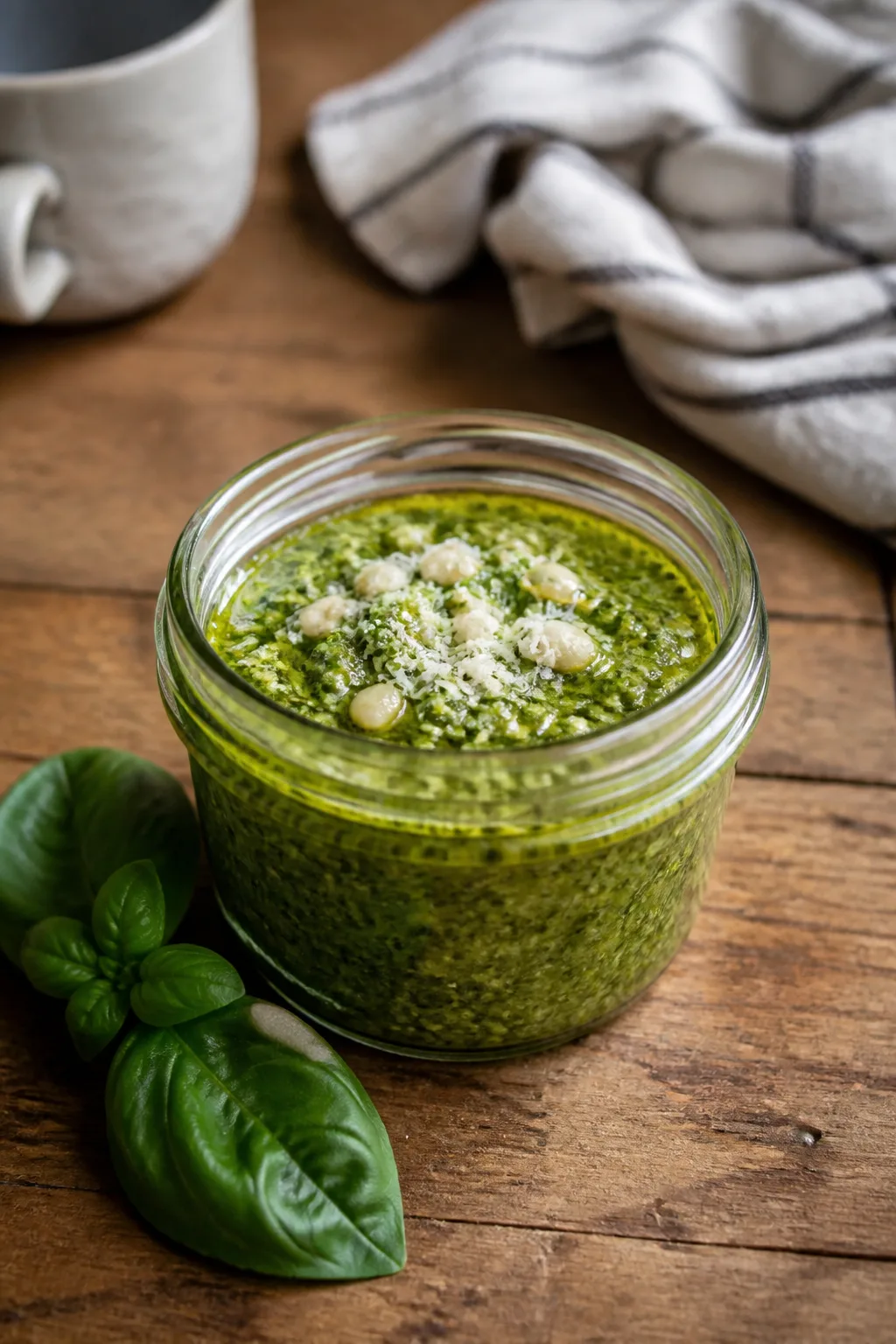
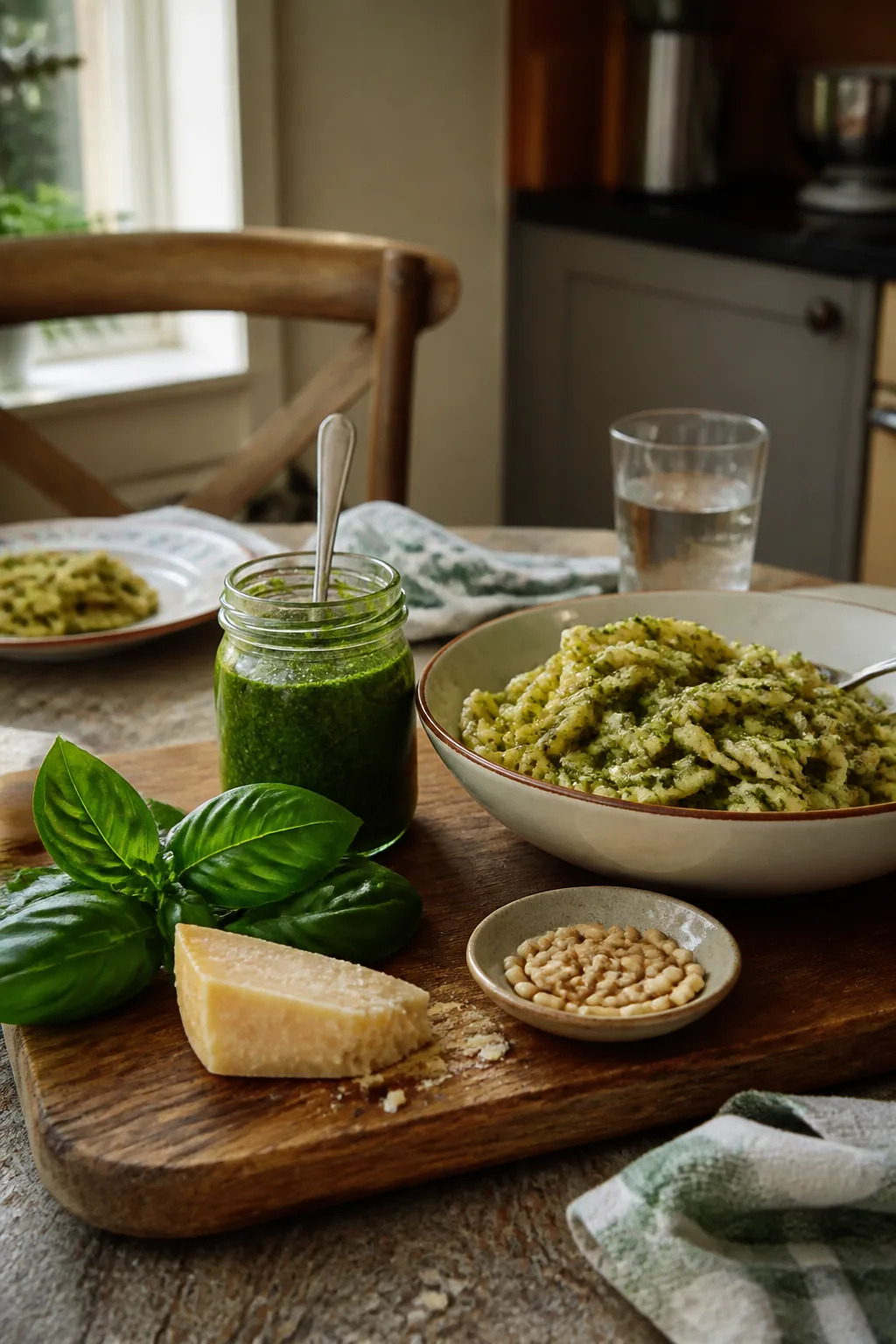
This vibrant basil pesto pasta is a quick way to add fresh, herby flavor to your meals. Made with simple ingredients and a classic technique, it’s perfect for a light dinner or a side dish.
Introduction
I first made this basil pesto pasta a few years ago when I had a bunch of fresh basil from my garden and wanted something quick and delicious. I’d tried store-bought pesto before but nothing beats the bright, fresh flavor you get from homemade. What makes this version stand out is using toasted pine nuts and freshly grated Parmesan—it adds a depth of flavor that’s just unbeatable. Also, I like to blend the ingredients just enough so the pesto has a bit of texture rather than being completely smooth. The trick I learned is to add the olive oil slowly while blending, which helps the sauce emulsify perfectly and keeps that vibrant green color. When you toss this pesto with al dente pasta, you get a dish that’s fresh, herbaceous, and comforting all at once. It’s great for a quick weeknight dinner but fancy enough to serve guests too. Plus, it’s super versatile—try it on salads, sandwiches, or roasted veggies. I love how it makes a simple pasta feel special without much effort.
How To Do It
Step 1
Bring a large pot of salted water to a boil for the pasta. The salt seasons the pasta itself and enhances the overall flavor of the dish. While waiting for the water to boil, toast the pine nuts in a dry skillet over medium heat, stirring frequently to prevent burning. This step takes about 3-5 minutes and brings out the nuts’ rich, buttery flavor, which is key to a balanced pesto. Be careful not to let them turn dark brown as that will give a bitter taste. Remove from heat and let cool slightly before using.
⏱ Time: 10 minutes
✓ Doneness: Pine nuts are golden and fragrant but not browned
Step 2
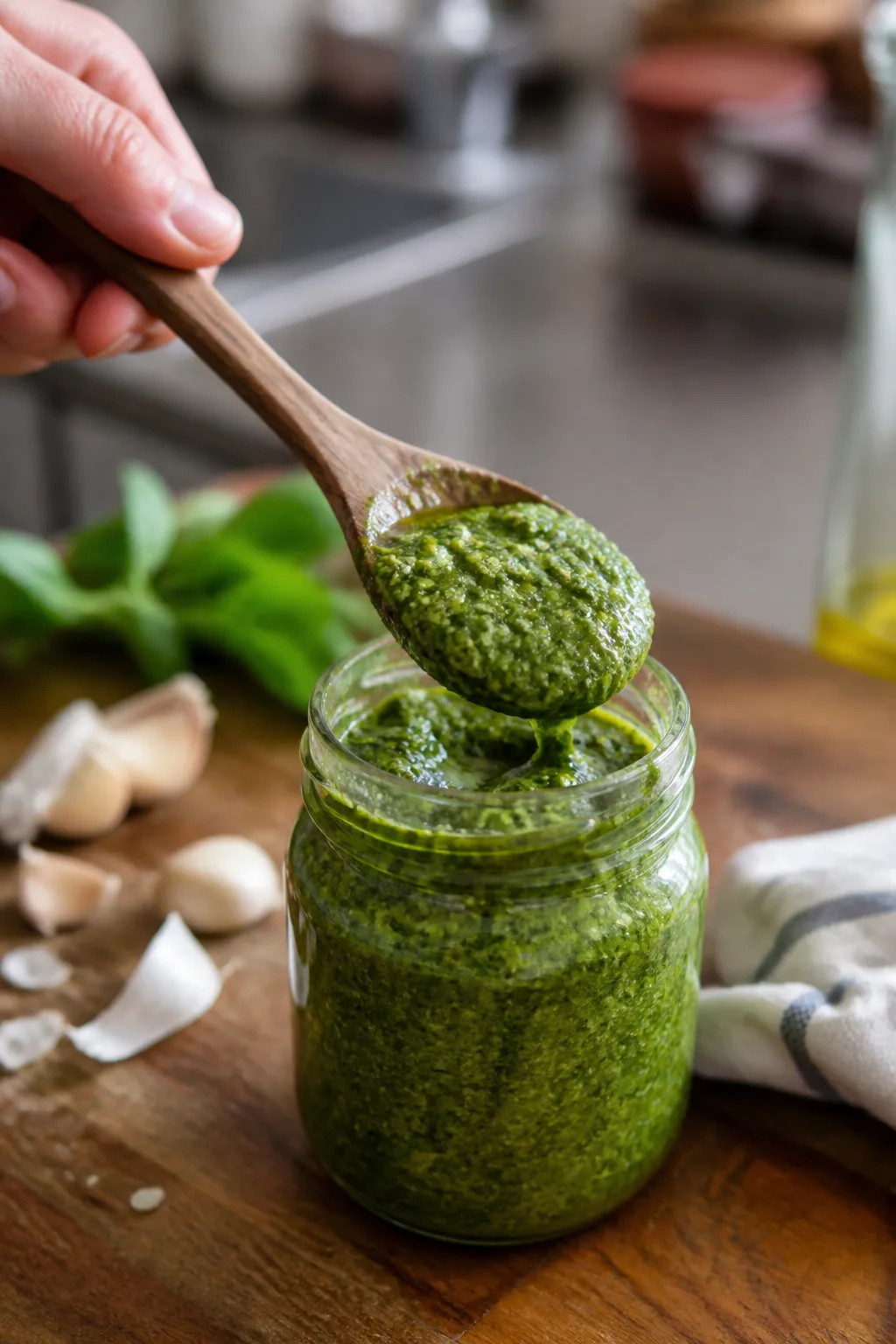
Add the basil leaves, toasted pine nuts, garlic cloves, and grated Parmesan to a food processor or blender. Pulse a few times to roughly chop everything. This ensures the pesto will have some texture instead of being a paste. Slowly drizzle in the olive oil while pulsing continuously to help the mixture emulsify. Adding the oil gradually prevents it from separating and keeps the pesto creamy and vibrant green. Stop processing just before it becomes perfectly smooth to retain a little bite. Season with salt and freshly ground black pepper to taste.
⏱ Time: 7 minutes
✓ Doneness: Pesto is thick but still slightly chunky, bright green color
Step 3
Cook the pasta according to package instructions until al dente. This usually takes about 8-10 minutes depending on the type of pasta. Al dente means the pasta should be tender but still have a slight bite in the center. Avoid overcooking as mushy pasta will not hold the pesto well and loses texture. Reserve about half a cup of the pasta cooking water before draining. This starchy water can be used to thin out the pesto sauce if needed and helps it cling to the pasta better.
⏱ Time: 8-10 minutes
✓ Doneness: Pasta is tender but resists slightly when bitten
Step 4
Return the drained pasta to the pot or a large mixing bowl. Add most of the basil pesto and toss to coat evenly. If the sauce feels too thick or clumpy, add a splash of the reserved pasta water a little at a time until you reach a silky consistency that clings to the noodles perfectly. Tossing the pasta with warm residual heat helps the sauce meld in beautifully. Avoid adding too much water or the pesto will become watery and lose flavor balance.
⏱ Time: 3 minutes
✓ Doneness: Pasta is evenly coated with glossy, vibrant green pesto sauce
Step 5
Taste the pasta and adjust seasoning if needed, adding more salt, pepper, or Parmesan cheese for extra richness. You can also stir in a squeeze of fresh lemon juice if you want a bright, acidic contrast to the rich pesto. Serve immediately, garnished with a few whole basil leaves or extra pine nuts for texture. Freshly grated Parmesan on top is always a welcome finishing touch. Enjoying it right away ensures the pesto’s fresh herbal flavors shine best.
⏱ Time: 2 minutes
✓ Doneness: Balanced flavors with fresh, bright, and savory notes
Step 6
If you want to prepare the pesto ahead, store it in an airtight container with a thin layer of olive oil on top to prevent browning. Keep refrigerated and use within 2 days for best flavor. When ready to serve, bring the pesto to room temperature and toss with freshly cooked pasta. This prevents the sauce from clumping or turning dull in color.
⏱ Time: 5 minutes prep
✓ Doneness: Pesto remains vibrant and smooth after storage
Step 7
For a twist, try adding a handful of fresh spinach or arugula to the pesto mixture for extra green goodness and a slight peppery note. Blend it in with the basil and nuts as usual. This variation adds nutritional value and a subtle change in flavor without overpowering the classic pesto taste.
⏱ Time: 3 minutes
✓ Doneness: Pesto retains vibrant color with added greens
Step 8
When choosing pasta, I recommend long, thin varieties like linguine or spaghetti because their shape holds the pesto well. However, you can use short pasta like penne or fusilli if you prefer. Just be sure to toss well so the pesto gets into all the crevices for maximum flavor.
⏱ Time: 2 minutes
✓ Doneness: Pasta shape complements pesto coating
Step 9
Serve the pesto pasta with a crisp side salad or crusty bread for a complete meal. A light drizzle of extra virgin olive oil or a sprinkle of crushed red pepper flakes can add a nice finishing touch if you like a bit of heat or richness. This simple addition elevates the dish without complicating it.
⏱ Time: 2 minutes
✓ Doneness: Complete meal presentation with complementary sides
Variations
Spinach and Basil Pesto
Add a handful of fresh spinach to the basil before blending to boost the green color and add nutrients. The flavor will be milder and slightly earthier but still fresh and vibrant. Great for those who want extra greens.
Note: Spinach adds moisture, so you may need slightly less olive oil to keep the pesto thick and creamy.
Walnut Pesto
Swap pine nuts for toasted walnuts for a richer, earthier flavor. Walnuts are more affordable and add a slightly bitter note that pairs well with basil. This version has a heartier texture and deeper taste.
Note: Toast walnuts carefully as they burn faster than pine nuts; adjust quantity to taste.
Vegan Pesto
Replace Parmesan with nutritional yeast or vegan cheese alternatives. This keeps the cheesy umami flavor without dairy, perfect for vegans. The texture might be a bit less creamy but still delicious.
Note: Nutritional yeast adds flavor but doesn’t melt, so blend well for smoothness.
Spicy Basil Pesto
Add a pinch of red pepper flakes or a small fresh chili to the pesto for a spicy kick. This variation wakes up the palate and adds excitement to the classic pesto flavor.
Note: Start with a small amount of chili and adjust to avoid overpowering the basil’s freshness.
Lemon Basil Pesto
Add a tablespoon of fresh lemon juice and some zest to brighten the pesto with citrus notes. This adds a fresh, tangy twist that pairs beautifully with seafood or grilled chicken.
Note: Add lemon juice after blending to avoid browning the basil prematurely.
Pro Tips
Toast pine nuts gently until golden but not brown.
Toasting nuts activates the Maillard reaction, enhancing their flavor and aroma. Over-toasting causes bitterness, which can ruin the pesto's delicate balance. Watch closely and stir often to prevent burning.
Add olive oil gradually while blending the pesto.
Slowly drizzling oil helps the ingredients emulsify into a creamy sauce. Pouring all oil at once can cause separation, resulting in an oily or broken pesto that lacks smooth texture.
Reserve pasta water before draining.
The starchy water helps loosen the pesto and helps it cling to the pasta. Without it, the sauce may be too thick or unevenly distributed, reducing flavor in every bite.
Use freshly grated Parmesan cheese.
Freshly grated cheese melts better and adds richer umami flavor. Pre-grated cheese often contains anti-caking agents that affect texture and taste.
Cook pasta until al dente.
Al dente pasta holds sauce better and provides a pleasant bite. Overcooked pasta becomes mushy and does not pair well with pesto.
Pulse the ingredients instead of pureeing.
Pulsing keeps some texture in the pesto, giving a rustic mouthfeel rather than a uniform paste, which many find more enjoyable.
Store leftover pesto with a thin layer of olive oil on top.
This prevents oxidation and browning, preserving the vibrant green color and fresh flavor for longer in the fridge.
Common Mistakes to Avoid
Using pre-packaged dried basil instead of fresh.
Why it happens People often grab dried herbs for convenience, assuming it will work the same.
Fix Always use fresh basil leaves for pesto. Dried basil lacks the essential oils and vibrant flavor that fresh basil provides, resulting in a dull sauce.
Adding all olive oil at once when blending.
Why it happens Rushing the process or not knowing the emulsification technique.
Fix Slowly drizzle the olive oil while pulsing the food processor. This promotes proper emulsification and prevents the sauce from separating.
Overcooking the pasta.
Why it happens Following package instructions blindly or multitasking in the kitchen.
Fix Test pasta a minute before the recommended time to ensure it’s al dente. It should be tender but still firm to the bite.
Not toasting pine nuts.
Why it happens Skipping steps to save time or not realizing the flavor difference.
Fix Take the extra few minutes to toast pine nuts in a dry skillet until golden. This step adds depth and richness to your pesto.
Blending pesto until completely smooth.
Why it happens Thinking smoother is always better or using high-powered blenders.
Fix Pulse the ingredients until just combined. Leaving some texture improves mouthfeel and gives pesto its characteristic rustic charm.
Nutrition
Per Serving:
Nutritional values are estimates and may vary based on specific ingredients used.
Storage & Tips
Room Temperature
Pesto pasta should not be left at room temperature for more than 2 hours to avoid bacterial growth. If serving buffet-style, keep it covered and stir occasionally.
Refrigerator
Store leftover pesto and pasta separately in airtight containers for up to 3 days. Pesto may darken slightly but will still taste good. Reheat pasta gently and add fresh pesto or olive oil to refresh flavors.
Freezer
Pesto freezes well in small portions for up to 3 months. Wrap tightly in freezer-safe containers or bags. Thaw overnight in the fridge and stir well before use. Pasta is best frozen without pesto to avoid sogginess.
Reheating
Reheat pasta in a skillet over medium-low heat with a splash of olive oil or reserved pasta water to loosen sauce. Avoid microwave reheating as it can dry out pasta and dull flavors.
Make Ahead
Prepare pesto up to 2 days in advance and store refrigerated with olive oil on top. Cook pasta fresh on serving day for best texture. You can also toast nuts and grate cheese ahead to speed up prep.
FAQ
Can I use other nuts instead of pine nuts?
Yes, walnuts, almonds, or cashews are great alternatives. Each nut brings a slightly different flavor and texture. Toast them gently to enhance taste but avoid over-toasting to prevent bitterness.
Can I freeze homemade pesto?
Absolutely! Freeze pesto in small portions using ice cube trays or airtight containers. Thaw in the fridge before use. Keep in mind that freezing may slightly change texture but flavor remains delicious.
What pasta pairs best with pesto?
Long, thin pastas like linguine or spaghetti work well as they hold the sauce nicely. Short, ridged pastas like penne or fusilli also trap pesto in their grooves, offering great flavor in every bite.
Is it okay to blend pesto until completely smooth?
While you can, I recommend pulsing just until combined to keep some texture. A slightly chunky pesto has a more rustic, homemade feel and better mouthfeel compared to a paste-like smooth sauce.
How salty should the pesto be?
Taste as you go. Parmesan cheese adds saltiness, so start with a small pinch of salt and adjust after blending. You want the pesto to be flavorful but not overly salty.
Can I make pesto without a food processor?
Yes! You can finely chop the basil, garlic, and nuts by hand and then mix in the cheese and oil. It takes more time but results in a rustic texture that’s equally delicious.
What if I don’t have fresh basil?
Fresh basil is key for authentic flavor, but if unavailable, try fresh spinach or arugula as a substitute. The taste will be different but still tasty. Avoid dried basil for pesto.
How long does homemade pesto last in the fridge?
Stored properly with olive oil on top, pesto lasts about 2-3 days refrigerated. Beyond that, it may lose flavor and turn brown, but it’s usually safe to eat if there’s no off smell.
Final Thoughts
Give this fresh basil pesto pasta a try—you’ll love how easy it is to make and how bright the flavors are. Can’t wait to hear what you think!