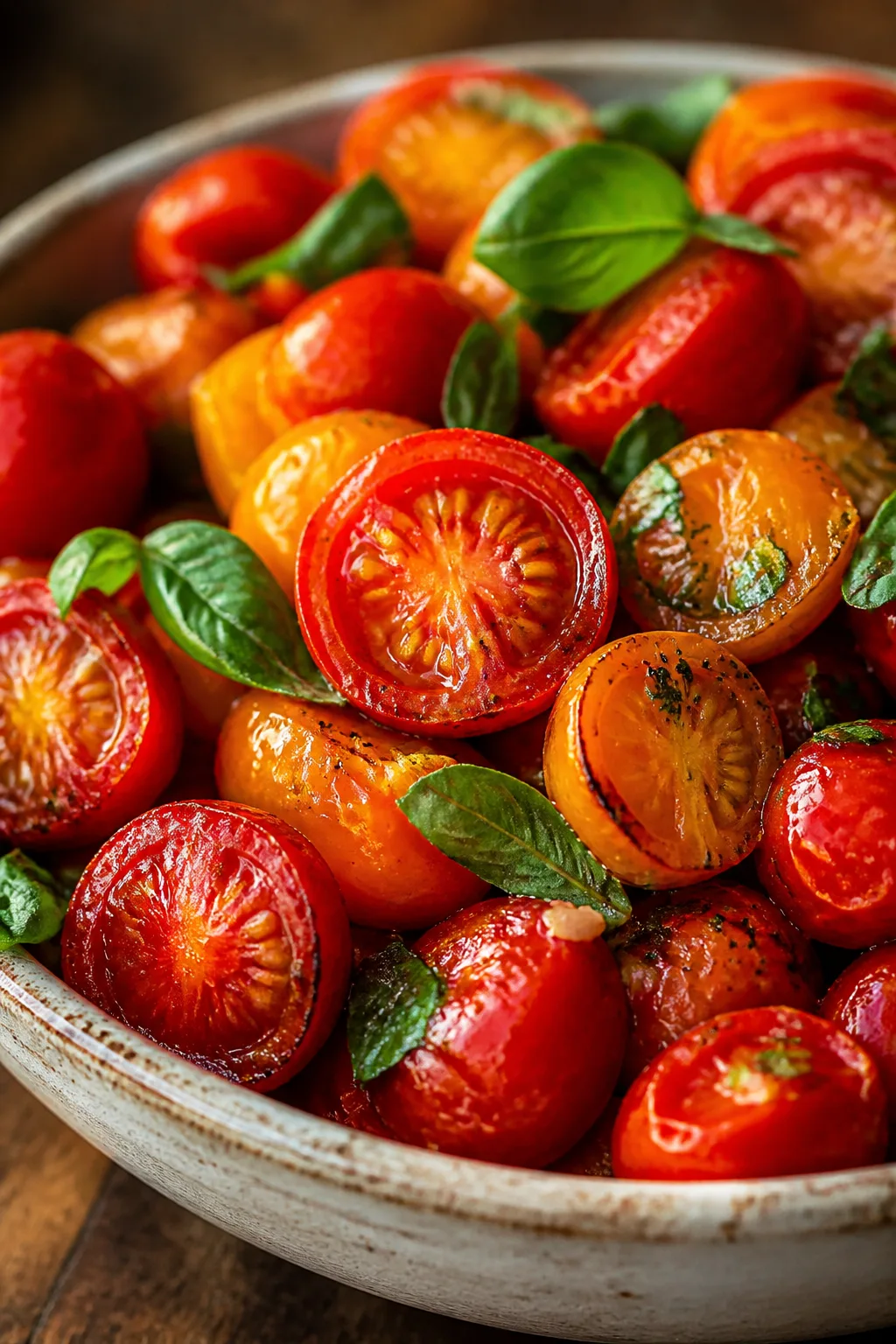
These cherry tomatoes get a gentle roast that unlocks their natural sweetness, while fresh herbs add a bright, earthy note. It’s an easy side or light lunch that feels fresh and comforting. Perfect for spring or summer meals!
Introduction
I first tried slow-roasting cherry tomatoes a few years ago, and it completely changed how I use them. Instead of just tossing raw tomatoes into salads, I discovered that roasting them low and slow really brings out their natural sweetness and adds this deep, juicy flavor that’s hard to beat. What I love about this version is how simple it is—just a few fresh herbs and garlic, plus a drizzle of olive oil, and you get this amazing, vibrant side dish that feels both rustic and elegant. I’ve found that the key is roasting at a low temperature for longer, which keeps the tomatoes juicy instead of drying them out. Plus, adding fresh thyme and basil right after roasting lifts the flavors beautifully. It’s perfect for a light lunch with crusty bread or as a bright side to grilled chicken or fish. Honestly, I’ve had my share of overcooked tomato dishes that turn mushy and bland, but this method keeps them bursting with flavor and just the right texture every time. Give it a try next time you want something fresh but a little different!
How To Do It
Step 1
Preheat your oven to 275°F (135°C). This low temperature is crucial because it allows the cherry tomatoes to roast slowly, concentrating their natural sugars without drying them out. Spread the halved tomatoes cut side up on a baking sheet lined with parchment paper or a silicone mat to prevent sticking. This setup helps the tomatoes roast evenly and makes cleanup easier. Avoid crowding the pan; give each tomato enough space so they can caramelize rather than steam. This step ensures you get that perfect balance of tender, juicy insides with slightly caramelized edges.
⏱ Time: 10 minutes
✓ Doneness: Tomatoes should look slightly shriveled around the edges but still plump and juicy in the center
Step 2
Drizzle the tomatoes evenly with olive oil, then sprinkle the sea salt and freshly ground black pepper over them. The olive oil helps carry the flavors and aids caramelization, while the salt enhances the tomatoes’ natural sweetness. Toss the tomatoes gently with your hands or a spatula to coat them well, but be careful not to break them apart. Once coated, sprinkle the minced garlic and fresh thyme leaves on top. The garlic will infuse the tomatoes with a subtle savory note during roasting, and thyme adds an earthy aroma that complements the sweetness perfectly.
⏱ Time: 5 minutes
✓ Doneness: Tomatoes evenly coated and seasoned, with garlic and thyme distributed across the surface
Step 3
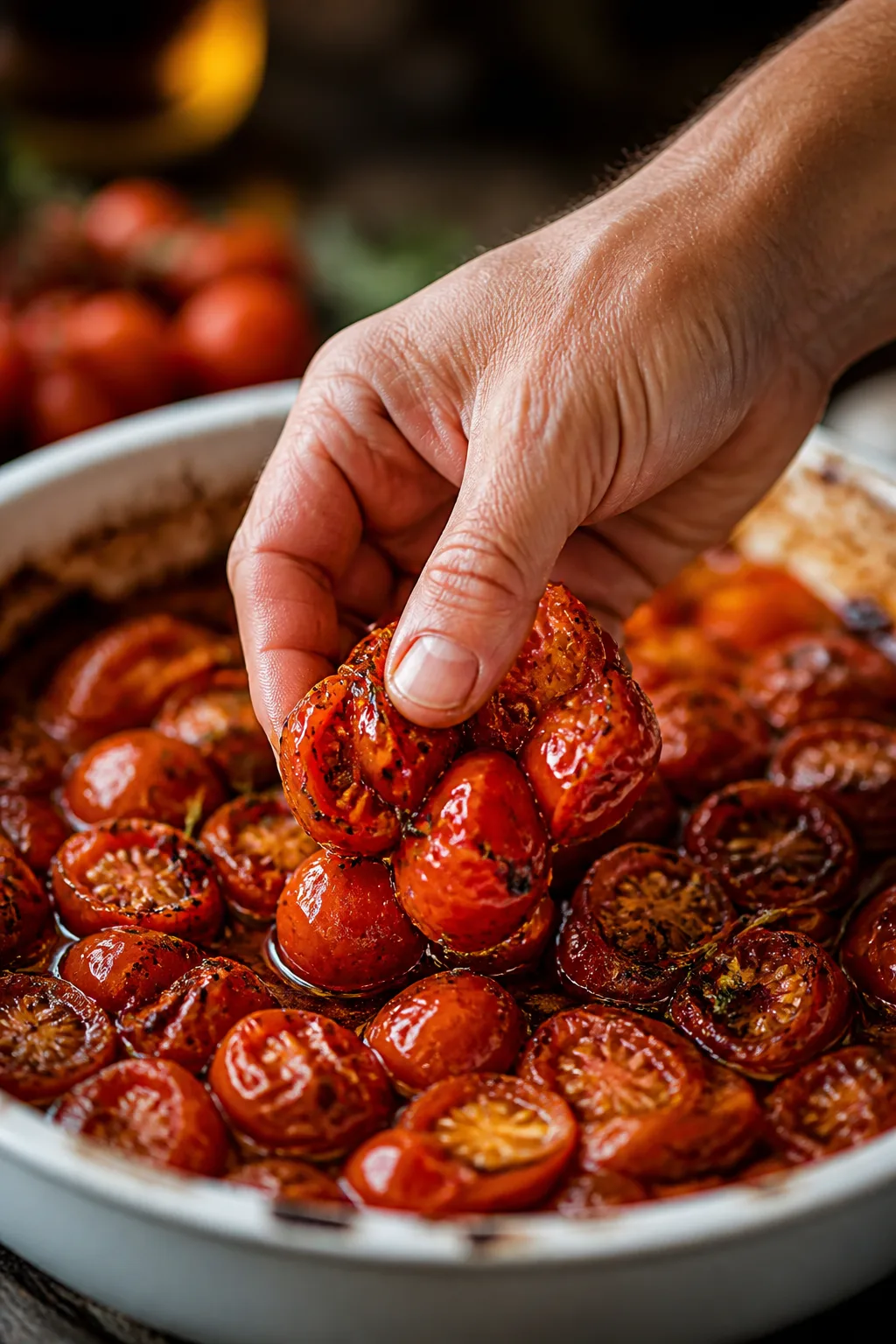
Place the baking sheet in the preheated oven and roast the tomatoes for 40 minutes, turning them gently halfway through. The slow roasting time allows the tomatoes to release their juices and caramelize slowly, intensifying their flavor. Turning them midway ensures even roasting and prevents any from sticking or burning on one side. Keep an eye on them towards the end—if they start to dry out too much, reduce the time slightly next time. The goal is a soft, bursting texture, not a dried or shriveled tomato.
⏱ Time: 40 minutes
✓ Doneness: Tomatoes are tender, juicy, with edges caramelized and slightly browned
Step 4
Once roasted, remove the tomatoes from the oven and immediately sprinkle the chopped fresh basil over the top. The heat from the tomatoes will gently release the basil oils, giving a fresh, bright flavor that balances the sweetness and earthiness from roasting and thyme. This final fresh herb addition adds a pop of color and a lovely herbal note that makes the dish feel vibrant and fresh.
⏱ Time: 2 minutes
✓ Doneness: Basil looks vibrant and slightly wilted but not browned or wilted excessively
Step 5
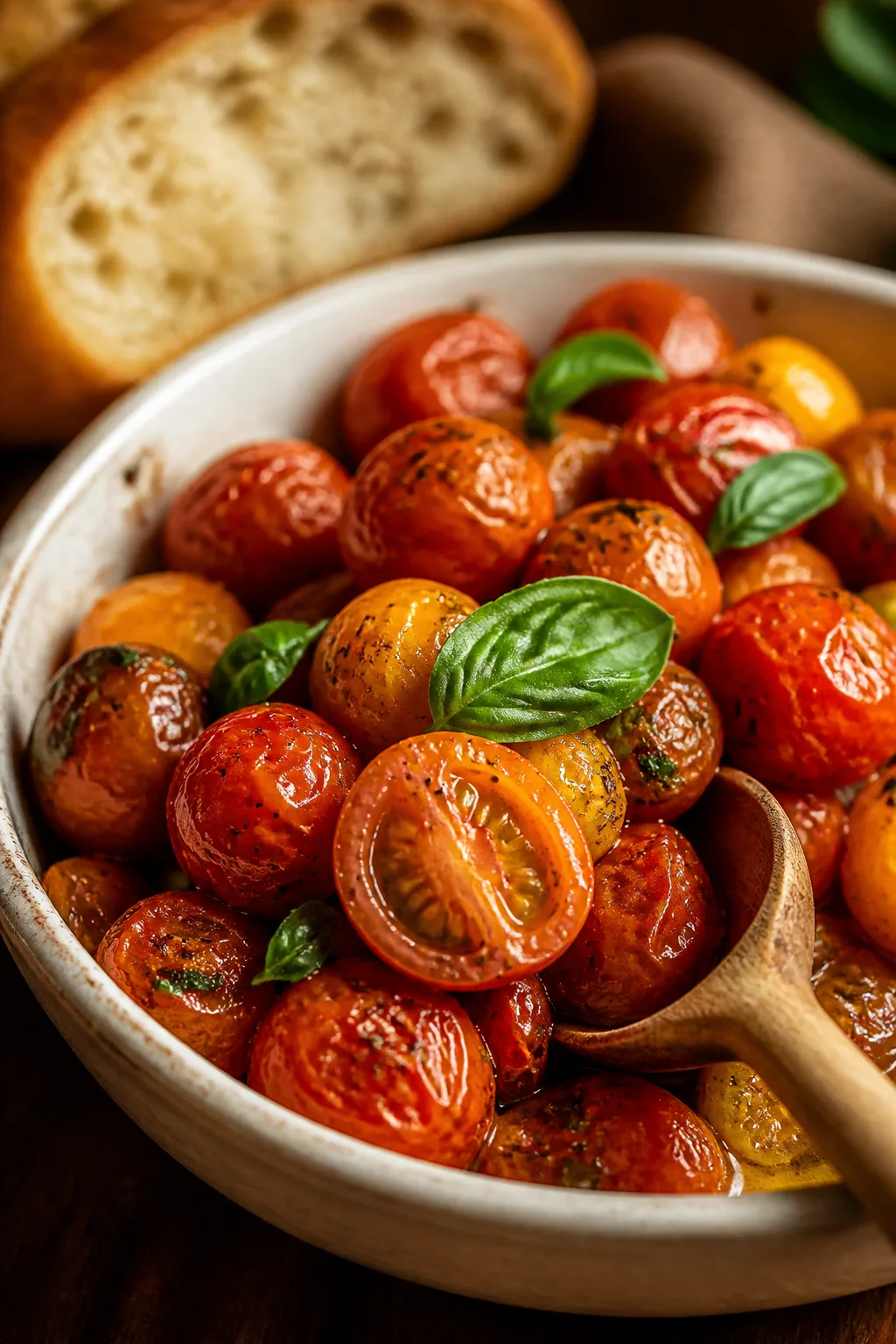
Let the tomatoes cool for about 5 minutes before serving. This allows the flavors to settle and the tomatoes to thicken slightly in their juices, making them easier to serve without being watery. It also helps prevent burning your mouth on piping hot tomatoes. Serve warm or at room temperature alongside grilled meats, tossed into pasta, or simply with crusty bread for a light meal.
⏱ Time: 5 minutes
✓ Doneness: Tomatoes slightly cooled, juices thickened but still moist
Step 6
If you want to add a touch of acidity, drizzle a little balsamic vinegar or lemon juice over the tomatoes just before serving. This brightens the dish and adds a nice contrast to the sweetness. Be careful not to add too much, or it can overpower the delicate roasted flavors. Just a light splash is enough to balance everything beautifully.
⏱ Time: 1 minute
✓ Doneness: Tomatoes glisten with a light sheen of vinegar or lemon juice
Step 7
For a heartier option, sprinkle some toasted pine nuts or crumbled feta cheese on top. These add texture and richness that complement the juicy tomatoes and fresh herbs. Toast pine nuts lightly in a dry pan until golden for the best flavor, and crumble feta just before serving so it retains its creamy texture.
⏱ Time: 3 minutes
✓ Doneness: Nuts are golden and fragrant; cheese is fresh and crumbly
Step 8
If you want to store leftovers, transfer the roasted tomatoes along with their juices into an airtight container and refrigerate. They’ll keep well for 3-4 days and can be enjoyed cold or gently reheated. The flavors often deepen after resting, making them even better the next day.
⏱ Time: 2 minutes
✓ Doneness: Tomatoes and juices fully cooled and stored in sealed container
Step 9
To reheat, warm the tomatoes gently in a skillet over low heat or in the microwave in short bursts to avoid overcooking. Adding a splash of olive oil or water can help keep them moist. Avoid overheating, which can make them mushy and lose their fresh herb brightness.
⏱ Time: 3 minutes
✓ Doneness: Tomatoes warmed through but still tender and juicy, not mushy
Variations
Spicy Roasted Cherry Tomatoes
Add a pinch of red pepper flakes or a diced fresh chili pepper before roasting to give these tomatoes a warm, spicy kick. This variation pairs wonderfully with grilled meats or as a topping for tacos and spicy pasta dishes.
Note: Monitor roasting time closely, as spices can intensify during cooking. Adjust heat level to taste.
Roasted Cherry Tomatoes with Balsamic Glaze
Drizzle a balsamic reduction over the tomatoes after roasting for a tangy-sweet finish. This adds complexity and a beautiful glossy look, perfect for serving as a fancy appetizer or salad topping.
Note: Make sure the glaze is added after roasting to maintain its syrupy texture and flavor.
Mediterranean Style with Olives and Feta
Mix in chopped Kalamata olives and crumbled feta cheese after roasting for a salty, savory twist. This variation is great for Mediterranean-inspired meals or as a flavorful side for grilled fish or chicken.
Note: Add cheese and olives just before serving to keep textures distinct.
Roasted Cherry Tomatoes with Garlic and Rosemary
Swap thyme for fresh rosemary and add extra minced garlic for a more robust, piney flavor. This pairs especially well with roasted meats and hearty grain bowls.
Note: Rosemary is more potent; chop finely and use sparingly to avoid overpowering the tomatoes.
Tomato and Mozzarella Caprese Style
After roasting, toss tomatoes with fresh mozzarella balls, basil, and a drizzle of olive oil for a warm Caprese salad. It’s a comforting yet fresh twist on the classic summer favorite.
Note: Serve immediately to enjoy the contrast between warm tomatoes and cool mozzarella.
Pro Tips
Roast tomatoes cut side up for best caramelization.
Keeping the tomatoes cut side up exposes the fleshy interior to dry heat, allowing the sugars to caramelize beautifully. If you roast them cut side down, they’ll steam and lose that concentrated sweetness, resulting in a less flavorful dish.
Don’t overcrowd the baking sheet.
Spacing tomatoes apart prevents them from steaming and ensures even roasting. Crowded pans trap moisture, causing tomatoes to become soggy rather than caramelized, which diminishes the texture and flavor.
Use fresh herbs added after roasting.
Adding herbs like basil after roasting preserves their bright flavor and color. Cooking fresh herbs for too long can cause bitterness and loss of aromatic oils, which would dull the dish’s overall freshness.
Low and slow roasting is key.
Roasting at a low temperature for a longer time draws out the natural sugars gently, preventing the tomatoes from drying out or burning. This method gives a soft, juicy texture with deep flavor, unlike high-heat roasting which can toughen or shrivel the tomatoes.
Use parchment paper or silicone mats on your baking sheet.
These liners prevent sticking and make cleanup easier. They also allow heat to circulate evenly under the tomatoes, contributing to uniform roasting and better texture.
Add a splash of balsamic vinegar before serving.
A little acidity balances the sweetness of the roasted tomatoes and adds a tangy brightness that elevates the dish. It’s a simple touch that can transform the flavor profile subtly but effectively.
Cool tomatoes slightly before serving.
Letting them rest helps the juices thicken and the flavors meld, so the tomatoes don’t release too much liquid when plated. It also ensures they’re not too hot to enjoy immediately.
Common Mistakes to Avoid
Roasting at too high a temperature.
Why it happens Many cooks assume higher heat means faster cooking, but with cherry tomatoes, this causes them to dry out or burn quickly, losing their juicy texture.
Fix Stick to a low oven temperature around 275°F and roast longer. This lets the tomatoes caramelize slowly and stay juicy, resulting in better flavor and texture.
Not spacing tomatoes apart on the pan.
Why it happens Trying to roast a large batch quickly leads to crowding, which traps moisture and causes steaming instead of roasting.
Fix Use two pans if needed and space tomatoes evenly. This ensures dry heat reaches each tomato, allowing proper caramelization.
Adding fresh herbs too early.
Why it happens Some add herbs before roasting to save time, but herbs lose their fresh flavor and can become bitter when cooked too long.
Fix Add delicate herbs like basil after roasting, while sturdier herbs like thyme can go in before roasting for flavor infusion.
Using underripe or overly soft tomatoes.
Why it happens Underripe tomatoes lack sweetness, and overripe ones become mushy when roasted, both affecting texture and flavor.
Fix Select ripe, firm tomatoes with bright skin for best roasting results.
Skipping the olive oil or using too little.
Why it happens Olive oil helps with heat transfer and flavor infusion; without enough oil, tomatoes can stick or roast unevenly.
Fix Coat tomatoes evenly with a good-quality olive oil to ensure even roasting and enhance flavor.
Nutrition
Per Serving:
Nutritional values are estimates and may vary based on specific ingredients used.
Storage & Tips
Room Temperature
Roasted cherry tomatoes can be left out at room temperature for up to 2 hours if covered loosely to prevent contamination. Beyond this, refrigeration is recommended to maintain freshness and safety.
Refrigerator
Store leftovers in an airtight container for up to 4 days. The tomatoes may lose some firmness but will develop deeper flavors. Enjoy them cold in salads or gently reheat to restore warmth and juiciness.
Freezer
Freeze roasted tomatoes for up to 2 months in a freezer-safe container. To prevent freezer burn, cover tightly and remove excess air. Thaw overnight in the fridge and reheat gently to maintain texture.
Reheating
Warm tomatoes slowly in a skillet over low heat or microwave in short bursts, adding a splash of olive oil or water if they seem dry. Avoid high heat which can make them mushy or cause the herbs to lose freshness.
Make Ahead
You can roast the tomatoes a day ahead and refrigerate. Add fresh herbs like basil just before serving to keep the flavors bright. This makes it an easy, quick side for busy days.
FAQ
Can I use other types of tomatoes for this recipe?
Yes, but cherry tomatoes work best because their small size and high sugar content make them ideal for slow roasting. Larger tomatoes like Roma or plum can be used but may require longer roasting and might not caramelize as evenly.
What if I don’t have fresh herbs?
Dried herbs can be used but add them before roasting so their flavors infuse the tomatoes. Fresh herbs added after roasting provide a brightness that dried ones can’t replicate, so for best results, try to use fresh when possible.
How do I prevent the tomatoes from becoming mushy?
Roast at a low temperature and avoid overcrowding the pan. Also, don’t roast for too long; watch for the tomatoes to shrivel slightly but still hold their shape. Proper spacing and timing are key to maintaining texture.
Can I make this recipe vegan or dairy-free?
Absolutely! The base recipe is vegan and dairy-free. If you add toppings like feta cheese, simply omit or substitute with a plant-based cheese alternative.
Is it better to eat the tomatoes warm or cold?
Both work well! Warm tomatoes are juicy and comforting, while chilled leftovers make a fresh addition to salads or sandwiches. Reheating gently helps retain their texture and flavor.
How do I store leftover roasted cherry tomatoes?
Store them in an airtight container in the refrigerator for up to 4 days. The flavors develop more over time, but the texture softens, so use them in cooked dishes or salads.
Can I add other vegetables to roast with the tomatoes?
Yes! Vegetables like sliced bell peppers, zucchini, or mushrooms roast well alongside tomatoes. Just adjust roasting times since some veggies cook faster or slower.
What’s the best way to reheat roasted tomatoes?
Reheat gently in a skillet over low heat or microwave in short bursts. Adding a little olive oil or water helps keep them moist and prevents drying out or becoming mushy.
Final Thoughts
I hope you enjoy making these slow-roasted cherry tomatoes as much as I do! They’re a simple way to add loads of flavor to your meals—let me know how yours turn out!