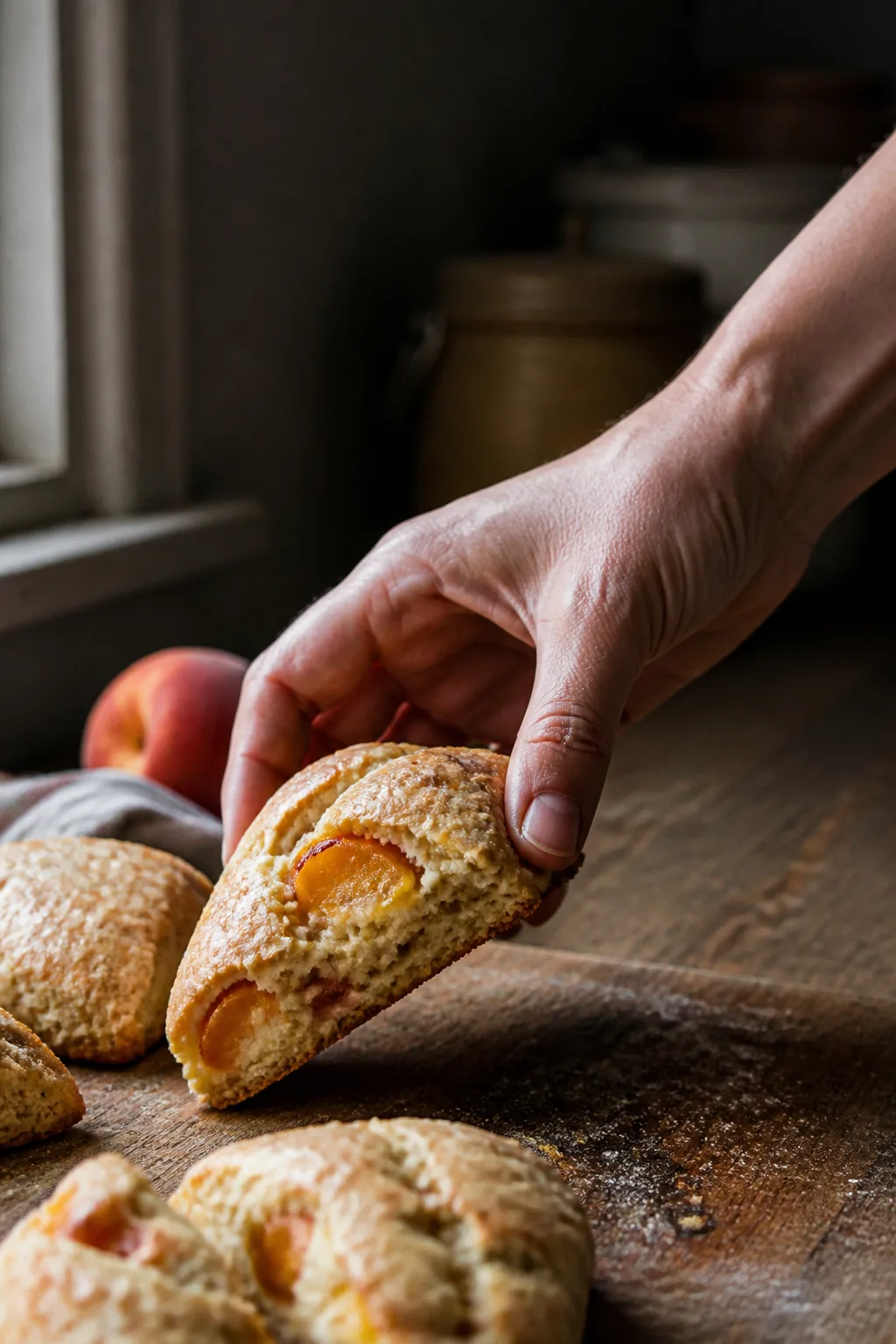
These peach scones are buttery and flaky, bursting with fresh peach chunks and a hint of vanilla that warms every bite. They’re my go-to for slow weekend breakfasts or sharing over coffee with friends.
Introduction
I first made these peach scones on a lazy summer morning when ripe peaches were overflowing at the farmer’s market. I wanted something flaky and buttery but also bursting with fresh fruit flavor. The trick I learned that makes these scones stand out is adding vanilla extract to the dough—it adds this subtle warmth that complements the juicy peaches perfectly. Unlike some scones that can be dry or crumbly, these come out tender with a crisp, golden crust every time. I’ve made them countless times for weekend breakfasts or casual brunches with friends, and they always disappear fast. The peaches soften just right while baking, keeping their fresh sweetness without turning mushy. If you’re used to scones that taste a bit plain or dry, give this recipe a try—you’ll notice the difference immediately. Plus, they’re surprisingly easy to whip up, even if you’re not a pro baker. Just be gentle when mixing to keep that flaky texture. When done, they have a comforting aroma that fills the kitchen and a texture that’s flaky on the outside but tender inside. Trust me, you’ll want to keep these in your regular rotation!
How To Do It
Step 1
Start by preheating your oven to 400°F (200°C) and lining a baking sheet with parchment paper. This ensures your scones bake evenly and don’t stick. Next, in a large bowl, whisk together the sifted flour, sugar, baking powder, and salt. Sifting helps aerate the flour and remove lumps, which is key for a light, tender scone. Mixing the dry ingredients thoroughly distributes the leavening agent evenly, so your scones rise properly.
⏱ Time: 10 minutes
✓ Doneness: Dry ingredients are well combined with no clumps or uneven patches
Step 2
Cut the cold butter into small cubes and add it to the dry ingredients. Use a pastry cutter or your fingertips to blend until the mixture resembles coarse crumbs with pea-sized pieces of butter. This step is vital because those small butter bits melt during baking, creating pockets of steam that make the scones flaky. Be careful not to overwork the dough, or the butter will melt prematurely, resulting in denser scones.
⏱ Time: 5-7 minutes
✓ Doneness: Mixture looks crumbly with visible butter pieces, not a uniform dough
Step 3
Gently fold in the diced fresh peaches. You want to distribute the fruit evenly without breaking it down too much, which could make the dough soggy. Fresh peaches add moisture and sweetness, so handling them delicately preserves their texture. If your peaches are very juicy, pat them dry slightly with paper towels before adding to keep the dough from becoming too wet.
⏱ Time: 3 minutes
✓ Doneness: Peach pieces are evenly scattered throughout the dough without mushiness
Step 4
In a separate small bowl, whisk together the heavy cream, egg, and vanilla extract until smooth. This wet mixture adds richness and flavor to the scones. The vanilla is subtle but really elevates the overall taste profile, giving the scones a warm, inviting aroma.
⏱ Time: 3 minutes
✓ Doneness: Wet ingredients are fully combined with no streaks of egg or cream
Step 5
Pour the wet ingredients into the dry mixture and gently stir with a spatula until just combined. The dough should be slightly sticky but manageable. Overmixing will develop gluten and make the scones tough, so stop as soon as you don’t see dry flour. The texture at this point should be lumpy and soft, not smooth or elastic.
⏱ Time: 2-3 minutes
✓ Doneness: Dough holds together but still looks rough and uneven
Step 6
Turn the dough out onto a lightly floured surface and pat it into a circle about 1 inch thick. Using a sharp knife or bench scraper, cut the dough into 8 equal wedges. This shape ensures even baking and makes for perfect, shareable scones. Handle the dough gently to keep the butter cold and flaky texture intact.
⏱ Time: 5 minutes
✓ Doneness: Dough wedges hold shape without crumbling or falling apart
Step 7
Place the scones on the prepared baking sheet, leaving a couple of inches between each. Brush the tops with a little more heavy cream to promote golden, shiny crusts. This simple step helps them brown beautifully and adds a subtle richness to the crust.
⏱ Time: 5 minutes
✓ Doneness: Scones are evenly spaced with glossy cream coating on top
Step 8
Bake in the preheated oven for 18-20 minutes, rotating the tray halfway through for even color. You’ll know they’re done when the scones are golden brown on top and a toothpick inserted in the center comes out clean. The edges should be firm but not hard, and the aroma of baking peaches and vanilla will fill your kitchen.
⏱ Time: 18-20 minutes
✓ Doneness: Golden brown tops with a clean toothpick test and fragrant aroma
Step 9
Remove the scones from the oven and let them cool on a wire rack for at least 10 minutes before serving. This resting time allows the interior to set and prevents them from crumbling when you bite in. Serve warm or at room temperature, maybe with a pat of butter or a drizzle of honey for extra indulgence.
⏱ Time: 10 minutes
✓ Doneness: Scones feel firm to the touch and are cool enough to handle without falling apart
Variations
Blueberry Lemon Scones
Swap fresh peaches for blueberries and add a teaspoon of lemon zest to the dough. This creates a bright, tangy flavor perfect for spring mornings. The blueberries burst during baking, adding juicy sweetness.
Note: Handle blueberries gently to avoid crushing. You may need to reduce cream slightly if blueberries are very juicy.
Cinnamon Sugar Peach Scones
Add 1 teaspoon of ground cinnamon to the dry ingredients and sprinkle cinnamon sugar on top before baking. This gives a warm, cozy flavor with a sweet, crunchy crust.
Note: Be careful not to add too much cinnamon, as it can overpower the peaches. The sugar topping caramelizes nicely in the oven.
Vegan Peach Scones
Replace butter with chilled coconut oil and use a flax egg (1 tbsp ground flaxseed + 3 tbsp water) instead of the egg. Swap heavy cream for coconut milk or almond milk. Expect a slightly different texture but still delicious.
Note: Cold coconut oil behaves similarly to butter for flakiness. The flax egg helps bind the dough but won’t brown as much.
Glazed Peach Scones
After baking, drizzle a simple glaze made from powdered sugar and peach juice over the cooled scones. This adds a sweet, glossy finish and extra peach flavor.
Note: Allow scones to cool completely before glazing to prevent melting and sogginess.
Savory Herb Peach Scones
Add 2 tablespoons chopped fresh thyme or rosemary to the dough and reduce sugar to 1 tablespoon. The herbs complement the peaches for a unique sweet-savory breakfast or snack.
Note: Fresh herbs add aroma and complexity. Adjust sugar carefully to keep balance.
Pro Tips
Keep your butter cold until just before mixing it into the flour.
Cold butter is essential for flaky scones because it melts in the oven, creating steam that forms layers. If the butter warms up too soon, it blends fully into the flour, resulting in a dense, crumbly texture rather than flaky layers.
Don’t overmix the dough once you add the wet ingredients.
Overmixing develops gluten in the flour, which toughens baked goods. For tender scones, mix just until the dough holds together. This keeps the crumb soft and prevents the scones from becoming chewy.
Use fresh, ripe but firm peaches and handle them gently.
Ripe peaches add sweetness and moisture, but if too soft or juicy, they can make the dough soggy. Gently folding them in preserves their texture and avoids breaking down the fruit, which keeps the scones light and fluffy.
Brush the tops with cream before baking.
This step encourages a golden, shiny crust through Maillard browning, enhancing both appearance and flavor. Skipping it can lead to pale, dull scones that don’t look or taste as appealing.
Cut the dough into wedges rather than rounds.
Wedges bake more evenly and create classic scone shapes that hold together well. Circles can sometimes spread out too much or bake unevenly.
Let scones cool on a wire rack after baking.
Cooling on a rack prevents steam from making the bottoms soggy and allows the interior to set properly. Eating them too hot can cause crumbly texture.
Sift your flour and baking powder for best results.
Sifting aerates the flour and evenly distributes the baking powder, ensuring uniform rise and a lighter texture.
Common Mistakes to Avoid
Using warm butter instead of cold butter
Why it happens Many people don’t realize how crucial cold butter is for creating flaky layers and may leave it out too long to soften.
Fix Chill the butter thoroughly and cut it into small cubes just before mixing. Use a pastry cutter or fingertips quickly to keep it cold. If it starts to soften, refrigerate the dough briefly before proceeding.
Overmixing the dough after adding wet ingredients
Why it happens It’s tempting to mix thoroughly to combine, but this develops gluten and toughens the scones.
Fix Mix gently and stop as soon as the dough holds together with no visible dry flour. It’s okay if the dough looks a bit rough or lumpy.
Adding too many peaches or using overly juicy fruit
Why it happens Trying to pack in more fruit can make the dough soggy and hard to handle.
Fix Use the recommended amount of peaches, and if they’re very juicy, pat them dry with paper towels before folding in.
Skipping the cream brush on top
Why it happens Some skip this step to save time, not knowing it affects browning.
Fix Brush the tops lightly with cream or milk to encourage golden crusts and improve flavor.
Not preheating the oven properly
Why it happens Rushing the process can lead to underbaked or unevenly baked scones.
Fix Always preheat your oven fully to 400°F before baking. This ensures scones rise and brown as intended.
Nutrition
Per Serving:
Nutritional values are estimates and may vary based on specific ingredients used.
Storage & Tips
Room Temperature
Scones keep well at room temperature for up to 2 days if stored in an airtight container. Covering them prevents drying out, but they are best eaten fresh or within this timeframe for optimal texture.
Refrigerator
Store scones in an airtight container in the fridge for up to 4 days. The texture may firm up and become less flaky, so warming them briefly before serving helps restore softness.
Freezer
Freeze scones individually wrapped tightly in plastic wrap and placed in a freezer bag for up to 3 months. To thaw, leave at room temperature or warm gently in the oven to refresh the texture.
Reheating
Reheat scones in a 350°F oven for 5-7 minutes until warm throughout. Avoid microwaving as it can make them tough or rubbery. Adding a small pat of butter before warming enhances moisture.
Make Ahead
You can prepare the dough and shape the scones up to 1 day ahead, then cover and refrigerate. Bake fresh the next morning for best results, or bake and freeze fully baked scones for later.
FAQ
Can I use frozen peaches instead of fresh?
Yes, but thaw and drain frozen peaches thoroughly before adding. Excess moisture can make the dough too wet, so pat them dry with paper towels. Frozen peaches may also be softer, so fold gently to avoid mushy dough.
What if I don’t have heavy cream? Can I substitute?
You can use half-and-half or whole milk, but the scones won’t be quite as rich or tender. For a non-dairy option, full-fat coconut milk works well and adds a subtle flavor twist.
How do I make the scones more flaky?
Keep your butter very cold and cut it into small pieces. Handle the dough gently and avoid overmixing. Also, don’t roll or press the dough too thin—about 1 inch thickness is ideal for flakiness.
Can I add nuts or other fruits?
Absolutely! Chopped pecans or almonds add nice crunch, and berries or dried fruit can be swapped for peaches. Just adjust moisture accordingly and fold in gently to keep texture.
Why are my scones tough or dry?
Usually from overmixing or using warm butter. Overworking develops gluten, making baked goods chewy. Also, not enough fat or moisture can cause dryness. Follow the recipe steps carefully and keep ingredients cold.
Can I make these scones vegan?
Yes, substitute butter with chilled coconut oil or vegan butter and replace the egg with a flax egg (1 tablespoon ground flaxseed mixed with 3 tablespoons water). Use plant-based milk instead of cream. The texture will be slightly different but still tasty.
How do I store leftover scones?
Keep them in an airtight container at room temperature for 2 days or freeze for longer storage. To refresh, warm them briefly in the oven before eating.
Can I freeze the dough before baking?
Yes, shape the scones and freeze them on a baking sheet until firm, then transfer to a bag. Bake from frozen, adding a few extra minutes to the baking time.
Final Thoughts
I hope you’ll give these peach scones a try soon—they’re such a comforting, delicious way to start the day. Let me know how they turn out!