Crunchy, tangy dill pickles made in just a few days with fresh dill and mustard seeds. These quick fridge pickles are perfect for snacking or adding a zesty touch to sandwiches anytime!
Introduction
I first stumbled on refrigerator pickles years ago when I wanted crunchy pickles fast without the fuss of canning. This recipe quickly became a staple in my kitchen because it’s so simple and reliable. What makes these pickles stand out is the fresh dill and mustard seeds combo—it adds a bright, tangy twist that you don’t often get with standard recipes. I like to slice my cucumbers fairly thin for that perfect snap, and smashing the garlic releases just enough flavor without overpowering the brine. One trick I learned is to use kosher salt instead of table salt; it dissolves cleaner and keeps the pickles crisp. These pickles develop their magic in the fridge in just 2-3 days, so they’re perfect for last-minute sides or whenever a crunchy snack craving hits. The finished pickles have that satisfying crunch and a balanced tang that pairs wonderfully with sandwiches, burgers, or just on their own. Honestly, once you try these, you’ll never want to buy store-bought again!
What You'll Need
Approximately 4 cups of pickles, 4 servings
- 4 cups fresh cucumber slices, about 2 medium cucumbers
- 1 cup distilled white vinegar
- 1 cup water
- 2 tablespoons kosher salt
- 1 tablespoon sugar
- 4 garlic cloves, smashed
- 2 teaspoons mustard seeds
- 1 teaspoon black peppercorns
- 3 sprigs fresh dill
How To Do It
Step 1
Start by washing your cucumbers thoroughly and slicing them into even rounds or spears, about 1/4-inch thick. Uniform slices ensure they pickle evenly and maintain a consistent crunch. Avoid slicing too thin, or they’ll become soggy quickly. Place the cucumber slices into a clean quart-sized jar or container with a lid. This step is key because fresh, evenly cut cucumbers absorb the brine better, giving you crisp pickles every time.
⏱ Time: 10 minutes
✓ Doneness: Cucumber slices are evenly cut and snug in the jar but not crushed.
Step 2
In a small saucepan, combine the white vinegar, water, kosher salt, and sugar. Heat over medium heat, stirring until the salt and sugar fully dissolve. Heating the brine helps the flavors meld and ensures the salt and sugar are evenly distributed, which is crucial for proper pickling and flavor balance. Don’t boil; just warm enough to dissolve.
⏱ Time: 5 minutes
✓ Doneness: Brine is clear and all solids have dissolved.
Step 3
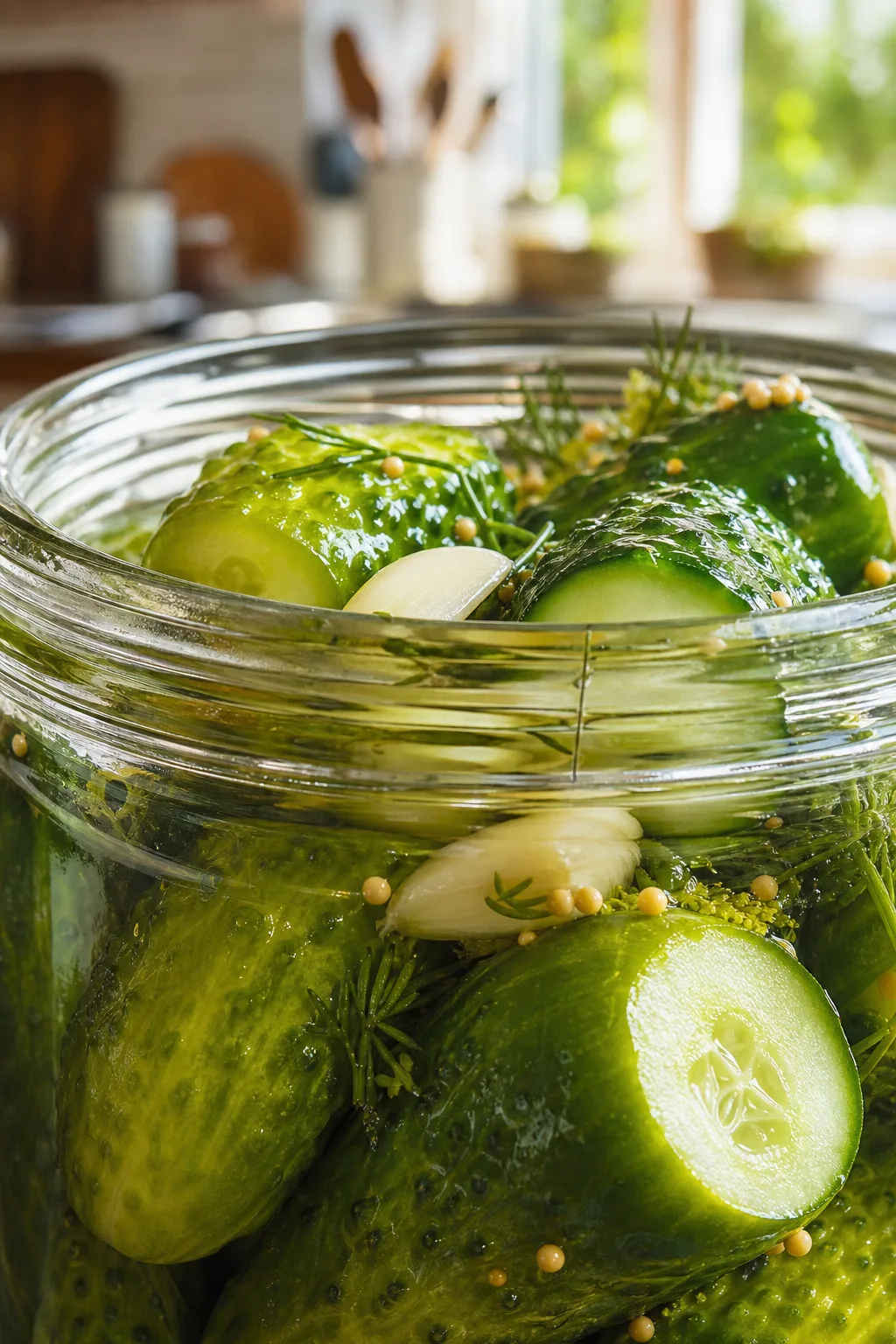
Add the smashed garlic cloves, mustard seeds, and black peppercorns into the jar with the cucumbers. Tuck in the fresh dill sprigs on top. These aromatics infuse the pickles with layers of flavor while keeping the profile fresh and vibrant. Don’t skip the mustard seeds—they add a subtle tang and crunch that elevate the whole jar.
⏱ Time: 5 minutes
✓ Doneness: Aromatics are evenly distributed and visible throughout the jar.
Step 4
Pour the warm brine over the cucumbers and spices until they’re fully submerged. Make sure to leave about half an inch of space at the top. Submerging the cucumbers prevents them from oxidizing and turning soft. If needed, press the cucumbers gently with a clean utensil to release trapped air bubbles.
⏱ Time: 5 minutes
✓ Doneness: Cucumbers are fully covered by brine with no floating pieces.
Step 5
Seal the jar tightly and let it cool to room temperature before refrigerating. Cooling prevents condensation inside the jar, which could dilute the brine and affect pickle texture. Once cooled, place the jar in the fridge where the pickling magic happens.
⏱ Time: 15 minutes
✓ Doneness: Jar is cool to the touch and tightly sealed.
Step 6
Allow the pickles to marinate in the fridge for at least 48 hours, although they taste best after 3-4 days. The longer they soak, the more the flavors develop. Resist the temptation to open the jar too often, as exposure to air can soften the pickles prematurely.
⏱ Time: 48-72 hours
✓ Doneness: Pickles have developed a bright, tangy aroma and crisp texture.
Step 7
Before serving, give the jar a gentle shake or stir with a clean utensil to redistribute the spices and brine. This refreshes the flavors and ensures every bite is perfectly seasoned. Serve chilled straight from the jar or add to sandwiches, burgers, or salads.
⏱ Time: 2 minutes
✓ Doneness: Pickles glisten evenly and smell fresh and tangy.
Step 8
If you want extra crispness, you can add a couple of grape leaves or a pinch of calcium chloride to the jar before sealing. These help maintain firmness by inhibiting enzymes that soften cucumbers. This step is optional but great if you’re picky about crunch.
⏱ Time: Optional, 2 minutes
✓ Doneness: Leaves or calcium chloride are submerged and don’t cloud the brine.
Step 9
Enjoy your homemade refrigerator pickles within 2-3 weeks for best texture and flavor. After that, they’ll still be safe to eat but may soften a bit. Always use a clean utensil to remove pickles to avoid contamination and extend shelf life.
⏱ Time: Ongoing
✓ Doneness: Pickles remain crisp and flavorful during storage.
Variations
Spicy Refrigerator Pickles
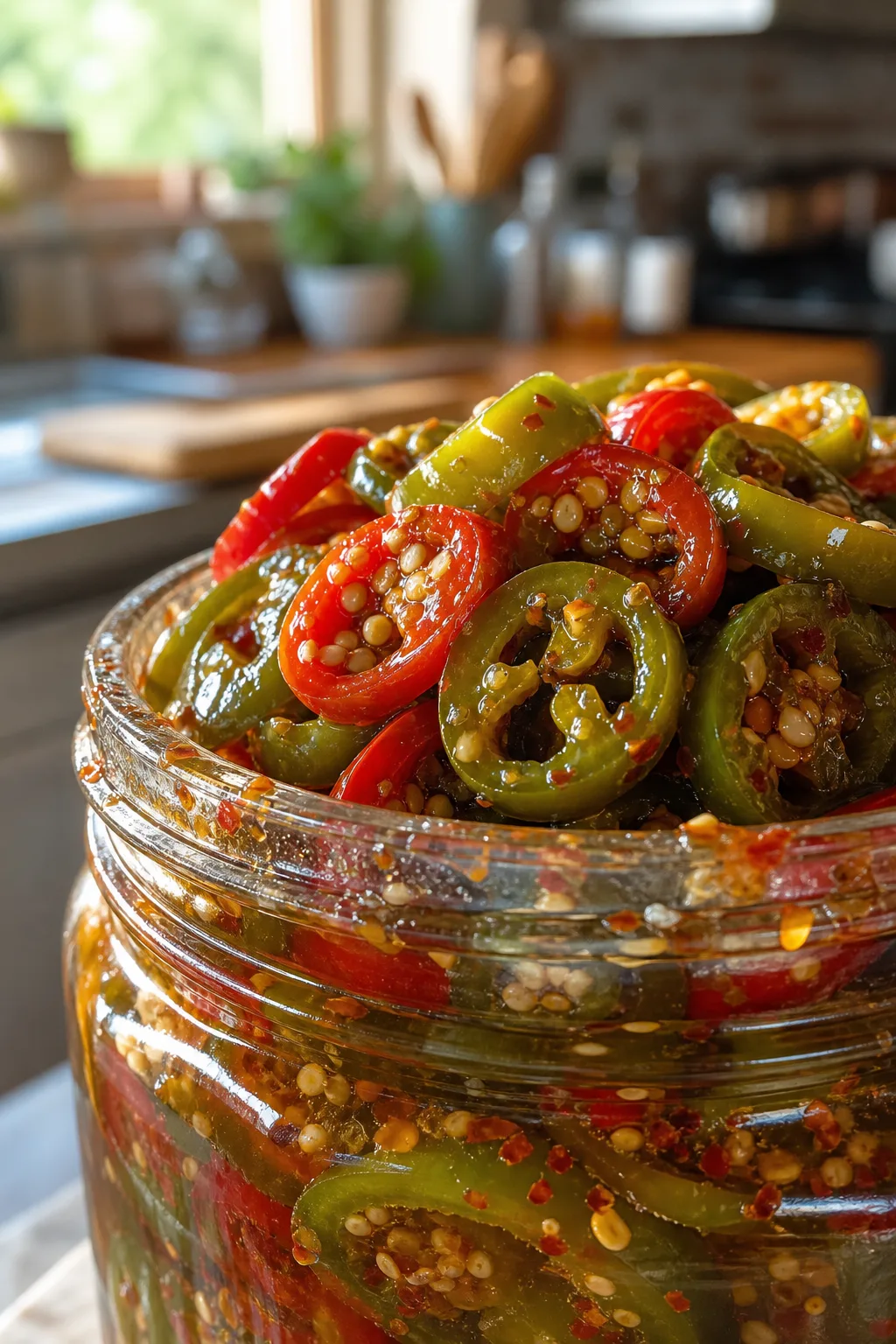
Add 1-2 sliced jalapeños or a pinch of red pepper flakes to the jar for a spicy kick. The heat pairs beautifully with the dill and mustard seeds, giving your pickles a fiery twist that’s perfect for adventurous snackers.
Note: Keep an eye on spice levels and taste after 48 hours; heat intensifies with time so adjust accordingly.
Garlic and Herb Pickles
Include fresh thyme or rosemary sprigs along with dill and increase garlic cloves to 6 for a more herbal and pungent flavor profile. These pickles work great as a side for roasted meats or charcuterie boards.
Note: Herbs can overpower if left too long; remove after 5 days for balanced taste.
Sweet and Tangy Bread and Butter Pickles
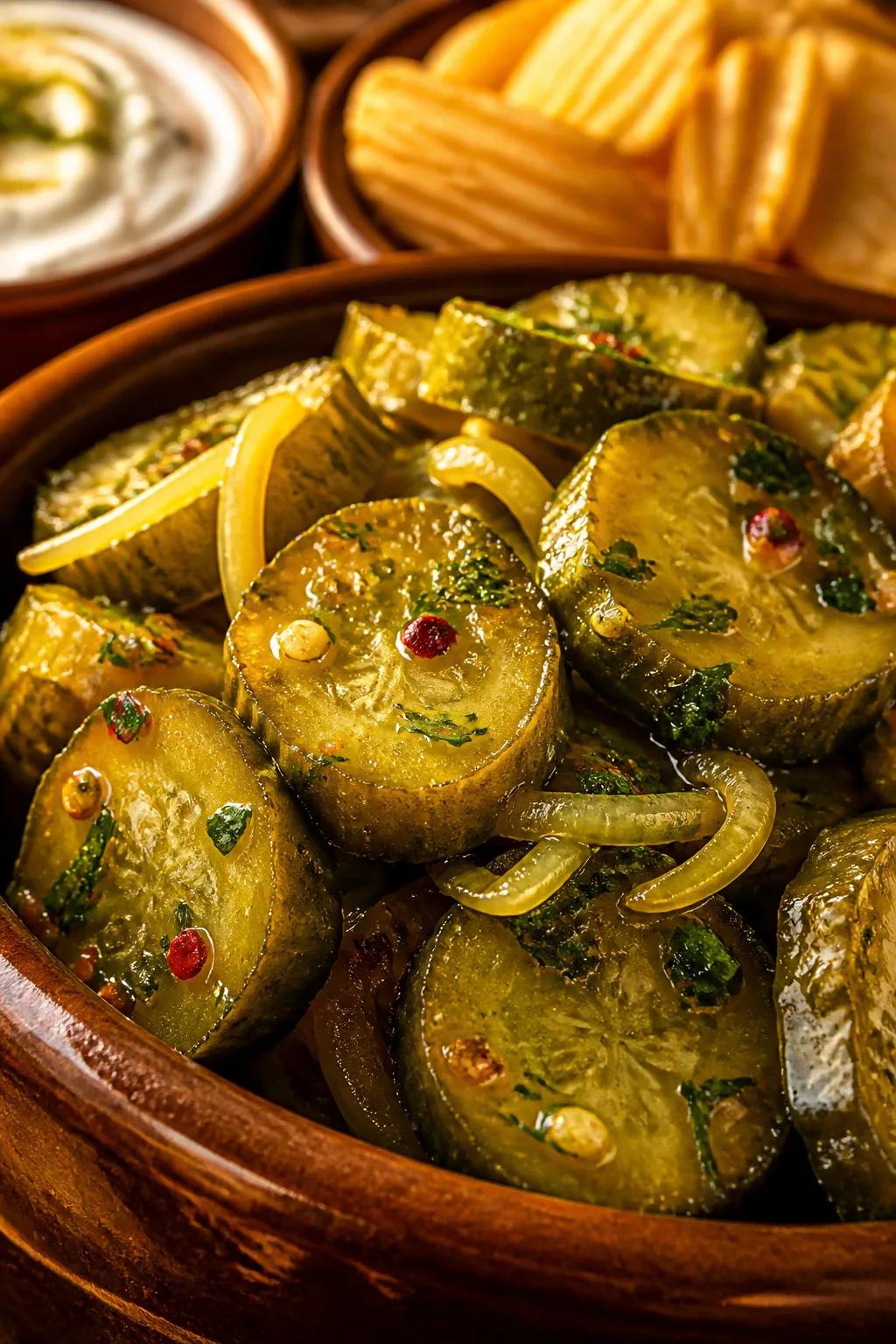
Add 1/4 cup of sliced onions and increase sugar to 1/3 cup for a sweeter, tangier pickle reminiscent of classic bread and butter style. Ideal for burgers or picnic sandwiches.
Note: Sugar changes brining time slightly; taste after 3 days to check sweetness balance.
Dill Spears with Turmeric
Use cucumber spears instead of slices and add 1/2 teaspoon turmeric powder to the brine for a vibrant color and subtle earthiness. Turmeric adds health benefits and a beautiful golden hue.
Note: Turmeric can stain surfaces; use glass jars and clean spills immediately.
Quick Pickled Red Onions
Swap cucumbers for thinly sliced red onions and omit dill. Use the same brine with mustard seeds for tangy, crunchy pickled onions that brighten salads and tacos.
Note: Pickled onions soften faster; best eaten within 5-7 days for optimal crunch.
Pro Tips
Slice cucumbers evenly for uniform pickling.
Even slices ensure the brine penetrates at the same rate, preventing some pieces from becoming mushy while others remain under-flavored. Uneven slices can lead to inconsistent texture and taste in the jar.
Use kosher salt instead of table salt.
Kosher salt dissolves cleaner and lacks additives that can cloud the brine or negatively impact flavor. It also helps maintain a crisp texture by effectively drawing moisture out of the cucumbers.
Warm the brine just enough to dissolve salt and sugar.
Heating the brine helps evenly distribute flavors and speeds up the pickling process. But boiling can break down delicate herbs and dull the fresh taste, so moderate heat is best.
Ensure cucumbers are fully submerged under brine.
Exposure to air causes oxidation, which darkens and softens the pickles. Keeping cucumbers submerged preserves color, texture, and safety by preventing mold or spoilage.
Add fresh dill sprigs whole rather than chopped.
Whole sprigs infuse flavor gradually and are easier to remove if desired. Chopped dill can become mushy and cloud the brine, affecting appearance and texture.
Use smashed garlic cloves for balanced flavor.
Smashed garlic releases essential oils gently, adding depth without overpowering. Whole cloves wouldn’t infuse enough flavor, while minced garlic can be too strong or watery.
Store pickles in the fridge for at least 48 hours before eating.
This resting time allows vinegar and spices to fully penetrate cucumbers, developing crisp, tangy flavor. Eating too soon results in bland, less crunchy pickles.
Common Mistakes to Avoid
Using regular table salt instead of kosher salt.
Why it happens Many home cooks assume all salts are interchangeable. Table salt contains additives that can cloud brine and affect texture.
Fix Switch to kosher salt; it dissolves better and helps keep pickles crisp and clear. Measure carefully since volume differs between salts.
Not fully submerging cucumbers under the brine.
Why it happens It's easy to overlook pressing cucumbers down or using a weight, leading to floating pieces.
Fix Use a clean utensil or a small jar lid to press cucumbers below the brine surface. This prevents spoilage and maintains crispness.
Skipping the resting time in the refrigerator.
Why it happens Impatience or misunderstanding that pickles need time to develop flavor.
Fix Plan ahead and wait at least 48 hours before tasting. The longer the rest, the better the flavor and crunch.
Using large slicing cucumbers.
Why it happens Sometimes only large cucumbers are available or preferred for slicing.
Fix Choose smaller pickling cukes with thinner skins and fewer seeds. They stay crisp and absorb brine better.
Boiling the brine too long.
Why it happens Some think a rolling boil is necessary for safety or flavor extraction.
Fix Heat just until salt and sugar dissolve. Avoid boiling to preserve fresh herb flavors and avoid bitterness.
Nutrition
Per Serving:
Nutritional values are estimates and may vary based on specific ingredients used.
Storage & Tips
Room Temperature
Refrigerator pickles should not be kept at room temperature for more than 2 hours as they lack the heat processing that canned pickles have. Always keep them chilled in the fridge to maintain safety and crispness.
Refrigerator
Store pickles in an airtight jar in the refrigerator for up to 3 weeks. Over time, the texture may soften slightly but flavors continue to develop. They’re best served cold or at room temperature.
Freezer
Freezing is not recommended for cucumber pickles as it breaks down their cell structure, causing mushiness upon thawing. Instead, enjoy fresh within the refrigeration period.
Reheating
These pickles are best enjoyed cold or at room temperature. Reheating is unnecessary and can degrade texture and flavor.
Make Ahead
You can prepare the brine and slice cucumbers 1 day ahead, storing them separately. Assemble and combine everything on the day you plan to refrigerate for pickling to keep cucumbers crisp.
FAQ
Can I use regular table salt instead of kosher salt?
While you can use table salt, kosher salt is preferred because it dissolves more cleanly and lacks additives that can cloud the brine or affect flavor. If you substitute table salt, use about half the amount by volume and be aware pickles might be less crisp.
How long do refrigerator pickles last?
Stored properly in the fridge, these pickles last about 3 weeks. They’ll stay safe to eat longer but may soften and lose some crunch. Always use clean utensils to avoid contamination and check for any off smells or mold.
Why are my pickles soft after a few days?
Soft pickles often result from using cucumbers that are too large or watery, not fully submerging them in brine, or using table salt instead of kosher salt. Also, opening the jar too often can introduce air and bacteria that soften them.
Can I add other spices to this recipe?
Absolutely! Feel free to experiment with spices like coriander seeds, dill seeds, or red pepper flakes. Just keep the balance in mind so flavors don’t overpower the fresh dill and mustard seeds.
Do I need to boil the brine?
You only need to warm the brine enough to dissolve salt and sugar. Boiling is unnecessary and can degrade fresh herb flavors. Just heat gently over medium heat until fully dissolved.
Can I use dried dill instead of fresh?
Fresh dill gives the brightest flavor and best aroma. Dried dill can be used in a pinch but add it sparingly as it’s more concentrated and lacks the fresh herbal notes. The pickles won’t be quite the same without fresh dill.
Why do I need to wait 2-3 days before eating?
The resting period allows the vinegar and spices to fully penetrate the cucumbers, developing flavor and crunch. Eating too soon results in bland, less flavorful pickles.
Can I use other types of cucumbers?
Pickling cucumbers are best due to their firm texture and thin skins. Larger slicing cucumbers tend to be watery and seedy, which can lead to soggy pickles. If using slicing cucumbers, peel and remove seeds for better results.
Final Thoughts
I hope you enjoy making these easy refrigerator dill pickles as much as I do! They’re a fast, flavorful snack that’ll brighten any meal—give them a try and let me know how they turn out.