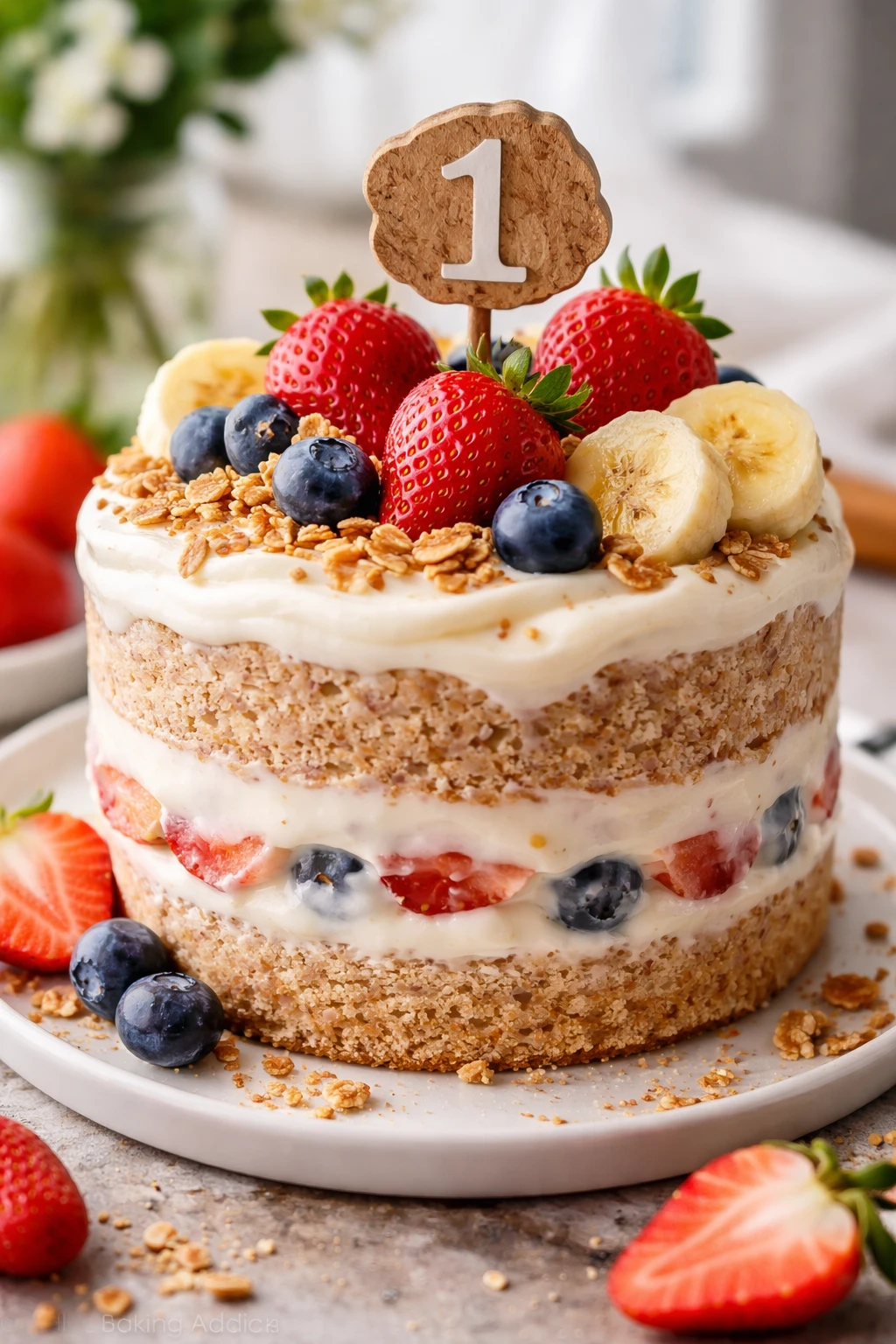
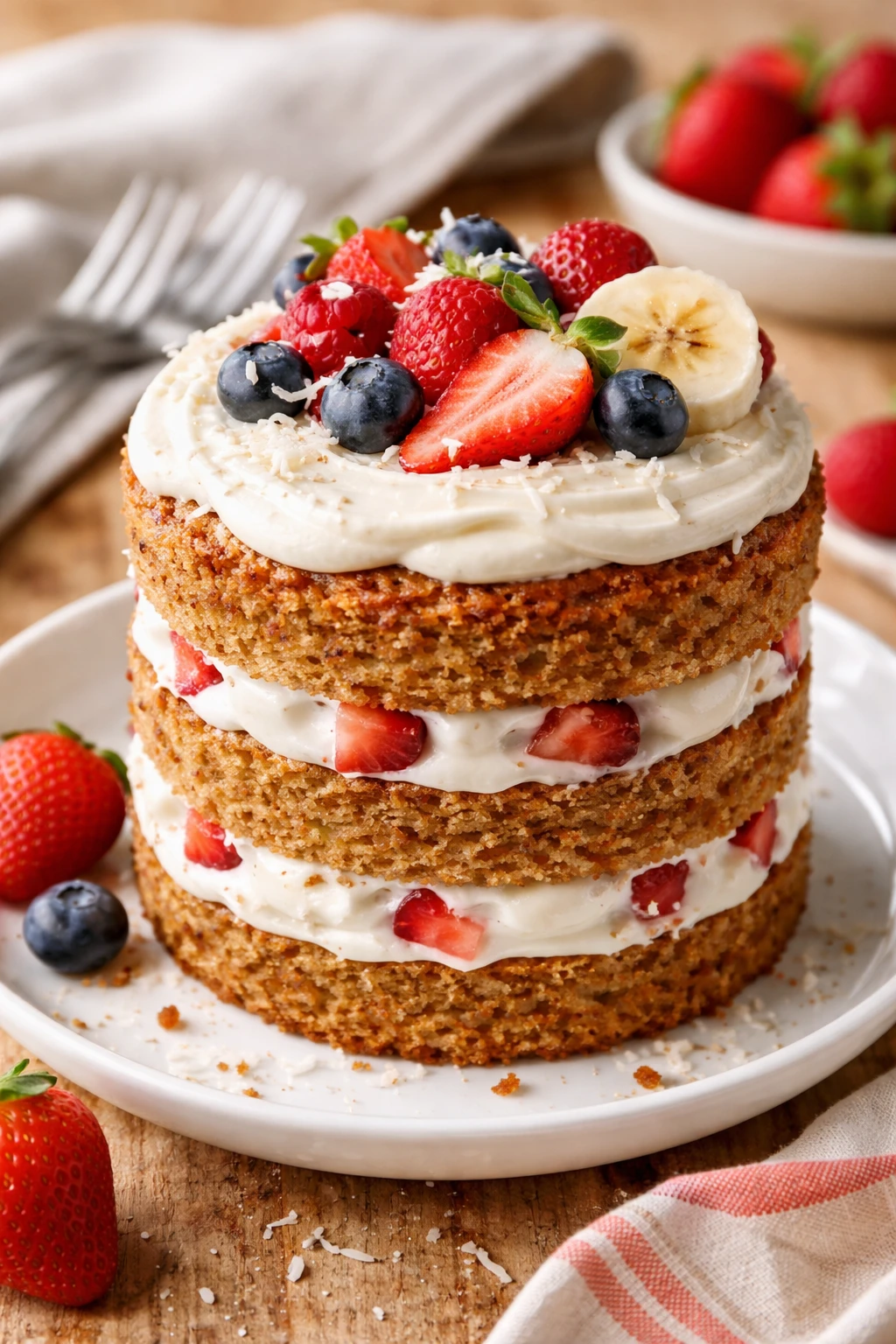
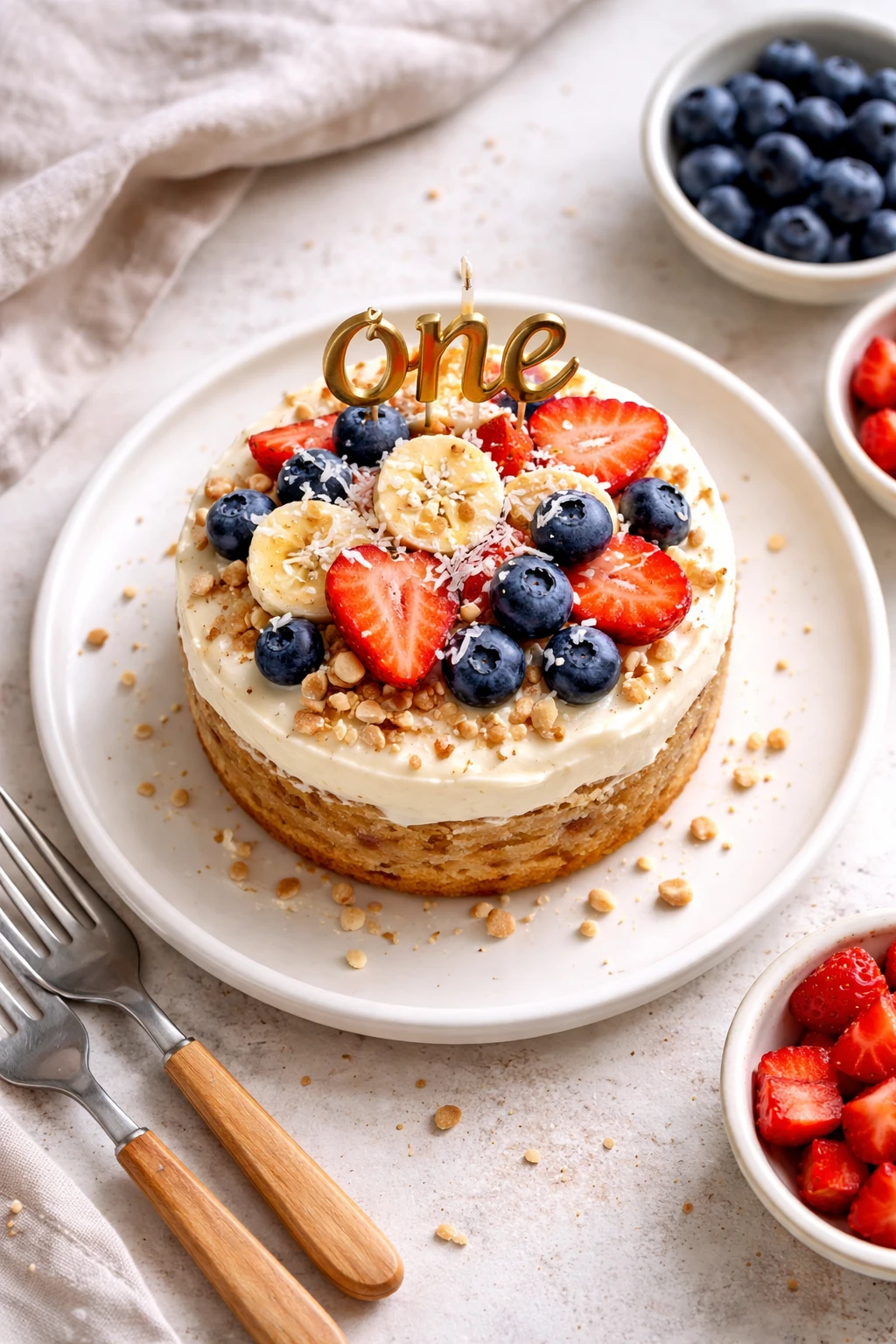
A gentle cake made just for little ones’ first birthdays! Soft, naturally sweetened with fruit, and free from added sugar. Perfect for celebrating milestones with a healthy twist.
Introduction
I remember the first time I wanted to bake a cake for my baby’s first birthday. I wanted something soft, wholesome, and without that overwhelming sweetness typical of store-bought cakes. After a few trial runs (including one that ended up way too dense!), I landed on this natural recipe that uses ripe bananas and applesauce for gentle sweetness. No added sugar means it’s easier on little tummies and still delicious enough for adults to enjoy. What sets this cake apart is the use of whole wheat flour for a bit of heartiness and coconut oil, which keeps it moist without any artificial fats. The yogurt adds a subtle tang and tender crumb. When it comes out of the oven, it’s soft, lightly fragrant with cinnamon, and just sweet enough from the fruit. This cake works beautifully for milestone celebrations or anytime you want a treat that’s both nourishing and fun. Plus, it’s simple enough that even a novice baker can get it right on the first try—trust me, I’ve been there! So, if you want a cake that feels like a warm hug for your baby’s big day, this is it.
What You'll Need
One 8-inch round cake, 8 servings
- 2 ripe bananas, mashed
- 1 cup unsweetened applesauce
- 1/3 cup coconut oil, melted
- 1 teaspoon vanilla extract
- 1 1/2 cups whole wheat flour
- 1 teaspoon baking soda
- 1/2 teaspoon ground cinnamon
- 1/4 teaspoon salt
- 1/2 cup full-fat plain yogurt
- 2 eggs, beaten
How To Do It
Step 1
Preheat your oven to 350°F (175°C) and grease an 8-inch round cake pan with a little coconut oil or line it with parchment paper. This step ensures your cake won't stick and will come out cleanly, preserving the soft edges we love in this recipe. A well-prepared pan also helps the cake bake evenly by allowing heat to circulate properly around the sides. Avoid skipping this or using only flour, as it can dry out the cake's crust.
⏱ Time: 10 minutes
✓ Doneness: Pan is evenly greased or parchment paper is smoothly fitted with no wrinkles
Step 2
In a large bowl, mash the ripe bananas until smooth. Add the unsweetened applesauce, melted coconut oil, vanilla extract, and beaten eggs. Whisk everything together until the mixture looks uniform and creamy. Mixing the wet ingredients first helps incorporate moisture evenly and activates the natural sweetness from the fruit. Be gentle when mixing to avoid overworking the eggs, which can toughen the cake later.
⏱ Time: 5 minutes
✓ Doneness: Wet mixture is smooth, with no lumps of banana or separated oil
Step 3
In a separate bowl, sift together the whole wheat flour, baking soda, ground cinnamon, and salt. Sifting helps aerate the flour and evenly distributes the leavening agent and spices, which is critical for a light, tender crumb. Skipping this can lead to clumps and uneven rising.
⏱ Time: 5 minutes
✓ Doneness: Dry ingredients are well combined with no visible clumps
Step 4
Gradually add the dry ingredients to the wet banana mixture, folding gently with a spatula. Mix just until combined—overmixing can develop gluten and make the cake tough. The batter should be thick but still spreadable. If it feels too dense, a splash of milk or more yogurt can loosen it slightly without losing moisture.
⏱ Time: 3 minutes
✓ Doneness: Batter is smooth with no dry flour streaks but not overly runny
Step 5
Fold in the full-fat plain yogurt last to add moisture and tenderness. The yogurt's acidity reacts with the baking soda to give the cake a gentle rise and a soft texture. Using low-fat or non-dairy yogurt can change the texture, so stick to full-fat for best results.
⏱ Time: 2 minutes
✓ Doneness: Batter looks creamy and slightly glossy with yogurt fully incorporated
Step 6
Pour the batter into your prepared cake pan and smooth the top with a spatula. This helps the cake bake evenly and gives a nice, level surface for decorating. Avoid tapping the pan vigorously, which can cause air bubbles and uneven texture.
⏱ Time: 2 minutes
✓ Doneness: Batter surface is evenly spread with no peaks or deep dips
Step 7
Bake in the preheated oven for 28-32 minutes. Check doneness by inserting a toothpick into the center; it should come out clean or with a few moist crumbs. Baking too long dries the cake, while underbaking leaves it gooey inside. The edges will pull slightly away from the pan when it’s done.
⏱ Time: 30 minutes
✓ Doneness: Toothpick comes out clean and edges are lightly golden
Step 8
Let the cake cool in the pan for 10 minutes before transferring it to a wire rack. Cooling in the pan allows the structure to set so the cake doesn’t break apart. Moving it too soon can cause crumbling or sogginess from trapped steam.
⏱ Time: 10 minutes
✓ Doneness: Cake feels firm to the touch and starts to pull away from the pan edges
Step 9
Once fully cooled, decorate as desired with natural toppings like mashed berries, a light spread of cream cheese, or a sprinkle of finely chopped nuts. Keep decorations simple and baby-friendly to maintain the wholesome vibe. This also keeps sugar content low and flavor fresh.
⏱ Time: 15 minutes
✓ Doneness: Cake is cool to touch and decorations are evenly applied
Variations
Berry Swirl First Birthday Cake
Fold in 1/2 cup of mashed berries such as blueberries or raspberries into the batter before baking. This adds natural sweetness and a beautiful marbled effect. Expect a slightly moister cake with a fresh, fruity twist.
Note: Reduce yogurt slightly if the berry puree is very wet to maintain batter consistency.
Pumpkin Spice First Birthday Cake
Substitute half the applesauce with canned pumpkin puree and add 1/2 teaspoon nutmeg and 1/4 teaspoon cloves for a cozy fall flavor. The pumpkin adds moisture and subtle sweetness that pairs well with cinnamon.
Note: Pumpkin puree is wetter, so reduce yogurt by 1-2 tablespoons to keep batter from becoming too loose.
Dairy-Free Coconut Yogurt Cake
Replace the plain yogurt with full-fat coconut yogurt for a dairy-free version. This adds a hint of tropical flavor and keeps the cake moist and tender, perfect for allergy-friendly celebrations.
Note: Check that coconut yogurt is unsweetened to avoid extra sugar; texture may be slightly softer.
Gluten-Free First Birthday Cake
Use a gluten-free all-purpose flour blend instead of whole wheat flour. Add 1/2 teaspoon xanthan gum if your blend doesn’t contain it to help structure. The cake will be just as soft but may be a bit more crumbly.
Note: Baking time may vary slightly; start checking for doneness at 25 minutes.
Mini Muffin Birthday Treats
Pour batter into a greased mini muffin tin for easy, bite-sized treats. Bake for 12-15 minutes until golden and toothpick clean. Great for party finger food or snack time with less mess.
Note: Watch closely as smaller portions bake faster and can dry out if overcooked.
Pro Tips
Use ripe bananas with plenty of brown spots for natural sweetness.
Ripe bananas contain higher sugar levels and softer texture, which means your cake will be naturally sweet and moist without needing added sugar. Using underripe bananas results in a less flavorful, denser cake that's less appealing to little ones.
Don’t overmix the batter once flour is added.
Overmixing develops gluten in the flour, leading to a tougher, chewier texture. Gentle folding keeps the crumb tender and soft, which is essential for a cake meant for babies and sensitive palates.
Measure flour properly by spooning it into the cup and leveling off.
Scooping flour directly can pack it tightly, resulting in too much flour and a dry, crumbly cake. Lightly spooning and leveling ensures the right amount for a moist, tender crumb.
Let the cake cool completely before decorating.
Decorating while the cake is warm can cause toppings to melt or slide off, ruining the presentation. Cooling also lets the crumb set properly, making slicing easier and cleaner.
Use full-fat yogurt for the best texture and flavor.
The fat content helps keep the cake moist and tender, while the acidity activates the baking soda for proper rise. Low-fat alternatives can lead to a drier, less flavorful cake.
Line your pan with parchment paper for easy removal.
This prevents sticking and reduces the chance of breaking the delicate cake when removing it from the pan. It also helps keep edges soft rather than crusty.
Add a pinch of cinnamon for a subtle warming flavor.
Cinnamon pairs beautifully with banana and applesauce, adding complexity without overpowering. It also has natural antioxidants, making the cake slightly more nutritious.
Common Mistakes to Avoid
Using underripe bananas
Why it happens Sometimes cooks grab bananas that look ripe but are actually too firm or greenish, thinking they’ll ripen in the oven.
Fix Always use bananas with brown spots or even fully brown skins. If you only have underripe ones, wait a few days or warm them gently in the oven wrapped in foil until soft before mashing.
Overmixing the batter after adding flour
Why it happens It’s a common instinct to mix thoroughly to avoid lumps, but this develops gluten and toughens the cake.
Fix Fold the flour in gently with a spatula, mixing just until no dry spots remain. It’s okay if a few small lumps persist; they’ll bake out.
Skipping greasing the pan
Why it happens Sometimes people think parchment paper alone is enough or just forget.
Fix Always grease the pan lightly with coconut oil and line with parchment paper. This double layer helps the cake release cleanly without damage.
Baking at too high a temperature
Why it happens Ovens vary, and some cooks crank the heat to speed baking.
Fix Stick to 350°F (175°C). Higher heat can dry out or burn the outside before the inside cooks through.
Decorating before the cake cools
Why it happens Impatience or excitement to serve leads to topping a warm cake.
Fix Wait at least an hour until the cake is fully cooled. This preserves texture and appearance.
Nutrition
Per Serving:
Nutritional values are estimates and may vary based on specific ingredients used.
Storage & Tips
Room Temperature
This cake keeps well at room temperature for up to 24 hours if covered tightly with plastic wrap or stored in an airtight container. Beyond this, it may start to dry out or become stale.
Refrigerator
Store leftovers in an airtight container in the fridge for up to 3 days. The cake may firm up and lose some softness when cold, so bring to room temperature before serving or warm slightly in the microwave.
Freezer
Freeze wrapped tightly in plastic wrap and then foil for up to 2 months. Thaw overnight in the fridge or on the counter for a few hours. Reheat gently in the oven or microwave to restore softness.
Reheating
Warm slices in the microwave for 15-20 seconds or in a 300°F oven for 5-7 minutes. Adding a tiny splash of milk before reheating can help keep it moist. Avoid overheating to prevent drying out.
Make Ahead
You can prepare the batter a day ahead and keep it covered in the fridge. Bake fresh the next day for best texture. Alternatively, bake the cake and freeze it undecorated, then thaw and decorate on the day of serving.
FAQ
Can I use regular sugar instead of fruit for sweetness?
You can, but the cake is designed to be naturally sweetened by bananas and applesauce. Adding sugar changes the flavor profile and may make the cake less suitable for babies. If you prefer sugar, reduce the fruit slightly to balance moisture and sweetness.
What if I don’t have whole wheat flour?
You can substitute with all-purpose flour, but the cake will be lighter and less nutty. Whole wheat adds fiber and a subtle flavor that complements the fruits. If using all-purpose, consider adding a tablespoon of wheat germ or oat bran for extra nutrition.
Can I freeze the whole cake after baking?
Yes! Wrap the cooled cake tightly in plastic wrap and then foil to prevent freezer burn. Freeze for up to two months. Thaw slowly in the fridge for best texture before serving or decorating.
How do I know when the cake is fully baked?
Insert a toothpick in the center; it should come out clean or with a few moist crumbs. The edges should pull slightly away from the pan and the top will be lightly golden. Underbaked cake will be wet and dense inside.
Can I make this cake vegan?
To make it vegan, substitute eggs with flax eggs (1 tablespoon ground flaxseed mixed with 3 tablespoons water per egg) and use dairy-free yogurt. Coconut oil works well as is. Texture may be slightly different but still delicious.
Is it okay to add nuts or seeds for texture?
Yes, finely chopped nuts or seeds can add a nice crunch and nutrition. Avoid whole large pieces for babies to prevent choking hazards. Toast nuts lightly for extra flavor before adding.
What if I don’t have coconut oil?
You can use melted butter or a neutral oil like canola, but coconut oil adds a unique richness and helps with texture. Butter will give a slightly different flavor and may make the cake less dairy-free.
How do I make the cake less dense?
Make sure to sift your flour and fold the batter gently to avoid overmixing. Also, ensure baking soda is fresh to get a good rise. Using yogurt activates the baking soda for a lighter crumb.
Can I use this recipe for cupcakes?
Absolutely! Fill lined cupcake tins about two-thirds full and bake for 18-20 minutes. Check with a toothpick for doneness. Cupcakes bake faster due to smaller size.
What’s the best way to decorate this cake for a first birthday?
Keep it simple and natural: fresh fruit slices, a light spread of cream cheese frosting, or a sprinkle of edible flowers work beautifully. Avoid sugary frostings to keep it baby-friendly.
Final Thoughts
I hope you enjoy making and sharing this gentle, natural first birthday cake with your little one. Don’t forget to tell me how it turns out—I’d love to hear your thoughts!