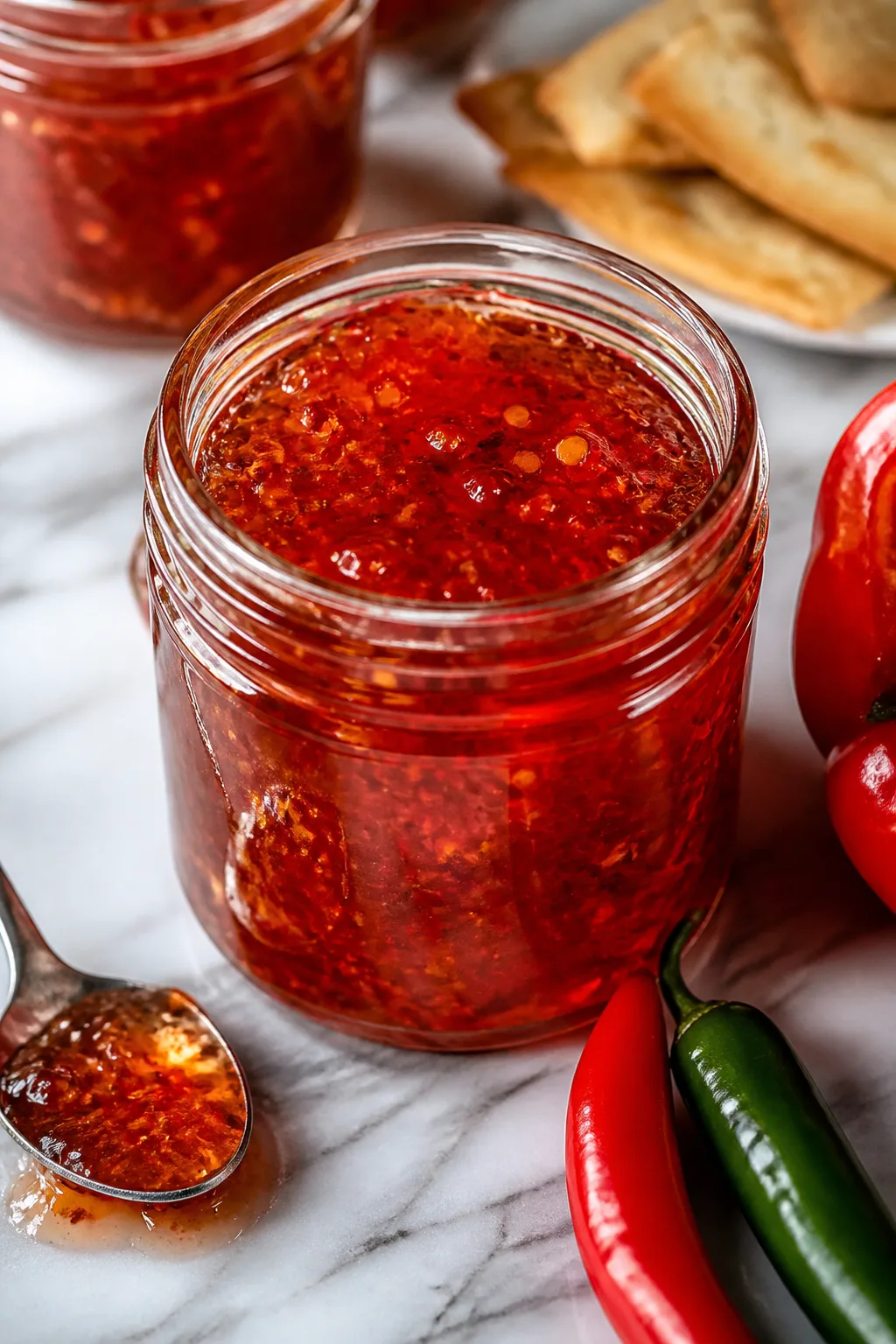
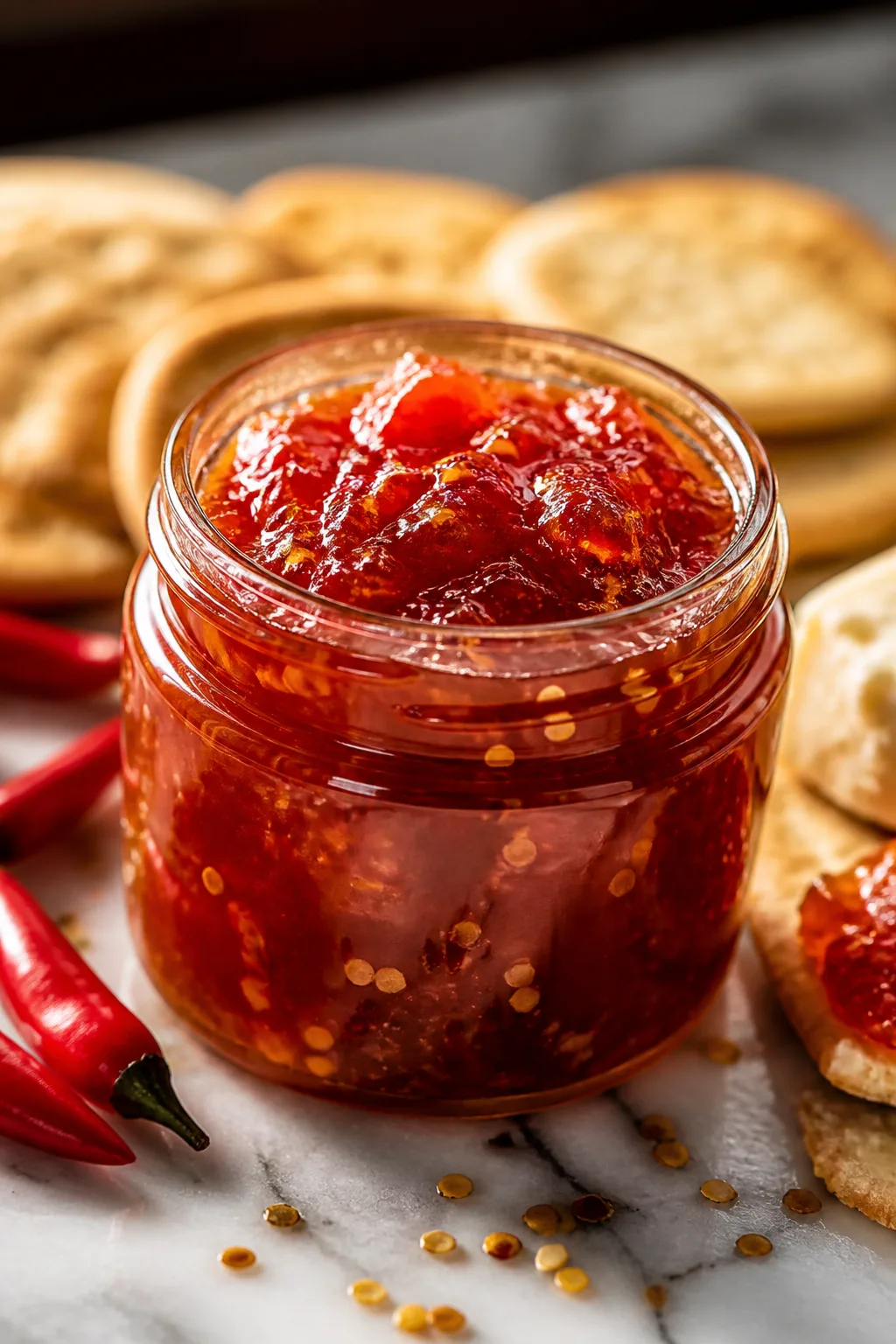
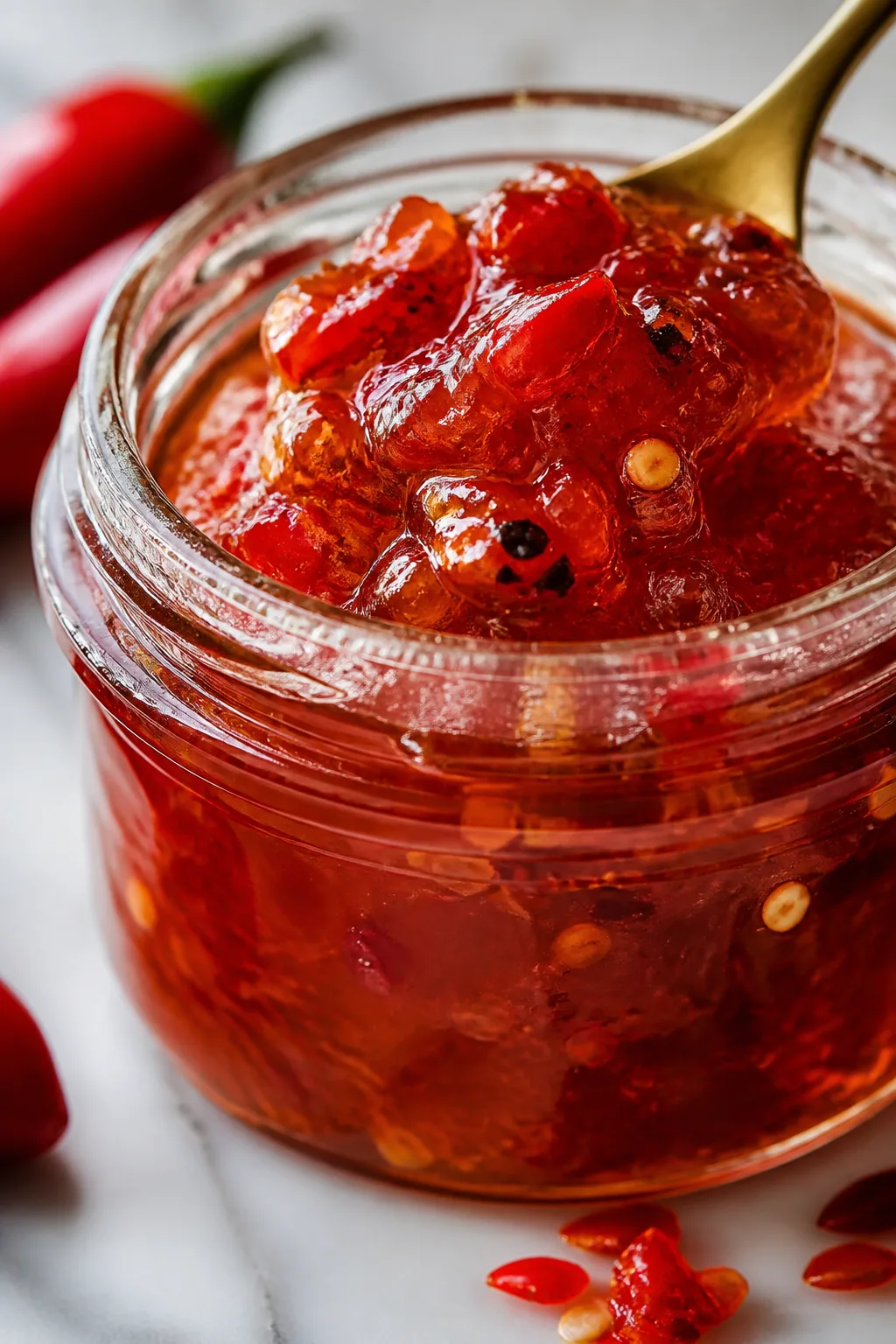
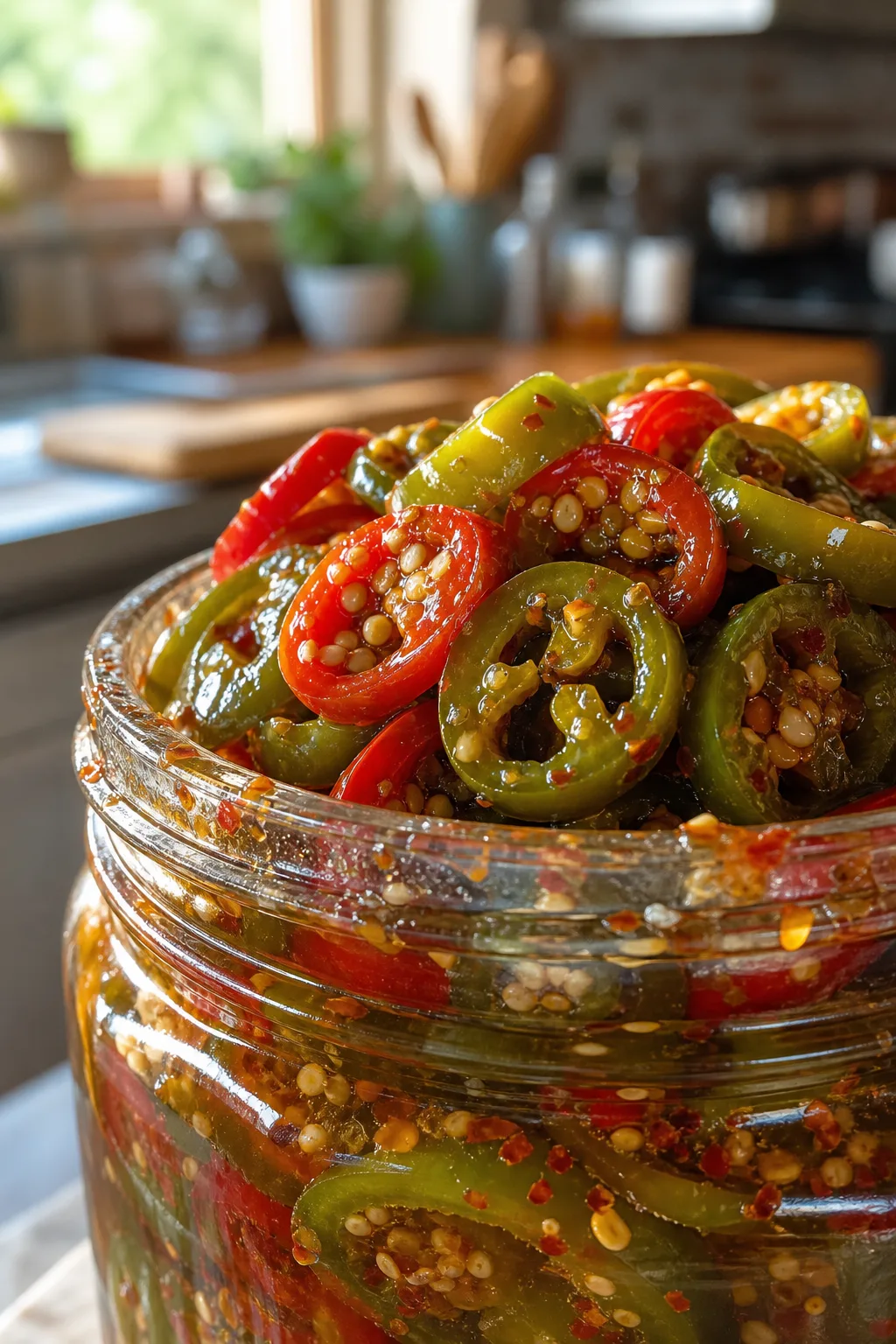
This jalapeño pepper jelly is a perfect blend of sweet and heat, made with fresh jalapeños and a splash of vinegar. It’s fantastic on crackers or as a glaze, ideal for snacking or entertaining friends.
Introduction
I first made this jalapeño pepper jelly a few years back when I wanted something different to bring to a summer party. The balance of sweet and spicy is just right—not too hot, but with enough kick to keep things interesting. What makes this recipe stand out is using fresh jalapeños and a splash of apple cider vinegar, which adds a subtle tang that brightens the flavors. I’ve tried other versions before, but some were either too sweet or too fiery. Here, the sugar and vinegar are measured carefully to create a lovely harmony. The secret I learned is to remove most seeds to control the heat, letting the pepper’s flavor shine without overwhelming your palate. When it’s done, the jelly has a beautiful, glossy finish and a nice spreadable texture—perfect on crackers, cream cheese, or even as a glaze for grilled chicken. It’s become a staple in my kitchen for quick snacks or party appetizers, and I think you’ll love how versatile and easy it is to make. Just be sure to watch the jelly closely as it cooks to get the right set without burning the sugar.
What You'll Need
Approximately 4 half-pint jars, 4 servings
- 4 cups finely chopped fresh jalapeños (seeds removed for less heat)
- 3 cups granulated sugar
- 1 1/2 cups apple cider vinegar
- 1 package (1.75 oz) fruit pectin
- 1/2 teaspoon salt
How To Do It
Step 1
Start by washing and finely chopping the fresh jalapeños. Removing most of the seeds is key here if you want to keep the heat mild while retaining the pepper’s flavor. The seeds and membranes hold much of the capsaicin, so taking them out makes the jelly more approachable. Chop the peppers finely so they’ll distribute evenly and release their flavor throughout the jelly.
⏱ Time: 10 minutes
✓ Doneness: Peppers are finely chopped with minimal seeds remaining, ready for cooking.
Step 2
In a large pot, combine the chopped jalapeños, granulated sugar, apple cider vinegar, and salt. Stir well to dissolve the sugar before heating. This step ensures even sweetness and acidity distribution. The vinegar not only adds brightness but also helps preserve the jelly. Avoid rushing this step so the sugar fully dissolves, preventing graininess in the final product.
⏱ Time: 5 minutes
✓ Doneness: Sugar is fully dissolved and the mixture is uniform with no gritty texture.
Step 3
Bring the mixture to a rolling boil over medium-high heat. Stir frequently to prevent burning, especially as the sugar heats. A rolling boil means the liquid is bubbling vigorously and won’t stop when stirred. This is essential for activating the pectin later and ensuring the jelly sets correctly.
⏱ Time: 7-8 minutes
✓ Doneness: Mixture is bubbling vigorously and evenly, no sugar crystals visible on pot sides.
Step 4
Once boiling, add the fruit pectin all at once while stirring briskly. The pectin helps the jelly thicken and set. Stir for about 1-2 minutes to fully incorporate the pectin and avoid lumps. Skipping or adding pectin too slowly can cause uneven texture or failure to gel.
⏱ Time: 2 minutes
✓ Doneness: Pectin is fully dissolved, mixture thickening and bubbling steadily.
Step 5
Continue boiling the mixture hard for another 1-2 minutes after adding pectin, stirring constantly. This step activates the pectin’s gelling properties. Don’t overcook here as it can break down the pectin and cause a runny jelly, but undercooking will prevent proper setting.
⏱ Time: 2 minutes
✓ Doneness: Mixture thickens visibly and coats a spoon with a gel-like consistency.
Step 6
Remove the pot from heat and skim off any foam that has formed on the surface. Foam can trap air bubbles and cause cloudy jelly. Use a spoon or ladle to gently remove it, leaving a clear, shiny jelly base.
⏱ Time: 3 minutes
✓ Doneness: Surface is clear and shiny with no foam remaining.
Step 7
Ladle the hot jelly carefully into sterilized jars, leaving about 1/4 inch of headspace. Wipe jar rims clean to ensure a good seal. This step is crucial for safe preservation and prevents spoilage. If jars aren’t clean or filled properly, the jelly might not seal well.
⏱ Time: 10 minutes
✓ Doneness: Jars are filled evenly with no spills on rims.
Step 8
Seal the jars with sterilized lids and process them in a boiling water bath for 10 minutes. This heat process kills bacteria and creates a vacuum seal. It’s essential for safely storing your jelly at room temperature. Skip this step if you plan to refrigerate and consume quickly.
⏱ Time: 10 minutes
✓ Doneness: Lids pop down and seal tightly as jars cool.
Step 9
Let the jars cool completely at room temperature without disturbing them. As they cool, the jelly will set fully and the lids will seal. Avoid moving jars during this time to prevent seal failure. Once cooled, check that lids are concave and don’t flex when pressed.
⏱ Time: 4-6 hours
✓ Doneness: Jelly is firm and lids are sealed with no movement.
Variations
Mango Jalapeño Pepper Jelly
Add 1 cup of finely chopped ripe mango to the jalapeño mixture for a sweeter, tropical twist. The mango’s natural sweetness complements the pepper’s heat beautifully, creating a more complex flavor profile. Expect a slightly softer texture due to the fruit’s moisture content.
Note: Reduce sugar slightly to balance mango sweetness and cook a bit longer to accommodate extra moisture.
Smoky Chipotle Pepper Jelly
Swap half the jalapeños with chipotle peppers in adobo sauce for a smoky, deeper heat. This variation is perfect for barbecue lovers and pairs well with grilled meats. The flavor is richer and less sharp than the original.
Note: Use less vinegar to balance the smoky chipotle flavor and monitor salt levels closely.
Honey Sweetened Pepper Jelly
Replace half the granulated sugar with honey for a floral sweetness and smoother mouthfeel. Honey adds depth and a slightly sticky texture that works well as a glaze or dip. This version is less processed and has a nuanced flavor.
Note: Heat gently to avoid burning honey and adjust pectin amount slightly for proper set.
Citrus Jalapeño Jelly
Add zest and juice of one lime or lemon to brighten the jelly with citrus notes. This adds a fresh tang that enhances the pepper’s flavor and makes the jelly taste lighter and more vibrant. Great for summer snacks.
Note: Increase vinegar slightly to maintain acidity and pectin activation.
Garlic Infused Pepper Jelly
Add 2-3 minced garlic cloves during the initial cooking stage for a savory twist. The garlic complements the heat and sweetness, creating a more complex and robust jelly that pairs well with cheeses and charcuterie.
Note: Cook garlic gently with peppers to avoid bitterness and balance with sugar.
Pro Tips
Remove most jalapeño seeds to control heat without losing flavor.
Seeds and membranes contain most of the capsaicin, the compound responsible for heat. Removing them lets you keep the pepper’s flavor while making the jelly more approachable for a wider audience.
Use a candy thermometer to monitor boiling temperature.
Maintaining the right temperature ensures proper pectin activation and sugar dissolution. Too low, and the jelly won’t set; too high, and it can burn or become too thick.
Sterilize jars and lids thoroughly before filling.
Proper sterilization prevents contamination that can spoil your jelly. It also helps create a vacuum seal during processing, which is critical for safe long-term storage.
Don’t rush the boiling step after adding pectin.
Pectin needs a full, hard boil to gel correctly. Skipping this or boiling too briefly results in runny jelly that won’t hold shape.
Skim off foam immediately after boiling.
Foam traps air and impurities, making the jelly cloudy and affecting texture. Removing it leads to a clearer, more attractive final product.
Leave headspace in jars to allow for expansion during processing.
If jars are filled to the brim, jelly can overflow during boiling, preventing a proper seal and causing mess or spoilage.
Cool jars undisturbed at room temperature for several hours.
Moving jars while cooling can break the seal or cause uneven setting. Letting them sit quietly ensures a firm jelly and proper vacuum seal.
Common Mistakes to Avoid
Not removing enough seeds causing overly spicy jelly.
Why it happens Many assume all parts of the pepper contribute equally to flavor, but seeds hold most heat. Leaving them in can overwhelm the jelly’s balance.
Fix Carefully remove most seeds and membranes before chopping. Taste a small piece if unsure about heat level and adjust accordingly.
Underboiling after adding pectin resulting in runny jelly.
Why it happens Some rush the process or misjudge boiling, preventing pectin from activating fully.
Fix Ensure a full rolling boil for at least 1-2 minutes after adding pectin while stirring constantly to achieve proper gel.
Skipping foam skimming leading to cloudy jelly.
Why it happens Foam forms naturally and can be overlooked, but it traps air and impurities.
Fix Use a spoon to gently skim foam off the surface right after boiling, ensuring clarity and smooth texture.
Using unsterilized jars causing spoilage.
Why it happens Assuming clean jars are safe can lead to contamination and mold growth.
Fix Always sterilize jars and lids by boiling or dishwasher sanitizing before use to ensure safety.
Filling jars too full and breaking seals.
Why it happens Not leaving enough headspace can cause overflow during processing, preventing vacuum seal formation.
Fix Leave about 1/4 inch of headspace in jars to allow for expansion and proper sealing.
Nutrition
Per Serving:
Nutritional values are estimates and may vary based on specific ingredients used.
Storage & Tips
Room Temperature
Once sealed properly, the jelly can be safely stored at room temperature for up to 1 year in a cool, dark place. Keep jars away from direct sunlight and heat sources to preserve flavor and color.
Refrigerator
After opening, store the jelly in an airtight container in the fridge for up to 3 weeks. The flavor may deepen but the texture might firm slightly. It’s delicious served cold or at room temperature.
Freezer
Pepper jelly can be frozen for up to 6 months. Use freezer-safe containers or bags and leave space for expansion. Thaw in the refrigerator overnight and stir before serving to restore consistency.
Reheating
Reheat gently on the stovetop or in the microwave if using as a glaze. Add a splash of water or vinegar if the jelly is too thick. Avoid boiling again to preserve fresh flavor and texture.
Make Ahead
You can prepare the jelly up to 1 week ahead and store it refrigerated before processing jars. Alternatively, fully process and store sealed jars for months, making it great for gifting or busy days.
FAQ
Can I use other peppers instead of jalapeños?
Absolutely! You can swap jalapeños for milder peppers like bell peppers for less heat or hotter ones like serranos for more kick. Just remember to adjust the amount of seeds you remove and taste as you go to balance the spice.
What if my jelly doesn’t set properly?
If the jelly is too runny, it usually means the pectin didn’t activate fully. Make sure you boiled the mixture hard for the full time after adding pectin and measured ingredients precisely. You can re-cook it with a little more pectin to fix it.
How long does unopened pepper jelly last?
Properly sealed and stored in a cool, dark place, unopened pepper jelly can last up to 1 year. Always check the seal before use and discard if you notice any off smells or mold.
Can I reduce the sugar in this recipe?
Reducing sugar is tricky since it impacts preservation and setting. If you want less sweetness, try substituting part of the sugar with a low-calorie sweetener designed for canning, but expect some changes in texture and shelf life.
Why do I need to process the jars in a water bath?
Processing kills bacteria and creates a vacuum seal that keeps your jelly safe for long-term storage. Skipping this step risks spoilage and unsafe food.
Can I make this jelly without pectin?
Without pectin, the jelly won’t set properly and will be more like a syrup. You can try using natural pectin sources like apple peels, but results vary and require longer cooking.
How spicy is this jelly if I leave in some seeds?
Leaving seeds will increase the heat noticeably. It can become quite spicy, so taste small amounts before deciding how many seeds to include based on your heat tolerance.
What are some good pairings for jalapeño pepper jelly?
It’s fantastic on cream cheese with crackers, as a glaze for grilled chicken or pork, or drizzled over roasted vegetables. It adds a sweet heat that livens up many dishes.
Final Thoughts
Give this sweet and spicy jalapeño pepper jelly a try — it’s a fun, flavorful addition to your kitchen that’s sure to impress. Let me know how yours turns out!