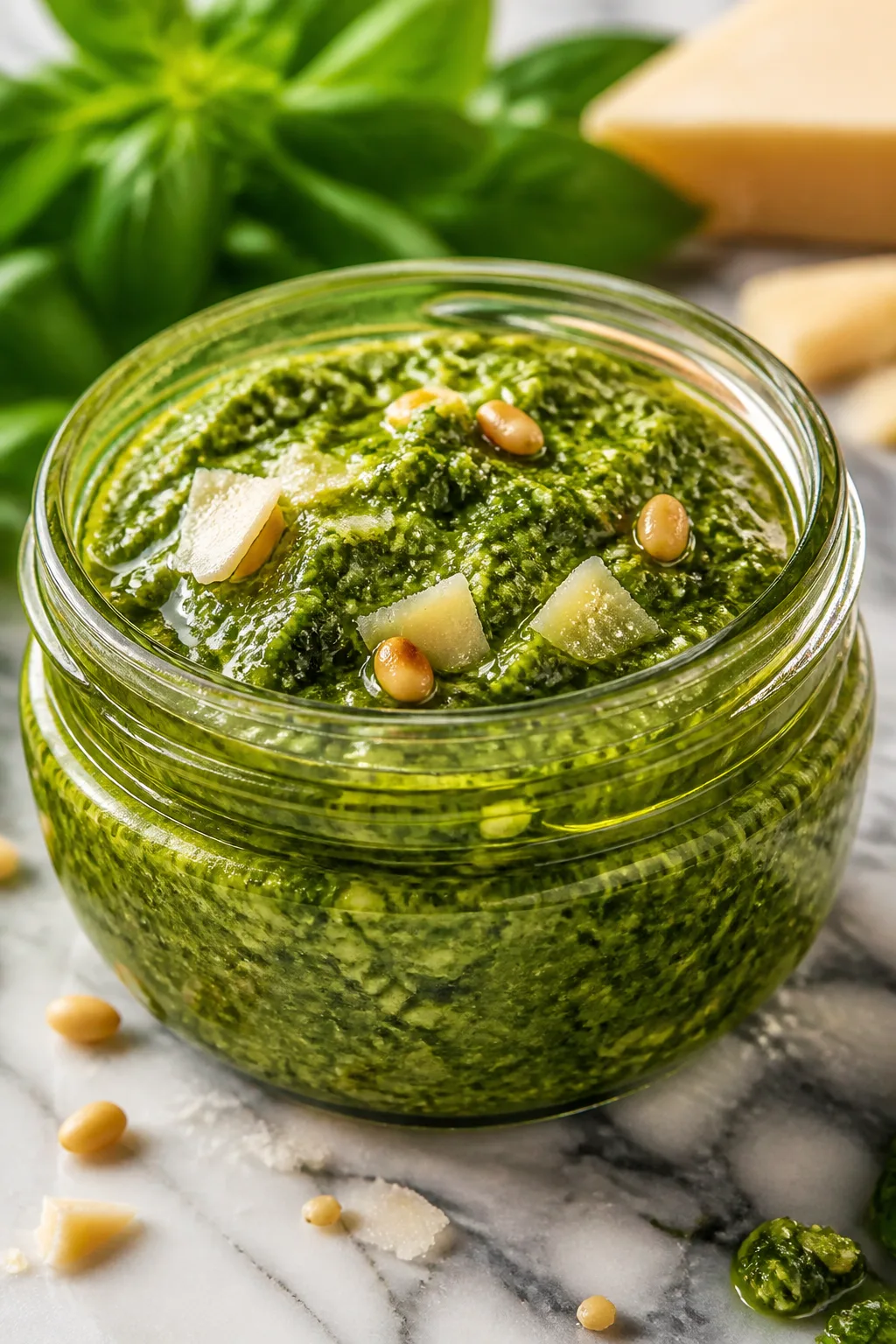
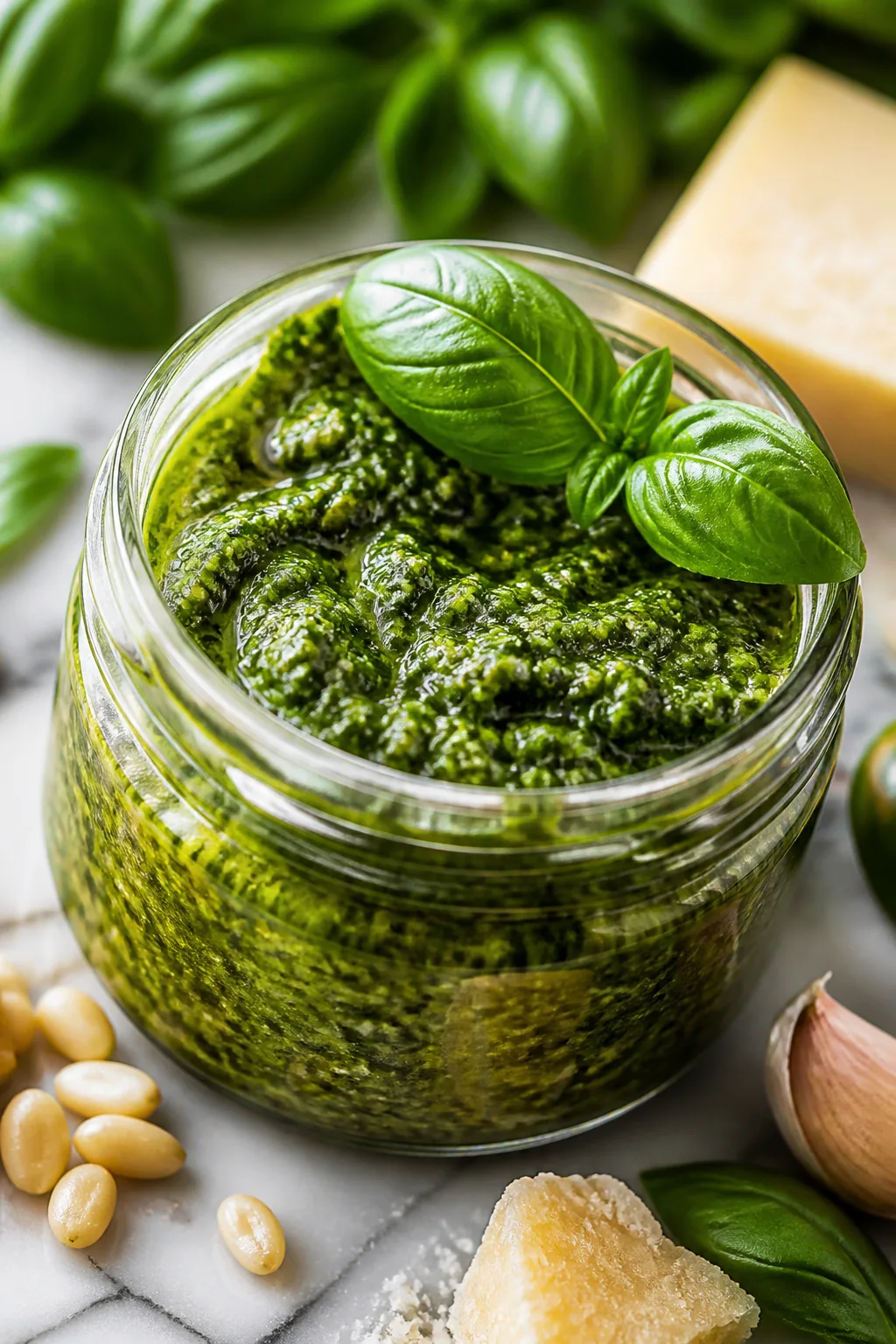
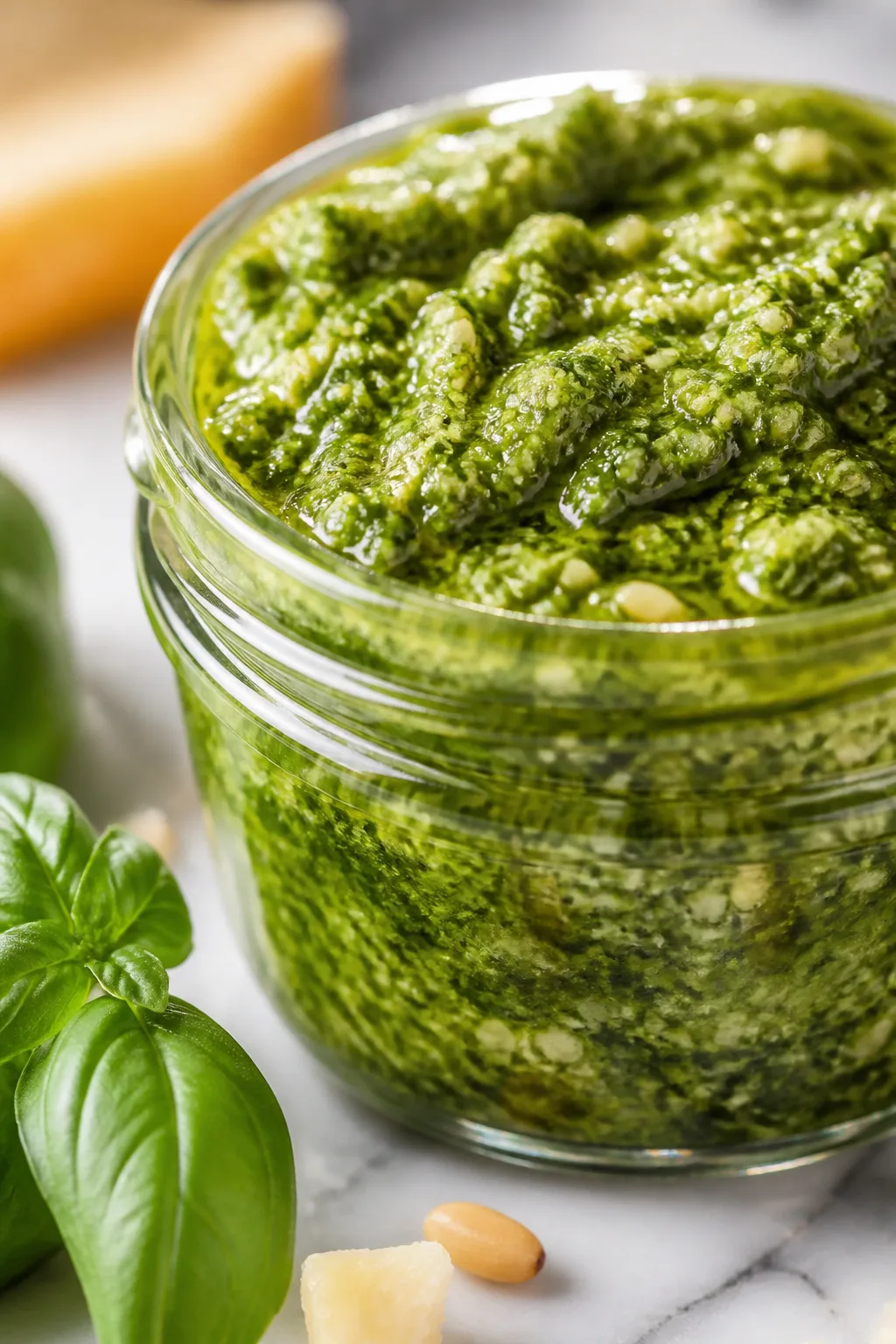
This vibrant basil pesto is packed with fresh herbs and just the right touch of garlic. It’s super quick to make with a blender, perfect for tossing with pasta or spreading on crusty bread. A fresh burst anytime!
Introduction
I first made this basil pesto when I stumbled upon an overgrown basil plant in my garden last summer. I wanted something fresh and quick to use up all those fragrant leaves, and this simple recipe quickly became a favorite. What I love most is how versatile it is—thrown on pasta, spread on toast, or even as a dip. Unlike some recipes that call for tons of ingredients, this one keeps it straightforward with fresh basil, toasted pine nuts, and a punch of garlic. The trick I learned was to toast the pine nuts lightly—this adds a subtle nuttiness that really deepens the flavor. Also, blending everything just enough so it’s still a little chunky gives it a homemade, rustic texture. The finished pesto is bright green, richly aromatic, and creamy without any cream. It feels like summer in a jar and makes any meal instantly more special. I usually make this in big batches and keep it in the fridge to brighten up weeknight dinners whenever I want. Plus, it’s so quick to whip up, you’ll wonder why you ever bought pre-made pesto!
What You'll Need
Approximately 1 cup pesto, 4 servings
- 2 cups fresh basil leaves, packed
- 1/3 cup pine nuts, toasted
- 2 cloves garlic, peeled
- 1/2 cup extra virgin olive oil
- 1/3 cup freshly grated Parmesan cheese
- Salt to taste
- Freshly ground black pepper to taste
- Optional: 1 tablespoon lemon juice
How To Do It
Step 1
Start by toasting the pine nuts in a dry skillet over medium heat. Stir them frequently and watch closely as they can burn quickly. Toasting releases their oils and deepens their flavor, which adds a rich nuttiness to your pesto. This step is crucial because raw pine nuts can taste bland and grassy. Once they’re golden and fragrant, transfer them to a plate to cool so they don’t keep cooking in the hot pan.
⏱ Time: 5 minutes
✓ Doneness: Pine nuts are lightly browned and smell nutty but not burnt
Step 2
Place the fresh basil leaves, cooled pine nuts, and garlic cloves into a food processor or blender. Pulse a few times to start breaking everything down. This initial mixing helps evenly distribute the ingredients before adding the oil. If you skip pulsing and just pour in oil, your pesto might not blend smoothly or evenly.
⏱ Time: 2 minutes
✓ Doneness: Basil and pine nuts are roughly chopped into small pieces
Step 3
Slowly drizzle in the extra virgin olive oil while the blender or food processor is running on low speed. This slow addition helps emulsify the mixture, creating a creamy texture without separating. If you add the oil too quickly, the pesto can become oily and thin rather than thick and luscious. Stop adding oil when the pesto reaches your desired consistency.
⏱ Time: 3 minutes
✓ Doneness: Pesto is creamy and smooth but still has some texture
Step 4
Add the freshly grated Parmesan cheese next and pulse a few more times to combine. The cheese adds savory depth and helps thicken the pesto. Avoid over-processing at this stage because too much blending can cause the cheese to become grainy and affect the texture.
⏱ Time: 1 minute
✓ Doneness: Cheese is fully incorporated and pesto looks creamy
Step 5
Season the pesto with salt and freshly ground black pepper to taste. Taste as you go – you might need more salt depending on how salty your cheese is. Adding seasoning at the end ensures you don’t overdo it early on.
⏱ Time: 1 minute
✓ Doneness: Balanced flavor with a slight savory kick
Step 6
For a bright finish, stir in about a tablespoon of fresh lemon juice if you like. This adds a subtle acidity that balances the richness of the oil and cheese. It’s optional but highly recommended for a fresher flavor profile.
⏱ Time: 1 minute
✓ Doneness: Pesto has a fresh, slightly tangy aroma
Step 7
Transfer the pesto to a clean jar or airtight container. To keep it vibrant green, pour a thin layer of olive oil on top before sealing. This helps prevent oxidation and browning. Store in the refrigerator until ready to use.
⏱ Time: 5 minutes
✓ Doneness: Pesto is bright green and smooth with a thin oil layer on top
Step 8
When ready to serve, toss the pesto with freshly cooked pasta, spoon it over grilled veggies, or spread it on warm bread. If the pesto thickened too much in the fridge, stir in a little olive oil or pasta water to loosen it up. This flexibility means you can adjust to your preferred consistency easily.
⏱ Time: 5 minutes
✓ Doneness: Pesto coats pasta evenly and looks glossy
Step 9
Enjoy your homemade pesto fresh within 3-4 days, or freeze leftovers in small portions for up to 3 months. Freezing preserves the vibrant flavor and lets you enjoy this fresh sauce anytime. Just thaw in the fridge overnight and stir well before serving.
⏱ Time: N/A
✓ Doneness: Pesto remains vibrant and flavorful after thawing
Variations
Walnut Basil Pesto
Swap pine nuts with toasted walnuts for a slightly earthier, richer pesto. This variation has a deeper, nuttier flavor and a bit more texture. Great if pine nuts are pricey or hard to find.
Note: Walnuts are softer than pine nuts, so pulse less to avoid a pasty texture.
Spinach and Basil Pesto
Add fresh spinach leaves along with basil for a milder, greener pesto packed with extra nutrients. It’s lighter in flavor but still creamy and perfect for kids or picky eaters.
Note: Use equal parts spinach and basil to keep the bright pesto color and flavor balance.
Vegan Basil Pesto
Replace Parmesan with nutritional yeast or vegan cheese to keep the cheesy flavor without dairy. Use the same method for a creamy, flavorful vegan-friendly pesto.
Note: Nutritional yeast adds umami but doesn’t melt, so texture will be slightly different.
Spicy Basil Pesto
Add a pinch of red pepper flakes or a small fresh chili to the blender for a spicy kick. This variation pairs beautifully with grilled meats or roasted vegetables for extra flavor dimension.
Note: Adjust chili quantity carefully to avoid overpowering the basil’s freshness.
Lemon Basil Pesto
Increase lemon juice and zest for a bright, citrusy pesto that’s perfect for summer salads or seafood dishes. The lemon adds a fresh zing and keeps the pesto vibrant longer.
Note: Add zest before blending for maximum flavor, and adjust acidity to taste.
Pro Tips
Toast pine nuts gently until golden but not brown.
Toasting releases the nuts’ oils and enhances flavor without bitterness. Over-toasting makes them taste burnt, ruining your pesto’s delicate balance.
Use a food processor instead of a blender for better texture control.
A food processor pulses ingredients more evenly, preserving some chunkiness essential for rustic pesto. Blenders can over-process and turn it into a puree.
Add olive oil slowly while blending to emulsify properly.
Slow addition prevents separation and creates a smooth, creamy sauce. Pouring oil too quickly results in a greasy, thin pesto.
Use freshly grated Parmesan cheese instead of pre-grated.
Fresh cheese melts better and enhances texture and flavor. Pre-grated often contains additives that affect pesto’s creaminess.
Store pesto with a thin layer of olive oil on top to prevent browning.
Exposure to air causes oxidation, turning pesto brown and dull. The oil barrier keeps it vibrant and fresh longer.
Adjust garlic quantity to suit your taste; start with less if unsure.
Raw garlic can be very strong and overpower the pesto. It’s easier to add more later than to fix an overly garlicky sauce.
If pesto thickens after refrigeration, loosen with olive oil or pasta water.
Cold causes oil to solidify, thickening the pesto. Adding liquid restores spreadable consistency without compromising flavor.
Common Mistakes to Avoid
Using wilted or old basil leaves
Why it happens Sometimes cooks use whatever basil is on hand without checking freshness, assuming flavor won’t be affected.
Fix Always pick fresh, vibrant basil leaves for the best flavor. If basil is limp, the pesto will taste dull and may turn brown quickly.
Skipping toasting pine nuts
Why it happens Some think raw nuts are fine or want to save time, not realizing the flavor difference.
Fix Toast nuts lightly in a dry pan until golden to unlock their full flavor, which makes a richer pesto.
Over-blending pesto into a puree
Why it happens Using a blender on high speed or blending too long can cause this.
Fix Pulse gently to keep some texture. Over-processed pesto loses its rustic charm and can taste bitter.
Adding too much garlic at once
Why it happens Garlic lovers sometimes add extra without testing, overpowering the sauce.
Fix Start with less garlic and add more if needed after tasting to keep balance.
Not seasoning pesto properly
Why it happens Some skip seasoning or add too much salt at the start.
Fix Season at the end, tasting as you go, to achieve perfectly balanced flavor.
Nutrition
Per Serving:
Nutritional values are estimates and may vary based on specific brands and ingredient quantities.
Storage & Tips
Room Temperature
Pesto can safely sit out for up to 2 hours if covered, but it’s best stored chilled to keep its vibrant color and fresh flavor.
Refrigerator
Store pesto in an airtight container with a thin layer of olive oil on top for up to 4 days. Flavor may mellow and darken slightly; stir before serving.
Freezer
Freeze pesto in small portions (ice cube trays work well) for up to 3 months. Wrap tightly to prevent freezer burn. Thaw overnight in the fridge and stir well before use.
Reheating
Pesto is best served cold or at room temperature. If warming, gently heat on low in a saucepan or microwave with a splash of olive oil or pasta water to loosen it, avoiding overheating which can dull flavor.
Make Ahead
Prepare pesto 1-2 days ahead and store refrigerated with olive oil on top. This lets flavors meld nicely. For longer storage, freeze and thaw as needed.
FAQ
Can I use other nuts instead of pine nuts?
Absolutely! Walnuts, almonds, or cashews work well and add different flavor notes. Just toast them lightly for best results. Keep in mind the flavor will shift slightly with each nut choice.
How long does homemade pesto last in the fridge?
Stored properly in an airtight container with a layer of olive oil on top, pesto lasts about 3 to 4 days. After that, it may start to brown and lose freshness, so it’s best to consume it quickly.
Why is my pesto bitter?
Bitterness often comes from over-blending the basil or using basil stems. Also, over-toasting pine nuts or garlic can cause bitterness. Pulse gently and use only basil leaves to avoid this.
Can I freeze pesto?
Yes! Freeze in small portions to make it easy to use later. Use ice cube trays and transfer frozen cubes to freezer bags. Thaw in the fridge overnight and stir well before serving.
Do I have to use Parmesan cheese?
Parmesan adds umami and creaminess, but you can omit it for a dairy-free or vegan pesto. Nutritional yeast is a popular substitute that provides a cheesy flavor without dairy.
Can I make pesto without a food processor?
Yes, you can finely chop the basil, garlic, and nuts by hand and mix with oil and cheese. It takes more time but results in a chunkier, rustic pesto.
How do I keep pesto green and fresh looking?
Store pesto with a thin layer of olive oil on top and airtight to prevent air contact. Using lemon juice also helps prevent browning. Refrigerate promptly after making.
What’s the best way to serve pesto?
Pesto is delicious tossed with hot pasta, spread on sandwiches, dolloped on grilled veggies, or stirred into soups. Use it fresh or slightly loosen with olive oil or pasta water for easy mixing.
Final Thoughts
I hope you enjoy making this fresh basil pesto as much as I do! It’s a simple, flavorful way to brighten your meals—don’t forget to share how it turns out!