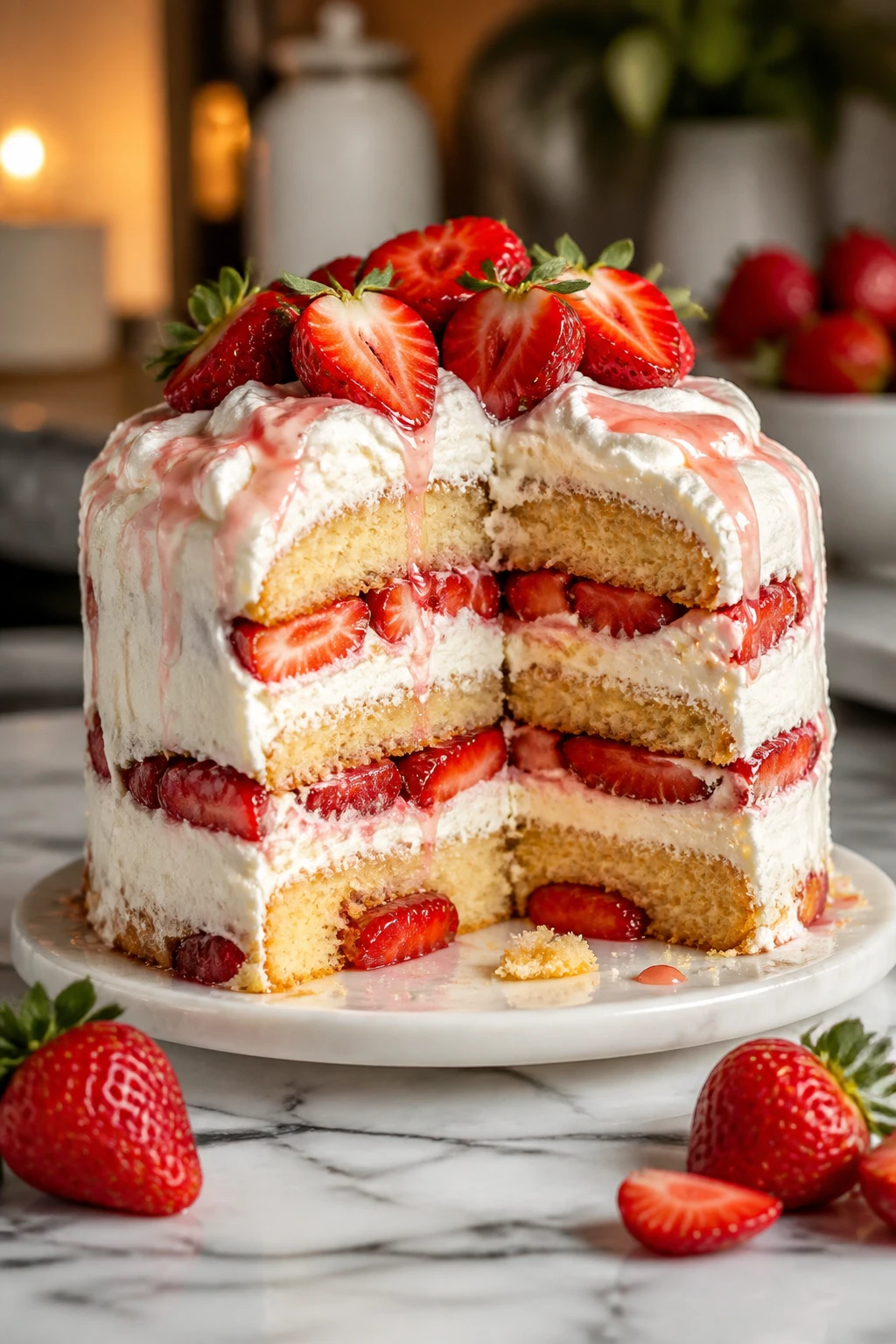
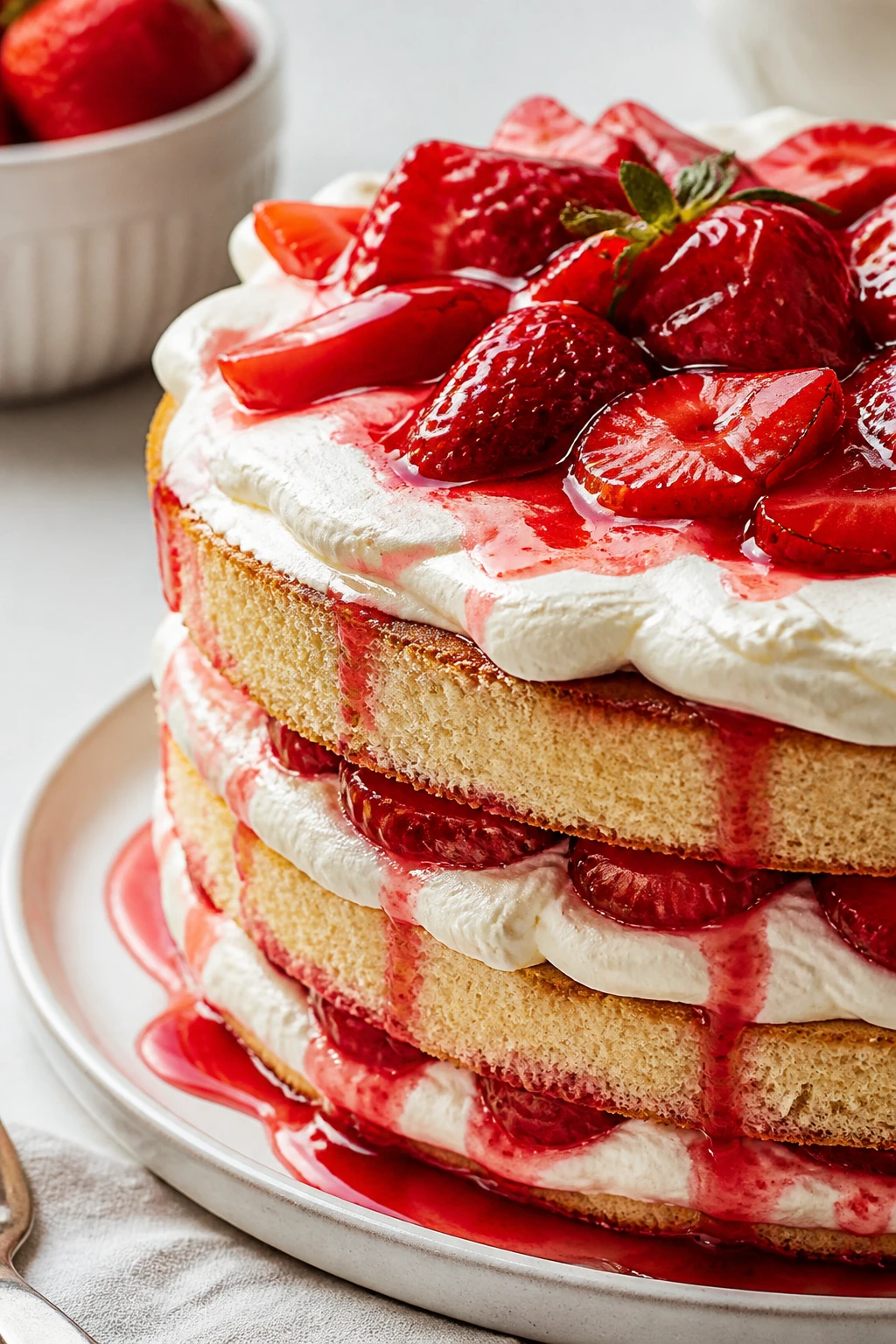
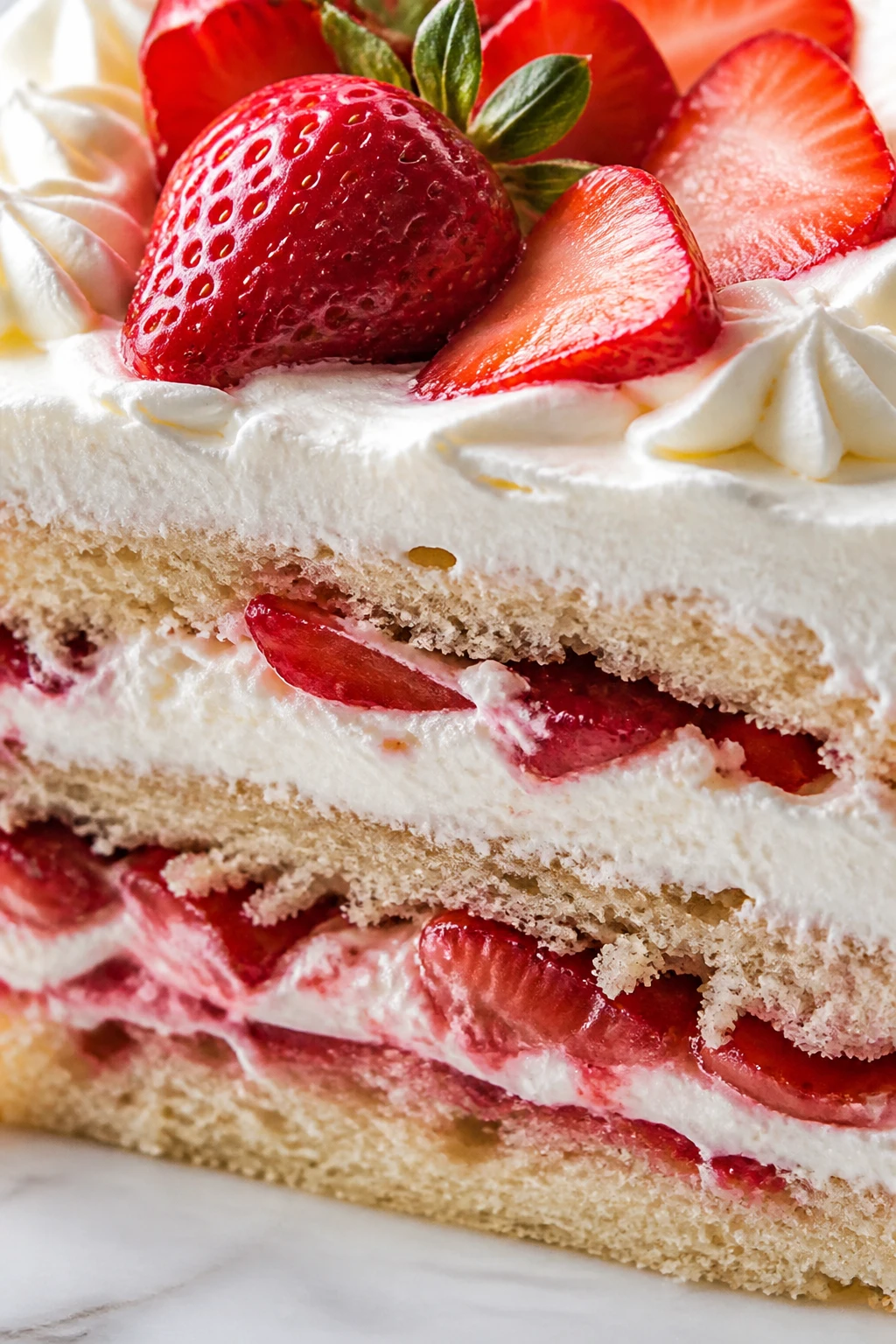
This strawberry shortcake layer cake is bursting with fresh berries and topped with light whipped cream frosting. It’s super moist and perfect for springtime gatherings or a casual weekend treat when you want something sweet but not too heavy.
Introduction
I first made this strawberry shortcake layer cake a few springs ago when I wanted to bring a fresh twist to a classic dessert. Instead of the usual biscuits or sponge, I went for a tender, moist cake layered with juicy strawberries and a cloud-like whipped cream frosting. What makes this version special is how I keep the cake super soft by carefully folding in the flour and using whole milk for richness. Plus, letting the strawberries macerate with a bit of sugar brings out their natural sweetness and juiciness, which soaks into the cake layers just enough without making them soggy. I’ve tried other versions that ended up dry or too heavy, but this one strikes the perfect balance—light, fresh, and bursting with berry flavor. When you slice into it, you get that beautiful contrast between the airy whipped cream and the moist cake, with strawberries peeking out in every bite. It’s a dessert that never fails to get compliments, whether it’s a casual weekend treat or a centerpiece for a spring gathering. Trust me, once you make it, you’ll want to keep this recipe on hand for every berry season!
What You'll Need
One 9-inch three-layer cake, serves 8
- 2 1/2 cups all-purpose flour, sifted
- 2 1/2 tsp baking powder
- 1/2 tsp salt
- 1 cup unsalted butter, softened
- 1 3/4 cups granulated sugar
- 4 large eggs, room temperature
- 1 tsp vanilla extract
- 1 cup whole milk, room temperature
- 4 cups fresh strawberries, hulled and sliced
- 2 tbsp granulated sugar (for berries)
- 2 cups heavy cream, cold
- 1/4 cup powdered sugar
- 1 tsp vanilla extract (for whipped cream)
How To Do It
Step 1
Preheat your oven to 350°F (175°C). Grease and flour three 9-inch round cake pans to prevent sticking. This step ensures your cakes come out cleanly and keep their shape. Be sure to tap out excess flour so it doesn’t affect the texture of the cake. Properly preparing the pans is crucial because poorly greased pans can cause your cake layers to tear or crumble when you try to remove them.
⏱ Time: 10 minutes
✓ Doneness: Pans are evenly greased and floured with no clumps
Step 2
In a medium bowl, whisk together the sifted flour, baking powder, and salt. Sifting adds air and helps avoid lumps, creating a lighter cake texture. Mixing dry ingredients separately also ensures even distribution of the leavening agents, which is essential for even rising.
⏱ Time: 5 minutes
✓ Doneness: Dry ingredients are combined with no visible clumps
Step 3
In a large bowl, beat the softened butter and sugar with an electric mixer on medium speed until light and fluffy, about 4-5 minutes. This creaming step is key to incorporating air into the batter, which helps the cake rise and become tender. Don’t rush this step—if you under-cream, your cake will be dense.
⏱ Time: 5 minutes
✓ Doneness: Butter and sugar mixture is pale and fluffy
Step 4
Add eggs one at a time to the butter-sugar mixture, beating well after each addition. This gradual incorporation prevents the batter from curdling and ensures a smooth texture. Once all eggs are in, mix in the vanilla extract. The vanilla adds warmth and depth to the flavor, balancing the sweetness.
⏱ Time: 3 minutes
✓ Doneness: Batter is smooth and glossy without streaks
Step 5
Alternately add the dry ingredients and whole milk to the batter in three parts, starting and ending with the dry ingredients. Mix gently on low speed and stop as soon as combined to avoid overmixing, which can make the cake tough. The milk adds moisture and richness, making the crumb tender and soft.
⏱ Time: 5 minutes
✓ Doneness: Batter is smooth with no flour pockets but not overworked
Step 6
Divide the batter evenly between the prepared pans and smooth the tops with a spatula. Bake in the preheated oven for 30-35 minutes or until a toothpick inserted in the center comes out clean. Even batter distribution ensures uniform layers, which makes stacking easier and the cake more stable.
⏱ Time: 30-35 minutes
✓ Doneness: Cake tops are golden and spring back when lightly pressed
Step 7
While the cakes bake, toss the sliced strawberries with 2 tablespoons of sugar and let them sit at room temperature for 20-30 minutes. This maceration draws out the juices and sweetens the berries naturally, making them juicier and more flavorful to complement the cake layers.
⏱ Time: 20-30 minutes
✓ Doneness: Strawberries are slightly glossy and have released some juice
Step 8
For the whipped cream frosting, chill your mixing bowl and beaters in the freezer for 15 minutes. Then whip the cold heavy cream with powdered sugar and vanilla extract on medium-high speed until soft peaks form. Chilling the equipment helps the cream whip faster and hold its structure better for a stable, fluffy frosting.
⏱ Time: 10 minutes
✓ Doneness: Whipped cream forms soft peaks that hold shape but are still smooth
Step 9
Once cakes are completely cool, level the tops if needed. Place one cake layer on your serving plate, spread a layer of whipped cream, then sprinkle a generous amount of macerated strawberries. Repeat for the next layers, finishing with whipped cream on top and a decorative strawberry arrangement. This layering technique ensures every bite has cake, cream, and berry goodness.
⏱ Time: 15 minutes
✓ Doneness: Cake is evenly layered with visible cream and strawberry filling
Variations
Lemon-Infused Strawberry Shortcake
Add lemon zest to the cake batter and a splash of lemon juice to the macerated strawberries for a bright citrus twist. This variation adds freshness and a subtle tang that pairs beautifully with the sweet berries and cream.
Note: Zest finely and fold gently into the batter; avoid overmixing to keep texture tender.
Strawberry Shortcake with Mascarpone Frosting
Swap whipped cream for a mascarpone-based frosting mixed with a little powdered sugar and vanilla. It’s richer and tangier, offering a sophisticated flavor profile while still complementing the fresh strawberries.
Note: Chill mascarpone well and beat gently to avoid curdling.
Vegan Strawberry Shortcake Cake
Use plant-based butter and milk alternatives like oat milk, and replace eggs with flax eggs. Whip coconut cream for the frosting. This version keeps the cake moist and flavorful while accommodating vegan diets.
Note: Ensure coconut cream is well chilled before whipping to achieve stiffness.
Chocolate Strawberry Shortcake
Add 1/4 cup cocoa powder to the flour mixture for a chocolate twist. The rich chocolate flavor contrasts nicely with the sweet strawberries and light whipped cream, creating a decadent treat.
Note: Reduce flour by 2 tablespoons to balance the added cocoa powder.
Strawberry Shortcake Cupcakes
Portion the batter into cupcake liners and bake for 18-22 minutes. Top each cupcake with whipped cream and a strawberry slice for an individual-sized dessert perfect for parties or picnics.
Note: Adjust baking time and check doneness early to avoid overbaking.
Pro Tips
Always bring eggs and milk to room temperature before mixing.
Room temperature ingredients blend more easily into the butter-sugar mixture, creating a smoother batter. Cold ingredients can cause the butter to seize and the batter to curdle, resulting in a dense or uneven cake texture.
Don’t overmix the batter once flour is added.
Overmixing develops gluten in the flour, which makes the cake tough and chewy instead of tender. Mix just until the flour disappears to keep the crumb soft and light.
Let the strawberries macerate for at least 20 minutes.
This step draws out the natural juices and sweetens the berries, enhancing their flavor and moisture without overwhelming the cake layers. Skipping this can result in less juicy berries and a drier cake.
Chill your mixing bowl and beaters before whipping cream.
Cold equipment helps the cream whip faster and hold its structure longer. Warm tools cause the cream to loosen and lose volume, making it hard to frost the cake smoothly.
Level cake layers with a serrated knife before assembling.
Cutting off domed tops creates flat layers that stack evenly, preventing the cake from leaning or collapsing. Uneven layers can make frosting tricky and affect the cake’s appearance.
Use an offset spatula for spreading whipped cream.
An offset spatula provides better control and smoother application of frosting, especially on layered cakes. It helps avoid tearing the cake layers or creating lumps in the cream.
Refrigerate the assembled cake for at least an hour before serving.
Chilling sets the whipped cream and allows the strawberry juices to meld with the cake layers, improving flavor and texture. Serving immediately can cause the frosting to be too soft and the cake to crumble.
Common Mistakes to Avoid
Using cold eggs and milk directly from the fridge
Why it happens Many assume cold ingredients speed up baking or don’t realize it affects batter texture.
Fix Always let eggs and milk sit at room temperature for 30 minutes before mixing. This ensures smooth blending and prevents curdling, resulting in a tender cake.
Overmixing the batter after adding flour
Why it happens It’s tempting to mix thoroughly to remove lumps, but this develops gluten.
Fix Mix just until no streaks of flour remain. Stop early to keep the cake soft and avoid toughness.
Skipping maceration of strawberries
Why it happens Rushing or forgetting this step reduces berry juiciness and sweetness.
Fix Toss berries with sugar and let sit at room temp for 20-30 minutes. This enhances flavor and moisture in the cake layers.
Not chilling bowl and beaters before whipping cream
Why it happens People often overlook this prep step, especially if in a hurry.
Fix Pop your tools in the freezer for 15 minutes before whipping. It helps the cream hold peaks better and prevents runniness.
Stacking cake layers before they fully cool
Why it happens Impatience or distraction leads to assembling warm cake layers.
Fix Cool layers completely on wire racks to prevent the whipped cream from melting and sliding off.
Nutrition
Per Serving:
Nutritional values are estimates and may vary based on specific ingredients used.
Storage & Tips
Room Temperature
The assembled cake can safely sit at room temperature for up to 2 hours if covered loosely with a cake dome or large bowl to prevent drying out. Beyond that, refrigerate to keep the whipped cream fresh.
Refrigerator
Store the cake in an airtight container or cover it tightly with plastic wrap and refrigerate for up to 3 days. Note that the whipped cream might weep slightly and the cake may firm up, so bring it to room temperature before serving for best texture.
Freezer
Freeze the unassembled cake layers wrapped tightly in plastic and foil for up to 2 months. Thaw in the refrigerator overnight. Whipped cream frosting is best made fresh, so assemble the cake after thawing.
Reheating
This cake is best served chilled or at room temperature. If desired, bring to room temp for about 30 minutes before serving. Avoid microwaving as it will melt the whipped cream and alter texture.
Make Ahead
Bake the cake layers 1-2 days in advance, wrap well and refrigerate. Macerate the strawberries the day of serving to keep them fresh. Whip the cream and assemble the cake a few hours before serving for optimal freshness.
FAQ
Can I use frozen strawberries for this cake?
Frozen strawberries tend to release more water when thawed, which can make the cake soggy. If you must use frozen berries, thaw and drain them well, then pat dry before macerating. Fresh strawberries are best for texture and flavor.
How do I prevent the whipped cream from melting too fast?
Use heavy cream with at least 36% fat and chill your mixing bowl and beaters before whipping. Also, keep the cake refrigerated until serving and avoid warm environments to help the whipped cream hold its shape longer.
Can I make this cake gluten-free?
Yes, substitute the all-purpose flour with a gluten-free baking blend that includes xanthan gum for structure. Baking times may vary slightly, so watch the cake closely for doneness.
What’s the best way to level cake layers?
Use a serrated knife or a cake leveler to slice off any domed tops once the cake is fully cooled. This creates flat, even layers for stacking and prevents the cake from leaning or sliding.
How long can I store leftover cake?
Store leftover cake covered in the refrigerator for up to 3 days. The whipped cream may soften and the cake may dry out slightly, so bring it to room temperature before eating for best texture.
Can I use a different frosting instead of whipped cream?
Absolutely! Cream cheese frosting or mascarpone frosting are delicious alternatives that pair well with strawberries. Just keep in mind they are richer and heavier than whipped cream.
Why is my cake dense instead of fluffy?
Common causes include overmixing the batter, using cold ingredients, or not creaming the butter and sugar long enough. Follow the mixing steps carefully to incorporate air and avoid toughness.
Can I make this cake ahead and freeze it assembled?
It’s best to freeze cake layers separately and assemble fresh. Freezing the assembled cake with whipped cream frosting can cause the cream to lose texture and become watery upon thawing.
Final Thoughts
I hope you enjoy making and sharing this strawberry shortcake layer cake as much as I do! It’s such a fresh, delightful treat—let me know how yours turns out!