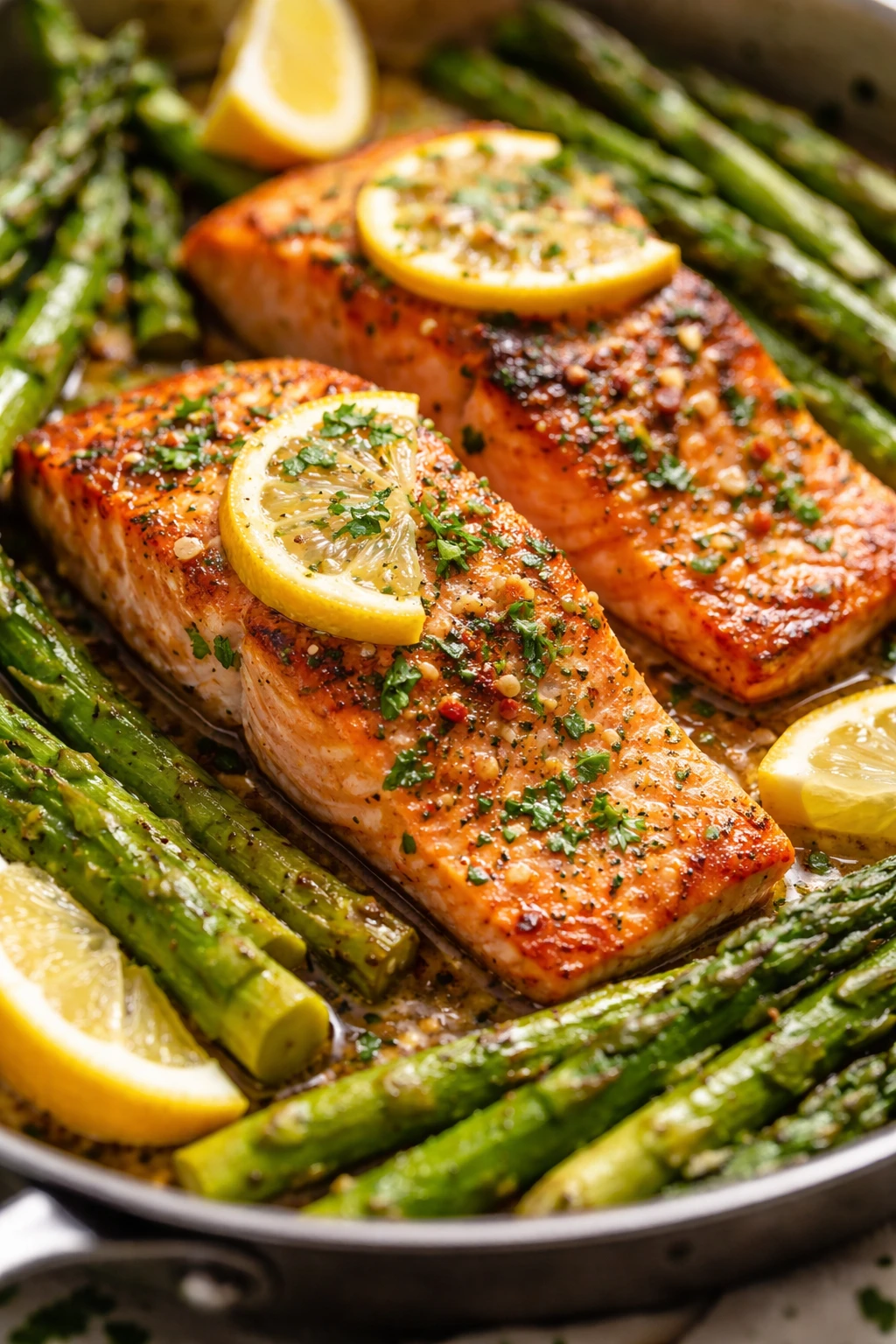
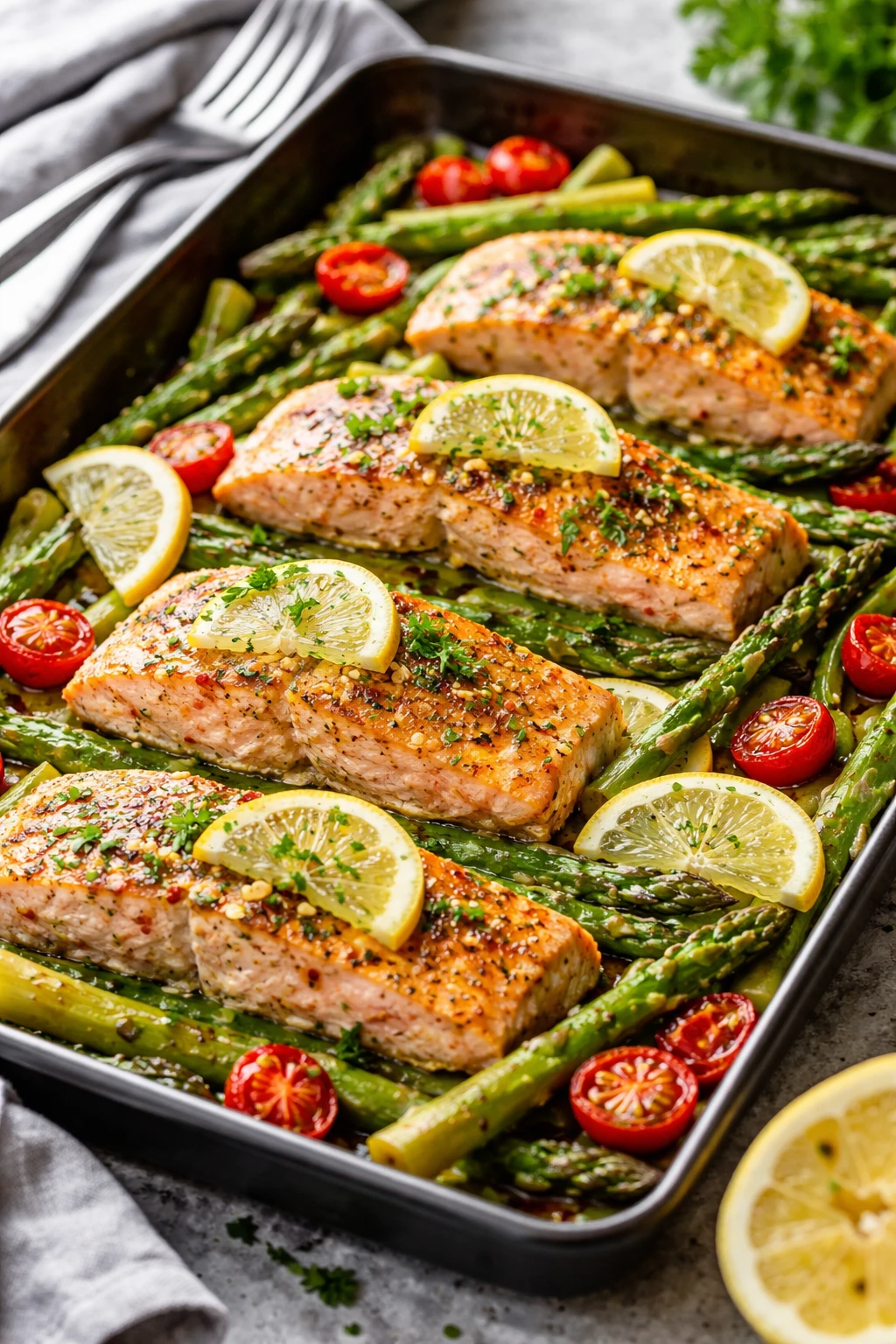
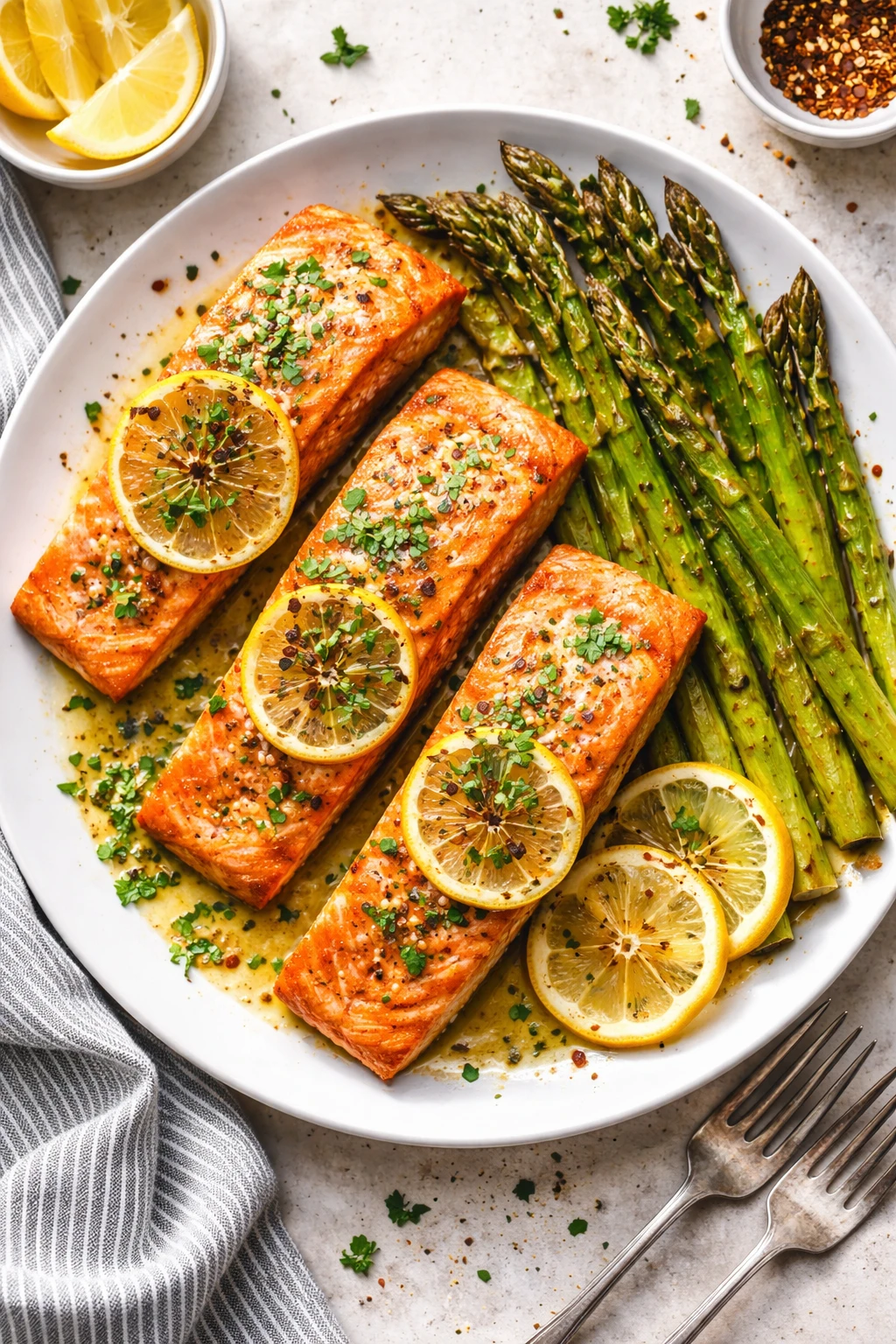
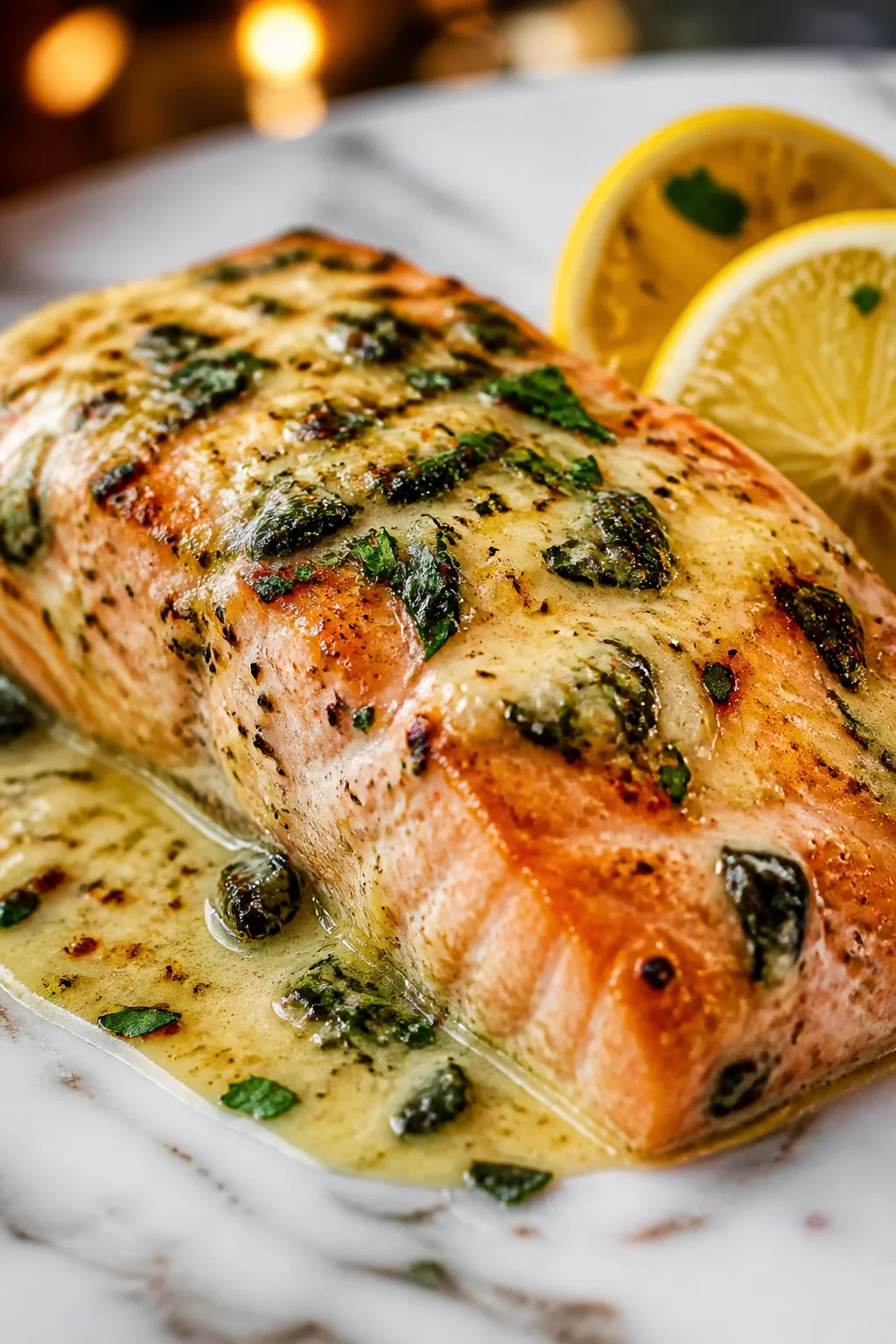
A super easy one-pan meal where juicy salmon and tender asparagus roast together with lemon and garlic. It’s fresh, flavorful, and perfect for a quick weeknight dinner when you want something healthy but fuss-free.
Introduction
I first tried this one-pan salmon and asparagus recipe on a hectic weeknight when I didn’t want to fuss with multiple pots or dishes. What stuck with me was how the salmon stayed juicy and tender, while the asparagus roasted beautifully alongside it, absorbing the garlicky lemon flavors. I’ve tweaked the timing a bit over time to get the salmon perfectly cooked without drying it out. The secret? A gentle roast with olive oil and fresh garlic that infuses the whole pan. Also, adding lemon slices on top helps keep the fish moist and brightens the whole dish. This version feels fresh and light, but still satisfying and comforting. It’s become my go-to when I want a healthy dinner on the table fast, with minimal cleanup. Plus, there’s something so cozy about roasting everything together in one pan—the flavors just meld in the best way. If you’ve struggled with dry salmon or limp asparagus before, this recipe will change your mind. The finished meal is colorful, aromatic, and truly delicious, with crispy edges on the salmon skin and tender stalks of asparagus that still have a little bite. It’s just the kind of simple, homey meal I love sharing with friends and family.
How To Do It
Step 1
Preheat your oven to 400°F (200°C). This temperature is ideal for roasting salmon and asparagus evenly without drying out the fish. Line a large baking sheet with parchment paper or foil for easy cleanup. Make sure the oven is fully heated before you put the pan in, so the salmon starts cooking immediately and gets a nice sear on the skin.
⏱ Time: 10
✓ Doneness: Oven reaches 400°F, baking sheet prepared
Step 2
Pat the salmon fillets dry with paper towels—this step is crucial to get crispy skin. Brush both sides lightly with 2 tablespoons of olive oil and season generously with salt, pepper, and dried oregano. The oil helps conduct heat and creates a golden, crispy crust, while seasoning enhances the natural flavors. Avoid skipping the drying step or the skin may steam instead of crisp.
⏱ Time: 5
✓ Doneness: Salmon skin feels dry and slightly tacky before oiling
Step 3
Arrange the trimmed asparagus in a single layer on one side of the baking sheet. Drizzle with the remaining 1 tablespoon olive oil and sprinkle minced garlic evenly over the asparagus. Toss gently to coat everything well, ensuring the asparagus roasts evenly and absorbs the garlic flavor. Spread the asparagus out so it’s not overcrowded to avoid steaming.
⏱ Time: 5
✓ Doneness: Asparagus is evenly coated and spread out without overlapping
Step 4
Place the salmon fillets skin-side down on the opposite side of the pan. Tuck lemon slices on top of each fillet and scatter a few around the asparagus. The lemon slices will infuse the fish and veggies with bright citrus notes as they roast. Make sure the fillets aren’t touching to allow heat to circulate and cook evenly.
⏱ Time: 3
✓ Doneness: Salmon and lemon slices arranged neatly and separated
Step 5
Put the pan in the oven and roast for about 12-15 minutes. Timing depends on thickness; thicker fillets need closer to 15 minutes. Resist the urge to open the oven frequently, or heat will escape and affect cooking. The salmon is done when it flakes easily with a fork but still looks moist and slightly translucent in the center.
⏱ Time: 15
✓ Doneness: Salmon flakes with gentle pressure, asparagus is tender-crisp
Step 6
If you like extra crispy skin, after roasting, you can carefully transfer the salmon skin-side down to a hot skillet for 1-2 minutes to crisp up further. This step adds texture but is optional. Be gentle when flipping to keep the fillet intact.
⏱ Time: 2
✓ Doneness: Skin is visibly crisp and golden brown
Step 7
Remove the pan from the oven and let the salmon rest for a few minutes. Resting helps the juices redistribute so the fish stays juicy when you cut into it. Meanwhile, check the asparagus: it should be tender but still have a slight snap when bitten.
⏱ Time: 5
✓ Doneness: Salmon surface slightly firm but moist, asparagus tender
Step 8
Transfer the salmon and asparagus to plates, garnish with fresh chopped parsley if you like, and squeeze any extra lemon juice over the top for a fresh finish. The parsley adds color and a mild herbaceous note that complements the garlic and lemon beautifully.
⏱ Time: 2
✓ Doneness: Dish looks vibrant with fresh green parsley and lemon juice
Step 9
Serve immediately with your favorite side like rice, quinoa, or a simple salad. The flavors are best enjoyed fresh, but leftovers store well too. Enjoy the balance of tender salmon, crisp skin, and roasted asparagus with bright lemony garlic notes.
⏱ Time: 1
✓ Doneness: Meal plated and ready to eat
Variations
Spicy Cajun Salmon and Asparagus
Add a Cajun spice blend to the salmon before roasting for a smoky, spicy kick. Toss asparagus with smoked paprika and cayenne for complementary heat. Expect a bolder, zestier flavor with the same tender textures.
Note: Adjust spice levels carefully; roasting time remains the same but watch for char on spices.
Honey Mustard Glazed Salmon with Lemon Asparagus
Brush salmon with a honey-mustard glaze before roasting for a sweet-savory twist. Keep asparagus simply roasted with lemon and olive oil to balance the glaze’s richness.
Note: Apply glaze in the last 5 minutes of roasting to prevent burning sugars.
Herb-Crusted Salmon with Garlic Butter Asparagus
Coat salmon with a mix of fresh herbs and breadcrumbs for a crunchy crust. Roast asparagus tossed in garlic butter instead of olive oil for a richer flavor. Expect a textural contrast and more indulgent taste.
Note: Use broil setting briefly if crust needs extra browning, watching carefully to avoid burning.
Asian-Inspired Soy Ginger Salmon and Asparagus
Marinate salmon in soy sauce, ginger, and sesame oil before roasting. Toss asparagus with a little sesame oil and sprinkle with sesame seeds. This variation offers an umami-packed, aromatic dinner.
Note: Reduce salt elsewhere since soy sauce adds saltiness; watch for overcooking due to marinade sugars.
Mediterranean Salmon with Tomato and Olive Asparagus
Add halved cherry tomatoes and sliced olives to the asparagus before roasting. Season with oregano and lemon zest for a Mediterranean vibe. This adds juicy bursts and briny notes alongside the salmon.
Note: Tomatoes release moisture; roast slightly longer or spread ingredients well to avoid sogginess.
Pro Tips
Dry the salmon skin thoroughly before seasoning to get that perfect crispiness.
Moisture on the skin creates steam in the oven, preventing the skin from crisping up. By patting the skin dry, you allow direct contact with the hot pan surface, encouraging the Maillard reaction that produces a crispy, flavorful crust.
Don’t overcrowd the baking sheet; give each item enough space to roast properly.
Crowding traps steam between ingredients, leading to soggy asparagus and less crispy salmon. Proper spacing allows hot air to circulate, roasting everything evenly and developing better texture and flavor.
Add lemon slices on top of the salmon before roasting for a fresh citrus infusion.
Lemon slices slowly release juice and aromatic oils during roasting, keeping the salmon moist and imparting a bright, fresh flavor that balances the richness of the fish.
Use a high oven temperature like 400°F for roasting to get the perfect balance of cooked-through salmon and tender asparagus.
This temperature is hot enough to brown the salmon skin and roast the asparagus without drying either out. Lower temps can result in limp vegetables and under-browned fish.
Let the salmon rest a few minutes after roasting before serving.
Resting allows juices to redistribute within the fillet, keeping the salmon moist and tender instead of leaking out immediately when cut.
Use fresh minced garlic instead of pre-minced for brighter flavor and aroma.
Fresh garlic releases flavorful oils during cooking, enhancing the dish naturally. Pre-minced garlic often loses potency and can taste bitter when roasted.
If you want extra crispy salmon skin, finish it in a hot skillet after roasting.
This quick sear on the stovetop adds a second layer of crispness and texture that roasting alone can’t always achieve, especially if the skin didn’t fully crisp in the oven.
Common Mistakes to Avoid
Cooking salmon at too low a temperature
Why it happens Some cooks think lower heat is safer to avoid overcooking, but it can prevent proper browning and cause uneven cooking.
Fix Use 400°F for roasting to get a nicely browned skin and tender flesh. This temp cooks salmon evenly and keeps asparagus crisp. Avoid opening the oven frequently to maintain heat.
Not drying salmon skin before cooking
Why it happens Skipping this step is common because it’s easy to overlook, but wet skin steams instead of crisps.
Fix Pat the skin dry thoroughly with paper towels before applying oil and seasoning. This step is key for a crispy, flavorful skin.
Overcrowding the pan with asparagus and salmon
Why it happens To save time or dishes, people place everything tightly packed on the pan, but this traps steam.
Fix Arrange ingredients in a single layer with space between pieces to ensure proper roasting and texture development.
Using bottled lemon juice instead of fresh
Why it happens Bottled lemon juice is convenient but lacks fresh citrus oils and brightness.
Fix Use fresh lemon slices on top of the salmon for natural oils and flavorful steaming during roasting.
Skipping the resting step before serving
Why it happens Impatience or not knowing the benefit leads to cutting into salmon right away, causing juice loss.
Fix Let salmon rest 3-5 minutes after roasting to allow juices to redistribute, keeping the fillet moist.
Nutrition
Per Serving:
Nutritional values are estimates and may vary based on specific ingredient brands and portion sizes.
Storage & Tips
Room Temperature
This dish should not be left out at room temperature for more than 2 hours to prevent bacterial growth. Cover loosely with foil if you need to hold it briefly before serving.
Refrigerator
Store leftovers in an airtight container in the fridge for up to 3 days. Salmon may firm up and asparagus soften when cold. Reheat gently to avoid drying out the fish.
Freezer
Freeze cooked salmon and asparagus separately in freezer-safe containers or bags for up to 2 months. Wrap well to prevent freezer burn. Thaw overnight in the fridge before reheating.
Reheating
Reheat salmon and asparagus gently in a 325°F oven for 10-15 minutes or microwave on medium power in short bursts. Add a splash of water or lemon juice to keep fish moist. Avoid high heat that can dry out the salmon.
Make Ahead
You can prep the salmon and trim asparagus up to a day ahead and keep them refrigerated separately. Assemble the pan and add lemon slices just before roasting to keep flavors fresh.
FAQ
Can I use frozen salmon for this recipe?
Yes, but thaw it completely in the fridge overnight before cooking. Frozen salmon often releases more moisture, so pat it dry well to get crispy skin and avoid steaming. Cooking times remain the same.
What if I don’t like asparagus? Can I use another vegetable?
Absolutely! Broccoli, green beans, or even thinly sliced zucchini work great roasted alongside salmon. Adjust roasting time slightly depending on the vegetable’s tenderness and thickness.
How do I know when the salmon is perfectly cooked?
Salmon is done when it flakes easily with a fork but still looks slightly translucent in the thickest part. Overcooking makes it dry and tough, so aim for a moist, tender center.
Can I make this recipe dairy-free and gluten-free?
Yes! This recipe is naturally dairy-free and gluten-free as written, since it uses olive oil and fresh ingredients without any breading or dairy additions.
Is it necessary to use skin-on salmon?
Skin-on salmon crisps up nicely and helps hold the fillet together during cooking. You can use skinless fillets, but they may be more delicate and won’t have the crispy texture.
Can I prepare this dish in advance and reheat?
You can roast everything and store leftovers refrigerated for up to 3 days, then reheat gently. However, it’s best fresh for the crispiest skin and tender asparagus.
What’s the best way to get crispy salmon skin in the oven?
Pat the skin dry, oil it well, and roast at a high temperature like 400°F. Avoid moving the fillets too much during cooking. For extra crispiness, finish skin-side down in a hot skillet for 1-2 minutes after roasting.
Can I add other herbs or spices?
Definitely! Fresh dill, thyme, or rosemary all pair beautifully with salmon. Feel free to experiment, but keep herbs light to avoid overpowering the lemon-garlic flavors.
Final Thoughts
I hope you love this easy one-pan salmon and asparagus as much as my family does. Give it a try and let me know how it turns out!