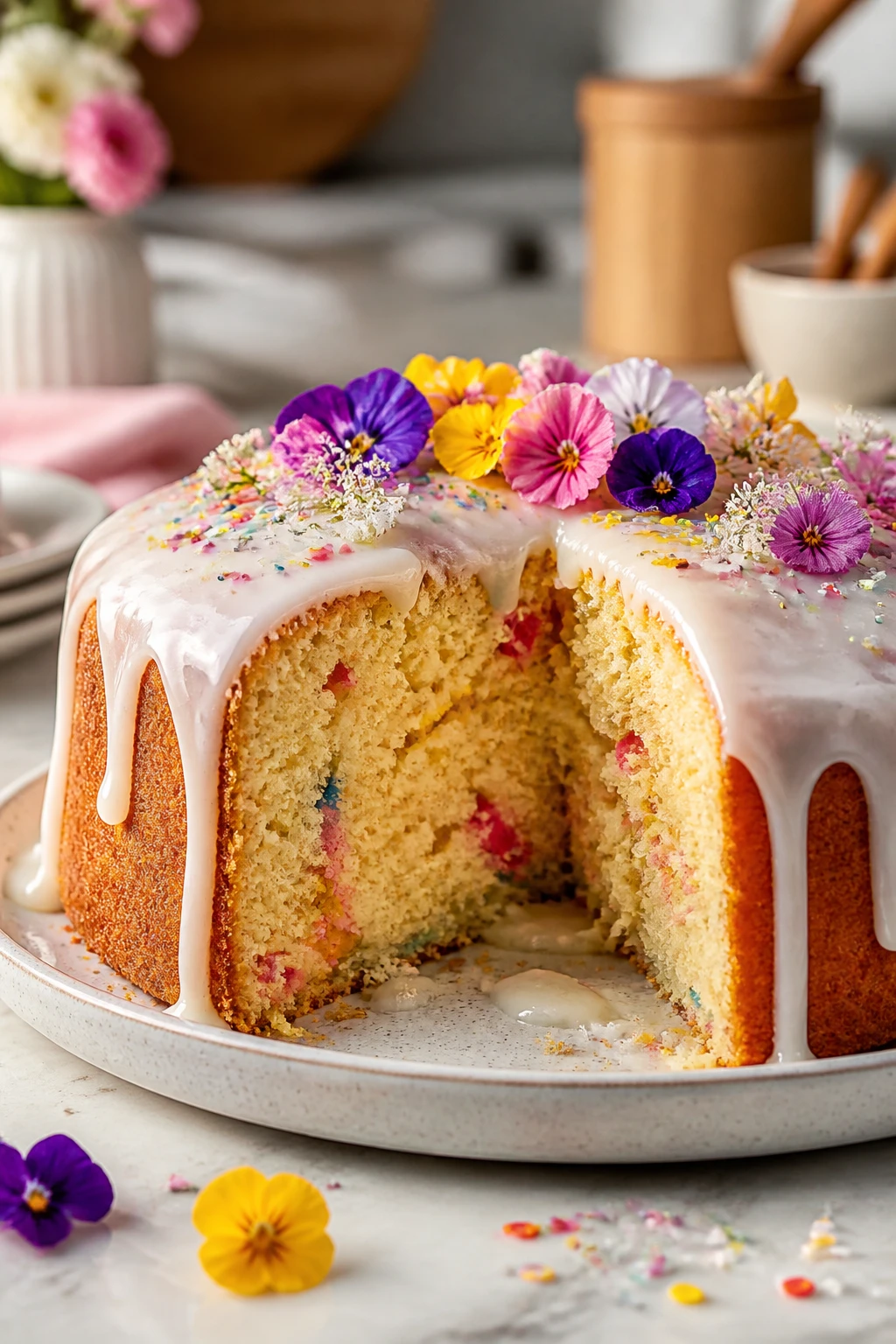
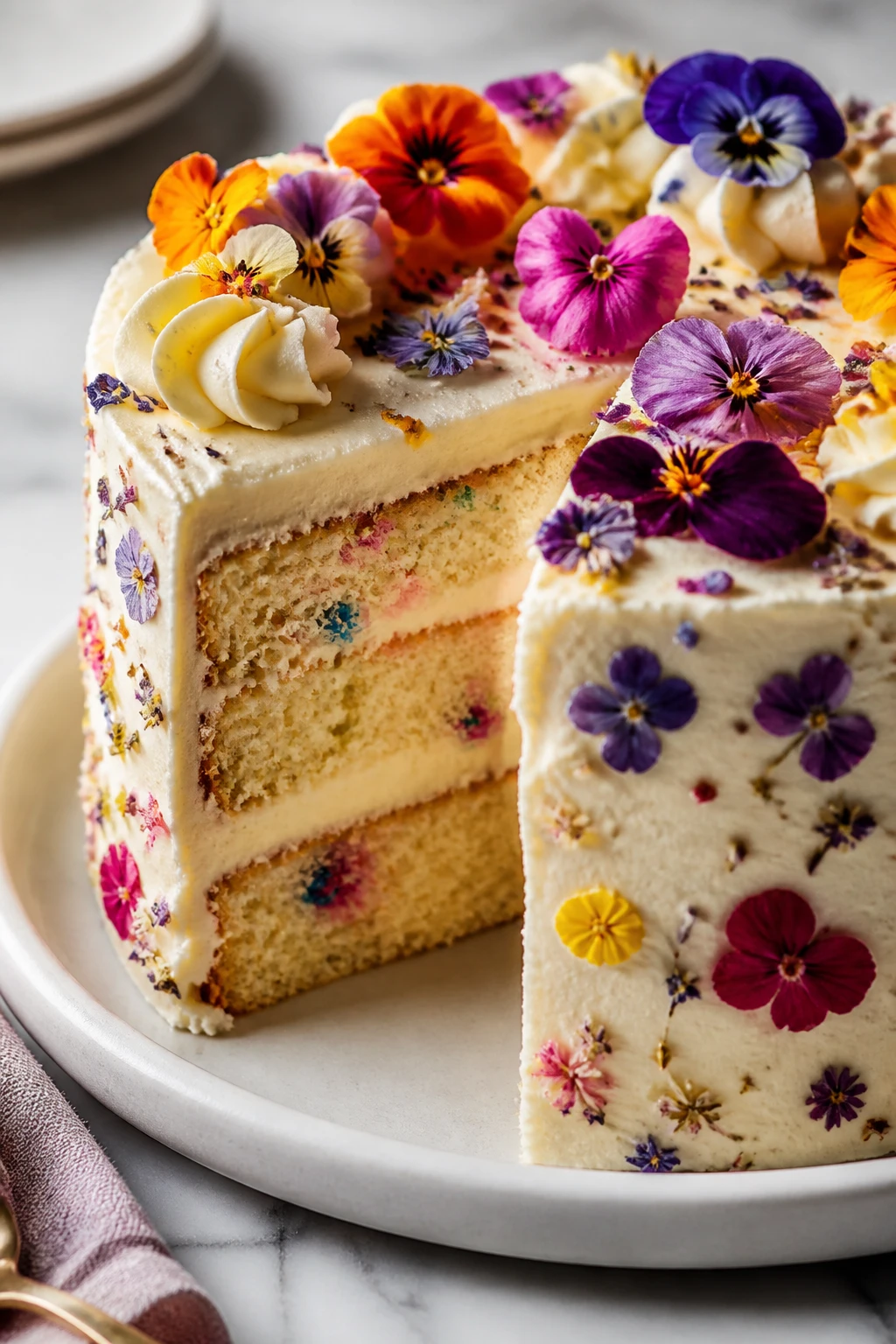
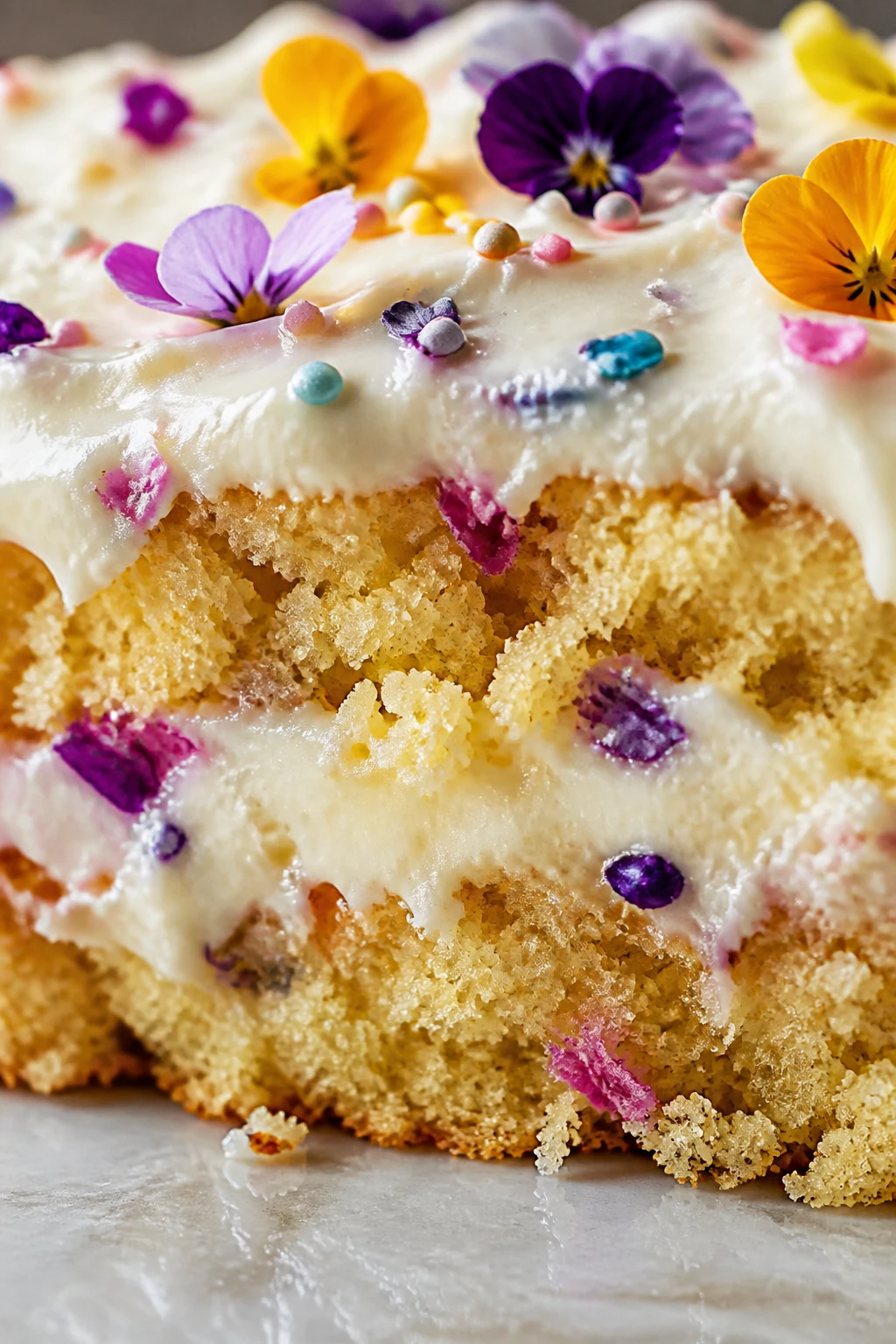
This vanilla birthday cake is a breeze to make with just five ingredients and a touch of edible flowers for that charming, fancy look. Ready in under an hour, it’s perfect for spontaneous celebrations or when you want something sweet but fuss-free.
Introduction
I first made this vanilla birthday cake when I needed a quick dessert for a surprise party. Honestly, I was skeptical at first—only five ingredients and under an hour seemed too good to be true. But the result was delightful! The cake came out moist, tender, and with just the right sweetness. What makes this version stand out is the simple addition of edible flowers on top—they instantly make it look fancy without any complicated frosting. I also learned that using room temperature eggs and milk really helps the batter mix smoothly and bake evenly. The crumb is soft and light, and it pairs perfectly with a cup of tea or coffee. Plus, it’s so forgiving; I’ve had moments where I was a bit rushed and it still turned out great. If you’re like me and want a charming, fuss-free cake that doesn’t require hours in the kitchen, this one’s definitely worth trying.
What You'll Need
One 9-inch round cake, 8 servings
- 2 cups all-purpose flour, sifted
- 1 1/2 cups granulated sugar
- 1 cup unsalted butter, softened
- 4 large eggs, room temperature
- 1 cup whole milk, room temperature
- 2 teaspoons pure vanilla extract
- Edible flowers for decoration
How To Do It
Step 1
Preheat your oven to 350°F (175°C) and grease a 9-inch round cake pan with butter or nonstick spray. Properly preparing your pan is crucial to ensure the cake releases easily after baking. You can also line the bottom with parchment paper for extra insurance. This step helps prevent sticking and promotes even baking by allowing heat to circulate evenly around the batter.
⏱ Time: 10 minutes
✓ Doneness: Oven preheated and pan greased with no dry spots visible
Step 2
In a large mixing bowl, beat the softened butter and sugar together until light and fluffy. This aerates the mixture, which contributes to a tender crumb and good rise. Using room temperature butter is key here; cold butter won’t cream properly and affects texture. Beat for about 3-5 minutes until the mixture looks pale and fluffy, then you’re ready for the next step.
⏱ Time: 5 minutes
✓ Doneness: Butter and sugar mixture is pale, fluffy, and smooth
Step 3
Add the eggs one at a time, beating well after each addition. This ensures proper emulsification, which means the fat and liquid combine smoothly to create a stable batter. If you add eggs too quickly or skip beating in between, the batter can curdle, leading to a dense cake. Make sure eggs are room temperature to avoid this issue.
⏱ Time: 3 minutes
✓ Doneness: Batter looks smooth and slightly glossy without lumps
Step 4
Mix in the vanilla extract gently, distributing the flavor evenly throughout the batter. Vanilla adds warmth and depth, making the cake taste homemade and comforting. Avoid overmixing at this stage to keep the batter light.
⏱ Time: 1 minute
✓ Doneness: Vanilla is evenly incorporated with no streaks
Step 5
In a separate bowl, whisk together the sifted flour and a pinch of salt to ensure even distribution. Sifting helps remove lumps and aerates the flour, which improves the cake’s texture. Salt balances sweetness and enhances flavor, so don’t skip it even if it’s just a pinch.
⏱ Time: 3 minutes
✓ Doneness: Flour mixture is light and lump-free
Step 6
Add the dry ingredients alternately with the milk to the butter mixture, starting and ending with flour. Use a gentle folding or low-speed mixing to combine. This method helps maintain the air incorporated in the batter, resulting in a lighter cake. Overmixing here can develop gluten and make the cake tough.
⏱ Time: 5 minutes
✓ Doneness: Batter is smooth, slightly thick, without streaks of flour
Step 7
Pour the batter evenly into the prepared pan and smooth the top with a spatula. An even surface helps the cake bake uniformly and look neat once out of the oven. Tap the pan lightly on the counter to release any large air bubbles that might create holes.
⏱ Time: 2 minutes
✓ Doneness: Batter surface is level and free of large bubbles
Step 8
Bake in the preheated oven for about 30 minutes. Start checking around 25 minutes by inserting a toothpick in the center. If it comes out clean or with a few moist crumbs, the cake is done. Avoid opening the oven door too often to prevent temperature drops which can cause the cake to deflate.
⏱ Time: 30 minutes
✓ Doneness: Toothpick inserted in center comes out clean or with moist crumbs
Step 9
Let the cake cool in the pan for 10 minutes, then turn it out onto a wire rack to cool completely. Cooling is important to set the crumb and prevent sogginess. If you decorate while warm, the edible flowers might wilt or discolor, so patience here really pays off.
⏱ Time: 20 minutes
✓ Doneness: Cake is cool to the touch and firm enough to handle
Step 10
Once cooled, arrange edible flowers gently on top for a pretty, natural decoration. Choose fresh, pesticide-free flowers safe for consumption. This simple touch transforms the cake from everyday to special occasion-worthy without any frosting hassle.
⏱ Time: 5 minutes
✓ Doneness: Flowers look fresh and vibrant on the cake surface
Variations
Lemon Vanilla Cake
Add 1 tablespoon of fresh lemon zest and replace half the milk with buttermilk for a tangy twist. The lemon zest brightens the flavor and buttermilk adds a subtle tang and extra tenderness.
Note: Buttermilk’s acidity reacts with baking soda if used, so adjust leavening slightly if adding.
Chocolate Swirl Vanilla Cake
Stir in 1/3 cup of melted semi-sweet chocolate gently into half the batter before swirling it back into the plain batter. This creates a beautiful marbled effect and adds a rich chocolate flavor.
Note: Don’t overmix to maintain distinct swirls and avoid blending the flavors completely.
Gluten-Free Vanilla Cake
Swap all-purpose flour for a gluten-free blend with xanthan gum included. The texture will be slightly different but still moist and delicious for those avoiding gluten.
Note: Gluten-free batters may need a bit more moisture or baking time; watch doneness carefully.
Vegan Vanilla Cake
Use plant-based milk, vegan butter, and replace eggs with flax eggs (1 tablespoon ground flaxseed + 3 tablespoons water per egg). This version is dairy-free and egg-free while staying flavorful and moist.
Note: Flax eggs don’t provide as much leavening, so adding 1/2 teaspoon baking powder can help with rise.
Spiced Vanilla Cake
Add 1 teaspoon cinnamon and 1/2 teaspoon nutmeg to the dry ingredients for a warm, cozy flavor perfect for fall birthdays or holidays.
Note: Spices can slightly darken the batter color and intensify aroma during baking.
Pro Tips
Always use room temperature ingredients for the best texture.
Room temperature butter, eggs, and milk mix more evenly, preventing curdling and ensuring a smooth batter. This results in a tender, uniform crumb. Cold ingredients can cause uneven mixing and denser cakes.
Don’t overmix the batter once you add the flour.
Overmixing develops gluten, making the cake tough and chewy. Mixing just until combined keeps the crumb soft and light, which is ideal for a vanilla birthday cake.
Sift flour before measuring to avoid lumps and ensure accurate amounts.
Sifting aerates the flour and removes clumps, which improves texture and helps the cake rise evenly. It also prevents adding too much flour if you scoop directly from the bag.
Use fresh, pesticide-free edible flowers for decoration.
Fresh edible flowers add a lovely aroma and visual appeal without chemicals. Using flowers not meant for consumption can be unsafe, so sourcing properly is important.
Cool the cake completely before decorating.
If you add flowers or frosting while the cake is warm, it can cause wilting or melting. Cooling sets the crumb and makes decorating easier and more attractive.
Grease and line your pan well to prevent sticking.
Proper pan prep ensures the cake releases cleanly without breaking apart. It also helps heat circulate evenly during baking for uniform doneness.
Check doneness early to avoid overbaking.
Overbaking dries out the cake and makes it crumbly. Start testing with a toothpick a few minutes before the timer ends to catch it at perfect moistness.
Common Mistakes to Avoid
Using cold eggs or milk.
Why it happens Many people forget to take ingredients out ahead of time or rush the process.
Fix Plan ahead and let eggs and milk sit at room temperature for about 30 minutes before mixing. This prevents curdling and ensures smooth batter.
Overmixing after adding flour.
Why it happens Often, home cooks want to be sure everything is combined and mix too vigorously.
Fix Mix gently and only until no flour streaks remain. Use a folding motion or low speed on a mixer to keep the cake tender.
Not preparing the pan properly.
Why it happens Sometimes people skip greasing or lining to save time.
Fix Always grease and optionally line your pan to avoid sticking and broken edges when removing the cake.
Opening the oven door too often during baking.
Why it happens Curiosity or impatience can cause this, disrupting temperature.
Fix Set a timer and resist opening the door until at least 25 minutes have passed to maintain steady heat for proper rise.
Decorating the cake before it has fully cooled.
Why it happens Excitement to finish can lead to rushing.
Fix Wait until the cake is completely cool to keep decorations fresh and prevent melting or wilting.
Nutrition
Per Serving:
Nutritional values are estimates and may vary based on specific ingredients used.
Storage & Tips
Room Temperature
Store the cake covered loosely with a cake dome or plastic wrap at room temperature for up to 2 days. Avoid direct sunlight or heat to prevent drying out. This keeps the crumb moist and fresh.
Refrigerator
Keep the cake in an airtight container in the fridge for up to 4 days. The cake may firm up and dry slightly when chilled. Bring to room temperature before serving for best texture and flavor.
Freezer
Wrap the cooled cake tightly in plastic wrap and then foil before freezing. It will keep well for up to 3 months. Thaw overnight in the fridge and then let it come to room temperature before serving to restore softness.
Reheating
To refresh slightly stale cake, warm individual slices in the microwave for 10-15 seconds or in a 300°F oven for 5 minutes. Avoid overheating to prevent drying. Adding a light smear of butter or cream can help restore moisture.
Make Ahead
You can bake the cake 1-2 days ahead and store it wrapped at room temperature or refrigerated. Add edible flowers just before serving to keep them fresh. This makes party day less stressful and keeps the cake looking its best.
FAQ
Can I use salted butter instead of unsalted?
Yes, you can use salted butter, but reduce or omit added salt in the recipe to avoid over-salting. Unsalted butter is preferred because it gives you full control over the salt level, which affects flavor balance.
What if I don’t have edible flowers?
No worries! You can decorate the cake with fresh berries, a dusting of powdered sugar, or a simple glaze. Edible flowers add charm but aren’t essential for taste.
How do I know when the cake is done baking?
Insert a toothpick into the center; if it comes out clean or with a few moist crumbs, it’s done. Avoid waiting until it’s completely dry as that can mean overbaking and a drier texture.
Can I make this cake gluten-free?
Yes, substitute the flour with a gluten-free blend that includes xanthan gum. Baking times may vary slightly, so check doneness carefully. Texture might be a bit different but still tasty.
Is it okay to use frozen edible flowers?
Frozen flowers aren’t recommended as decoration because they tend to wilt and lose color when thawed. Fresh, pesticide-free flowers look and taste best.
Can I double this recipe for a larger cake?
Absolutely! Just double the ingredients and bake in a larger pan or two pans. Baking time may need to be adjusted slightly, so check with a toothpick for doneness.
What’s the best way to store leftover cake?
Store leftover cake in an airtight container at room temperature for a couple of days or in the fridge up to 4 days. Bring to room temperature before eating for best flavor and texture.
Can I add frosting to this cake?
Yes! This cake pairs well with buttercream, cream cheese frosting, or a simple glaze. The recipe’s tender crumb holds up nicely to frosting without becoming soggy.
Final Thoughts
I hope you enjoy baking and sharing this simple vanilla birthday cake as much as I do. Don’t forget to try adding those edible flowers for a special touch and share your results with me!