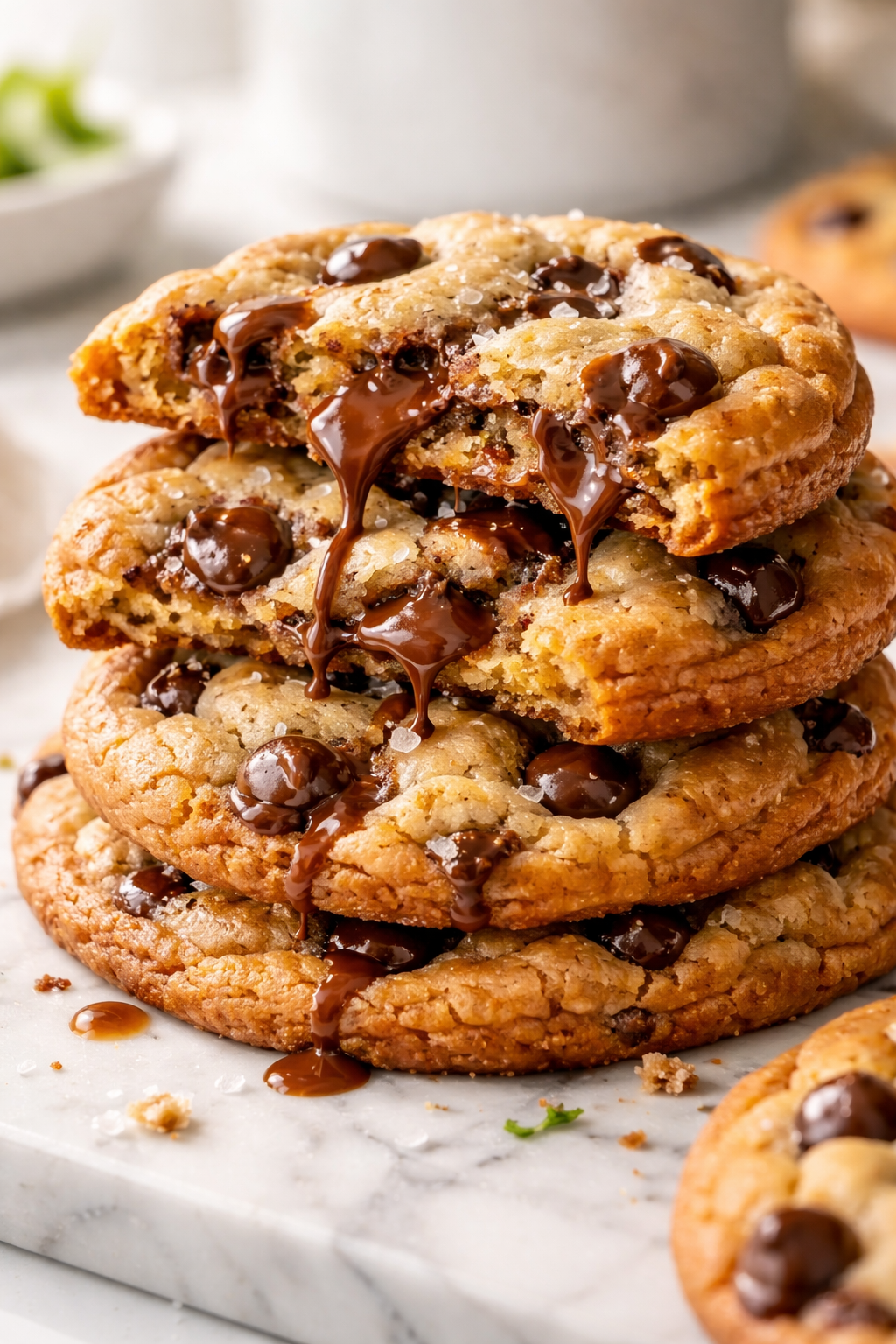
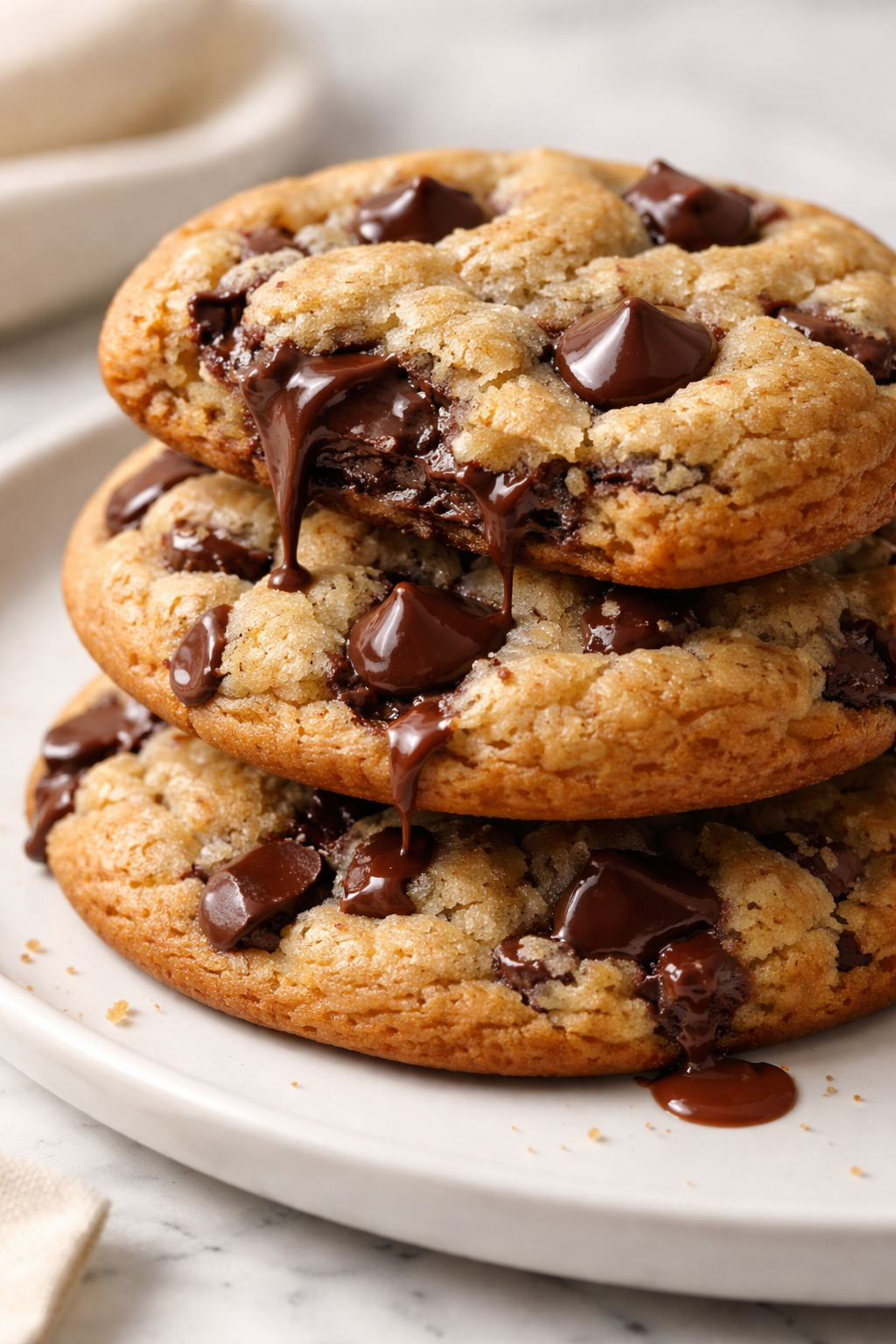
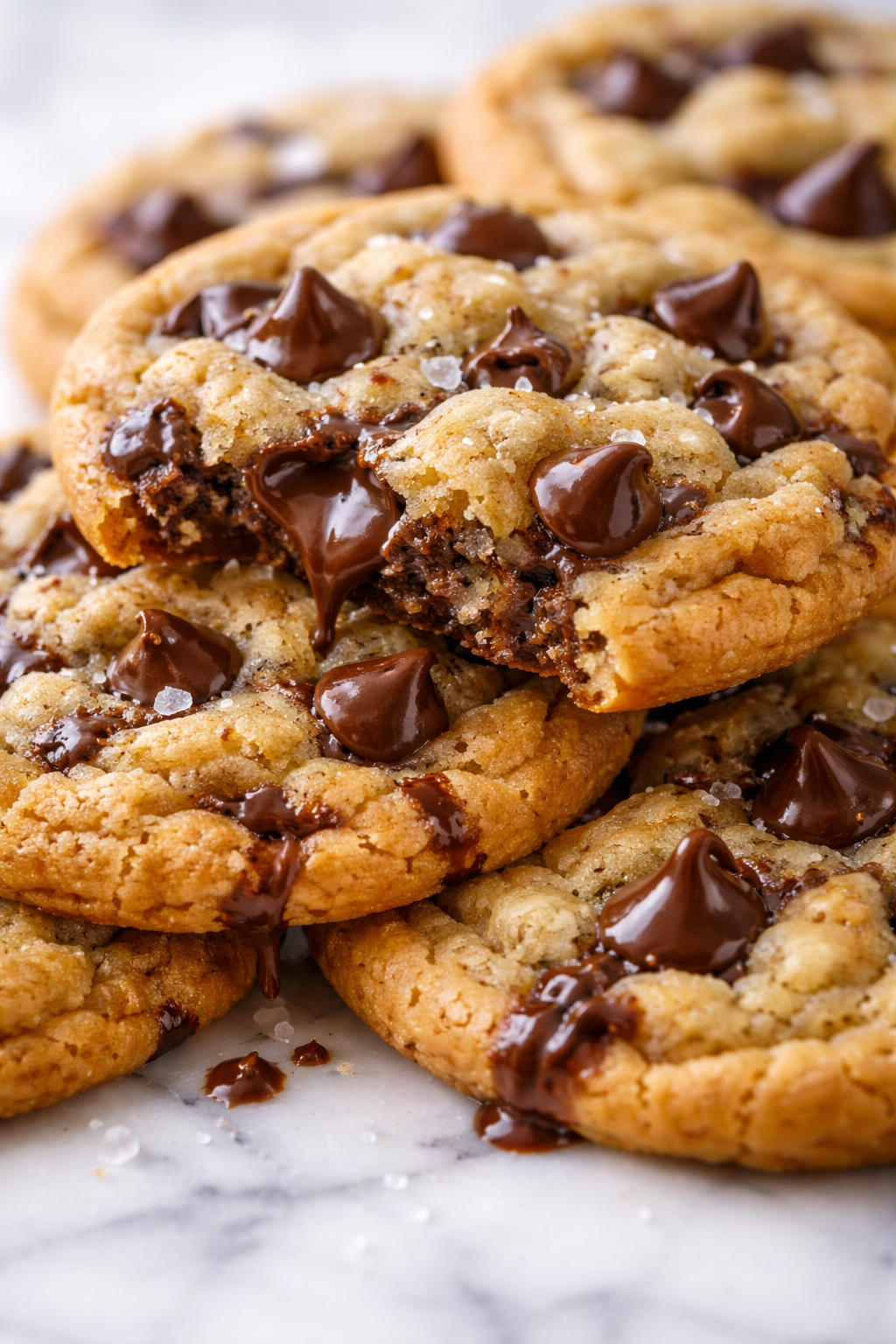
These chocolate chip cookies are my quick fix when I want something soft, chewy, and comforting. Just five ingredients and about 30 minutes later, you’ve got a treat that feels homemade and warm. Perfect for a last-minute snack or dessert!
Introduction
I first made these chocolate chip cookies when I was desperate for a quick homemade treat but didn't have a ton of ingredients or time. What I love about this recipe is how simple it is—just a handful of pantry staples and a short baking time, yet the cookies turn out soft, chewy, and totally satisfying. I’ve tried other recipes that promised softness but ended up cakey or dry, but this one nails the texture every time. The trick I learned is in the balance of brown and granulated sugar, which keeps the cookies moist and chewy without being too sweet or dense. Also, letting the dough chill briefly before baking really helps prevent spreading and keeps that perfect shape. When they come out of the oven, they’re golden around the edges and soft in the center, with melty chocolate chips throughout. Honestly, these cookies feel like a warm hug—perfect for an after-dinner treat, a cozy snack with tea, or just because you deserve a little indulgence. I think you’ll find yourself coming back to this recipe over and over, especially when time’s tight but you still want that homemade goodness.
How To Do It
Step 1
Start by creaming the softened unsalted butter with both the brown and granulated sugars. Use a hand mixer or stand mixer on medium speed for about 3-4 minutes until the mixture is light and fluffy. This step is crucial because properly creamed butter and sugar trap air, which helps create a tender and chewy texture in the cookies. Avoid rushing this part; under-creamed butter can result in dense cookies, while over-creaming may cause them to spread too much during baking.
⏱ Time: 4
✓ Doneness: The mixture should look pale and fluffy, with the sugar fully incorporated and no visible butter chunks.
Step 2
Add the egg to the creamed butter and sugar mixture and beat on medium speed until fully combined and slightly thickened, about 1-2 minutes. The egg adds moisture and structure, so make sure it’s well mixed to ensure even texture. Skipping thorough mixing here can cause uneven baking and texture issues.
⏱ Time: 2
✓ Doneness: The batter should be uniform in color and texture, slightly glossy, and smooth without streaks of egg.
Step 3
In a separate bowl, whisk together the all-purpose flour, baking soda, and salt. This ensures the leavening agent and salt are evenly distributed, which helps the cookies rise properly and balances the sweetness. Sifting is optional but helps prevent lumps and ensures a lighter texture.
⏱ Time: 3
✓ Doneness: Dry ingredients are well combined with no clumps.
Step 4
Gradually add the dry ingredients to the wet mixture, mixing on low speed or folding with a spatula. Mixing just until combined is key to avoid overworking the gluten in the flour, which would make the cookies tough. Stop mixing as soon as you don’t see dry flour patches.
⏱ Time: 3
✓ Doneness: Dough looks uniform with no visible dry flour, but still slightly thick and soft.
Step 5
Fold in the chocolate chips evenly using a spatula. This gentle folding prevents breaking the chips and distributes them so every cookie has that perfect melty chocolate bite. Reserve a few to press on top of each cookie before baking for a pretty presentation.
⏱ Time: 2
✓ Doneness: Chocolate chips are evenly spread throughout the dough without clumping.
Step 6
Cover the dough and chill it in the refrigerator for at least 30 minutes. This resting time firms up the dough, making it easier to scoop and preventing cookies from spreading too thin while baking. Skipping this step often results in flat, crispy cookies.
⏱ Time: 30
✓ Doneness: Dough is firm to the touch and holds shape when scooped.
Step 7
Preheat your oven to 350°F (175°C) and line a baking sheet with parchment paper. Using a cookie scoop or tablespoon, portion dough balls about 2 inches apart to allow room for spreading. Press a couple of reserved chocolate chips on top of each dough ball for a glossy, chocolatey finish.
⏱ Time: 10
✓ Doneness: Dough balls are evenly spaced and topped with visible chocolate chips.
Step 8
Bake cookies for 12-15 minutes, turning the pan halfway through for even baking. Watch carefully starting at 12 minutes; the edges should be golden while the centers remain soft and slightly underbaked. This ensures that chewy texture we all love. Overbaking will dry out the cookies and make them crumbly.
⏱ Time: 15
✓ Doneness: Edges are light golden brown, centers look set but still soft and glossy.
Step 9
Remove the cookies from the oven and let them cool on the baking sheet for 5 minutes before transferring to a wire rack. This resting time allows the cookies to finish setting without becoming hard. Moving them too soon can cause breakage, while leaving them too long on the hot sheet may overcook the bottoms.
⏱ Time: 5
✓ Doneness: Cookies hold their shape when lifted and feel slightly firm but still soft.
Variations
Add chopped nuts for crunch
Stir in 1/2 cup chopped walnuts or pecans for a nutty twist that adds texture and flavor. Nuts complement the sweetness and add a pleasant crunch.
Note: Fold nuts in with chocolate chips during the last mixing step to evenly distribute.
Use dark chocolate chunks instead of chips
Swap semi-sweet chips for dark chocolate chunks for richer, more intense chocolate pockets that melt beautifully and add a gourmet touch.
Note: Be mindful that chunks may melt differently, creating gooier spots; bake as usual.
Add a pinch of cinnamon or espresso powder
Enhance flavor complexity by adding 1/2 teaspoon cinnamon or 1 teaspoon espresso powder to the dry ingredients. These subtle additions deepen the cookie’s flavor profile.
Note: Mix spices with flour before combining with wet ingredients to ensure even distribution.
Make gluten-free with almond flour
Replace all-purpose flour with almond flour for a nutty, gluten-free version. Expect a softer, more delicate texture with a slightly different crumb.
Note: Almond flour dough may spread more; chill longer and consider reducing butter slightly.
Swap butter for coconut oil for dairy-free
Use solid coconut oil in place of butter to make a dairy-free cookie with a subtle tropical flavor. Coconut oil yields slightly crispier edges but still tender centers.
Note: Chill dough well to prevent excess spreading due to coconut oil’s lower melting point.
Pro Tips
Always measure flour with a spoon and level method instead of scooping directly.
Scooping flour directly with a measuring cup can compact it, leading to more flour than intended. This results in dry, dense cookies. Using a spoon to fluff the flour and then leveling it ensures you add the correct amount for tender cookies.
Let the dough chill for at least 30 minutes before baking.
Chilling firms the dough, which controls spreading during baking and helps develop flavor. Without chilling, cookies can become too thin and crispy instead of soft and chewy.
Use room temperature butter, not melted or cold.
Room temperature butter creams properly with sugar, creating air pockets that yield a light, tender cookie. Melted butter makes dough too loose and spreads too much; cold butter won’t mix evenly.
Don’t overmix once you add flour.
Overmixing develops gluten, making cookies tough and chewy in an unpleasant way. Mix just until flour disappears for the best texture.
Press extra chocolate chips on top of dough balls before baking.
This gives cookies an attractive, chocolatey surface and ensures every bite has visible chocolate, which makes them more irresistible.
Use parchment paper or silicone mats for baking.
These surfaces prevent sticking and promote even baking without burning the bottoms, compared to greasing pans.
Rotate the baking sheet halfway through baking.
Ovens often heat unevenly; rotating ensures cookies bake uniformly, preventing some from burning while others remain underdone.
Common Mistakes to Avoid
Using melted butter instead of softened butter
Why it happens Some think melted butter speeds up mixing or improves texture, but it changes the dough consistency and spreading behavior.
Fix Always soften butter to room temperature before creaming. If it’s too hard, microwave in short bursts and check often. Softened butter traps air with sugar, essential for cookie texture.
Skipping the chilling step
Why it happens In a rush, it’s tempting to bake dough immediately, but this leads to overly thin, crispy cookies.
Fix Plan ahead and chill dough at least 30 minutes or up to 24 hours. This controls spreading and enhances flavor.
Overmixing after adding flour
Why it happens Trying to fully blend dough can lead to tough cookies due to excess gluten development.
Fix Mix gently and stop as soon as flour is incorporated. Folding with a spatula is often best.
Using old or expired baking soda
Why it happens Baking soda loses potency over time, causing flat or dense cookies.
Fix Test baking soda by mixing a small amount with vinegar to see if it fizzes. Replace if no reaction.
Not spacing dough balls enough on the baking sheet
Why it happens Crowding causes cookies to merge into one big sheet.
Fix Leave at least 2 inches between dough balls to allow for spreading.
Nutrition
Per Serving:
Nutritional values are estimates and may vary based on specific ingredients used.
Storage & Tips
Room Temperature
Cookies keep well at room temperature for up to 2 days when stored in an airtight container. Keep them away from heat and direct sunlight to maintain softness and prevent melting chocolate.
Refrigerator
Store in an airtight container for up to 5 days. Refrigerated cookies may firm up and lose some chewiness; bring to room temperature or warm briefly in the microwave for best texture.
Freezer
Freeze baked cookies in a sealed container or freezer bag for up to 3 months. Freeze dough balls separately on a tray before bagging to prevent sticking. Thaw at room temperature or warm gently in the oven to restore softness.
Reheating
Reheat cookies in a 300°F oven for 5 minutes or microwave for 10-15 seconds with a damp paper towel nearby to prevent drying out. Avoid overheating to keep them soft and melty.
Make Ahead
Prepare the dough and chill it up to 24 hours ahead. Scoop dough balls onto baking sheets, freeze, then transfer to bags for longer storage. Bake directly from frozen adding a few extra minutes to baking time.
FAQ
Can I substitute butter with margarine or oil?
Butter provides flavor and structure that margarine or oils can’t fully replicate. Margarine might work but can alter texture, making cookies softer or greasier. Oils generally produce cakier or flatter cookies. For best results, stick with unsalted butter or try solid coconut oil as a dairy-free alternative.
Why are my cookies spreading too much?
Common causes include using melted butter, skipping chilling, or too much sugar. Also, dough that’s too warm spreads more. Make sure butter is softened, chill the dough, and measure ingredients accurately. Baking soda freshness also affects spread, so check that too.
How do I make these cookies chewier?
You can also try adding an extra egg yolk which adds richness and chew.
Can I freeze the cookie dough?
Dough can be frozen up to 3 months with good results.
What’s the best way to store leftover cookies?
Avoid storing in plastic bags without ventilation to prevent sogginess.
Can I use different types of chocolate chips?
Chopping a chocolate bar into chunks also adds a nice texture variation.
Why do my cookies come out cakey sometimes?
Avoid adding baking powder, which is better for cakey textures.
Can I make these cookies vegan?
Chilling the dough is even more important to control spreading with these substitutions.
Final Thoughts
Give these soft and chewy chocolate chip cookies a try—you’ll love how quick and comforting they are. I can’t wait to hear how yours turn out!