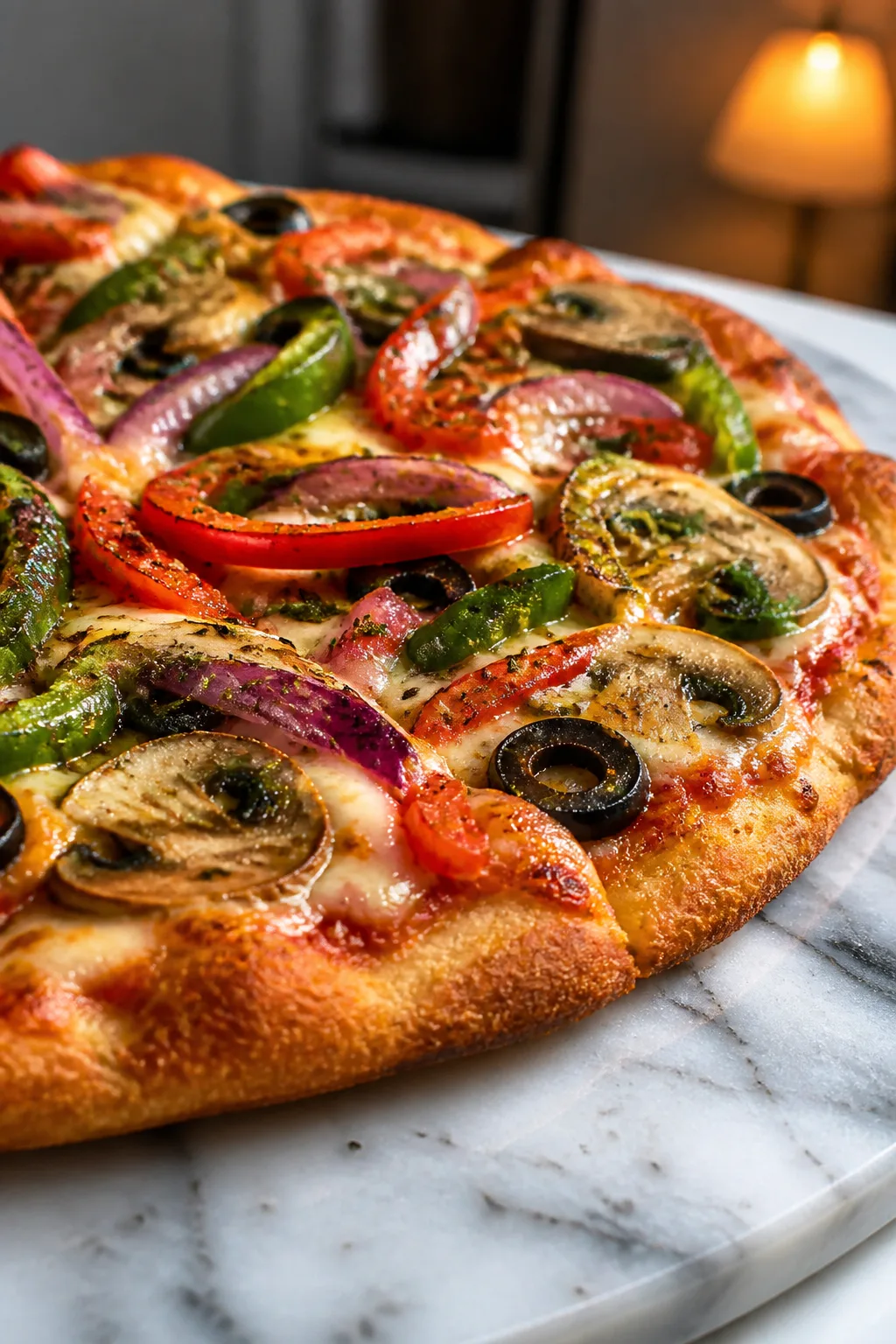
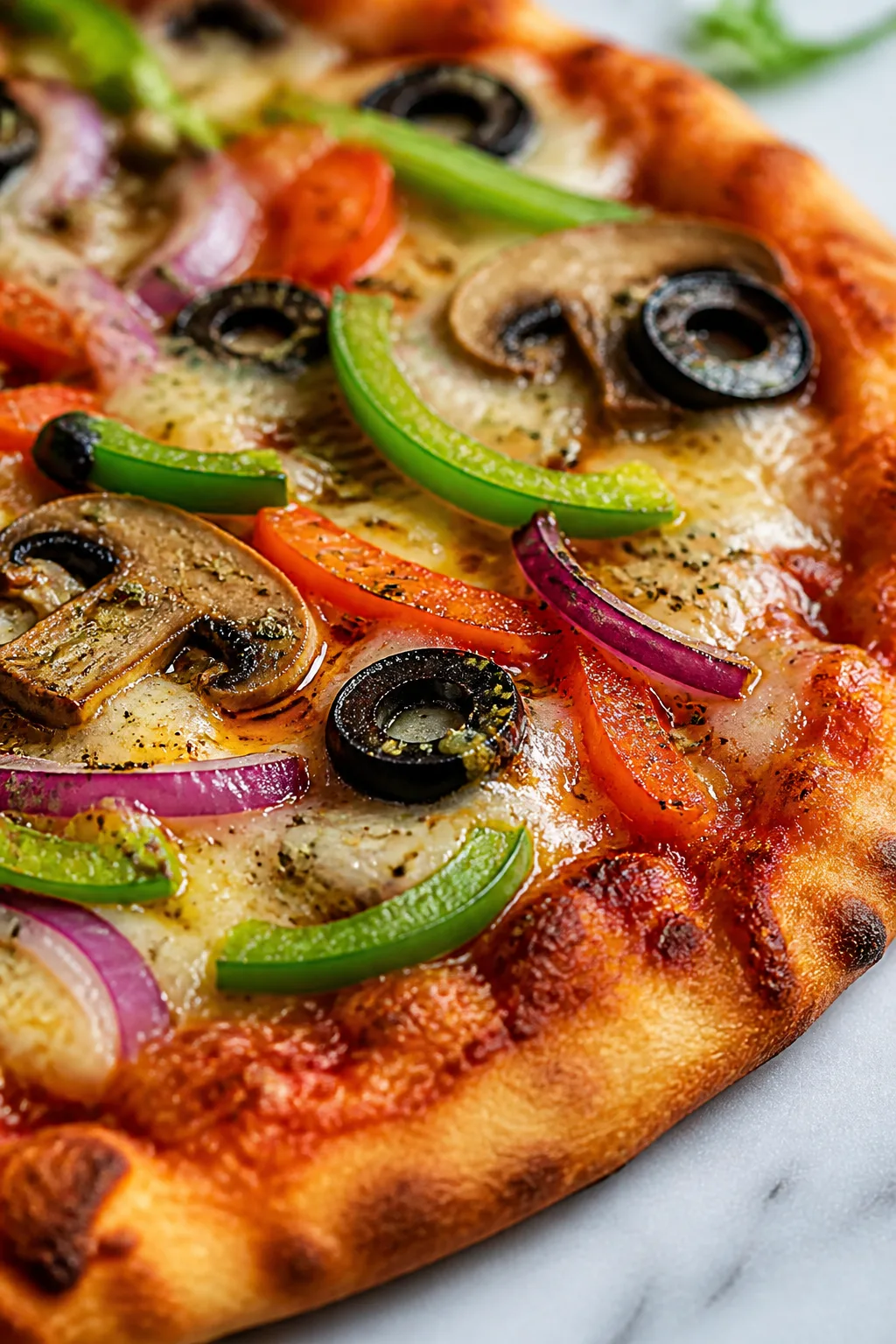
This veggie pizza is my go-to for a fresh yet comforting meal. The homemade crust adds a lovely chewiness, and the mix of peppers and mushrooms keeps it vibrant. Perfect for a relaxed weekend dinner!
Introduction
I stumbled upon this veggie pizza recipe years ago when I wanted something light but still satisfying for dinner. The idea of piling colorful peppers and earthy mushrooms on a homemade crust instantly won me over. Since then, it's become my go-to for a casual weekend meal or whenever I crave something fresh but comforting. What sets this version apart for me is the homemade dough — it’s surprisingly easy to make and gives the pizza that perfect chewy, slightly crisp texture that store-bought crusts just can’t match. I also love mixing mozzarella with provolone for a richer, gooey melt that pairs beautifully with the veggies. One trick I learned is letting the dough rise slowly in the fridge overnight if you have time; it develops a deeper flavor and better crumb. When it comes out of the oven, the crust is golden, the cheese bubbling, and the peppers still vibrant — it’s just the kind of homey, colorful dish that makes you want to dig in right away. I think this pizza works whether you’re feeding a crowd or just treating yourself to a cozy night in.
What You'll Need
One 12-inch pizza, 4 servings
- 2 1/4 tsp active dry yeast (1 packet)
- 1 1/2 cups warm water (110°F/43°C)
- 3 1/2 cups all-purpose flour
- 2 tbsp olive oil, plus extra for greasing
- 1 tsp salt
- 1/2 tsp sugar
- 1/2 cup tomato sauce
- 1 red bell pepper, thinly sliced
- 1 yellow bell pepper, thinly sliced
- 1 cup sliced mushrooms
- 1 cup shredded mozzarella cheese
- 1/2 cup shredded provolone cheese
- 1 tsp dried oregano
- Fresh basil leaves for garnish (optional)
How To Do It
Step 1
Start by activating the yeast. In a small bowl, combine the warm water (make sure it’s around 110°F to avoid killing the yeast) with the sugar and yeast. Stir gently and let it sit for about 5-10 minutes until it becomes frothy. This signals that the yeast is alive and ready to work its magic. If you don’t see bubbles or foam, your yeast might be old or the water temperature was off, so try again. This step is crucial because without active yeast, your dough won’t rise properly.
⏱ Time: 10 minutes
✓ Doneness: The mixture should be bubbly and foamy on top, indicating activated yeast
Step 2
In a large mixing bowl, combine the flour and salt. Make a well in the center and pour in the yeast mixture along with the olive oil. Using a wooden spoon or your hands, mix the ingredients until a shaggy dough forms. Then transfer it to a lightly floured surface and knead for about 8-10 minutes. Kneading develops the gluten, which gives the crust its chewy texture. If the dough feels too sticky, add a little more flour, but be careful not to overdo it or your crust will be tough.
⏱ Time: 10 minutes
✓ Doneness: The dough should be smooth, elastic, and slightly tacky but not sticky
Step 3
Lightly oil a large bowl and place the dough inside, turning it once to coat with oil. Cover with a clean towel or plastic wrap and let it rise in a warm spot until doubled in size, about 1 to 1 1/2 hours. This rise allows the dough to ferment and develop flavor. Avoid rushing this step by placing the dough in a cold place or skipping the cover, as it will slow the yeast activity or dry out the dough surface.
⏱ Time: 1 to 1.5 hours
✓ Doneness: The dough should be about twice its original size and spring back slowly when poked
Step 4
Preheat your oven to 475°F (245°C) and place a pizza stone or baking sheet inside to heat. Punch down the risen dough to release air bubbles, then transfer it to a floured surface. Roll or stretch the dough into a 12-inch circle, being gentle to keep some air bubbles intact for a light crust. If it resists stretching, let it rest for a few minutes to relax the gluten. Transfer the dough to a piece of parchment paper for easy handling.
⏱ Time: 10 minutes
✓ Doneness: The dough should be evenly stretched with small air pockets visible beneath the surface
Step 5
Spread the tomato sauce evenly over the dough, leaving about an inch border around the edges. This prevents the crust from getting soggy and allows it to puff up nicely. Don’t overload the sauce; a thin layer is enough to complement the toppings without weighing down the crust.
⏱ Time: 5 minutes
✓ Doneness: A thin, even layer of sauce covers the dough without pooling or dripping
Step 6
Arrange the sliced red and yellow bell peppers along with the mushrooms evenly over the sauce. Distribute toppings evenly so each bite has a good balance of flavors. Overcrowding the pizza can result in uneven cooking and a soggy crust, so keep toppings moderate.
⏱ Time: 5 minutes
✓ Doneness: Toppings are spread in a single layer without overlapping too much
Step 7
Sprinkle the shredded mozzarella and provolone cheeses over the veggies. The combination melts well and adds a nice depth of flavor. Using a mix of cheeses helps achieve a gooey, stretchy texture with a bit more richness than mozzarella alone.
⏱ Time: 3 minutes
✓ Doneness: Cheese is evenly sprinkled covering the toppings without clumping
Step 8
Carefully slide the pizza with the parchment paper onto the preheated pizza stone or baking sheet. Bake for 12-15 minutes until the crust is golden and crisp, and the cheese is bubbly and starting to brown. The high heat encourages a good rise and crispness, mimicking wood-fired oven results at home.
⏱ Time: 12-15 minutes
✓ Doneness: Crust is golden brown with slightly charred spots, cheese is bubbly and golden
Step 9
Remove the pizza from the oven and let it rest for a few minutes before slicing. This allows the cheese to set slightly so it doesn’t slide off. Garnish with fresh basil leaves if you have them for a bright herbal note that complements the roasted veggies beautifully.
⏱ Time: 5 minutes
✓ Doneness: Pizza is cool enough to slice cleanly, basil adds a fresh touch
Variations
Spicy Veggie Pizza
Add sliced jalapeños or crushed red pepper flakes to the toppings for a kick of heat. You can also swap the tomato sauce for a spicy arrabbiata sauce. Expect a bolder flavor profile with the same great texture.
Note: Be mindful of the heat level so it doesn’t overpower the other ingredients; add spicy elements sparingly.
Vegan Veggie Pizza
Replace the cheese with vegan mozzarella or cashew-based cheese alternatives. Use olive oil and a robust tomato sauce to keep flavors vibrant. This version is dairy-free but still rich and satisfying.
Note: Vegan cheeses melt differently, so watch the bake time and check for bubbling rather than browning.
Gluten-Free Veggie Pizza
Use a gluten-free flour blend designed for pizza dough. The texture will be slightly different—less chewy and more crumbly—but the fresh toppings and sauce remain delicious.
Note: Gluten-free dough often requires a binder like xanthan gum and may need a gentler handling to prevent cracking.
Pesto Veggie Pizza
Swap tomato sauce for a layer of basil pesto, then top with the same veggies and cheese. This creates a fresh, herbaceous twist with a nutty depth from the pesto.
Note: Pesto can brown quickly, so watch the baking closely to avoid burning.
Roasted Veggie Pizza
Roast the peppers and mushrooms beforehand to concentrate their flavors and reduce moisture. This results in a sweeter, slightly caramelized topping with a firmer texture.
Note: Roasting adds a step but prevents sogginess and intensifies taste; reduce oven bake time slightly to avoid overcooking.
Pro Tips
Use a pizza stone or steel to bake the pizza.
A preheated pizza stone or steel retains and radiates heat evenly, creating a crispy bottom crust by mimicking the conditions of a wood-fired oven. Baking directly on a cold sheet pan won’t give the same crispness and can produce a softer, doughier base.
Let the dough rise slowly in the fridge overnight if possible.
A slow, cold fermentation enhances flavor as yeast consumes sugars and produces aromatic compounds. This also improves dough texture, making it easier to stretch and resulting in a more complex, slightly tangy crust.
Don’t overload the pizza with toppings.
Too many toppings weigh down the crust and release moisture, leading to a soggy pizza. Keeping toppings moderate ensures even cooking and crispness, allowing each ingredient’s flavor to shine.
Use a mix of mozzarella and provolone cheeses.
Mozzarella melts well and stretches, while provolone adds a richer, deeper flavor. This combination results in a gooey, flavorful cheese layer that browns nicely without becoming greasy.
Slice vegetables thinly and evenly.
Thin slices cook quickly and uniformly during the short bake time, preventing raw spots and sogginess. Uneven thickness can cause some pieces to be undercooked while others overcook.
Allow the pizza to rest for a few minutes after baking before slicing.
Resting lets the cheese set slightly, preventing it from sliding off when you cut the pizza. This also allows the crust to cool just enough to handle without losing crispness.
Use warm water to activate the yeast, but not too hot.
Water that’s too hot will kill the yeast, preventing dough rise. Too cold and the yeast won’t activate properly, leading to dense dough. The ideal temperature is around 110°F for optimal yeast activation.
Common Mistakes to Avoid
Using water that’s too hot or cold for the yeast.
Why it happens Many assume any warm water is fine, but temperatures above 120°F kill yeast, and below 95°F yeast activates too slowly or not at all.
Fix Use a kitchen thermometer or test water temperature by hand to ensure it’s warm but not hot before adding yeast. Aim for about 110°F for best activation.
Overloading the pizza with too many toppings.
Why it happens It’s tempting to pile on every veggie you like, but this adds moisture and weight that can make the crust soggy.
Fix Stick to a moderate amount of toppings and slice veggies thinly. This helps them cook evenly and keeps the crust crisp.
Skipping the dough rise or rushing it.
Why it happens Impatience or lack of planning can lead cooks to skip proper rising, resulting in dense, tough crusts.
Fix Allow the dough to rise in a warm place until doubled in size. If short on time, a warm oven (turned off) can help speed this up gently.
Using pre-shredded cheese with anti-caking agents.
Why it happens Pre-shredded cheese often contains additives that prevent clumping but reduce melt quality and cause greasy or clumpy results.
Fix Shred block cheese yourself for a smoother melt and better texture on your pizza.
Not preheating the pizza stone or baking sheet.
Why it happens Without preheating, the crust won’t crisp properly and can end up doughy and pale.
Fix Place your stone or steel in the oven during preheat and allow at least 30 minutes for it to get very hot before baking.
Nutrition
Per Serving:
Nutritional values are estimates and may vary based on specific ingredients used.
Storage & Tips
Room Temperature
Pizza can be safely kept at room temperature for up to 2 hours uncovered. To keep it fresh, cover loosely with foil or a clean kitchen towel. Avoid leaving it out longer to prevent bacterial growth.
Refrigerator
Store leftover pizza in an airtight container or wrapped tightly in plastic wrap for up to 3 days. The crust may lose some crispness and become chewier when cold, so reheating is recommended before eating.
Freezer
Wrap pizza slices tightly in plastic wrap and then in aluminum foil or a freezer bag to prevent freezer burn. Freeze for up to 2 months. Thaw overnight in the fridge before reheating for best texture.
Reheating
Reheat pizza in a preheated oven at 375°F (190°C) for 8-10 minutes to regain crispness. Avoid microwaving as it makes the crust soggy. Adding a splash of water to the oven tray can help keep toppings moist.
Make Ahead
You can prepare the dough a day ahead and refrigerate it for slow fermentation. Assemble the pizza just before baking. Alternatively, pre-slice toppings and keep them ready to speed up assembly on serving day.
FAQ
Can I use instant yeast instead of active dry yeast?
Yes, instant yeast can be used and often doesn’t require proofing in warm water. You can mix it directly with the flour and other dry ingredients. However, the dough may rise faster, so keep an eye on it to avoid over-proofing.
What if my dough is too sticky to handle?
If the dough is sticky, sprinkle a little flour on your hands and work surface. Be careful not to add too much flour as it can make the dough tough. Knead gently until the dough becomes elastic and manageable.
How do I prevent a soggy crust with veggie toppings?
Slice veggies thinly and avoid piling them on thickly. Pat mushrooms dry if they’re very wet, and consider pre-roasting or sautéing them briefly to reduce moisture before adding to the pizza.
Can I make the dough ahead and freeze it?
Absolutely! After the first rise, punch down the dough, wrap it tightly, and freeze for up to 3 months. Thaw overnight in the fridge, then let it come to room temperature before shaping and baking.
What’s the best way to stretch the dough without tearing?
Let the dough rest for a few minutes if it resists stretching; this relaxes the gluten. Use gentle hands and stretch from the center outward, rotating as you go. Avoid pulling too hard in one spot to prevent tears.
Can I substitute the cheeses with others?
Yes, you can try provolone with mozzarella alternatives like fontina or gouda for different flavors. Just note that meltability varies, so some cheeses may not produce the same gooey texture.
How do I get a crispier crust?
Bake on a preheated stone or steel at a high temperature (475°F or above). Also, avoid overloading with sauce or toppings that release moisture. Brushing the crust edge with olive oil before baking helps it brown and crisp nicely.
Is it okay to use canned or jarred tomato sauce?
Yes, just choose a good-quality sauce without too many added herbs or spices, so you can control the flavor. If sauce is watery, simmer it briefly to thicken before spreading on the dough.
Final Thoughts
I hope you give this veggie pizza a try soon—it’s such a satisfying way to enjoy fresh veggies with a homemade touch. Don’t forget to share how it turns out!